
By Vivify Mariposa 🦋 No Filter. Just Facts.
If you read Part One, did you recognize anything? How many labels do you use on yourself? People used to call me hyperactive, because I am always full of energy, even at my age. I walk fast, I think fast, I connect things in a different way, and that is exactly why I love being unique.
Part One was an introduction, a test to see if you are a critical thinker. Let’s see if you still are in this section, and how many of you abandon the article versus keep reading. If you get triggered, you are not a critical thinker. Remember that. Triggers are normal, and learning about your fears is not bad.
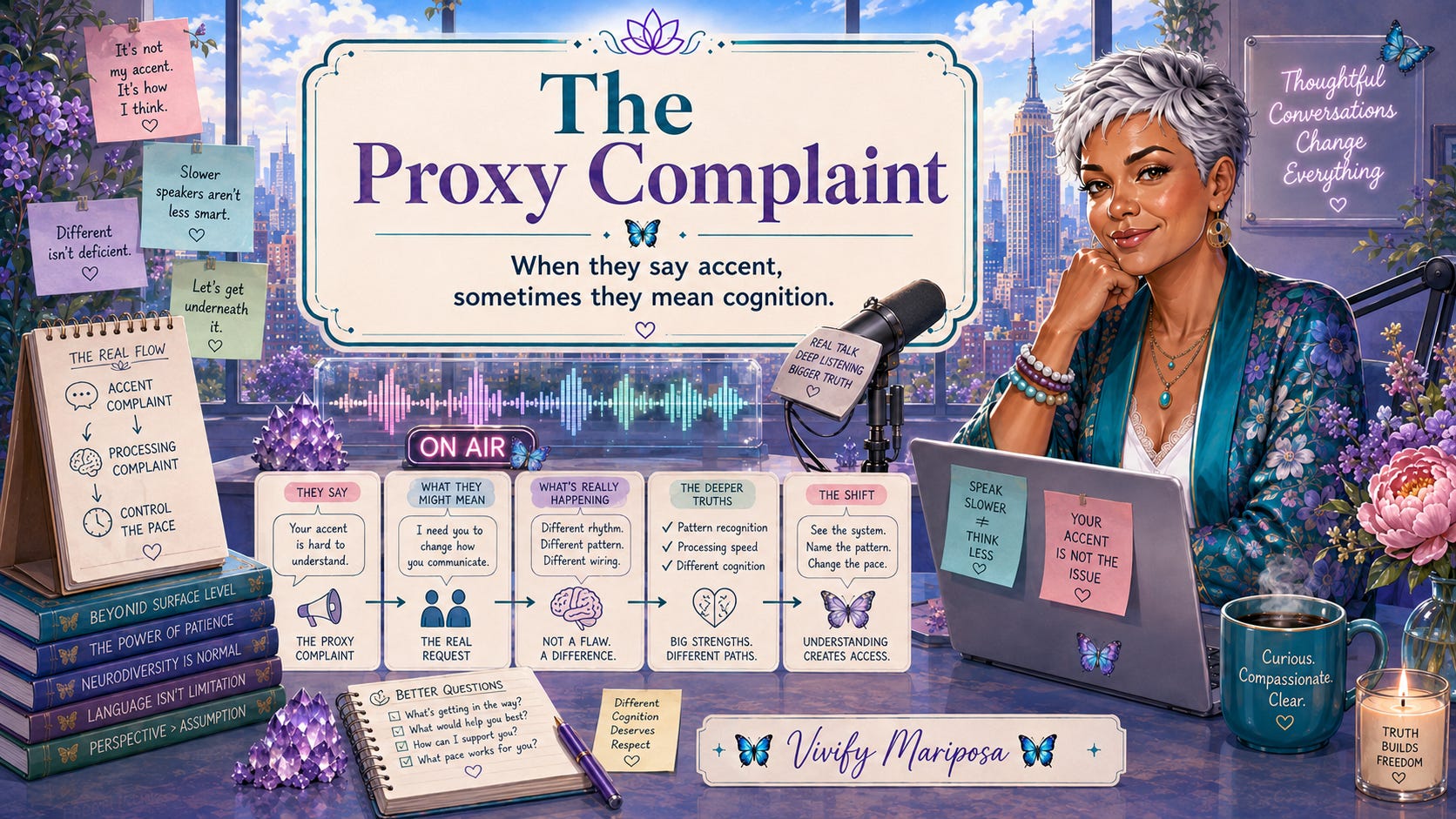
The label I get too often when I do interviews or speak on podcasts is that I need to speak slower, or that my accent is too strong.
For a long time I heard it and moved on. Then I started paying attention, like I always do. I watched other interviewers speak to the exact same audience with accents much heavier than mine. Nobody complained. Nobody told them to slow down. People understood them perfectly well and continued listening.
So naturally I started asking myself why.
I don’t think in a straight line. When I am looking at something, I am already seeing the money, the legal liability, the dictionary change, the media language, the comments, and whatever else connects to it. I am not waiting to finish A before my brain notices C, F, and whatever is sitting underneath all of them. That is how I research, and it is also how I speak.
Most people are trained differently. School teaches you to follow the lesson in order. Universities do the same thing. Media does it constantly. Here is the beginning, here is the middle, here is the conclusion, and please wait while everything is explained in the proper sequence.
My brain doesn’t wait for the proper sequence.
So when I speak at the same speed that I am connecting things, somebody who is still trying to place the first piece can lose where I went next. And instead of saying they lost the connection, the complaint becomes easier: slow down. Your accent is too strong. Something about the way I am speaking must be the problem.
That is why I call it a proxy complaint.
The accent is simply the easiest thing to point at because they can hear it. What they are having trouble following is how quickly I move between connections without giving them the institutional training wheels they are accustomed to.
The same administration pulling production, minerals, pharmaceutical supply, and financial settlement away from the City of London intermediary structure is now touching something else Americans were basically taught during the pandemic not to question: the childhood vaccine schedule.
Look at what started happening. In December 2025, Kennedy’s reconstituted vaccine advisory panel was discussing things that five years earlier would have caused an explosion just for being mentioned. Hepatitis B moved away from the automatic routine recommendation toward shared decision-making. Aluminum adjuvants were being discussed again. They were even comparing the American childhood schedule with Denmark’s.
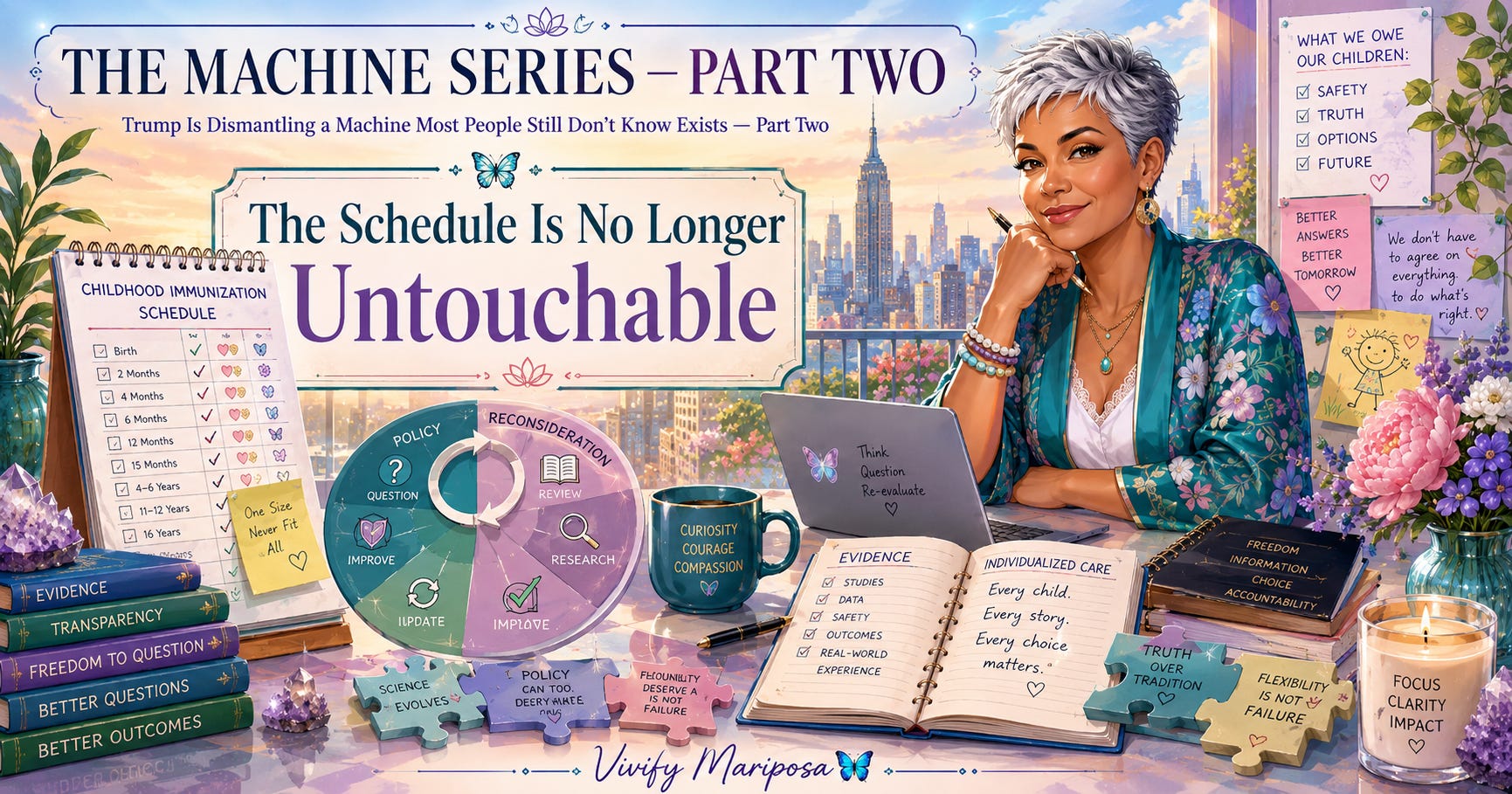
Then, on January 5, 2026, HHS reduced the number of diseases included in the routine childhood immunization schedule from seventeen to eleven after Trump directed the department to compare the U.S. schedule with other developed countries.
And they did not stop there.
On August 10, Trump ordered HHS to go back through the timing and sequencing of the core childhood vaccines, look for alternatives to aluminum adjuvants, compare safety and efficacy, keep reevaluating the risk and benefit using American and international data, and strengthen the safety monitoring and research around the schedule. The order also recommends separating MMR into individual measles, mumps, and rubella shots once those products are available domestically, and, when feasible, giving childhood immunizations at separate medical visits.
That matters to me because for years the message was basically: the schedule is settled, stop asking questions.
Now the government itself is asking questions about the timing, the combinations, the adjuvants, and whether some of these vaccines should even be given together.
Call Trump whatever you want politically. I am looking at what the administration is actually doing. They are taking something people were trained to treat as one untouchable package and opening it back up piece by piece.
Kennedy spent years outside government fighting the vaccine industry. Now he is inside the same government people expect him to change, and suddenly they act like decades of laws, agency rules, contracts, advisory committees, liability protections, and institutional relationships should disappear because one person became Secretary of HHS.
That makes no sense to me.
Government does not work like that. He can change the people sitting on committees when the law allows it. He can change what gets studied. He can reopen questions agencies stopped asking. He can push them to look again at sequencing, safety, and the assumptions built into the system.
But he is still working from inside the machinery he criticized from the outside.
So I look at it differently. If this system was built one law, one committee, one protection, and one policy at a time, then of course taking it apart is going to happen the same way.
Piece by piece.
So I looked at who wants this country destroyed this way, and why, and who’s actually fighting it. I started with the question I assumed would embarrass them: why isn’t a vaccine considered a drug? Then I actually checked, and the question turned out to be wrong. The FDA’s own language says a vaccine meets the legal definition of a drug under the Food, Drug, and Cosmetic Act. It is also, simultaneously, a “biological product” under the Public Health Service Act, reviewed by a different center, licensed through a different application, regulated on a different track built around the fact that something grown from a living organism cannot be characterized with the same precision as a chemical compound.
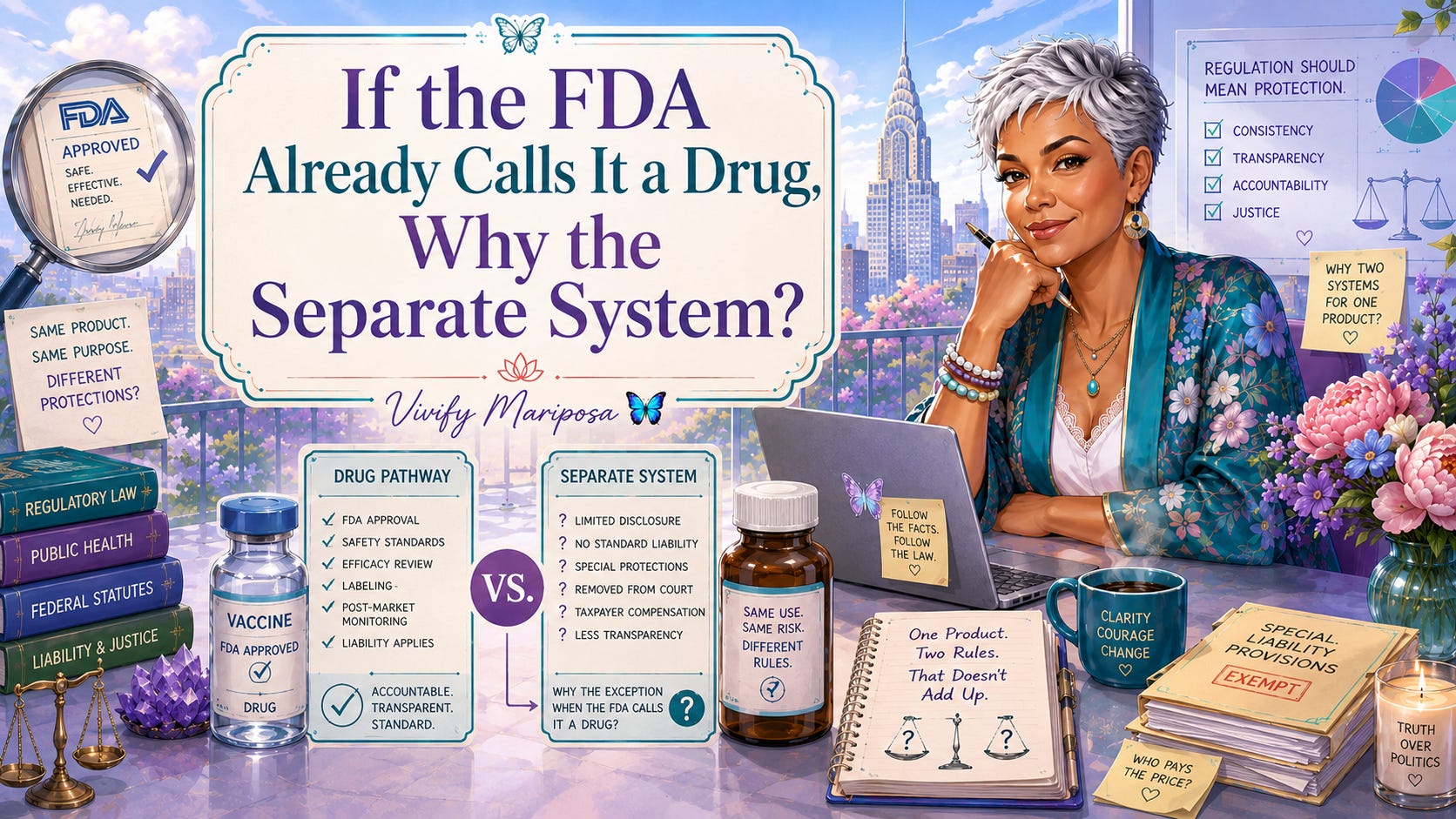
So the FDA is not pretending a vaccine isn’t a drug. It calls it one. The real question is sharper than the one I started with: if the FDA itself classifies a vaccine as a drug, why did Congress build one category of pharmaceutical product its own separate liability and compensation architecture, routed away from ordinary tort law and into a program with its own table, its own window, and its own Supreme Court-affirmed shield against design-defect suits? That is not a rhetorical trick. That is a documented legal fork in the road, and it only forks for one category of product.
That’s not a coincidence of language. That’s the entire architecture.
Here’s where it gets specific enough to check.
Before 2021, Merriam-Webster defined “vaccine” as “a preparation of killed microorganisms, living attenuated organisms, or living fully virulent organisms that is administered to produce or artificially increase immunity to a particular disease.” Immunity. A produced, measurable outcome.
By early 2021 the definition had already changed to: “a preparation that is administered... to stimulate the body’s immune response against a specific infectious agent or disease,” with a new clause added to cover “a preparation of genetic material (such as a strand of synthesized messenger RNA).”
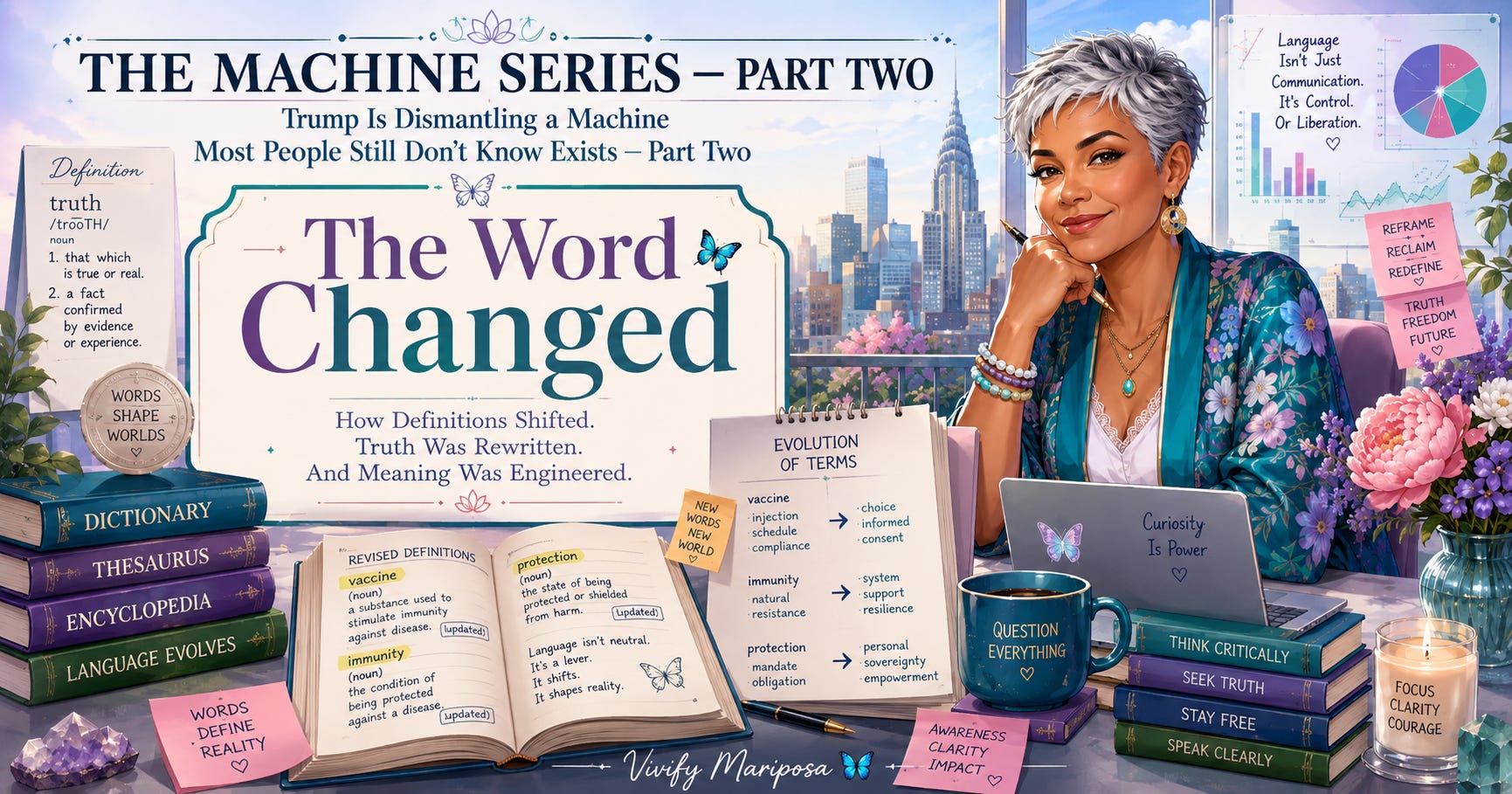
Stimulate a response. Not produce immunity. That is not a synonym swap. That is a lowered bar, rewritten just widely enough to keep a new product inside an old word.
Merriam-Webster’s own public explanation says they made this change in May 2021, because of mRNA technology. But the archived capture of their site from January 11, 2021 already shows the old definition, and the capture from January 26, 2021 already shows the new one. That’s a three-month gap between what they told the public and what the record actually shows, sitting right across Inauguration Day.
I’m not going to tell you what that means. I’m going to tell you the dates don’t match the company’s own story, and ask you why that doesn’t bother more people.
CDC did its own version of this months later. Internal emails, the kind that only surface through FOIA rather than anything CDC volunteered, show that in August 2021 the agency was discussing how its own vaccine definition was being used to question what it was telling the public. A health communications specialist called the definition “problematic.” By September 1, 2021, CDC changed it. “Immunity” became “protection,” and “produce immunity” became “stimulate the body’s immune response.” The Biden administration changed the definition. Now the next administration is correcting what the previous administration changed. This is how false narratives are created: one administration changes or removes information, and the next has to bring it back.
If you have a headache, I don’t take the pill so that you avoid having one. That’s not how medicine works for any other condition on earth. So why are people manipulated into believing a vaccine only works if everyone around them takes it too?
Because herd behavior isn’t a medical argument. It’s a social one. It doesn’t need you to understand the mechanism. It needs you to feel like an outlier for questioning it. That’s not science protecting you. That’s a script managing you.
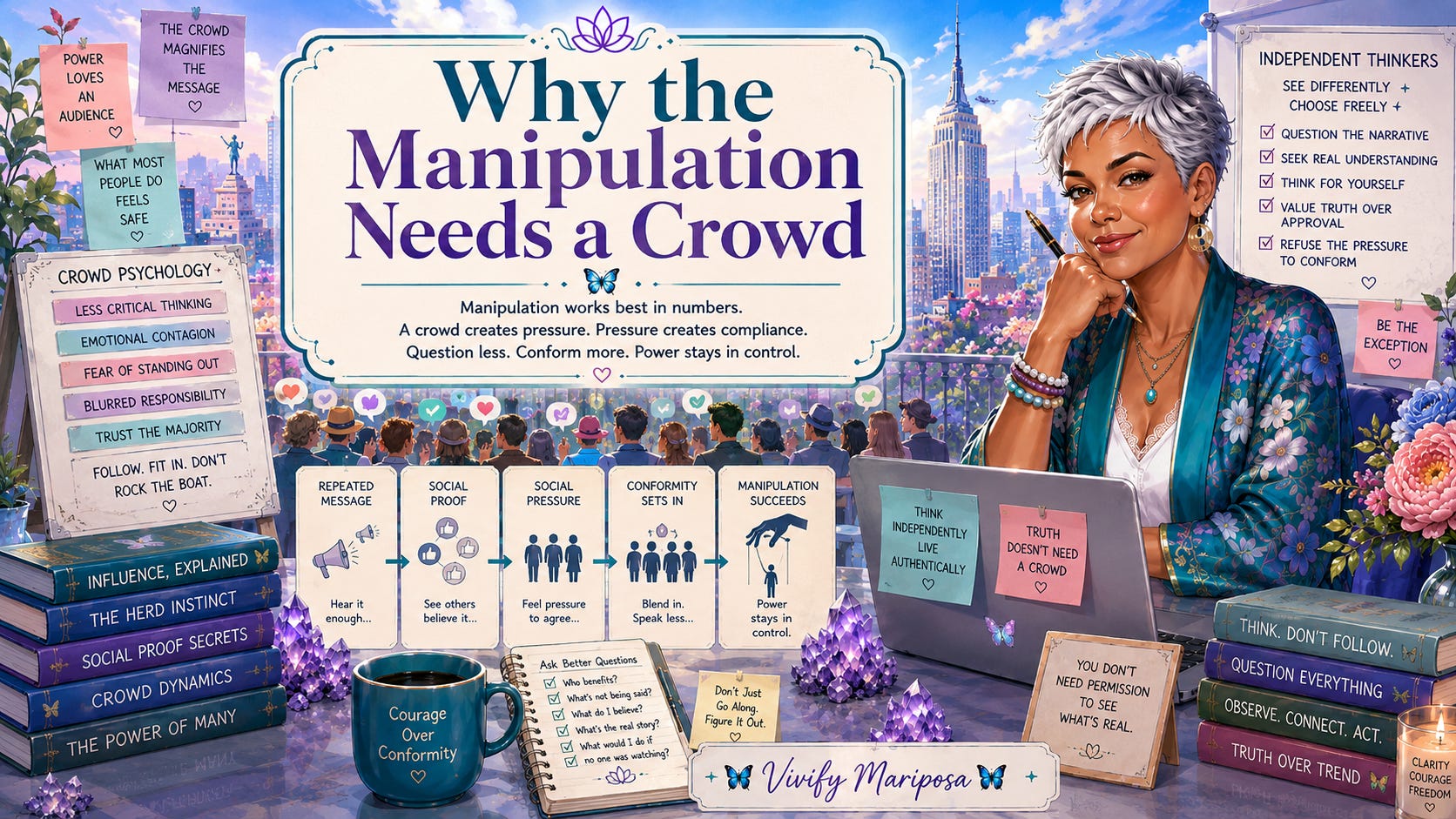
Watch how selectively people use the phrase “follow the science.” Question a vaccine study or a pharmaceutical claim and suddenly the paper is untouchable. The expert said it, the study was published, end of conversation. Why? Since when did science mean you are not allowed to question the premise?
Then change the subject to biological sex and somehow the rules change. Male and female are biological categories connected to reproduction. Changing the terminology does not change the biology underneath it.
Gender dysphoria is real. I can acknowledge that somebody may experience serious distress about their body without pretending biological sex stopped existing.
My problem is what gets built around that reality, especially when children are involved. Give something a name, expand the definition, teach children to look at themselves through that definition, and then the moment somebody questions any part of the framework, the question itself becomes the problem.
Why?
Something being real does not mean every political movement, clinical practice, cultural explanation, or business later attached to it automatically becomes true too.
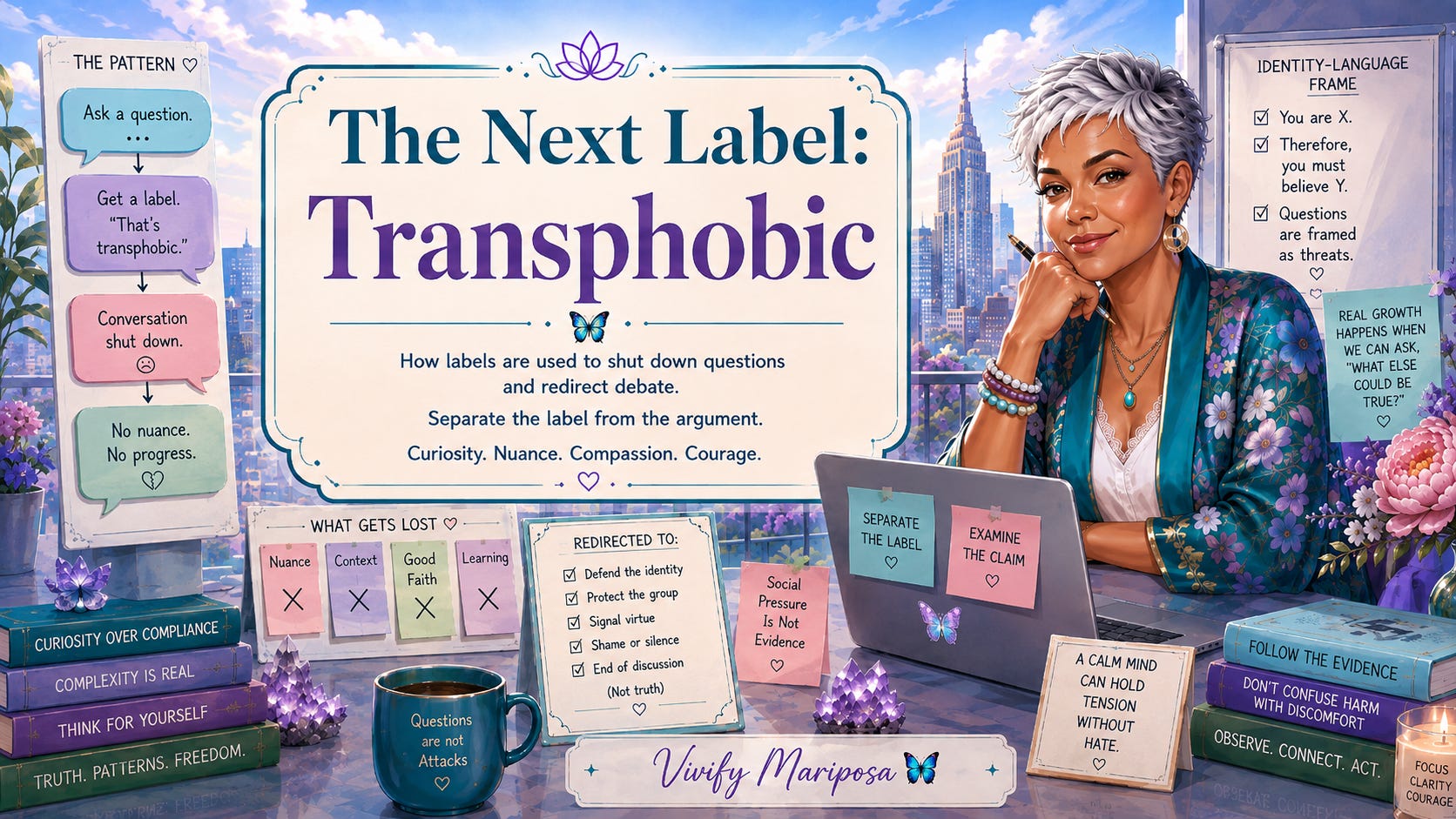
And when somebody questions that framework, another label is waiting: transphobic. The label does the same job the earlier labels did. It tells everyone how to feel about the person before anyone has to answer what the person actually asked.
My objection becomes even stronger when this language is introduced to children, because children are exactly where I have already documented the destruction of critical thinking. A child does not invent these categories independently. Adults provide the vocabulary, schools repeat it, clinicians formalize it, social media normalizes it, and algorithms surround the child with other people repeating the same language until the category begins to feel like an internal discovery instead of something supplied from outside. To me, that is grooming the child toward an identity before the child has the maturity to interrogate the biological, psychological, social, and medical claims being attached to it.
I already wrote about what the word cancer does to people in Cancer, Obedience, and the Files Nobody Answered, so I am not going to repeat that investigation here. But something happened to me recently that made me see the same mechanism from another angle. I had a horrible reaction to infrared light. My left leg was badly burned, what I describe as a third-degree burn, and the same thing happened to my left breast. One healed faster than the other. If I show you my leg, everybody sees a burn. They ask what happened. They can see the damaged tissue and the healing. But if I show you the breast, suddenly people stop seeing an injury and start seeing cancer. They tell me to see a doctor. Why? It is the same body. Why does the location change the logic? Why can the leg be injured, inflamed, burned and healing, but the moment something abnormal happens to a breast the first word people have been trained to reach for is cancer? Everything in the body that is abnormal is not cancer. The question "what happened?" gets replaced by "which label is this?"
Then I saw a CNBC headline about Moderna developing a cancer vaccine, and I had to laugh because the joke writes itself. Cancer is one of the words people have been trained to fear the most because the moment they hear it they immediately think death, and once fear enters the room critical thinking usually leaves. So now the answer is another vaccine? You are telling me that in order not to get cancer, or to treat cancer, I should inject another manufactured product into my body and apparently I am not supposed to ask what that product does inside the body years later because the word cancer came first and scared me enough to accept the solution. Why not tell people to eat healthy? Why not teach them to listen to the body before the body is screaming? Look at populations that eat differently and live differently and have lower cancer rates. Look at the Amish. People want the easy way out and the system is more than happy to sell it to them: eat whatever you want, fill the body with processed garbage for years, sit all day, ignore what the body is telling you, then when something goes wrong wait for somebody to manufacture the rescue and call that science. Why is maintaining the body treated like a side note while the manufactured intervention becomes the exciting answer? Because one requires you to take responsibility for your own body and the other creates a customer. My question is always the same: why?
Then there is another stupidity I keep seeing everywhere: sensory sensitivity, another behavior people now want to put somewhere on the autism spectrum. A child hates noise and immediately somebody starts talking about sensory sensitivity, but why is nobody asking how that child lived from the moment they were born? If the adults around a baby never make noise, keep everything quiet, protect the child from normal sounds and never allow that child to experience the environment around them, then later the child cannot tolerate noise and suddenly the explanation becomes sensory sensitivity instead of lack of living and lack of exposure. Again, the label replaces the question. Nobody asks what happened before the behavior appeared. They just name the behavior, connect it to another spectrum, and move on as though giving something a name explained where it came from.
I understand this because I experienced something similar with caffeine. As a child I was always drinking coffee, and I continued drinking it as an adult. After college, something changed. I probably oversaturated my body with caffeine and eventually my body said stop. The reactions became terrible. I would feel faint, my body would shake, and I would have neurological reactions from caffeine. So I stopped drinking it. But then something interesting happened: once I stopped completely, even a small amount of caffeine would create the reaction again. Anything containing caffeine became a problem. Eventually I looked at that and said, this is not normal. My body had consumed coffee for years without reacting that way, so why should I simply accept that suddenly caffeine had become something my body could never tolerate again? I introduced coffee again, little by little, and today I do not faint, I do not shake and I do not have that neurological response anymore. I listened to my body instead of accepting a permanent label for what my body was doing at one particular moment.
That experience changed how I look at the brain too. I learned that the brain takes time to repair itself. After a stroke, for example, somebody can lose abilities that were automatic before, including the ability to swallow properly or get oxygen the way the body normally does. Doctors do not always have the time to wait for the body to repair itself, and many people are given terrible predictions about how long they will live or what they will never do again. But think about the logic. If the problem is that the person cannot swallow food, food can still be given another way. If the person cannot get enough oxygen, oxygen can be provided. Those functions can be supported while the body and brain are doing whatever they are capable of doing. Yet people hear a doctor’s prediction and treat it like God has personally announced the expiration date. Why? A doctor can tell you what they are seeing at that moment. They cannot tell you with certainty what your body will do tomorrow, six months from now or a year from now.
This is why I say something that makes people uncomfortable: if you follow medicine blindly, you are dead. If you ignore the fear and start listening to your own body, you may add days or years to your life. Surgery has a purpose. If something is broken and needs to be put back into place, I understand that. If something needs repair, repair it. But the moment somebody tells me the solution is simply to remove a part of my body, I do not look at that the same way. I want to know why. I want to know what happened to it. I want to know what the body is trying to do before somebody decides the body part itself is the problem.
Think about something as simple as a boil. When people have one outside the body, they are constantly warned not to start cutting and opening it themselves because they can make the situation worse. Yet when something abnormal appears inside the body, suddenly cutting, removing and opening become normal parts of the conversation. Why? Why does the logic change because I cannot see what is happening with my own eyes? Why does something inside me automatically become property of the medical system to name, remove, treat or frighten me about? I am still going to ask what caused it. I am still going to ask what changed. I am still going to ask whether the body is reacting, protecting itself, repairing itself or trying to tell me something before I accept that the answer is to remove something from it.
I was born to die. That is the one thing I know nobody can save me from, so why would I spend my life stressing over something I have absolutely no control over? When it is my time, it is my time. It will not matter how many healthy drinks I had, how many supplements I took, how many doctors I visited, how many vaccines somebody convinced me to inject or how many surgeries somebody performed. I am still going to die. And in the process of trying desperately not to die, people can accelerate the very thing they are terrified of. Stress will kill you faster than any doctor with all his vaccines, pills and surgery could save you if you spend your entire life terrified of dying. Fear changes how you sleep, how you eat, how you think and how you react to everything happening inside your body. Yet people will allow a doctor with vaccines, pills and surgery to frighten them every day about death while never stopping to ask what that constant fear itself is doing to them.
And that is what medicine has learned to sell extremely well: dying slower. I will not call it modern medicine, because I see it as the medicine Rockefeller made sure became the system, a system that turned the human body into a permanent client and made millions for the legacy built around it. Keep people afraid of disease, teach them that every abnormality requires an expert, every symptom requires a name, every diagnosis requires treatment, every treatment requires another appointment, another prescription, another test, another intervention, and eventually the person no longer owns their body because somebody else has become the authority over everything happening inside it. That is a perfect customer. Not somebody who understands their body, questions what changed, learns how to maintain it and asks why. A perfect customer is somebody afraid enough to keep coming back.
Sunday, I was on YouTube. This video showed up: “Are These 5 Physical Signs Linked to Autism?” Then it showed me this one: “How to Spot Autism in AuDHD Women (and Why They Get Missed).” Followed by this one: “How To Spot Autism in High-Masking Women and Girls, Signs You’re an Undiagnosed Autistic Person.”
The label traces back to two papers, and once you actually read them instead of trusting the summary, the story gets a lot more interesting.
Leo Kanner published his paper in 1943, based on eleven children he had studied at Johns Hopkins since 1935. Look at who these children actually were. Donald T. had, before he turned two, “an unusual memory for faces and names” and knew the names of houses around his hometown. He learned the alphabet backward and forward, counted to a hundred, read fluently, and played simple tunes on the piano. Frederick W. could read numbers into the hundreds. Their parents were not random. Donald’s father was a successful lawyer, his mother a college graduate. Frederick’s father was a university-educated plant pathologist, his mother a college graduate who had worked as a secretary, a purchasing agent, and a teacher. Kanner was not describing damaged children. He was describing children with extraordinary memory and precocious ability, born into some of the most educated families he could find, and he treated their condition as a profound disturbance of affective contact that did not touch their underlying cognition.
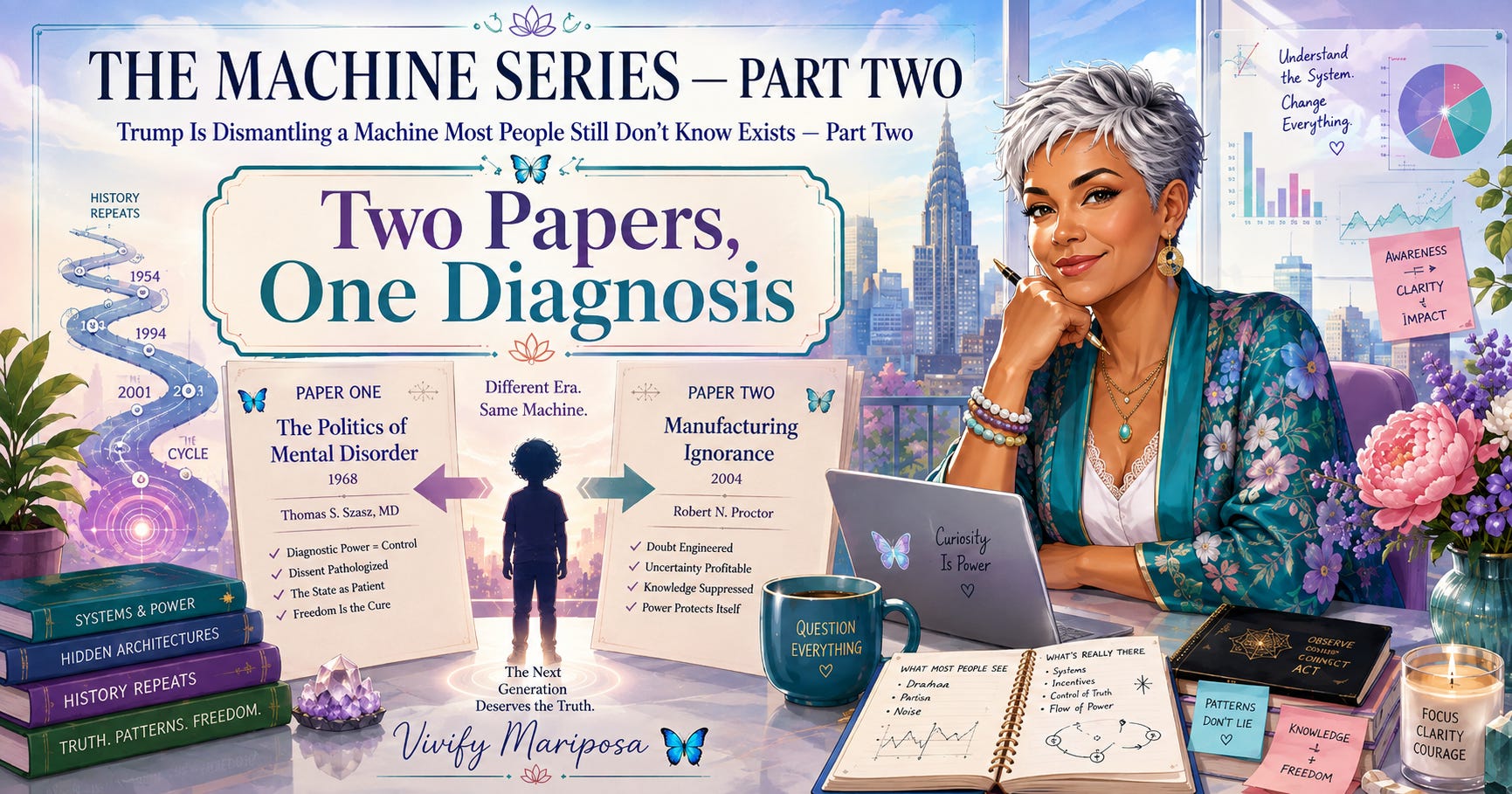
Hans Asperger published his paper the following year, in Vienna, and it does something Kanner’s paper does not. Asperger documented a boy he called Hellmuth L., who had suffered severe asphyxia at birth and early convulsions, and wrote plainly that “there were clear indications that his autism was due to brain injury at birth.” He then drew the conclusion that should have anchored eighty years of research that came after him: “there are cases where an organic disorder can result in a picture that, in numerous critical points, is closely similar to the picture presented by ‘autistic personality disorder’ of constitutional origin.” Read that again. In 1944, the man whose name is now attached to a fifth of the modern spectrum was already telling you that brain injury and constitutional autism could look identical from the outside, and that you could not always tell which one you were looking at just by watching the child.
That distinction, between what you were born with and what was done to you, survived for about thirty years, and then it started to disappear.
In 1979, Lorna Wing and Judith Gould published the Camberwell study, screening children across a London borough and finding far more of them showing autism-like traits than anyone expected. Out of that study came the “triad of impairments,” a framework built around difficulties with social interaction, communication, and imagination that could stretch to cover children who looked nothing alike. Wing revived Asperger’s own work in 1981, gave his patients a name in English, and in 1996 published the book that put the actual word “spectrum” into public use. The two-paper record Kanner and Asperger left behind, one describing extraordinary children with intact cognition, one carefully separating organic injury from constitutional presentation, had become one continuous line with no seam showing.
The DSM caught up to that erasure in stages. DSM-III, in 1980, still gave autism its own separate diagnosis with specific criteria. DSM-III-R, in 1987, added “pervasive developmental disorder, not otherwise specified” and dropped the requirement that symptoms appear before thirty months, which is the exact moment the category started to stretch. DSM-IV, in 1994, listed five separate conditions under one umbrella: autism, PDD-NOS, Asperger’s disorder, childhood disintegrative disorder, and Rett syndrome. Then in 2013, DSM-5 did what the YouTube videos are now doing to individuals: it collapsed all of it, Asperger’s included, into one category called autism spectrum disorder, erasing the very distinction Asperger had gone out of his way to preserve in 1944.
Watch the YouTube videos today and none of that history is in them. You’re told you were just born that way. That’s the whole trick. Take a diagnostic category built by narrowing, arguing, and separating causes for eighty years, and flatten it into a single word simple enough for a comment section to diagnose itself with in fifteen seconds. Dilute the injury, and nobody can claim it’s another drug-related injury.
Why does the industry need to dilute a symptom of injury in the first place? Simple. If too many people carry the same injury, it stops being an injury and starts being a mechanism of harm, and a mechanism of harm loses in court. An identity doesn’t. You can’t sue anyone for who you were born as.
Here is the part nobody explains, and it is the part that makes the dilution worth the effort.
Congress created the National Vaccine Injury Compensation Program in 1986, and it works nothing like a normal lawsuit. Instead of suing a manufacturer, you file a claim against the program itself, and the government keeps an actual document called the Vaccine Injury Table. The Table lists specific vaccines, specific injuries, and a specific window of time in which the injury has to appear. If your case matches the Table, the claim moves fast: you show the injury happened inside the window and you are largely done. If it doesn’t match the Table, you are filing what is called an off-Table claim, and now you carry the full burden of proving causation yourself, by a preponderance of the evidence, against a federal program built to make that proof difficult to gather.
Encephalopathy is on the Table. For a pertussis-containing vaccine, it has to show up within seventy-two hours. For MMR, the window is five to fifteen days. Outside those windows, or with a different vaccine, you are off-Table, and off-Table is where autism has always lived. There has never been an autism-specific entry on the Vaccine Injury Table. A child can have a documented encephalopathy inside the Table window and a behavioral diagnosis of autism two years later, and the legal system does not connect those two facts for you. You have to connect them yourself, against a program designed around a table that was never built to hold that connection.
That is exactly what several thousand families tried to do between 2002 and 2010, in what the court called the Omnibus Autism Proceeding. Test cases went first: Cedillo, Hazlehurst, and Snyder, arguing that the MMR vaccine combined with thimerosal caused autism. Then King, Mead, and Dwyer, arguing thimerosal alone. The special masters ruled against every one of them, and the rulings were affirmed on appeal. Thousands of other families, watching those test cases lose, never got their own day in court. The record was closed by the outcome of six cases carrying the weight of thousands.
Then in 2011, Bruesewitz v. Wyeth went to the Supreme Court, and the Court did not just rule on causation. It ruled that Section 22 of the 1986 Act preempts design-defect claims against vaccine manufacturers entirely, categorically, even where a safer design existed and was never used. Justice Scalia wrote that the design of the vaccine is “a given, not subject to question in the tort action.” Manufacturers still theoretically answer for manufacturing defects and failure to warn. They do not answer, at all, for the choice to build the product the way they built it.
So follow what that actually does. A neurological injury with a documented onset inside seventy-two hours of a shot has a legal pathway. A behavioral diagnosis that surfaces months or years later, with a name that by 2013 had already absorbed every earlier, narrower category into itself, has no Table entry, no window, and a Supreme Court ruling closing the one door that might have let a jury look at the design. The label did not just get diluted culturally. It got diluted into a shape the legal system was never built to compensate.
The pharmaceutical industry that got legal immunity in 1986 for the childhood vaccine schedule ran on it. I wrote about that in The Objective Truth Trap.
I’ve already documented part of this mechanism once, in the piece where I laid out what happened after 1986: the year Congress created a separate compensation system that routed vaccine injury claims away from ordinary lawsuits and largely shielded manufacturers from conventional liability. Not an absolute shield. A rerouted one, with its own table, its own burden of proof, and, since 2011, a Supreme Court ruling that closes off design-defect claims specifically. Before that architecture existed, the childhood vaccine schedule ran about ten shots, and autism sat at roughly 1 in 10,000 children. After it, the schedule climbed to seventeen by 2025. Autism sits at 1 in 36.
They’ll tell you that’s better diagnosis. Broader awareness. Changed definitions.
Answer me this: if there’s nothing to connect, why does every explanation for the rise conveniently avoid the one variable that changed the liability math?
This is where I need to explain what I mean when somebody tells me to “follow the science,” because apparently people have confused science with papers, definitions and citations. A published paper is not the truth simply because somebody published it. A definition is not biological reality simply because an institution wrote it. Ten thousand later papers citing the same original assumption do not magically transform that assumption into truth, especially when many of those papers may never go back and examine what the original source actually said. That is exactly what I just watched happen with Asperger. The paper existed since 1944, thousands of people had referenced the history around it, AI had absorbed the conventional summary, and Claude confidently gave me that summary until I made it open the actual source. Then the source contradicted the framing it had inherited. Repeating the same thing for eighty years does not make it true; sometimes it only tells you how successfully one interpretation traveled without enough people going backward to check the foundation.
And definitions are even easier to manipulate because a definition is not nature; it is language human beings use to organize nature. Change the language and you can change what fits inside the category without changing the underlying biological reality at all. That is why I keep comparing autism, vaccines and the language around sex and gender. A dictionary cannot change human biology. A psychiatric manual cannot change what happened biologically to a child. A government agency cannot make an injury disappear by changing the category under which the resulting symptoms are recorded. What language can change is how millions of people are taught to interpret what they see, what questions researchers are encouraged to ask, what variables get included or excluded, what qualifies for treatment or reimbursement, and eventually what the next generation of researchers accepts as its starting premise.
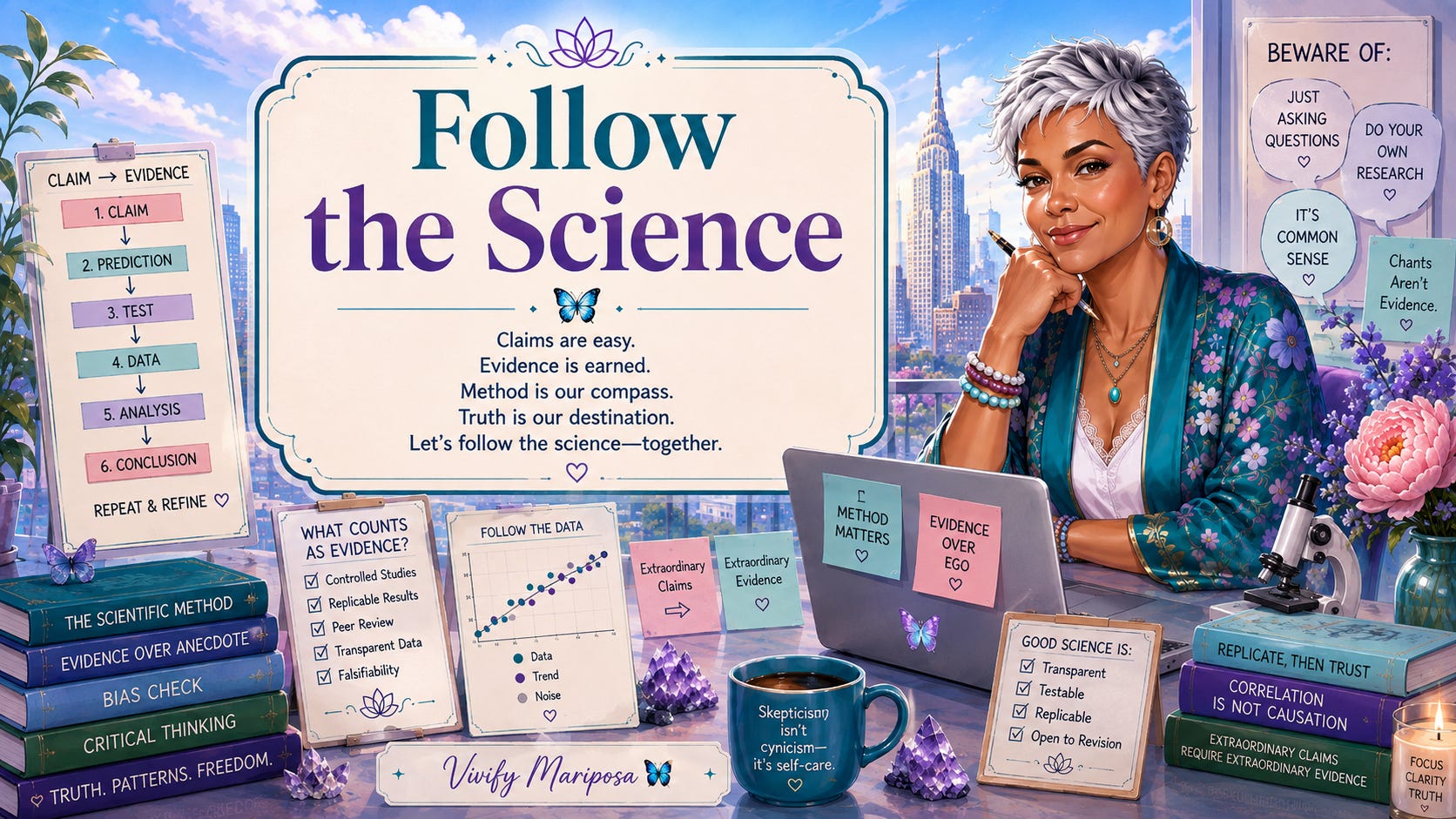
This is also why I reject the lazy response that there are “thousands of studies.” Thousands of studies of what, beginning with which assumption, using which definition, and comparing the result against which alternative explanation? If the first researcher begins with a false premise, the second researcher accepts that premise as established, the third cites the second, and eventually an entire field treats the assumption as background knowledge that no longer requires examination, adding more papers does not repair the foundation. It multiplies whatever was already built into it. Science should be the mechanism that exposes that problem, not the vocabulary used to prevent anyone from questioning it.
The same applies when people tell me autism is “genetic” as though that one word should end the discussion. My question is not whether researchers can find genetic differences among people who have already been placed inside a behavioral category called autism. My question is whether that proves the category itself represents one genetically caused biological condition when the original record already showed that similar outward presentations could arise through different pathways, including organic injury. If the population being studied contains different causes underneath the same behavioral label, finding genetic associations inside parts of that population cannot by itself establish that the label has one genetic origin. You have to question the category before using the category to prove itself. Otherwise the research becomes circular: the definition selects the population, the population produces the findings, and the findings are then used to validate the definition that selected the population in the first place.
That is why “follow the science” means nothing to me when the person saying it refuses to question the premise. Science is not obedience to the largest pile of papers. Science is the willingness to destroy your own explanation when the evidence does not support it. If you cannot question the definition, cannot question the diagnostic category, cannot reopen the founding papers, cannot examine whether later researchers actually read what they cited, and cannot ask whether a completely different causal pathway produces the same observed behavior, then you are not protecting science from people like me. You are protecting an inherited narrative from the scientific method. And repeating the same lie, mistake, assumption or incomplete explanation ten thousand times still does not make it the truth.
This brought me back to MKUltra and the pandemic. What words were installed in people that made them so easy to manipulate? What fears were repeated until people began policing one another without anyone having to force them? I was listening to a podcast discussing the idea that even things such as rain and environmental conditions can be used to influence people by lowering their frequency. And you may be asking me, Vivify, what the hell does this have to do with autism and vaccines?
Everything, if you follow the behavior.
If you can weaken a person’s ability to think clearly, keep them afraid, exhausted, distracted, dependent on authority, or constantly looking outside themselves for an explanation of what they feel, that person becomes easier to influence. It does not even require them to realize it is happening. That is what brought MKUltra back into my mind. The United States government already conducted experiments on people without their knowledge or consent. That is documented history, not imagination. They experimented with drugs, psychological manipulation, sensory deprivation, conditioning, and methods intended to alter human behavior.
So my question became very simple: if institutions were willing to experiment on people without telling them before, what exactly makes everyone so confident that institutions would never try to manipulate human behavior again?
Maybe the tools change. Maybe the vocabulary changes. Maybe today you do not need to put someone in a laboratory because the laboratory is already in their hand, in their television, in their school, in their medical system, in the language they repeat, and in the algorithm that decides what they will see next.
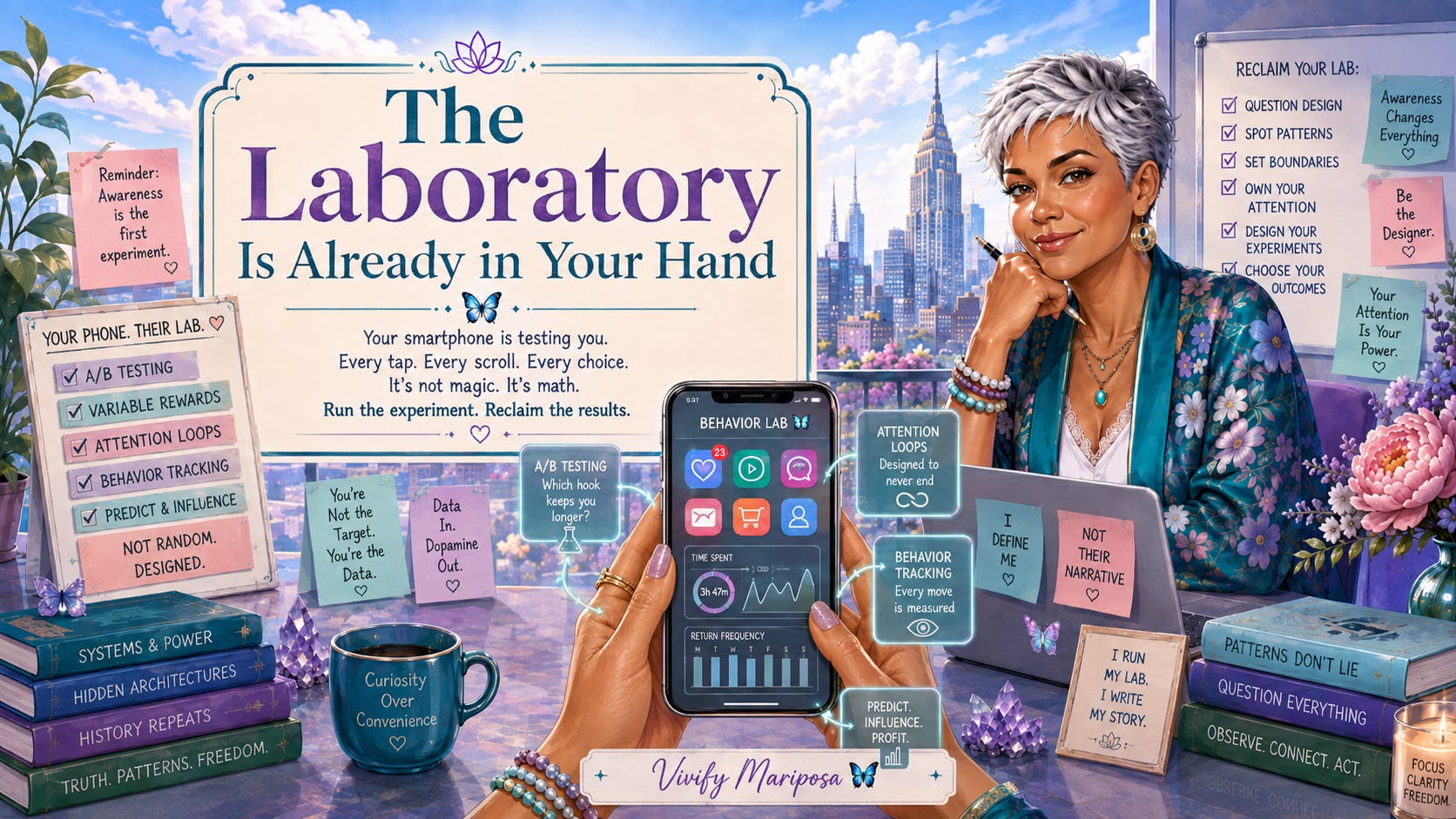
That brought me straight back to autism.
Look at the words being installed now: spectrum, masking, high-masking, late diagnosed, undiagnosed, neurodivergent, AuDHD. Keep repeating them, attach ordinary human behaviors to them, let thousands of people repeat the same language in the comments, and eventually people begin examining themselves through terminology somebody else gave them. They stop asking, Why am I unique? Why do I think this way? Why did this child change? What happened before the change? Instead, they are given a ready-made answer: this is simply who you are; you were born this way; you were autistic all along.
And once that answer becomes culturally automatic, another question becomes easier to bury: what if some of those children were injured?
That is why MKUltra came back into this research for me. Not because autism and MKUltra are the same thing, but because MKUltra proved something about institutions that people apparently prefer to forget: human behavior has been deliberately studied for manipulation, and people have been used as subjects without their knowledge. Once you know that happened, “they would never do something like that” is no longer an argument. The question becomes: What methods would they use today, and would you even recognize them if the manipulation came disguised as awareness, care, identity, safety, or science?
Do you see the trend? It isn’t organic. It’s manufactured. By whom is exactly what I want to find out. Who benefits? I’d assume Big Pharma first, but this has grown past a company. It’s become a cult. And it runs on the same principle the City of London runs on: no trace. No single document you can point to and say “this is the order that started it.” Just a hundred small decisions (a dictionary edit here, a definition update there, a liability shield in 1986) that all somehow point the same direction without anyone ever signing their name to the whole thing.
Here’s the part that took me longest to accept, because I kept looking for the room where somebody decided all of this. There is no room. Manufactured does not mean everyone in it knows what they are building. The creator making the self-diagnosis video can sincerely believe she is helping people who suffered the way she did. The person in the comments sincerely wants a name for what they feel. The clinician sincerely uses the DSM category she was trained on. The therapy platform bills legally, inside rules it did not write. The pharmaceutical company treats the symptoms in front of it. The insurer reimburses the claims that meet its criteria. The investor finances the roll-up because the numbers work. Every single one of those people can be honest, and the machinery still produces the same outcome, because none of them has to see past their own desk to do their job. That is not a conspiracy. It is worse than a conspiracy, because a conspiracy requires someone to know and choose. This only requires everyone to perform their local function and never ask what the whole thing adds up to.
Then I went back to the YouTube comments, because if you want to understand whether a message is working, do not only watch the person delivering it. Watch what the audience does with it. That is where the manipulation becomes visible. Why are people on YouTube telling you how to diagnose yourself in the first place? Why do you need that label so badly? Why are people voluntarily taking ordinary things about themselves, things that make one human being different from another, and turning them into symptoms? At some point I have to ask the uncomfortable question: why do you want to be stupid instead of unique?
Those original papers described extraordinary children. Almost eighty years later, YouTube has turned that history into people scrolling through a list trying to discover which ordinary behavior proves they belong to a spectrum.
The comments are almost funnier than the videos, except that after reading thousands of them it stops being funny. One woman reads something as broad as “fatigue from just existing in my own body” and replies, “Yep. That’s me.” Another says her favorite trait is that she starts laughing before someone finishes speaking because she already figured out where the person was going. Apparently thinking quickly now requires a diagnosis. Then a 64-year-old woman says she did not discover she was autistic until her son was diagnosed, and lists toe walking, a high pain threshold, difficulty looking someone in the eye while listening, and having a small “social battery” as the explanation for finally understanding herself. She lived sixty-four years, apparently functioning in the world, and a collection of traits on the internet finally gave her an owner’s manual.
But the comment that may explain the entire business model is from someone who openly says she has never been diagnosed with autism. She says she has ADHD, sensory issues with food and sounds, therefore she is “thinking Autism is there,” and she does not have the time or money to obtain a diagnosis. Read the logic. The diagnosis is no longer beginning with a clinician observing an unusual developmental condition. The viewer watches content, recognizes traits, reads hundreds of other people recognizing the same traits, adopts the possibility of the label, and now the professional diagnosis becomes almost an administrative confirmation of something YouTube has already convinced her is probably true. The creator does not even have to diagnose her. The comments do it collectively.
Another comment describes a father who walked on his toes and apparently knew his brain “worked differently.” The daughter says she eventually told him something like “we’re autistic,” and he agreed. That is how casually a diagnostic identity can now travel backward through a family tree. Dad walked on his toes, Dad was apparently good at “masking,” therefore perhaps Dad was autistic too. Where does that logic end? If Grandma hated loud noises, was Grandma autistic? If Grandpa hated parties, was he masking? If your aunt could not tolerate certain foods, was she neurodivergent? If I recognize where someone is going with an argument before they finish speaking, am I now autistic, or could I simply have a fast brain?
And this is exactly what bothered me when I looked back at Kanner. His children were not being presented as examples so that every intelligent person could diagnose themselves. Yet now intelligence itself, productivity, spotting structure, thinking ahead, becoming bored with meaningless conversation, preferring solitude, concentrating deeply on one subject, remembering details, and even being exhausted after dealing with people can all be repackaged as possible signs that you have been autistic your entire life. How convenient. Take the characteristics that make someone unusual, independent, exceptionally focused or simply human, give them a clinical vocabulary, and suddenly the person stops saying “this is who I am” and starts saying “this is what I have.”
Do you see the difference?
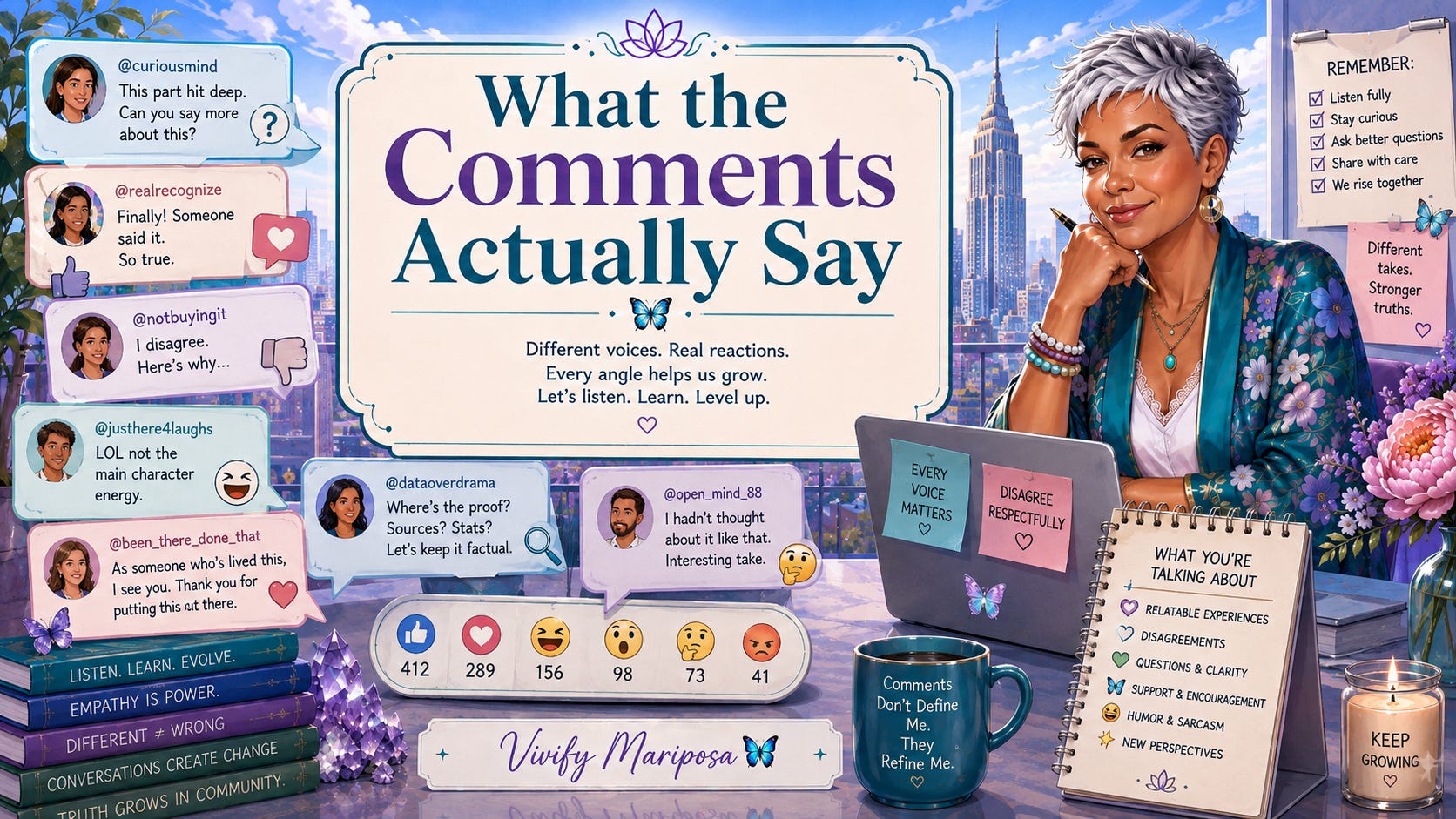
One creates a person who understands that their mind belongs to them. The other creates a person who needs a framework to explain themselves.
That is why I keep asking which one you want to be. I prefer to be unique. Those things are not defects I need someone else to name. They are me. Yet the more people accept the idea that every difference requires a label, the easier those people become to organize, categorize, study, sell to, treat, manage and monetize.
And then comes the part that makes the entire thing almost perfect as a business. The same person who helps convince you that your ordinary behaviors may mean you are autistic can then sell you more content explaining your new identity. Memberships. Courses. Coaching. Books. Communities. More videos explaining masking. More videos explaining why nobody noticed. More videos explaining why successful women were overlooked. More videos explaining why your childhood suddenly makes sense. You first create uncertainty about the person’s identity and then sell them a system built to explain the uncertainty.
That is not simply education. That is a funnel.
People name a foundation, manufacture the qualifiers, then hand you the reason you need the label. Same reason Musk wears his. Since when is being smart and unique bad? He makes millions. He is unique. So what? Why does he need that label? How many people need to profit off you believing you are unique?
If a drug dealer offered to sell you a drug, would you take it? I bet you would say no. Dress the same thing up as a label, and you would not think twice.
Why do you think Gates needs your money? Who benefits, you or him? Why doesn’t he fund the rare diseases instead of the label everyone already recognizes? Because you were conditioned to accept the ones you already know.
Search it yourself: how many foundations exist, and why is September the autism month when May is already Mental Health Month? Why do you need another month to sell the same label?
Look at what is actually for sale once the identity question is open. There is a membership platform charging $19.99 a month, or $327 a year for the full tier, built entirely around community and courses for people exploring whether they are autistic. There is a six-week coaching workshop, suggested tuition around $300, built specifically for late-diagnosed and self-identified adults working through masking and burnout. There is a continuing-education course sold to therapists on how to recognize autism in women who mask it. None of these have to be run by bad people to function as a funnel. They are simply what a market looks like once uncertainty about your own mind becomes something you can subscribe to resolve.
The funniest part is that the person watching believes they are discovering themselves while simultaneously becoming more dependent on somebody else’s interpretation of who they are.
And this takes me directly back to my earlier articles about children and the mind, because I had already documented the same mechanism without recognizing that autism could fit inside it. Destroy confidence in the person’s natural judgment, replace that judgment with institutional language, convince them that the label explains them better than they explain themselves, and then build a market around helping them live inside the label. The child who once would have been called exceptionally focused, difficult, brilliant, antisocial, stubborn, creative or simply strange now has a spectrum waiting for them. The adult who lived fifty or sixty years as themselves can watch one afternoon of YouTube and suddenly begin reconstructing an entire lifetime around a diagnosis they never needed before.
And then I look at what this administration is doing in the opposite direction: reopening questions that institutions had treated as closed, challenging systems that had become automatic, returning decisions and production back toward the individual country instead of surrendering them to permanent intermediaries. That is why I keep coming back to the word unique. A system that needs predictable populations benefits from categories. A system built around independent people has to tolerate something much harder to manage: individuals who do not fit neatly anywhere.
So which one are you?
Do you want to spend your life discovering more labels that explain why you are different, subscribing to someone else’s membership so they can continue teaching you who you supposedly are, or do you want to accept the possibility that being different may simply mean you are you?
Because after reading these comments, I am starting to think the most profitable thing the system ever convinced people to fear was their own uniqueness.
That question bothered me because the two investigations had become the same investigation. Why had so many people become willing to let a chart, an expert, a doctor, an algorithm, or now a YouTube personality explain their own mind to them?
Look at what happened with autism itself. In January 2026, Kennedy appointed twenty-one new members to the Interagency Autism Coordinating Committee, changing the people sitting inside the federal structure responsible for advising HHS on autism research and policy. NIH and CMS had already begun connecting Medicare and Medicaid claims, medical records, and other real-world data specifically to investigate the causes of autism instead of simply counting diagnoses, while NIH’s Autism Data Science Initiative was designed to examine genetic and nongenetic factors together, explicitly including pharmaceutical exposures, environmental exposures, pregnancy complications, perinatal events, clinical information, and behavioral data, with independent teams required to replicate analyses. That is a very different research question from simply asking which children satisfy an autism checklist. It moves the question backward again toward the place I have been asking about throughout this article: what happened before the label appeared?
Then the CDC did something that would have been almost unthinkable under the previous federal language. Its current vaccine-autism page says the categorical statement “vaccines do not cause autism” is not an evidence-based claim with respect to infant vaccines because the available studies have not ruled out that possibility, and it says HHS has launched a comprehensive assessment of autism causes that includes plausible biological mechanisms and potential causal relationships. What matters to me is that the federal government itself has reopened a causal question that people were trained for years to believe they were not even allowed to ask. The difference is enormous. One system tells you the answer is settled before you examine the child. The other says open the records, examine the exposures, examine the biology, and find out.
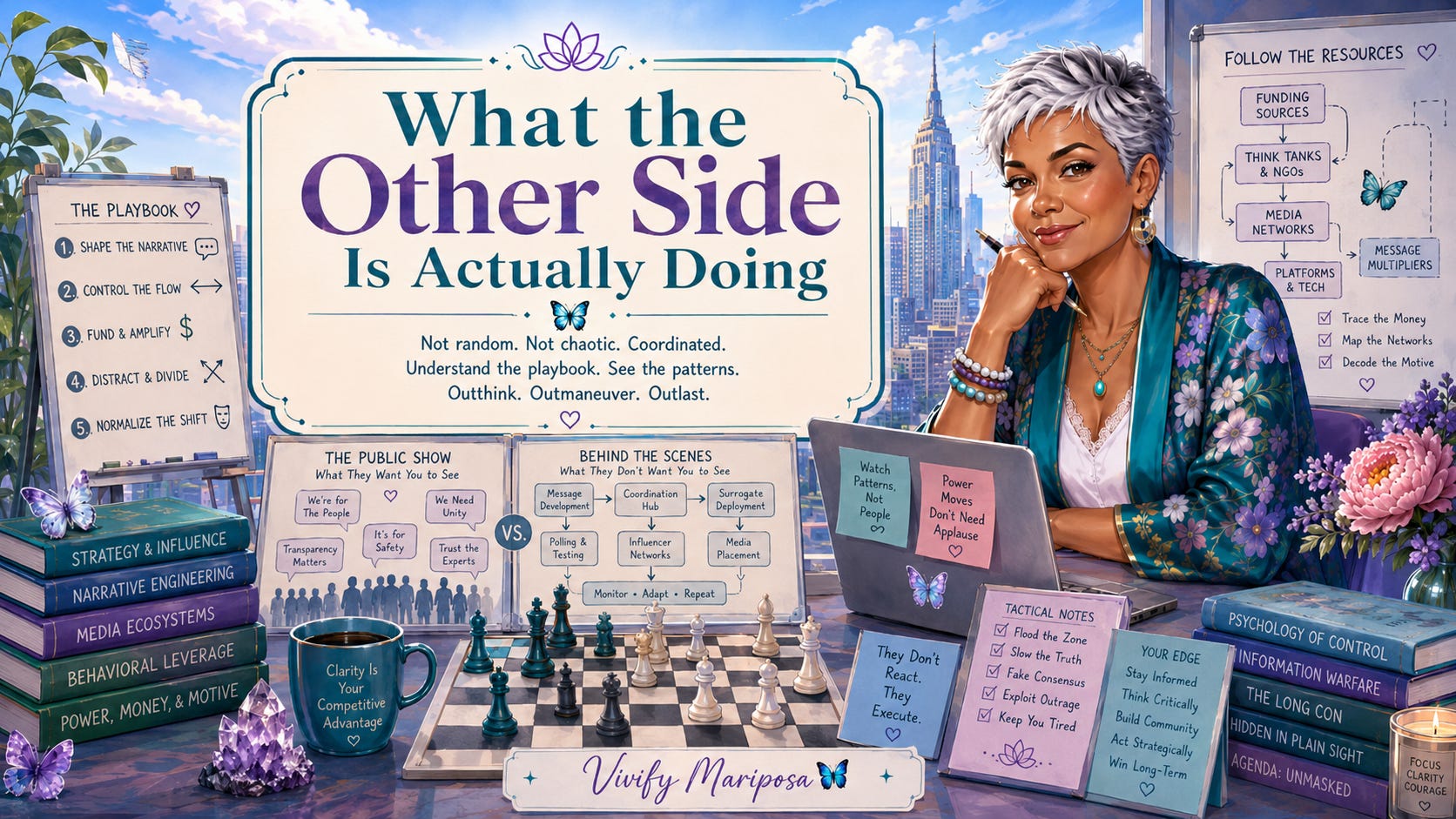
And while this is happening, CMS is going after another part of the autism machine that most people never follow: the money being made after the diagnosis. On August 4, CMS announced a new state toolkit specifically because of increasing autism-service expenditures, inconsistent practices, and fraud schemes involving Applied Behavior Analysis services. Kennedy’s own statement said the government wanted states to identify bad actors exploiting children with autism and misusing taxpayer funds. That belongs in this article because it answers the question I started asking after reading those YouTube comments: who benefits when more people receive the label? The administration is not only reopening the causal side; it is simultaneously auditing the treatment economy that grew around the diagnosis. That combination matters to me much more than another politician giving a speech about autism awareness.
And that brings me back to those YouTube comments, because while one part of the government is finally asking what caused the increase, another cultural machine is teaching millions of people that perhaps nothing increased at all because everybody was secretly autistic and simply did not know it. The more successful adults who can be retrospectively absorbed into the spectrum because they walked on their toes, hated small talk, saw connections quickly, disliked eye contact, needed solitude, or were simply unusual children, the easier it becomes to say autism was always everywhere. That explanation removes the urgency of asking what changed. The administration is moving in the opposite direction: open the data, examine the exposures, separate the variables, question the schedule, investigate the treatment industry, and stop pretending the label itself answers the causal question.
Now follow the road all the way to where I said it would end.
A diagnosis generates a service. The service bills Medicaid or private insurance. Reimbursement flows to pharmaceutical companies for the medications that often follow a diagnosis, and to provider corporations for therapy, most commonly ABA. Those provider corporations increasingly are not independent practices anymore. Private equity firms acquired more than 570 autism therapy sites across 42 states in the last decade, most of that buying concentrated between 2018 and 2022. One firm’s platform absorbed a chain of centers and standardized them into one uniform model, cutting services like speech and occupational therapy that didn’t fit the template. Another bought a Midwest autism health chain in 2024 to cluster regional density. A third bought a majority stake in a national provider network in 2019 and let the acquired brands keep their own names while plugging them into shared infrastructure. None of that is illegal. All of it is financialization: a diagnosis that used to end at a clinician’s office now ends at a leveraged buyout.
Private equity itself runs on debt, and that debt is underwritten by lenders, refinanced through capital markets, insured and reinsured by institutions that price the risk, and ultimately managed by asset managers who answer to pension funds and sovereign wealth funds looking for a predictable return. Predictable is the key word. A diagnosis with a rising prevalence curve, billed through a program the federal government funds, serviced by consolidated providers with standardized protocols, is about as predictable a revenue stream as modern finance can build. That is not a conspiracy theory. That is the plain mechanics of how private equity roll-ups work in every sector they touch, autism included.
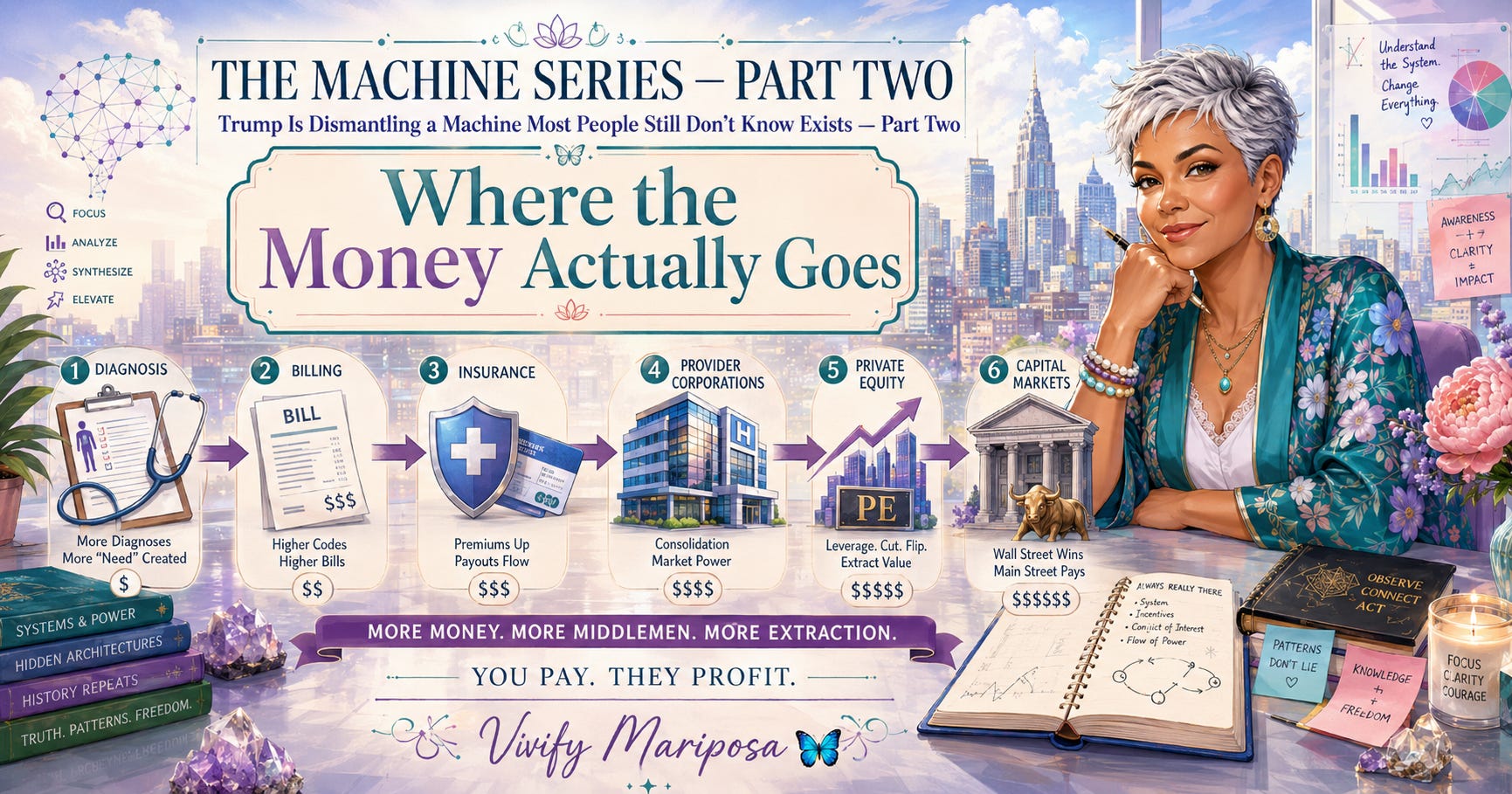
And the institutions that built the legal and financial architecture underneath that consolidation did not invent the method for autism. I have already documented, in detail, how the City of London built exactly this kind of intermediation for governments and corporations: no name attached to the decision, no founder to blame, just a jurisdiction whose own contract law now governs more of the world’s financial agreements than any other, moving money through a chain long enough that nobody at either end has to look at the whole thing. Diagnosis to service to insurance to provider to private equity to capital markets is the same architecture, running on a smaller, newer commodity. The commodity is your child’s file.
Here is the question underneath all of it, and I think it is the only one that matters.
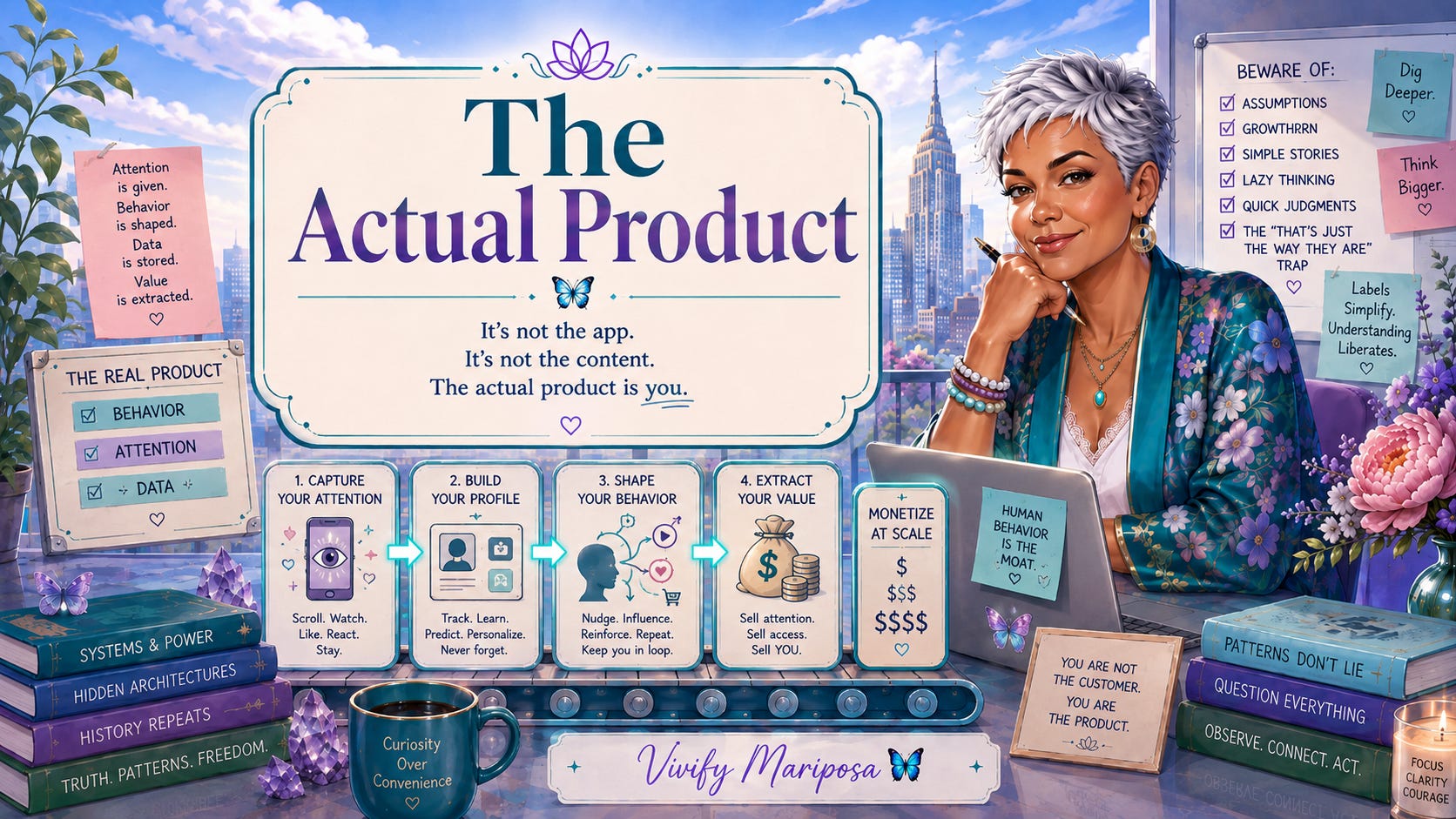
What if the product was never autism, or vaccines, or social media, or education, or AI? What if the actual product, the thing every part of this machinery is optimized to produce, is a person who no longer trusts their own ability to ask why?
And my own almost-sixty-year-old brain is the counterexample sitting in the middle of all of it. I still open the paper instead of the summary. I still read the definition instead of the meme. I still run the arithmetic myself. I still question the AI’s answer instead of accepting it because it arrived fast and confident. I still read the comments and ask why so many people want a label instead of a mirror.
That is the piece that makes these two articles one investigation instead of two unrelated subjects. Every mechanism above needs the same thing to work: a person who stops asking why. Mine hasn’t stopped. I am not sure yours has either, or you would not have read this far.
If you liked this article, tell me something in the comments: what is your biggest fear, and where did that fear come from? Really think about the second part, because most people can tell you what they fear but have never asked themselves who taught them to fear it. We die every day in different ways. The person I was yesterday is gone because every time I learn something new, question something I believed, or understand something differently, I become another version of myself. But physically, I die only once. Until that day, I am alive every single day. So which one are you doing: living in fear or dying in fear? To me they are almost the same thing, because when fear controls your life you are simply dying slower every single day.
Use logic. Who benefits at the end, and why? If people widely believed vaccines caused autism, what would happen? Claims. Lawsuits. A liability shield that would suddenly look less like protection and more like a confession.
The American System is coming back, and they’re scared.
Now you see why they’re using autism.
The record does not expire. If it reached you, pass it to one person who is still repeating the version they were given.
Paid subscribers keep this article independent, unsponsored, and answerable to no institutional desk. They support the primary-source research, document comparison, archive, and deeper investigations behind every issue.
The receipts do not file themselves. Share to help others too.
The goal is 1,000 paid subscribers by December 2026. If the record is worth reading, it is worth building.
Support the work at ko-fi.com/vivifymariposa.
Every article publishes in English and Spanish.
Vivify Mariposa 🦋 No Filter. Just Facts. nofilterjustfacts.substack.com
No posts
Comments
Nothing yet. Say the first thing.
Sign in to join the conversation.