
Before Medusa was a monster, she was beautiful.
At least, in the version of the myth I keep returning to.
There are older versions of Medusa where she is already a Gorgon, already monstrous, already something terrible to behold. But in Ovid’s telling, Medusa begins as a beautiful maiden, famous especially for her hair. Then Neptune — the Roman Poseidon — violates her in Minerva’s temple. Minerva — the Roman Athena — does not punish the god. She punishes Medusa. Her beautiful hair is transformed into snakes. Later, Perseus will kill her while avoiding her gaze through a mirrored shield, and from Medusa’s severed body the winged horse Pegasus is born. (Theoi)
That is the version that matters to this essay.
Not because it is the only Medusa. Myth is never that tidy. But because this version tells a story women recognize in their bodies: a woman is beautiful, desired, violated, punished, transformed, feared, hunted, silenced — and then the world still finds a way to use what comes from her.
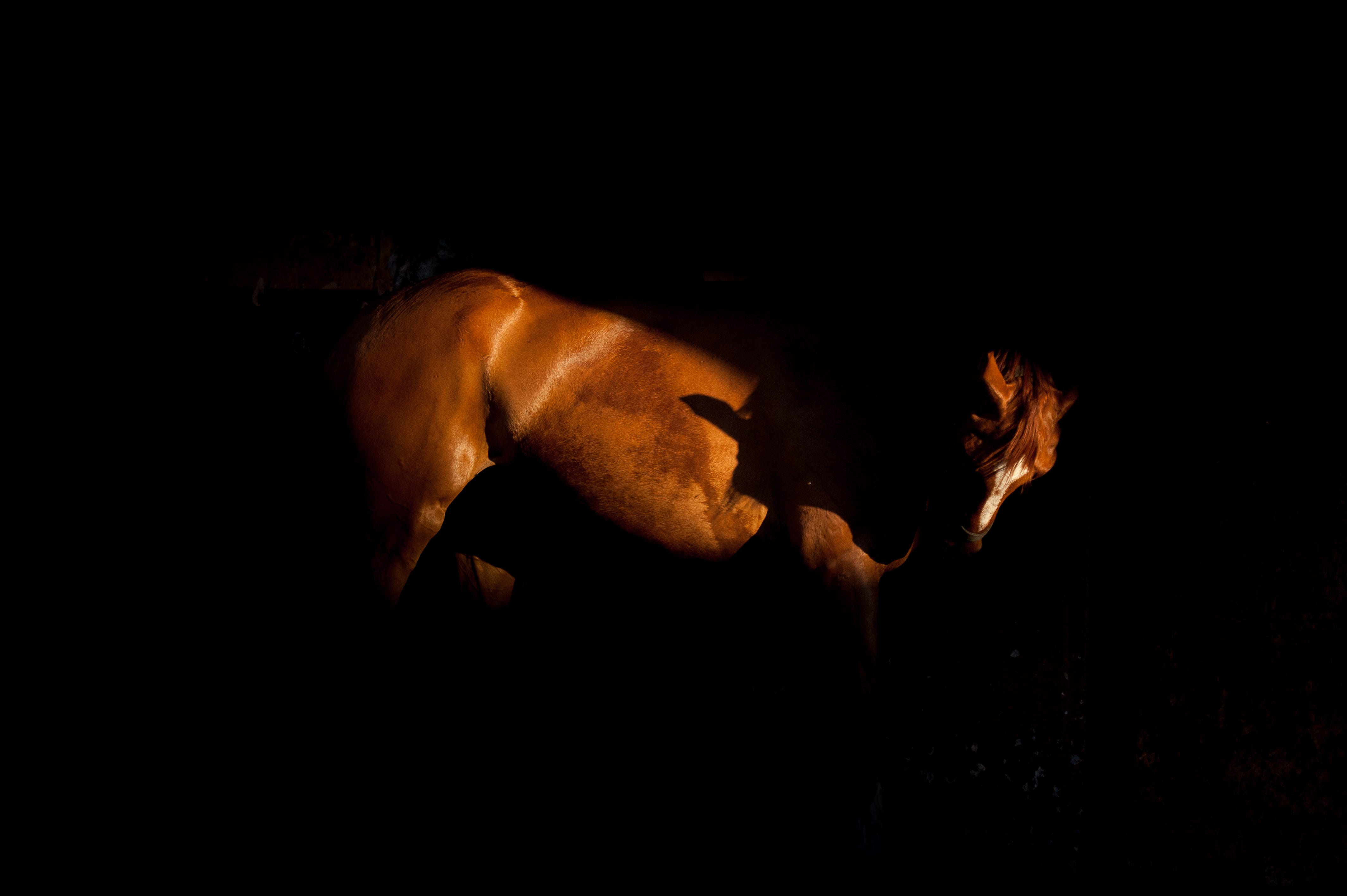
And out of that wound comes a horse.
Not just any horse. Pegasus. The winged horse. The creature we associate with poetry, imagination, inspiration, transcendence, divine movement, impossible ascent.
Pegasus does not arrive clean from the sky. He is not lowered from heaven on a beam of light. He is born from Medusa’s blood.
Which means one of the most beautiful horses in Western mythology, and a horse we refer to in horse sport often, is born from the wound of a woman the world could no longer bear to look at directly.
That image has been haunting me.
Because I think the horse world loves Pegasus. We love the image of the winged horse: beauty, nobility, athleticism, freedom, grace, spiritual ascent. We put wings on horses in our logos, our stories, our dreams, our language. We want the horse as symbol of transcendence. We want the horse as beauty. We want the horse as salvation.
But I am not sure we always want to remember his mother.
I am not sure we want to remember that Pegasus came from Medusa.
I am not sure we want to remember that the winged horse was born not from obedience, not from sweetness, not from goodness, but from rupture.
From blood.
From a woman made monstrous by what happened to her.
And maybe that is where this myth begins to speak directly to horse women and the horse woman’s experience.
Because so much of what we call “goodness” depends on what we are willing to ignore.
Comments
Nothing yet. Say the first thing.
Sign in to join the conversation.