
I sent a message to someone a few weeks ago that I’d met only once, briefly, in circumstances that shouldn’t have added up to anything. We’d talked for a few hours — one of those conversations that keeps finding new rooms even though neither person is steering it anywhere in particular — and then we went our separate ways, and that was supposed to be the whole story. But a few days later their name appeared on my screen, one of those algorithmic suggestions that feel like coincidence even though you know they’re not, and I sat there for a while just looking at it.
There’s a particular quality to the moment before you do something you can’t undo. Not the big dramatic decisions — those announce themselves, give you time to prepare arguments for and against, maybe consult other people or sleep on it. I mean the small ones, the ones that barely register as choices at all. Whether to send a message. Whether to ask a question. Whether to say the thing that’s forming in your mind or let the conversation move past it. These moments have a strange weightlessness to them precisely because they seem so inconsequential. You could go either way and it wouldn’t matter. Except sometimes it does, and you can’t know in advance which times those are.
I’ve been thinking about what makes me move in those moments rather than staying still. It’s not confidence — I’m not sure of anything when I reach out to someone I barely know, and if I waited for certainty I’d never reach out at all. It’s something more like a question that hasn’t finished asking itself, a thread I want to follow just to see where it goes. The closest word I have for it is curiosity, though that makes it sound more intellectual than it feels. It’s more physical than that, more like a leaning. A small tilt toward something rather than away from it.
I’ve always been like this, I think. Not brave exactly — bravery implies overcoming fear, and I’m not sure I overcome anything so much as I just find the other thing more compelling. The wanting to know. The pull of the unfinished. When I look back at how I’ve ended up in most of the interesting situations of my life, there’s usually a moment I can identify where I could have easily done nothing, said nothing, stayed where I was. And something in me went the other way instead, not because I’d calculated that it was the right move but because I was curious what would happen if I did. This has led me into all sorts of strange places over the years. Conversations I had no business starting. Connections that began from almost nothing — a comment, a coincidence, a feeling I couldn’t have justified if anyone had asked me to. Most of them didn’t lead anywhere in particular. Some of them rearranged everything. You can’t tell in advance which is which, and I’ve stopped trying to.
What interests me lately is the difference between this and fear, because from the outside they can look almost identical. Both involve standing at an edge, not knowing what happens next. Both contain uncertainty, risk, the possibility of being wrong. But they orient you differently, I think. Fear is a pulling back. It scans the situation for what could go badly, calculates the costs of action, builds a case for staying still. It’s protective, and I don’t want to dismiss it entirely — it’s kept humans alive for a long time, and some of what it whispers is probably worth hearing. But I’ve noticed how often my own fear isn’t actually protecting me from danger. It’s protecting me from awkwardness. From wanting something I might not get. From the vulnerability of being seen to try. These aren’t threats, not really. They’re just uncomfortable. And somewhere along the way I seem to have decided that discomfort is a price I’m willing to pay for the other thing, the finding out.
Curiosity doesn’t promise that things will go well. I want to be clear about that because I think there’s a version of this that sounds like optimism, like some kind of faith that the universe rewards those who take risks. I don’t believe that. I’ve followed hunches that led nowhere, started conversations that fizzled, reached out to people who didn’t reach back. The difference isn’t in the outcomes. It’s in what you’re left with afterward. When I’ve acted from curiosity and it didn’t work out, there’s a cleanness to that. A sense of completion, even if the completion is just knowing that this particular thread didn’t lead anywhere. But when I’ve held back out of fear, when I’ve let a moment pass because I couldn’t justify the risk, there’s a different residue. A kind of wondering that doesn’t resolve. Not sharp regret, nothing dramatic enough to learn from. Just a soft, persistent question that surfaces sometimes when I’m not busy: what would have happened if I’d said something?
I think about the architecture of a life, how it’s built from these tiny moments that don’t feel like decisions when you’re in them. The message you send or don’t send. The question you ask or swallow. The extra ten minutes you stay or don’t stay. None of them seem significant at the time — that’s what makes them so easy to let pass. But they accumulate into something, don’t they? They become the shape of what happened, and you can’t go back and see the other shape, the one made of all the moments you chose differently. That shape closes behind you silently. You don’t get to compare. You just live inside the version you built, and if you built it mostly from curiosity it feels one way, and if you built it mostly from caution it feels another way, and I know which one I prefer even though I can’t prove it’s better.
The person I messaged — we’re still talking. Or more than talking now, I suppose, though I’m not sure what to call it. Something is unfolding that I couldn’t have predicted from that first uncertain moment of looking at their name on my screen, wondering if it would be strange to reach out. It might still go nowhere. It might become something I’ll be grateful for years from now. I’ve stopped needing to know which, and maybe that’s the other thing curiosity teaches you if you let it — how to stay inside a question without grabbing at the answer, how to let something develop at its own pace without demanding it tell you what it is. Fear wants resolution. It wants to know if this is going to be good or bad so it can prepare accordingly, build the right defenses, manage expectations. Curiosity is willing to wait and see. Not passive, not patient exactly — I’m not a particularly patient person. More like interested in the waiting itself, in what happens in the space before you know how things turn out.
I wonder sometimes if this is a skill you can learn or if it’s more like a temperament, something you either have or you don’t. I’ve met people who seem to operate primarily from caution, who need to see the whole staircase before they’ll take the first step, and I don’t think they’re doing it wrong. Maybe they avoid disasters I walk straight into. Maybe their lives have a stability mine lacks, a coherence that comes from thinking things through. But when I imagine living that way — waiting until I’m sure, holding back until the risk feels manageable — something in me goes quiet. It sounds safe. It doesn’t sound alive.
So I keep following the hunches, even when I can’t explain them. Especially when I can’t explain them, actually, because the ones I can explain are probably just calculations dressed up as intuition. The real ones come from somewhere else, somewhere below language, and they don’t submit to analysis. They just say: here’s an open door. Here’s a thread. Here’s a question that hasn’t finished asking itself. And I’ve learned to trust that, or at least to follow it, which might not be the same thing as trust but functions similarly. You move toward the thing you’re curious about. You see what happens. You let the answer, whatever it is, become part of what you know.
The message I sent wasn’t anything special. Just a few lines, a small bridge thrown across the gap between strangers. But I think about how easily I could have not sent it, how reasonable it would have been to assume that the moment had passed, that reaching out would be unwelcome or odd or too much. All the sensible arguments for staying still. And then I think about what I would have missed, and the asymmetry of it strikes me — how invisible the missed things are, how you never have to confront them directly because they simply don’t happen. The life you didn’t live doesn’t send you a postcard describing what you would have found there. It just doesn’t exist. And you go on inside the life you did live, never knowing what was on the other side of the door you didn’t open.
I’d rather open the doors, I think. Even the ones that lead to empty rooms. At least then I know they’re empty. At least then the wondering stops.
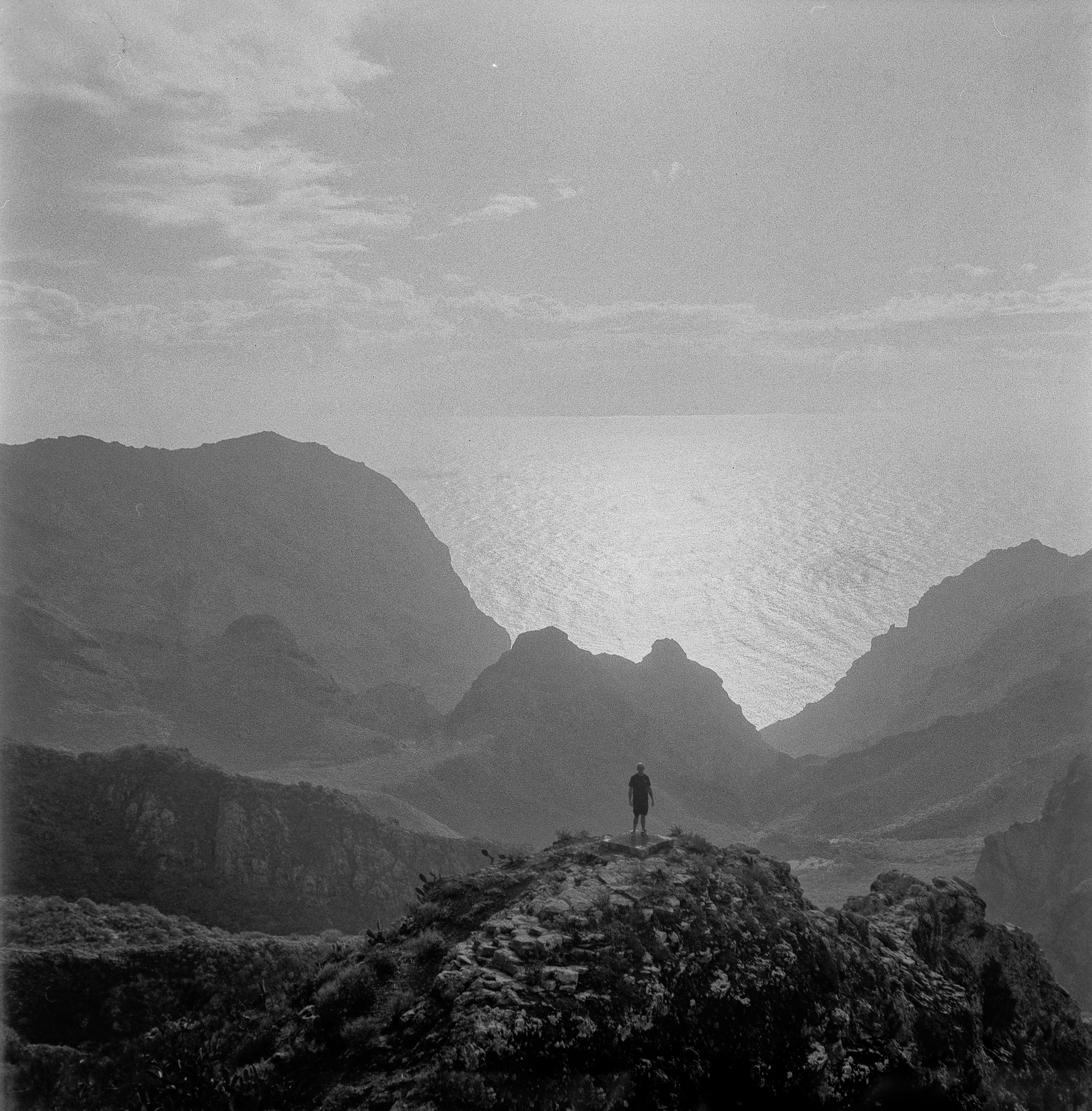
Image: © Victoria Mummelthei @rabbitingyears
Comments
Nothing yet. Say the first thing.
Sign in to join the conversation.