
We finally caught a break — some much-needed moisture rolled through this past week, with some areas picking up as much as 4.5” out of a single storm. It was a welcome sight after the drought talk that’s dominated the last few months. Unfortunately, we’re heading back into a drier stretch with warmer days creeping back in, which has us watching lake levels again with a little bit of dread.
On that front, Carter Lake’s drawdown has slowed down, which is good news. Horsetooth, on the other hand, is picking back up. Both lakes still have the best water in the Northern Front Range right now, and that’s no secret — the crowds have been brutal every single day. If you can swing it, get out early or fish in the evening to dodge the recreational boat traffic.
Chatfield and Cherry Creek are holding steady on water levels.
Ponds — Late summer pond fishing is all about timing and temperature. Bass and panfish are pushing shallow again in the early morning and evening hours as water cools slightly, so work the edges and shaded banks during those windows. Midday, don’t be afraid to slow down and fish deeper — a Ned rig or small jig worked along any drop-off or dock pilings can still produce when the sun’s high and the fish have pulled off the bank.
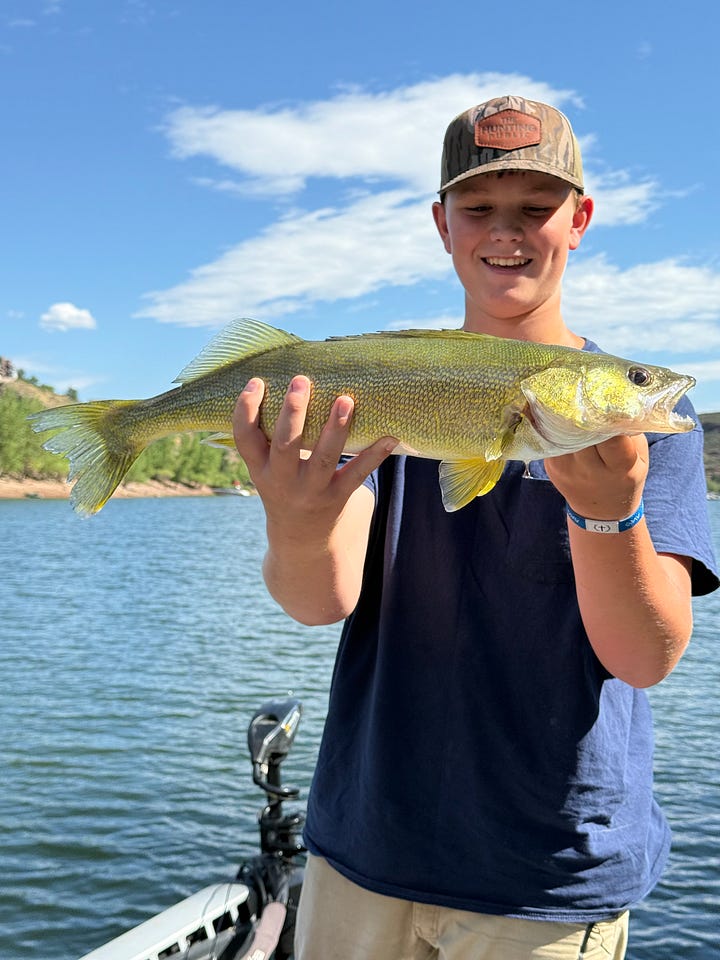
Chatfield — The bait is showing up, and that’s bringing the walleye with it. Look for them working structure near baitfish and throw reaction baits to trigger strikes. Smallmouth are still holding tight to the rock edges — drop shots or Ned rigs are getting it done.
Cherry Creek — Walleye are still cooperating. Try trolling shad crankbaits, like Shad Raps, for suspended fish, and work reaction baits along structure for those holding tighter to it.
Carter — The walleye bite has faded, but trout are still solid. Run spinners tipped with a nightcrawler in the 20-30’ range — get down there with snap weights or leadcore. There are also trout sitting higher in the water column eating Tasmanian Devils in pink.
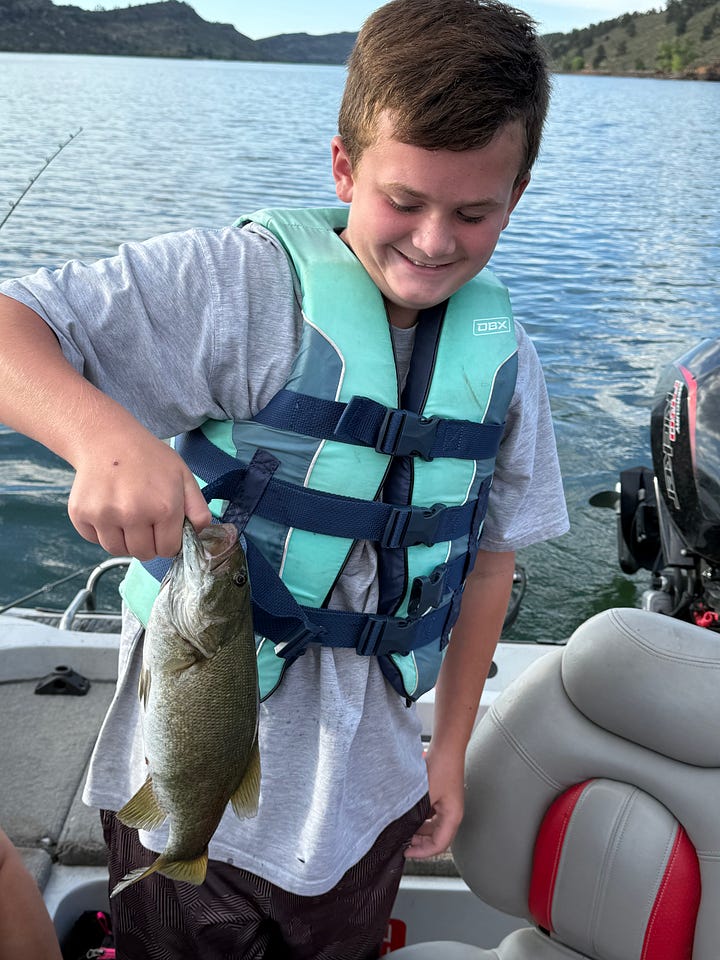
Horsetooth — Smallmouth are the best bite on the lake right now. Work the main lake in 15-20’ with dark-colored Ned rigs. Some trout are coming trolling in 30-50’, and the walleye bite is still mostly a nighttime game. Perch are showing up in the back of inlet coves on bottom bouncers tipped with nightcrawlers.
Drought conditions continue to squeeze reservoirs and rivers across the state, and here at home in Northeast Colorado we’re feeling it directly. Here’s the rundown on what’s closed, what’s restricted, and what you need to know before you load the boat.
Northeast Region
Barr Lake State Park — Boat ramps are closed for the rest of the 2026 season as of July 10th, thanks to low reservoir levels. Good news if you’ve got a kayak or paddleboard — hand-launched vessels are still good to go.
Boyd Lake State Park — Same story here. Boating closed for the remainder of 2026 effective June 28th. Kayaks, paddleboards, and swimming are still allowed.
Douglas Reservoir State Wildlife Area — Windsor Reservoir & Canal Company is drawing the reservoir down for irrigation, and boat ramp access could close soon. Worth noting this water is also carrying Eurasian watermilfoil, so clean, drain, and dry your gear. Questions? Call CPW’s Fort Collins office at 970-472-4300.
Spinney Mountain State Park — The North Boat Ramp closes to trailered launching a half hour after sunset starting July 17th because of low water. Hand-launched and motorized vessels can still get on the water otherwise.
Timnath Reservoir — Low water has triggered a voluntary fish salvage. Bag and possession limits have been lifted, and anglers are limited to shoreline fishing or non-motorized watercraft.
South Platte Watershed
Drought has hit the South Platte system hard, and CPW has voluntary noon-to-midnight fishing closures in effect across three stretches while flows remain critically low:
South Fork South Platte River — From the Middle Fork confluence upstream to Highway 285. Flows are under 10 cfs against a historical average of 40 cfs.
South Platte River — From the Spinney Mountain Reservoir inlet upstream to the Middle/South Fork confluence. Flows are under 10 cfs versus a normal 170 cfs.
South Platte River (Dream Stream) — From the Eleven Mile Reservoir inlet upstream to Spinney Mountain Dam. Flows sit at 94 cfs against a historical average of 190 cfs, with water temps pushing past 73°F daily.
Boat Ramp Closures
Prewitt Reservoir — Boat ramp closed.
North Sterling State Park — Elks boat ramp closed.
Bottom line: if you’re planning a trip to any of these waters, call ahead or check current conditions before you hitch up the boat. Low, warm water is hard on fish, so please respect these voluntary closures — a stressed fish released in 75-degree water often doesn’t make it.
Glendo Reservoir, Wyoming — For those of you making the run north, Glendo's dealing with low water too. Boat ramp closures at Bennett Hill, Indian Point, and Elkhorn.
With water temps climbing past 70-75 degrees on several river stretches around the state right now, how you handle a fish before releasing it matters more than ever. Warm water holds less oxygen, which means fish are already working harder just to recover from the fight — give them a bad release on top of that and their odds drop fast.
A few things to keep in mind next time you’re out:
Keep the fight short. Don’t finesse a fish for five minutes on light tackle just for sport — in warm water, a quick fight beats a long one every time. Step up your line or leader if you need to land fish faster.
Keep ‘em wet. Skip the grip-and-grin out of the water. If you want a photo, keep the fish in the net, in the water, and lift it for a second or two — not a full photo shoot.
Ditch the treble hooks for barbless singles. Faster unhooking means less handling time and less stress on the fish.
Revive before you release. Point the fish upstream (or into moving water) and let it kick off on its own — don’t just toss it back and hope for the best.
Know when to just let it go. If water temps are pushing toward 75+, consider giving that spot a rest altogether. A fish caught in that kind of water has a real chance of dying even with a perfect release.
This is exactly why you’re seeing so many voluntary closures pop up around the state right now — CPW isn’t shutting these stretches down for fun, they’re trying to protect fish that are already stressed to the max. Doing our part with good release practices on the water that's still open helps keep those fisheries healthy for the long haul.
No posts
Comments
Nothing yet. Say the first thing.
Sign in to join the conversation.