
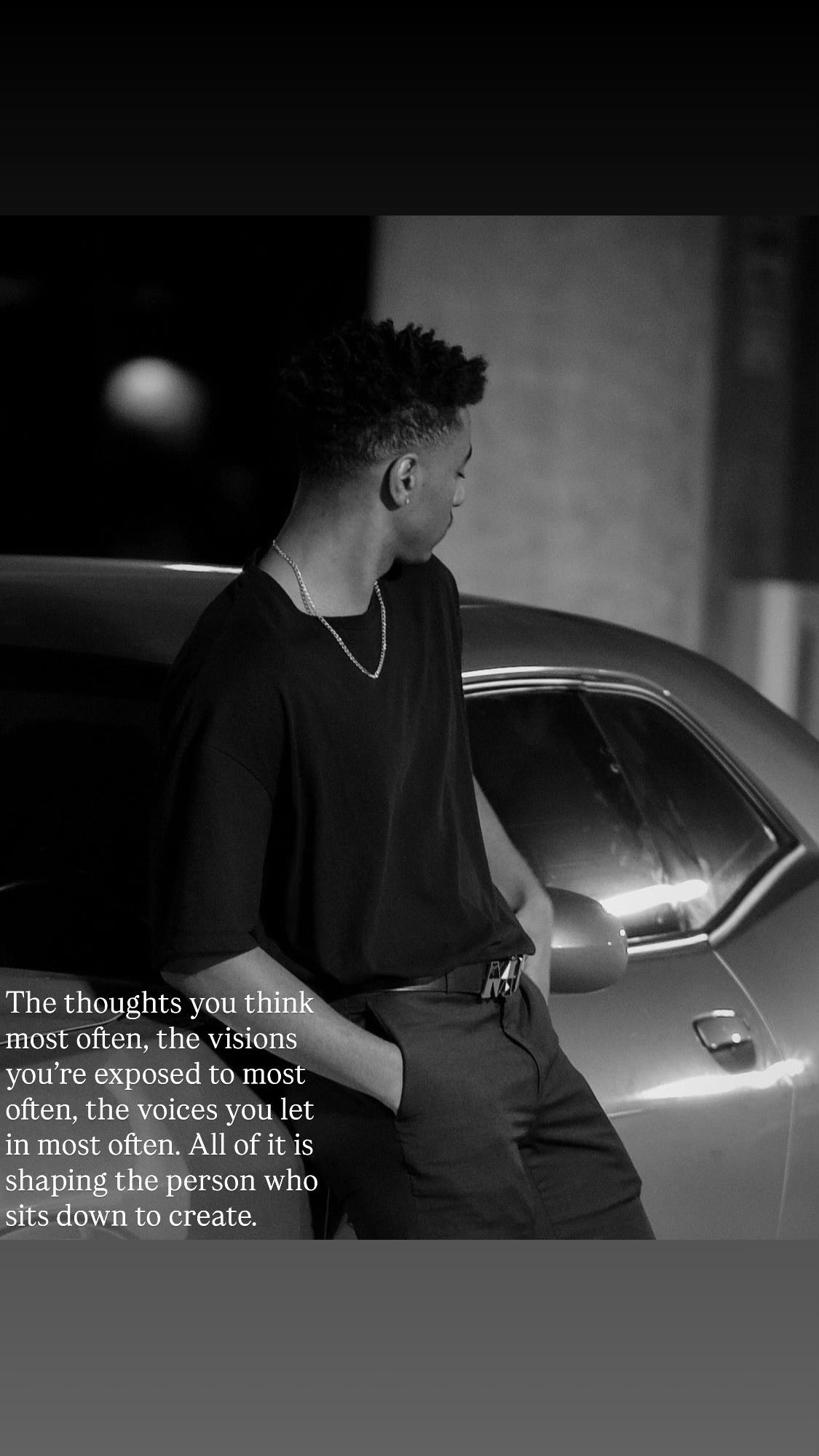
Filmmaking really comes down to how creatively you can picture scenes and sequences in your mind before they ever happen on camera.
And you know the funny thing is, this works for almost anything creative.
It works just as well for filmmakers as it does for writers, painters, designers, photographers, musicians, and anyone else trying to make something that did not exist before.
The principles are the same.
Anything that is beautifully crafted requires someone’s imagination before anything else. Before the camera records something, before the writer puts words on a page, before the painter touches the canvas, there was an idea.
There was something that existed inside someone’s mind first.
I think that is something we can easily forget right now.
We live in a world that is so focused on technology and AI that it is becoming easier for people to lose themselves and forget about their own creative thinking and the limitless possibilities of their own mind.
Technology can help you create.
A camera can help you capture something.
AI can help you explore something.
But none of those things can replace your ability to think.
Your ability to think is the greatest creative tool you have.
This is exactly what I’ve discovered throughout my career as a filmmaker.
I found out that there is literally no limit to how creatively we can think as human beings. There are no limitations on what we can imagine and what we can attempt to make if we truly believe we can figure it out.
More than anything, I began to learn that becoming a better filmmaker was actually built around what I was doing when my camera was not in my hand.
That realization changed everything for me.
I began to understand that developing my creative eye had everything to do with what I was imagining and seeing when I was outside in different environments.
It had a lot to do with showing up somewhere and looking at the scenery differently.
Instead of simply seeing a street, I started seeing a scene.
Instead of seeing a parking lot, I started wondering what it would look like with a Mustang sitting underneath one of the lights.
Instead of seeing an empty road at night, I would picture headlights coming around the corner.
Instead of hearing an engine, I would imagine how that engine could become part of a story.
That is when I started realizing that creativity is really about learning to see beyond what is physically in front of you.
A creative eye sees what is there, but imagination sees what could be there.
I started imagining different muscle cars on streets at nighttime while I would walk.
I would begin to picture every vivid detail that came to mind.
The way the car would look flying by.
The sound of the engine echoing through the streets.
The headlights hitting the pavement.
The person I imagined driving the car.
What their expression would look like when they fired up the engine.
What kind of monologue or voiceover I wanted them to have.
Where the camera would be positioned.
How the scene would begin.
How the scene would end.
What I wanted the audience to feel.
I would just imagine every possible detail of how I wanted the film to look before the film actually existed.
And the crazy part about all of this is how much easier it becomes to actually film something when the time finally comes.
Filming becomes almost effortless in a weird way because the hardest part was already done.
I had already spent days or weeks figuring it out in my mind.
I had already imagined it.
I had already questioned it.
I had already changed things.
I had already seen different versions of it.
I had already figured out what I wanted the project to feel like.
So when it came time to push record on the camera, the guesswork was already ruled out.
Everything simply started coming to life exactly the way I had pictured it in my mind.
That was when I could finally see and understand that great filmmaking was never only about the kind of camera you had.
It was never only about having a massive team.
It was never only about having the most expensive budget or production.
Those things can absolutely help you execute an idea, but they cannot create the idea for you.
I began to understand that if you had a deep imagination for what you could envision, the possibilities were endless.
For a while, part of me believed I just needed more willpower when filming.
I thought I needed to try harder.
I thought I needed to think harder while I was standing there with the camera in my hands.
Then I realized it was never really about trying harder on the day of filming.
It was about how well prepared I was mentally.
It was about how much I had imagined before the shoot ever happened.
The camera should not be the first place you see your film. Your mind should be.
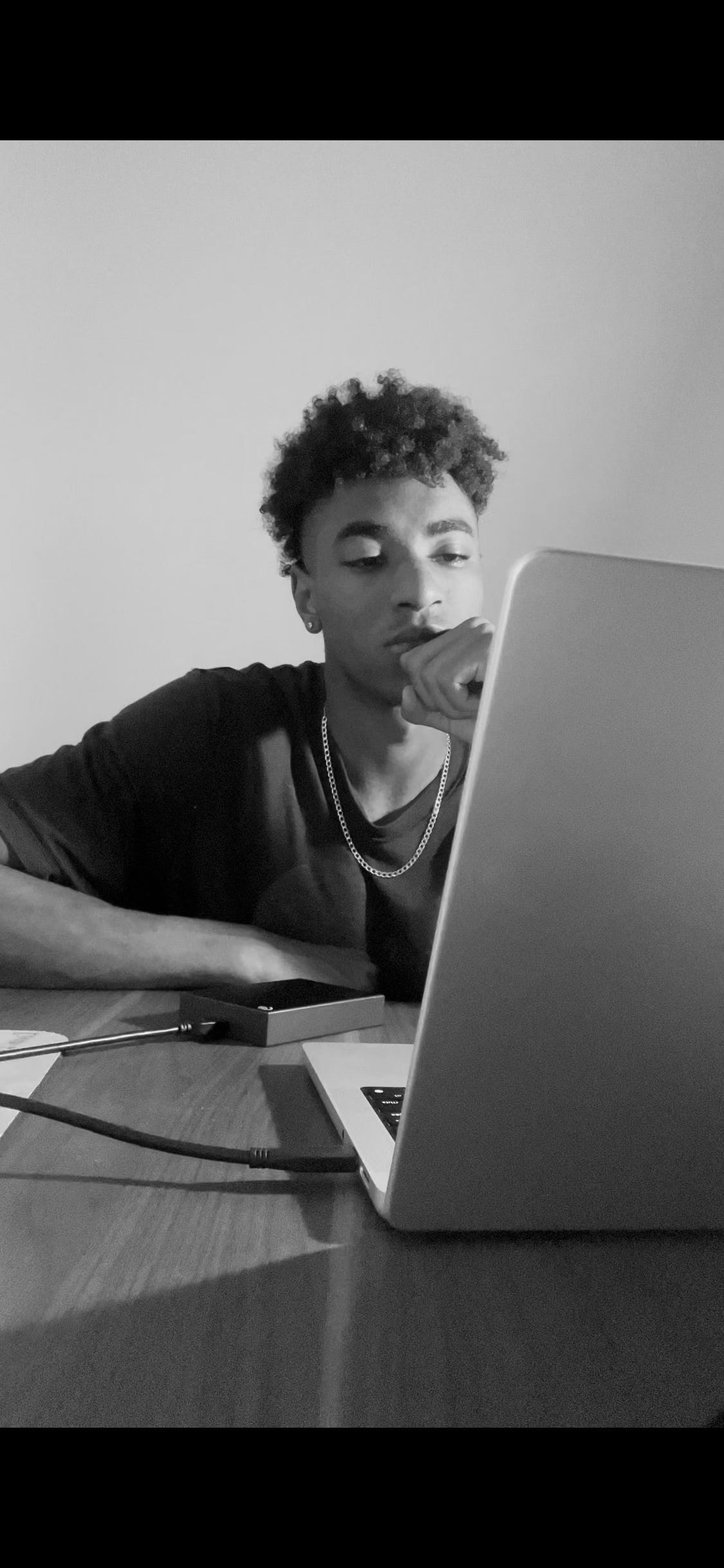
I started to understand that the creative way of seeing something has millions of possibilities.
You’ve probably heard someone say that your first idea is rarely your best idea.
I started taking that concept deeper.
Instead of getting one idea and immediately running with it, I started thinking about that original idea from as many different perspectives as possible.
Maybe I come up with three ideas that immediately interest me.
Then I think about another ten.
Then another twenty.
Then I keep going.
Sometimes I try to think about a single concept a hundred different ways until I find the version that feels the strongest.
A lot of this has to do with simply asking myself questions.
How can I make this better?
What if I added this to it?
What if I took this part away?
What if I filmed it this way instead?
What if the scene happened at night instead of during the day?
What if there was no dialogue at all?
What if there was a voiceover?
If this were actually a scene in an action movie, how would they do it?
What kind of lighting would they choose?
What kind of story would they tell?
What kind of dialogue would they write?
How would the car enter the scene?
How would the character enter the scene?
How would the audience feel during the first five seconds?
Those questions open doors in my mind.
One question leads to another question, which leads to another idea, and suddenly the original concept has become something completely different from where it started.
That is what I think your creative eye is really about.
It is seeking endless possibilities.
It is problem solving.
It is curiosity.
It is looking at something ordinary and asking yourself how you can make it feel extraordinary.
Creativity is not always about having an idea nobody has ever had. Sometimes it is about looking at something familiar from a perspective nobody around you thought to look from.
Here is something else I’ve noticed.
The more I work on these kinds of projects and use my imagination to the fullest capacity, the stronger my creative eye becomes.
I notice that seeing beginning, middle, and end sequences starts to flow a lot easier.
If I see a specific muscle car and a person standing together, I can start picturing exactly how they could look getting into the car, starting it up, pulling away, and driving it.
I can start hearing the dialogue in my head.
I can start hearing the engine underneath the voiceover.
I can picture the close ups.
I can picture the wide shots.
I can imagine the transitions between them.
It starts becoming second nature.
It reminds me of learning how to ride a bicycle or lifting weights.
When you first start doing something, you have to consciously think about everything.
Eventually, repetition builds a connection where it starts feeling natural.
I think creativity works the same way.
The more deeply you focus your attention on what you are creating, the easier your ideas and thoughts begin to flow.
You start noticing things faster.
You start connecting ideas faster.
You start seeing possibilities that you might have completely overlooked before.
And what is funny about all of this is that literally anyone is capable of creating at this kind of capacity.
I think when people call someone a creative genius, many times they are looking at someone who has simply learned how to use their imagination to its fullest potential.
For years, I thought some people were just naturally gifted and more creative than everyone else.
But I don’t really believe that anymore.
I believe anyone can develop a creative skill they are passionate about and become incredibly good at it.
There is no limit to what someone can learn.
The problem is that many people never realize how powerful their own mind is, so they never really discover what they are capable of creating.
We have so many thoughts in a single day.
It is no surprise to me that we slowly become what we think about and that what we consistently give our attention to begins shaping our lives.
Some years back, I decided to test this theory for myself.
I began deliberately thinking positively and intently about the filmmaker I wanted to become.
I became very aware, from the time I woke up to the time I went to sleep, of what I was thinking about and what I was giving my attention to.
I even carried around a goal card with me that had a very specific goal written on it about where I wanted to go in my career as a filmmaker.
I wanted that goal to constantly stay in front of me.
I wanted to remind myself of what I was building.
And you know the crazy thing?
My life slowly began to transform.
Things I was imagining and thinking about at one point in my life that were not true eventually started becoming part of the reality I am living today.
Not everything happened immediately.
A lot of it took time.
But I started seeing that the way I thought affected the way I worked.
The way I worked affected the opportunities I created.
The opportunities I created affected the direction of my life.
It all connected.
Your thoughts might not change your life overnight, but they can change what you notice, what you work toward, and what you believe is possible.
This is why I take as much time for myself every day as possible to observe, think intentionally about my life, and reflect on where I’ve been and where I am going.
I think about how I can continue innovating my projects.
How I can make them better.
How I can tell deeper stories.
How I can make someone actually feel something when they watch my work.
There was a time when I thought very negatively on a day to day basis.
I had no knowledge of the importance of paying attention to what I was imagining or repeatedly thinking about.
And the crazy thing is, I can remember exactly what life felt like when I lived like that.
I rarely felt like I had anything creative to work from.
My connections with people felt shallow.
I felt unfulfilled because my outlook on life was poor and the quality of my thoughts reflected that.
When I started paying attention to my thinking, I noticed that I did not only become a better artist.
I started enjoying life a lot more.
My relationships with people became more genuine and stronger.
I started valuing my time more.
I started protecting my solitude.
I started looking at being alone as something beautiful that I could be grateful for instead of something lonely or sad.
That change became extremely important for my creativity.
To this day, I still think very intentionally about my life and creativity because I know how powerful these concepts have been for me.
If you are going to become a high level creative, I believe it is essential that you take time for yourself every single day with no noise and no distractions.
I am talking about no social media.
No texting.
No calling anyone.
No music.
Nothing constantly trying to grab your attention.
Just you and your thoughts.
Think about your life.
Think about what you are building.
Think about what you want to create.
Think about where you are going.
I love doing this outside in the neighborhood when the sun goes down and everything becomes quiet.
I can walk and really think without anyone bothering me.
There is something about being outside, walking, observing, and having no constant stimulation that allows my mind to go places it normally would not go.

You will be amazed by how much your mind can soar when you actually give it time and space.
Solutions to problems start appearing.
Ideas start connecting.
Things you have been struggling to understand suddenly make sense.
You begin noticing how creative you actually are when your mind is finally given enough room to think.
I think many people believe they are not creative simply because they have never given themselves enough time and space to discover what is inside their own mind.
We are constantly consuming.
Scrolling.
Watching.
Listening.
Reacting.
Looking at what everyone else is making.
Looking at what everyone else is doing.
At some point, you have to turn all of that off long enough to hear yourself think.
Sometimes the best thing you can do for your creativity is stop consuming and give your own mind a chance to speak.
Time is something that moves rapidly.
That is another reason I think it is essential that you think and build as much as you possibly can with every day you have.
It may seem like you have all the time in the world.
And part of that is true because I do not believe there is one specific timeline for a person to make something of their life.
Some people discover what they love very young.
Other people start much later and still go on to do wonderful things.
There is no deadline on becoming who you want to become.
What I mean when I talk about time is something different.
Seconds become minutes.
Minutes become hours.
Hours become days.
Days become weeks.
Weeks become months.
Months become years.
That is the way I’ve started thinking about time, and when you look at it that way, you realize how quickly life actually moves.
You start realizing that the ordinary Tuesday afternoon you are living right now is still part of your life.
The walk you almost skipped.
The idea you almost ignored.
The project you keep telling yourself you will start later.
All of it matters.
I think there is something beautiful about recognizing that.
It makes me want to pay more attention.
It makes me want to create more.
It makes me want to actually be present for my own life.
Something I started doing recently is coming up with a single idea and writing it out on a sheet of paper or inside the notes on my phone.
Nothing complicated.
It could be something as simple as:
“Ford Mustang GT in the rain at night film.”
That is it.
One sentence.
One idea.
Once that single idea is written down, I start thinking about it a hundred different ways.
How do I make this come to life?
What does the opening look like?
What does it sound like?
What is the first thing the audience sees?
What is the first thing they hear?
How should the car be introduced?
Where should I appear?
Should I even appear?
Should there be dialogue?
Should there be a voiceover?
What feeling should someone have when the video ends?
I begin imagining every possible detail from start to finish.
One of the primary aspects I focus on before almost anything else is the voice.
For this Ford Mustang project, I knew I wanted the film to feel connected to what the Mustang has represented since Ford introduced the original car in 1964.
I wanted it to feel like Mustang.
Not just another video of a nice car driving around.
That is why, before filming anything, I came up with the voiceover:
“For six decades, they’ve tried to tame the Mustang. It still hasn’t worked.”
And later:
“They made it look this good.”
And finally:
“Sixty years later. Still untamed.”
I wrote those words before I ever picked up the camera to film the project.
That framework helped me so much when I actually filmed the video.
It also helped tremendously during the editing process because I already knew how I wanted the video to flow from start to finish.
The voice gave the visuals direction.
Instead of collecting random beautiful shots and trying to figure out what they meant afterward, I was capturing shots that already belonged to a story I had created in my mind.
I could picture the exact mood I was going for before filming because I had given myself a framework to work from.
That is what I mean when I say the creative eye is developed away from the camera.
By the time I had the camera in my hands, the film already existed somewhere inside my mind.
My job was simply to bring it into the real world.
Imagine first. Create second.
There is something incredibly powerful about the connection between our imagination and the reality of what we are capable of creating.
An idea starts as something invisible.
Nobody else can see it.
Nobody else can hear it.
Nobody else completely understands it.
It exists inside your mind.
Then you start working.
You write something down.
You pick up the camera.
You make the call.
You find the location.
You film the first shot.
You edit the first sequence.
And slowly, something that only existed inside your imagination becomes something other people can see.
I think that is one of the most beautiful things about being creative.
You get to take something that does not exist yet and give it life.
The more years I spend doing this, the less I believe becoming a great filmmaker is simply about mastering a camera.
Of course, learn your camera.
Learn lighting.
Learn composition.
Learn editing.
Learn sound.
Study films.
Understand your tools.
All of those things matter.
But do not become so obsessed with the tools that you forget about the person operating them.
You.
Your imagination.
Your experiences.
Your curiosity.
Your observations.
Your perspective.
Your ability to walk into an ordinary environment and see something nobody else sees yet.
That is where your creative eye lives.
A camera can record what is standing in front of it.
You are the person who decides what is worth recording.
You decide where to stand.
You decide what to leave outside the frame.
You decide when to cut.
You decide what the scene means.
You decide what the audience should feel.
That is why two people can stand in the exact same location with the exact same camera and create two completely different films.
They are looking at the same world.
They are just seeing it differently.
The goal is not simply to become better at using a camera. The goal is to become better at seeing the world.
That is really what developing a creative eye has become for me.
Learning to see.
Learning to observe.
Learning to think.
Learning to imagine.
Learning to question the first idea and search for the hundredth.
Learning to protect enough silence in my life that I can actually hear my own thoughts.
And then having the courage to take those thoughts and make something real with them.
I hope this helps many of you create and imagine better.
Give yourself more time to think.
Go outside.
Walk.
Observe.
Look at ordinary places differently.
Write your ideas down.
Question them.
Build on them.
Imagine them from beginning to end.
Do not immediately convince yourself that something is impossible just because you have never done it before.
And most importantly, do not underestimate your own imagination.
You might already have the greatest creative tool you will ever own.
You just have to learn how to use it.
Go create what you love and do it to the fullest.
- Noah
No posts
Comments
Nothing yet. Say the first thing.
Sign in to join the conversation.