
Let’s be real: cooking can feel hard. Not just because you might burn the onions (again), but because—like debugging a gnarly error message—it’s a process. And if you don’t understand the process, it can feel chaotic and unpredictable.
But here’s the thing: once you learn to cook, really cook—not just follow recipes like they’re ancient scrolls—you start to see things. Patterns. Sequences. Re-usability. And if you’re an engineer, this should sound familiar.
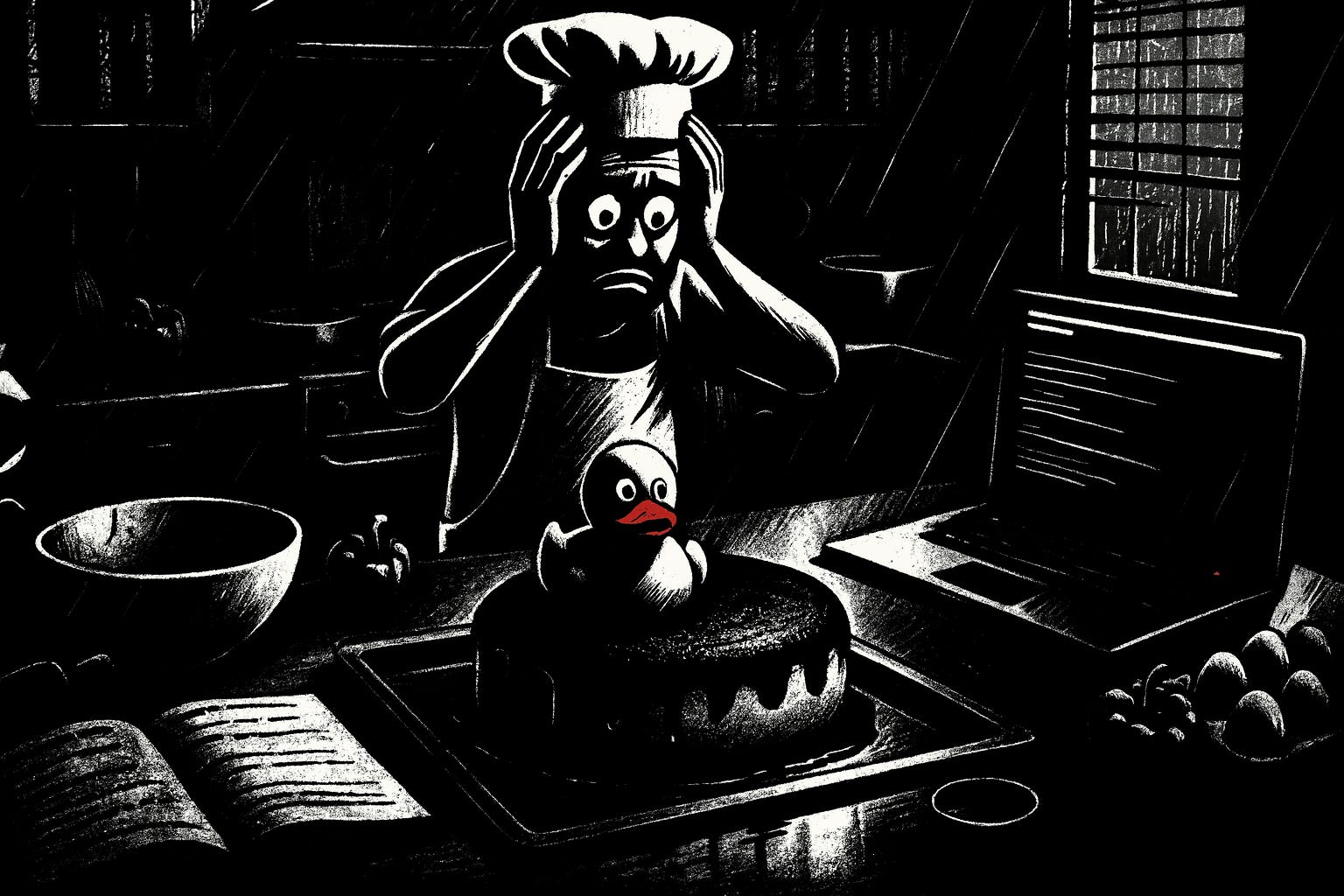
Think about it: cooking is fundamentally a series of steps. First, you shop. Then you prep. Then you cook. Each step builds on the previous one. If you mess up your prep, the cooking part gets stressful. If you didn’t shop for garlic, well, that tomato sauce isn’t going to hit the same.
That’s not so different from the classic engineering cycle: write, test, refactor (or red, green, refactor if you’re into TDD). If you skip a step or rush it, you’ll probably feel the pain later. The more you understand the flow, the easier it is to work within it—and even improvise when needed.
When you start to cook regularly, you begin to recognize the building blocks. You notice that a lot of recipes start with a base: onion, carrot, and celery (that’s mirepoix). Or garlic, onions, and peppers (hello sofrito). These little combinations form the foundation of many dishes across cultures. Once you see them, you can anticipate how a dish might taste—or even build your own from scratch.
Same goes for code. Refactoring gets easier when you recognize recurring patterns—like when you see a chunk of code that could be extracted into a reusable function. Or when you sense that a certain structure feels like a smell. Both in cooking and engineering, you develop a kind of intuition over time.

Ever had a sauce break? Or a cake that didn’t rise? You dig in and ask: was the pan too hot? Did I overmix the batter? Did I skip a step without realizing it?
Debugging a meal teaches you patience, observation, and how to think step-by-step—just like diagnosing a tricky bug. It’s frustrating, sure. But the more you do it, the more you build a mental model of how things work. And that model helps you recover faster and experiment more freely.
There’s also something meditative about cooking. When you’re in the zone—chopping, sautéing, plating—it’s not that different from being in flow while coding. You’re fully present. You’re solving small problems in real time. You’re creating something. And when it all comes together, there’s that same sense of quiet pride: yeah, I made this.
Learning to cook won’t just make your meals better—it can actually make your thinking better. It sharpens your ability to follow and recognize sequences, improves your pattern recognition, and teaches you how to debug with grace. All useful tools in any engineer’s toolkit.
So next time you're tempted to order takeout for the third time this week, consider firing up the stove. Your brain—and maybe your taste buds—will thank you.
No posts
Comments
Nothing yet. Say the first thing.
Sign in to join the conversation.