
There is a question I have started asking myself while shopping, or simply picking something to wear out of my closet, that I don’t think is particularly helpful: Where would I actually wear this? It’s a reasonable question. Probably even a responsible one. I am an adult. I have places to be. I don’t need a closet full of clothes that require an invitation to a vaguely European dinner party before they can leave the house.
The funny thing is, my closet is already full of interesting things. Pieces that make very little practical sense. A pair of earrings that are too much or too odd for most occasions. A dress that somehow only looks right with one particular shoe. A vintage piece I love but have to think about before wearing. Things I bought because they were beautiful, interesting, or just felt like me, not because they filled a gap in my wardrobe.
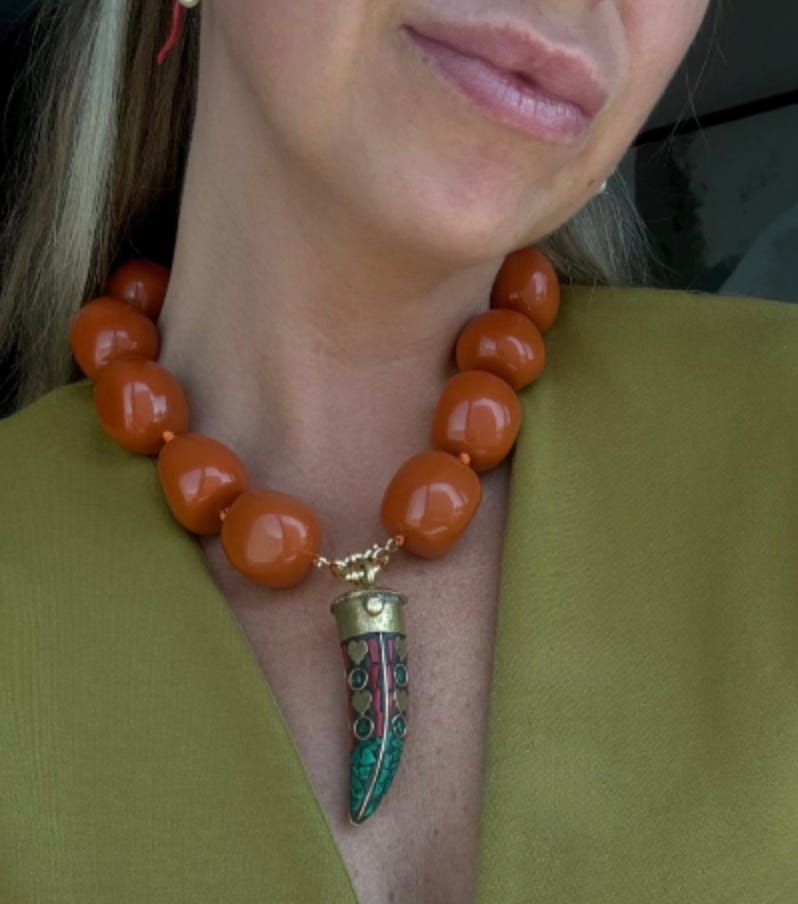
And yet, even with all of that already hanging in my closet, I still catch myself asking whether something is wearable enough. Not whether I like it. Not whether it makes me feel good. Whether I can imagine a reasonable occasion for it.
Which got me thinking: when did “Where would I wear this?” become such an important question?
But sometimes I think we’ve become a little too good at asking it.
Because somewhere along the way, fashion stopped being something we simply wanted and became something we were expected to justify. Is it comfortable? Is it versatile? Can you wear it with jeans? Can you dress it up or down? Is it worth the cost per wear? Does it work for the office? Is it “appropriate”? Can you walk in it? Does it go with everything?
The modern wardrobe is apparently supposed to be a small, efficient workforce.
And I understand why. There is something genuinely satisfying about a piece that works hard. The coat that goes with everything. The shoe you can walk in all day. The bag that somehow fits your laptop, water bottle, sunglasses, makeup bag, and the seventeen things you forgot were in there. But lately I’ve been wondering whether we’ve confused useful with good…
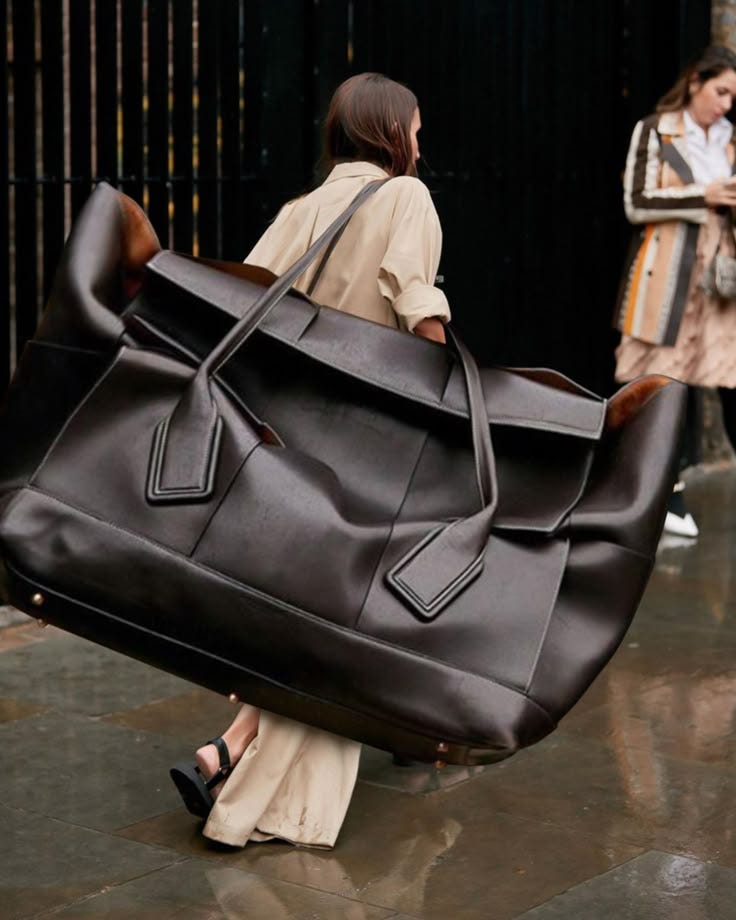
Think about the way we talk about clothes now. “This is so wearable.” It has become one of the highest compliments we can give a piece of fashion. And of course, we want clothes we will actually wear. There is no particular virtue in buying something beautiful and leaving it hanging in the closet with the tags still attached. But “wearable” has slowly become shorthand for sensible, and sensible is not always interesting.
Please tell me you agree!
Hear me out…
A piece can be difficult to style and still be wonderful. A shoe can work with exactly one outfit. A dress can be too dramatic for your Tuesday and somehow perfect for your Wednesday. A bag can hold almost nothing. An earring can be completely ridiculous. None of these are necessarily defects. Sometimes they’re the reason we want the thing in the first place.
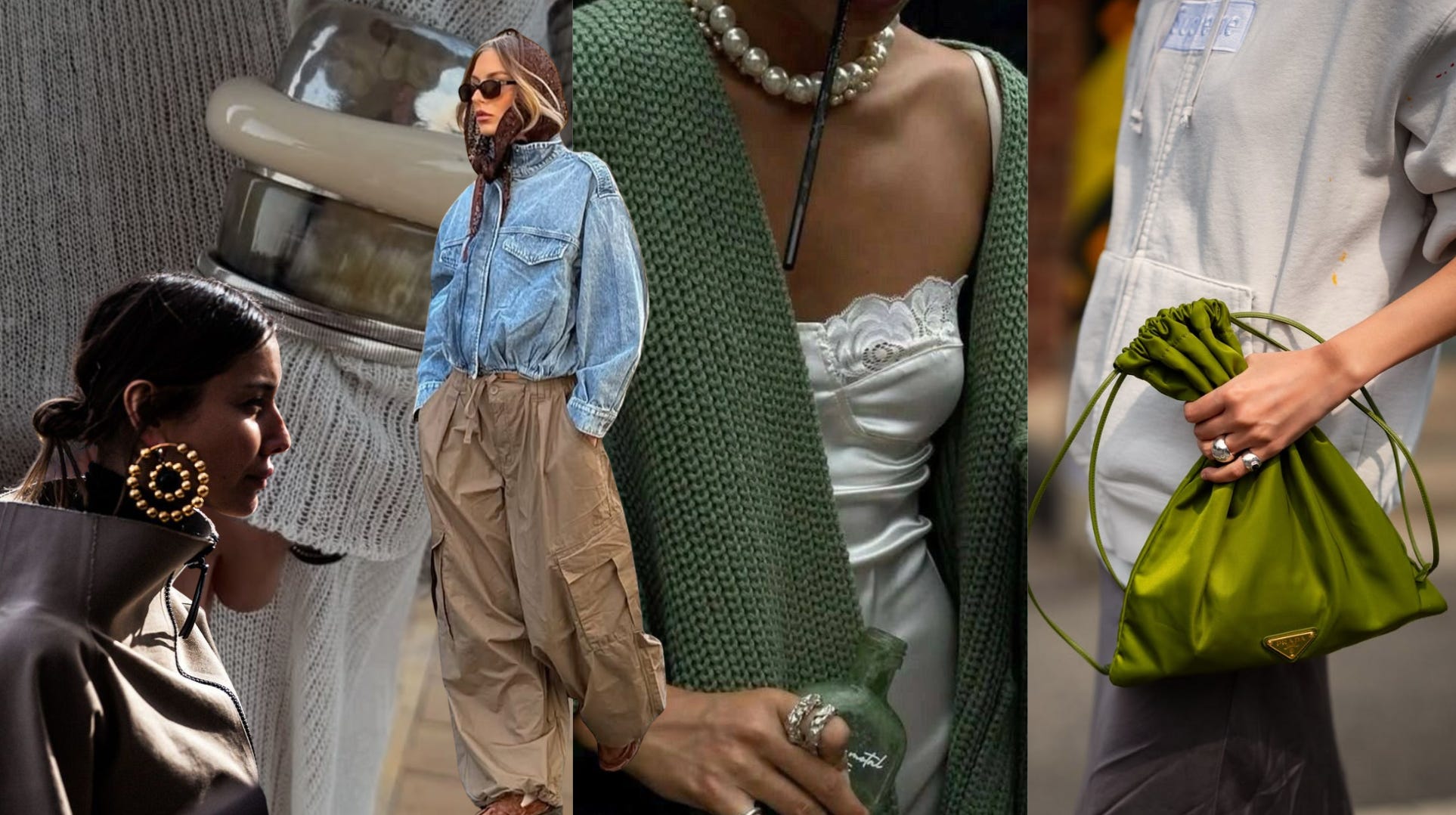
I think this is partly because our wardrobes have become another thing we’re expected to optimize. We optimize our morning routines, our skincare routines, our kitchens, our calendars, our vacations, our spending. Then we arrive at our closets and do the same thing. Every item needs a reason for being there. Every purchase needs a little internal presentation to the board.
But what will I wear it with? Where will I wear it? How often will I wear it? Is it worth it?
At some point, I would like to stop holding performance reviews for my clothes.
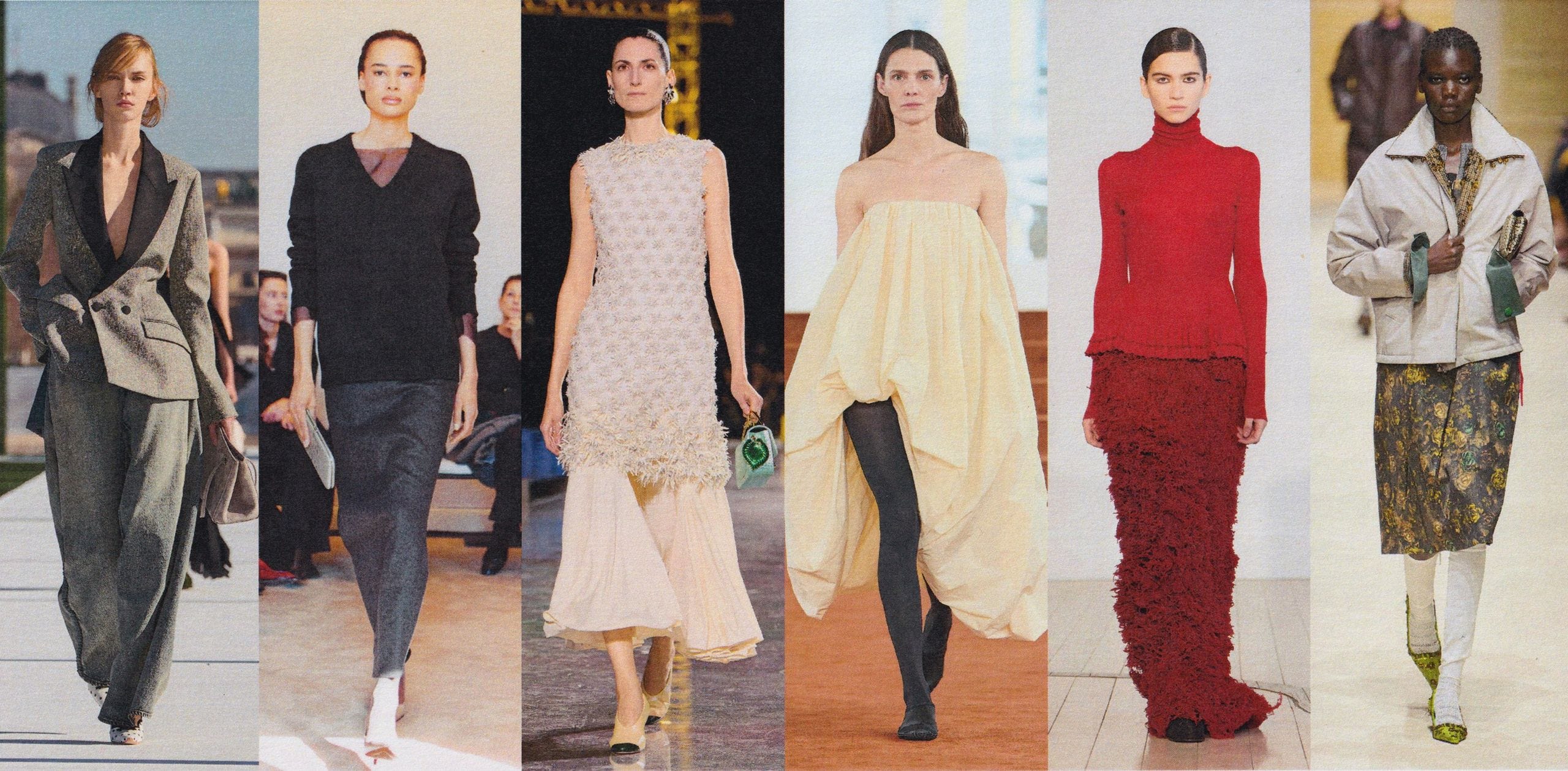
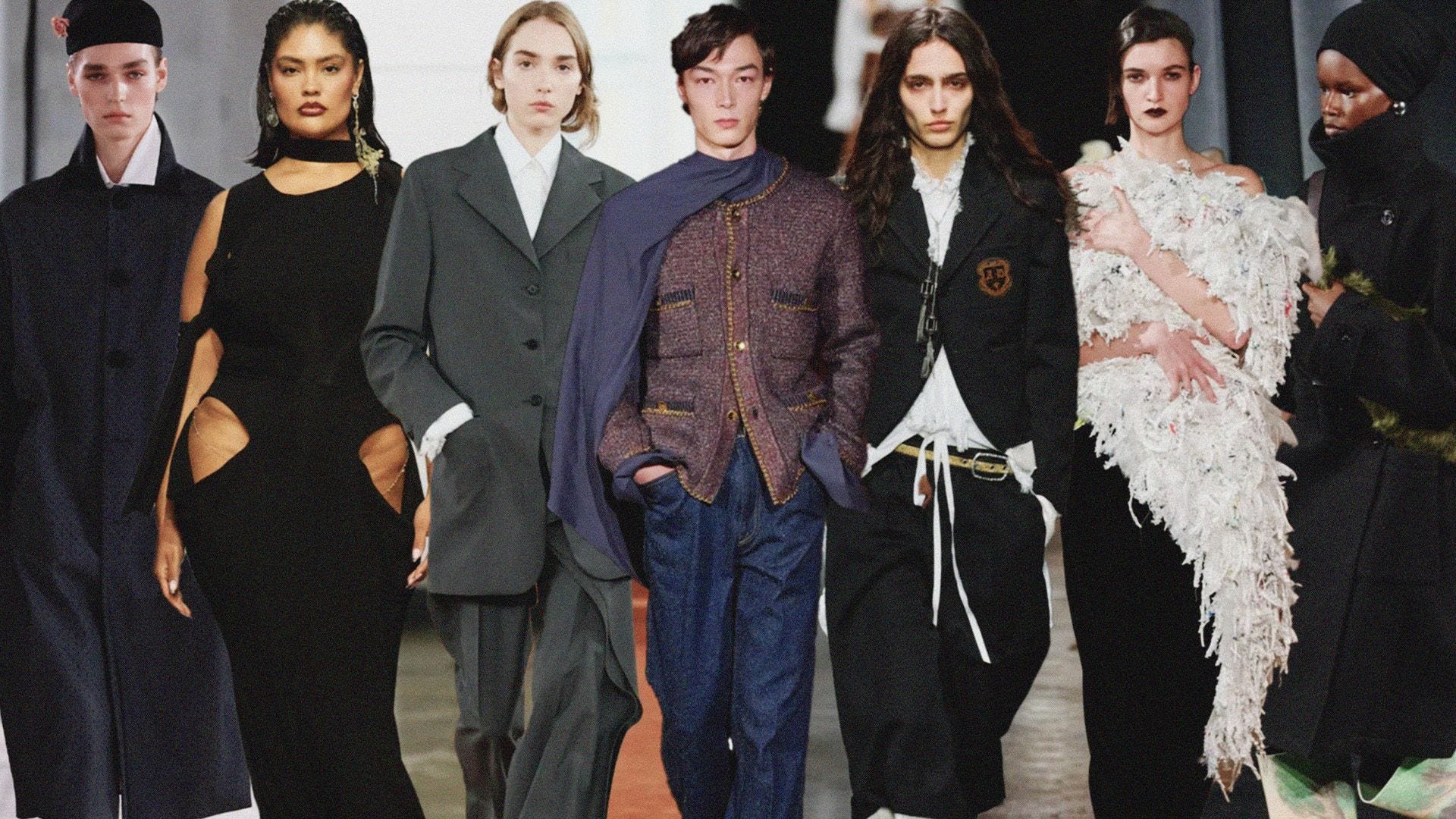
This is what I find so interesting about Fall 2026 fashion. If the last few seasons have been dominated by understated dressing, fall seems to be loosening things up a little. Not necessarily abandoning the basics, but making them feel more expressive. The runways are full of familiar pieces, clean coats, tailored trousers, classic silhouettes…but they’re being interrupted by unexpected shapes, rich textures, exaggerated proportions and details that make you look twice.
There seems to be a real interest in contrast this season: something polished paired with something strange, something minimal with something dramatic. A classic wardrobe staple gets a peplum, a familiar silhouette gets an exaggerated shape, a simple outfit gets an enormous accessory. The clothes can still be wearable without being entirely predictable.
And I think that’s what makes Fall 2026 feel particularly interesting. It’s not really a rejection of practicality. It’s an argument that practicality and personality don’t have to be opposites.
You can have the good coat. You can just put something weird on it.
Fashion does something slightly strange. Someone puts an enormous brooch on the coat. Someone stacks a completely unreasonable number of necklaces. Someone carries a fuzzy little handbag that looks more like an object than somewhere you would actually put your belongings. There are dramatic gloves, oversized accessories, unusual proportions and details that seem to exist primarily because somebody thought they would look fantastic.
And I like this.
Not because I think everyone needs a giant brooch. Quite the opposite. I like it because a giant brooch is so wonderfully unnecessary!!!
Vogue’s Fall 2026 accessory coverage has highlighted this exact tension between practical wardrobe foundations and more eclectic, decorative accessories, from statement jewelry and oversized brooches to unusual bags and expressive styling. The broader season has also been described as a move toward more individuality and personality after several years of pared-back dressing.
Fashion isn’t necessarily telling us to abandon practicality. It seems to be asking us to stop treating practicality as the highest virtue.
A brooch does nothing. It doesn’t make your coat warmer. It doesn’t make it more comfortable. It doesn’t improve your commute. It doesn’t hold your phone. It doesn’t solve a single problem.
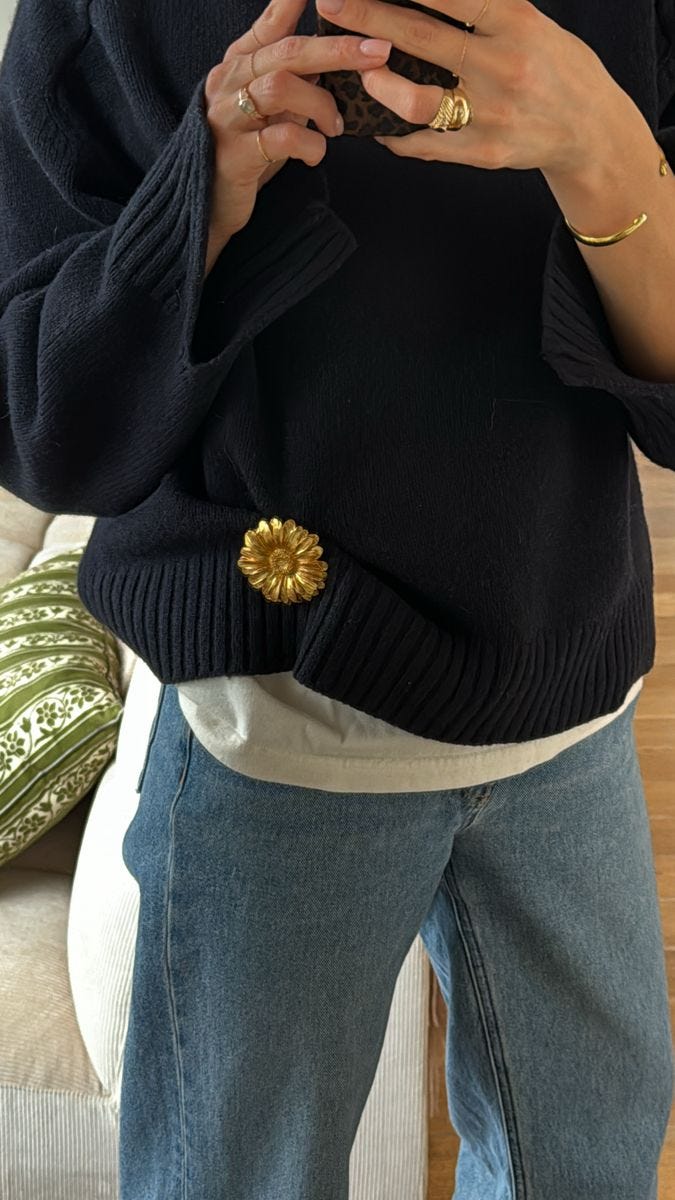
And yet, pin one onto a beautiful coat or knit and suddenly the entire outfit has a point of view.
That’s the thing I think we’re losing when we insist that fashion be useful. Sometimes the point is simply that it looks good.
A flower doesn’t need to be useful. A painting doesn’t need to match your furniture. A piece of jewelry doesn’t need to make you more productive. So why do we keep asking our clothes to perform?
Think about the handbag. At some point, the handbag stopped being a handbag and became emergency preparedness equipment. It needs to fit your phone, wallet, keys, sunglasses, charger, lip balm, makeup bag, water bottle, headphones, hand sanitizer, tissues, and approximately every object you may conceivably need between leaving the house and returning to it.
We’ve somehow arrived at a world where a woman carrying a tiny bag is immediately asked, “But what fits in there?”
Nothing.
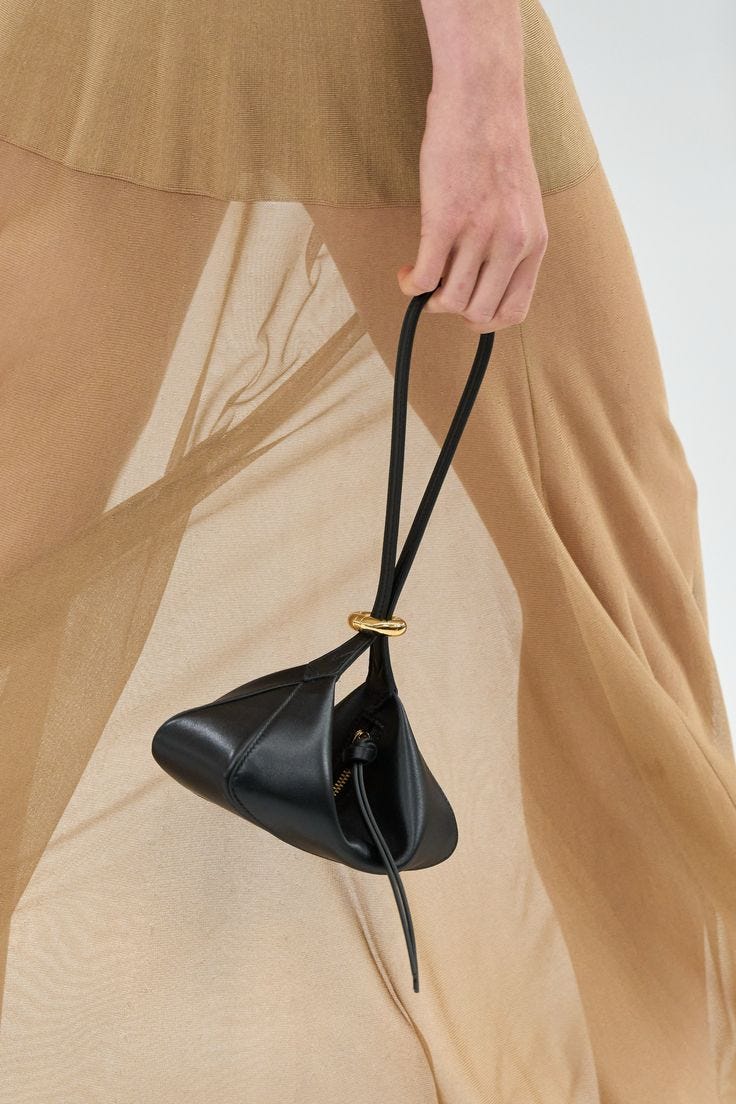
That’s the answer.
And that’s precisely why I want one.
I should probably say this before someone accuses me of romanticizing suffering for fashion: I am not. I like comfortable shoes. I like clothes that breathe. I like a coat that actually keeps me warm. I would prefer not to spend an entire evening quietly bleeding inside a beautiful pair of heels. In fact, it’s Sunday and I’m in my most comfortable sneakers, my favourite french terry wide leg pants, cozy long sleeve from Gap, and as always, a set of baroque pearls from Etsy (support small businesses!).
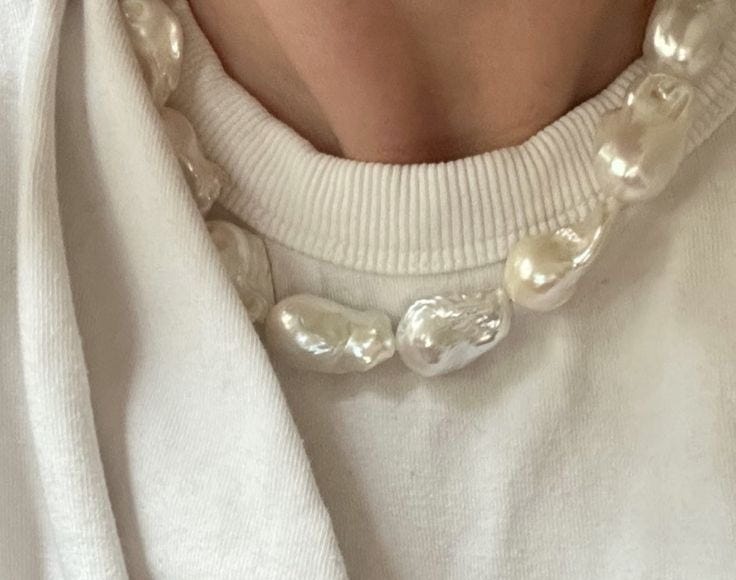
There is a difference between impractical and uncomfortable, and I think we’ve accidentally lumped the two together. Something can be unnecessary without being miserable. A scarf tied around your bag is unnecessary. A beautiful pair of earrings is unnecessary. A red glove when you already own black ones is unnecessary. A dress that only works with one specific shoe is unnecessary. None of these things need to make your life harder. They just don’t need to make your life easier.
And maybe that’s enough.
The capsule wardrobe made sense as a reaction to excess. But eventually, even minimalism became a shopping formula. Now we’re all supposed to own the same perfectly edited collection of excellent basics, preferably in colors that don’t offend anyone: a black trouser, a white shirt, a cashmere sweater, a great coat, a loafer, a neutral bag.
That’s it. Now let’s all be clones. Right?
Yes, yes, yes, OK…these are useful things to own. But a wardrobe made entirely of useful things starts to feel a little like a very well-designed hotel room. Beautiful. Expensive. Perfectly functional. And somehow not entirely yours.
The things that make a wardrobe feel personal are often the things that make the least sense. The strange vintage jacket. The earrings or necklaces that are too much. The scarf you bought because the colour was impossible to resist. The shoes that looked ridiculous until you put them on. The dress that doesn’t technically “go” anywhere.
Those are the things that tell me something about you.
I think this is what I miss: not extravagance, exactly, and certainly not buying more for the sake of buying more. Just frivolity. The willingness to like something without constructing a reasonable argument for it.
We don’t seem to do that very well anymore. We want to know if something is flattering before we decide if we like it. We want to know if it’s timeless. We want to know if it’s worth the money. We want to know if other people will like it. We want to know if we’ll still like it in five years.
Sometimes I want to like something for five minutes.
Sometimes I want to buy the ridiculous earrings because they make me laugh. Sometimes I want the coat because it has an enormous collar. Sometimes I want the shoe because it looks fantastic and has absolutely no business being on my feet.
That isn’t irresponsible. It’s just not optimized.
And maybe that’s exactly what fashion is for.
As fall arrives and the fashion cycle begins asking us what we need next, I’m trying to ask a slightly different question. Not Where would I wear this? Not How many outfits can I make with it? Not even Is it practical?
Just: Do I love it?
Because maybe the best thing in your closet isn’t the thing that works the hardest.
Maybe it’s the thing that does absolutely nothing—
except make you happy you put it on.

No posts
Comments
Nothing yet. Say the first thing.
Sign in to join the conversation.