
The other day I was sitting in a café, doing what every fashion person insists is “research” and everyone else calls people-watching. After about ten minutes, I noticed something strange. No one was wearing the exact same outfit, but somehow everyone looked oddly familiar.
There was the oversized button-down tucked into wide-leg jeans. Adidas Sambas that looked pleasantly worn in. A canvas tote slung over one shoulder. Tiny gold hoops. Hair pulled into a slick bun. An iced matcha that has somehow become part of the uniform.
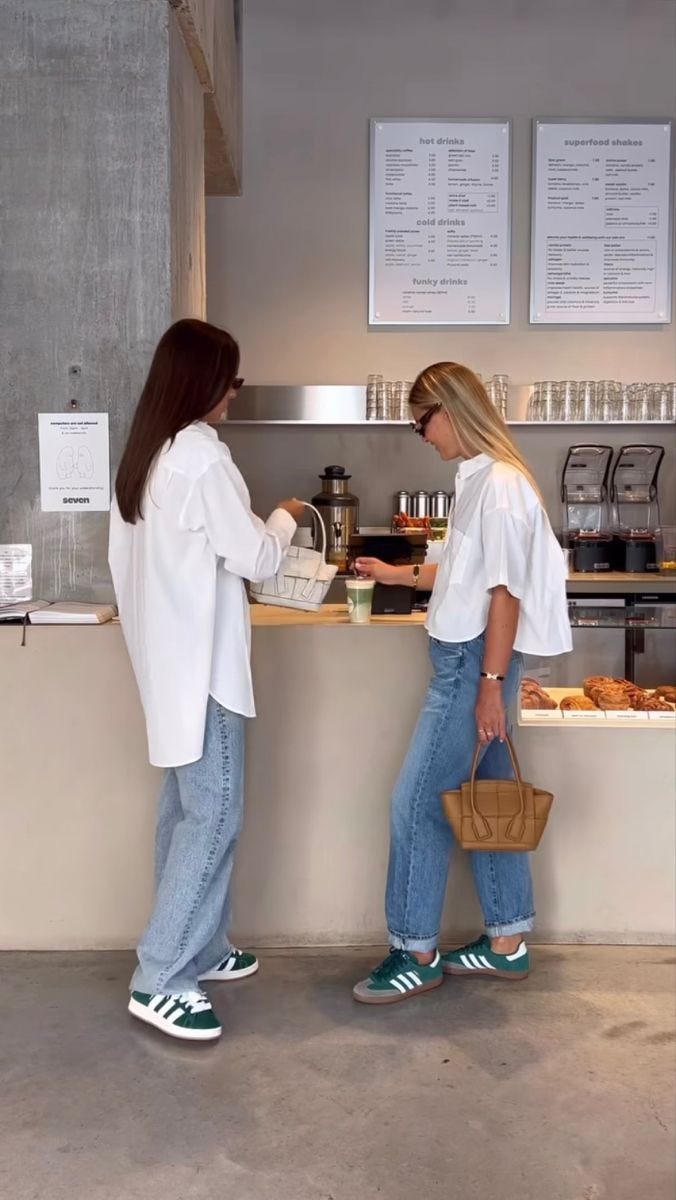
I say this with love because I’ve been every single one of these women. In fact, there’s a decent chance I looked exactly like them while noticing it.
Fashion has always been cyclical. Hemlines rise and fall, colours come in and out of favour, and every few years someone declares skinny jeans either gloriously back or officially dead. Trends aren’t new.
But this feels different.
What’s changed isn’t that we’re following trends. It’s that we’re following the same ones, at the same time, from the same places.
Open Instagram and someone in Copenhagen is wearing the same outfit as someone in New York, who looks remarkably similar to someone in Melbourne, who, coincidentally, just linked the exact same trousers on her Amazon storefront.
I don’t think it’s because we’ve become less creative.
I think it’s because we’ve never had access to more inspiration.
I love Pinterest.
Honestly, I have enough Pinterest boards to suggest I’m living at least six different lives. One version of me spends every summer on the Amalfi Coast. Another owns a perfectly restored townhouse in Copenhagen. A third wears nothing but The Row and somehow never spills coffee on white trousers. And then there’s my favourite: the completely unhinged board where I honestly have no idea what’s happening. It’s just colours, textures, patterns and silhouettes thrown together because they make me feel something and EVERYTHING at once.
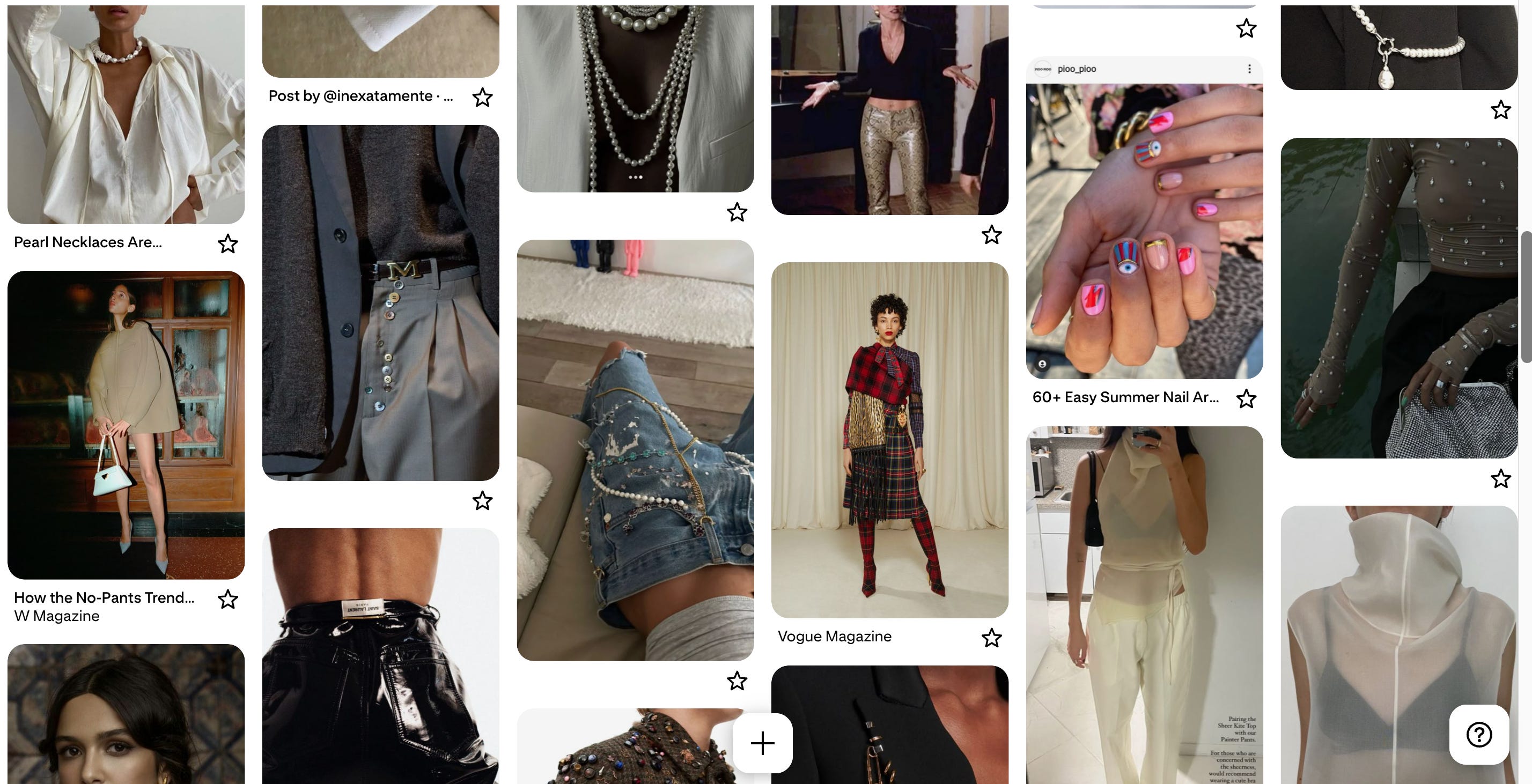
The real me exists somewhere between all of them, with a healthy amount of Zara, H&M, and convincing myself that this is finally the summer I become an “only linen and basics” person.
Pinterest isn’t the problem.
Neither is Instagram. Or AI.
If anything, I think we’re incredibly lucky to have these tools. I can discover an independent designer in Seoul while sitting on my couch in Toronto. I can pull up a Vogue editorial from twenty years ago in seconds. I can learn about a brand I’d never have found walking through my local mall.
Fashion has never been more democratic…
The problem isn’t that we’re inspired.
It’s that somewhere along the way, inspiration quietly became instruction.
We stopped looking at an outfit and asking, What do I love about this? Instead, we started asking, How do I recreate it? How do copy it?
Those questions sound almost identical.
They’re not.
One asks you to think.
The other asks you to copy.
Whenever we talk about fashion today, the algorithm usually ends up taking the blame. It’s become the internet’s version of Mercury retrograde. Something feels off? It must be the algorithm.
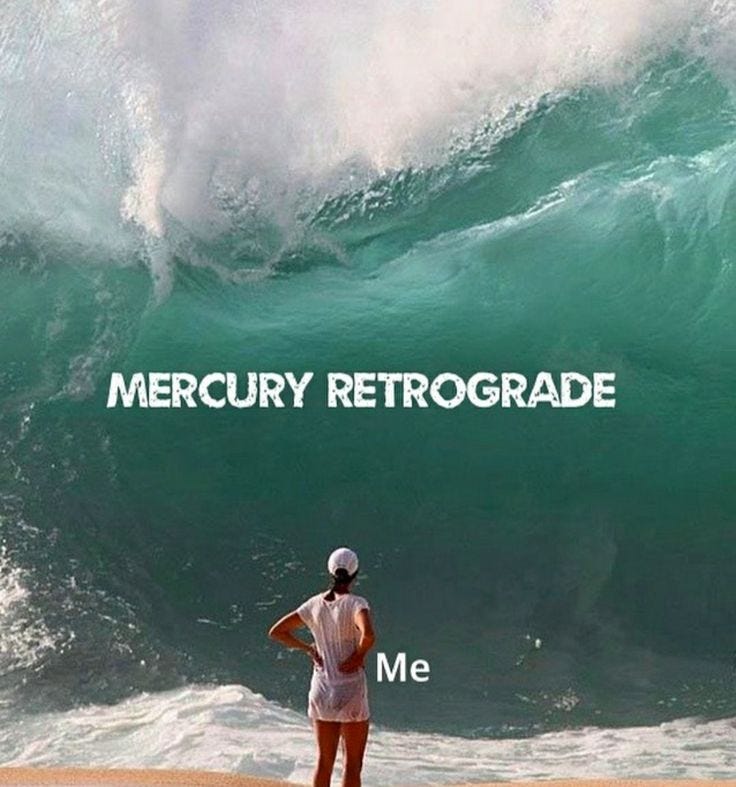
But I think that’s too easy.
Algorithms haven’t stolen our personal style. They don’t wake up each morning plotting to convince us all to buy the same suede jacket. They’re doing exactly what they were designed to do: showing us more of what people already engage with. If millions of people save the same outfit, more people will see it. If everyone suddenly starts searching for barrel-leg jeans, those jeans become even more visible. It’s less of a conspiracy than it is a feedback loop. The algorithm doesn’t invent taste. It amplifies existing behaviour until it begins to feel like consensus. Loved this article → How ‘the algorithm’ became a scapegoat for bland style. IT EXPLAINS EVERYTHING.
The more interesting question, then, isn’t why the algorithm keeps showing us the same outfit. It’s why we keep rewarding it.
Fashion has always been curated. Long before TikTok, editors decided which collections deserved attention, stylists introduced us to unexpected combinations, and magazines challenged us with ideas we hadn’t considered before. Good editors weren’t trying to tell everyone what to wear. They were trying to expand your eye. Sometimes they got it wrong, sometimes they got it spectacularly right, but they always had a point of view.
Algorithms don’t have a point of view.
They have data.
An editor might show you something difficult because they believe you’ll grow to appreciate it. An algorithm is much more likely to show you something familiar because it already knows you’ll click on it. One asks you to discover. The other asks you to consume.
Neither approach is good or bad. I’d be lying if I said I hadn’t discovered incredible designers through Instagram or Pinterest. I probably wouldn’t have found half the brands I love without them.
But there’s a subtle difference between being introduced to something and being repeatedly reassured that everyone else already likes it. Over time, familiarity starts masquerading as taste. We begin mistaking what’s popular for what’s personal.
The older I get, the more I think we’ve confused taste with approval.
They’re not the same thing.
Approval is easy.
Taste is difficult.
Approval comes from knowing an outfit has already been validated by thousands of strangers online. Taste asks whether you’d still wear it if no one else did.
That’s a much harder question.
Buying the blazer you’ve already seen a hundred times feels safe because you already know it works. You know people like it. You know it photographs well. You know it belongs.
Buying the strange vintage jacket that you can’t stop thinking about is different. Maybe nobody else understands it. Maybe it doesn’t fit neatly into an aesthetic. Maybe you’ll wear it once and regret it.
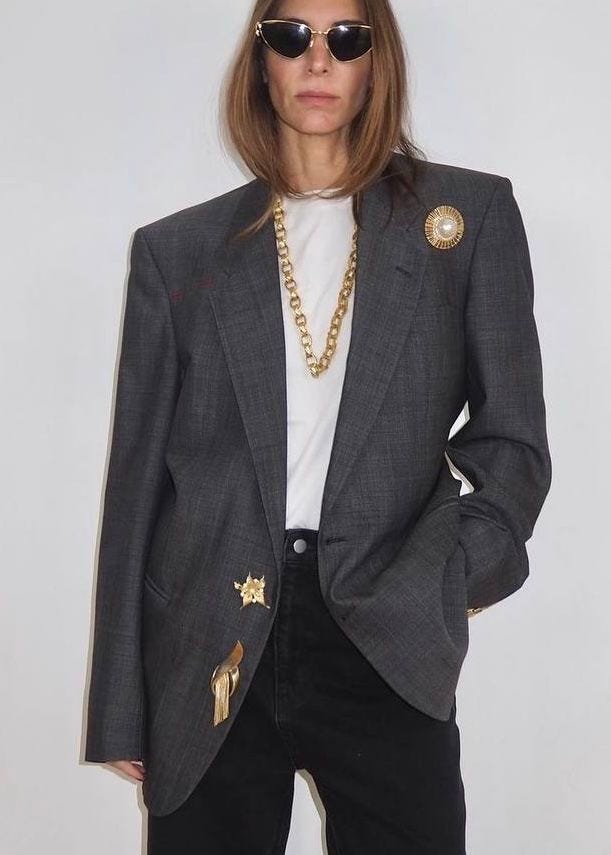
Or maybe it’ll become the piece people always associate with you.
Developing personal style has always required a little vulnerability.
It means making decisions before someone else confirms they’re the right ones.
Comments
Nothing yet. Say the first thing.
Sign in to join the conversation.