
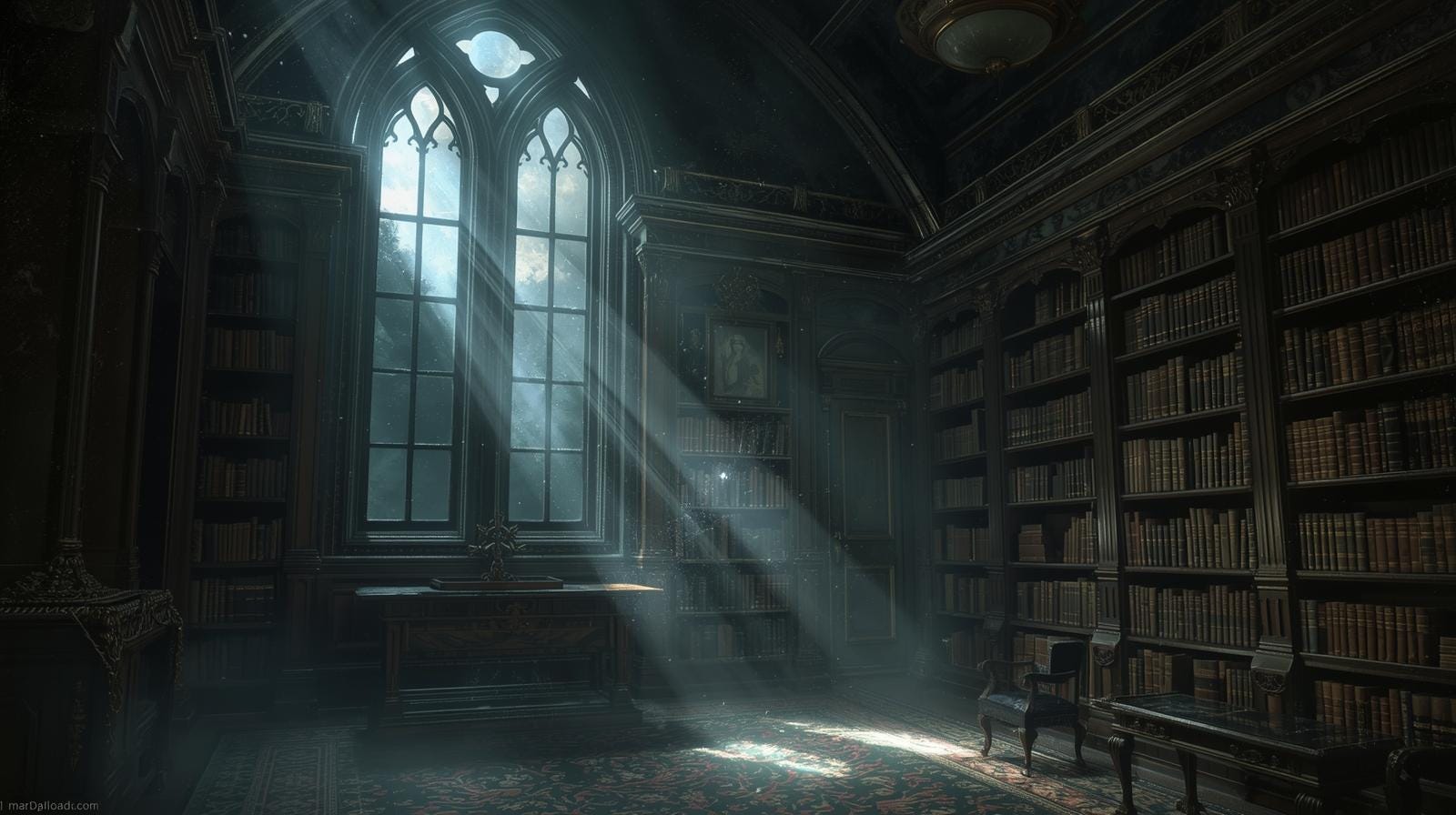
There’s a pot of cinnamon tea simmering in the corner and the library smells like old paper, cedar, and the faintest trace of frankincense.
Pull up a velvet chair.
Set your bag down.
Your divination tools—whatever they are—are welcome here, too.
Tonight, we talk about how to wake them.
Ever notice how a brand-new deck feels… shy?
Or how an oracle card will suddenly go quiet for weeks, like it’s in a mood?
Or that odd heaviness in your pendulum after someone else handled it?
Divination tools are not “objects” in the way a spoon or a stapler is an object.
They are instruments—of intuition, of lineage, of the unseen.
And they respond to how we treat them.
Cleansing them isn’t superstition.
It’s relationship maintenance.
Divination is older than agriculture.
Older than written language.
Older than nearly every structure we now call “civilization.”
Cultures across the world crafted tools for communication with ancestors, spirits, intuition, gods, land, and the deep unconscious.
Here are just a few:
Originally 15th-century Italian playing cards, tarot evolved into a divination tool after occultists like Court de Gébelin and the Hermetic Order of the Golden Dawn layered symbolism, astrology, and Kabbalah onto the deck. Today, tarot blends psychology, intuition, and archetypes, making it one of the most widely used modern divination systems.
The Elder Futhark runes were not just letters—they were symbols of cosmic forces tied to myth, magic, protection, and fate. Rune casting can involve drawing stones from a bag or scattering them onto a cloth. Each rune carries layers of meaning connected to nature, gods, and ancestral stories.
Ogham is an early medieval Irish script carved into stones and wood. Each symbol corresponds to a tree or plant, connecting the diviner to the land itself. Ogham staves are often made from sacred woods, offering messages rooted in nature, ancestry, and old Celtic cosmology.
Simple but potent, pendulums have been used for dowsing water, detecting energy shifts, and answering yes/no questions. Many traditions believe the pendulum amplifies subconscious knowledge or spiritual guidance. Its movements—circles, swings, hesitations—serve as the language of the unseen.
Scrying is one of humanity’s oldest magical arts. Whether using a black mirror, polished obsidian, or still water, the practitioner softens their gaze until symbols, scenes, or intuitive flashes arise. Different cultures used scrying for prophecy, healing, and communicating with ancestors.
Also called tasseography, this practice began in ancient China and spread through trade routes to Europe. After drinking loose-leaf tea, the reader interprets the shapes left behind—animals, letters, pathways, symbols—each carrying a message woven from intuition and tradition.
Bone throwing (or casting) varies widely across cultures. It may include bones, shells, coins, curios, and personal items within a divination set. The placement, orientation, and groupings carry ancestral meaning. These systems are deeply rooted in cultural lineage, spiritual practice, and community history.
Dating back nearly 3,000 years, the I Ching uses coin tosses or yarrow stalks to create hexagrams—six-line patterns that reflect cycles of change. It’s a divination system built on philosophy, balance, and the natural rhythms of life, offering counsel rather than prediction.
A simple yet powerful method practiced worldwide. The diviner asks a question, opens a sacred or meaningful text at random, and reads the first phrase their eyes land on. The chosen book often reflects the diviner’s lineage—religious scripture, poetry, myth, or personal favorites.
Geomancy involves making marks in sand or soil, or casting stones to form patterns interpreted through ancient charts. It was widely practiced across the Islamic world and medieval Europe. Its insights come from earth energy, randomness, and symbolic geometry.
Long before tarot gained popularity in America, Appalachian witches and folk practitioners read fortunes with regular playing cards. Each suit carries symbolic meaning—hearts for emotions, clubs for challenges, diamonds for money, spades for endings—forming a straightforward, practical divination system.
From ancient Greece to West African oracles to modern witches, lot casting is one of humanity’s earliest divination methods. Anything can become a “lot”: stones, bones, shells, sticks, dice. The randomness is intentional—spirit, fate, or intuition speaks through chaos.
Your tools absorb everything:
• Your mood
• Your environment
• The question you asked
• The hands of whoever touched them
• The intentions swirling around you
Not cleansing them is like never washing your favorite mug but still drinking daily tea out of it.
Eventually the flavor changes.
And cleansing isn’t just about removing “bad” energy—sometimes it’s about refreshing a tool’s voice, clearing your mind, and reconnecting.
Herbs, incense, resins.
Use ethically grown herbs—not closed-practice ones like white sage.
Try: cedar, rosemary, mugwort, lavender.
Salt is ancient purification.
Don’t put cards directly in salt unless wrapped.
Universal. Accessible. Gentle.
Bells, singing bowls, clapping, chanting—breaks up energetic residue.
Hold your tool above (not in!) the flame.
Let heat and intention melt away old impressions.
Safe for crystals that love water—NOT safe for decks.
A gentle exhale across a tool to infuse fresh energy.
Simply holding your tools with presence and reverence resets the connection.
Some tools (especially ancestral ones) appreciate offerings: flowers, incense, whispered thanks.
Cleansing is step one.
Bonding is where the magic blooms.
• Sleep with the deck under your pillow
• Carry runes in your pocket
• Touch your pendulum every morning
• Journal with your cards
• Bless bones or shells with oil
• Introduce tools to your altar
• Meditate while holding them
• Ask them: How do you want to work with me?
Bonding is a relationship.
Not a chore.
In today’s political climate—where rights are debated, censored, and clawed back—divination becomes more than mysticism.
It becomes:
• A way to preserve ancestral knowledge
• A way to resist systems that silence intuition
• A way to claim personal sovereignty
• A way to stay grounded when the world feels volatile
To read your cards is to reclaim your voice.
To throw your bones is to remember who came before you.
To scry is to imagine a world beyond the chaos.
This is not escapism.
This is survival magic.
If you love working with magical tools, you might enjoy my books:
📖 Healing the Wounds of Childhood: A Journey to Joy and Fulfillment - Ready to rediscover your playful spirit? ‘Awakening the Inner Child’ invites you to heal past wounds and embrace the boundless potential within. This journal helps you connect with your inner child through meditations, self-care practices, and reflective journaling.
📖 The Kitchen Witch’s Journal - Craving a more magical approach to cooking? ‘The Kitchen Witch’s Journal’ is your guide to unleashing the magic in your kitchen. With prompts for journaling and meditation, this book empowers you to create a more fulfilling and magical life.
📖 Dead Men Tell No Tales, But Their Recipes Do: A Pirate’s High Seas Cookbook - Want to cook like a pirate? ‘Dead Men Tell No Tales, But Their Recipes Do’ is your guide to the culinary world of these legendary seafarers. Learn to cook hearty, flavorful meals inspired by pirate history and master the art of seafaring cuisine.
“You are your ancestors’ wildest dreams.”
— Maya Angelou
Do you cleanse your divination tools regularly, or are you more of a “the vibes will sort themselves out” kind of witch?
Share your stories, your mishaps, your strange messages—
I want to hear everything.
• The I Ching or Book of Changes — classic divination text
• Tarot for Your Self by Mary K. Greer
• Runes: A Handbook by Michael P. Barnes
• The Way of Bones by Cat Yronwode (hoodoo & conjure bones history)
• Learn Religions – divination systems overview
• Aeclectic Tarot – deck history and meanings
• Rune Meanings (Elder Futhark resources)
• The Witch Wave
• Invoking Witchcraft
• Coffee & Divination Podcast
• The Okra Project (Black trans community support)
• Indigenous Women Rising (reproductive justice)
• Southern Poverty Law Center (civil rights)
🔗 All My Links 🔗
🧙♀️ Blessed Be! 🧙♀️
💲Help Keep This Space Going 💜
Thanks for reading Adulting is Hard, Let's Shuffle Some Cards! This post is public so feel free to share it.
Comments
Nothing yet. Say the first thing.
Sign in to join the conversation.