
Dear everyone, good morning, hello. In Boston yesterday, down along the Greenway underneath artist Rixy’s new mural The Midnight Ride, a little red cart was set up inviting people to write break-up letters to America. A bunch were push-pinned to a bulletin board. “It’s not me, it’s you.” “You are committing genocide all in the name of money. I’m disgusted and disillusioned. Goodbye forever.” “I’m leaving for Canada.” “I really believed the ‘American Dream’ when I was a kid…Yall lied.” The exercise proved more moving than I’d anticipated, standing in the sunshine with a little clipboard and a pen, addressing the country in this moment of fraught and freighted anniversary. It feels strange to wish anyone a happy 4th of July right now; my hope instead is that it provokes some reflection about where we’ve been, where we are now, and where it might be possible to go from here. And now for the literary news.
Galloping on-the-lam debut novel
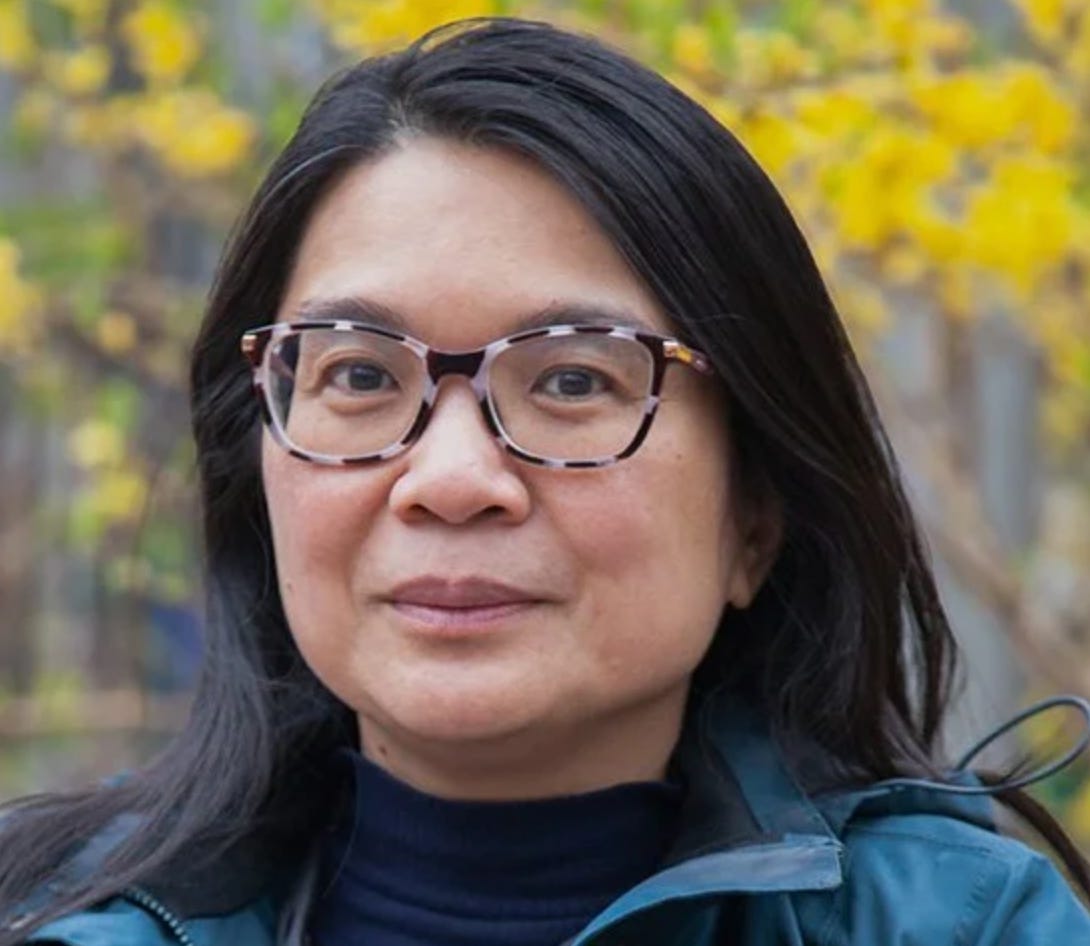
Yu-Mei Balasingamchow is a teacher at Grub Street and a former bookseller at Papercuts Bookshop in the Jamaica Plain neighborhood of Boston, and her debut novel, Names Have Been Changed (Tiny Reparations), takes the form of a podcast narrated by Ophir who’s telling her story in the waning days of Covid lockdown about being on the run, from the law, for one, and towards something more nebulous, lasting, and elusive. “I’m not a criminal mastermind . . . and I didn’t hurt anybody . . . I fled without a plan . . . I didn’t want anyone to be able to tell where I was from.” The story moves, across countries and continents, Singapore, Japan, England, the United States, and in its galloping narration. What is it to leave who you were behind and still carry that person with you? Ophir is a companionable, profane teller of her tale, and tells it with the urgency of I have to get this out of my head. She navigates her queer identity — she falls in love with women, now and then has sex with men — and the book, an alternative and nuanced take on the crime novel, explores what it is to run, to tell the story of yourself, to look at the string of decisions knotting into a tangle of a life. “Memory is fucking fickle. I’ve relived the things I don’t want to, and I can’t get to the ones I really want.”
The launch of the Porter Square Review of Books
The fast-slow dwindle of the books section in newspapers and magazines across the land, the fast-slow extinction of the book review, the fast-slow death of literary criticism and coverage. We’ve watched the loss, and Porter Square Books in Cambridge and Boston is doing something about it. They recently announced the launch of the Porter Square Review of Books, offering one book review each week written by one of their booksellers. So far, they’ve reviewed Ariel Delgado Dixon’s Sourland (“With dank prose that is as rich as the ripest bud, Sourland is a dirty, sexy novel of ambition and alliances, hunger and lust, with notes of salt and blood on the tongue and a clean finish that’ll leave you wanting more”); Chloe Caldwell’s Women; Marcus Kleiwer’s The Caretaker; and Violet Allen’s Plastic, Prism, Void: Part 1. They’ll be reviewing books across genres and for all ages, new work and books from the backlist. “Lack of coverage hurts everyone in the books ecosystem: readers, writers, publishers, and, of course, bookstores.” Here’s to books coverage. It matters. You can subscribe to the monthly PSRB newsletter right here.
Poetry of disaster and desire
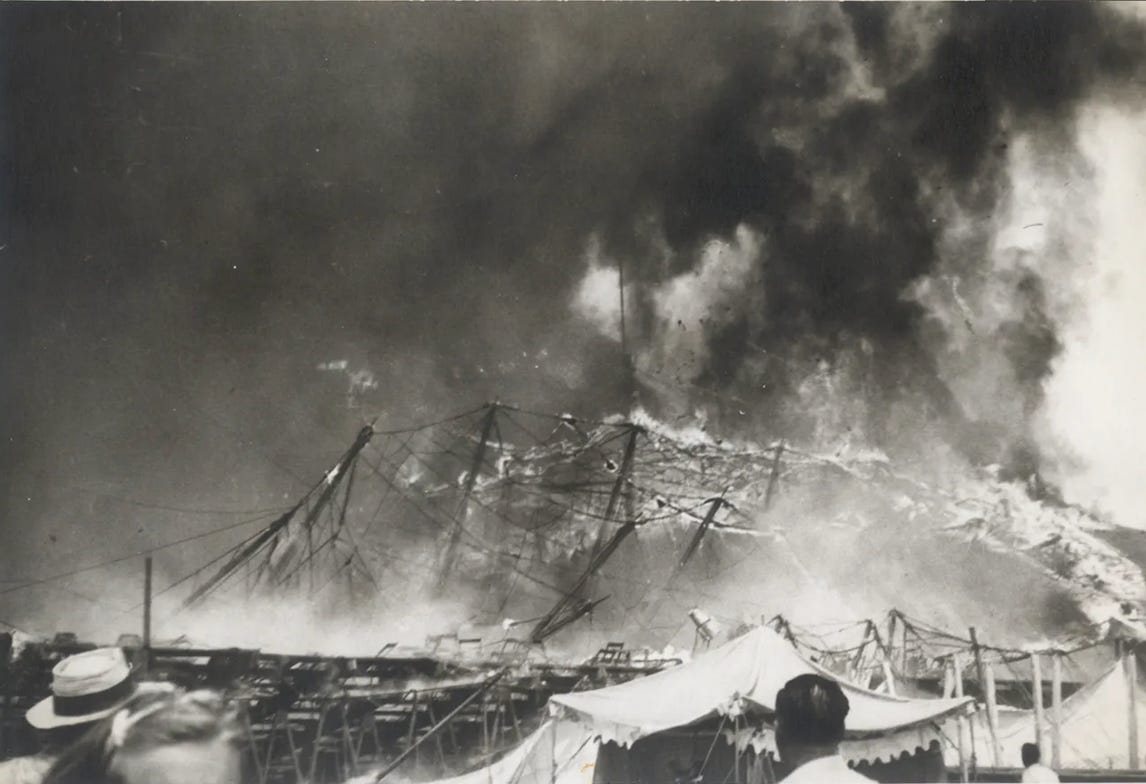
On July 6, 1944, a fire broke out at a circus in Hartford, Connecticut. A hundred and sixty-seven people were killed. The Ringling Bros. and Barnum & Bailey company had arrived the day before, and set up the tent which was coated with nearly a ton of paraffin wax dissolved with six-thousand gallons of gasoline. Poet Sandra Yannone’s father was a survivor of the fire, and her new collection, Fire at the Big Top (MoonPath) uses the disaster to explore “all who love and burn in the flames of desire.” Yannone, poet laureate of Old Saybrook, Connecticut, writes of how her father used to swear he could smell something burning, and liked to eat his toast and bacon burnt. When asked at the end of his life what he remembered most of that day: “Watching the clowns / hose the elephants down.” She writes, too, of the heat of desire, “How / Did we accomplish this miraculous feat / Of two breaths being in the same moment.” Tragedies fascinate Yannone (another collection looks at the sinking of the Titanic), and she reminds us, “it’s the skin that produces / the scar, not the original bite. So forget blame. / It will only undress you.”
Books of note out this week
Bone Horn by Prudence Bussey-Chamberlain (Soft Skull).
Quake by Kitty Mrosovsky (McNally Editions).
The Summer of the Serpent by Cecilia Eudave, translated from Spanish by Robin Myers (Soho).
Booksellers’ best: Staff picks from New England independent bookstores
Alyssa M. at Parkside Bookshop in Boston recommends Slave Play by Jeremy O. Harris (Playwrights Canada): “Slave Play made me laugh, it made me uncomfortable, it made me look inward, and it opened my mind. It’s a study on sex, relationships, and power dynamics in relation to racial trauma in America as three interracial couples attend ‘Antebellum Sexual Performance Therapy.’”
Thank you again and as always for being here. Thank you for being part of this. Is it possible for you to help me keep this work going with a paid subscription?
Comments
Nothing yet. Say the first thing.
Sign in to join the conversation.