
Dear all, good morning, hello, here you’ll find the next installment of the New England Literary News Questionnaire, a handful of questions posed to the region’s writers for glimpses into how they work, who they are, and their relationship to place.
The New England Literary News Questionnaire with Alexander Chee
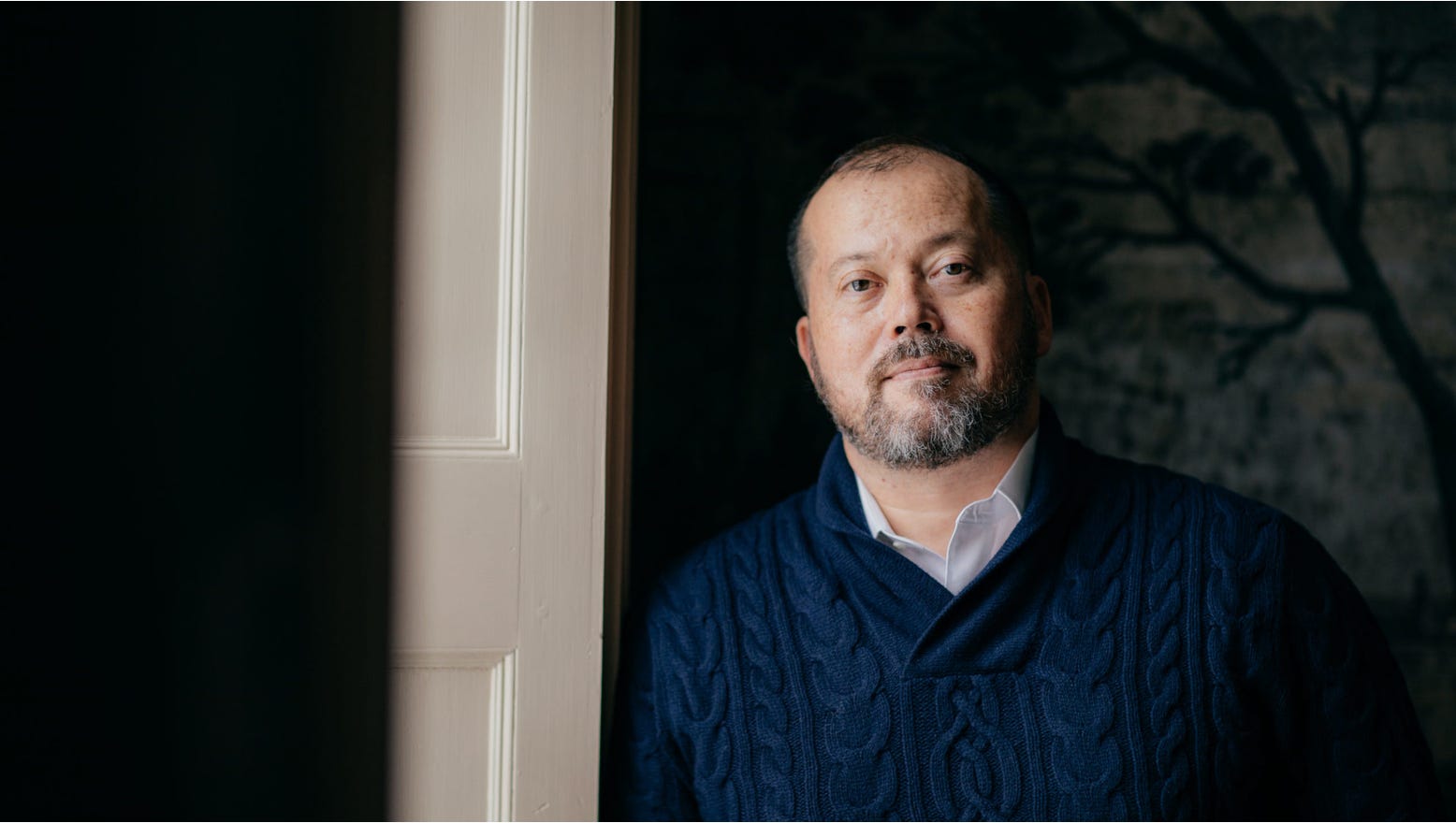
Alexander Chee has lived in New England for a lot of his life. He was born in Rhode Island where his father was pursuing a degree in oceanography that he would not finish. “My birth was a crisis—I was unplanned,” Chee explained. His mother lost her teaching job for being pregnant and nine months after Chee was born, he and his parents moved to Seoul where he lived until he was three. After that, they lived on the islands of Truk, Kawaii, and Guam, and in 1973, moved to Cape Elizabeth, Maine, where he lived until heading to Wesleyan for college in 1985. He’s lived in the Bay Area and in New York City.
Chee is the author of two novels, Edinburgh and The Queen of the Night, and the acclaimed essay collection How To Write an Autobiographical Novel. (You can subscribe to his Subtack here.) He writes with heart, heat, generosity, and a sustained and sustaining grace. Activist, author, teacher, he is someone, one gets the sense, who is alive and awake in this world (a rarer quality than you might think). In October, Mariner Books will publish a 25th anniversary edition of Edinburgh.
Chee teaches at Dartmouth and lives with his husband in Vermont now. “A small town,” he writes. “Less than 1000 people.” He’s lived there since 2019. “It was a perfect COVID-era house, bought almost as if we knew what was coming, though we did not.”
Salt water or fresh? Ocean or mountains?
I would say salt, though of late, freshwater has made a strong case with me. But I prefer the ocean to mountains every time.
Do you have a habit or ritual, related to writing or not, that you wouldn’t be able to replicate if you left where you live?
In my backyard is a writing studio I use just for writing fiction. I am not filling out this questionnaire there, for example. It’s a short walk up a hill, a little treacherous but fine for now.
You have an afternoon with any New England writer, living or dead. Who would it be and where would you take them for a walk/to eat a sandwich/to drink a beer?
The late great Sarah Orne Jewett, no question. I would want to walk with her, if she could manage it, along the path she describes in her essay, “The Old Town of Berwick,” a favorite of mine. Otherwise, tea and a slice of parsnip cake, a favorite treat of hers offered still in the town of South Berwick, near her house museum, would also be great.
What artist outside of writing (filmmaker, musician, visual artist, performer, craftsperson) is your work in conversation with?
I think often of the sensibility of the director Park Chan Wook, who I profiled for T Magazine, and who taught me so much in that interview about gesture, jokes, visual storytelling and transitions—a kind of formalization of much of what I learned from just watching and loving his films. But of course, most influences on me started with me a long time ago. The light in the paintings of Winslow Homer, especially Summer Night. The drawings of David Hockney. The X-Men comics from the era of John Byrne, Chris Claremont, and Terry Austin, which inspired my first attempts at writing fiction in high school. The operas Tosca, Carmen, Il Trovatore, and La Sonnambula. The Cure’s short, thrilling “Just Like Heaven,” Annie Lenox’s “Love Is A Stranger,” Hole’s “Malibu,” “Don’t Fear The Reaper,” by the Blue Oyster Cult, the song and the video for “Pass This On,” by the Knife.” The performances of Isabella Rosellini, which have amazed me since Blue Velvet. Katsuhiro Otomo’s Akira, the movie and the graphic novel—one reason I got a motorcycle when I was 22.
Do you consider your body of work to be associated with a place?
I don’t, though two of my books so far are quite invested in the state of Maine. The new novel underway is set mostly in Western Mass.
What word do you hate?
Problematic has become problematic. A kind of smear, unspecific, and without accountability.
What word do you love?
Aria always gets my attention with love and excitement.
Is there a writer you’d particularly want to see featured here? Send word. And a gentle, humble plea: I want to keep bringing the literary news to you. By supporting this work, you support the health of the literary scene across the region. Please help me keep it going with a paid subscription. I thank those of you who have renewed your subscriptions and those who’ve recently shown support. Please help keep the work going if you can. With my gratitude always.
Comments
Nothing yet. Say the first thing.
Sign in to join the conversation.