
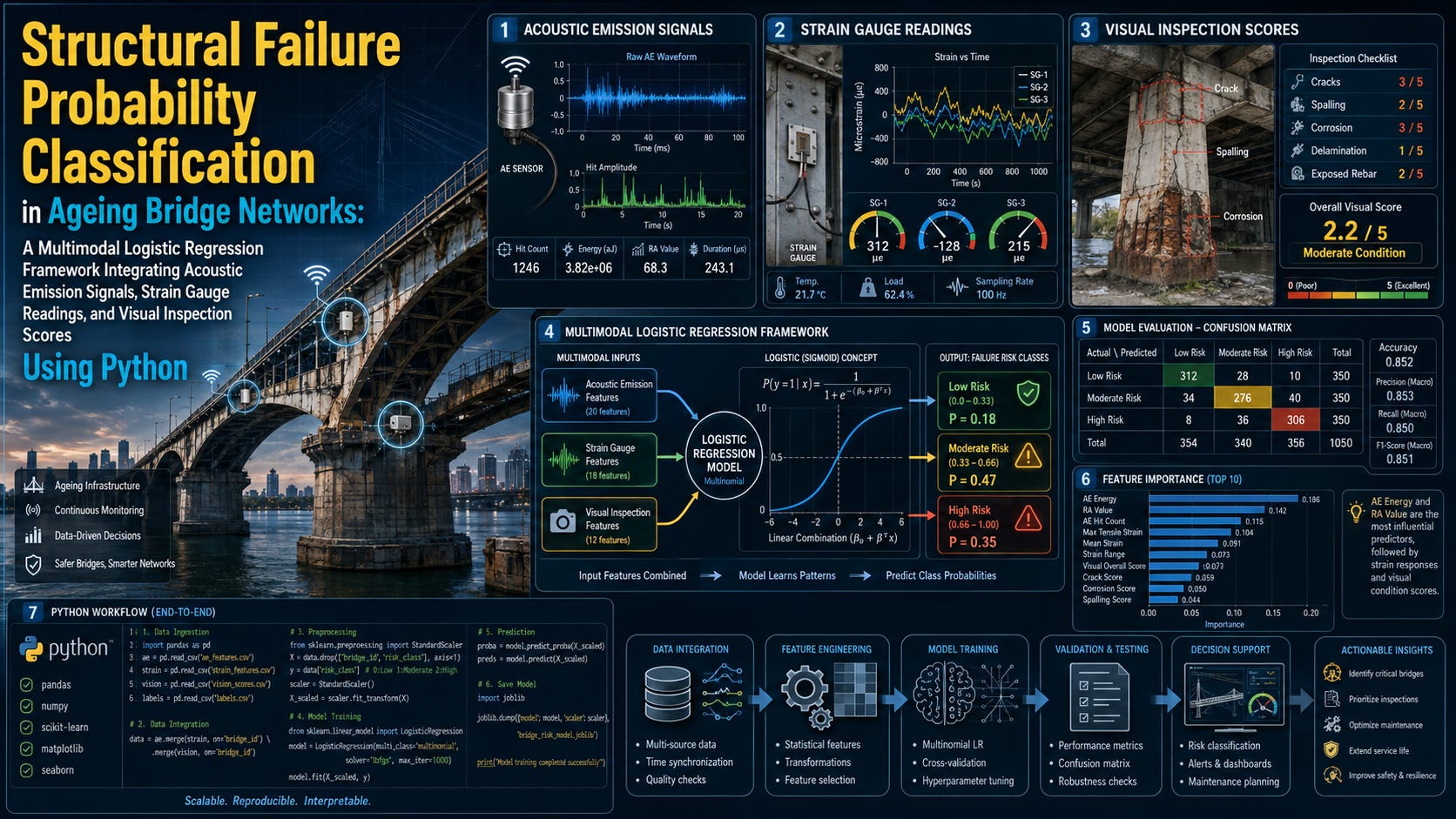
The article explains how Python can be used to classify structural failure probability in ageing bridge networks by combining visual inspection scores, acoustic emission signals, strain gauge readings, bridge inventory data and environmental exposure indicators.
It uses simulated but realistic bridge data to show how ageing, traffic loads, corrosion, scour, cracking, acoustic activity, abnormal strain response, fatigue damage, maintenance backlog and low load rating can contribute to higher structural risk. The workflow includes exploratory analysis, logistic regression modelling, model evaluation, coefficient interpretation, risk deciles, high-risk flagging, spatial risk maps and visual-sensor disagreement analysis.
Overall, the article demonstrates that bridge failure risk is multidimensional. Logistic regression provides a transparent and interpretable baseline model for prioritising inspections and maintenance, but real-world use would require engineering validation, calibrated sensors and expert review.

Comments
Nothing yet. Say the first thing.
Sign in to join the conversation.