
Note: Curiosity Files are deeper investigations into creative living.
It has been a busy few weeks since last month’s essay on boldness, and a time of getting out and about. At some point I hope to tell you all the stories from the Hay Festival (including what happened the moment I met Miriam Margoyles), the Women’s Prize Live and the Society of Authors Summer Party. These events, and others I mention in the essay, were perfect opportunities for creative inspiration.
Having filled my cup with all these rich experiences, I was curious to explore all the ways inspiration can strike, and a serendipitous question by a fellow writer became my prompt to do just that.
My aim here remains the same: to understand creative life from many perspectives. I’m so glad you’re here because you can help me by sharing yours. As you read, comment with whatever thoughts or questions arise. This is a shared enquiry and is all the richer with your contributions.
If you prefer to listen just press play, otherwise read-on below.
0:00
-13:24
Claire Venus ✨ from Sparkle on Substack asked, ‘Where do you draw inspiration from?’
As is often the way with me, when I pop into one of my favourite online places to hangout, if something catches my eye, I go all in. When I’m engaged, I’m engaged and my brain starts whirring and out comes a pure unedited response. It’s almost like a journal entry or writing from a writing prompt, and sometimes my thoughts on that prompt are emerging for the first time as a stream of consciousness. Claire’s question was no exception, and I answered it like this:
“I take inspiration from everywhere.
-Nature and the seasons. I’m in the minority in my family but I love the British weather and all the changes and rhythms.
- Travel. I am always keen to explore new places and cultures.
- My family across the generations from my dad who is 90 this year to my daughter who’s 21.
- All my inputs. Books. Television. Film. Theatre. Music. Long form essays here on Substack. Science and technology research, and more.
- My internal creative instincts... and following them rather than shushing them, which I did for far too long.
- Conversations with anyone who wants to chat about creativity — be that creatives for my podcast or people I meet at events, festivals, open studios, readers at bookish gatherings. Even outside of my work, at the gym or when I’m a plus one for my husband’s work events.
I have an ecosystem with both creative enterprise and creative expression and I need all sorts of information and ideas to flow through me to satisfy my insatiable curiosity and nourish my creative needs.
That was the long answer.
The short answer — Life!”
At first this interaction lingered for a few days, then it ignited my curiosity. Why do these experiences inspire me? And more broadly where do creative sparks come from? Taking each in turn I went in search of answers and here is what I have discovered so far.
There’s a passage in my novel Pivotal, where a character looks back towards a mansion.
“She spied smoke rising gently from a bonfire, somewhere within the walled garden. Its smell, mixed with that of damp soil beneath her feet, evoked memories of childhood frolicking through fallen leaves. How anyone could choose a permanent residence in a hot country and miss the seasonal contrasts, she would never understand. Every year, at every change, she tingled with excited anticipation of the newness, based on years of similar experiences safely stored and triggered by her senses.”
This, of course, is drawn from my own response to those seasonal changes, but what is it about the cyclical patterns in nature that inspire us? And why do rich sensory inputs —the artists palate of browns and golds, and the earthy, musky concoction of autumn smells— create such a visceral reaction in us?
Studies have shown that being in nature shapes our sensory processing and directly modulates our ability to think creatively.1 This could be due to respite from screens and the busy-ness of modern life, allowing us to notice and absorb details at a slower pace. Or it could be a positive response to those natural stimuli, or both.
Another more recent study suggested that rather than a causal link between creative output and nature, the picture is more complex and potentially linked instead to a heightened feeling or perception of our creativeness.1 More generally our cognitive effectiveness fluctuates with the seasons, and those environmental rhythms influence the way we think.
So as the seasons change, they determine the structure of our daily life, our cultural rhythms, and how we feel in our bodies and minds.1 For me, there’s also that question of newness, or reinvention, as our natural environments cycle through different temperatures and day lengths and phases of growth and decay. In the UK we are known for being obsessed with the weather but for me it is change itself which sparks my imagination.
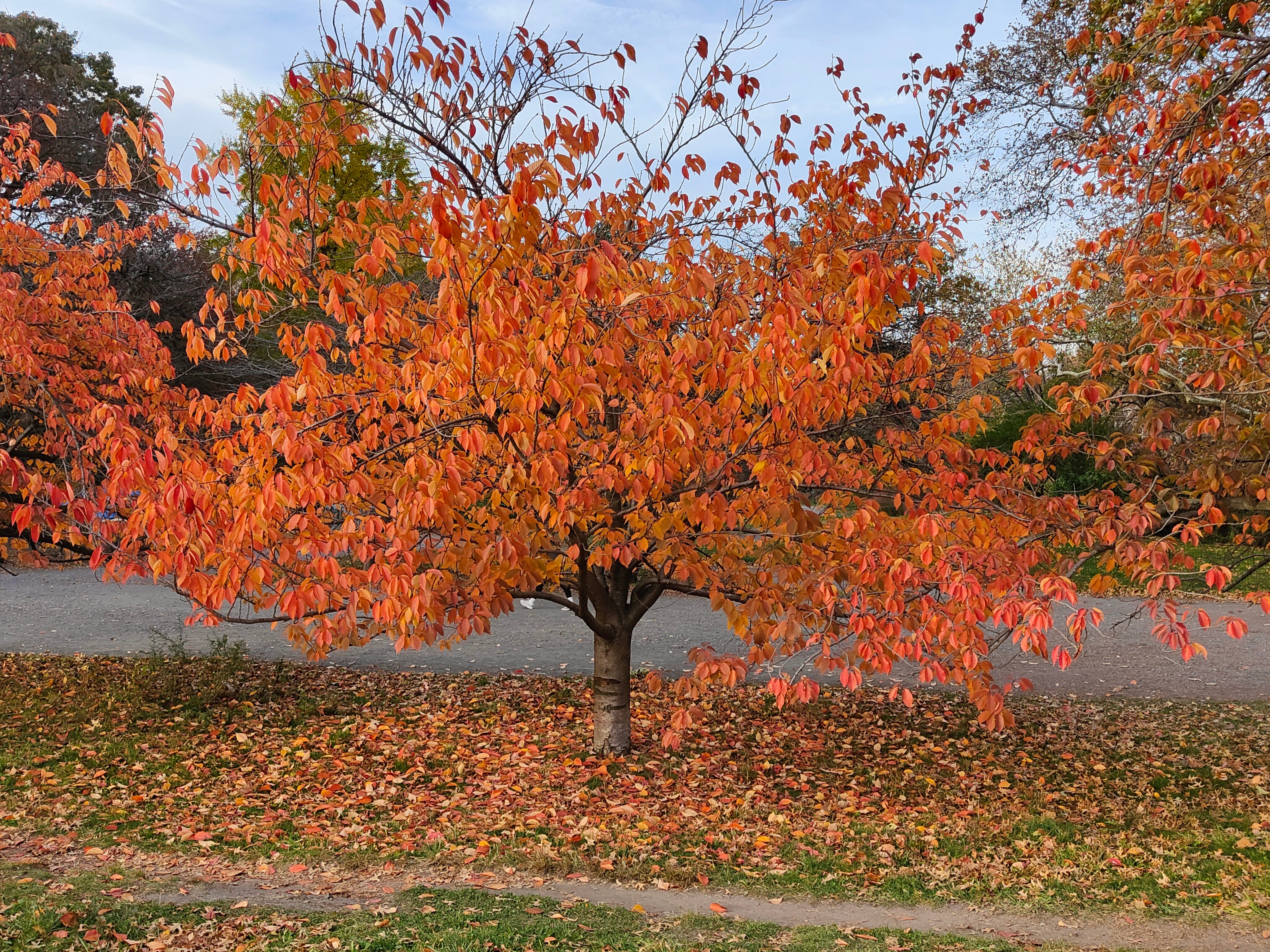
And that love of new things drives my desire to explore new places and cultures too. Opening the door to our new temporary home —be that villa or hotel bedroom— has us on edge, wondering if it will live up the photos, wondering what we will see when we look out of the window, or venture outside to explore. It is precisely this frisson of not knowing quite where we are or what lies ahead which helps us notice new patterns and make new connections. This exposure to novelty is what makes creativity possible.1 We’re switching off from the day to day, and indulging ourselves in new foods, engaging in people-watching from bistro café tables —a highly novel experience for those of us who live in ‘a green and pleasant land’. It’s green for a reason.
And you don’t need to spend thousands or travel miles, even taking a new route to a familiar destination can act as a creative nudge.1 When we travel somewhere we’ve not been before, whether that’s getting off the bus one stop early on our way to work, or flying to a new city, we are changing our perspectives. We are stretching ourselves. And as Emma Baylin1 says, ‘The stretch zone is where we get our biggest most powerful learning experiences.’
I don’t need scientific evidence to prove why my closest family inspire me — my dad always has, as far back as I can remember, and my son and daughter too, since they were born. I already have two ideas for future novels inspired by them, and a third by my husband. It’s a big year this year for family milestones and we’re so lucky to be heading off on holiday all together. A wonderful opportunity to soak up their unique viewpoints and the stories shared in relaxed moments round the bounty-laden table or by the shimmering pool. Like travel, our diverse perspectives stimulate new ideas.1 And that intergenerational story telling — of which there will be loads on holiday — adds another layer of perspective.1 It’s creative inspiration squared!
Every story ever told helps us understand ourselves, and others, a little bit more,1 and stories come in many forms. In my answer to Claire, I talked of my insatiable curiosity and the nourishment which comes from being exposed to different mediums. Whether that is discovering some new music (my most recent obsession is D3lta —Go check him out!) and marvelling at how a particular lyric or musical hook can become so addictive; or when I finish a book and it has such a profound lingering impact, I’m not quite the same person I was before I began reading. I have learnt that these inputs are an essential source of inspiration for both my creative work and my life.
Each experience is absorbed and stored during what’s referred to in Graham Wallas’ model of creativity as a period of incubation. You’ll see mentions to the model in earlier essays too.1 I’ve included it again here because it clearly shows that a spark of inspiration, or ‘illumination’, comes after incubation.1 In other words, that moment of the quickening of your heartbeat when the actor stops still and you hold your breath at the same time as every other audience member in the theatre; or an insight —from some research you read in an article or watched in a documentary or heard on a podcast— resonates in your bones so deeply that you want to share it with anyone else who will listen, is often the moment of illumination.
When I finish a book and it has such a profound lingering impact, I’m not quite the same person I was before I began reading.
This is where listening to your creative instinct, instead of shushing it, makes all the difference. When that idea arrives, it may come fully formed, ready to flourish, or it may be a tiny seedling needing more time to grow. Whichever, your instinct can tell you the way to go. Sometimes, like for Lorna Gibson1 , you may think the idea is bonkers. When that happens and she’s not sure what to do, she waits in the discomfort of not knowing, ‘practicing a bit of faith and patience and belief.’ Then if the idea, ‘is tugging at her coattails and keeps coming and coming’, she lets it take her by the hand and off down the trail to who-knows-where they go.
Last year, my finger hovered over the ‘book here’ button for Lucy Pearson’s reading retreat at the Hay festival, but not for long. Instinctively, I’d set my intention to be more spontaneous this year and seek out in-person connection; this would be the perfect way to do both.
And Hay is just one of several events and festivals I’ve attended this year: the superb Crouch End Open Studios, the Women’s Prize Live, Open Gardens at Tylers Green, with more to come. Whilst the experiences and circumstances are all different, it’s the in-person conversations I’ve had about creativity (and life) with such interesting people which I value the most.
In some ways these are another source of inputs or stories, but why are we instinctively drawn to meet in real life? Research shows that face‑to‑face conversation widens our cognitive field and increases the flow of ideas.1 It’s why events like Hay and Women’s Prize Live feel so creatively charged: the spontaneous collisions, the shared attention, the emotional presence. These are the conditions where creativity thrives.
And if I return to the question I set out to answer at the beginning, where do those creative sparks come from, it’s clear that there is no one answer. Looking back at my own experiences has shown me that inspiration takes many forms and is triggered when we have opportunities to hear stories, learn from new experiences, see from different perspectives and absorb ideas from the people we meet and the places we go. This is indeed, life.
Creativity and life are woven together and, for me, are one and the same.
Tell me, where does your inspiration come from?
Pop your ideas and thoughts in the comments and let’s keep exploring together.
¹And if you are curious to explore further, or follow up on the episodes, people and research mentioned, you can find links to everything in the Signposts post which accompanies this piece.
If you feel in need of 1-2-1 creative support, don’t forget to check out the Creative Pit Crew. It’s my way of connecting you to the people you might be looking for in your life.
Comments
Nothing yet. Say the first thing.
Sign in to join the conversation.