
This series is inspired by an old-school title called The Zodiac Cookbook: Fabulous Recipes for Every Star Sign, by Rose Elliot. This is a recipe for Pisces season (18 Feb - 20 March, 2026).
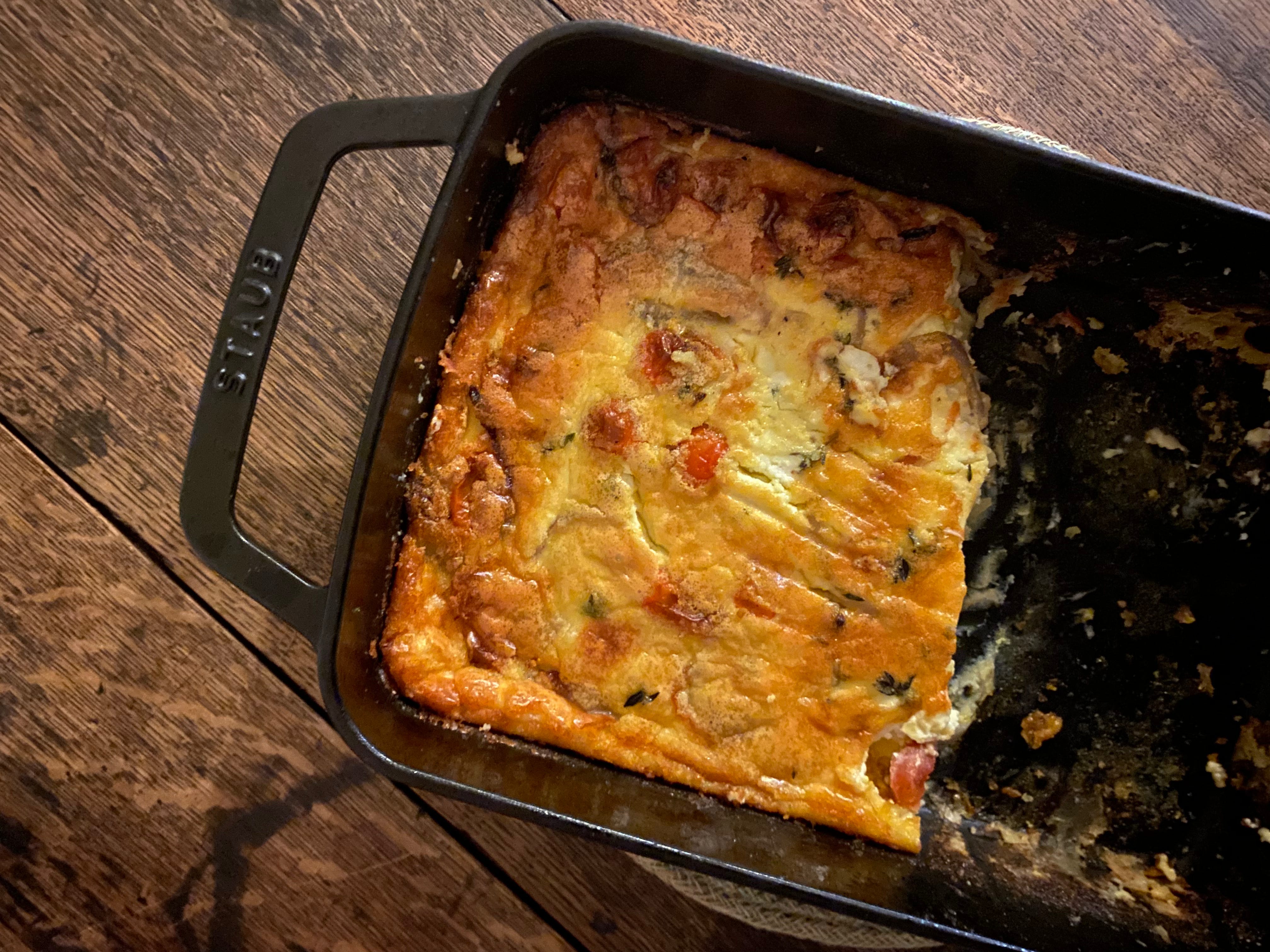
There is something so Piscean about clafoutis, in that it’s hard to pin down. It’s kind of a cake and kind of a pudding; you can slice it, or eat it with a spoon. It’s very rich, but so cloud-like it doesn’t feel rich. It’s made in a way that seems backwards: First you put the fruit (usually cherries) in a baking dish, then you pour the batter over it. But it’s not an upside-down cake because the fruit just floats in the custard, rather than sitting pretty on top. A French colleague told me that you must not pit the cherries in a cherry clafoutis, because the inedible pit in the inside of the fruit imparts an almond-like flavour, even if the recipe does not contain almonds. It’s a mystery sometimes dismissed as an old wives’ tale for the sake of convenience.
Since cherries taste bland at this time of the year – and I don’t want an angry French grandma showing up in my dreams, telling me I have disrespected her culture (because she would be correct) – I went the savoury route, adapting a recipe for tomato and goat cheese clafoutis from Diana Henry’s From the Oven to the Table: Simple Dishes That Look After Themselves. (A brilliant and accurate title.) Angry French grandmas showing up in dreams is totally in Pisces’ bag, too, as this sign is ruled by Neptune, who looooooooves dispensing funky dreams during its transits. Neptune is on my natal Venus right now, and I recently had a dream that my employer would have to sell the business to venture capitalists if my pores didn’t minimise as a result of my new skincare routine.
I added two anchovies to this recipe, because that is literally the symbol of Pisces – two fishes swimming in opposite directions. (Or, in this case, blitzed to smithereens.) I also added an onion, varied the cheeses, and used capers instead of chopped olives, though either would be great. We’re in mutable sign territory, so adaptations are welcome, however, do not skip the egg yolks + egg, which binds it all together, and make sure your oven temp is exactly as the recipe states. I tried using an egg yolk substitute and accidentally started at a lower temp, and the clafoutis was still good but unwilling to be sliced – more of a ‘spoonbread’ / custard situation. Still very tasty, still very Piscean, but not ideal.
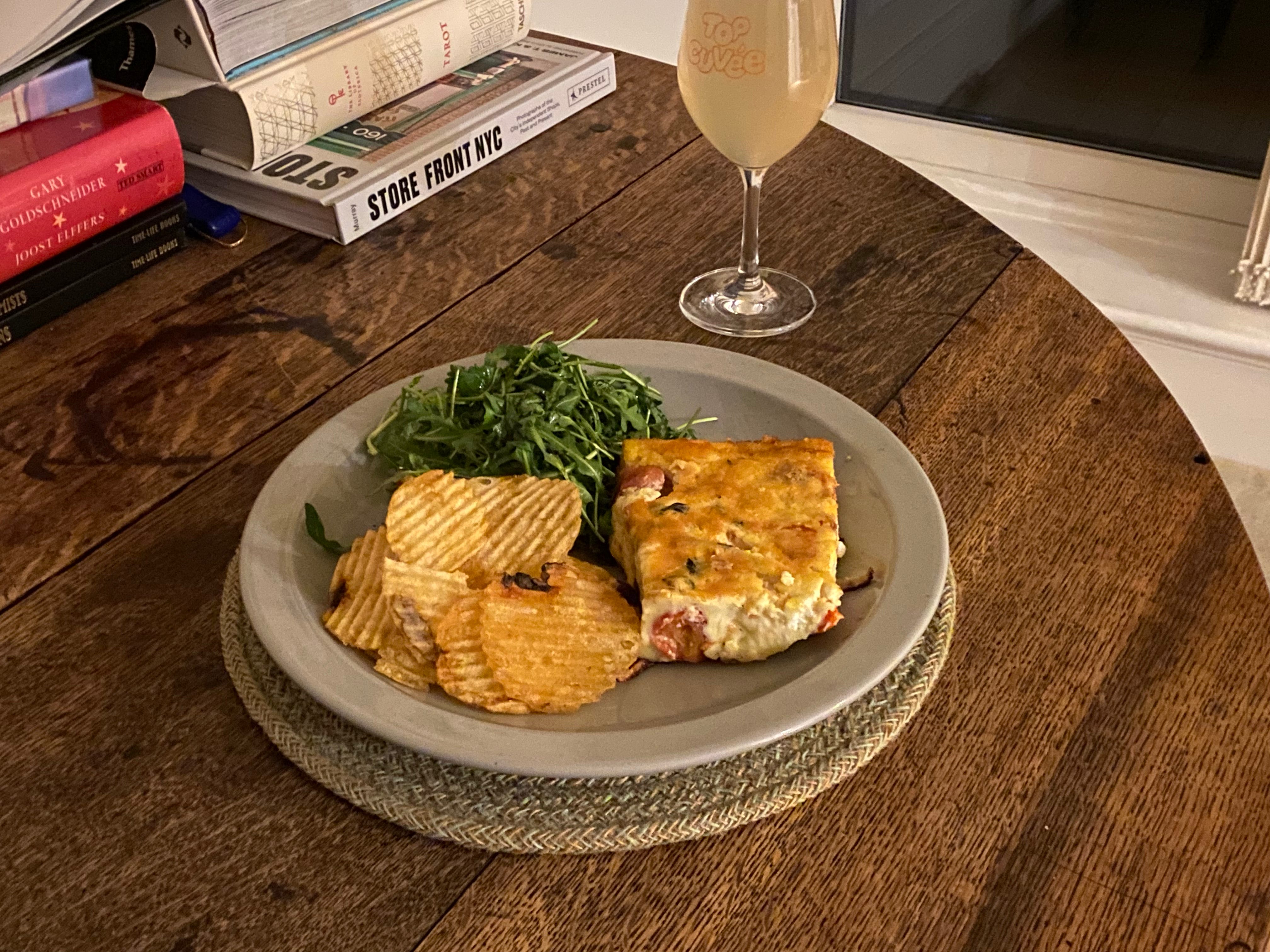
I made this clafoutis on a night when one of my oldest friends came over for dinner. She helped me take photos of this dish because the lighting in my apartment is horrible and makes everything look yellow (more mental institution than Coldplay song). My friend is a painter, and we talked about art and why we bother with something that makes us so vulnerable to disappointment and humiliation. I know the answer now, weeks later: It’s so dinners like these become super-charged with meaning. Active engagement with art, whether you are creating or experiencing it, makes you appreciate how special every single moment of life truly is.
I had leftovers for days, and on one evening, ate this clafoutis while re-watching Amélie, the most Pisces-coded movie ever. I think it’s an easy movie to make fun of because it’s so earnest. (When I told a friend I’d re-watched it, he said: ‘Is that the movie with the Instagram filter on it the entire time?’)
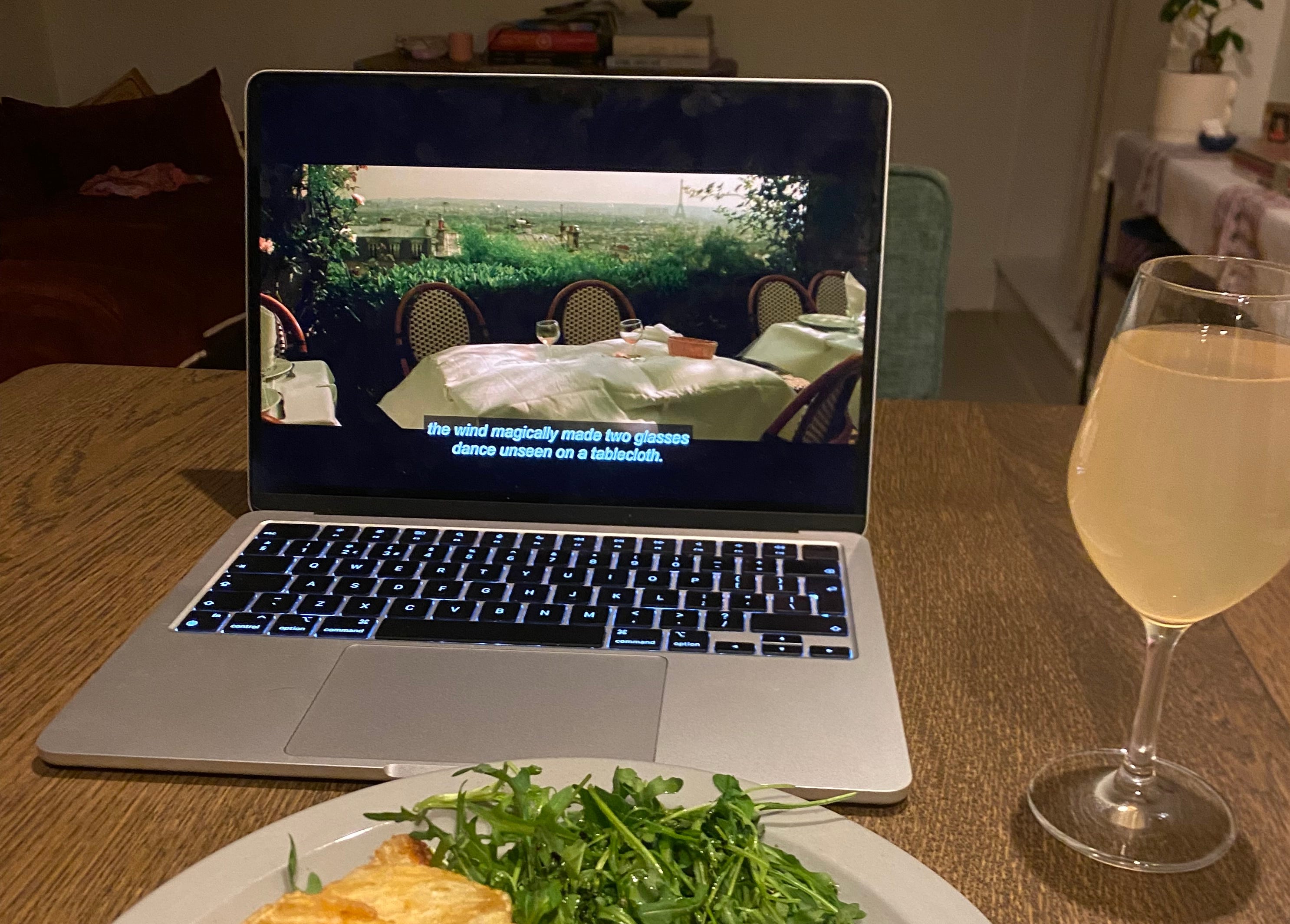
Released in 2001, Amélie preceded Instagram, but no doubt inspired it. The movie is unrealistic, and it romanticises stalking, but I love it because it’s so ambitious and original. It’s quirky, but the quirkiness doesn’t feel overly put-on because it’s not insisting that life is all joy and no pain. In fact, the movie is incredibly dark – Amélie’s mother dies when she is a child, while holding her hand, because a tourist from Quebec falls on her during a suicide attempt. They had gone to pray for a male sibling, because her parents were clearly dissatisfied with her, and she knew it. This happens within the first 10 minutes of the movie. The story is, essentially, about a serious commitment to infuse life with sweetness and romance, even when people are cruel and life is relentlessly dark. That feels very Piscean to me – a wisdom rooted in joy and hope, rather than disappointment and cynicism.
Note: The North Node is also currently in Pisces, conjunct Mars, so do try and Pisces it up in whatever way you can, i.e. making this recipe (or any recipe) and eating it with someone you love, seeing concerts / movies / art exhibits, helping someone in need (even if you suspect you’re being conned - if it makes no significant dent in your pocket, it’s worth it).
Adapted from From the Oven to the Table by Diana Henry, p. 92.
I like serving this with a side of very simply dressed rocket/arugula and potato crisps/chips. (One day I will just pick an English dialect and stick with it.)
300g cherry tomatoes, halved or quartered
1 onion, sliced
Lots of olive oil
Salt and pepper
6 eggs (4 whole eggs, plus two egg yolks)
50g flour
200ml whole milk
300ml double/heavy cream
40g Parmesan cheese, grated
2-3 garlic cloves
2 anchovies
30g capers or chopped and pitted olives
125g goat’s cheese
75g feta cheese
10g herb of choice (I used thyme)
Pre-heat oven to 180°C fan (400°F). Chop the tomatoes and onion.
Cover a rectangular or oval baking dish with olive oil, add the tomatoes and onion, and sprinkle liberally with salt and pepper. Mix it together and put it in the oven for about 30 minutes, until all most of the moisture from the tomatoes and onion look released.
Meanwhile, put the eggs, egg yolks, flour, milk, cream, Parmesan, garlic, and anchovies in a blender and blitz until combined into a batter.
Pour the batter into a separate bowl and add the capers or olives, goat’s cheese, and feta cheese. If you’re using a woody herb like thyme or rosemary, add the leaves here. If not, add it at the end, after the clafoutis has cooked. Let the batter rest for about 30 minutes before you bake it.
Take the roasted tomatoes and onion out of the oven. When the batter is done resting, add it over the tomatoes and onion and DO NOT MIX. Put the dish in the oven for 30 minutes. It should look puffed up and golden throughout the top, especially at the sides, but wobble slightly in the middle when you shake it. It’s better to underbake than overbake; underbaking will make it harder to slice but tasty, but overbaking will make it rubbery. Let it rest for 5-10 minutes after baking; it will sink a little and continue setting. Serve scattered with herbs (if you haven’t put it in the batter), and with a side salad.
Comments
Nothing yet. Say the first thing.
Sign in to join the conversation.