
Welcome to Mate Investigations - a content series in which I take a closer look at a single strategy designed to bring you closer to your friends. Firstly, some housekeeping: if you haven't read last week's newsletter, I recommend starting there. In it, I explain how the work you're about to read came to exist - and why I've chosen to share it now. This post is the first of five on the topic of platonic proximity - or why having friends in your neighbourhood, on your street or in your home represents a connective cheat code. Here, I trace the roots of the aspiration to live near my friends back to my childhood; next week, I’ll explore the aspiration through a cultural, economic and social lens, before hearing from those who have put it into practise about what it’s done for them. It's a fascinating topic and - as I discovered - it isn't all or nothing; you don't have to convince your friends to move to a commune in order to benefit from the proximity science (although I will die trying). I hope you enjoy reading it - let me know by leaving a comment, buying me a coffee or becoming a paid subscriber.
I’m hurtling down a hill at 20 miles per hour, my bum on the back of the skateboard Santa gifted me six months earlier. That skateboards are for standing is a detail that doesn’t bother my eight-year-old brain. I’m having too much fun to care.
It’s May 1996 and I’m in a chalet park in Pembrokeshire, a corner of Wales that will be written into my story with permanent marker in the decades to come. But before I said goodbye to my grandparents in the church where my mum and dad got married, before I said my own vows through a Covid mask a few miles along the coastline, I came here.
Chalets on stilts flank a road that’s San Francisco steep. The field at the bottom doubles as a football pitch and a single-track path through the woods beyond spits you out at a beach with a pub where the Freddos cost 10p and the kids run riot.
In an award-worthy feat of organisational engineering (WhatsApp still a twinkle in a tech bro’s eye) my parents gathered 40 of their friends and friends-of-friends in this chalet park each year. And in return for putting up with weather best described as fickle, they were rewarded with free childcare.
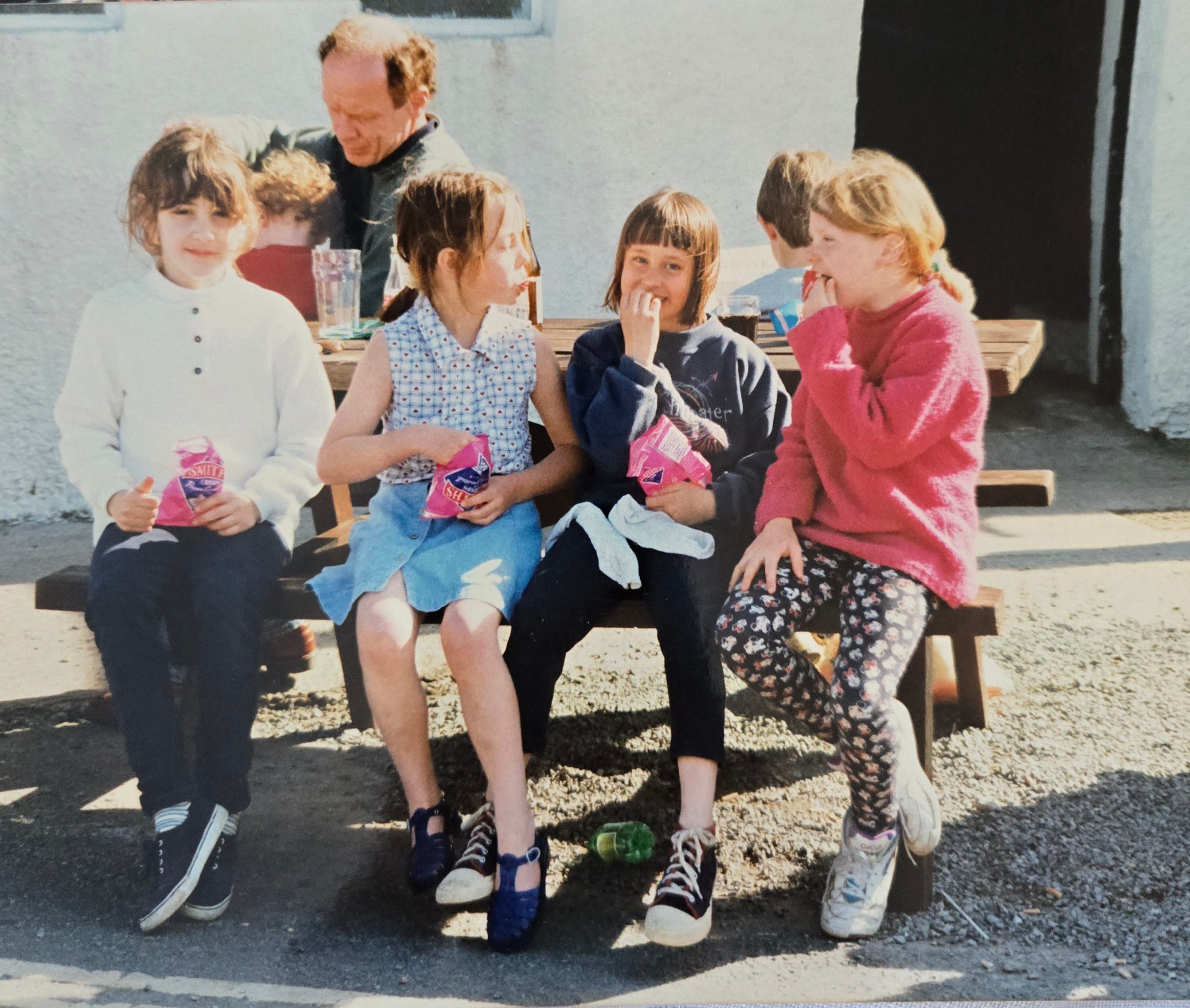
From six in the morning until we were slung over a shoulder sometime after midnight, we were together. When it rained, we holed up in the chalet of whichever parent pulled the short straw to play Mouse Trap, Dreamphone and Uno. When it stopped, we threw down our jumpers as goal posts and knocked for more kids until we had enough for five-a-side.
If it sounds like a child utopia, it was; the endless hours outdoors, uninhibited fun and freedom from the cautionary gaze of parents unlocking an intimacy that even the closest bonds back home couldn’t match. And one full-body feeling has lingered like the skateboarding scar on my ankle.
For those seven days, the family units we belonged to ceased to exist. The kids and grown-ups knitted together to form a new kind of social fabric - and our days were designed with the collective in mind. And more than the bonfires on the beach and the coach trips to the local theme park, it was the ability to eat a bowl of coco pops at another family’s breakfast table that made these friendships feel so formative.
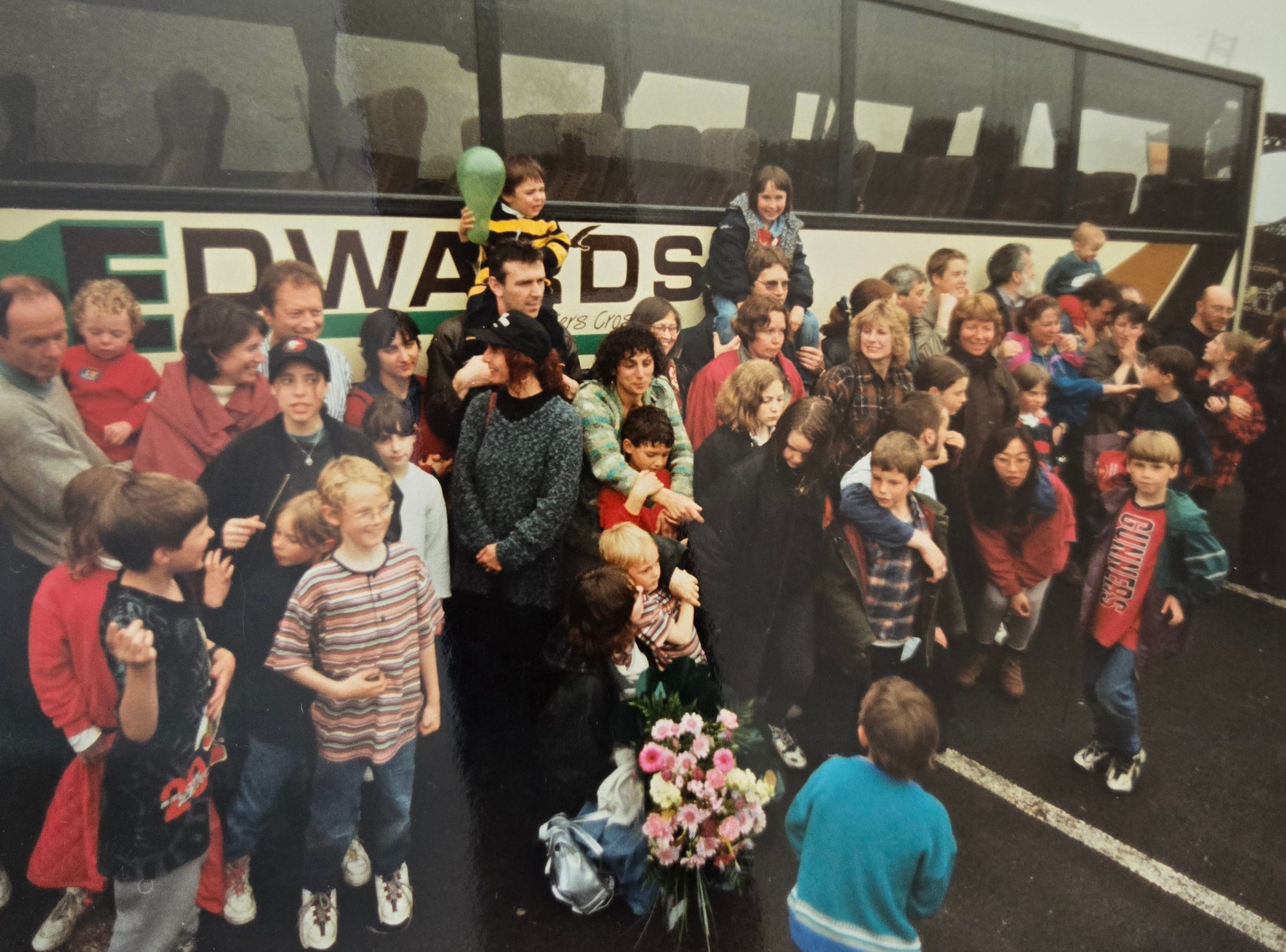
There would be communal coco pops in my future. There was a year of living in halls at 18, when I fell hard for my next-door neighbour, Jess* - a friendship in which bikini-clad baths were as much of a feature as fielding questions about our relationship.
The remainder of our uni days played out in creaky Victorian houses where we wore each other’s Topshop dresses to sticky-floored student bars. And I spent the lockdowns living with the man I would marry and the friend who would be his best-man - a thin-walled set-up that culminated in a wedding where the speeches wrote themselves.
But while each experience delivered a version of intimacy that only sharing a TV and a toilet brush can, written into the T&Cs of every tenancy agreement was the understanding that it was temporary; a pit stop en route to a version of adulthood that, sooner or later, would push us apart.
Three decades on from the peak of my skateboarding career, it has. I live with my husband in east London - a domestic arrangement we have in common with most of our friends. And while we’ve yet to find a use for the cot my sister is storing for us in her attic, if one thing was never up for debate, it was this: we would live together, and we would live alone.
We aren't always alone, of course. We book train tickets in advance and take advantage of bank holidays. Once a year, in July, we return to place where my earliest friendships were forged. And while the board games are boozier and the beach games more competitive, the pilgrimage to Pembrokeshire is the connective cheat code it always was.

But when our week of communal living lapses, we pile into our separate cars and drive home to our separate postcodes. By the time we’re back on the M25, a thought will be looping through my mind: if the holidays of my childhood created the conditions for intimacy, has the home life of my adulthood created the conditions for disconnection?
Comments
Nothing yet. Say the first thing.
Sign in to join the conversation.