
Hello.
The Heavy Loop, a ~30 minute long music video with glowing animated title cards. Similar to the song, this process was unexpected, improvised, intuitive, and long. It’s a video made the way I think a jazz musician improvises a song. The titles cards are as burned-in as they can get. This was a fun experiment; here are the findings.
Making this video was also like a great game of ping pong. I know I just said it was like jazz but wait. We hit this idea back and forth until it was something interesting. First, Jonah and his band recorded this song, The Heavy Loop, that they could play for any length of time. bop. As I listened to this, I recorded a 30 minute long video clip of a walk I took by a river, starting and ending on a drawing. bop. Then Jonah and his band improvised to my clip. bop. As they did this, I tip-toed around and filmed them playing, scoring my clip. bop. We then jammed both the videos into side by side circles, and had, without really meaning to, created a visual loop. bop bop.
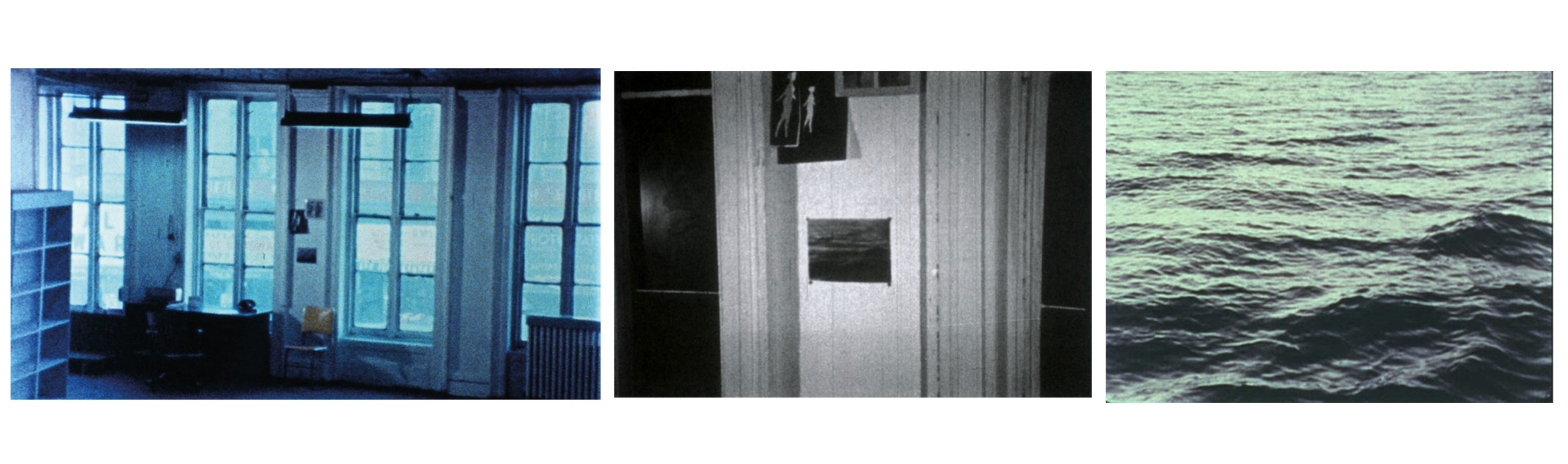
Pardon the extended ping pong analogy. The point is, like ping pong, like jazz, there was an easy back and forth, looking and listening, and a general attitude of acting intuitively. There wasn’t really a plan, we just kept shrugging and saying sure.
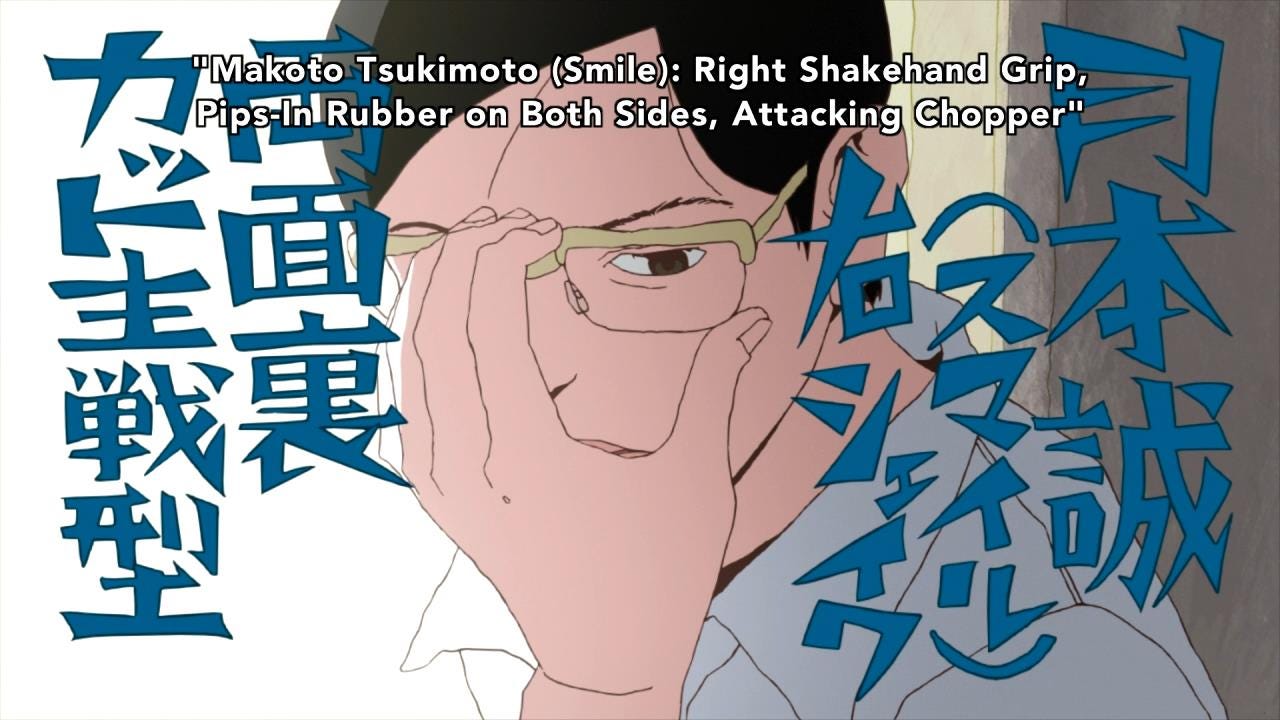
This was really rewarding, but in some ways it’s just the preamble so I can talk about these title cards. Speaking of 🏓, Ping Pong The Animation has these incredible screen-filling title sequences injected throughout the whole series. The titles introduce a character in huge messy letters and give some details about them. We wanted to bring some of that anime sensibility to this improvised jazz piece, to introduce Jonah, his band, and the song.
When I animate something onto a surface, I want it to feel like it belongs there. (It also wants to feel as though it belongs there, it has told me). I’ve seen some beautifully designed and composited digital type, and indeed I have and will do that in the future, but this felt like a good chance to try compositing physically. How can I get these titles on to this video in real space, instead of digital space?
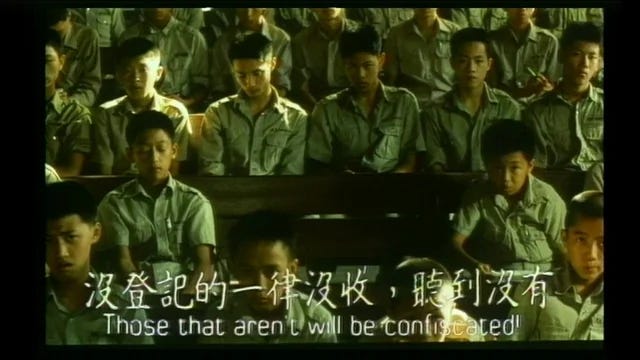
Sometimes there are subtitles in a movie, and there’s no preference to take them off, and they feel like they’re deeply ingrained in the movie you’re watching, or “burned-in”. Usually you can find these on bootleg DVDs or questionably legal streaming sites. They’re of course not burned-in on purpose, but they really feel as though they belong- they’re embedded into the texture of the grain, or vhs distortion, or just lossy compression. This feeling of belonging for the titles in our video was the goal.
What even is a video… like, if a video was a material, then what material is it? I realized it would be light- carefully arranged and coloured light, forming a picture (usually through a screen, but often through a projector). So in order for the titles to belong on the video, they need to be in the video. They need to be light. Like modifying DNA, we can take the video’s light apart and add more light to the light thats there, and then recapture all of that light again. I decided we could create a dual projector setup, one to project the two channel music video and another to project the titles in pure light overtop, and then rerecord the two layers of light as one. We would just need to create hundreds of stencils, one for every frame of the animated titles.
After Moya designed these perfect titles, we had to figure out how they animate. What motivates light to move? Eventually we swished some water around in front of the printed out titles, distorting the characters randomly. This process felt true to the making of the song and video: improvised, natural, chaotic but beautiful. It is also honest to the natural animation and distortion of light, as water is a frequent provocateur of strangely rippling light through caustic refractions.
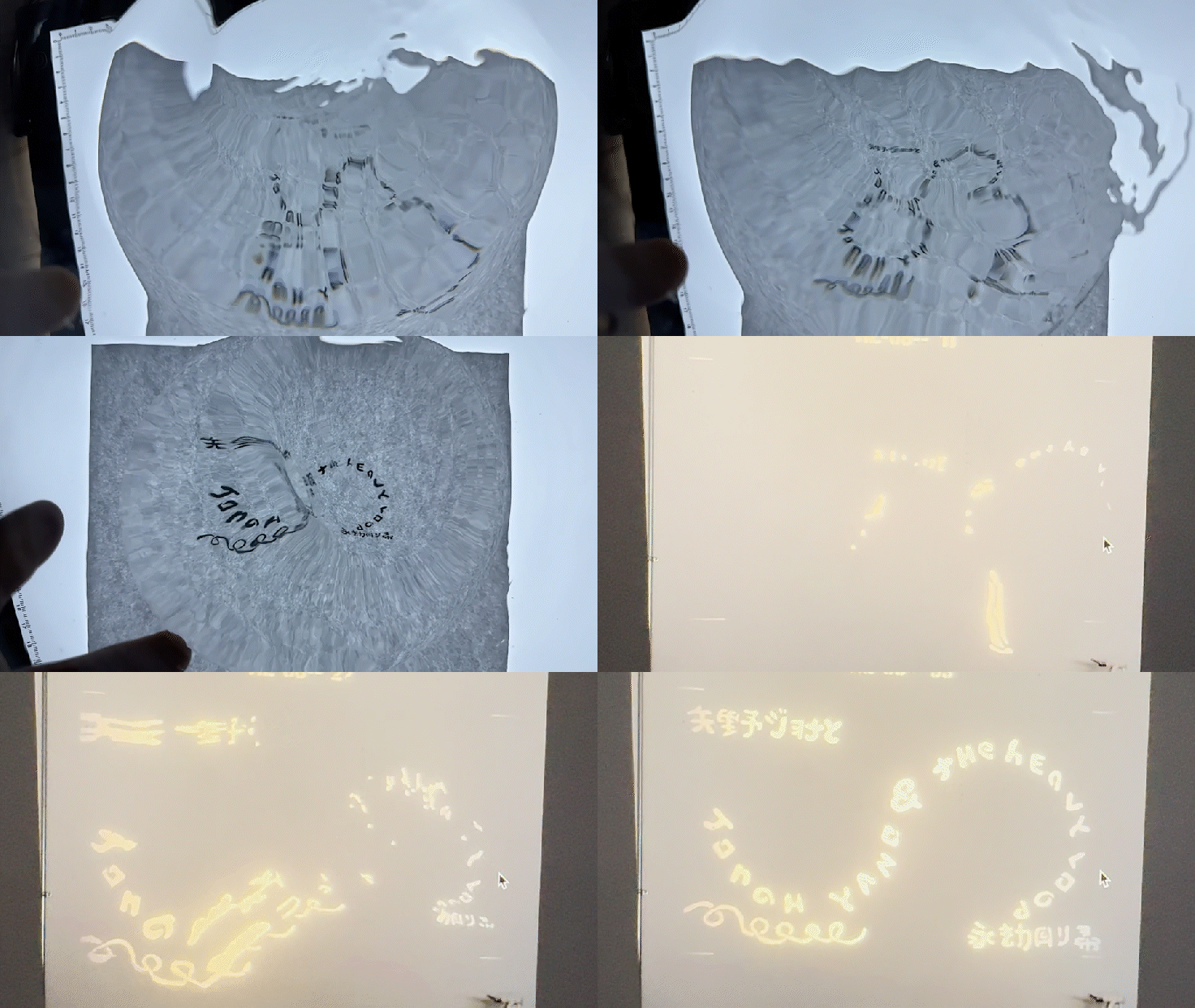
The rest was straightforward. I processed the water footage digitally, we made a couple of hundred stencils with a cricut cutter, and then we flipped through the video frame by frame, changing the stencils sequentially on the overhead projector to make the titles move on top of the video. We animated-out each title by just moving a knob on the overhead projector to make it fade out.
In the end we achieved the goal of belonging. There are always seemingly miraculous byproducts that come from doing things physically, and these unplanned-for variables really help make things feel right. They’re surprises that you can’t plan for when doing things digitally. The overhead projector was so much brighter than my modern movie projector that the titles literally glow, casting a soft orange across the whole video when they come in. Before the titles appear, the glow does, giving the viewer a nudge about whats about to happen. Sometimes we nudged the overhead projector as we were fading out, and so the whole title wobbles. Some of the stencils broke and for a single frame you get a hot spot of light. All of these accidents become key notes, and instead of striving for perfection, it is all a part of the composition.
Thanks for reading.
N
Heavy Loop, the video
Title design: Moya Garrison-Msingwana
Animation: Nik Arthur and Jonah Yano
Directed by: Nik Arthur
Photography and Assistance: Raiden Louie
Jonah Yano and The Heavy Loop is comprised of Jonah Yano, Felix Fox, Benja, Chris Edmondson, Raiden Louie, and Leighton Harrell. Recorded at Port William Sound.
No posts
Comments
Nothing yet. Say the first thing.
Sign in to join the conversation.