
I re-read The God of Small Things after three decades. I came back to it after reading Mother Mary Comes To Me.
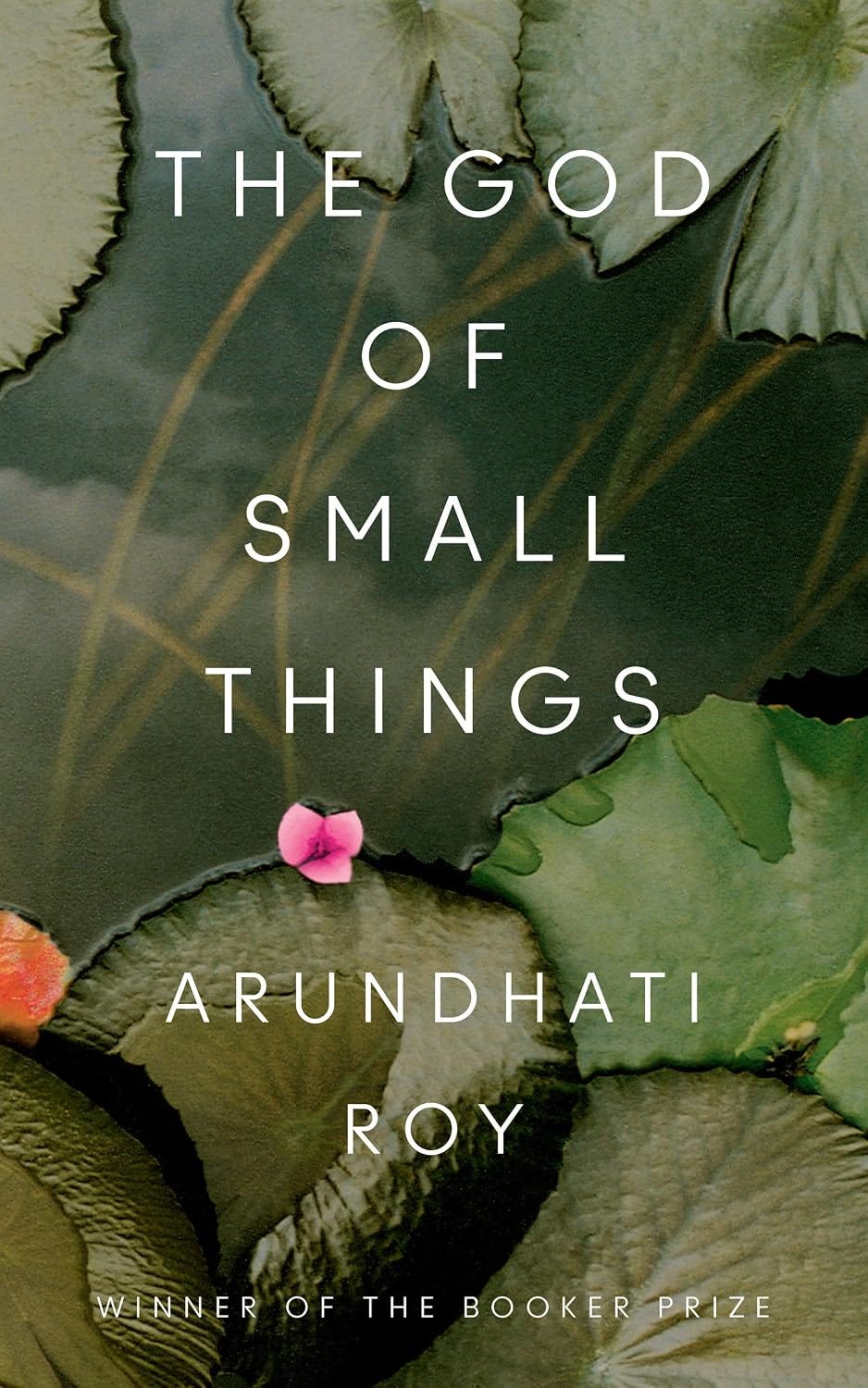
I had just finished high school when it came out. I remember turning the India Today over and opening it from the back, to the last page where the book reviews used to be. It was perhaps the first novel I read that was set in India, my earlier reading loyally following the tracks laid down for my generation: starting with England with Enid Blytons, Agatha Christies, P.G. Wodehouses later turning to America with Nancy Drews, Hardy Boys and Jeffrey Archers. Scones, daffodils, moors, the White House - not only did none of these exist in my part of the world, there was no visual reference and no Google. I got used to not fully understanding what I read. I did not understand God of Small Things either back then. I grew up in a small town in the north of India. I could label Kerala (neatly) on a blank map of India, but that was pretty much it. The book may as well be set further westwards of America for all it mattered, with all its references to Syrian Christians, communism, Rhodes scholars and the rest. Even so, I remember feeling like I was experiencing something beautiful in those pages. This, I’ve realised, is a hallmark of good art - it is felt before it is understood.
I remember two things specifically, first that Estha occupied very little space in the world. This line struck a chord with me and lodged itself in my mind sort of permanently, so much so that I think I shaped my personality around it for many years to come. The second thing is how the story ends. I remember being awestruck; not by what happened - that seemed to be the only merciful thing to happen in the story - but that it was okay to think and write something like this.
These are the things I remember remembering. But I wonder what else seeped into the subconscious. A slight irreverence in the way we write our characters? A clear-eyed, unapologetic owning of all that ails our home - fragile egos, hollow ideologies, abuse by the stronger over the weaker: men over women, rich over poor, adults over kids.
In the intervening three decades, I followed other stories set in India, especially the ones that became popular internationally. Stories of unimaginable poverty, caste and class politics, corruption, lawlessness, immigration, the inequality and indifference that we can’t shake off, no matter how many borders we hop over. Sadly, these I understood well. Stark, cringe inducing stories of poor kids jumping into lakes of shit for a chance to meet their Bollywood idol. Crossing oceans of paperwork and mountains of debt to go abroad, only to drown in petty jobs you then spend a lifetime hiding from your family back home. Airing our dirty laundry on an international clothes hanger, a literary race to be a slumdog millionaire, fastest finger first. These stories were international bestsellers. They made for hard reading and harder discussions. I could hear my voice get a defensive edge, sharp with the guilt of not living in the country, heavy with the burden of convincing non-Indian friends that it’s not all bad back home, this is only the underbelly, there is so much more to the glorious country, our history, our culture, the architecture, you must visit (but hold your bag tight in Agra).
Re-reading God of Small Things this time, I understood all of it too - the beauty of Kerala, the glorious POV of children, the much anticipated visit of the much loved white cousin from London. But I also understood the Untouchables, the evenly paced vomit streaks on the bus, ‘Murlidharan, the level-crossing lunatic, perched cross-legged and perfectly balanced on the milestone’, naked, what really happened with the Orangedrink Lemondrink Man man at Abhilash Talkies Princess Circle Refreshements Counter, the pettiness of Baby Kochamma, the loveless mother, the heavy, heavy losses hurled on little shoulders that didn’t have the language to scream. A familiar cringe began to crawl over me. How was this different from airing dirty laundry in public? How was this not pandering to a white audience?
Or did it perhaps, set off a trend? This book came out in 1997 and straight won the Booker prize. Is it possible that this immediate and unsurpassed success of this book came to be construed as a definition what good literature must look like?
It can feel like she is mocking her characters. And yet, we don’t hate any of them. Because she takes us deep into their psyches, their doomed loves, their utter loss and isolation which makes them wear all of their gold jewelry inside their homes, makes them incapable of tolerating anyone else receiving love. Not unlike how in my family we remember my grandmother. She was a personality. We still recall how she sent us off on random errands, like sprint to the post-office in the boiling 2 pm sun to post her ‘urgent’ letters to her sisters. She was a boss lady, she took up space, was the world’s greatest cook (we are all still trying to recreate her murabba) and had convinced all her grandchildren that each one of us, individually, were her absolute favourite. She is long gone, but we still tease her. She was a full, flawed human being. As are the characters in the book. Even Baby Kochamma. Especially Baby Kochamma. Irreverence is how she sums them up. The irreverence is shorthand for the full human being behind it. It is a writing device that is efficient, clever and immensely readable. A full character lends themselves well to being mocked. Mocking a character, however, does not make them full. Nor does wearing the ills of our developing country like a badge of honour make us good international writers. That’s mistaking style for content. Like those plastic plants in cheap restaurants. They can fool you for a second, but they do not withstand a closer inspection. They are the exact opposite of what they claim to be - lifeless, fake, toxic.
Is it possible that the Indian writing that emereged after it mistook the shorthand for the full depth? If so, we could be forgiven for making that mistake. It is spectacular writing and any budding writer would be excused for wanting to adopt that style. It happens all the time. We start to speak like the people we love. We start mimicking their accents and gestures. Stay married long enough and we start looking like our spouses. Call it imitation, call it osmosis. Or, call it… love? Because that’s the other great thing art does. It inspires. That urge to paint after visiting an art exhibition? That urge to cook after eating a decadent meal? That’s art calling art.
Am I lauding this piece of work to be on the right side of a thirty year old Booker decision? Perhaps. Am I shielding it from my own critical eye for the sake of a child-like need for at least some living literary heroes I can look up to? No comments!
To read God of Small Things after Mother Mary is to see the person who wrote it. It only confirms what we know in our hearts - that this book is the opposite of an expose of a far-from-perfect post-colonial society written to pander to a white audience. When you have spent your life speaking up against establishment, risking your safety, standing with the oppressed, be it Kashmir or Narmada Bachao or Naxal movement or Gaza or The Cockroaches, you get to write about the things you have seen. Not to show yourself as superior or distant, on the contrary, because you have been on the inside. To embrace it all, to say that this too is mine. To read God of Small Things after Mother Mary is to see how someone who had to endure too much cruelty and darkness at a young age, managed to spin it into courage, compassion and art. This is the other thing great art does.
No posts
Comments
Nothing yet. Say the first thing.
Sign in to join the conversation.