

Effective immediately, extra content/fun stuff for paid subscribers will now be its own full, designated email, as opposed to a section below the paywall in each issue. Cadence TBD. You can upgrade your subscription here. TY LY! 💖
Disclaimer: There are The O.C. spoilers in this post. If you have not seen the show since it premiered 23 years ago, that’s on you.

This week in 2006, television – and the course of our society & culture, as far as I’m concerned – changed forever. The death of beloved antihero Marissa Cooper (played by Mischa Barton) was among the most devastating losses in TV history. But:
This was the way Mischa wanted to go – out with a bang!!!
Do not believe the Season 4 slander!! I didn’t watch S4 during its original run, because everyone said it wasn’t the same. I first saw it probably about five years ago and wholeheartedly believe Season 4 is actually better than Season 3. (Do not get me started about the wet blanket that is Johnny! His arc should not have been as long as it was! RIP to Johnny though…)
Even if the show’s creators & writers regret the way it went down with Mischa and her team when severing their professional ties, I appreciate the show’s subsequent reframe of her tragic ending. In Season 4’s “The Chrismukk-huh?”, aka. the parallel universe episode, it’s revealed that Marissa would have fatally overdosed in Tijuana (Season 1) had Ryan not been there to save her. Okay now I’m crying hysterically…

The O.C. has always been one of my favorite shows, and I’d been wanting to write about it for quite some time. I’m super excited to have contributed a piece called “Your Pool House or Mine?” for Are.na Annual!!! Are.na Annual is a yearly anthology of writing from the people of Are.na – an online social networking community and creative research platform for creative curation and organizing ideas. (I generally think of it as “Intellectual Pinterest”.)

This year’s theme is “pool,” and I decided to interpret that theme quite literally. To me, The O.C. is the most important cultural product with swimming pools as a central element! I really enjoyed collaborating with editors Meg Miller and Amirio Freeman and was so excited to see my work in print!!! The book is sold out, but please enjoy an excerpt from my piece. You can also check out the full set of 100+ The O.C.-related pool images on my Are.na board, Pools of The OC.
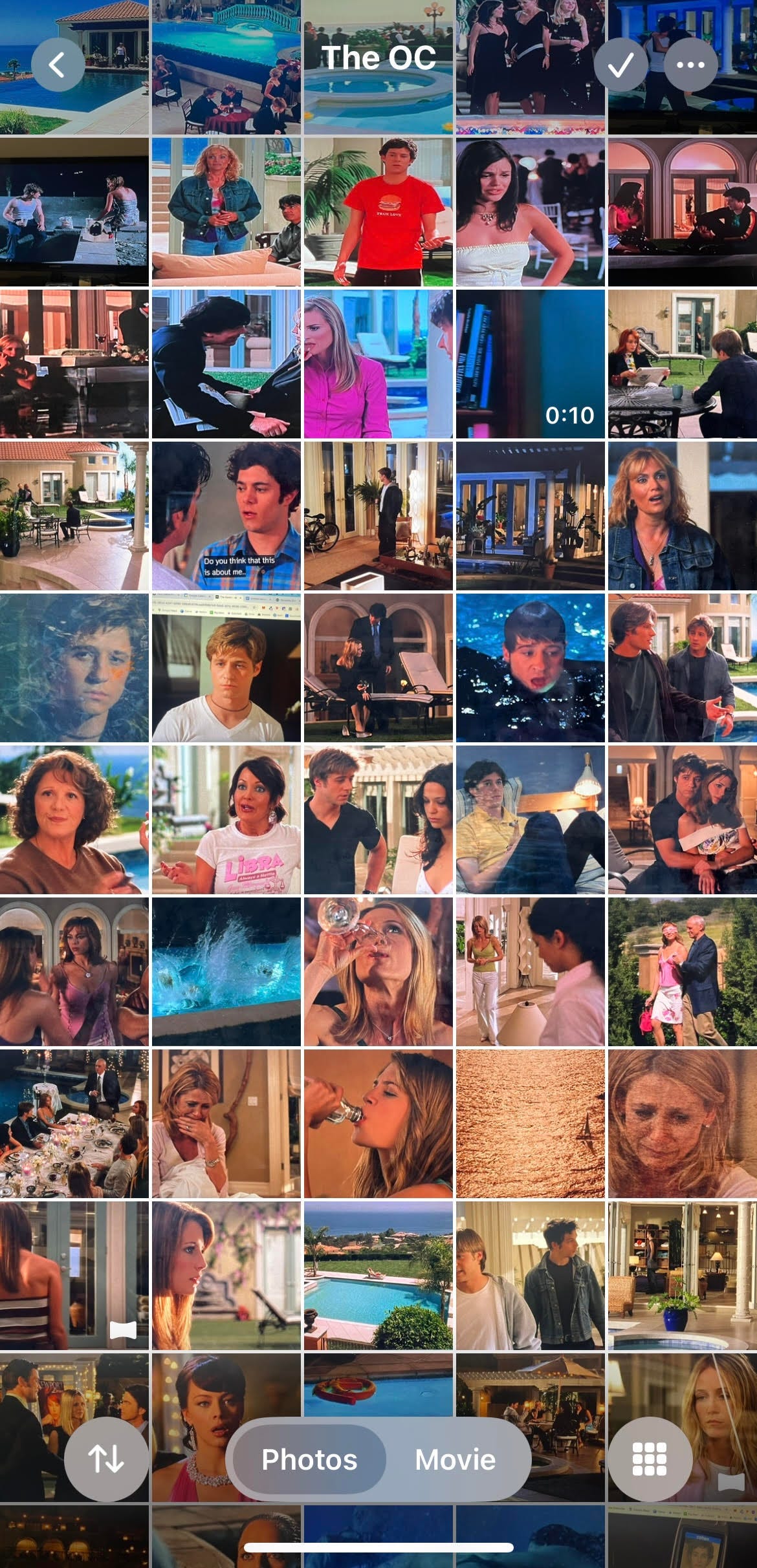
In The O.C. (2003–2007), swimming pools are shimmering facades of delusion and denial that set the stage for the show’s strong emotional current. Affluence cannot protect these dramatic suburbanites from being pulled into the undertow when they least expect it. The Cohen family’s pool in particular is like a nonverbal character, silently witnessing spilled secrets and ready to pop insulated bubbles of privilege at any moment. It’s the primary site where secrets are divulged, cosmic paths cross, and fates turn. It’s where our beloved characters dive in, make waves, float, sink, and sometimes even drown. The spatial symbolism depicted on The O.C. is intentional. Swimming pools are imbued with symbolic significance that shape the characters’ experiences, behaviors, and perceptions of themselves and others.
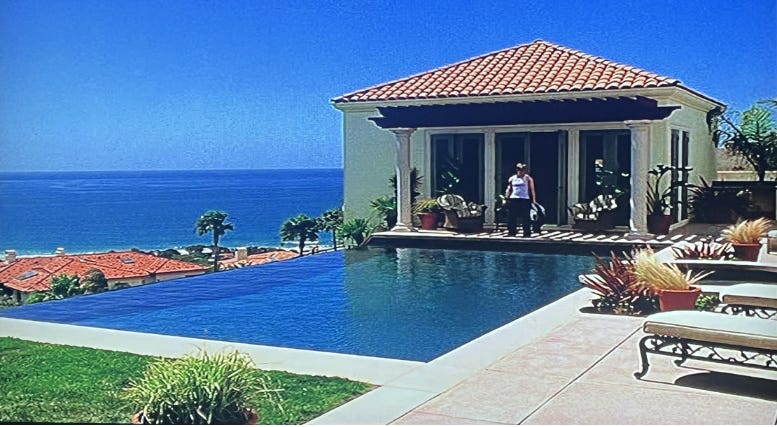
Ryan’s pool house has become an instantly recognizable cultural landmark. Even those who haven’t seen the show can sense the Californian grandeur that ruled supreme in 2000s American culture. Throughout the four seasons of the show, the intro theme is bookended by two architecturally significant depictions. The first shows Ryan’s face through the car window, flipping the perspective and fading into a view of dozens of cookie-cutter mansions. The last scene shows Ryan emerging from the pool house, looking past the infinity pool, hot tub, and manicured shrubbery out toward the sprawling coastal landscape. These scenes immediately establish The O.C.’s emotional structure, with Ryan as an underdog. The pool serves as a looking glass to Ryan’s hero journey: navigating the complexities and entitlements of upper-class privilege while avoiding repeating the same dysfunctional patterns he knows all too well.
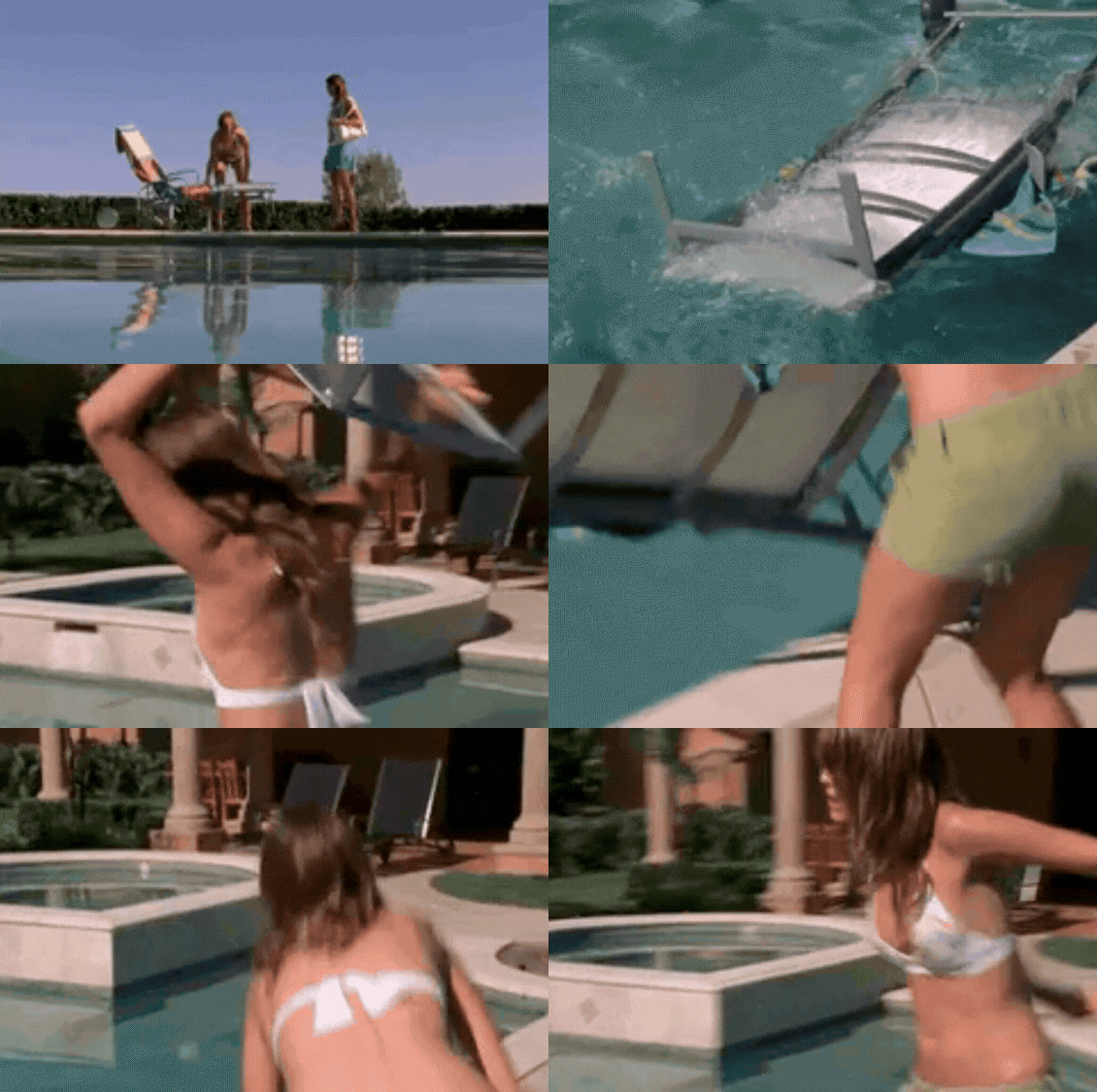
Season Two’s first episode, “The Distance”, depicts two sets of characters: the ones who traveled vast distances and the ones they left behind. The built-up resentment between them formed an emotional rift, like a hard water stain on a pool lounger cushion that’s had an entire off-season to set in. The first shot in “The Distance” after the intro theme shows the Cooper-Nichol’s outrageously large mansion and impressive swimming pool. Marissa and Summer lay poolside, suntanning, dissociating, and drinking cocktails so strong Summer jokingly asks if Marissa mixed lighter fluid in them.
Julie, frustrated by her sullen daughter’s emotional distance, approaches Marissa. She’s listening to music on her iPod, as far away from her mother as she could possibly be without leaving home. When Julie’s concern seems contrived, Marissa retorts, “Do you really wanna know what’s on my mind?” before releasing a guttural scream, flipping her chair and towel into the pool, picking up and chucking the side table into the water, turning her back, and walking away. The pools of The O.C. maintain their composure through emotional intensity, witnessing crossed boundaries, complex negotiations, overdue confrontation, and erupting conflict.

The pool is like an all-knowing force, with its premonitions driving interpersonal relationship narratives and character arcs. Characters’ inextricable ties or ultimate fates are often first seen by the pool. The pool sets the stage for the initial appearance of Summer Roberts, Kirsten drinking alone, the reunion between Ryan and his mother, Seth and Summer’s first kiss, the reacquaintance of Jimmy and Hailey, Seth and Anna’s breakup, and even the pilot episode appearance of the catering waiter who ends up planning Julie’s wedding in Kirsten’s backyard after his husband delivered her baby.

Each poolside encounter holds some kind of significance, reinforces the ties that bind, and proves that nothing is quite what it seems at surface-level. The pool’s warm, sunlit, sparkling appearance reflects back the superficiality of those who gather around it, exposing what lies underneath. Scenes of rest and relaxation can devolve into riots; calm can escalate to chaos. Whether as a result of a power struggle, blackmail, or act of sheer desperation, the pool in any particular scene guarantees that whatever is hidden will always rise to the surface. Try as they might, the characters largely cannot replicate the stillness or silence provided by the idyllic poolscape for very long.
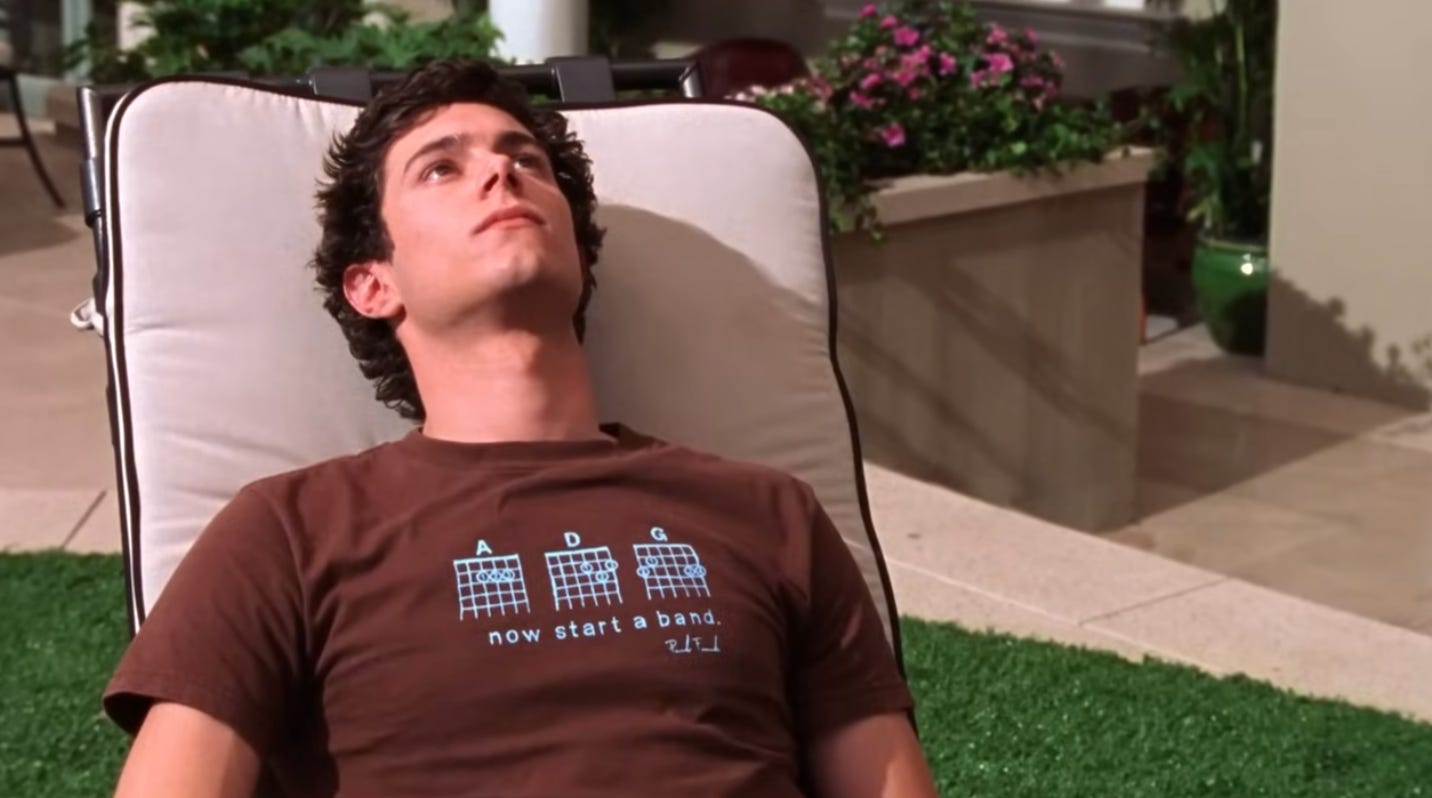
Secrets are shared in the presence of the pool:
Kirsten calls her financial advisor to transfer $100,000 to her disgraced high school beau, Jimmy, without telling Sandy
Ryan tells Marissa that Luke’s dad is gay
Seth tells Ryan he lost his virginity to Summer
Ryan tells Seth that he stole Oliver’s note to Marissa out of her locker
Theresa tells Ryan she’s not keeping her baby, though he later discovers that she does
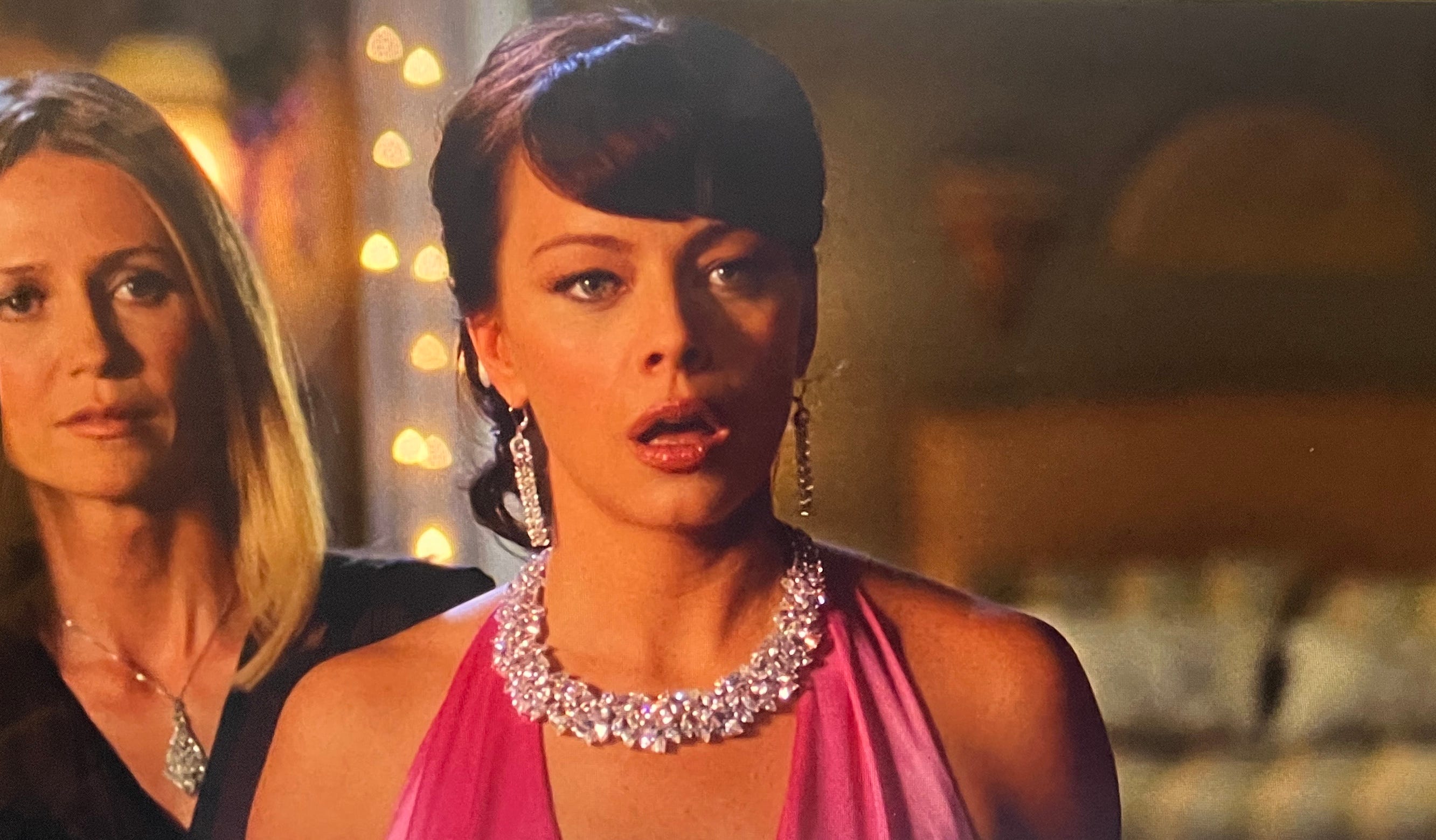
Secrets are spilled in the presence of the pool:
Lance humiliates Julie by going undercover as a waiter and publicly screening their vintage 80s sex tape at a party
Luke blows his cover that he slept with Julie Cooper in front of her daughter, his ex Marissa
Seth finds out The Nana is being nice to people because she has cancer
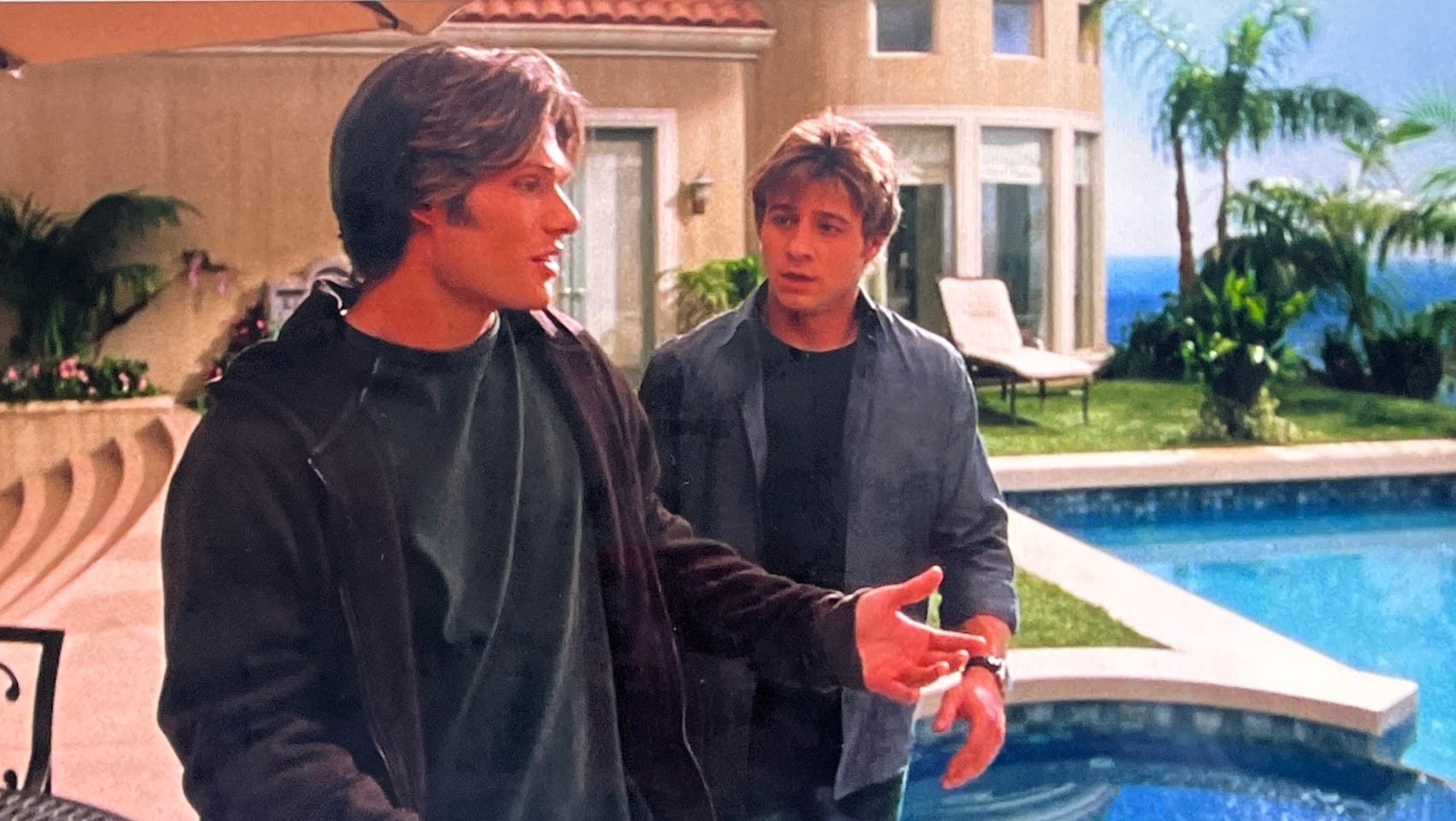
Negotiations are made in the presence of the pool:
Sandy and Kirsten arrange opposite sides of a lawsuit on their respective flip phones
The boys ask permission to go to Oliver’s penthouse so he doesn’t steal Marissa away
The boys convince the parents to let them go to L.A. so Grady Bridges of The Valley fame doesn’t steal Summer away
Ryan asks Sandy if Lindsay can come to Thanksgiving, before it’s revealed in front of the entire extended family that she’s Caleb’s “illegitimate love child”

Conflicts arise in front of – and sometimes end in – the pool:
Hailey arranges male strippers for Julie’s backyard bachelorette as a setup
Eddie angrily confronts Ryan about breaking up his relationship with Theresa
Kirsten questions Sandy about his old flame, whom she saw after he claimed Rebecca was dead
Trey’s troublemaking love interest Jess ends up face-down in the pool before being rescued
Julie lightly poisons Cal, triggering a heart attack that causes him to fall in the pool, and – despite her best effort to save him – die
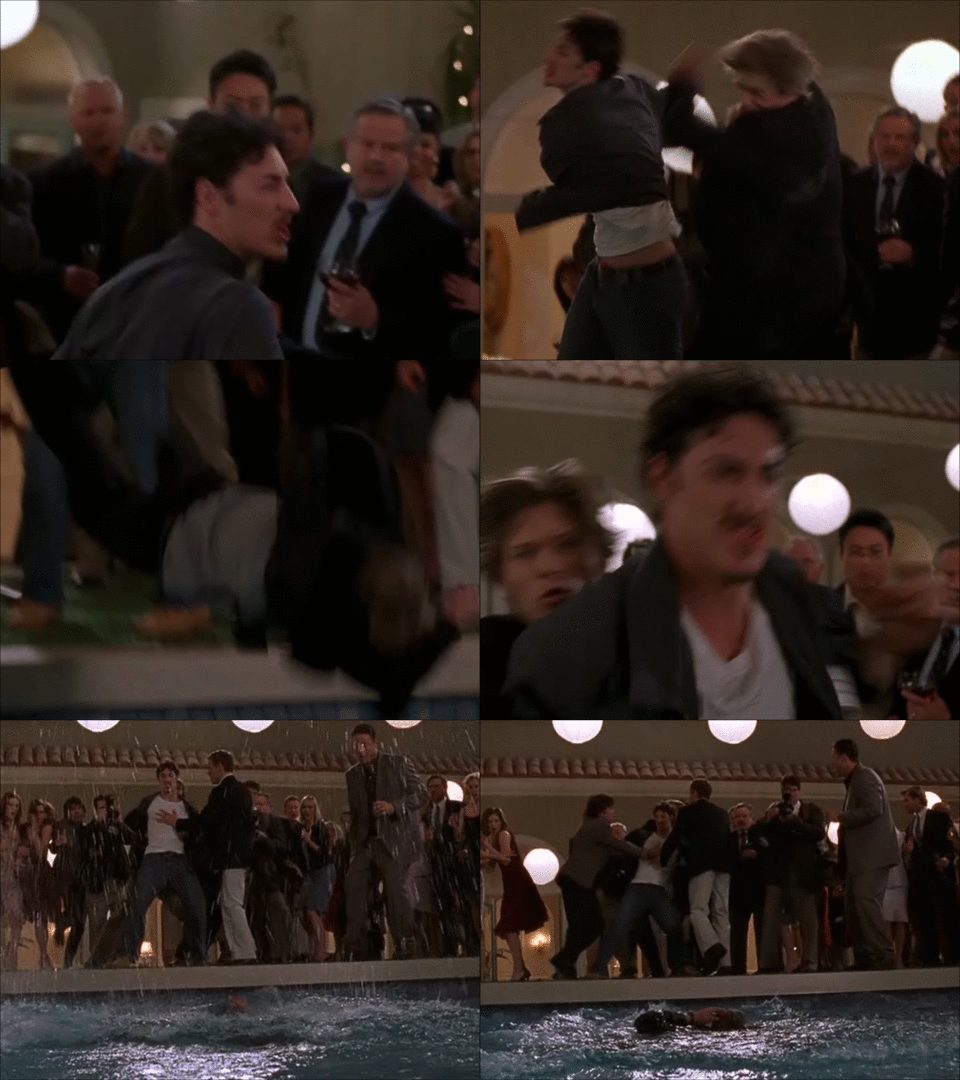
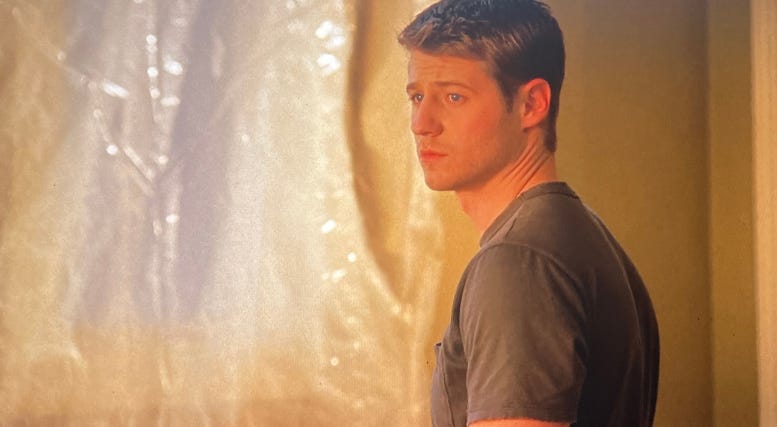
The pools of The O.C. served their architectural and psychological purpose to drive multi-faceted interpersonal relations through nearly the entirety of the series. An earthquake in the third to last episode of Season Four destroys the pool house and causes full structural collapse in the main house. The last swimming pool ever seen on the show is not the Cohen’s, it’s a new property they’re touring with a realtor. The Cohens ultimately settle back where they belong in Berkeley, no swimming pool in sight.
The pools of The O.C. were memorable as a character in their own right, holding an almost unbearable amount of tension between what was said and unsaid, what was submerged below, and what rose to the surface. Looking out at the Cooper-Nichol mega-pool, Jimmy exclaims, “It’s everything you’ve always wanted.” Julie responds, quite aware of the compromises and sacrifices required to maintain such a luminous surface, “Be careful what you wish for.”

Huge thank you to the paid subscribers who support my work: Janine, Liv, CY, Matthew, Emily, Gina, Taylor, Alejandra, Lindsay, Bea, Janani, Tia, and Taylor! À la Jessica Simpson, I’m gonna love you forever 💐💐💐
If you enjoy my interviews, essays, deep dives, and other musings, please consider supporting Nicstalgia! Your support helps me continue writing the most fun newsletter about offbeat, obscure, and niche pop culture. If you’d rather send a one-time gift of a custom amount versus a recurring subscription, you can also do that here!

Nicstalgia Newsletter ☆ My Instagram ⟡ My Cool Website ♡ Aerobics Schedule ☆ Podcast Episode Archive ⟡ Physical Media Renaissance™ Zine ♡ My Physical Media Shelf ☆ iPod Shuffle Player ♡ Workout Playlist Archive ☆

Comments
Nothing yet. Say the first thing.
Sign in to join the conversation.