
After a family trip to Mexico in December of 2025, I became quite sick. I was sure it was just a bit of “holiday tummy,” but by the time I realized I wasn’t improving, I had become dehydrated. One day, I landed in urgent care with an IV and a bag of fluids— which, thankfully, righted the ship almost immediately. I went home, faithfully drank electrolytes for a few days, and left the episode behind me without a second thought.
Until I went to my biannual rheumatology appointment a few months later.
“Why did you get this bloodwork done?” My rheumatologist asked.
“Oh, it was nothing. I got a bit sick in Mexico and needed some fluids. I think the labs were routine.”
“I don’t like these numbers,” she said. “They may have been elevated because you were sick, but I’d like to run some tests just to be sure.” She was already adding orders to my medical chart.
What ensued was a weeks-long, invasive, and frankly, very scary journey that included seemingly nonstop appointments with different specialists, obscene amounts of bloodwork, several ultrasounds, a PET scan, and a bone marrow biopsy. (0 out of 10, do not recommend.)
Long story short, turns out I have a plasma cell disorder that can be a precursor to certain types of blood cancer. “Where did this come from?” I asked my new hematologist/oncologist at what was the first of now lifelong appointments. “Is it genetic?” He explained that yes, the condition is genetic, but it’s not hereditary. Instead, my specific chromosomal abnormality presents later in life and is acquired.
How? I wanted to know, but there were so many questions swirling in the room, I’m not sure the nitty-gritty of it was ever adequately explained. So, the moment we left his office, I began researching the condition and quickly found that there a few key risk factors linked to my diagnosis:
Age (over 70) - nope
Race (Black individuals have a higher risk) - nope
Sex (more males than females have this diagnosis) - nope
Family History (a relative with the same diagnosis increases risk) - nope
Environment (exposure to toxic chemicals like pesticides or fertilizers) - ding! ding! ding!
There are other suspected (but not proven) contributors, but out of the big five risk factors for disease, I can only claim a single red flag: my home.

You may have heard that Iowa has the second-highest cancer rate in the nation, and that the numbers are rising. In fact, some Iowa counties boast a cancer rate that’s 50% higher than the national average. And while behavioral and genetic factors certainly play a part (Iowa is considered one of the top states for binge drinking), and every cancer diagnosis stems from a complicated ecosystem of interplaying components, it’s the worst sort of willful ignorance to pretend that our environment doesn’t also play a significant role.
Recent findings from the Iowa Environmental Council establish the link:
“Well-established peer-reviewed research demonstrates that environmental risk factors, including pesticides, PFAS, nitrate, and radon are associated with increased cancer incidence and risk for numerous cancer types. Our analysis shows that all of these carcinogens are present at high levels in Iowa. These factors combine and build on one another as well. While cancer is multifactorial and complex, we know enough to act to mitigate these modifiable risk factors.” Cancer and Environmental Risk Factors in Iowa
And to put a really fine and personal point on it:
“…research in the journal Environmental Health Perspectives finds that long-term exposure to the insecticide permethrin and legacy organochlorine insecticides (aldrin, dieldrin, and lindane) increase the risk of developing MGUS, a blood disease that precedes multiple myeloma, with disproportionate risks to farmers and farmworkers. This study highlights the importance of understanding how pesticide use can increase the risk of latent diseases, which do not readily develop upon initial exposure. As the researchers state, “Our findings provide important insights regarding exposures to specific pesticides that may contribute to the excess of MM among farmers… [T]he continued widespread residential and other use of permethrin and environmental exposure to organochlorine insecticides due to legacy contamination…could have important public health implications for exposed individuals in the general population.” Literature Review Links Pesticide Exposure to Increased Risks of Multiple Myeloma, a Blood Cancer
Over the course of the last century, it is estimated that tens of thousands of epidemiological, toxicological, and clinical studies have been done linking environmental factors to cancer. This isn’t new information. So why haven’t I been paying attention?
My home, this gentle, soulful, often misunderstood land that I love, could very well be poisoning us all.
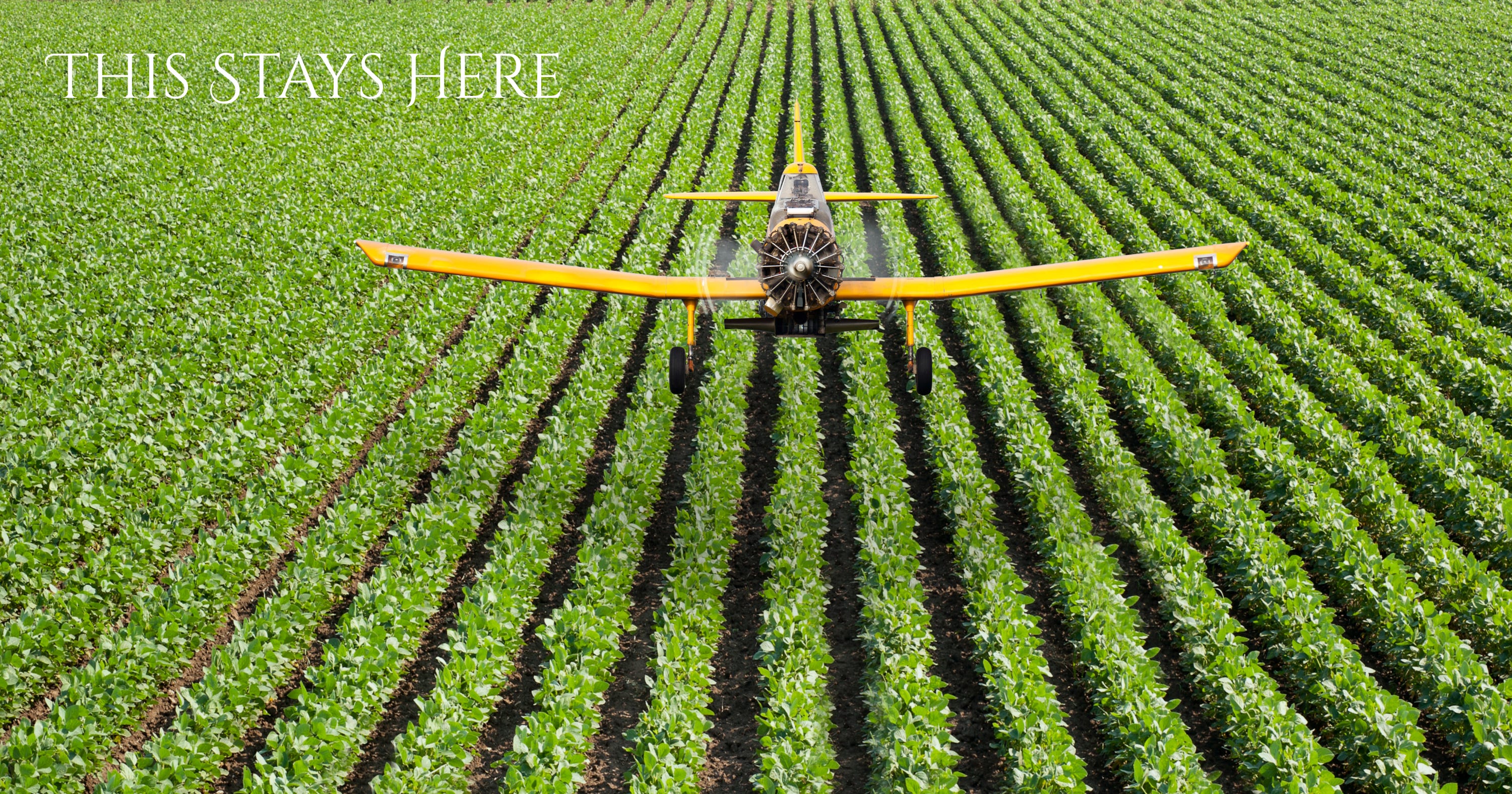
Yesterday, I stood in my backyard watering my garden as a crop duster circled overhead. The plane was low, its wings casting a swiftly moving shadow that swept across the lawn. For just a moment, I was in the shade, beneath the small craft and the canisters of fungicides or insecticides or fertilizers the pilot was spraying in the neighborhood (I live in a small town, mere blocks in every direction from farmland). I don’t know exactly what farmers are applying right now, but the crop dusters have been out en force. I have always loved their bright colors, the way they seem to dance above the fields. In high school, I used to park on gravel roads and watch them work, marveling at the skill it takes to fly so low and with such precision and grace.
Yesterday, I didn’t gape in wonder—I covered my mouth and nose. Not that it made a lick of a difference. Not that anything at all can stop the possible progression of a disease that I already have.
Look, I’m not a farmer, doctor, scientist, or even a journalist. There are so many people who are way smarter than I am doing the hard work of researching and reporting, of continuing to ring the warning bell about the increasing toxicity of our beloved state, and I suggest you do your own digging (I’ll share some of my favorites below, including some incredible, eye opening articles). What I am is a storyteller, and this is part of my story.
I’m not trying to spark pity (I’m fine, there are zero side effects to my condition beyond routine blood draws and the constant, niggling seed of a thought that this could develop into something more), and I don’t want to stoke fear…
***I JUST WANT PEOPLE TO PAY ATTENTION.***
Yes, climate change is real. Yes, our environment significantly impacts our health. Yes, Big Ag is a Big Driving Factor in all of this. And yes, the decisions we make now have a huge and lasting impact—not just on our lives, but on generations to come.
“Of the 14 states with the highest cancer incidence, Iowa and three others are in the Midwest Corn Belt, according to newest federal figures. Chemicals and manure pouring off farm fields and out of livestock and poultry production sites represent an intolerable and dangerous menace to water and human health. Farm industries are largely exempt from regulating their discharges. And though government has helped them concentrate their wealth in huge crop and livestock operations that generate millions of dollars in revenue, leaders have displayed scant interest in responsibly managing farm industry wastes. For the love of every living thing, what kind of a world are we leaving our kids?” In a “toxic terrain,” journalism exposes Iowa’s farm pollution problem
For the love of every living thing indeed.
What can be done in a world where SCOTUS Says You Can’t Sue Pesticide Companies if You Get Cancer and Agricultural Lobbying and Deregulation Are Fueling a Cancer Crisis in Iowa's Water Supply (please watch the video embedded at the end of this link)? Or when data centers threaten to exacerbate the problem and no one in power seems to care?
We can educate ourselves (links below). Do our part (we already know how to be environmentally friendly). And VOTE.
If you don’t know Chris Jones, let me introduce you:
“Chris Jones is well known in this town [Iowa City], as he should be. He was a professor at the University of Iowa. He’s a scientist. He’s a prolific writer on clean water and big ag and corporate farming and the biggest taboo topic: growing corn for ethanol in Iowa.
If you’re not from the corn belt, you may not understand just how “radical” his words are. He says the things most are unwilling to say and he is bipartisan in his efforts and his ire. He is willing to tell Republicans and Democrats the same thing: don’t take campaign money to look the other way while corporations poison Iowa water.” Iowa City and Clean Water, Jess Piper
Chris Jones is running for Iowa Secretary of Agriculture and I believe he not only has the knowledge and experience necessary to make a real and lasting impact in Iowa, he has an actionable plan to make Iowa healthier and more livable. I encourage you to check out his platform and learn more about who he is and what he plans to do if elected. Forget partisan politics—we’re so far beyond that petty tug-of-war. We need leaders who care about the communities they serve and have inspiring, sustainable, and achievable plans for our future.
I didn’t really intend for this article to be a plug for Chris Jones, but I have to admit that I feel a bit helpless and this at least is something I can do. From a dear friend (a young father and lifelong farmer) who is fighting non-Hodgkin’s lymphoma, to a community member (also young!) recently diagnosed with glioblastoma, to my own much lesser but still concerning diagnosis, it’s not hard to see that Iowa is in trouble. There is something in the water, my friends. And the soil, the crops, the sky. It’s time that we do something about it.
Eyes open. Hearts steady. Hands ready.
Thanks for reading. xoxo - Nicole
Want more? I think you’d enjoy:
Because I’m Black - A personal account of ICE detention in Minneapolis
No matter where you stand - Reproductive care in the US is broken
Want more about Iowa agriculture? I think you’d enjoy:
Matt Russell at Growing new Leaders: Perspectives from Coyote Run Farm
Iowa cancer rates surge — farm chemicals are a key risk, new report finds
As cancer rates fall nationally, Iowa sees a troubling rise in diagnoses
Iowa’s high cancer rate linked to nitrate, pesticides, PFAS and radon, new report finds
Not interested in becoming a paid subscriber but would like to support my work? You can “buy me a coffee” at THIS LINK. It’s just a small way to say “thanks” if you feel so inclined.
I’m a proud member of the Iowa Writers’ Collaborative, a roundup of world-class journalists who call Iowa home. I invite you to check out the group and become a paying member of one or more of our pages.
No posts
Comments
Nothing yet. Say the first thing.
Sign in to join the conversation.