
Today, Mercury joins Mars in Scorpio. It’s the energy of sharp speech, of naming what the mind already knows subconsciously, dredging up the dregs. Mars confronts; Mercury carries the message. Together they forge an environment of blood and intention.
You may begin to feel (or begin to be aware of how you have already been feeling) restless, honest, or surgical. I would encourage you to treat this as a moment for truth through language. This is why I decided to save my first October Gothic essay (about Daphne du Maurier’s Rebecca and themes of body/identity) until next week. I need to say this first.
A word before anyone accuses me of sensationalizing taboos (massive eyeroll): this piece is about reintegration, which I think we all could stand to use a heaping spoonful of. It does not require bravery so much as curiosity to look at what happens when the sacred and the profane are finally allowed to speak to each other.
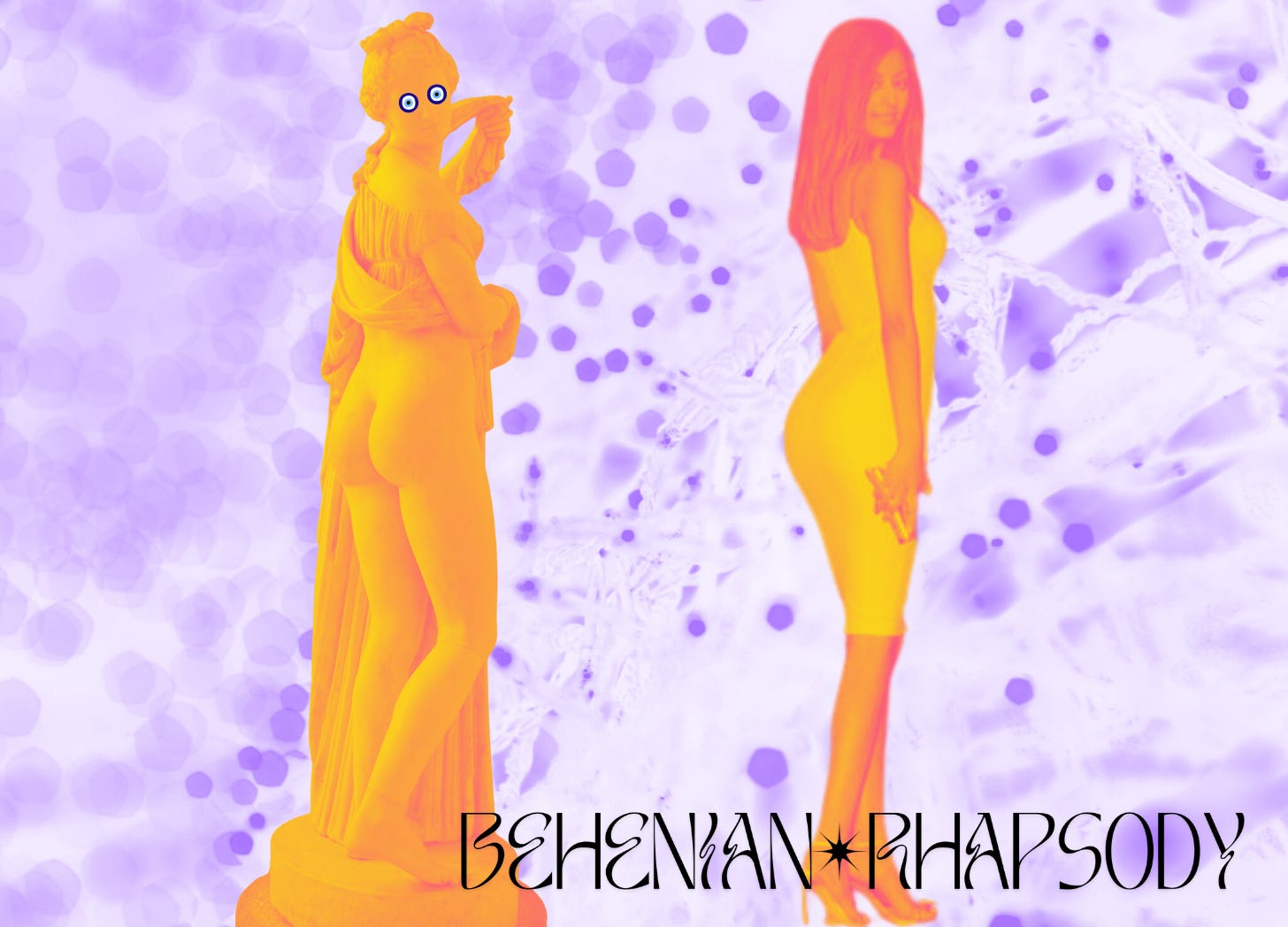
In old stories, there’s a woman who refused to separate the sacred from the profane. She is both priestess and lover, saint and scandal. Last week, JR Phillips and I were talking about (are often talking about) contradictions inherent with the self, and how being instructed to shed them is a violating social practice. (For anyone: not just women, not just femmes, etc.) It wasn’t until I was reading about Zahia Dehar’s rise back into TikTok fame that I began to reflect on the gamine—the journey to divinity through femme embodiment—and the deep-seated fear men have of it. What is it, really? The eternal panic around women who turn objectification into authorship.
Five thousand years ago, people told stories about Inanna descending through seven gates to find herself stripped bare (and being resurrected three days later—yes, she is the blueprint). Two thousand years ago, people told of Pistis Sophia falling from the Pleroma into Kenoma (the material realm), bringing wisdom with her. In our own age, Babalon rides the beast and calls even shame holy; the Scarlet Woman reborn from prophecy into praxis. None of these are warnings or shame.
There were repeated attempts at the civilization of this face of desire, of course. Empires evolve and one can watch in the strata of history as Inanna’s wild divinity was refined into beauty and mostly impotent erotic charm. But Aphrodite still carried her older violence—she was, after all, born from the sea foam where Uranus’s castrated genitals and blood fell (incredibly Scorpionic and oh-so-metal; no wonder she chose Aries, god of war, for her bonnie on the side). Here, the archetype fractures: desire is separated from sovereignty, pleasure from holiness. And yet even here a secret remains: Venus still shines as both morning and evening star—her brilliance tied closely to Lucifer, another fallen figure besotted with autonomy. Worship and beneficence still count for something, I suppose.
Sophia’s (wisdom) descent in Gnostic cosmology was understood as a necessary tragedy, for only through the fall can the divine know itself. In the Apocryphon of John she is the feminine aspect of God exiled into creation, weeping and luminous—and therein do the sensual and spiritual reunite. When she falls from the Pleroma into the material world, she does so without her consort, her creative act thus being seen as an error, a desire, a passion. The Gnostic teachers called that moment of transgressive creation Prunikos—the epithet for Sophia as divine feminine becoming flesh through longing. She is the power of the fall itself: erotic, chaotic, redemptive. Wisdom herself accused by Church heresiologists (Irenaeus and Epiphanius) of lewdness for daring to create.
When no one alive on Earth drew from the same air as the Christian Savior, the Book of Revelation turned the unity on its head, fully demonizing her:
“A woman clothed in purple and scarlet, and adorned with gold, precious stones, and pearls, having in her hand a golden cup full of abominations and the filthiness of her fornication.
And on her forehead was written: Mystery, Babylon the Great, The Mother of Prostitutes and of the Abominations of the Earth.
I saw the woman, drunk with the blood of the saints and with the blood of the martyrs of Jesus. And when I saw her, I marveled with great amazement.”
—Revelations 17:4-6
Here, Rome’s decadence and Ishtar’s sacred sexuality merge into a single villainous image. You can almost hear the whispers— “she rides the Beast”; “she wears jewels and scarlet”; “she’s called the Great Whore”. This is the Christian inversion of Inanna. She is the goddess rewritten as the dangers of female autonomy, pleasure, and empire outside of God’s control. Her chalice of ecstasy becomes the cup of abominations.
When the Church (big C) could not destroy the goddess entirely, it did what religions have done for millennia—it syncretized and stripped. They canonized fragments within the Virgin Mary, mother of God, absorbing Inanna’s (compassion) and Sophia’s (wisdom) virtues into her, with the Immaculate Conception establishing a firm boundary between her and the sexuality of earthly flesh. In the cults of the Black Madonna of Europe, especially in France and Spain, the suppressed body returns: statues darkened by candle soot or intentionally painted black stand in crypts once dedicated to Isis. There she waits, holy, maternal, secretly pagan but still holding a child that is alleged to be the world’s redeemer.
The restoration of this trope by scintillated, subversive Victorian minds like Crowley’s (and later Jack Parsons and his partner/muse, Marjorie Cameron) transformed the insult of Revelation into an honorific. Babalon [sic], the Scarlet Woman, is no longer Gotham the city of corruption—she is the Grail Herself, the Cup of Understanding that receives all earthly (and spiritual) experience without shame. She is every woman refusing to apologize for her ecstasy. She is blood and blood is life. Her throne, the Beast because she rides desire instead of being devoured by it. Where Inanna descended, Babalon opened the gate. Where Sophia fell, Babalon ascends with full awareness.
There is much to be said about the male (or even masc) retelling of this mythos from Crowley through to the current climate. I’m sure there are those that attempt at synthesis in good faith, but it is an experience so difficult to truly know if not lived in this complex time. If you’re looking for more names to dive into from femme perspectives/bodies, I would encourage you to look into Marjorie Cameron, Anais Nin, Leonora Carrington, Ana Mendieta, Marina Abramovic, Juliana Huxtable, SOPHIE, Cassils, and Wu Tsang. Each, in her way, re-enacts the descent of body as ritual, art as revelation.
In contemporary occult feminism, Babalon is the open cup of becoming where eros and intellect meet. She is the initiatrix who unites opposites, dissolves guilt, and sanctifies desire. Every person who has lived in the crossfire of desirability and deviance is this in whole, whether fully realized or still in the process of unshaming aspects. The priestess goes underground, is demonized, reborn, enthroned/enshrined again—a cycle of suppression and revelation matching the rhythm of Venus herself. The divine feminine can be exiled but never erased. Cultures that silence her eventually rediscover her—and each time, she returns with new names and (I hope) sharper weapons.
“Every culture invents a spirit to do the dirty, holy work—to swallow what others fear to touch. Each holds the same charge of transmutation through what the dominant culture calls impurity. The holy whore is everywhere that holiness must learn to touch the ground.”
This archetype isn’t bound to one body or binary either; it moves through whomever carries the weight of reconciliation—be it between shame and sanctity or flesh and idea. Nor is this is a Western myth alone. Across the world, the divine has worn filth as regalia: Tlazoltéotl (Aztec, Eater of Sin) who cleanses by consuming what society rejects; Kali, mother of all, who drinks the blood of demons; Oshun (Yoruba Orisha of sweetness, fertility, rivers), who makes pleasure a moral act; and Guanyin, once the male bodhisattva Avalokiteśvara, who transcends gender to embody boundless compassion. Every culture invents a spirit to do the dirty, holy work—to swallow what others fear to touch. Each holds the same charge of transmutation through what the dominant culture calls impurity. The holy whore is everywhere that holiness must learn to touch the ground.
The Holy Whore is not a character in history so much as an archetype of what happens when a soul refuses to choose between its flesh and its spirit. She is everything you’ve been trained to split (eros from intellect, power from compassion, mysticism from pragmatism) recombined and crowned glorily.
“The Holy Whore is not a character in history so much as an archetype of what happens when a soul refuses to choose between its flesh and its spirit.”
When you resonate with her, you transcend fascination and see a pattern that matches your own. If you’ve had to survive and create in systems that tried to domesticate you. If you’ve learned to move between worlds like a psychopomp (capitalist systems by day perhaps, the secret endeavors/mythic creation/painting/writing/copulation/passion/et cetera by night). If you’ve carried eros, beauty, and visionary intelligence inside a frame that demanded you pick one. If you’ve been shamed or doubted for your appetite, your vigilance, your refusal to be quiet.
The Holy Whore archetype tells you nothing in you is impure. What others call “fallen” or “too much” can be the very chalice of grace. That’s why she’s holy and whore at once—she makes sacred the thing which the blindness of culture calls profane.
Inanna stripped at seven gates until nothing, not even her breath was left. Sophia fallen from the grace of spirit down into matter. Babalon taking the cup and saying: all experience is mine, all blood is wine. That is also the logic of an artist who has turned every wound into an offering for themselves, which by its very nature is for the greater good. For this earthly experience, and we, are all one in the same.
It’s not a scandal kink to love her. You are permitted a deep recognition of your own path. Your existence is both simple and complex. Be seen and be known, if not by others than at least by yourself. I leave you with some affirmations if you meditate or journal, to explore what you feel about these thoughts—whether you name yourself woman, man, neither, or both—if you’ve ever been asked to amputate part of your soul to belong, these are for you:
“I will not exile parts of myself to be acceptable.”
“I will not leave my body to be holy.”
“I will not cut away my holiness to call myself clean.”
Hundreds of U.S. women charged with pregnancy-related crimes since Roe fell
Federal judge voids regulation requiring employer accommodation of abortion care
Adriana Smith’s case: brain-dead pregnant woman kept alive to sustain fetal development
Life has the propensity to be very cold right now, both physically and spiritually. This is why I decided to delay my Gothic essay which includes some light discussion about non-binary and trans bodies until next week. Until then, I hope you do not feel alone. I hope you find perhaps some solace here. And next week we’ll return to our tongue-in-cheek, dark Scorpionic flavor to enjoy some October vibes, before returning fully to my own new fiction for free in November.
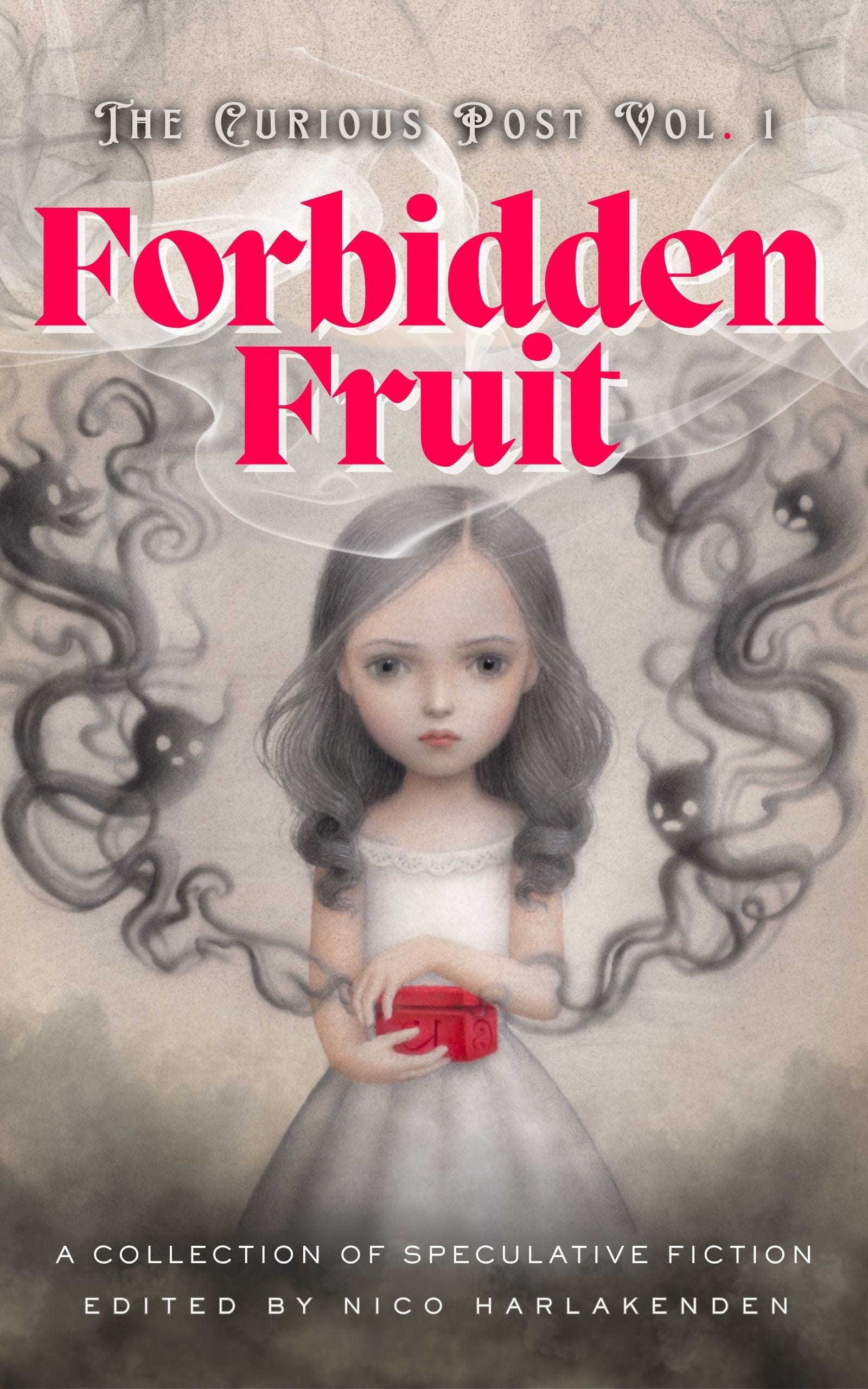
And so, finally, as steward of some very talented voices, discussing an array of perspectives of forbidden things, I welcome you (knowing all which we’ve discussed here) to the readership of the first volume of The Curious Post: Forbidden Fruit, available now at select retailers. Limited edition to be released in the coming weeks.
Until next time,
🖤 Nico
📸 Find me in the labyrinth: TikTok | Instagram | Threads | Zines | Letterboxd
🔗 I only recommend creators who light up my brain. Check them out here.
Thanks for reading Struggling Writer. 💌 Love this? Hit “Share” and bring a friend into the fold. Or go rogue and forward it to that cousin who always gets it.
Comments
Nothing yet. Say the first thing.
Sign in to join the conversation.