
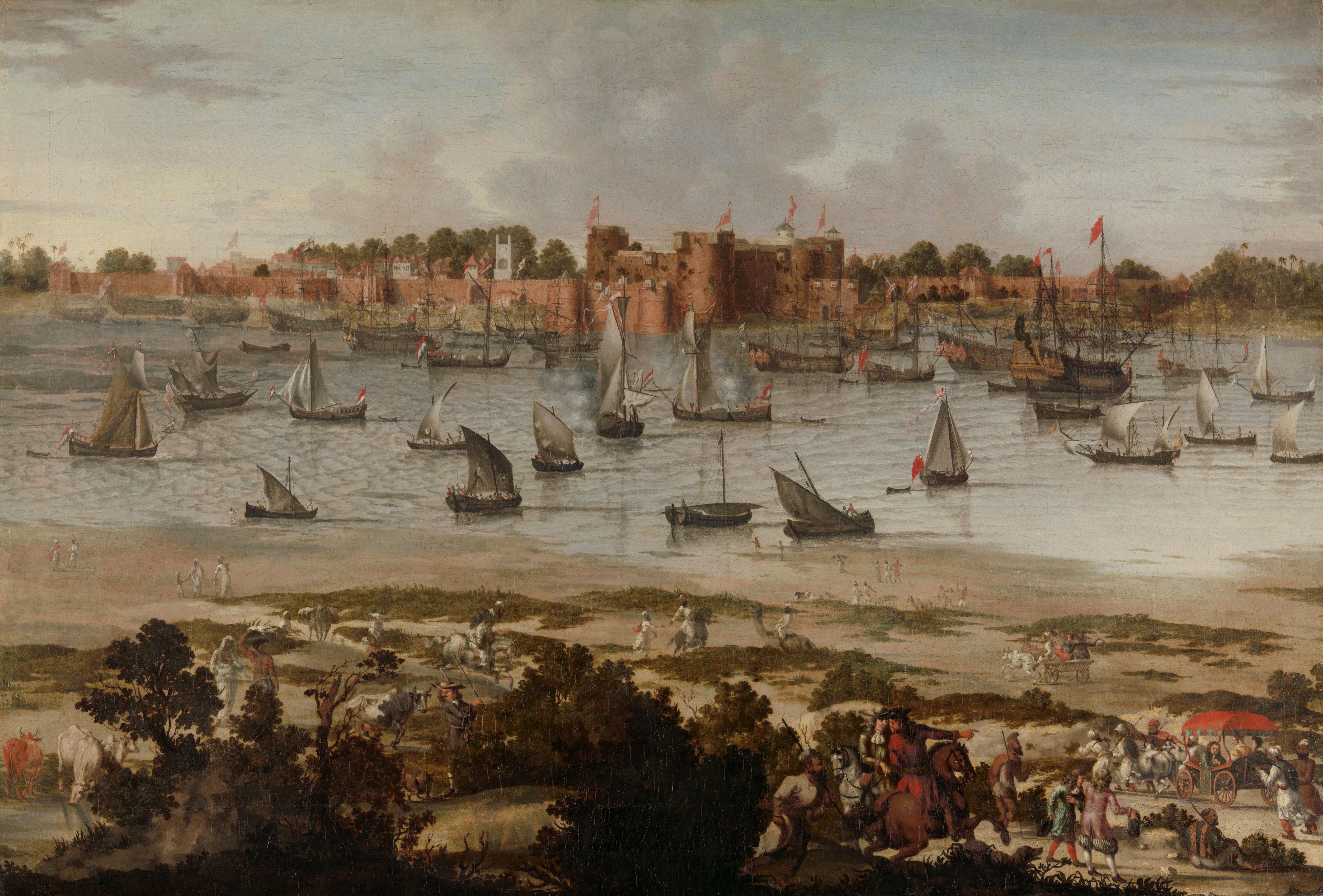
For thousands of years, the Indian subcontinent was the centre of world trade. Sumerian tablets record ships from Meluhha - i.e. India - bringing copper, carnelian, ivory and timber to Mesopotamia in the third millennium BC. The Roman Empire ran a chronic trade deficit with India, sending shiploads of gold east in exchange for pepper, cotton, spices, pearls and gems. A thousand years later, merchants of Gujarat and the Coromandel coast, not forgetting those in east coast India, still controlled commerce from East Africa to the South China Sea.
Within a human lifetime, it ended.
The conventional explanation is that Europe arrived with better ships and better guns and took what it wanted. That explanation may be comforting, but it is wrong. Europe did not seize India’s maritime supremacy. India’s Mughal ruler relinquished it. The story of how, is one of the most instructive in world history, and it has very little to do with Europeans.
To understand what was lost, you have to understand how strong Indian commerce was.
By 1600, Surat was the greatest port in India, home to over a hundred ships and a merchant community drawn from across the world: Hindus, Jains, Armenians, Jews, Persians, Turks, Arabs and Europeans, all trading together. One of those men was Virji Vora, the Jain merchant who dominated Surat in the mid-seventeenth century, reputedly the world’s richest man. His family network reached across India, the Gulf, the Red Sea and Southeast Asia. He was a banker, a shipowner and a trader in indigo, pepper, coral and cloves. He lent money to Mughal nobles and to the English East India Company alike. When Company employees needed credit, they borrowed from him and other native merchants.
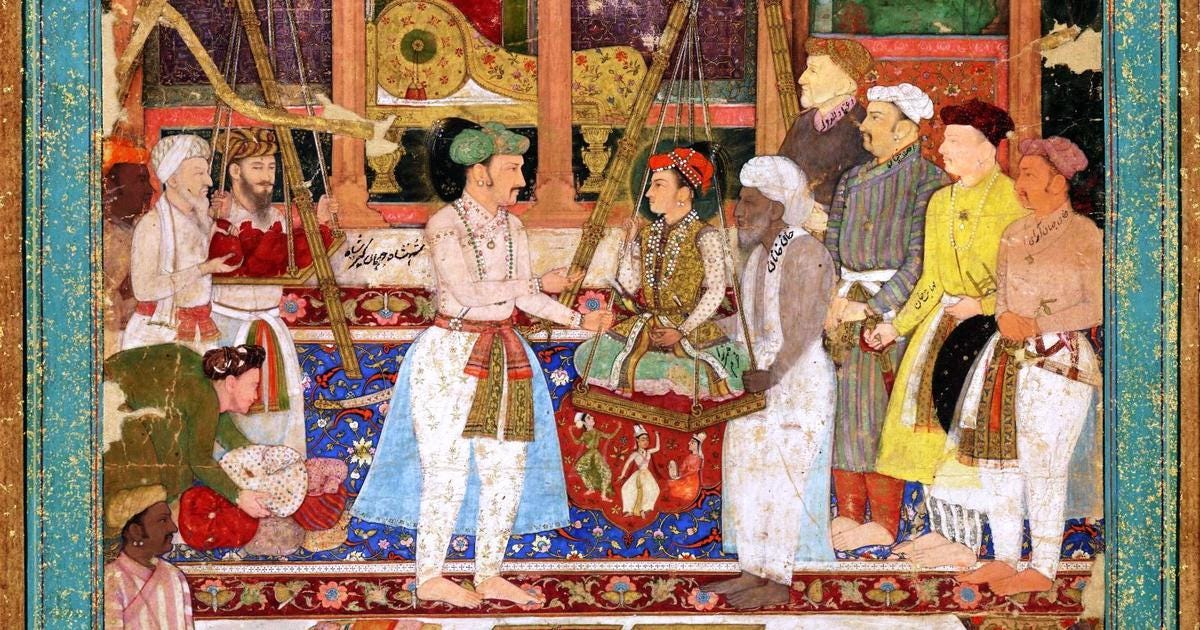
Like all successful commercial relations, everything depended on trust. Merchants of every religion and origin congregated in Indian ports because the rules were predictable and the environment was tolerant. Customs duties at Surat were only about five per cent. Religious toleration, established under Emperor Akbar and accepted by Hindus and Muslims alike, was the foundation on which the whole edifice rested. A Jain merchant, a Sufi trader, a Parsi shipowner and an Armenian financier could do business together because the state did not interfere with their faith, and because contracts were honoured. Trust is an enduring commercial necessity. The motto of the modern Baltic Exchange is ‘My word, my bond.’
It was a sophisticated, mature, multi-religious commercial civilisation that had evolved over millennia. Merchants used credit notes, hundis, for transactions across thousands of miles. They spread their investments across shipping, tax-farming, money-lending, banking and trade. They were, the Portuguese observed on first contact, the world’s finest merchants at mental arithmetic.
There was one structural weakness, and it would prove decisive. In Venice, Genoa, Amsterdam and London, rulers and the public invested in maritime ventures. The state and merchants shared a common interest in maritime trade. In India, merchants operated alongside a ruling elite that was fundamentally uninterested in commerce. The Mughals needed gold and silver, so they did not unduly hinder trade, but they never championed it. Indian merchants placated their rulers rather than partnering with them. They could not create publicly funded companies because no ruler would underwrite them. Apart from land taxes, merchants financed the Mughals but they did not encourage merchants.
When that ruling elite turned from indifference to hostility, the merchants had no protection at all.
The Emperor Aurangzeb came to the throne in 1658, having fought and defeated three brothers for the succession. One brother’s severed head was presented to their imprisoned father. Another was cut to pieces. Aurangzeb was iron-willed, devout, personally austere and, for India, catastrophic.
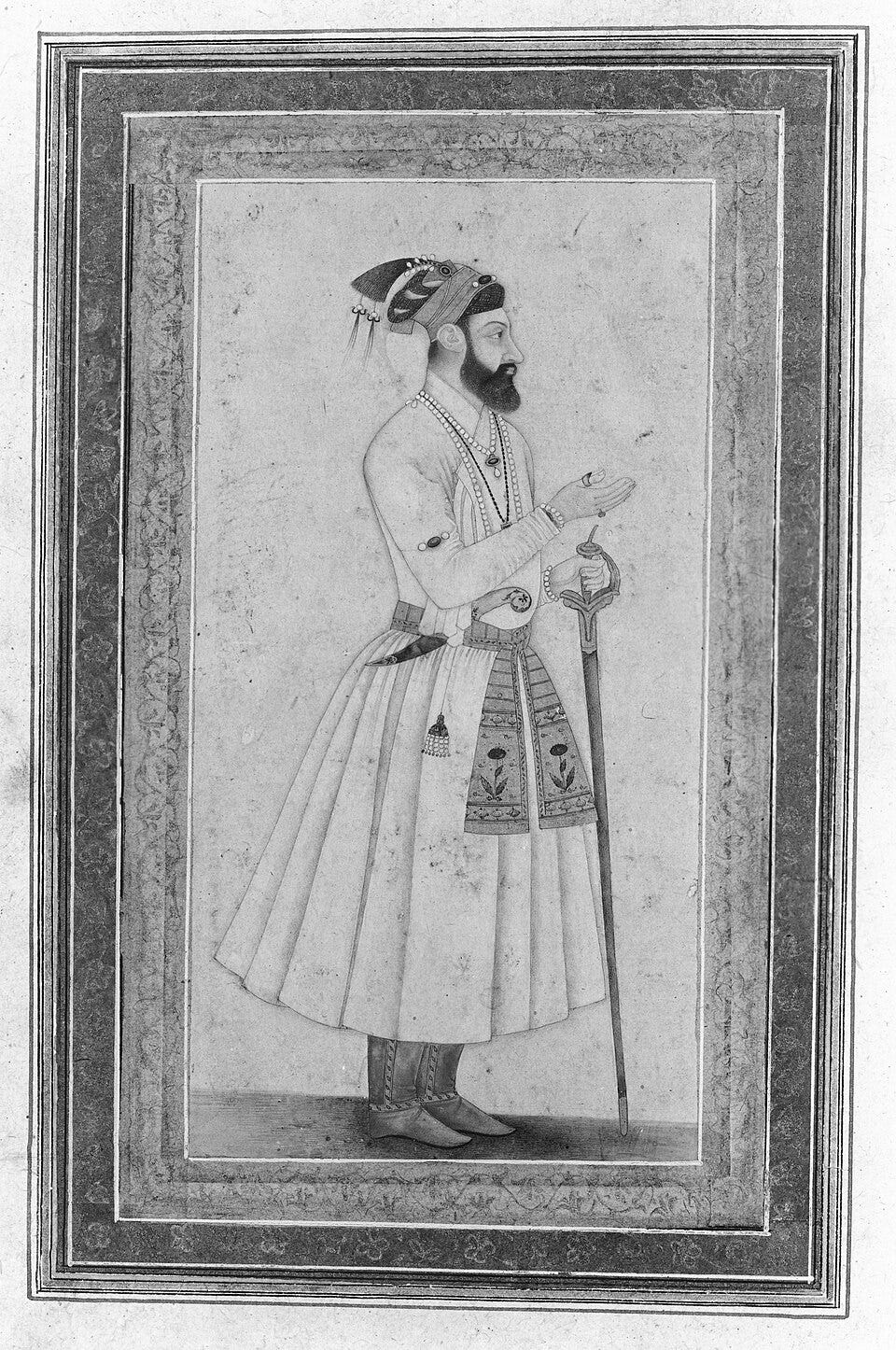
He regarded the religious toleration of his predecessors as un-Islamic, and he set about dismantling it. Sharia law was instituted. Hindu clerks and court musicians were dismissed. Hindu temples were ordered destroyed. Punitive taxes on non-Muslims, abolished generations earlier, were reimposed. Winemaking and the celebration of Diwali were outlawed. The Sikh Guru was tortured and beheaded for refusing to convert to Islam.
The commercial consequences were immediate and severe. Political breakdown produced commercial chaos. The Marathas, rising in revolt against Mughal rule, sacked Surat, the richest port in India, in 1664 and again in 1670. Virji Vora was among the many who suffered: his houses and warehouses were demolished and his grandson murdered. In 1669, a Surat judge began forcibly converting wealthy Hindus, circumcised a Hindu scribe, and threatened to destroy the local temples. Eight thousand merchants shut their shops and left the city en masse.
The numbers tell the story. East India Company imports from India collapsed from £800,000 in 1684 to £80,000 in 1691 - a fall of ninety per cent in seven years. Aurangzeb’s last decades cost roughly a hundred thousand lives a year. His armies stripped the Deccan of grain and wealth. Two million people died in the famine and plague that followed the Deccan War of 1702 to 1713, the war that finally broke Mughal power. By the end, the Marathas dominated central and northern India and the Mughal emperor was confined to Delhi, his governors ruling as independent kings in Hyderabad, Mysore, Oudh and Bengal.
Thousands of years of Indian merchants who survived natural and political disasters did not collapse because foreigners arrived in ships. It collapsed because Aurangzeb destroyed the conditions that made commerce and wealth-creation possible: toleration, security, predictable law, and trust between communities.
The part of the story that the conventional account leaves out entirely is that the commercial genius of India did not die under Aurangzeb. It moved.
The Hindu and Jain merchants who fled Surat had to go somewhere. Many went to Gujarat’s smaller ports like Mandvi, some went to Muscat in Oman or Zanzibar in East Africa. And many went to a small, insignificant island off the west coast that the Portuguese had handed to the English Crown as part of a royal wedding dowry: Bombay.
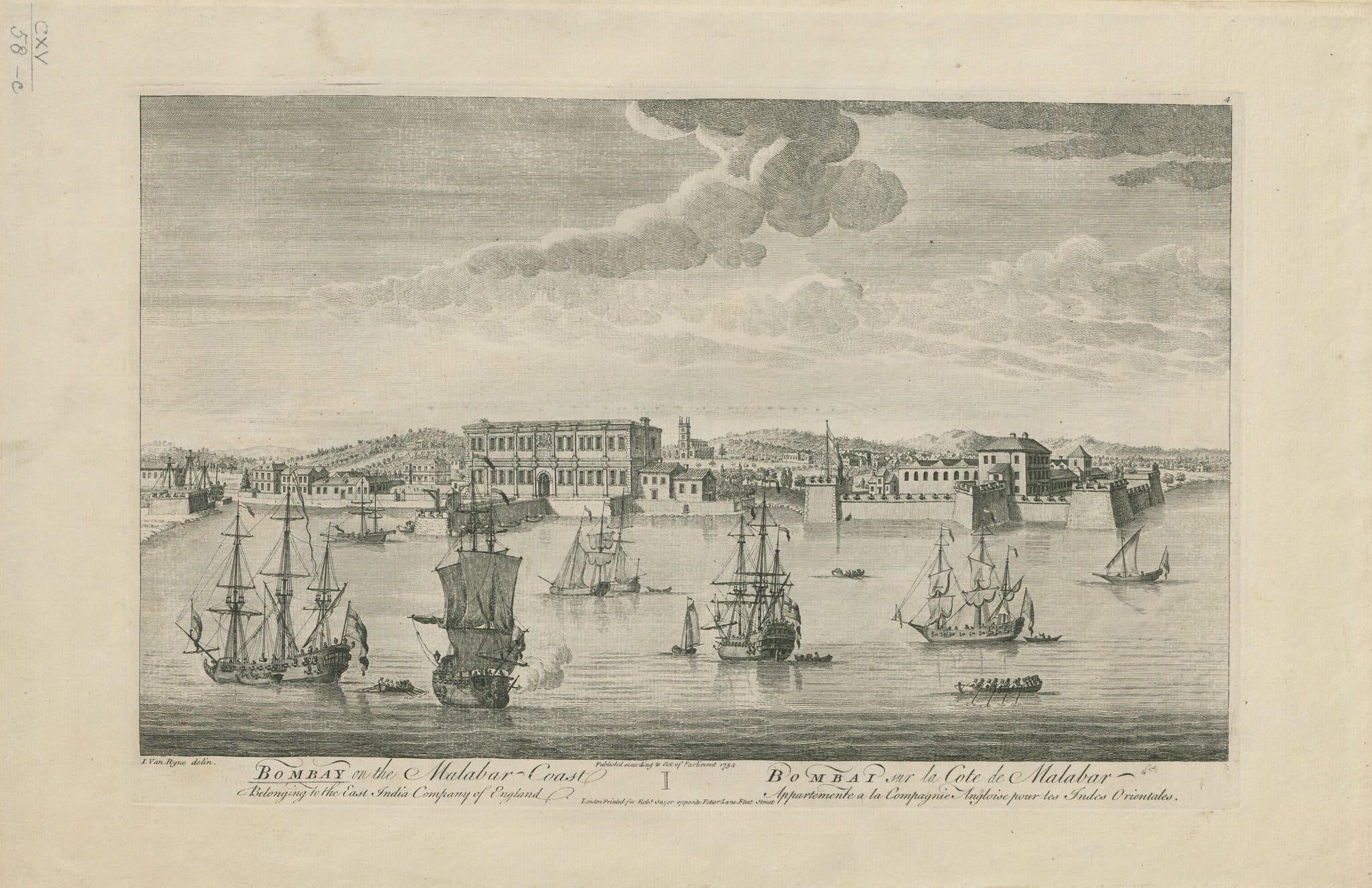
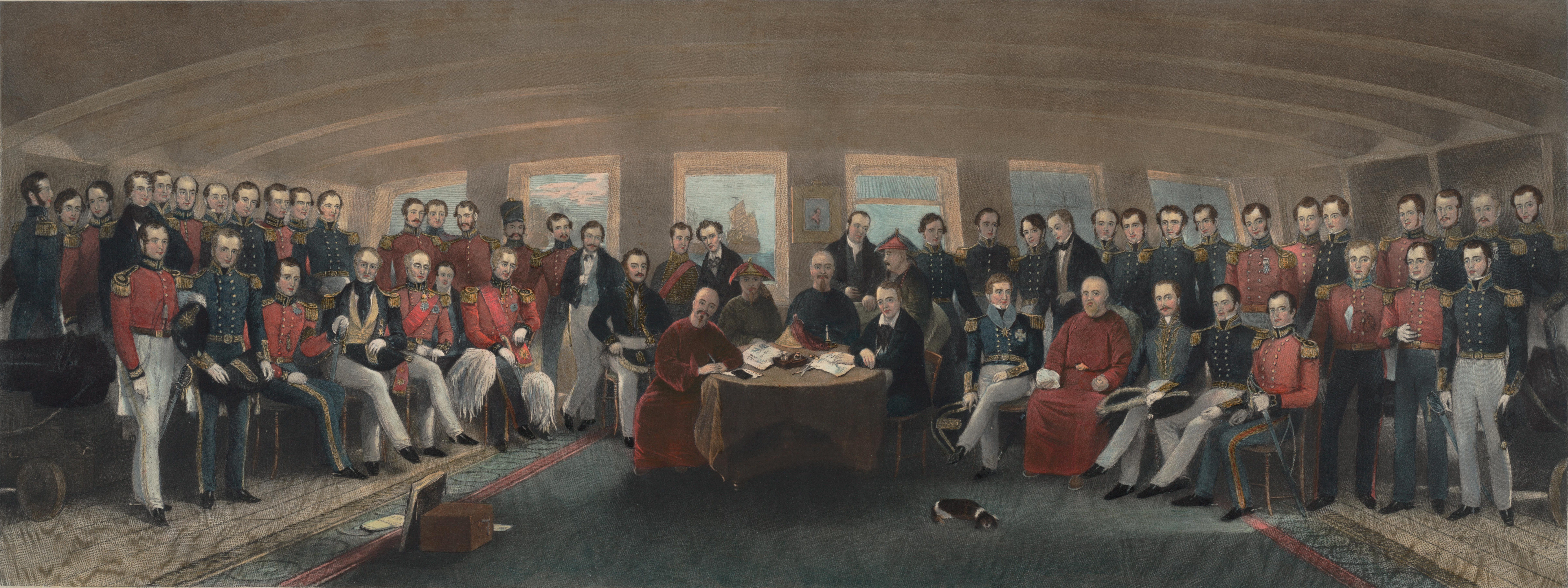
Bombay had a poor hinterland and few natural advantages. What it had was the one thing Mughal India had thrown away; security and religious toleration. The East India Company, whatever its later sins, understood that merchants needed predictable rules and protection for their property and their faith, because that was precisely the environment in which trade flourished. Furthermore, rather than bribes to Mughals for favours, Indian merchants did business under English Common Law. Merchants who could no longer trust the Mughal state, relocated to a place that would honour their contracts and leave their temples standing. Within a generation, Bombay became the commercial capital of India. The Parsi shipbuilding family of the Wadias established a yard there that would go on to build some of the finest ships in the Royal Navy, including the vessel on which the Treaty of Nanking was signed.
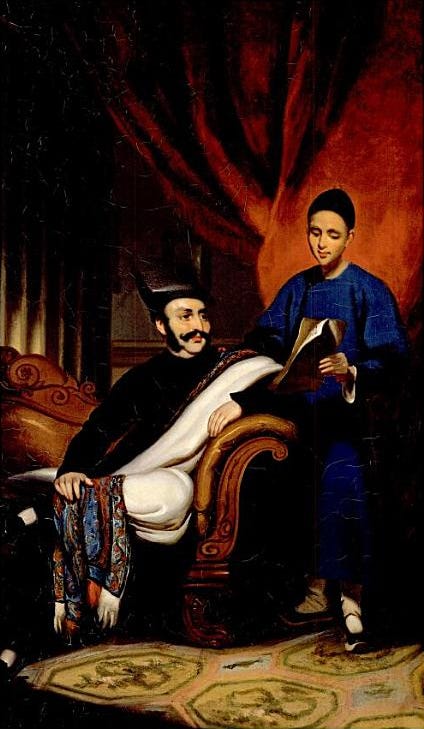
Jamsetjee Jeejeebhoy, a Parsi merchant, would become the first Indian to receive a hereditary British title. The commercial dynasties that would later build modern Indian industry, the Tatas among them, trace their origins to this migration of mercantile talent from a collapsing Mughal order to a tolerant port.
European companies did not defeat Indian commerce. They inherited it. They provided the institutional conditions that Indian merchants required and that the Mughal court had deliberately destroyed. This is not an argument for colonialism, which brought its own extraction and its own catastrophes. It is an argument about something more fundamental: that commerce is not a natural resource to be seized, but a delicate growth that depends entirely on the conditions a society chooses to create or destroy.
What happened to India was not unique. The same pattern recurs throughout the history of maritime trade, and it is the central argument running through all three of my books on the subject, the second of which is subtitled ‘How Asia Lost Maritime Supremacy.’
Portugal built the first European seaborne presence in Asia and could not sustain it, because the Crown was too strong, taxed its merchants too heavily, and spent its wealth on display rather than reinvestment. The Dutch Republic dominated world trade in the seventeenth century and then lost that dominance as its ruling oligarchy turned inward. Oman dominated western Indian Ocean trade in the first half of the 19th century, then like Aurangzeb, adopted militant Islam which collapsed its prosperity. Britain, in its turn, would eventually choose the path of decline by neglecting commerce and technical education by recruiting a classically trained administrative class that held trade in contempt.
In every case, the cause of decline is internal, not external. Maritime supremacy is lost not when a stronger rival appears, but when a society stops valuing the openness, the toleration and the commercial purpose that made it great in the first place.
India’s loss of the ocean is the oldest and clearest example. A civilisation that had dominated world trade for four millennia handed that dominance away in two generations, not because it was conquered, but because its rulers decided that ideological conformity mattered more than commercial openness. The merchants who had made India the centre of the world simply packed up and moved to wherever they would be left in peace to trade.
The lesson is not only about India but about what every prosperous society eventually forgets: that the recipe for prosperity is a choice, which can be unmade by a single generation that forgets the cascading economic power of maritime trade.
This essay draws on all three volumes of my work on the history of maritime trade: How Maritime Trade and the Indian Subcontinent Shaped the World (2021), The Millennium Maritime Trade Revolution 700–1700 (2023), and The Ascent of Maritime Trade 1700–2025 (2025). On Surat and the Indian merchant communities, the standard scholarly work is Ashin Das Gupta, Indian Merchants and the Decline of Surat (1979). On the structure of Indian Ocean commerce, K.N. Chaudhuri, Trade and Civilisation in the Indian Ocean (1985) remains foundational. On the East India Company’s early relationship with Indian financiers, John Keay, The Honourable Company (1991). On the Gujarati merchant diaspora specifically, Chhaya Goswami, Globalisation Before its Time (2016). The figures for EIC import collapse and the Deccan death tolls are drawn from contemporary Company records and the secondary literature cited in the volume bibliographies.
This essay is part of a three-volume history of maritime trade. The books are available on Amazon, via Garuda in India, Pen & Sword in the UK.
Thanks for reading Maritime Trade History! This post is public so feel free to share it.
Comments
Nothing yet. Say the first thing.
Sign in to join the conversation.