
By Nick Butter

Creatine & Running: The Overlooked Supplement
For something so widely researched, so consistently validated in sport science, and so straightforward to use, creatine remains surprisingly misunderstood. This is particularly true in endurance sport, where many runners still overlook one of the most well established supplements available.
Mention creatine to a group of runners and the reaction is often predictable. The image that comes to mind is usually a bodybuilder in a gym, lifting heavy weights and trying to gain muscle mass. For decades creatine has been closely associated with strength sports, which has created the assumption that it belongs only in the world of weight rooms and powerlifting platforms. That perception, however, says more about sporting culture than it does about physiology.
Creatine should be viewed through the lens of energy production!
Creatine is not fundamentally about muscle size or appearance. Its real role lies much deeper within the body, at the level of cellular energy production. Every muscle contraction relies on a molecule called ATP, the body’s immediate source of usable energy. Whether you are sprinting up a steep climb, holding pace late in a marathon, or stabilising your stride on uneven trail, ATP is the fuel that allows your muscles to contract and produce force.
The difficulty is that the body stores only a very small supply of ATP at any given moment. During demanding exercise it is depleted quickly. Creatine exists within muscle cells in the form of phosphocreatine, where it helps regenerate ATP so that energy production can continue. In simple terms, it allows muscles to restore their energy supply more rapidly during repeated efforts.
This is why creatine has traditionally been used by athletes performing short, explosive movements such as weightlifting or sprinting. Yet the same energy system is also heavily involved in endurance training. Running is not simply an aerobic activity sustained by oxygen and cardiovascular fitness. It also relies on repeated muscular effort, changes of pace, hill climbing, and the ability to maintain efficient movement patterns under fatigue.
During interval sessions, hill repeats, and even the final stages of a long race, the phosphocreatine system plays an important supporting role. It helps muscles respond to sudden increases in demand and recover between those efforts. When creatine stores are higher, the body can regenerate ATP more efficiently, which may contribute to stronger muscular performance and better resilience during training.
This is where the misunderstanding among runners begins to unravel. Creatine does not exist purely to help someone lift heavier weights in a gym. Its real function is to support the body’s fundamental energy system. That system is used constantly in running, even if it is less obvious than in strength sports.
The benefit for endurance athletes therefore lies not in dramatic short term improvements, but in long term durability. Runners rely heavily on their ability to repeat training sessions week after week, month after month, without excessive fatigue or muscular breakdown. When muscles are able to replenish energy more efficiently, they may cope better with demanding workloads and recover more effectively between sessions.
Creatine is therefore better understood as a support tool rather than a performance trick. It does not stimulate the nervous system like caffeine, nor does it act as a quick source of fuel like carbohydrates. Instead it quietly supports the machinery that allows muscles to produce energy in the first place.
For runners who value consistency, resilience, and sustainable training progression, that role becomes increasingly relevant.
Once creatine is viewed through the lens of energy production rather than bodybuilding culture, its place in endurance sport becomes much clearer. It is not a shortcut and it is certainly not a gimmick. It is simply one of the most well researched and reliable ways to support how the body produces and restores the energy required for repeated physical effort.
Best In Market: LLS - Creavitalis®
Love Life Supplements’ Creavitalis® Creatine Monohydrate Powder stands out because of the quality of its raw ingredient and the precision of its manufacturing. The product uses Creavitalis®, a branded creatine monohydrate produced in Germany by AlzChem under strict quality control standards. This ingredient is known for its exceptional purity and consistency, with creatine monohydrate typically reaching around 99.9 percent purity. Every batch is produced using precision manufacturing and undergoes independent third-party testing for identity, heavy metals and contaminants. For athletes using supplements regularly, this level of testing and transparency is important, providing reassurance that the product is both safe and reliable for daily use.
Another reason the product stands out is its highly micronised formulation, which improves how creatine mixes and absorbs in the body. Micronisation reduces the particle size of the powder, allowing it to dissolve quickly in water, juice or recovery drinks without leaving the gritty texture sometimes associated with older creatine powders. The result is a smooth, neutral-tasting supplement that blends easily into everyday routines. Importantly, the formula contains nothing other than 100 percent pure creatine monohydrate. There are no flavours, fillers, sweeteners or unnecessary additives, making it a clean and simple supplement for athletes who want complete transparency in what they consume.
Finally, the dosing aligns closely with the scientific research surrounding creatine supplementation. Each scoop provides 5 grams of creatine monohydrate, which matches the amount commonly used in human studies investigating strength, power, recovery and performance. Research consistently shows that daily creatine intake in the range of 3 to 5 grams helps increase phosphocreatine stores in muscle, supporting ATP regeneration and improving the body’s ability to produce energy during demanding exercise. With 60 servings per container, the product provides roughly two months of supplementation when taken once per day, making it a practical and evidence-based option for runners and athletes looking to support muscular energy production, training adaptation and long-term recovery.

1. Why Runners Should Be Using Creatine, And Why Most Aren’t Yet
An introduction to creatine and the common misconceptions that have led many endurance athletes to overlook one of the most researched supplements in sport science.
2. Understanding Creatine and Energy Production
How ATP fuels muscle contractions and the role creatine plays in helping regenerate this energy so muscles can continue producing force during demanding exercise.
3. Why Creatine Has Been Misunderstood in Running
A look at how creatine became associated with gym culture and why this perception has prevented many runners from recognising its benefits for endurance training.
4. What the Research Says
An overview of the scientific evidence supporting creatine supplementation, including studies showing improvements in strength, performance, recovery and training adaptations.
5. The Role of Creatine in Real-World Run Training
How creatine supports hill climbing, pace changes, muscular resilience and the ability to maintain efficient running form during long or demanding efforts.
6. Recovery and Training Consistency
Why restoring energy within muscle cells matters for endurance athletes and how creatine may help reduce fatigue and support more consistent training.
7. Choosing and Using Creatine Correctly
Guidance on selecting high-quality creatine, understanding micronised forms, and how a simple five gram daily serving can be incorporated into a training routine.
8. The Takeaway for Runners
Why creatine remains one of the most reliable and well-researched supplements for supporting strength, recovery and long-term training durability.
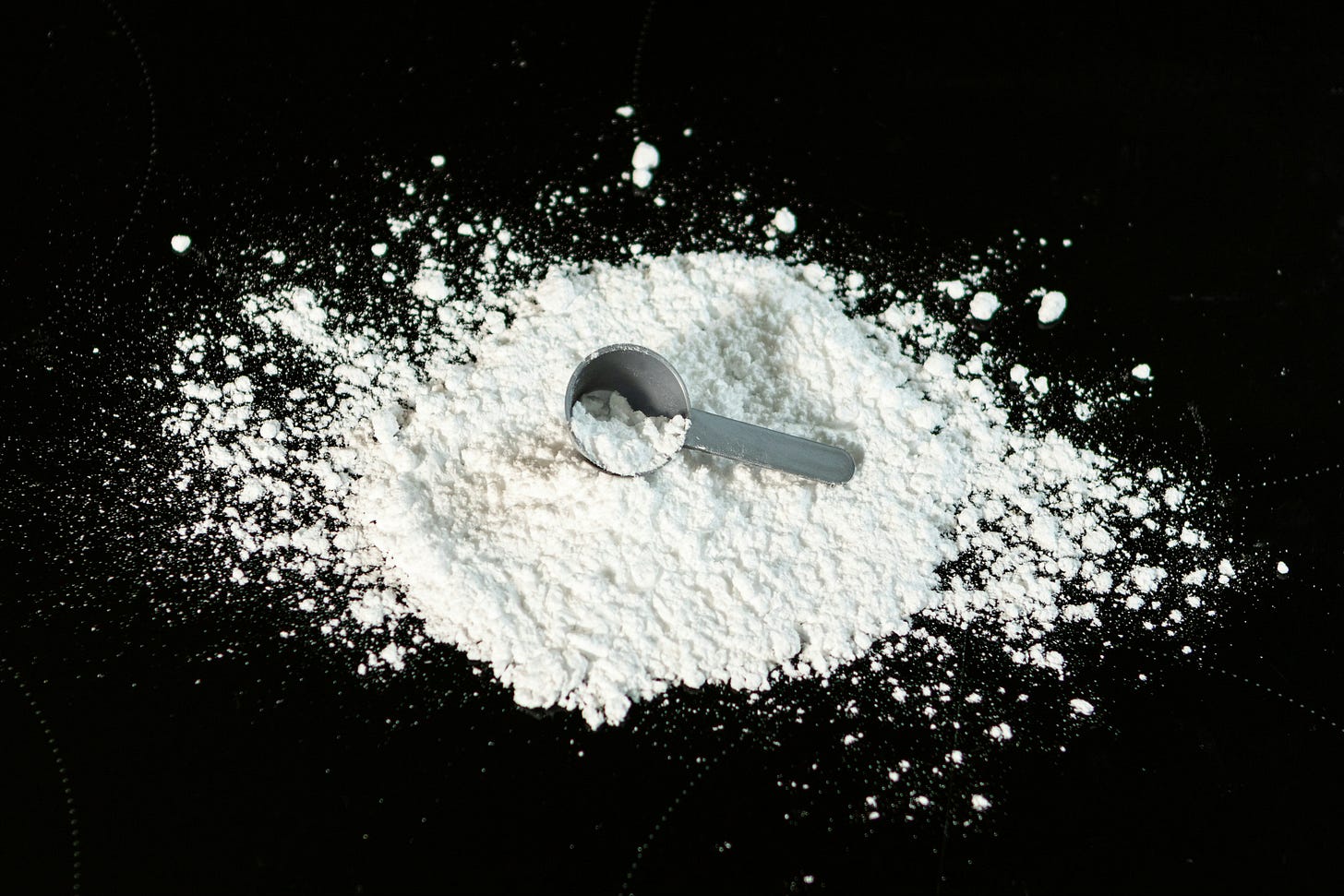
The Importance of Purity & Quality
Because creatine is taken daily, quality matters.
A well-produced creatine monohydrate should be:
Chemically pure
Consistently manufactured
Free from contaminants
Easily dissolvable
Gentle on digestion
High-grade, German-manufactured creatine such as Creavitalis® is produced under stringent quality controls, ensuring reliability batch after batch. This matters not for marketing reasons, but because consistency is essential when something becomes part of a long-term training routine.
Why Micronisation Improves Practical Use
One of the historical complaints about creatine was poor solubility. Larger particle powders could feel gritty or settle in liquid.
Micronised creatine solves that by reducing particle size dramatically, allowing it to:
Mix instantly
Remain suspended in fluid
Absorb efficiently
Cause less gastrointestinal discomfort
This is a practical improvement, not a chemical change, but one that makes daily use far easier.
And ease of use is what ensures adherence.

Creatine is one of the most widely researched supplements in sports science, yet it remains surprisingly underused in endurance sport. For decades it has been strongly associated with weightlifting and bodybuilding, which has led many runners to assume it has little relevance to their training. In reality, creatine’s primary function is not about building large muscles but about supporting the body’s fundamental energy systems. Because running relies heavily on efficient energy production within muscle cells, creatine has a clear physiological role in endurance training.
The misunderstanding largely comes from culture rather than science. Runners traditionally focused on mileage, aerobic capacity and body weight, often avoiding supplements that appeared linked to strength sports. Modern research, however, shows that endurance performance also depends on muscular durability and the ability to repeatedly produce force under fatigue. Creatine helps support this process, making it highly relevant for runners seeking long-term training consistency and resilience.
Every muscle contraction in the body is powered by a molecule called ATP, or adenosine triphosphate. ATP acts as the body’s immediate energy currency, allowing muscles to contract and produce movement. The challenge is that muscles only store very small amounts of ATP at any given time, meaning it must be constantly regenerated during exercise, particularly during demanding efforts such as hill running, interval training or finishing kicks late in a race.
Creatine plays a central role in this energy system. Inside muscle cells it is stored as phosphocreatine, which helps rapidly regenerate ATP when energy demand increases. This allows muscles to continue producing force during repeated efforts. For runners, this means creatine supports the body’s ability to handle surges in pace, maintain strength during climbs and sustain muscular work when fatigue begins to set in.
Creatine’s reputation has long been shaped by its popularity in strength sports during the 1990s and early 2000s. Because it was widely used by bodybuilders and power athletes, many endurance athletes came to see it as a supplement designed purely for increasing muscle size and strength. This cultural association has persisted even though the underlying science shows creatine’s benefits extend far beyond the weight room.
In reality, creatine supports a fundamental biological process that applies to all forms of exercise. The rapid regeneration of ATP is not only important for lifting weights but also for sprinting, climbing hills, stabilising stride and maintaining form during long runs. Once creatine is understood as a tool that supports energy metabolism rather than muscle size, its relevance to running becomes much clearer.
Scientific research into creatine supplementation spans more than two decades and includes hundreds of studies across different populations and sports. Reviews of the literature consistently show that creatine monohydrate can improve strength, exercise performance and training adaptations when used regularly. One well-known review by Branch (2003) found that creatine supplementation significantly increased strength, lean muscle mass and exercise performance across multiple athletic settings.
More recently, the International Society of Sports Nutrition published a comprehensive position stand summarising decades of research. The review concluded that creatine is both safe and effective when taken at recommended doses and may help improve recovery, reduce fatigue and enhance training capacity. For runners, these findings suggest creatine may support the ability to handle demanding training blocks and maintain performance across repeated sessions.

Running performance is influenced not only by cardiovascular fitness but also by muscular strength and resilience. During training sessions such as hill repeats, tempo runs or interval workouts, muscles must repeatedly produce force while resisting fatigue. Creatine helps support this process by improving the body’s ability to regenerate ATP and maintain muscular performance during short bursts of higher intensity effort.
This can be particularly valuable in situations where runners need to change pace or sustain power under fatigue. Climbing steep terrain, accelerating late in a race or maintaining stride efficiency in the final kilometres all place demands on the muscular system. By supporting the body’s energy regeneration systems, creatine helps runners maintain strength and coordination when fatigue would otherwise begin to compromise form.
One of the most important factors in endurance development is consistency. Training adaptations occur when the body recovers from repeated stress and gradually becomes stronger and more efficient. If recovery is inadequate, fatigue accumulates and the quality of subsequent training sessions can decline.
Creatine may help support recovery by improving the restoration of energy within muscle cells after demanding exercise. By helping replenish phosphocreatine stores and regenerate ATP more efficiently, creatine allows muscles to restore their energy supply between sessions. This may help runners feel more prepared for their next workout and maintain a consistent training rhythm across the week.
When selecting a creatine supplement, quality and purity are important considerations. Creatine monohydrate remains the most studied and reliable form, and high-quality products are manufactured under strict standards to ensure purity and consistency. Micronised creatine powders are often preferred because the smaller particle size allows the supplement to dissolve more easily in liquid and mix smoothly into drinks.
The recommended intake in most research studies is around five grams per day. This amount has been shown to effectively increase creatine stores in muscle tissue over time. Because creatine works by gradually saturating muscle cells rather than providing an immediate effect, the most important factor is regular daily use rather than precise timing around training sessions.
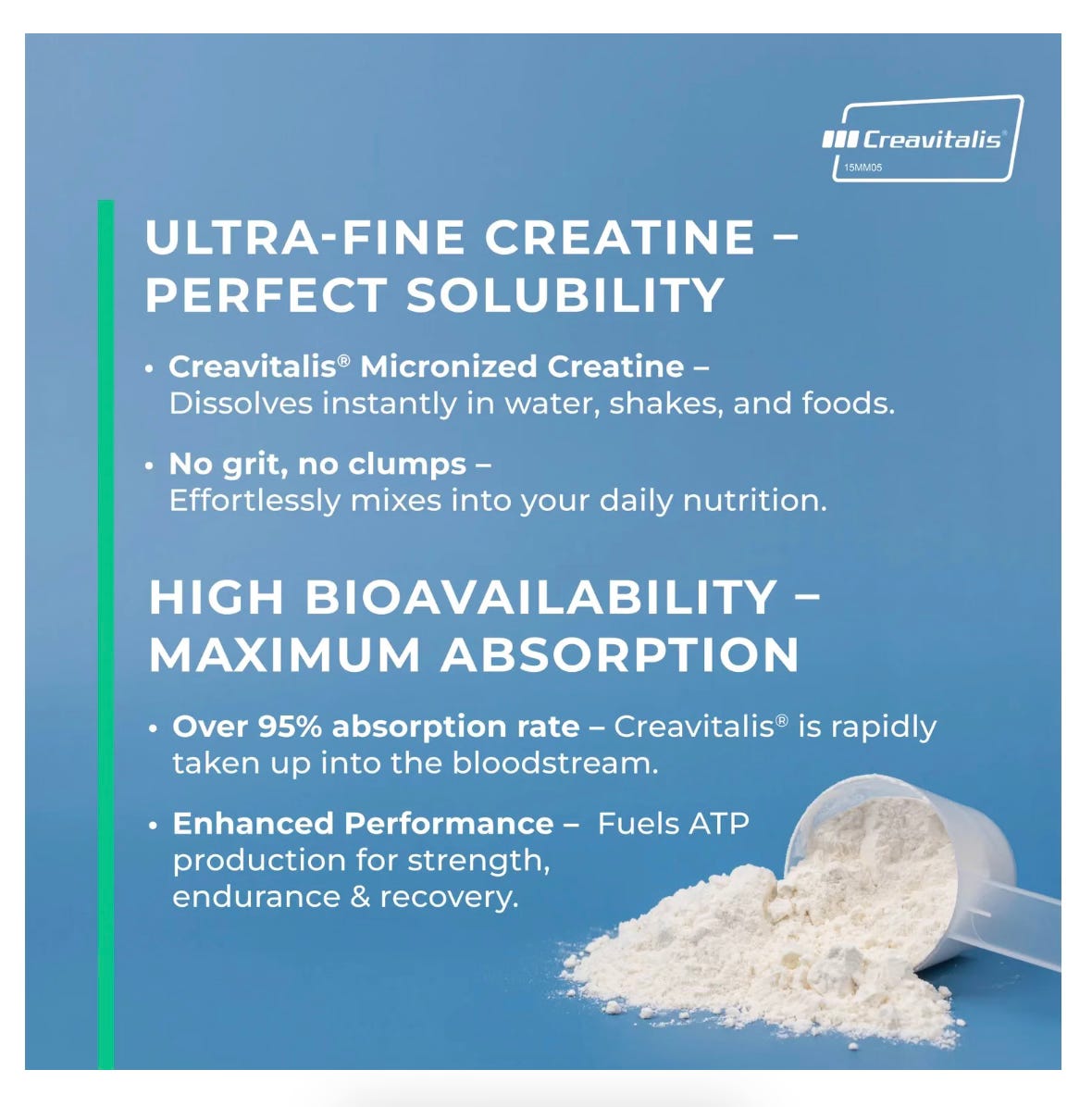
If you are going to supplement with creatine, quality and purity matter. One of the strongest options available is Love Life Supplements Creavitalis® Creatine Monohydrate Powder, which uses Creavitalis®, a premium creatine monohydrate manufactured in Germany by AlzChem. Each serving provides 5 g of pure creatine monohydrate, the clinically researched daily dose shown to support strength, recovery and energy production during demanding training. The powder is highly micronised, meaning it dissolves quickly in water or shakes without grit, making it easier to absorb and simple to use daily. Importantly, the formula contains 100% pure creatine monohydrate with no flavours, fillers or additives, and every batch is third-party tested for identity, heavy metals and contaminants. This combination of pharmaceutical-grade raw material, transparent formulation and research-backed dosing makes it one of the cleanest and most reliable creatine products available for athletes and runners looking to support muscular energy and long-term training performance.
Creatine monohydrate remains one of the most thoroughly researched supplements in sports nutrition. Decades of studies have consistently shown that it supports muscular energy production, improves training capacity and helps athletes maintain strength under demanding conditions. For runners, these benefits translate into improved resilience during challenging sessions and better recovery between workouts.
Rather than being a supplement reserved for gym-based athletes, creatine is better understood as a tool that supports the body’s natural energy systems. By helping muscles regenerate ATP more efficiently, it allows runners to sustain repeated effort and maintain training quality over time. For athletes seeking long-term durability and consistency, creatine represents a simple and well-supported addition to a structured training routine.
1. PubMed, Creatine Research Database
https://pubmed.ncbi.nlm.nih.gov The world’s largest biomedical research database, containing thousands of peer-reviewed studies on creatine, exercise performance and recovery.
2. International Society of Sports Nutrition, Creatine Position
https://www.sportsnutritionsociety.org Expert consensus paper reviewing hundreds of studies on creatine’s safety, effectiveness and role in sports performance.
3. PubMed Central, Full Creatine Research Papers
https://www.ncbi.nlm.nih.gov/pmc Free access to full scientific papers and systematic reviews covering creatine physiology, safety and performance benefits.
4. Google Scholar, Academic Creatine Studies
https://scholar.google.com A powerful academic search engine that finds research papers, reviews and highly cited studies on creatine.
5. Frontiers in Nutrition, Sports Nutrition Research Journal
https://www.frontiersin.org/journals/nutrition Peer-reviewed journal publishing research on supplements, metabolism and sports performance including creatine studies.

No posts
Comments
Nothing yet. Say the first thing.
Sign in to join the conversation.