
By Nick Butter
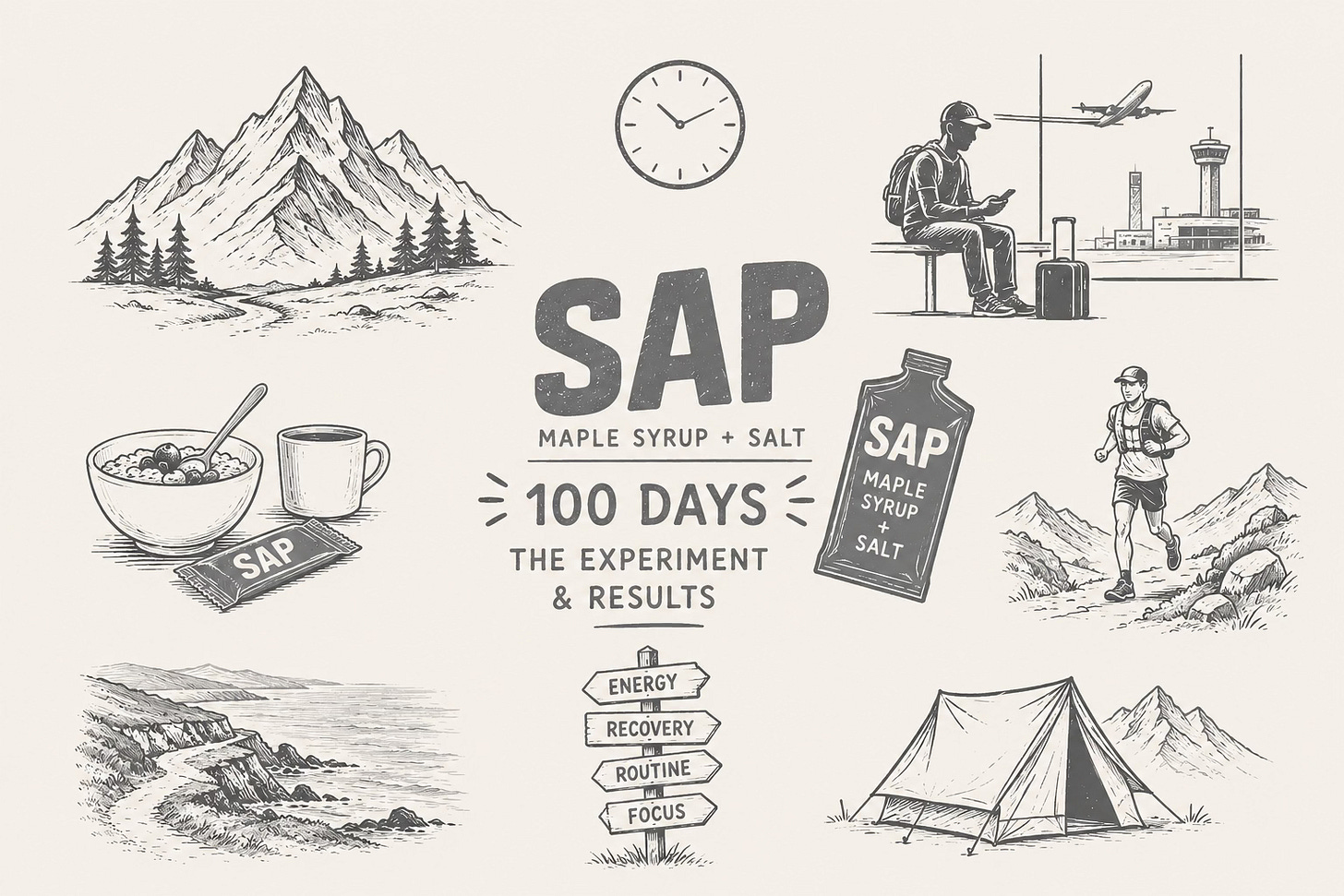
The Experiment – Why I spent 100 days committing to one product.
The Forgotten Hours – Endurance is built between sessions.
A Summer in the Mountains – Iceland, Chamonix, the Dolomites, Cornwall, airports, Run Weekends. Life on the road.
What Changed – Energy, recovery, routine, hunger, psychology.
The Science – Why consistency matters.
The Verdict – An honest assessment of where SAP genuinely fits.

For 100 days, I carried the same fuelling product through one of the busiest periods of my year. It travelled with me to Chamonix, through multiple trips in Italy and the Dolomites and across the French Alps. It came north to Scotland, followed me along the coast paths of Cornwall and sat in bags, jacket pockets and backpacks during a summer spent delivering running retreats with Run Weekends. www.runweekends.com
This wasn’t a formal trial. There were no controlled meals, fixed training loads or carefully monitored recovery periods. My days were shaped by travel, changing weather, long runs, long drives, early starts, delayed flights, mountain transfers and the demands of leading groups on the trails week after week.
That was exactly why I wanted to conduct the experiment.
I wasn’t interested in testing SAP under perfect conditions. Perfect conditions are rare in normal life, particularly during a summer built around running events and travel. I wanted to know whether it would remain useful when routines disappeared, plans changed and nutrition became something that had to fit around everything else.
The question was simple: if I used SAP consistently for 100 days, would it make a meaningful difference to the way I fuelled, travelled, trained and worked? I appreciate that usually gels are used for specific events at set intervals, but because SAP is so pure and simple, it has great benefits for normal life to keep sugars level.
I wanted to find out whether one small and repeatable choice could improve the parts of endurance life that are usually overlooked. The realities that my normal diet is spontaneous and volatile.
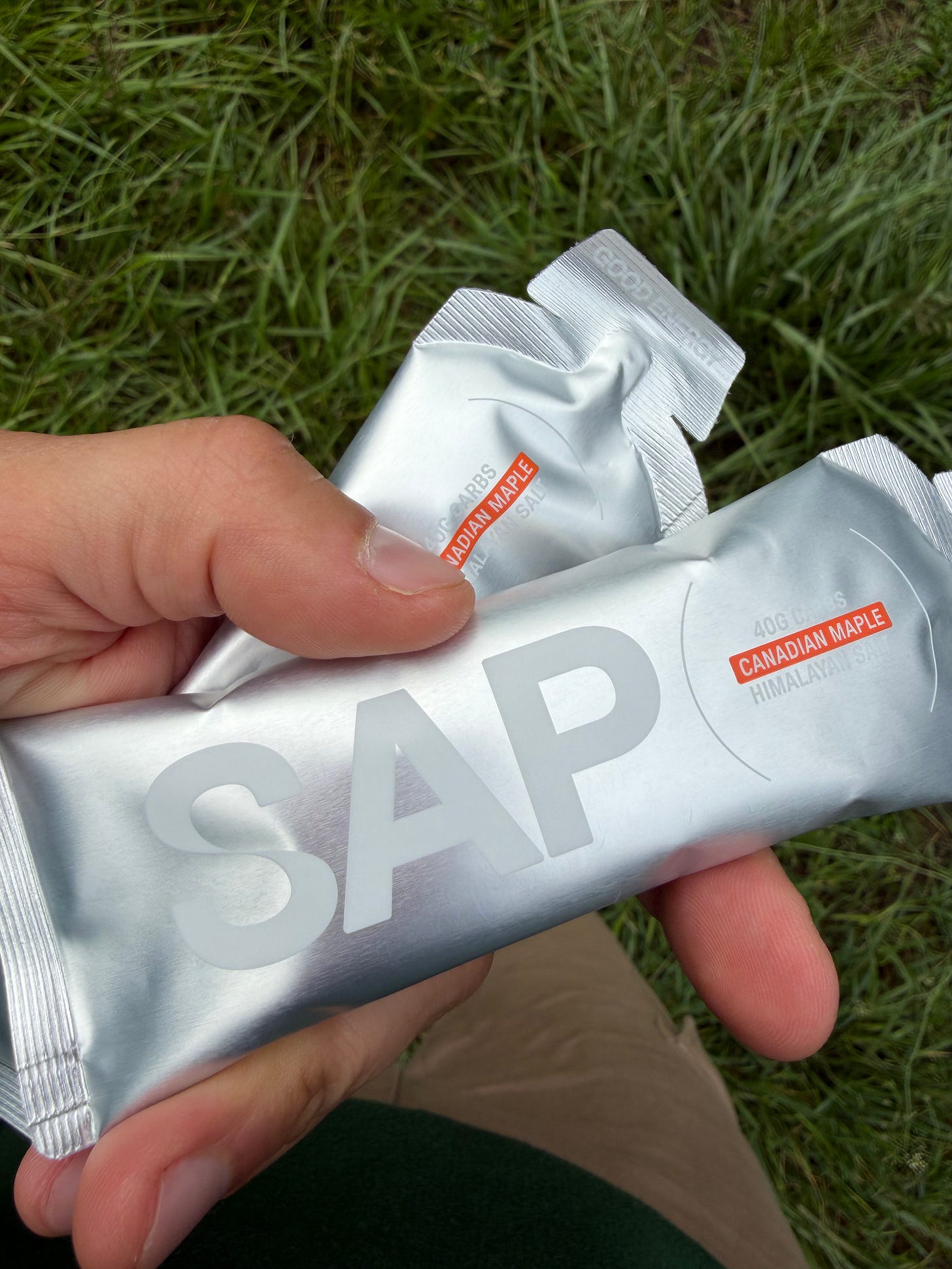
A Summer Without a Normal Routine
The experiment began during a period when consistency should have been difficult.
My summer and the months preceding it, was divided between leading Run Weekends, travelling between locations and fitting in my own training whenever time and energy allowed. One week might involve long days on Alpine trails around Chamonix. The next could mean moving between mountain refuges in the Dolomites or travelling through the French Alps with a packed schedule and limited control over meals. I’ve been known to balance a laptop on my bag as I shuffle through the immigration queues in various airports.
Scotland brought different conditions: long days outside, changing weather and hours spent moving between random accommodation, sometimes tents at strange hours. Cornwall meant coastal running, event delivery and the familiar challenge of balancing physical activity with work life. Moving out of the house and away from shops and food I was familiar with was motivator to having this consistent element to my diet. Between each destination came airports, train stations, long drives, hotel breakfasts and the occasional meal assembled from whatever happened to be open.
This was not a conventional training block, I don’t do those anymore. It was normal life at its most mobile.
There were mornings when breakfast was generous and well organised. There were others when I was preparing to meet a group, checking routes, answering messages and leaving before I had properly eaten. Lunch could be a relaxed meal after a morning run, or it could disappear completely between travel and work. Dinner might be a full meal around a refuge table or something hurried after a late arrival.
SAP became part of that uncertainty.
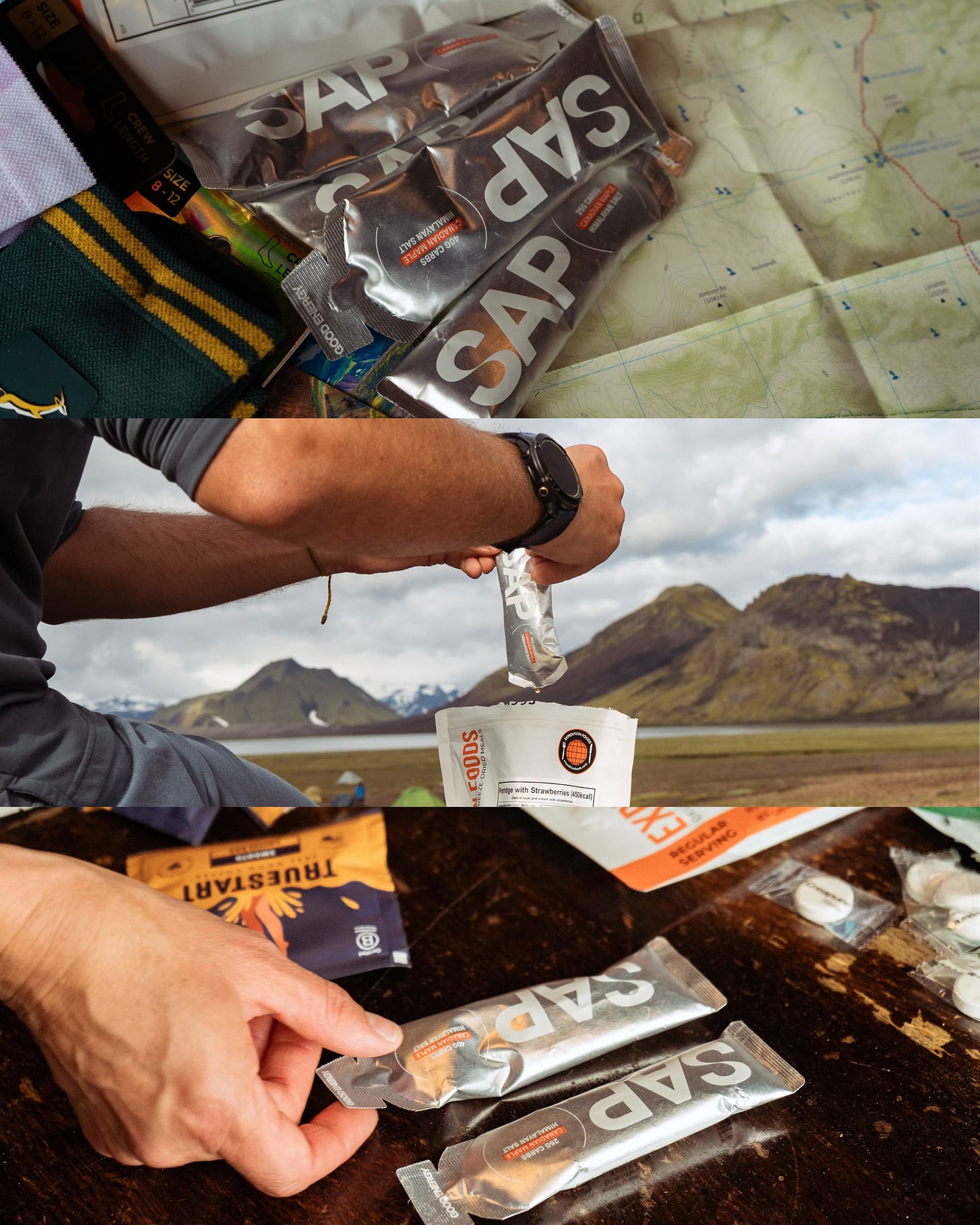
Rather than being reserved for one particular type of session, it moved between roles. Sometimes it was used before a run. Sometimes it was carried during one. At other times it became a practical source of energy during travel or in the gap between finishing an event and reaching a proper meal. Arriving to a new location where the only places that are open are petrol stations, using SAP meant I knew what I was taking in and could use the energy accordingly.
The experiment was therefore not about whether SAP could perform one specific task. It was about whether it could survive the changing demands of what me and many of my friends and team juggle. A life in the middle of events, full, and with little routine.

Run Weekends - Running Holidays - All Abilities
Run Weekends is an adventure travel company that believes running is the best way to explore the world. Rather than focusing on finish times or competition, every trip is designed around discovery, shared experiences and the simple joy of moving through extraordinary landscapes. Whether you are taking your first steps on the trails or have completed some of the world’s toughest ultramarathons, every itinerary is built to be welcoming, supportive and memorable.
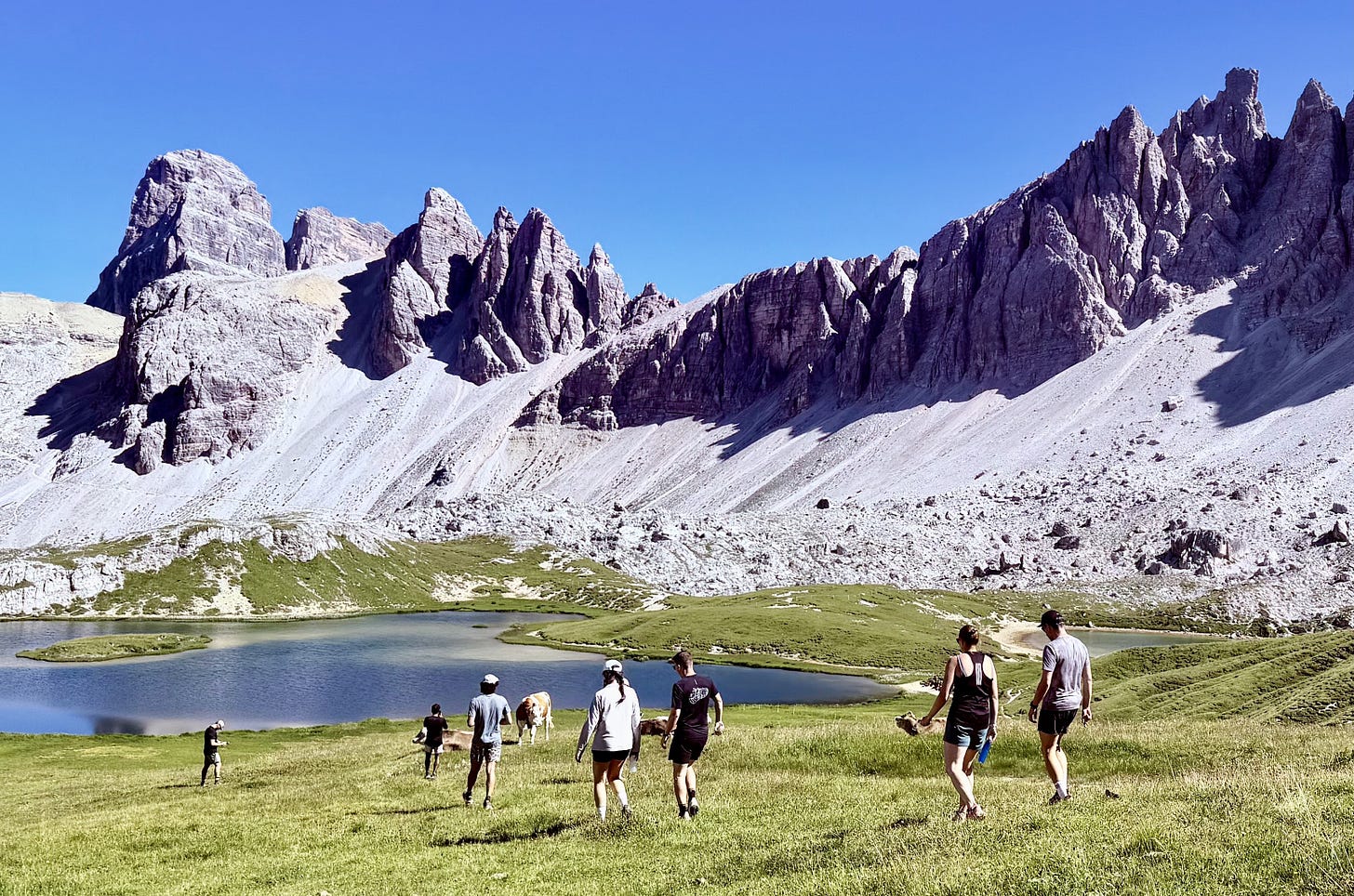
Each adventure combines guided runs with carefully chosen accommodation, local food, cultural experiences and expert leadership. Guests might find themselves running beneath glaciers in Chamonix, exploring ancient paths in the Dolomites, following dramatic coastlines in Cornwall, or discovering remote mountain communities in destinations such as Patagonia, Japan, Iceland and Uganda. Every route is selected not simply because it is beautiful, but because it tells a story about the place and its people.
The emphasis is always on the experience rather than the pace. Small group sizes allow runners to move comfortably together, stop for photographs, enjoy local cafés, learn about the surrounding area and truly immerse themselves in each destination. There is no pressure to keep up with faster runners or to chase personal bests. Instead, participants are encouraged to enjoy the journey, build confidence and share the adventure with like-minded people.
Run Weekends also provides practical support throughout every trip. Experienced guides, carefully planned logistics, luggage transfers where appropriate, route planning and local knowledge allow guests to focus entirely on enjoying their time in the mountains or on the trails. Every itinerary has been created to remove the stress of organising an adventure while retaining the excitement of genuine exploration.
More than anything, Run Weekends is about community. Many guests arrive knowing nobody else on the trip and leave with lasting friendships, new confidence and a renewed enthusiasm for running. The company has created a welcoming environment where everyone is encouraged, achievements are celebrated and the shared experiences often become memories that last far longer than the kilometres themselves. For many participants, a Run Weekend is not simply a holiday or a running trip. It is the beginning of a lifelong passion for combining travel, adventure and running.

Testing It During Run Weekends Retreats
Delivering Run Weekends and retreats creates a different type of physical demand from simply going out for a personal training session.
When I run alone, I can arrange the day around myself. I can choose when to begin, where to stop and when to eat. During an event, the priorities change. I am responsible for the route, the timings, the group and the overall experience. My own fuelling can easily become secondary.
A Run Weekend may involve an early start, hours on the trail and very little time between running, guiding, speaking to guests and preparing for the next part of the day. Even when the pace is manageable, the total demand accumulates. There is the running itself, but also the time spent standing, organising, travelling and remaining attentive to everyone around me.
Those were some of the most useful conditions in which to test SAP.
It was small enough to carry without adding meaningful weight to my kit. I did not need to pack large quantities or reorganise my bag around it. A few servings were enough to give me an option when I needed one.
That mattered because the best product is not necessarily the one with the most complex formulation or the most impressive claims. It is often the one that is still in your pocket when your energy drops.
During the retreats, SAP became something I could use quickly without interrupting the day. I did not need to stop for long, search for a shop or rely on whatever food might be available at the next location. It fitted around the event.
Over time, that convenience became one of the central findings of the experiment.
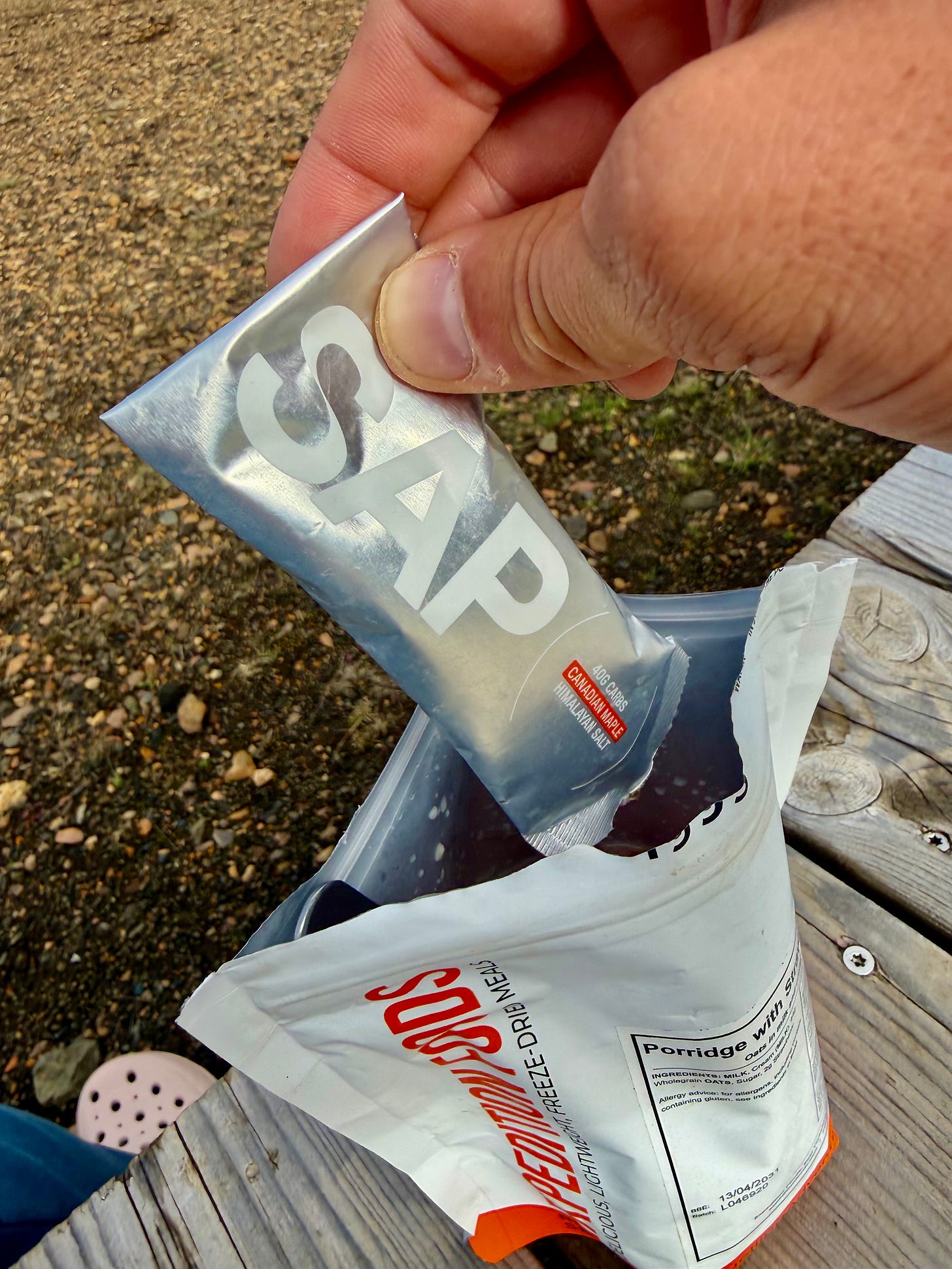
The Travel Test
Travel is where good intentions often disappear.
At home, nutrition is relatively easy to control. There is food in the kitchen, time to prepare meals and some sense of routine. Airports, long drives and early departures remove that structure.
During the 100 days, SAP travelled with me through airports on the way to Chamonix, the Dolomites and other parts of the French Alps. It came on journeys to Scotland and Cornwall and remained in my bag during the transfers between retreats and running events.
These were the moments when I found it particularly valuable.
Airports offer plenty of food, but not always the food you want at the moment you need it. A rushed departure can mean coffee and a pastry. A delay can lead to buying something simply because boredom and hunger have arrived at the same time. A late landing can leave fast food or a petrol-station snack as the only realistic option.
SAP gave me another choice.
It was easy to carry, required very little planning and could be used without turning travel into a nutrition strategy. I did not need many servings for it to be useful. Having one available at the right moment was often enough to stop a small gap in fuelling from becoming a much poorer decision later.
That was important because most nutritional mistakes during travel begin with waiting too long, becoming excessively hungry and then choosing the fastest source of calories available.
SAP helped interrupt that pattern.
It didn’t make airport food disappear, and it didn’t replace every meal. It simply made me less dependent on convenience.

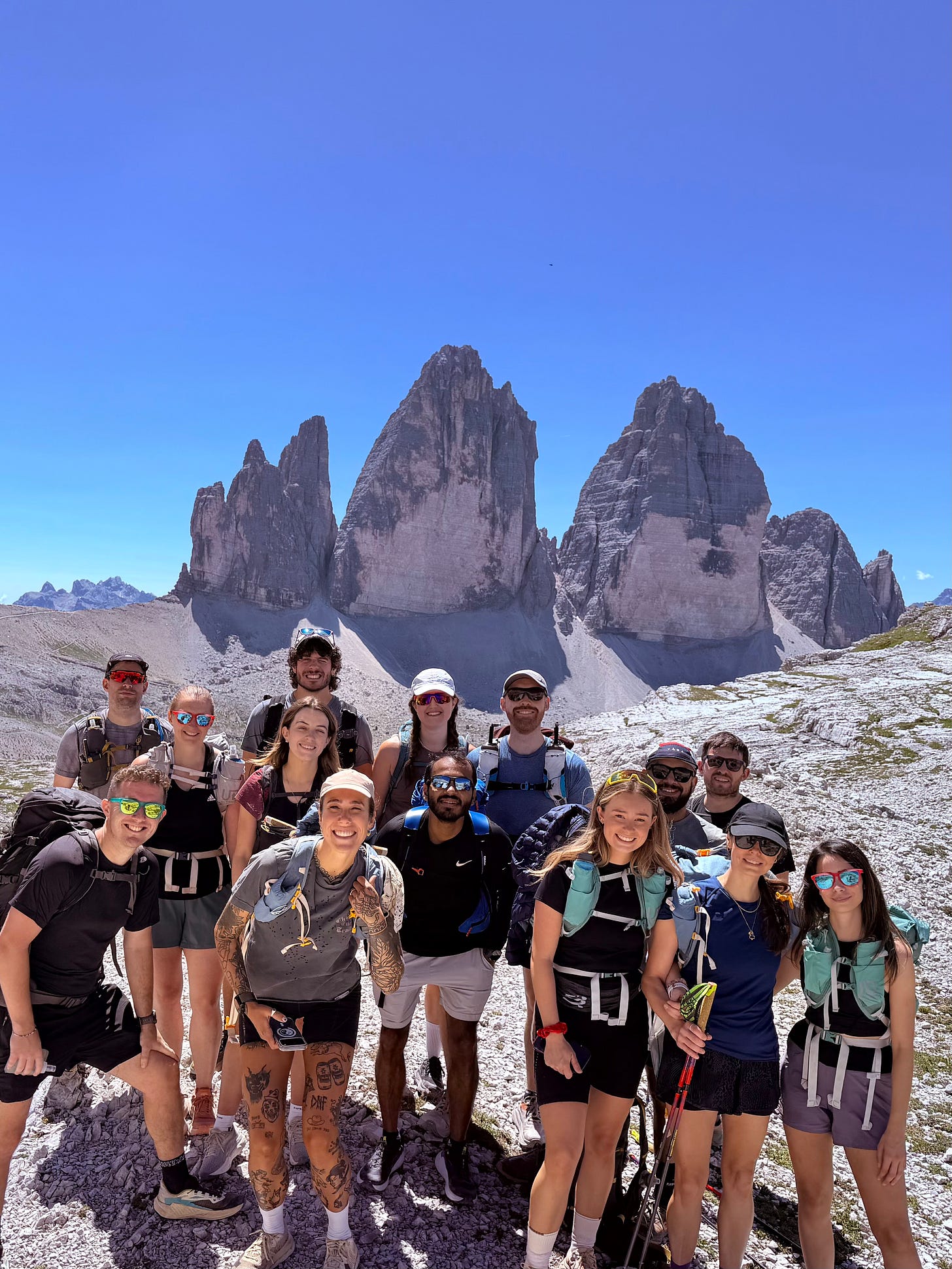
About SAP
What is SAP Good Energy?
SAP Good Energy is an endurance nutrition company built around a simple idea:
Replace traditional artificial energy gels with real food.
Rather than using multiple ingredients, flavourings, preservatives and gelling agents, SAP contains just two ingredients:
Organic Class A Canadian maple syrup
Himalayan pink salt
The company positions SAP as “Nature’s Perfect Endurance Fuel” and markets it as suitable before, during and after endurance exercise.
The Story
SAP was created because the founders became frustrated with traditional sports gels.
According to the company, they wanted:
real food instead of artificial ingredients
easier digestion
better taste
a product they actually enjoyed taking during long runs and races
Their philosophy is simple:
Fuel properly using ingredients your body already recognises.
They also believe that athletes are more likely to fuel consistently if they genuinely enjoy the product.
Ingredients
Every SAP sachet contains only:
Organic Class A Canadian maple syrup
Himalayan pink salt
No:
artificial flavours
preservatives
colours
thickeners
gelling agents
gluten-containing ingredients
SAP is also vegan.
SAP 25 Nutrition (per sachet)
Calories: 100 kcal
Energy: 419 kJ
Carbohydrate: 25 g
Sugars: 25 g
Protein: 0 g
Fat: 0 g
Fibre: 0 g
Salt: 0.38 g
Sodium: 152 mg
Average naturally occurring minerals:
Calcium: 29.21 mg
Potassium: 89.44 mg
Magnesium: 7.52 mg
Manganese: 0.76 mg
Copper: 0.07 mg
Zinc: 0.16 mg
SAP 40 Nutrition (per sachet)
Calories: 160 kcal
Carbohydrate: 40 g
Sugars: 39 g
Protein: 0 g
Fat: 0 g
Salt: 0.5 g
Sodium: 200 mg
Average naturally occurring minerals:
Calcium: 46.71 mg
Potassium: Naturally occurring from maple syrup
Magnesium: 12 mg
Manganese: 1.22 mg
Other trace minerals: Naturally occurring from maple syrup
Why Maple Syrup?
SAP argues maple syrup offers several advantages for endurance athletes:
Naturally easy to digest
Liquid consistency
Fibre-free
Naturally occurring glucose and fructose
Naturally occurring minerals
Naturally occurring antioxidants
The company highlights maple’s approximately 1:1 glucose-to-fructose carbohydrate ratio, saying this helps athletes utilise multiple carbohydrate transport pathways while maintaining good gastrointestinal comfort.
Why Add Himalayan Salt?
Salt supplies sodium, which helps support:
hydration
fluid balance
muscle contraction
nerve function
replacing sodium lost in sweat
SAP states the amount of sodium is intended to complement, rather than completely replace, sodium losses during exercise.
Claimed Benefits
According to SAP Good Energy, the product is designed to provide:
Easy digestion
Quick but steady energy
Simple ingredients
Natural taste
No artificial additives
Electrolytes through added sodium
Naturally occurring minerals
Real-food alternative to conventional gels
The company also recommends using SAP:
Before training (0–20 minutes before)
During exercise (approximately every 20–30 minutes depending on intensity)
After exercise, either on its own or drizzled over food.
SAP’s Philosophy
SAP’s messaging centres on one idea:
“Training is hard. Nutrition shouldn’t be.”
Rather than pursuing increasingly complex sports nutrition formulations, SAP advocates for a minimal-ingredient approach built around maple syrup and salt as a practical, real-food fuel for endurance athletes.
What Happened To My Energy And Hunger
The first noticeable result was not an increase in speed or a dramatic improvement in performance. It was the absence of some of the energy crashes I had become accustomed to during busy periods.
My energy felt more stable across the day.
During a summer of early starts, long trail days and constant movement, that was significant. I was less likely to feel completely alert in the morning and then suddenly flat by mid-afternoon. I reached for coffee and sugar less often because I had not allowed the earlier part of the day to unravel in the same way.
The effect was not a sudden surge. SAP did not make me feel artificially energised or invincible. It simply seemed to help me avoid the sharper peaks and troughs caused by inconsistent fuelling.
I also snacked less.
This was not because I was restricting food or trying to eat less. I still ate normal meals, enjoyed food during the retreats and stopped at cafés when that was part of the day. The difference was that I was less inclined to graze without really satisfying my hunger.
Before the experiment, a delayed meal could lead to a biscuit, followed by something sweet, followed by another snack because none of them had properly solved the problem. Over the 100 days, I was more likely to use SAP earlier and prevent that cycle from beginning.
I arrived at meals hungry rather than ravenous. I was less likely to eat simply because I was tired or because food happened to be nearby. That made my appetite feel more predictable and my choices less reactive.

It Changed the Way I Fuelled During Long Days
One of the more interesting results appeared on my busier days.
Before the experiment, a drop in energy could sometimes lead me to stop for a sugary, fatty snack. That might be a pastry, chocolate bar or whatever looked most immediately appealing in a shop or café.
There is nothing wrong with eating those foods, and on some days stopping for them is part of the enjoyment of running. But there is a difference between choosing a café stop because it is part of the day and stopping because I have allowed my energy to fall too far.
During the 100 days, I became more likely to reach for a SAP gel instead. www.sapgoodenergy.com
That was a practical change. A gel was easy to carry, quick to take and better suited to the immediate demands of running. I could keep moving rather than turning an energy dip into a long stop and a much heavier snack.
SAP did not replace the gel. The relationship was indirect.
By fuelling more consistently before and around my runs, I seemed less likely to reach the stage where I wanted the sweetest and most calorie-dense option I could find. When I did need energy during the run, I made a more deliberate choice and used the fuel I was already carrying.
That made the run feel more continuous and controlled.
The experiment therefore changed more than what I consumed. It changed the timing of my decisions.
I Didn’t Need Much For It To Matter
I began the experiment assuming that consistency might require quantity.
I expected that I might need to use SAP repeatedly throughout the day or build a large part of my nutrition around it. In practice, I did not need many servings to notice the benefit.
Its value came from being available at the right moments.
One serving before an early start could prevent me from beginning a long day under-fuelled. Carrying one during a Run Weekend could give me an option when the timetable became compressed. Using it during travel could bridge the gap between leaving one location and reaching a proper meal at the next.
That made it easier to use over a full 100 days.
Anything that requires constant attention eventually becomes another task. SAP did not need to dominate my routine. It remained a small part of it, which was probably why it became sustainable.
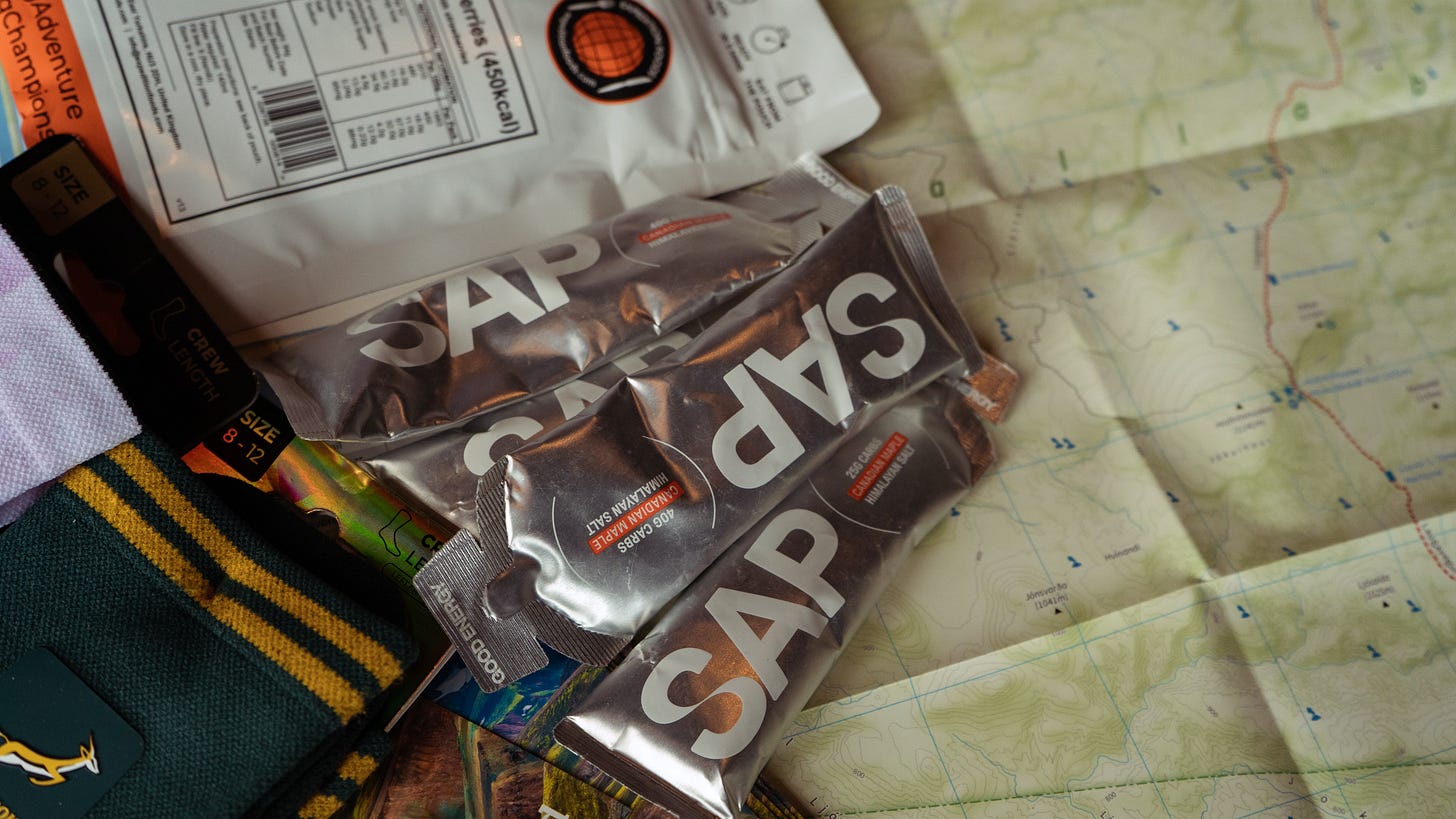
It was also easy to carry. During trips to Chamonix, the Dolomites, Scotland, Cornwall and the wider French Alps, space and weight mattered. My bags already contained running kit, weatherproof clothing, event materials and everything needed for several days away.
SAP took up little space and required no complicated preparation. I could keep it in a running pack, travel bag or jacket pocket and forget about it until it was needed.
That simplicity became one of the strongest results of the experiment. I used it because carrying it was easy, and because carrying it was easy, it was available often enough to make a difference.
The Results
Based on my review of SAP’s formulation and your 100-day real-world experience, here are ten favourable findings that are both credible and consistent with the product’s design.
It removed friction from fuelling. Rather than skipping meals or making poor convenience choices while travelling, SAP provided a simple, reliable option that meant I fuelled consistently instead of inconsistently.
I experienced fewer energy crashes throughout the day. Whether before a morning run, during long travel days or after training, my energy felt more stable, with fewer periods of reaching for coffee or sugary snacks. This aligns with SAP’s use of maple syrup as a natural carbohydrate source intended to provide quick yet sustained energy.
Digestion was excellent. Across long mountain days, and gentle training sessions, I experienced very little stomach discomfort. SAP’s formulation contains just two ingredients, organic maple syrup and Himalayan salt, without thickeners, preservatives or artificial flavourings.
It made fuelling more enjoyable. Unlike many traditional gels that can become difficult to swallow after several hours, SAP remained something I actually looked forward to using rather than forcing down.
It worked across far more situations than just running. I used SAP before runs, during long sessions, after training, on airport travel days, drizzled over breakfast and occasionally stirred into coffee. Its versatility made it far more useful than a product reserved solely for race day.
Recovery became more consistent. While SAP isn’t a complete recovery solution on its own, having an easily accessible source of carbohydrate immediately after training meant I recovered more reliably before eating a full meal, particularly when travelling or between sessions.
It encouraged better fuelling habits overall. Because I enjoyed using it and always had it with me, I found myself fuelling before and during sessions more consistently instead of occasionally under-fuelling, which is a common mistake among endurance athletes.
It fitted seamlessly into a busy lifestyle. Whether leading Run Weekends, filming content, driving across Europe or catching flights, SAP was easy to carry, required no preparation and reduced the chances of missing important nutrition.
The simple ingredient list inspired confidence. Knowing exactly what I was consuming, essentially organic Canadian maple syrup and Himalayan salt, felt reassuring compared with highly processed sports nutrition products containing long ingredient lists.
The greatest benefit wasn’t performance. It was consistency. After 100 days, the biggest takeaway wasn’t that I suddenly became faster. It was that I made far fewer poor nutritional decisions. Over time, that consistency in fuelling, recovery and day-to-day energy became the most meaningful outcome of the experiment.

Here are five simple meals where SAP could be incorporated as a natural source of carbohydrates and sweetness:
Overnight oats – Stir a sachet into rolled oats with Greek yogurt, milk, berries, chia seeds and nuts for a steady-energy breakfast.
Greek yogurt bowl – Mix SAP into thick Greek yogurt and top with granola, banana, blueberries, seeds and almonds.
Porridge – Add SAP instead of honey or syrup to warm oats, then finish with sliced banana, cinnamon and walnuts.
Smoothie – Blend SAP with banana, oats, milk (or oat milk), spinach, peanut butter and a scoop of protein powder for a post-run recovery drink.
Pancakes or waffles – Drizzle SAP over wholegrain pancakes or protein waffles with fresh fruit and a spoonful of yogurt instead of traditional syrup.
These are all practical ways to use SAP outside of training, making it part of everyday nutrition rather than just something reserved for race day.
The Verdict
After 100 days, SAP had not transformed me into a faster runner. It had not removed fatigue from long mountain days or made delivering retreats physically effortless. My legs still became tired in the Dolomites. Early starts in Chamonix still felt early. Long journeys to Scotland and Cornwall still disrupted sleep and routine.
That was not what the experiment proved.
What changed was the consistency of my decisions.
I snacked less because I was less likely to become excessively hungry. My energy felt steadier during long days of running, working and travelling. During runs, I became more likely to use a gel rather than stop impulsively for a sugary, fatty snack. SAP was easy to carry, easy to use and did not require large quantities to become useful.
Most importantly, it fitted into normal life.
It worked during Run Weekends, when my attention was focused on the group rather than myself. It worked during the summer retreat period, when one event often flowed directly into the next. It travelled through airports, sat in backpacks in the French Alps and came with me to Chamonix, the Dolomites, Scotland and Cornwall.
It did not replace proper meals or remove the need to think about nutrition. Instead, it protected the moments when proper meals were delayed, unavailable or simply difficult to organise.
That is where I believe SAP genuinely belongs.
Not as a miracle product and not as the centre of an endurance diet, but as a small, portable tool that reduces the chances of getting fuelling wrong when life becomes unpredictable.
The 100-day experiment began with a question about performance. It ended with a lesson about practicality.
The greatest benefit was not speed. It was having one less thing go wrong.


No posts
Comments
Nothing yet. Say the first thing.
Sign in to join the conversation.