
At least in one respect, New York City’s supposedly reformist mayor, Zohran Mamdani, has proved no different from a typical politician: he chose someone with zero diplomatic or international affairs experience to serve as the city’s commissioner for international affairs.
So I wasn’t at all surprised last week when Mamdani acknowledged that the commissioner, Ana María Archila, had made an “error” by accepting an invitation to meet with Iran’s ambassador to the United Nations, Amir Saeid Iravani, just as the U.S.-Iran ceasefire collapsed and hostilities resumed.
What Mamdani failed to concede was that he himself had made a mistake when he handed the highly important post to a complete amateur in February. In fact, there is no indication that he finds anything wrong with his personnel decision — or that it’s tantamount to appointing someone with no law-enforcement experience as his police commissioner.
I don’t mean to speak ill of Archila, whom I don’t know. The New York Times reported that she “does not have significant experience in diplomatic affairs.” Significant? That makes it sound as if she has some experience, which is incorrect.
“She previously served as co-director of the left-leaning Working Families Party,” the Times wrote. “She has also co-founded and led progressive organizations like Make the Road New York and the Center for Popular Democracy, which serve immigrant and vulnerable New Yorkers.”
Where is the less-than-significant diplomatic experience? Political activism and nonprofit leadership may be admirable pursuits, but they are not forms of diplomatic experience. The way the Times described Archila’s résumé reflects a broader misunderstanding of diplomacy. It matters how this is characterized in the media, because it affects how Americans think about diplomacy.
The Trump administration said it was “unconscionable” that a New York City official would consider meeting with the Iranian ambassador, even though Elon Musk met with him shortly after the 2024 election, as the Times noted. The administration didn’t bring up diplomatic incompetence, of which it’s guilty itself, of course.
Iravani is the highest-ranking Iranian official in the United States. Iran has had no embassy in Washington since the two countries broke off diplomatic relations following the 1979 Islamic revolution.
The controversy over the now-canceled meeting comes as a growing number of city and state governments across the United States become increasingly active on the international stage and engage in diplomacy. Positions like Archila’s have mushroomed in recent years, but most of their occupants’ diplomatic experience is commensurate with hers.
For decades, foreign affairs was largely the exclusive domain of Washington. Governors occasionally led trade missions abroad, mayors welcomed foreign delegations and sister-city programs promoted cultural exchanges. These activities were generally limited and focused on commerce or cultural ties.
That world no longer exists, thanks to climate change, migration, cyber crime, artificial intelligence, public health, investment, education and global supply chains. While Washington is still responsible for U.S. foreign policy, local governments now pursue their own foreign partnerships and interact regularly with ambassadors, consuls-general, multinational corporations and international organizations.
The U.S. State Department recognized this shift in 2022, when it created the position of special representative for city and state diplomacy, before the Trump administration abolished it last year.
Many local international affairs positions are filled primarily on the basis of political loyalty, activism, fundraising or general management credentials. Those qualifications may be valuable somewhere in government, but they aren’t nearly sufficient to practice diplomacy at any level — whether it’s local, national or global.
This may be shamelessly self-serving, but there is a place where these amateur appointees can learn diplomatic tradecraft: the Washington International Diplomatic Academy, which I lead. The hundreds of years of combined experience of our instructors — some of the best career ambassadors — are at their disposal.
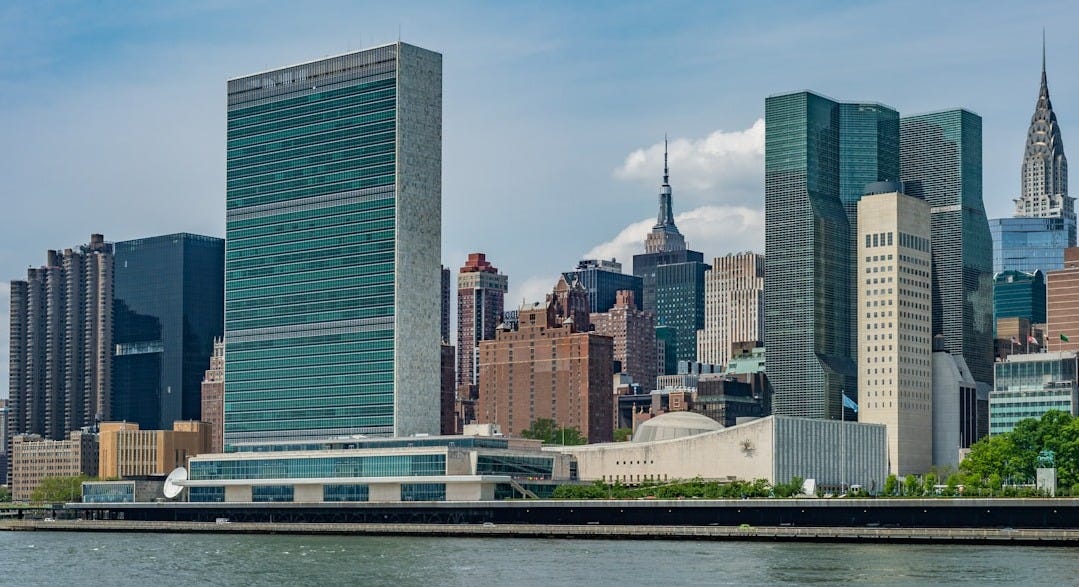
Of all cities, New York — host of the United Nations headquarters and home to thousands of foreign diplomats — can’t afford diplomatic incompetence. In fact, the original incarnation of Archila’s position, which was created in 1962, was commissioner for the United Nations.
Appointing Archila was Mamdani’s fault, but accepting the position was her mistake. Her judgment in doing so should itself raise serious questions about her fitness to serve in this role. As a result, she and her colleagues failed to appreciate the diplomatic context, the timing and potential consequences of a meeting with the Iranian ambassador.
But the problem is bigger than Archila. If she resigned tomorrow, another well-connected amateur is likely to replace her. The real problem is a political culture that still refuses to recognize that diplomacy is a profession, not a hobby or instinct.
I’m tired of writing about politicians clueless about diplomacy entrusting amateurs with consequential diplomatic appointments. Nonetheless, I intend to keep going.
Nicholas Kralev is the founder and CEO of the Washington International Diplomatic Academy, and a former Financial Times and Washington Times correspondent. His books include “Diplomatic Tradecraft,” “America’s Other Army” and “Diplomats in the Trenches.”
Comments
Nothing yet. Say the first thing.
Sign in to join the conversation.