Those with a memory stretching to last Friday would have heard him say: “I have a plan”. Did something go wrong over the weekend? In that speech he went on to say: “And what I also want you to know is that I won’t change. I have a style, it’s my style.” Who, after a glut of style, cares about his style other than to fear it? People what change and to know the country is on a better path, they aren’t interested in the meta-politics of style. … [H]e goes on about doing things differently (so far he hasn’t), but he says little about being different. And needless to say, pulling media stunts [delivering a speech without any notes} isn’t doing things differently.
If you prefer reading chatgpt’s anaesthetised version of the above, here it is:
Burnham says he is “doing things differently”, yet his first days in office have been dominated by announcements about future announcements. Last week he declared, “I have a plan”; this week he promised a ten-year plan to be published later in the year. If the plan already exists, where is it? If it does not, why claim that it does? Likewise, declaring an end to rough sleeping does not end rough sleeping. Social outcomes are achieved through institutions, resources and sustained administration, not through political speech acts. After years of politics conducted through image and presentation, voters are likely to judge Burnham not by his style but by whether conditions materially improve.
In any event, here’s FT Columnist Janan Ganesh’s take. He’s thinking maybe a big failure might open up the political scope for the UK to address its problems. Perhaps. But as the saying goes, “be careful what you wish for”. Australia too is enamoured of the idea that we’re good under pressure. Churchill put it well about the Americans accusing them of always doing the right thing, after they’ve exhausted all the alternatives. The thing is, when things get bad, they either get better, or they get worse - often a lot worse. History gives us some good examples of that. Anyway, over to Ganesh:
We have to at least entertain the possibility that Britain’s new prime minister will not be diabolical... Andy Burnham talks left but acts centre-to-centre-right. All his cheap shots against “neoliberalism” and London earn him the moral cover to make minor welfare cuts... His various crusades — to end rough sleeping... — are tellingly inexpensive. He knows the Labour movement is made up of featherheads who just want nice vibes.
Like Bob Hawke and Paul Keating, Australian Labor leaders who deregulated their economy, Burnham starts to make the left feel OK about doing heretical things. Then... he electrifies Britain with an announcement. “Brexit was a mistake,” he says... “Vote Labour to re-enter the single market.” At once, Nigel Farage and Kemi Badenoch find themselves defending a Brexit that scarcely one voter in three now regards as a good idea... Years later... Burnham retires to his Everton games and his New Order albums, leaving behind a nation that is, if anything, slightly more market-oriented than he found it.
This could happen... So why do I hope that it doesn’t? Why do I think it is better for the UK if Burnham really is as leftwing as billed?
Because, in the end, bad ideas have to be tested to destruction. Big government... is a bad idea. The country will never fix the welfare state, which is a drag on enterprise... until we have exhausted all the alternatives. Burnham is the last alternative left. Give the status quo one more heave... Then voters will accept change.
This was the 1970s to a tee. The ideas that we now call Thatcherite were circulating for a while... but it took another crisis... for voters to say, at last, “Enough.” Rich democracies do not undertake painful reform until circumstances oblige them. And Britain now is nothing like as troubled as it was then.
The best-case scenario under Burnham is that he turns out to be a bit less socialist than some fear. But that implies more years of purgatory: a Britain that is not so dysfunctional as to change, but not so functional as to be happy. The much “cleaner” outcome is that he fails so badly... that his successor is licensed to make sweeping reforms at last... Burnham leaves less doubt.
Is it ever OK to hope that one’s prime minister fails? What if that failure would raise the chances of the country finally getting its act together? Even then, a good citizen should feel conflicted...
Let us remind ourselves of the stakes. Britain has not balanced its fiscal budget since the millennium. It was still running a deficit on the eve of the banking crash in 2008... The UK borrows more expensively than Greece... According to the “baseline” scenario of the UK fiscal watchdog, public sector net debt will touch 300 per cent of GDP in the 2070s.
And still lots of people, including Burnham, believe the problem is something called neoliberalism. This is a difficult view to rebut because it is less an argument than a religious incantation... All that can be done is to wait until public spending causes a breaking point. So let Andy be Andy: price controls, subsidies, perhaps another stab at “industrial strategy” from a state that could not build a high-speed rail line from Birmingham to Manchester without disgracing itself.
That things have to get worse to get better, that the status quo must be taken to an extreme in order to trigger its opposite: I realise how mechanical, how Hegelian, this view of history must seem...
If I am wrong, tell me this: what is the precedent for a rich democracy doing pre-emptive economic reform?... Southern Europe needed the Eurozone panic of 2009 onwards to make spending cuts. Hawke, Keating, Margaret Thatcher and Ronald Reagan were reacting to 1970s stagflation. François Mitterrand in 1983 was reacting to a market shock that to some extent he’d created.
Reform only happens when it absolutely has to happen. So try again, prime minister. Fail again. Fail worse.
In our regular naked mole rat segment, there have been some important and fascinating developments. They also explain why in the East African Naked Mole Rat community, there’s an additional Q in LGBTQQ - for obvious reasons.
After three attempts to get ChatGPT to depict the new British PM trying to drive over the bridge I’ve given up and offer this to you as ChatGPT’s take on the new developments. He’s determined to drive across the bridge.
MoGMaxxing, or should that be MaxMogging? Mogging is the same in the UK as it is in Australia - Machinery of Government - or the rearrangement of functions between departments of state. Whatever it is, just another straw in the wind suggesting that the new reshuffle in the UK is what the Liberals in Australia apparently think they need - a rebrand. I’m more sympathetic to the Australian Liberals given that, as much as pundits pound an Opposition for not having any policies, as Keir Starmer and John Howard among others have shown, given the rules of the game as imposed by the media, not having any policies is the only safe way for an Opposition to get into power.
Once you get into Government, things change. Not only is it possible to do a few unpopular things (because they actually happen rather than being endlessly speculated on), if you don’t do anything that upsets people too. And saying ‘I have a plan’ sounds quite good in Opposition, even if you don’t have one. It starts looking pretty silly when you’re the Government and the next question is “well what is it?”
At least from my distance in Australia, not too many priorities seem to be turning up at the top of the new Government. Anyway, here’s hoping I’m wrong. Here’s the LinkedIn post of Tom Loosemore who was one of the architects of one of the jewels in HM Government’s administrative performance - and there have been a few.
The FT and Guardian report that the new PM will disband the Department of Science, Technology and Innovation (DSIT), splitting its functions between a beefed-up Department for Business and Trade (DBT) and the Department for Culture, Media and Sport (DCMS). Responsibility for AI in public services may go to the Cabinet Secretary.
One DSIT function I know and care about, having co-founded it, is the Government Digital Service (GDS). Since DBT is mooted to become the Ministry of Industry, GDS would likely land in DCMS.
This is crazy. Here’s why.
Merging Whitehall departments causes at least a year of internal mayhem, distracting from what Ministers actually care about. Senior officials get bogged down haggling over org charts, roles and pay, while merging IT systems is a nightmare with no end. This government has barely two years to show voters improved services, and you want to waste a year shuffling deckchairs?
You’re not serious about devolution if GOV.UK One Login isn’t politically backed to prioritise local authorities and MSAs over Whitehall. DCMS doesn’t have and never will have that political capital. Devolution requires Whitehall to provide local government and MSAs with the digital plumbing underpinning all modern public services, a gargantuan cultural shift needing genuine servant leadership from the centre. Such cross-jurisdiction digital public infrastructure is hard to get right, and GDS generally does it well. We need more common platforms like GOV.UK Notify, used by tens of thousands of public services to send billions of messages, and GOV.UK Pay, which handles billions in payments across thousands of services. GDS is following an ambitious roadmap including a common digital wallet and digital credentials. DCMS drafts policy and herds ALBs; it can’t lead radical reform of public service foundations. Has this been thought through? Has it?
Making the most of AI to improve public services requires new AI-native common platforms. You’re not serious about AI-driven reform if one “AI for public services” platform team sits in Cabinet Office while the teams handling non-AI platforms and common data sit at the margins in DCMS. Have you not clocked the chaos this invites?
Finally, and most seriously, many of the best people will just leave.
pen & ink with watercolor splatters, layered colored pencil, pure wet-on-wet watercolor, ink and bleach, pastel chalk, wax-resist watercolor and gouache artworks I've created in 2005
A LinkedIn post from my friend the indefatigable and endlessly sunny YiYing.
Seeds of Possibilities: How My 21-Year-Old Pomegranate Illustration Grew Into a Tropical Orchard with AI
Today is National Tropical Fruit Day, and it felt like the right day for an experiment: Could the pomegranate I first painted 21 years ago still carry new seeds?
In 2005, I painted pomegranates in various media: pen & ink, colored pencil, wet-on-wet watercolor, ink and bleach, pastel chalk, wax-resist watercolor and gouache...
Those paintings have been sleeping in my archive for two decades. This morning, wanting to celebrate the day and curious about the new AI Assistant, I dug out the old photos. Holding my 21-year-old brushstrokes in one hand and a brand-new creative tool in the other, I felt something I did not expect: not nostalgia, but possibility.
So I opened the Firefly AI Assistant and planted one reference at a time, asking it to grow five tropical fruits from each: dragon fruit, pineapple, star fruit, purple mangosteen, mango. Thirty-plus artworks later, I am still a little stunned...
I uploaded my splatter-style pomegranate watercolor and typed: “Help me create five watercolor artworks of each of the following tropical fruits...”
It did not jump straight to generating. It ran an Analyze Image step first and described my style back to me: “Loose expressive black ink linework, vibrant wet-on-wet watercolor washes, energetic paint splatters...”
The results held: my ink pressure, my color logic, my compositional habits, applied to fruits I had never painted...
The first batch is never the final word. When I wanted a variation set, I redirected the assistant with plain feedback. It adjusted without losing the style. I stayed the art director the entire time.
Then I kept going. Each round, I handed it a different pomegranate from my archive...
With the series done, I asked the assistant to collect everything onto a Firefly board. Then I asked it to turn still paintings into motion using the new Product Reel feature. One sentence covered the video edit, the opening title card, and the typography.
Here is the thing I keep coming back to:
Without my analog originals, none of this would mean a thing.
The soul of every generated image is a physical painting I made with wet paper, real ink and bleach. The AI did not invent a style. It studied and extended decades of my own mark-making.
I hold both truths at once: in my hands, this technology amplified my own archive. In someone else’s hands, it could imitate me. That is exactly why provenance matters.
A few honest takeaways:
Your archive is an asset. Every sketchbook and old painting is creative fuel.
Iteration becomes play. “What would my mangosteen look like in bleach and ink?” took minutes instead of an afternoon.
Taste is still the key. The editorial eye is the part no tool provides.
Protect your provenance. Being provably the source is your strongest creative asset.
If you are an artist sitting on a body of work, try this: pick one piece you love, plant it in the assistant, and see what grows.
Plaintiff lawyers of course. So they’re dead against driverless (and much more accidentless) cars.
Roughly 37,000–40,000 Americans die in auto accidents every year. Evidence fromWaymo and a joint analysis with Swiss Re [shows that driverless operations can be substantially safer than matched human driving]. The latest data show that over 220 million miles driven, Waymo vehicles [across five U.S. cities] have 94% fewer serious injuries, 82% fewer air bag deployments, and 93% fewer pedestrian injuries...
So with thousands of lives annually in the balance who is against autonomous vehicles (AVs)? Trial lawyers...[who have] been lobbying against AVs for nearly a decade. The American Association for Justice, the trial lawyers’ lobby, has been a prominentopponent to AV legislation...
The trial lawyers earn a huge amount litigating ordinary auto accidents...and [want to keep the right to sue] car manufacturers for product liability. In my view, product liability isn’t useful as a safety device in this field. [The solution is simpler]: every car should be required to be insured, regardless of driver. Waymo vehicles are already insured at $5 million liability coverage per vehicle, far higher...than most human drivers are covered.
The UK’s Automated and Electric Vehicles Act 2018 does basically this–a single insurer covers the vehicle whether the human or the automated system is driving; the victim is compensated directly by the insurer, no need to establish product defect; the insurer then subrogates against the manufacturer if the software was at fault. Victims get paid fast, manufacturers face the cost of their defects through recoveries and premiums, and [lawyer fees are largely eliminated]...
[This system] deters better than tort: fleets generate data that makes experience rating precise, so insurers become continuous safety regulators, whereas litigation delivers a noisy, lagged, lottery like signal depending on safety-irrelevant factors of the jury and the locale...
Let the insurers decide how much to charge Tesla robotaxis and FSD drivers–they will internalize the externality far better than tort lawyers. In short, insurance works great for accident victims but not for trial lawyers. [If] the trial lawyers have their way accident victims will continue to be buried in an invisible graveyard.
Valerie Stivers on Rachel Cusk’s novel about well … Natalie Portman. From Unherd.
The actor Natalie Portman has long seemed more like a person who wants to brand herself as smart than like a person who is actually smart — and her decision to let her friend Rachel Cusk write a book about her seems to confirm this. Portman has read many Rachel Cusk books. She hosted [a discussion] with the writer upon publication of Cusk’s 11th novel, Second Place, in 2022, and picked it for her Instagram book club. Yet no one in her right mind who understood Rachel Cusk’s work would allow her to write about her — at least, no one with a sense of self-preservation and a public image to protect. ...
Cusk is brilliant, but her skill has always been at reducing the human to the mathematical product of cold existential forces: the violent struggle between men and women; the primal wounds left by abuse; the emptiness at the heart of identity. In other words, obviously, a Cusk book about you is never going to be flattering. ...
Is this what happened? Chatter in New York literary circles says that Cusk’s upcoming novel, Life of M, is based on Cusk’s relationship with Portman. The novel is about a famous actress, M, and a nameless writer-friend’s project to chronicle her. M’s key biographical information is very similar to Portman’s. The actress’s dissatisfaction and betrayal at the finished product, as recorded in the final pages of the book, is also said to be true to life. If so, it’s ironic in the extreme, since the impossibility of identity itself — and thus of anything being, truly, “true to life” — is the book’s central theme, a fact that says more about Cusk than it ever could about Portman. ...
Life of M begins: “A little while ago, I told the actor M that I was thinking of writing her autobiography. She liked the idea. She’s a good sport.” The writer-narrator goes on to explain that she met M in a bookstore (”M is interested in books”) and that “in addition to being a film star, she was the model for a major brand, and her image looked out everywhere.”
Portman, famously, pulled back from acting in order to attend Harvard. She runs a book club, and often posts book-selfies on Instagram — so she is clearly “interested in books.” She is a global brand ambassador for Christian Dior, the face of the Miss Dior perfume. The two characters live in an unnamed European capital with a central river, which could be Paris, where both Cusk and Portman reside. ...
Such material could be true of many stars, but the comparison is more pointed than this. The narrator tells us, in the opening sequence, that M became famous as a child, and that “the script of her first film originally included several scenes in which the child was shown wanting or inviting sexual interaction with the central male character.” The scenes were cut after M’s mother objected.
Portman, famously, was catapulted to stardom by her turn in the 1994 Luc Besson film, Léon: The Professional, filmed when she was 11 and 12 years old. In that movie, before we see her face, the camera dwells lovingly on her child’s legs and thighs. It’s a matter of public record that Portman’s mother demanded that more explicitly sexual material be cut from the script. Portman has called her adult relationship to the film “complicated.” She has also revealed that she was harassed and slut-shamed as a child after its success, an experience shared by M. ...
There is more. M claims in the novel’s final pages that the author-character has made her “identifiable,” yet “filled the book with things she herself didn’t recognize.” The portrait in the book is what anyone could have written, based on M’s publicly available work and biography. The statement, of course, is that of a fictional character, and unless Portman does come forth to correct the record, the truth will never be known — nor can it really matter, except to Portman. ...
The resulting book is a feat, simpler and more direct than 2024’s Parade, but also more crystalline and just as complex beneath the surface. For readers who have yet to fall in love with Cusk, this might be the book to start with. ...
Of course, it doesn’t hurt that the book also brims with juicy revelations about M’s psychology. “M had told me that starring in a film as a child had immediately brought her childhood to an end,” the author-narrator recounts. This event, with its swirling undercurrents of sexual abuse, is a primal violence that detaches both women from reality and their own identities. The writer is secure in her craft, but it becomes the actress’s healing quest “not to create, but to try to make her life seem more normal.” ...
To anyone other than Cusk, it might seem cruel to dash M’s dreams of normality and selfhood. But a darker, more fascinating portrait of celebrity emerges, in which M is both bewildered perpetrator and victim. Cusk’s penchant for satire of this nature — especially the embedded satire of the movie star with pretensions to reading — could not possibly have pleased the real-life Portman. ...
And M wants to live this way. She is secretly irritated when ugliness and inconvenience intrude on her environments. When a visiting relative is hit by a car, it isn’t an opportunity for compassion and connection, but “an episode of primal confusion.” Still, we feel sorry for her, as the true extent of her alienation sinks in. ...
Cusk tends to land in such places: hatred, somehow, instead of love. The cold intellectualism with which she approaches the human seems to naturally produce this result. As an artist, she has never spared herself the bitter fruit of her own creation. And if the result of the two women’s friendship is a very strong Cusk book indeed, everyone should be happy — including, if her art-appreciation is real, Natalie Portman.
You know how you’re planning to play ‘Buzzword Bingo’ at your next strategy retreat just to retain your grip on reality? Well, this is how my children feel if I ever stray from Basil Fawlty’s Law: “Don’t mention the war”. I just can’t get a word in about the Third Reich without a round of ‘Hitler Bingo’ going down. Be that as it may, Basil Fawlty be damned. This caught my eye - it’s way longer than it needed to be to get across the grizzly basics and not especially well written - but click through should you wish.
In 2006, I attended a small Shabbat dinner at a synagogue in Yonkers... [with] R. Riskin, a... 78-year-old ophthalmologist with an Eastern European accent. ... Dr. Riskin decided to tell his story.
I thought I’d heard these stories before. ... the trains, the camps, the selections, the gas chambers, the liberation. ...
But Dr. Riskin told a completely different story.
He was thirteen years old... east of Vilnius, when Barbarossa kicked off in June of 1941. The Wehrmacht rolled through his town. They came, they confiscated some things... and they left. They were... in a tremendous hurry... trying to destroy the largest army in the history of the world before winter arrived. ...
A few days later, the Lithuanian neighbors a town over came. And they were not in a hurry at all.
The pogrom started in the afternoon. Dr. Riskin... ran. ... Some were locked in the synagogue and it was set on fire. Hundreds of others were shot where they stood. ...
He escaped to the woods... with his brother... and his sister, who was nine. His sister died... from disease. ...
I had heard hundreds of “Holocaust Survivor’s Stories,” but never one like this. And the reason is brutally simple: almost none of them survived. Auschwitz was a horror... but Jews could survive Auschwitz. ...
The story we tell ourselves about the Holocaust is the story of the survivors, which means it is the story of the camps... But it is not how most Jews died. ... [U]pwards of 75% of the Jews that died in the Holocaust didn’t die in camps or ghettos. ...
The Problem of the Trains
[There] were six extermination camps... all located in occupied Poland and most were not fully operational until 1943. ...
The vast majority of European Jews... didn’t live in Berlin or Amsterdam or even Warsaw but in the small towns and cities of eastern Poland, Lithuania, Latvia, Belarus, and Ukraine. ...
German and Russian rail gauges were different. ... [Regauging] was an enormous engineering effort... for one purpose: moving men and matériel toward the front. ...
The Wehrmacht was not regauging rail to reach a village thirty-five kilometers outside of Poltava so it could transport a few hundred Jews to a camp in Poland that hadn’t been built yet. The Wehrmacht was trying not to freeze to death. ...
By the time Treblinka was operational in July 1942... the majority of Jews east of the Molotov-Ribbentrop line were already dead. ... They died where they lived and they were killed overwhelmingly not by Germans but by their neighbors. ...
Two Different Wars
The German army’s relationship to the Jews of the East was... one of terrifying indifference because they had somewhere else to be. ... They left the Jews to the locals. And the locals were hungry. ...
Lithuania and Latvia
Before the war, [the Baltic states] were the home to about 300,000 Jews. Only about one in 20 would survive the war. ... [The] scale of the Baltic slaughter was made possible only by local participation. ...
The killing across both countries... was substantially complete by the end of 1941 — well before... the death camps were operational... The Jews of Lithuania and Latvia were killed at home, by their neighbors... with rifles and axes and fire.
Dr. Riskin’s story was the Lithuanian story. ...
Belarus
Belarus had a Jewish population of approximately 750,000. By 1945, virtually all of them were dead. ... [Jews] were not woodsmen. ... They froze. They starved. ...
The Timeline Problem
It does not exonerate Germany... But it fundamentally changes the story from one of German industrial genocide carried out primarily in camps, to one of a continent-wide eruption of murderous violence carried out primarily by local populations against their own neighbors...
Why the True Story Isn’t Told
First, the survivor effect. ... A ninety-five percent kill rate does not produce a robust oral history tradition.
Second, the clean enemy. ... The real story gives you a much more disturbing villain: your neighbors. ...
The story we have... is the story we want, not the story that happened. ...
There is no museum for the million who froze in the marshes of Belarus. There is no museum for Dr. Riskin’s sister, who died of disease somewhere in the wilderness outside Vilnius.
A reader spotted the New Zealand painter Rita Angus among the pics I included in my Sunday special on New Zealand last week and complimented me on my choice. Well, I just liked the look of that picture, but he’s right - she’s great! All these great antipodean women artists of the first half of the 20th century! So good!
Destroying the digital public goods of the 21st century. Thanks to subscriber Gene for sending me this.
Kick out Chinese companies. Free right-wing former President Jair Bolsonaro from jail. Scrap tariffs on American ethanol.
President Trump has bombarded Brazil with a list of demands as Washington seeks to assert its influence across Latin America.
However, few things have provoked more outrage here than Trump’s attack on PIX, the country’s beloved instant-payment system that Washington cited as a key justification for its decision this week to impose a 25% tariff on many Brazilian goods.
From coconut sellers to billionaires, more than 90% of Brazilian adults—more than 140 million people—regularly use PIX, a government-run program that allows users to transfer money in seconds on cellphones at no cost. In less than six years, PIX now handles more transactions in Latin America’s biggest economy than credit and debit cards combined.
Marcos Rosa, an evangelical pastor who visits remote Amazonian villages, said PIX hasn’t only made payments easier but also shrunk distances across the world’s biggest rainforest.
“Everything happens much more quickly,” he said, explaining how PIX and satellite internet mean villagers no longer spend days on the river to buy a bag of rice.
Instead, they send a PIX payment to a store in the nearest town, which loads the goods onto a boat already heading upriver. “It’s been a tremendous help,” Rosa said.
The Trump administration disagrees...It is the first country hit with duties under the Trump administration’s new strategy of using Section 301 of U.S. trade law to punish alleged unfair trade practices.
Among a host of grievances...Washington argues that PIX has become so ubiquitous in Brazil it unfairly disadvantages U.S. payment companies such as Visa and Mastercard...
The Trump administration says Brazil has tilted the market toward PIX...by requiring [larger] financial institutions to offer it. Unlike state-backed PIX, private providers, many of them American, must also cover fraud prevention, technology and shareholder returns through fees, making it nearly impossible for them to compete.
Although the latest measure spared [several major products] the U.S. needs from Brazil, it still covers more than $11 billion of the country’s exports, according to the American Chamber of Commerce for Brazil.
The tariffs follow a yearlong U.S. trade investigation. Secretary of State Marco Rubio blamed Brazil’s President Luiz Inácio Lula da Silva for failed negotiations to reach a settlement...
Section 301 allows presidents to impose permanent duties over trade, but it has never before explicitly targeted another country’s domestic payment system, said Alisha Chhangani of the Atlantic Council...
“This is the first example and it won’t be the last,” she said, calling it a warning to countries seeking greater control over their payment systems, including the European Central Bank as it develops the digital euro.
Created by Brazilian central-bank technicians in late 2020...PIX has been hailed by the World Bank and International Monetary Fund as a model for financial inclusion.
“PIX belongs to Brazil, and no one is going to make us change it,” da Silva said earlier this year. PIX has helped millions of poorer Brazilians, a key segment of his political base.
Like a similar system in India called UPI, PIX has encouraged users to ditch cash and open bank accounts...Active users of Brazil’s financial system nearly doubled from about 77 million in 2018 to 152 million in 2023, a surge the central bank attributes largely to PIX.
Whether buying a Porsche 911, paying bills or giving money to a beggar at a stoplight, the payment is made the same way...
Nicknamed PixTinder by some, PIX has even become a last resort for jilted lovers...sending a one-cent transfer with a message begging for forgiveness in the transaction description.
The diplomatic spat...first erupted after Washington imposed 50% tariffs on Brazil last year over what it called the “persecution” of Bolsonaro, da Silva’s political rival. The duties were soon rolled back, and the U.S. Supreme Court later struck down many of Trump’s global tariffs...
Polls suggest Washington’s attacks have boosted da Silva ahead of October’s election against Bolsonaro’s son, Flávio. Many Brazilians blame the Trump-allied Bolsonaro family for the tariffs, while da Silva has cast them as an attack on Brazilian sovereignty...
And here’s the subject of the doco, Demis Hassabis on how to regulate AI so it’s safe. He knows more about AI than you or I, but it’s still obviously pretty naïve. But perhaps I’ll put some more effort into arguing that on another occasion.
This article from the Monthly by John Harms speaks for itself, as does Daniher.
I never met Neale Daniher, who died from motor neurone disease in late May. I once tried to. I always wanted to.
In 2006 ... I was asked by an editor ... if there was anyone I might like to write about. “Who, in sport, do you find interesting,” he inquired, “right now?”
“Neale Daniher,” I said, without even thinking. That was seven years before he was diagnosed with MND. I wrote to the media manager at Melbourne Football Club and received a polite decline from the club. ...
Part of Neale’s appeal was his place in the Daniher family story. He was one of four footballing brothers from a sheep and wheat farm at Ungarie ... Their parents, Jim and Edna, had 11 kids altogether. They were devout Catholics ... Jim and Edna raised their children to value family, loyalty, discipline, manners, sport and hard work. ...
I was interested in the thinker-sportsman ... Because Australian footy is an alchemy of the vagaries of chance and the skill that yields control ... the game pushed some coaches into philosophical considerations ... Footy is about character. ...
He had also suffered, in football terms. He was the classic champion ... cut down by injuries, denied by the footy gods. ... Across 12 years, he played only 82 games, including one in 1990 where, remarkably, all four Daniher brothers – Terry, Neale, Anthony and Chris – ran out for the Bombers.
I was interested in his torment – his frustration – and in its acceptance.
The clincher ... was that, after graduating in computer science from RMIT, he’d returned to the University of Melbourne to study theology. How many footballers study theology? ... it had won him a nickname: “The Reverend”. ...
Of his interest in theology, Neale said, “I had spent my life riding on the Catholic bus, now I wanted to look under the hood.” He was searching, yearning ...
He also recognised that there was something in football – that it was not merely a rough and tumble game played by tough nuts. It contained significant meaning ...
In 2013, while working at the West Coast Eagles as footy manager, he was diagnosed with motor neurone disease. There was no cure. Average life expectancy was 27 months.
He made a decision. ... He drew on one of his favourite writers, Viktor Frankl in Man’s Search for Meaning: “Everything can be taken from a man but one thing: the last of the human freedoms – to choose one’s attitude in any given set of circumstances.”
He called on moral courage: “When it’s your time to go, you have to go.” ... He and his family – Jan and their four children – established FightMND to support research ... The most public face of its campaign has been The Big Freeze event ... where well-known Australians dress in costumes and go down a slide into a pool of ice. ...
Over the past 13 years, the event has grown and grown, as has the organisation, which has raised around $200 million. ...
In 2019 ... he published When All Is Said and Done, and, in 2025 ... The Power of Choice. In these books he draws on thinkers with whom we are familiar.
Bonhoeffer on gratitude. Mark Twain on laughter. Theodore Roosevelt’s call to action: “It’s not the critic that counts … The credit belongs to the man who is actually in the arena.” ...
For me, this is not pop philosophy nor self-help. The respect Neale Daniher had earnt through life ... gave him the platform to talk about MND, and to create awareness in the heartfelt hope of helping those who are suffering, and will suffer, until a cure is found. ...
We saw the human reality – that we all die ... He challenged us: what will we do in the face of the human condition? Will we extend our hands in love? ... Life matters. People matter.
He led us. He called us to “play on”.
The timing of his death meant that this year’s King’s Birthday game ... was a chance for thousands to pay tribute to him. Two days later, almost 10,000 people attended that state funeral ...
And there was Edna, now 92, a grieving mother; a woman whose faith remains deep ... a woman of action, who has ... nurtured a magnificent family, including her third child, Neale Francis Daniher. A man whom I never met but feel I know.
The rise of President Donald Trump has transformed the Republican Party, moving it in a populist direction. ...
[What] we are witnessing in the United States is part of a global phenomenon. ...
The Populism in Power database shows an approximately fivefold increase in the number of populist leaders and parties ruling over democracies between 1990 and 2019. ...
Perhaps the political question of our time is whether we should embrace or reject this trend. ... Practically all of [the data] points to the lesson that countries should avoid populist leaders if they want to maintain freedom and achieve economic growth. ...
Since we can’t [run randomized experiments], we have to go by theory and observation. ... There have never been randomized controlled trials establishing that smoking causes lung cancer, but I would bet my life that it does. ...
Before we even begin ... we have to ... ask: what even is populism? ...
In practical terms, however, when scholars make lists of populist leaders, they basically agree on who qualifies, and examples come from the Right and the Left, which means we can’t tell a simple story of political bias. Trump, ... Viktor Orbán, ... Hugo Chávez, and ... Evo Morales all count, no matter who you ask. ...
Since analysts agree on who populists are, we can undertake observational studies ... Perhaps the most comprehensive paper ... is “Populist Leaders and the Economy”, published in the American Economic Review ... The authors found that between 1990 and 2020, a country being ruled by a populist is associated with a 10% lower GDP after 15 years relative to a reasonable counterfactual. ... Left-wing populists do worse ... but populist rule still has its own independent negative effect.
What about non-economic indicators? ... Jordan Kyle and Yascha Mounk investigated the period from 1990 to 2018. Populists over that time degraded checks and balances, and were four times more likely than other leaders to preside over democratic backsliding. ... Perhaps most remarkable of all: 40% of populist leaders ended up charged with corruption. ...
Another data point is what has happened in the UK since Brexit. Stanford economics professor Nicholas Bloom and his coauthors found that by 2025, ... GDP per capita was 6% to 8% lower in the UK than it would have otherwise been. ... Brexit ... was a shock that caused the enactment of a major populist policy ...
That’s the empirical evidence. What about theory? ... Let’s say you believe that elites have made a lot of mistakes. ... That can all be true. The question is why anyone would think that a leader whose only claim to power is a direct connection to a mass audience would be better. ...
[It] is impossible to deny that gatekeepers are usually right. ... Most of the time, media and academic elites are gatekeeping views that are clearly false and often harmful. Among these ... given a respectful hearing on The Joe Rogan Experience ... are the following ideas: ... HIV doesn’t cause AIDS; ... Covid vaccines are more dangerous than the disease itself...
You might oppose elites on completely reasonable grounds, but creating a political culture in which expertise is rejected as a general matter leads to a decline in intellectual and moral standards ...
Sometimes, the elites of a country truly are bad enough to justify grabbing onto almost any alternative. We have seen this in the case of Argentina ... So President Javier Milei comes along as a populist with a libertarian agenda, and is probably worth supporting. ... Populism usually being bad doesn’t mean it is always a negative, and we have to exercise judgment in individual cases.
More typical than Milei is someone like Trump ... While Milei slashes tariffs, Trump enacts new ones ... Even if Trump enacts more sensible economic policies than his opponents on average, that has to be balanced against the costs of higher levels of corruption and institutional decay ...
Populist movements don’t simply reduce the power of elites, but raise the status and influence of a new group of people. ... sometimes populism achieves so much success that its figures must be judged by the same standards we once applied to organic elites.
We have now arrived at that moment. And the historical record is clear. Whatever problems your country is facing, populist parties and candidates are rarely the answer.
All Property, indeed, except the Savage’s temporary Cabin, his Bow, his Matchcoat, and other little Acquisitions, absolutely necessary for his Subsistence, seems to me to be the Creature of public Convention. Hence the Public has the Right of Regulating Descents, and all other Conveyances of Property, and even of limiting the Quantity and the Uses of it. All the Property that is necessary to a Man, for the Conservation of the Individual and the Propagation of the Species, is his natural Right, which none can justly deprive him of: But all Property superfluous to such purposes is the Property of the Publick, who, by their Laws, have created it, and who may therefore by other Laws dispose of it, whenever the Welfare of the Publick shall demand such Disposition. He that does not like civil Society on these Terms, let him retire and live among Savages. He can have no right to the benefits of Society, who will not pay his Club towards the Support of it.
Benjamin Franklin to fellow Founding Father Robert Morris, 1783.
As you may know, I’m a fan of Walter Lippmann, the finest 20th-century English-speaking political journalist of which I’m aware.
Dear Mr. Avent:
When you asked me the other day to put on paper ideas about the teaching of English in New York public schools, you were aware, of course, how great are my disqualifications. I do not know how English is actually taught today, except as I have had some chance to talk to children who were being taught. Nothing I shall say, therefore, is meant as direct criticism, and I shall have few if any practical suggestions to offer. I shall confine myself to sketching the problem as it presents itself to me.
My impression is that the canons of English teaching were formed in an environment very unlike that which now exists in New York City. They assume that the pupil studies English in order to discipline, refine, and enrich his native speech. They assume that he already possesses the idiom of the language, and that at home and at play he is in contact with the living sources of English. But, of course, for a very large part of the school children of New York such an assumption is untrue. The speech which they learn at home is a second hand and acquired English. It is a language learned by their parents rather late in life, if they have learned it at all, and it is a language learned hastily and wholly for the purpose of a quick adjustment to immigrant conditions. This urban immigrant dialect is a kind of convenient sign language rather than an expression of personality and experience. It tends to abstraction and not to imagery. Its rhythms and its idiom draw upon no folklore and no folkways, but instead upon the standardized language of newspapers and advertisements. You cannot assume in New York City, therefore, as you might still assume in the country districts or in England, that from outside of school the sap of native English flows through the pupil’s mind.
Lacking the sense of language, acquiring the language learned by his parents to express their immediate wants rather than their whole sense of life, the child comes to you with a pitiably insignificant fund of words. His words are so colorless and meager that in the attempt to express himself, the modern city child uses the same words so often and in so many different meanings that at last his speech is a series of ejaculations. Everything is a “thing.” “Things” are grand, swell, awful, nice, terrible, pretty, interspersed with “you know what I mean” and “do you get me.” It is not a language that describes and communicates experience in a world of shapes and colors and movement, but a language of seeking and demanding and giving and refusing accompanied by exclamations of approval and disapproval.
But experience that can’t be described and communicated in words cannot long be vividly remembered. For words more than any other medium prolong experience in consciousness. And then because experience can’t be expressed and can’t be remembered it soon ceases to be noticed. That is one reason, I think, why in a modern city like New York the enduring interests of the race seem so neglected. When you have looked at the stars once and remarked that they are grand, and then again only in order to say that the heavens are swell, why not look at the Wrigley chewing gum sign on Broadway which is equally grand and equally swell? Without words to give precision to ideas the ideas themselves soon become indistinguishable. If you go through life as so many city people do, knowing objects only by the general species to which they belong, the individuality on which all true judgment and all genuine appreciation depend is soon lost.
The Book of Genesis is wise in these matters. You will remember that the Lord’s first act after the creation, even before He made Eve, was to bring every living creature to Adam “to see what he would call them.” But if you ask an ordinary movie audience in New York City to tell you the names of natural objects, you know what the response would be. How many stars could they recognize and name? How many plants? How many trees, how many animals, how many parts of their own bodies? You find, I think, that the purely urban person has almost no sense of and no words for the main activities by which he is fed, clothed, housed, transported, or even amused. The whole cycle of the seasons and the weather, of ploughing and sowing and reaping, of carrying to market and distributing is a blur in his mind. Unless he happens to be in a certain trade he is shut out of the very rich and expressive language of labor, of shipbuilding, and carpentry, and plumbing, and tailoring, and cooking. The names of tools, the names of structural parts, the names of different sorts of joining and cutting and welding are mysterious to him. You search his mind in vain for the sharp aspects of real perceptions. The substances with which his imagination can work are impoverished.
Yet the business of living in what Graham Wallas calls the Great Society is an even greater tax on the imagination. For the bulk of public questions deal with matters that are out of sight, and have, therefore, to be imagined. These questions are reported to us in the thin and colorless language of the newspapers. We read this language, and unless we read it with a mind stored with concrete images, we can come to no true realization of what it all means. How can you hope, for example, to find a sound public opinion in New York City about the farmer’s politics if the whole circumstance of the farmer’s life is hidden and unconceived? Yet that is just the difficulty we are facing every day.
As you know I have no belief that this underlying problem of our civilization—the problem of enabling men to master an unseen environment—is soluble without a very great development of our machinery of accounting, analysis, record, and reporting. I have dealt with that elsewhere at some length. But nothing is more certain than that the teaching of English in the public schools is a critical factor in the whole affair.
On the teachers of English our society depends for the formation of habits of speech, which are in reality habits of thought, that will equip the modern citizen to give precision to experience by naming it. Our social life depends on the presence of enough people who can tell different things apart and discern identities where they exist. It depends, therefore, on people who use words without confusion as to their meaning, to whom the name of this and that is the name of this and that, and not of half a dozen vaguely related things as well. It depends on people, who in language at least, are what the Medieval schoolmen called Nominalists, on people who do not mistake general terms for objective facts, on people who can penetrate phrases like Bolshevism, socialism, democracy, liberalism, radicalism, Americanism, and can arrive at candid vivid understanding of the particular persons, acts, hopes, fears that these omnibus words are supposed to cover.
A large order, but to be a teacher in a republic is in itself a large order. An easy and inconsequential life is after all a dull one. But to teach English in a community like ours is to be dealing every day with the main instrument of civilized living. To give that instrument edge and point and temper is a sacred task.
As you may know, I have a new favourite way of scanning books. I get Claude to summarise them, and it’s sufficiently good at doing that that it’s a great introduction to their content, and I can take it from there. I usually listen to the summaries on an AI reader, ElevenLabs. Let me know if you’d like an introduction and I may be able to get you a discount - though it will be pretty minor - like a free month or something. I pay US$11 per month. The summary gives me the basic arguments in the book, or enables me to identify specific chapters, or discuss further references and reviews with Claude.
Because this has enabled me to check out a lot more books, I generally get it to provide a short summary and then a substantially longer one, while minimising repetition between the two summaries. That way I can identify if I’m really not that interested by the end of the first summary. I really enjoyed both summaries on this occasion, but I didn’t take it further. It seems to me that the book is continually making the same point. The point, however, is fascinating, and I was very glad to have encountered it. You can download the whole book, which is available online freely at the link provided below.
Short Summary
In the 1820s and 1830s, an English traveler named John Gardner Wilkinson spent years in the rock tombs of Luxor, trying to work out why the Egyptians had gone to such trouble embalming their dead. He never found what he called “decided proof.” But he reasoned his way to an answer anyway: since no other explanation seemed to fit, the Egyptians must have believed in the resurrection of the body. Wilkinson wasn’t a crank. He was one of the founding figures of Egyptology, and his conclusion became, in essence, everyone’s conclusion. Open a book about ancient Egypt today, and you will still meet the same idea: a people obsessed with death, desperate for eternal life, who mummified their kings and packed their tombs with everything a soul might need for the journey ahead.
Rune Nyord’s Yearning for Immortality asks where that idea came from, and his answer is unsettling. It didn’t come from reading Egyptian texts, because for most of the four centuries he traces, nobody in Europe could read a word of hieroglyphic Egyptian. It came from Christian theology, applied to Egypt long before anyone had evidence to check it against, and then carried forward largely unexamined, absorbing whatever new evidence turned up rather than being tested by it.
Watch the idea travel across a single, specific piece of evidence, and the pattern becomes visible in miniature. Egyptian tombs of the Middle Kingdom, roughly four thousand years ago, are full of small wooden figurines showing men and women baking bread, brewing beer, ploughing fields. Nobody doubted these depicted labor. The question was why a tomb would need them. In 1885, the German scholar Adolf Erman proposed an answer that has stuck ever since, repeated today in museum labels: the Egyptians feared running out of food in the afterlife, so they buried magical servants to farm for them for eternity. It is a vivid, memorable idea. It is also, Nyord shows, entirely deduced rather than observed. Nobody had found Egyptian evidence of a fear of starving in the beyond. What Erman had was a prior, unexamined assumption, that the Egyptians were pursuing personal eternal life along recognizably Christian lines, and once you grant that assumption, an eternal food problem follows automatically, and the figurines conveniently solve it. The worry was manufactured backward from the conclusion, then handed down as though it were the evidence for the conclusion.
That backward manufacture is the four-hundred-year story the book tells, and the same figurines Erman explained in 1885 had already, centuries earlier, generated the same style of reasoning under completely different theological pressures: medieval Europeans, encountering intact mummified bodies, inferred that the Egyptians’ entire purpose had been preservation, since preservation was the observable effect, never pausing to ask whether an effect proves an intention. Seventeenth-century scholars stitched a handful of contradictory, centuries-old Greek reports, from Herodotus, Diodorus, a stray sentence in a commentary on Virgil, into a single coherent doctrine of judgment and salvation, filling every gap in the Greek testimony with the only theological vocabulary available to them, which was Christian. Eighteenth-century antiquarians, confronted with actual Egyptian coffin art for the first time, read a weighing scale as the Last Judgment because it resembled centuries of European paintings of the Archangel Michael, not because anything Egyptian told them so. Even the decipherment of hieroglyphs in 1822, the moment usually celebrated as the discipline’s true beginning, changed remarkably little: once scholars could finally read the ancient captions, they simply mapped the newly legible Egyptian words onto the waiting European scaffolding, so that the underworld Amenti became “hell” and a judgment scene became the Christian term psychostasis. Indigenous vocabulary was absorbed into a framework already built, not used to test it.
None of this means the scholars involved were fools, or even especially careless. Nyord is at pains to show how intelligent, learned, and often mutually skeptical his cast of characters were. What defeated them was never a lack of rigor but the shape of the question itself. Ask what the Egyptians believed about judgment, salvation, and the afterlife, and the categories, soul, salvation, afterlife, have already done the deciding before a single Egyptian source is opened, because they are not neutral vessels waiting to be filled by any culture’s evidence. They are Christian theological categories. Egyptian material poured into them will look like confirmation almost regardless of what it says. Nyord calls the result “conceptual colonization,” and it is the real subject of the book: not what the Egyptians believed, but how a fully formed European fantasy of what they must have believed survived, essentially intact, the arrival of the very evidence that should have tested it.
Worth continuing, if that pattern intrigues you.
Long Summary
The Title, and the Terrain
The title comes from a French consul. Benoît de Maillet, stationed in Egypt around 1700, described a “secret yearning for immortality” that he took to be a human universal, fully answered only by Christian revelation and only dimly, imperfectly reached for by everyone who came before it, pyramid-builders included. Nyord borrows the phrase because it captures something larger than one consul’s private theory. It names the whole tradition’s habit of assuming, as a starting point rather than a finding, that Egyptian burial practices must be answering the same question Christianity answers, and then reading the tombs accordingly, century after century, regardless of who was doing the reading or why.
The short summary above sketches the mechanism once, through the wooden tomb figurines and Adolf Erman’s “danger of hunger.” What follows is not a second, longer pass through the same demonstration. It is a handful of episodes, spread across four centuries, chosen because each shows the mechanism working through a different kind of evidence, medicine, art, mass-produced imagery, principled skepticism, translation, so that by the end the pattern is visible not as one clever trick repeated, but as something closer to the water European scholarship on Egypt was swimming in, largely without noticing it was wet. Read in sequence, the episodes are less a chain of individual mistakes than a single mistake, made in a different costume each time it recurs.
Effect Mistaken for Intention: Medieval Mumia
Long before any European had read a word of Herodotus, mummified bodies were already generating theory on their own, through medicine rather than scholarship. Arabic and Persian travelers of the tenth through thirteenth centuries were the first careful observers: the physician al-Baghdadi described unwrapping a mummified falcon and finding, after a thousand years, not a feather missing. Out of encounters like this grew mumia, a substance scraped from Egyptian tombs and prescribed across the Mediterranean and Europe for six hundred years, for broken bones, bruises, bleeding, headaches. The word itself started out meaning something else, a natural bitumen unrelated to Egypt, and drifted onto Egyptian corpses through a chain of mistranslation traceable to an eleventh-century Latin translator working from Arabic medical texts. Manuscripts illustrated the drug not as a jar of powder but as an entire wrapped body, and later just a skull. Tombs were opened for centuries to keep the trade supplied.
The logic was close to irresistible: a body that had lasted three thousand years must contain some potent, transferable form of life, and the Egyptians, it followed, must have embalmed their dead in order to achieve exactly that lasting. Nyord’s point is a narrow one, but it recurs throughout the book in different disguises: the mummies had, as a matter of fact, survived. That survival was quietly promoted from an observed outcome into an intended purpose, as though endurance were proof of design. Nothing about a body’s lasting three thousand years tells you what its embalmers were trying to achieve. But the inference felt so natural that almost nobody paused to notice it was an inference at all, and by the seventeenth century the assumption had outlived its own reasoning. The English polymath Thomas Browne, writing in 1658 about an unrelated discovery of English burial urns, could not resist a bitter aside on where all that Egyptian ambition for permanence had ended up: “Mummie is become Merchandise, Mizraim cures wounds, and Pharaoh is sold for balsoms.” Bodies supposedly embalmed for eternity were, by his own century, being sold by the ounce in European apothecary shops.
The mumia trade did not exist in isolation. It sat alongside, and borrowed credibility from, a wider European practice of treating the bodies of the dead as medicine: relics of saints, and parts taken from executed criminals, were both prescribed for similar ailments in the same period, on similar reasoning. Some writers of the time even suggested, with a straight face, that a hanged criminal did more good for the nation dead than alive, once his remains were put to medicinal or anatomical use. Egyptian mummies fit neatly into an existing category of thought about what a corpse could still do for the living. Nobody needed to consult a single Egyptian source to decide what Egyptian embalming had been for. The conclusion was already sitting on the apothecary’s shelf.
The Same Fragments, Opposite Purposes
By the second half of the seventeenth century, the small, fixed stock of classical passages on Egypt, a few lines each from Herodotus, Diodorus, Plutarch, Porphyry, Servius, had become raw material for arguments that had nothing to do with Egypt at all. In 1597, the French historian Henri de Sponde needed to prove that Protestants should not be buried in Catholic cemeteries, and built part of his case on the Egyptians, cast as the pagan “fathers of religion” whose mummification supposedly reflected a hope of bodily resurrection. He simply left out Herodotus’s transmigrating souls, useless for his purposes, and kept Servius’s soul-clings-to-body idea, which was not. The Jesuit polymath Athanasius Kircher went the opposite direction a few decades later, building an elaborate scheme in which Egyptian religion mixed a fragment of true, antediluvian monotheism with degenerate magic, and for Kircher’s purposes it was the animal transmigration, an embarrassment to Sponde, that became the centerpiece, proof of Egypt’s corrupting influence on the pagan world. Bishop Jacques-Bénigne Bossuet, tutoring the future Louis XIV, used Diodorus’s burial tribunal to teach the crown prince that even kings answer to judgment after death.
Three scholars, three unrelated projects, and all three reaching into the same small handful of ancient lines, keeping what served and setting aside what didn’t, without ever needing to argue that the discarded parts were false. Nobody in this period thought they were fabricating evidence. Each simply assumed, as a starting point too obvious to defend, that the Egyptians had believed in some version of postmortem reward and punishment, and then reached for whichever classical fragment made that belief legible for the argument at hand. The disagreements were real, sometimes bitter. What none of the combatants disagreed about was the shape of the question itself, and it is that shared, unexamined shape, not any one side’s conclusions, that carried forward into the centuries that followed.
The same pattern shows up, in an even purer form, in the long-running debate over whether Moses had learned from the Egyptians or the Egyptians had corrupted a purer, older revelation Moses preserved. English scholar John Spencer argued Egyptian ritual law was the buried source of Mosaic law. Bishop William Warburton wrote two long volumes arguing the reverse, that Egyptian priests had invented the whole apparatus of an afterlife purely as useful political fiction, a “double doctrine” taught to the masses without being believed by the sages who invented it. Both sides took for granted, without feeling any need to argue it, that the Egyptians had believed in some version of postmortem reward and punishment. The fight was never about whether that assumption was true. It was only ever about which direction, from Egypt outward or into Egypt from elsewhere, the borrowing had run.
A Christian Painting Looking Back: Gordon’s Coffin
In 1737, a Scottish antiquarian named Alexander Gordon published a study of an Egyptian coffin lid newly arrived in London, and became the first European to claim he could read a postmortem judgment directly off a piece of Egyptian art, rather than deducing one from Greek text. Gordon identified two small figures tugging at a balance as “the opposite good and bad principles,” each trying to claim the soul of the deceased, and read the whole composition as proof of the Egyptians’ belief in the immortality of the soul, a future existence, and an “intellectual judge” pronouncing the dead worthy of bliss.
What makes the episode worth pausing on is not the conclusion, which by 1737 was already conventional wisdom, but how Gordon got there. European religious painting had for centuries shown the Archangel Michael weighing souls at the Last Judgment, complete with devils tugging at the scale-pan to tip the verdict toward damnation. Gordon was recognizing a composition, not decoding one. It felt like discovery. It was recognition, of a picture he already knew, wearing unfamiliar clothes. His pamphlet had a tiny readership and the specific observation did not spread for another seventy years, but the underlying move, reading Egyptian imagery through the template of European religious art, would be rediscovered again and again by scholars who each believed they were the first to let the monuments speak for themselves. None of them, including Gordon, seem to have noticed that the monuments were being handed a script before they opened their mouths.
Sixty years later, the Danish scholar Georg Zoëga, commissioned by Pope Pius VI to study the obelisks of Rome, rediscovered Gordon’s neglected pamphlet and folded its reading into the most encyclopedic synthesis of Egyptian mortuary belief attempted before Napoleon’s invasion, identifying the falcon-headed and jackal-headed figures beside the scale as symbols of virtue and appetite. Zoëga worked harder than most of his predecessors to keep his conclusions tethered to the evidence, and on at least one point he pulled up short where others plunged ahead: he rejected the increasingly popular idea that the Egyptians believed in the resurrection of the body, noting simply that he could find nothing in the ancient sources to support it. It was a rare moment of restraint in a four-hundred-year pattern of scholars finding exactly what they had arrived expecting to find.
One Scene Licenses an Entire Manuscript: Napoleon’s Savants
In July 1798, Napoleon invaded Egypt with an army and, trailing behind it, a hundred and fifty-one scholars tasked with documenting the country from top to bottom. The resulting Description de l’Égypte took decades to publish in full, and historians now tend to downplay it as a turning point, since much of its empirical spirit had already been building through the eighteenth century. But for this particular question it mattered enormously, because of one inferential leap made by its eventual chief editor, a surveyor named Edme-François Jomard.
Jomard, examining a weighing-of-the-heart vignette from a Book of the Dead papyrus, concluded, reasonably enough by the standards of the age, that it showed a postmortem judgment. Then he took a step nobody had quite taken before: if this one scene showed judgment, he reasoned, the rest of the manuscript, all the boat journeys and offerings and hybrid beings, must depict the trials the soul passes through on the way there. One identified scene became license to read fifty feet of largely unintelligible scroll as a travelogue of the afterlife. That single move carried an extraordinary amount of interpretive weight for the following century, resting on nothing sturdier than how satisfying it felt.
Jomard also believed he had found direct pictorial proof of Herodotus’s old claim about reincarnation, in a scene from the tomb of Ramesses VI showing a boat carrying a pig, chased by baboons, away from an enthroned god: a soul, he concluded, had been judged, found guilty, and condemned to return to earth as a swine. His colleague Louis Costaz was sufficiently convinced that he named the tomb, on the spot, the “Catacomb of Metempsychosis,” a label that stuck for decades. One detail captures the whole book’s argument in miniature: the row of curious “human-headed birds” hovering above the scene, which Jomard took as further evidence of souls in transit, are now understood to be four upside-down hartebeest heads, misdrawn by the original Egyptian copyists and then further misread by Jomard’s own draftsmen. Because the Description‘s engraving was, for decades, the only version of that tomb wall most scholars would ever see, a copying error calcified into an established fact, cited without doubt by everyone who came after, evidence not of what the Egyptians believed but of how quickly a mistake can become unquestionable once it is printed, engraved, and reproduced widely enough.
Even a mathematician could catch the fever. In 1819 the physicist Thomas Young, best known today as Champollion’s rival in the race to decipher hieroglyphs, published a paper on probability theory at the Royal Society and used, as one of his worked examples, the coincidence that Diodorus gives the number of Egyptian funerary judges as forty-two, matching the number of divine assessors depicted in judgment scenes. The odds against coincidence, Young calculated, were about a hundred to one, proof, he concluded, both that Diodorus was a reliable historian and that the scenes depicted a real judgment. What Young never paused to notice is that Diodorus was describing an earthly funeral ritual, while the scenes in question were increasingly read as events happening after death, in a different world entirely. A numerical coincidence was left to paper over a difference in kind, dressed up in the borrowed authority of mathematics.
A Revolution That Mostly Confirmed the Old Regime
Jean-François Champollion’s decipherment of hieroglyphs in 1822 is the one date every history of Egyptology treats as year zero: for the first time, Europeans could read the very words Egyptians had used about their own dead. What happened next was slower and stranger than the legend suggests. Champollion died a decade later, full translations of any substantial Egyptian text were still decades off, and when he did examine a monumental judgment scene at the temple of Dayr al-Madinah in the late 1820s, the result was not a challenge to the received framework but its most fluent restatement yet. He appears to be the first scholar to apply the Greek term for the Christian weighing of souls, psychostasis, directly to the Egyptian scene, and he translated the Egyptian word for the underworld, Amenti, simply as “enfer,” hell.
His collaborator Ippolito Rosellini, publishing his own vast survey through the 1830s, made a point of criticizing earlier scholars for trusting Greek and Roman authors over the monuments themselves, insisting his own interpretations would be grounded in the primary evidence. In practice, Rosellini’s model turns out to be the received one from a century earlier, judgment, transmigration as temporary purgatory, eventual salvation, merely illustrated more richly with new inscriptions that seemed, conveniently, to confirm it at every turn. New evidence kept sliding into an old shape, and the neatness of the fit was mistaken for proof the shape had come from the evidence in the first place.
It is worth noting what decipherment did not deliver. In the 1838 preface to his own book, the scholar James Cowles Prichard admitted, with evident disappointment, that the great hope, that reading hieroglyphs would finally settle the deep theological questions everyone wanted answered, had come to remarkably little. The alphabet had arrived. The doctrines it was meant to unlock remained, for the time being, exactly as European scholars had already imagined them to be.
Finding the Reward You Already Expected: Lepsius
In 1842, the Prussian scholar Karl Richard Lepsius published a study of a lengthy funerary papyrus in Turin and, along the way, coined the name still used today for the whole genre of Egyptian afterlife texts: the Book of the Dead. His most consequential move, though, concerns a single image. Scholars had long assumed, on theological grounds alone, that a religion so preoccupied with judgment and reward ought to have some picture of the reward itself, an Egyptian Elysian Fields, and had simply never found one in the material. Lepsius announced that he had: a vignette, now known as chapter 110, showing the deceased ploughing, sowing, and harvesting in a stylized watery landscape. The identification stuck immediately, and it is still reproduced in textbooks today alongside the weighing of the heart as one of the two canonical illustrations of the Egyptian afterlife, the two images between them doing most of the work that four centuries of European scholarship had assigned to Egyptian religion: judgment on one side, reward on the other, with everything else in the manuscript loosely filed under trials undergone on the way between them.
What makes the moment worth isolating from the others in this chapter is how openly it follows the same shape twice over, once in substance and once in vocabulary. In substance, a specific, previously unmet theological expectation, a scene of effortless paradise, went looking for a matching ancient picture and, having found one, treated the fit as proof rather than as the end of a search it had set out to complete. In vocabulary, Lepsius rendered the heading of the neighboring judgment chapter as the “Book of Redemption,” and drew a careful theological distinction between the Egyptian scene, understood as a defendant’s own legal self-justification before a strict judge, and the Christian doctrine of salvation through divine grace, a distinction that maps suspiciously well onto the live Protestant-versus-Catholic dispute of Lepsius’s own Prussia, and rather less well onto anything an Egyptian scribe would have recognized as a live theological question at all.
The Skeptics Who Could Not Win
It would be a mistake, across this whole span from the 1770s to mid-century, to leave the impression that nobody noticed the pieces didn’t fit. Several scholars did, and got a surprising amount right, without managing to dislodge anything. The German historian Arnold Heeren argued in 1804 that mummification, meant by definition to stop a body decaying, was logically incompatible with the belief that the soul moves on only once the body has decayed: the two ideas cancel each other out. His solution was to split Egyptian religion into an elite “priestly” doctrine of transmigration and a separate “popular” belief that identity simply clings to the body, and he flatly rejected a fashionable reading of the weighing scene as an initiation ritual, calling it, in so many words, wrong. The Dutch diplomat Cornelius de Pauw went further in 1773, rejecting Egyptian reincarnation outright, largely as collateral damage in an unrelated argument: he wanted to demolish the theory, fashionable among some of his contemporaries, that China had been founded as an Egyptian colony, and dismantling the supposed shared belief in transmigration was part of that project. And the English Unitarian John Kenrick, working through Herodotus’s actual Greek in 1850, showed that the historian’s wording supports no reward and no punishment at all, just an automatic sequence through every species with no judge and no verdict, and wondered aloud whether the tomb of a reigning king really would depict that king’s own soul condemned to inhabit a pig, a detail every scholar before him had accepted without blinking.
Each of these objections was reasonable, evidenced, and largely correct by later standards. None of them changed the shape of the field. Heeren’s split into priestly and popular belief was absorbed as one more layer of the existing model rather than treated as a challenge to it. De Pauw, having thrown out reincarnation, immediately replaced it with something closer to Christian purgatory, dressed in an actual Egyptian word, so that one European import was traded for another without the underlying architecture ever being questioned. Kenrick’s skepticism about the pig scene earned him a footnote in later scholarship, not a revision. The pattern Nyord draws out here is less about any single error than about the resilience of the whole structure: a framework built to answer “was this person saved, and how” can absorb almost any new detail, because there is essentially no way to disprove it from the outside. Add a contradiction, and it becomes a priestly-versus-popular split. Remove one mechanism, and another slides in to do the same job. The trouble was never a shortage of careful readers. It was that carefulness, applied within a badly shaped question, only ever produces a better-supported version of the same wrong answer.
1885: The Paradigm Becomes Self-Sufficient
The bridge to this final stage was built a few years earlier by the British Museum scholar Peter Le Page Renouf, who in an 1879 lecture series became one of the first to reject metempsychosis outright as a Greek and Hindu misreading foisted onto Egyptian material by, in his words, “scholars who might have known better.” It is a striking reversal: the idea that had anchored the whole tradition since Herodotus, discarded in a single confident lecture, with barely a ripple in the surrounding framework, because by then the ethical judgment it had once been needed to support could be read directly off the Book of the Dead’s own imagery instead.
Nyord ends his story in 1885, when two monographs, by two scholars who would each dominate Egyptology for the next half-century, show the framework reaching a kind of final, self-sustaining maturity. E. A. Wallis Budge, newly hired at the British Museum, published The Dwellers on the Nile, summarizing Egyptian religion in one memorably patronizing line as a heap of rubbish concealing grains of truth “worth picking up even by the civilised nations of to-day.” Adolf Erman, about to take up Berlin’s first chair in Egyptology, published a survey the same year that reached a superficially opposite conclusion, that the Egyptians had never managed a coherent view of the afterlife at all, imagining the dead among the stars one moment and lying in the ground the next. It reads, on the surface, like a more honest reckoning with truly messy evidence. But the assumption underneath, that every one of these scattered statements is a literal, sincere claim about where the soul goes, was exactly the assumption Erman inherited rather than questioned, and it is that assumption, not the details built on it, that produced his single most durable idea: that the Egyptians feared a “danger of hunger” in the afterlife, sketched already in the short summary above.
What is worth adding here is not the idea itself but what it shows about how far the framework had traveled by 1885. The specifically Christian vocabulary of earlier centuries, souls, salvation, resurrection, had by now mostly receded from the surface of Egyptological prose. In its place stood something more durable precisely because it no longer announced its origins: Egyptian words themselves, ka, ba, Duat, absorbed wholesale into the old soteriological shape, so the whole apparatus could be described as though it had emerged from the Egyptian material on its own terms. It had not. A four-hundred-year-old European question had simply learned, by 1885, to speak fluent Egyptian, well enough that almost nobody, including the scholars asking it, could hear the accent anymore.
What Nyord Would Put in Its Place
None of this, Nyord is careful to say, means the scholars involved were fools. Many were formidably learned and often skeptical of one another, and several, as the previous section showed, were right about specific details for centuries at a stretch without it mattering. What defeated them was the shape of the question they inherited before they opened a single book: ask what the Egyptians believed about judgment, salvation, and the afterlife, and soul, salvation, and afterlife have already done the deciding, because those are not neutral vessels waiting to be filled by any culture’s evidence, they are Christian theological categories. Nyord’s term for the result, used across the whole book, is “conceptual colonization”: not a metaphor for something else, but a literal description of indigenous concepts being made to speak a language built to answer someone else’s questions. The closing chapter turns from diagnosis to a sketch of what might replace it, resting on three examples.
First, the Egyptian terms conventionally translated as “soul,” ka and ba, do not function as a single immortal, immaterial essence in the way that English word implies; treating them as interchangeable “aspects of personality” is itself a nineteenth-century deduction, modeled on the Christian body-soul split and then multiplied to absorb Egyptian vocabulary that did not fit neatly into either half. Second, mummification was probably never chiefly about preserving a body forever in a lifelike state; it looks instead like part of the process of turning a dead person into an ancestor, a status carrying ongoing ritual and social obligations rather than a body in storage awaiting reanimation. Third, and most concretely, the wooden servant figurines that supposedly sprang to life to solve Erman’s imagined hunger crisis can be shown, once that assumption is dropped, to depict the same offering-production scenes found on tomb walls documenting the ordinary, earthly cult of the ancestors, carried out by real descendants and household staff. The figures are not anonymous servants waiting to wake. They are pledges, deposited in the tomb, of labor the living had undertaken, or promised to undertake, on the dead person’s behalf.
None of this amounts yet to a finished replacement theory; that is promised as the subject of a future book. What Yearning for Immortality offers instead is rarer and in some ways more useful: a fully documented account of why a badly shaped question came to feel unshakably right, sustained for two centuries not by evidence but by the sheer, ongoing labor of museums, textbooks, and documentaries required to keep any settled fact looking settled. Take that labor away, and the “quest for eternal life” stops looking like ancient Egypt’s most obvious feature and starts looking like exactly what the title says it always was: Europe’s yearning, projected backward three thousand years, and mistaken for Egypt’s own.
Pressed for time: read the introduction, the conclusion, and chapters six through eight, on the pivotal turn.
Rune Nyord, Yearning for Immortality: The European Invention of the Ancient Egyptian Afterlife. Chicago: The University of Chicago Press, 2025. ISBN 978-0-226-83823-6 (cloth); 978-0-226-83825-0 (paper); 978-0-226-83824-3 (e-book). Published open access with support from Emory University and the Andrew W. Mellon Foundation.










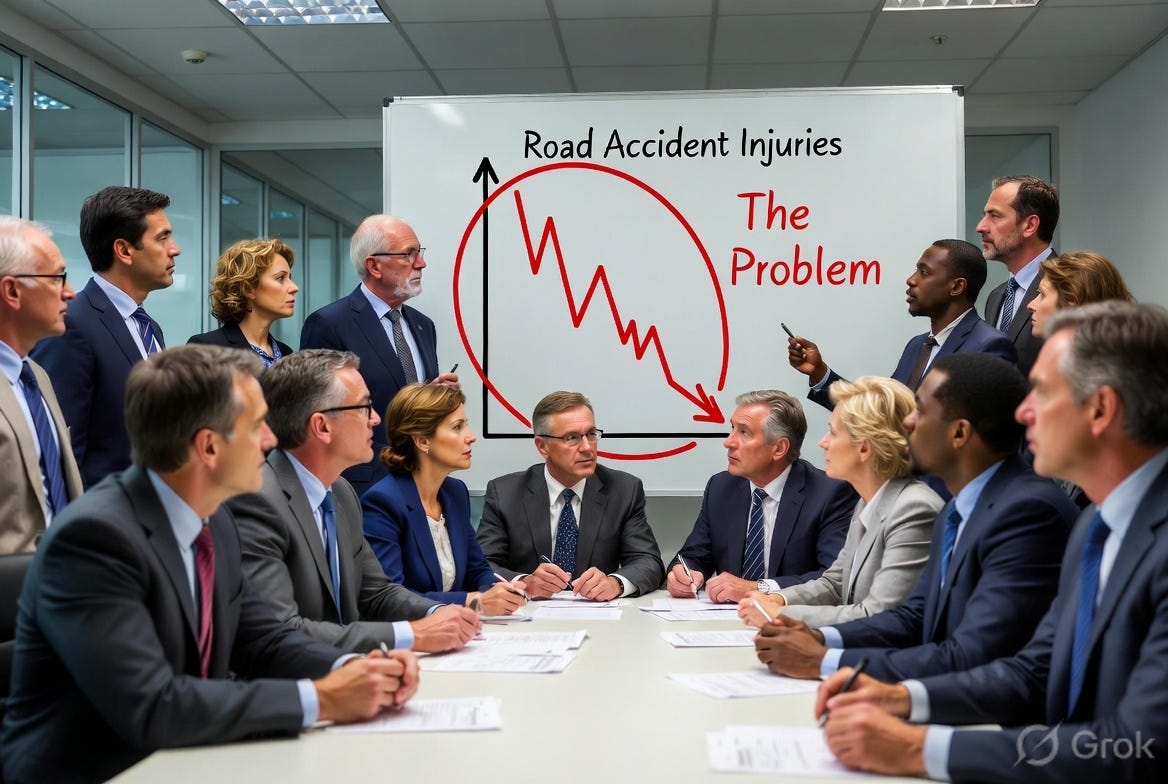




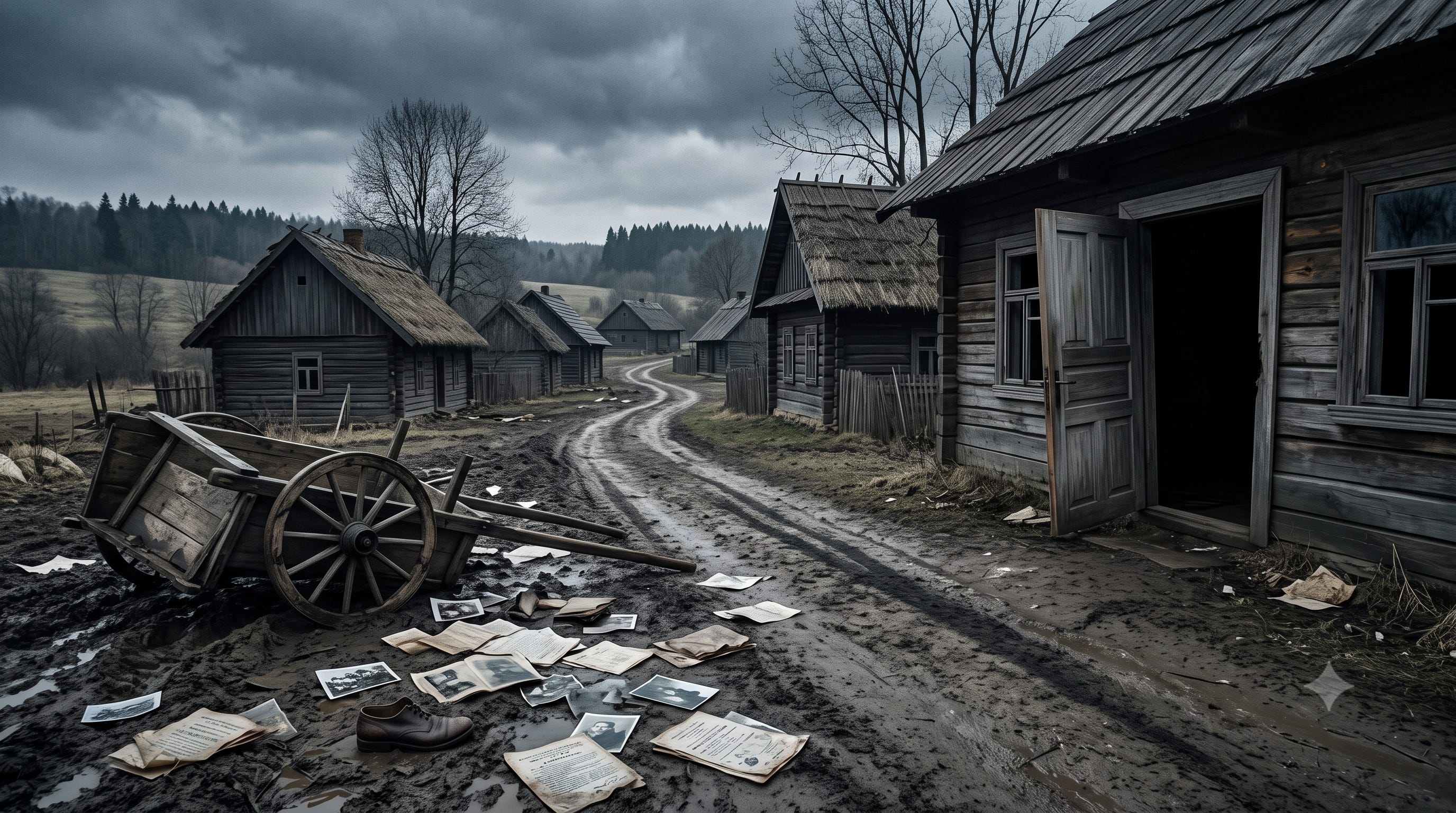













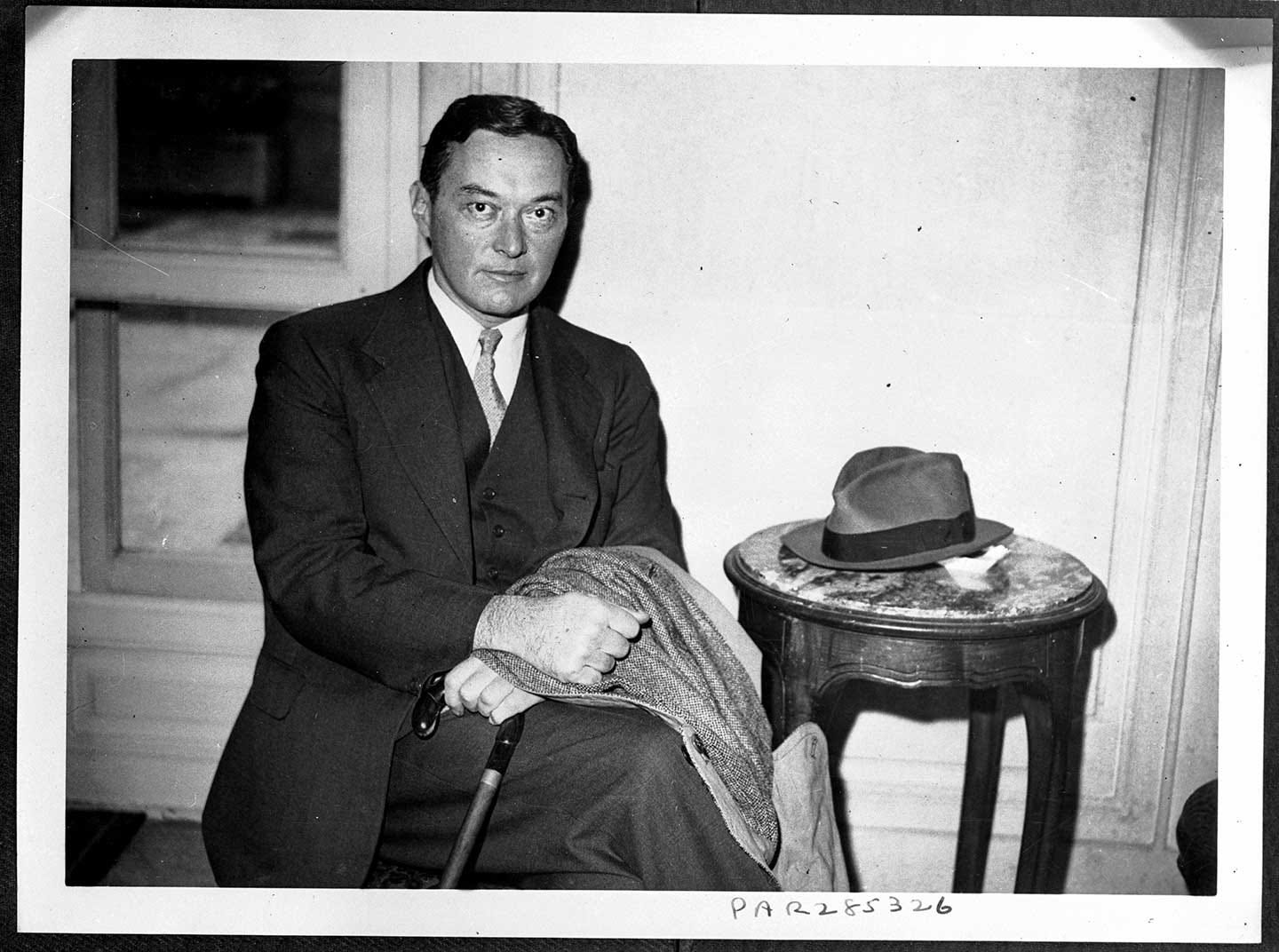


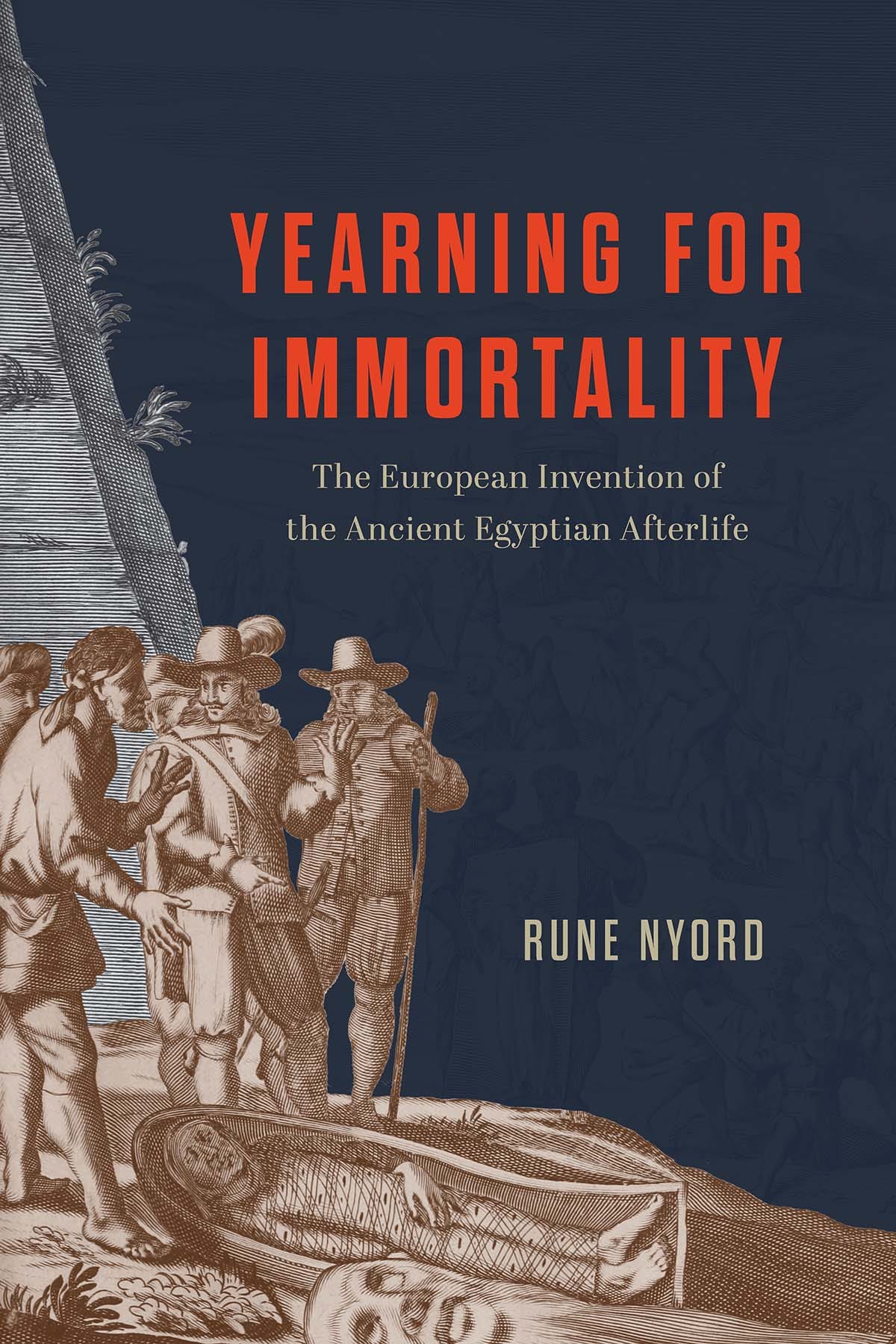


Comments
Nothing yet. Say the first thing.
Sign in to join the conversation.