
As I follow little droplets of blood throughout my parents’ home, I take care not to step on any of them. The sanguine trail leads me out of my brother’s former bedroom, down the stairs, and into the kitchen where my dad watches old episodes of Top Chef on a desktop computer — his legs kicked up on the counter. Next to my dad lies Mona, our dying golden doodle, the blood bandit.
My parents elected not to get Mona spayed due to the fact that it’s “evil” according to my mother. Which means Mona still gets her period. Typically, when Mona is menstruating, my mother fits her with a diaper to ensure, mainly, that my brother and I die of embarrassment.
But these days there’s no room for humiliating diapers; the tumor on Mona’s undercarriage has metastasized to the size of a football and it’s beginning to burst. There’s something cruel about Mona’s body actively decaying while simultaneously reminding everyone that she can still produce life.
The unsightly growth needs to be kept clean and delicately re-dressed four times a day, a process that my parents take turns doing. Which means this uncontrollable thing that’s killing our dog is getting more love and attention than all else in my parents’ dilapidated house.
In April, when I came home for a visit, I was shocked to be greeted by the same cuddly, wiggly, energetic dog. “She doesn’t know she has cancer,” my dad yelled over her door-rattling barks. “I won’t tell her,” I responded, losing my fingers in her curly mane.
Aside from this…thing…hanging off her belly, making my parents curdle with worry, she was completely fine. Which somehow made her death sentence even harder to digest.
When it was time to head back to Los Angeles, I pressed her huge doggy head to my chest and told her she was a good girl over and over again, until, eventually, my dad pulled me away by the elbow.
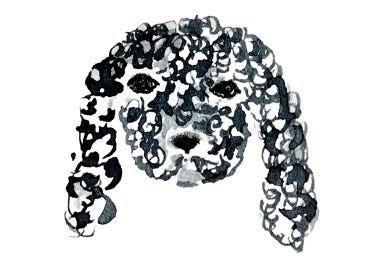
Unexpectedly back home three months later, I immediately noticed Mona was slower to greet me. Grumpier, too—growling as I bent down to give her a kiss.
“She smells like death,” my mom said while shaking her head. I inhaled through my nose trying to catch a whiff, but all I could smell was the same musky scent that’s always been attached to the dog.
I had just flown in from the East Coast where my dad, aunt, brother and I were burying my half-sister’s mother (i.e mostly eating, drinking, and sneaking glances at my sister’s face to see if she was laughing or crying).
I was back in Highland Park, for reasons I simply cannot bring myself to write about anymore, but those very reasons made me wonder if it was really I who smelled of death.
“There’s blood everywhere,” I complain to my dad. On the computer, a man in an apron cries, he has disappointed his family. “Mom will clean it when she gets up,” my dad says, enrapt in the show. I head to the sink where my father has left me two hard-boiled eggs. My steady diet of grief has turned my appetite to shit, so I only take one.
It will be a while before my mother wakes up. The night before Olga, Vladimir, and I stood around our kitchen island with three shot glasses full of NyQuil. We weren’t sick per se, but we were in need of a simple, cost-effective way to disassociate for the night. When discussing how to do so, my mom reached for the NyQuil so effortlessly that it made me suspect this wasn’t a first-time occurrence.
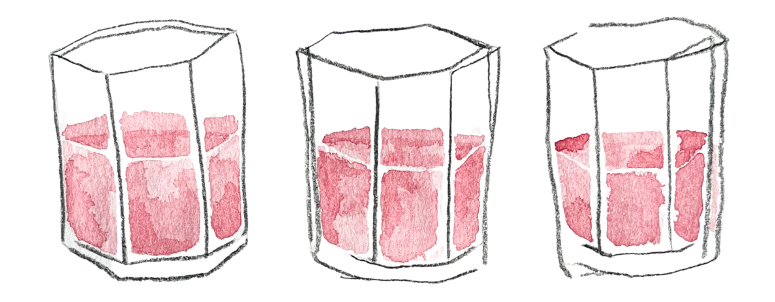
“What a nightmare,” my dad sighed before raising his tiny glass full of ruby liquid. We clinked rims, collectively tilted our heads back, and coated our throats with the sticky, red medicine. My dad slammed his empty glass onto the island first and bid us adieu shortly after.
I went to bed next, at which point my mother disappeared into her secret life which begins every night, after everyone in the house goes to bed. Doing what exactly? I will never know.
“The shower is broken too,” I add, lightly knocking the egg on the counter. My dad hits pause on Top Chef and spins to face me. “Yeah?” he says. “Yeah,” I respond. “Okay, I’ll take a look today.”
I head over to the fridge to get mustard for my egg only to see the fridge isn’t on. The temperature adjuster is broken, so my parents just unplug the thing once a day to keep their vegetables from freezing solid. I grab the mustard and slam the door shut, causing the jars inside to jingle. (The next day, after I drop a donut on my shorts I am harshly reminded that my parents’ dryer isn’t working either.)
“You can’t live like this,” I whine, “The house is falling apart and it’s depressing!” My dad hits the spacebar on the computer and Padma Lakshmi’s voice drowns out mine.
“What do you expect, Marina? Your parents are poor, humble villagers.” This is factually not true.
I plop into my chair at the kitchen table, avoiding the corner where a nail head has been perilously jutting out for the past 6 years.
My dad continues, “You were basically raised in the wild. You know that, right?” Also, factually not true. “Running barefoot through the forest, feeding trash to goats.” Okay, this part is kind of true.
Lately, I have felt wild. Navigating the world through pure instinct. Making decisions with my body. Basing next steps on my gut. I cannot remember the last time I used my brain for something. On walks, I touch everything around me; scraping my palms against bark, brick, and foliage, comforted by things that existed before me and will continue to exist long after I’m gone.
That night, after the kitchen island ritual (replacing NyQuil with whiskey this time) I head upstairs only to find Mona’s enormous mop of a body selfishly splayed across the bed. I consider, for a moment, sleeping on the living room couch because my poor, humble, villager parents strictly forbid sleeping with animals—they find it to be uncivilized.
Gently, so as not to disturb Mona, I climb into the corner of the bed that’s unoccupied. I inch closer until I can feel the measured rise and fall of her body against mine. I try to match her breathing pace, but it is so slow that I get dizzy.
Soon though, we drift off to sleep, two wild animals, pressed against each other, fighting to make it to another day.
Okay, I promised some Nice Internet, so I’m gonna give you some Nice Internet. Here are my top threes for the week:
Domino - I always find Scott Sueme’s work to be soothing on the ol’ peepers, and this particular piece in his Sleeping Arrangements collection reminds me of encircling Mona with my body.
Kintsugi Court - This incredible installation built by Victor Solomon connected me to Kintsugi and the art of mending brokenness.
The Diatomist - I adored this short film about the Victorian art of arranging single-cell algae and the beauty in simplicity.
If you enjoyed any part of this newsletter, please feel free to:
No posts
Comments
Nothing yet. Say the first thing.
Sign in to join the conversation.