
To the supporters and friends of NextGen Ventures:
2025 was a daily grind just to exist, yet we did more than survive. We cleared that bar and exceeded even our own ambitious expectations.
As Mitch and I reflect back, the honest feeling is gratitude. A lot of the things we believed to be true when we started NextGen are now becoming visible in the real world.
A not-so-popular belief we had three years ago was that young Australian founders will build a large proportion of the next Australian unicorns. At the time, most people underestimated them by correlating inexperience with risk. But our conviction ran in the opposite direction. We believe young people are uniquely positioned to win precisely because of their unconditioned view of the world that is unburdened by “how things are done”. When paired with their ability to build, learn, and adapt at extreme speed, this mindset is a massive advantage.
In 2025, we began to see that perception shift meaningfully. As AI tooling collapsed the cost and barrier of entry to building, this created space for more students to step forward earlier and start building startups without waiting for permission. At the same time, there’s been a growing number of young people who no longer trust that the beaten path will lead to the security it once promised, and are taking their careers into their own hands. The effect was more volume of founders showing up and the quality of ideas improving. Importantly, we noticed more young people speaking about their ambition and desire to impact the world with even greater conviction. These voices compound, and so did a broader belief that young people not only could build startups, but had every right to play the game and win.
Our thesis today is less contrarian than when we started, and that is something we welcome. We’re noticing the broader market believes that young founders can build important companies of tomorrow, and that shift is a positive one. This shift creates more capital pathways and reinforces that the younger generation is absolutely worth backing.
That said, consensus does not equal coverage. While interest has increased, access and understanding of the unique needs of young founders haven’t kept pace. The earliest, most formative stages of a young founder’s journey still demand proximity and alignment with ambition, something we look to intimately serve.
As we head into 2026, our focus is on raising the bar of how we operate. We are moving from defining what “good” looks like to building a firm with a multi-decade horizon that aspires to be globally great.
This is our second annual letter through which I will share our reflections, key observations, and learnings over the past year. As I write this letter on Christmas Day, it has become remarkably longer than I expected, but I think this attests to how much is happening. To those who have been with us on this journey, thank you for your support. And to those just joining, my hope is you’ll be able to learn something new about the opportunity we see at the grassroots of Australia.
We raised Fund I: $4m committed from 71 LPs
In 2025, we were fortunate to meet 704 student-founded startups, up from 475 in 2024
We were privileged to partner with 11 ambitious startups. 4 have raised follow-on rounds since our initial investment
We ran FoundersHack in Sydney and Melbourne, hosted four private founder firesides, and launched our first female founder and investor program, Verge and Vantage
Over the course of 2025, Mitch doggedly spearheaded our fundraise. He went full-time in December 2024 as back then, we were still unsure if we could raise enough capital to afford salaries for two full-time people.
The brutality of fundraising in the early days lingered on the fact that we were then two 22 and 23 year olds with an ‘unusual’ thesis that young Australians would be successful in building startups. But we held firm on our belief in the magic of young ambition. Mitch wrote more about it here.
We were initially helped by the fact that in 2023 and 2024, we found founders early who would go on to raise internationally and reach multiple six-figures in ARR. But even with those proof points, fundraising was anything but straightforward.
By our first close in June, we reached $2m committed, and I joined Mitch in a full time capacity in May. Up until that point, progress felt fragile and uncertain. Every commitment was hard won, built through several meetings and a willingness to keep showing up long after it would have been easier to stop.
It was not until September and October that the tide meaningfully turned. By then, our portfolio companies were executing well with traction and follow-on rounds, and trust with early LPs had begun to meaningfully compound. LP conversations that once required extensive convincing began to close with far greater ease. Momentum built quickly, and as of this letter, we’ve raised $4m from 71 LPs for Fund I, overshooting our initial $2.5m target.
In 2025, Mitch met with 272 potential LPs across 386 meetings, both online and physically across Australia, to brute force the fund into existence. This outcome was not the result of chance or timing alone. It was the product of an unapologetic belief and the persistence to carry that vision through its most uncertain phase until the evidence finally caught up.
In authoring this letter, I extend to Mitch a deep personal gratitude in shouldering the responsibility of primarily raising our first fund through which we will collectively make investments, along with the student team. Going into 2026, I will be taking on more of this responsibility alongside him as we lay the foundations for Fund II.
To our limited partners, we’re extremely grateful for your support and are honoured by your trust.
On performance
In 2025, our team uncovered 704 student-founded startups, up from 475 in 2024. We were fortunate to partner with 11 startups. Across these rounds, some were joined by local and international investors, including General Catalyst, Peak XV Partners, AirTree, Archangel, and more.
Looking back, the time between when we first met a founder to making the partnership official with an investment was roughly 6 months. In a traditional venture process, that might sound slow, but for us, it is a strength. We meet founders extremely early, often before the inception of their startup, and we look to build genuine long-term relationships based on trust and shared experiences. We also genuinely get to call many of the founders we back our friends.
I’m also happy to share that four startups have so far raised follow-on rounds of funding after our initial investment. Of these four companies, three raised from US investors, including Accel and Y Combinator (2x).
Our experiences this year also heavily reinforced a belief we long held. That the most ambitious young founders are not concentrated in a narrow set of sectors. We simply back the most talented, ambitious, and hungry young founders, irrespective of the industry they begin in. Core to this mentality is a belief in the long-term capability and potential of the human, and us existing to enable them to achieve greatness in whatever problem space that ends up being.
We do still look at the market, but only as a signal of how big a founder is willing to think. Because when someone wholeheartedly carries with them an extreme level of ambition, we trust they will self-navigate towards the problem and market that allows that ambition to be fully realised.
This meant that this year, we partnered with founders building autonomous pipe inspection robots (Puralink) to an AI design platform (Blunge). Each investment we’ve made holds its own unique story, but one is front-of-mind that I wanted to share that captures the kind of founders we exist to empower.
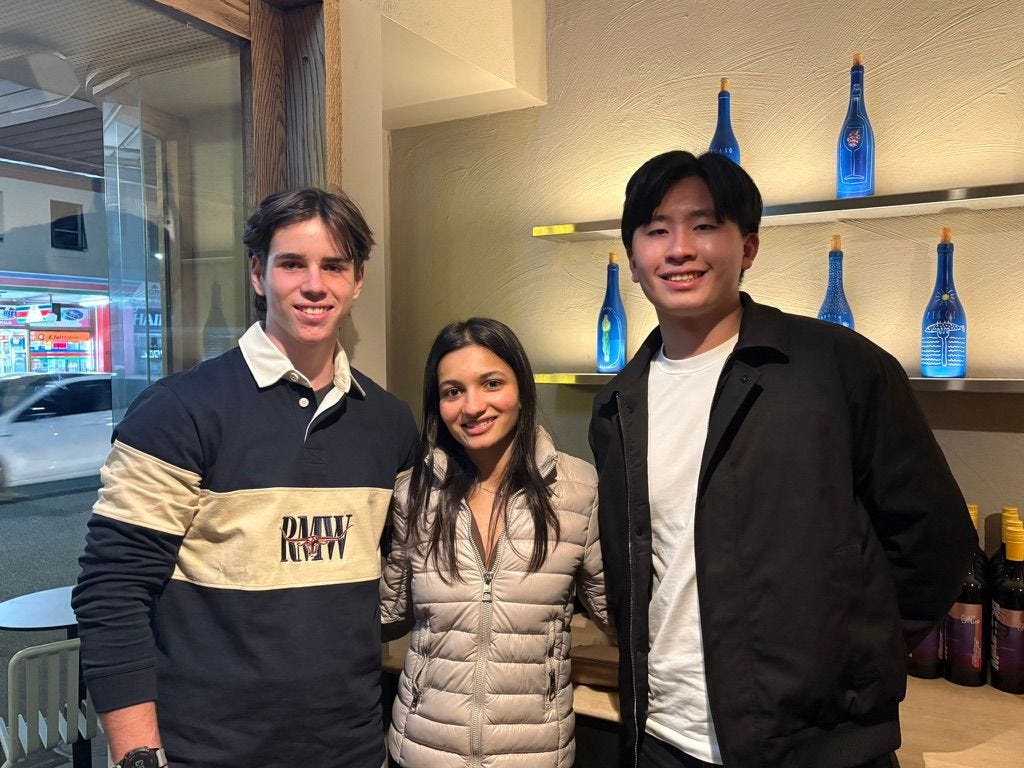
GrazeMate – Disha (a student investor at USyd) met Sam in her college at the beginning of the year. She would recall days where large packages written in Chinese would show up outside Sam’s dorm room. It turns out Sam had taught himself how to code in Chinese with alternative drones as he wasn’t yet able to afford the max-spec drones he would eventually go on to build with.
After getting to know Sam more, we learned of his remarkable life story. Raised on a farm in Northern Queensland, at 14 he built a robotic arm, trained an AI model to detect electronic waste, then travelled to the US where he placed second in an international AI competition out of 10 million applicants. At 16, he faced a life-threatening spinal injury. After three spinal surgeries, he climbed Everest.
Today, GrazeMate is building autonomous drone-based cattle mustering technology, cutting mustering costs by over 10x. Farmers just select a paddock and the drones handle the rest.
On community
With the limited time we had beyond fundraising and investments, we were selective in what we committed to from a community perspective.
Our operating principle was simple. Do less but do it properly, never compromise on quality, and maximise for signal to the best young founders in Australia. This means every event we hold has to be a genuine 110% effort to provide value to those whose time and attention we are privileged to have. Our measure of success? Asking ourselves ‘were we able to tangibly change or accelerate the trajectory of an attendee’s journey that they couldn’t get anywhere else’.
We finished 2025 having run FoundersHack in Sydney and Melbourne respectively (shoutout the brilliant Saachi for spearheading this effort). Across the two hackathons, we brought together around 200 hackers and saw some great outcomes. From the winning FoundersHack Sydney team landing a YC interview to another securing an internship at Eucalyptus through Tim Doyle after taking part in our localised rendition of ‘Request for Startups’. A very large thank you to all of the countless judges, mentors, sponsors, partners, and workshop facilitators who made the hackathon possible.
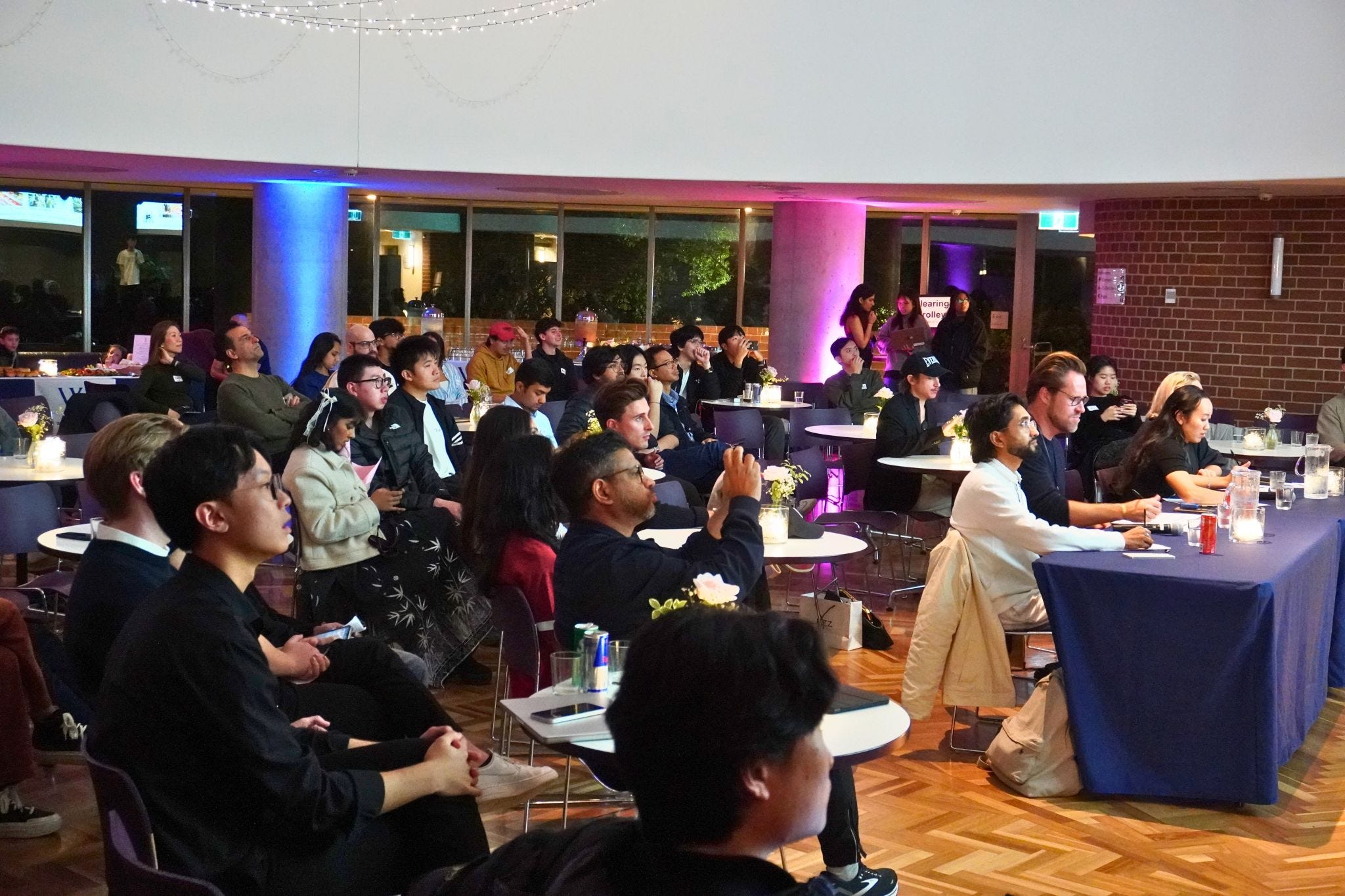
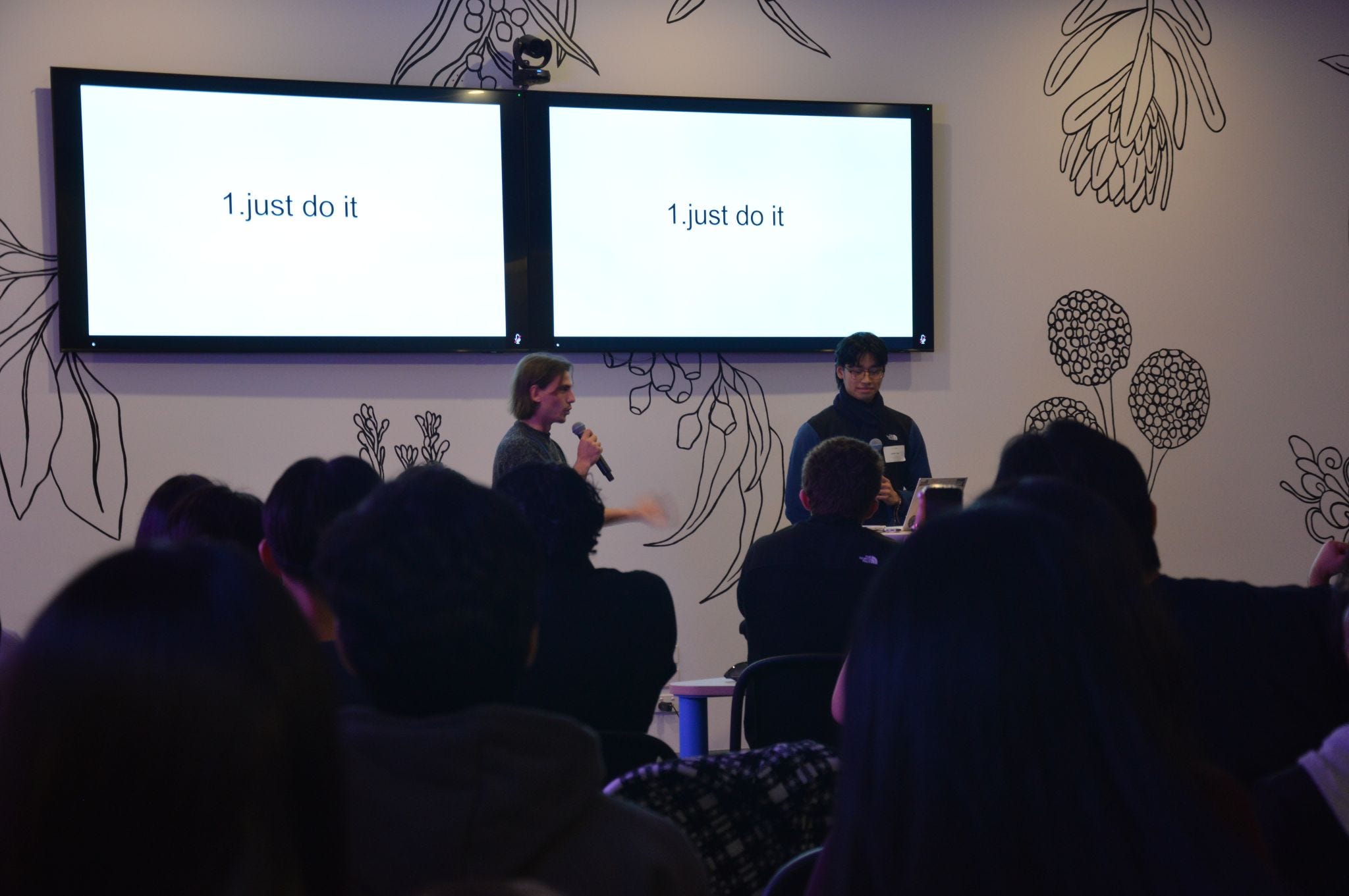
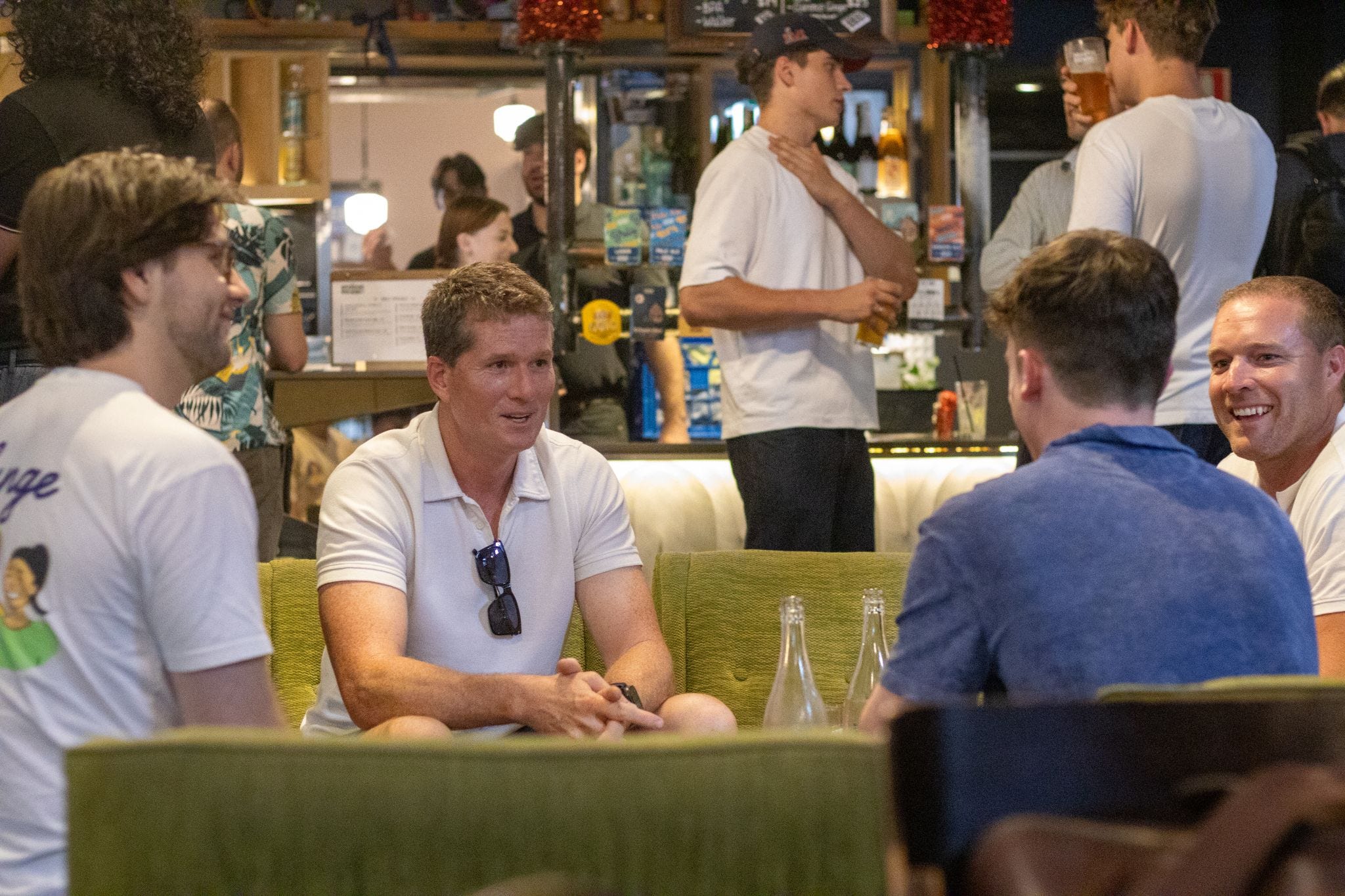
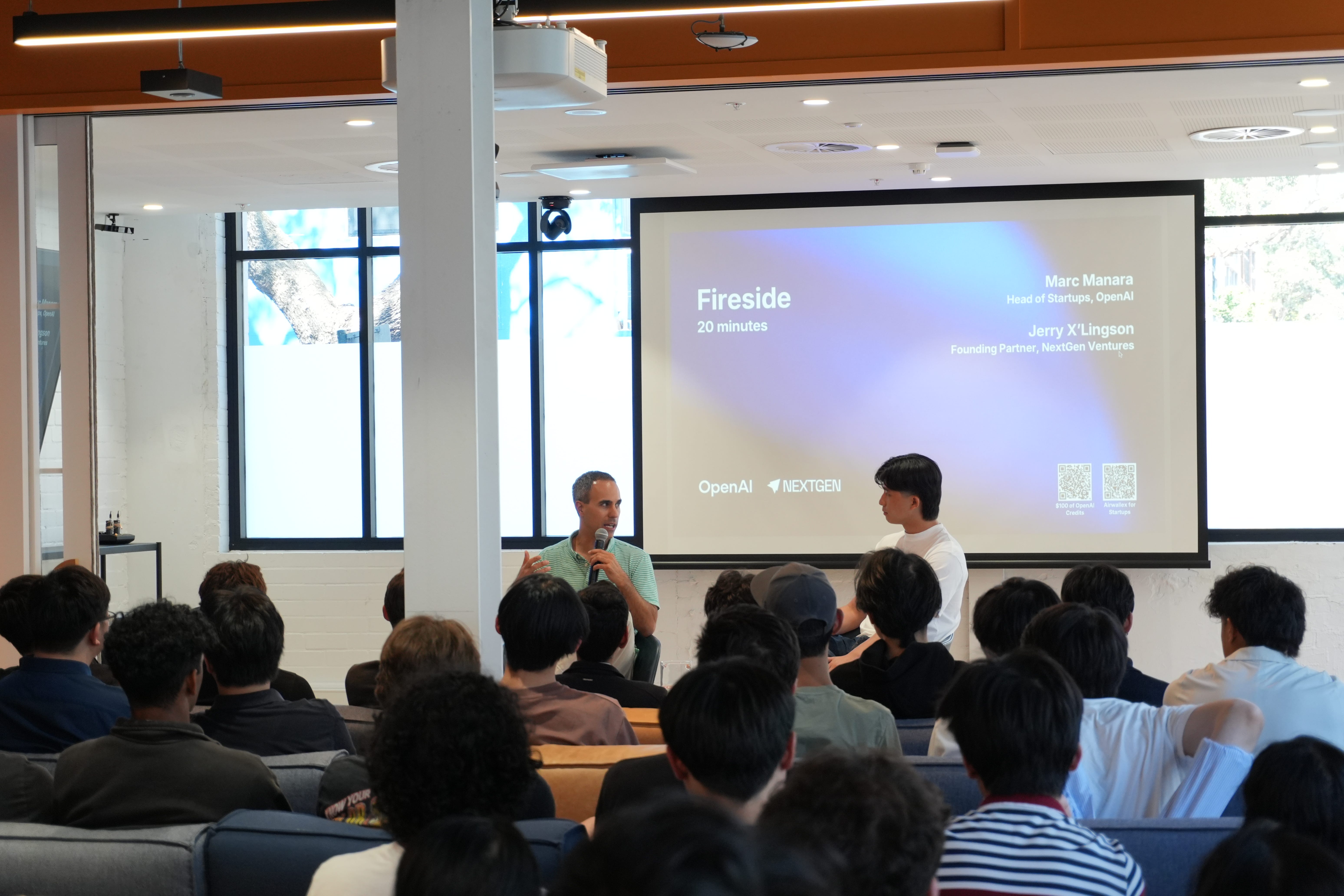
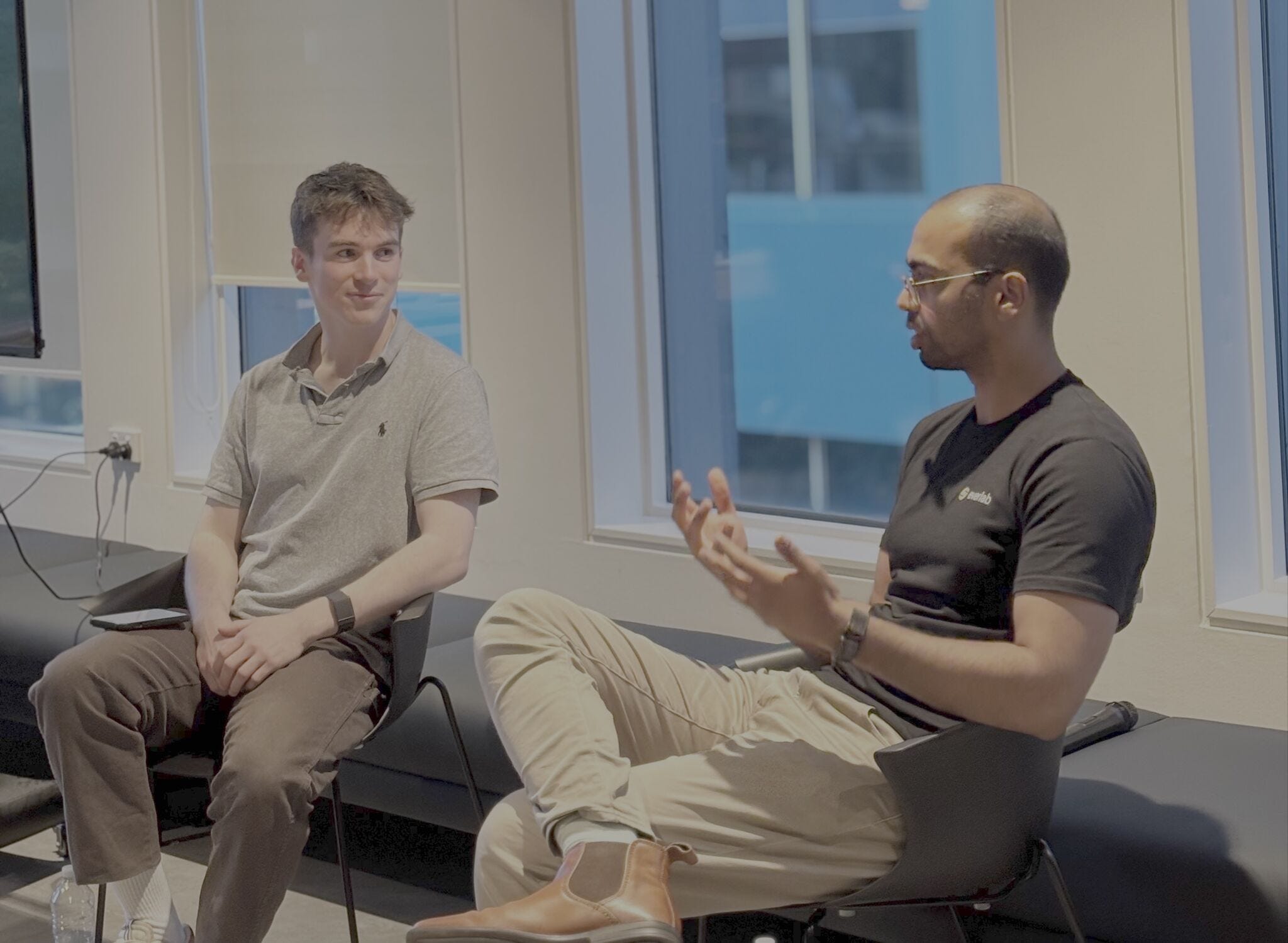
We also ran four private founder firesides (three in Sydney, one in Melbourne). Through our founder firesides, we bring together ~30 young founders into a room with some of the great founders in our ecosystem who have already walked the path. It is a space where young ambition can collide while giving them an opportunity to see what greatness, clarity, and intentionally looks like. We believe this is essential for calibrating, and often raising, the bar we hold ourselves to.
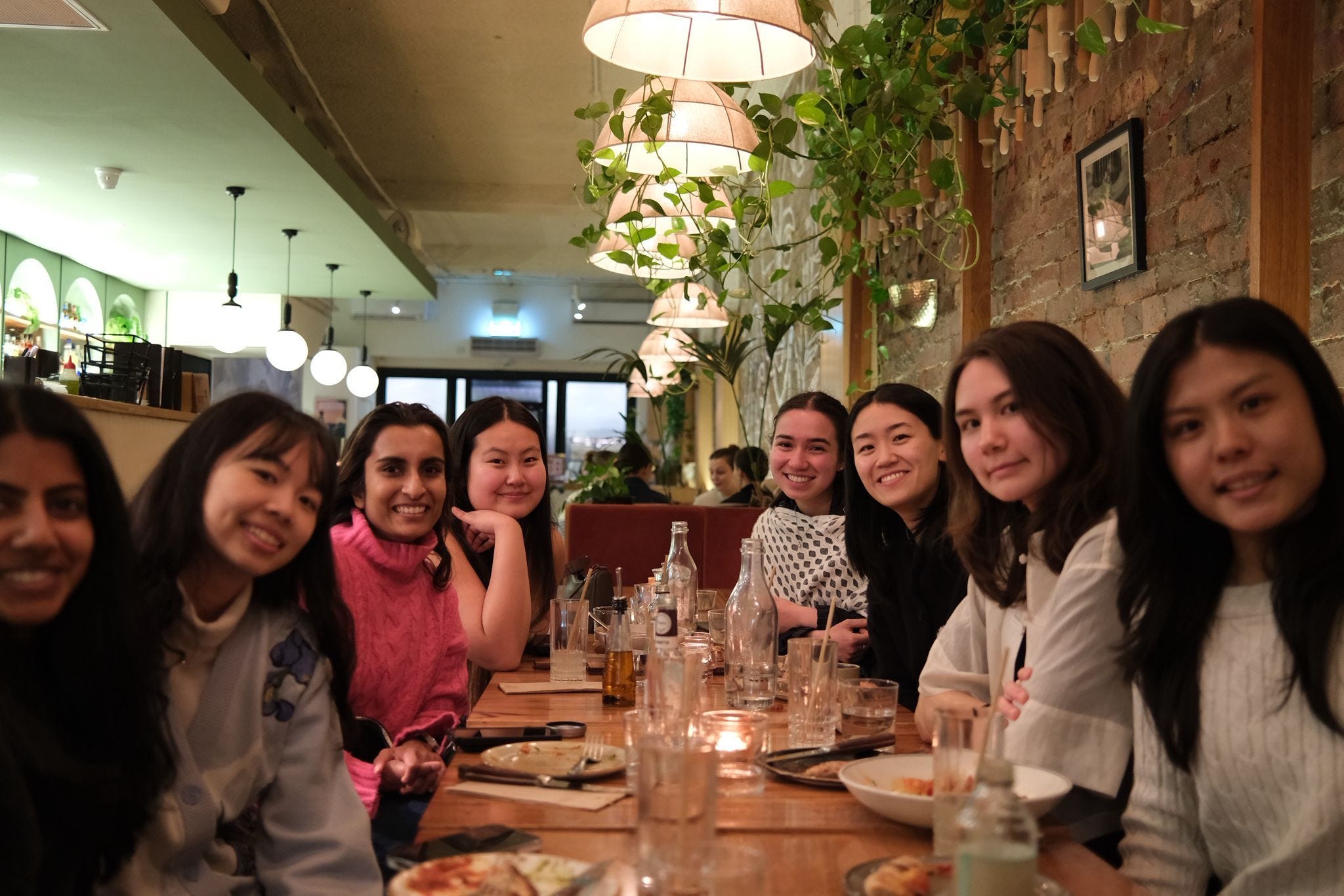
Mitch and I love giving our team radical ownership and Mary took this all the way, having designed the first edition of our female founder and investor program, Verge and Vantage, while securing funding from Blackbird and Trawalla Group. The hypothesis was that if you create a community built on peer accountability and scrappy progress, small steps each week, you keep more female founders building. Mary’s efforts would go on to impact 28 young female founders across Melbourne and Sydney, and 10 female investors within NextGen Ventures. A special thank you to Kate Glazebrook and Chenelle Tanglao for their support and the many guest speakers and mentors who participated in the program.
Creating a launchpad for ambition
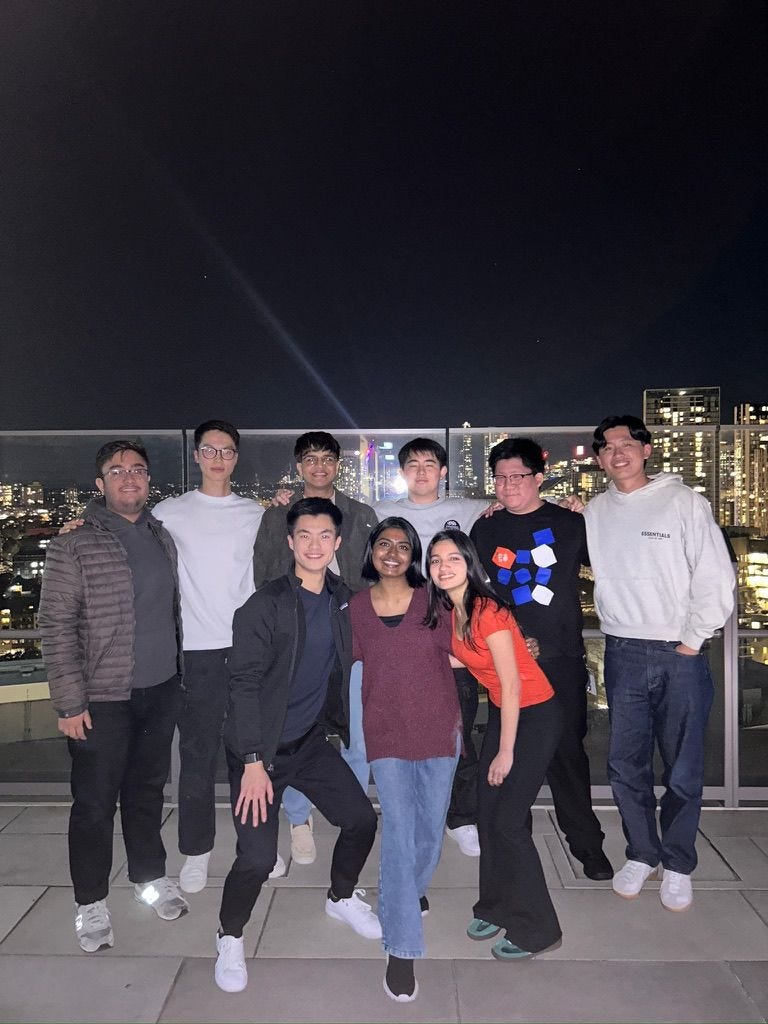
In 2025, we welcomed a total of 37 students to the NextGen Ventures team. This means 67 (hah) have come through the firm since our inception in 2023. To all past and present NextGenners who helped turn their campus into a place where young founders could thrive and who grew a garden of tall poppies along the way, thank you.
Two stories from the year encapsulate our learnings around the type of culture we’re setting out to build at NextGen and the role we play in each students journey.
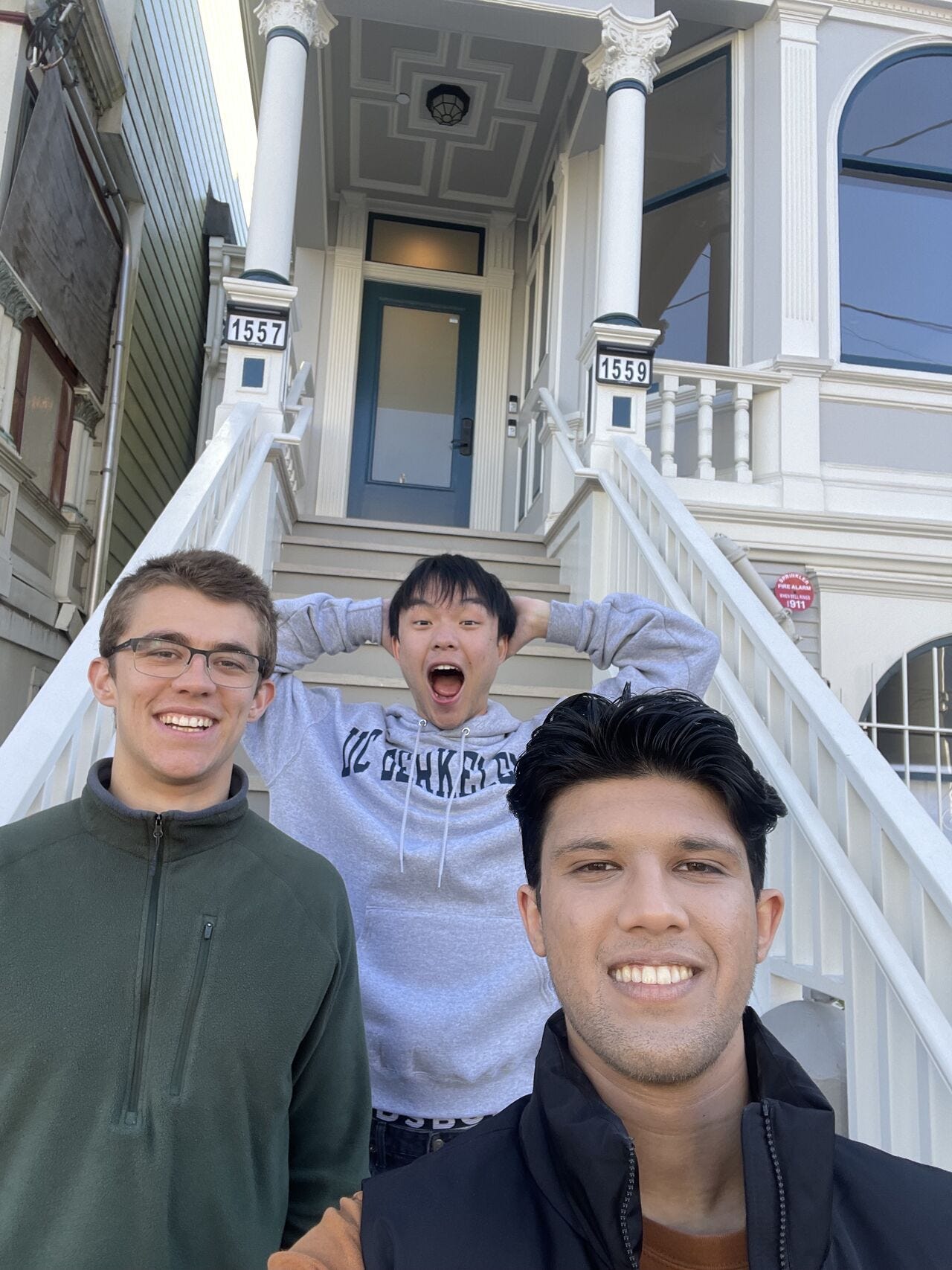
First was Donald and Varad. Both joined the firm in 2024 and left in 2025 to work at Fluency. Varad was pivotal for our operational set-up as he took full ownership of overseeing the investments team while Mitch and I were preparing to fundraise in 2024. Donald was an Investments Associate at the University of Melbourne alongside Varad. Together, they led our inaugural investment into Fluency, which makes for a beautiful full circle moment that they would later join the company. While Varad first left at the start of 2025 to spearhead growth at Fluency, Donald stayed with NextGen for the remainder of 2025 and led investments into two more startups, Den and Alythya. In November, both moved to San Francisco to support the company’s US expansion.
Then there was Jamyson, who joined as the first ever Investment Associate in 2023. Back then, there was no precedent, but from day one, Jamyson learned rapidly. He moved fluidly between web design (where he helped launch our first website) to going deep on his personal thematic interests in crypto. But even then, it was always clear to us that he was one day going to become a founder. After almost a year and a half with NextGen, Jamyson took everything he had learned and made the leap to start building. I still remember the early days of Jamyson requesting feedback on the first iteration of his website. Not long after, we had the privilege of backing him as a founder, the first NextGen alumni we’ve invested in. Another full-circle moment. Today, he’s building Alythya, a startup providing digital product passports for luxury fashion brands.
In a December letter to our NextGen alumni, a community we’ve begun nurturing more intentionally, Mitch shared the following note:
My desire to have a strong alumni community stems from the belief that there is a tremendous amount of value that can be derived from it, playing a small but impactful role in each of you achieving your definition of success in life.
If you think in decades, let alone years, the value actually becomes obvious.
In 2024, you find Founder X and NextGen soon invests. Then, 2025, Founder X hires you, and after years of growth, you found your own company in 2029, receiving an angel cheque from another NextGen alum, whilst I intro you to every VC in Australia. After you raise, you hire two cracked NextGen scouts straight out of uni, get Seed funding from NextGen alum who works at a SF VC fund, and you crush the next decade. After exiting, you start angel investing into younger NextGen alumni and portco’s who are growing rapidly, before reconnecting with a NextGen alum from the same cohort, and you build a startup with them.
That’s the dream. Well, likely reality.
NextGen, at its core, is a launchpad for ambitious students. Our responsibility is to give those with the highest agency and ambition more opportunities to increase their rate of learning and approach their definition of success. We are excited to see what our alumni build over the next decade, and we will consider it a success if we can say we played a small part in their journeys.
The courage to be early
Besides our initial two investments in January, we ran into a dry spell of roughly 6 months where we made no investments. For context, our target was always to make one investment per month.
A coffee with Niki, a close advisor and the first LP in our fund, at the start of July was a brilliant reality-check. Mitch and I had gone into the meeting seeking feedback on how we could improve our fundraising strategy as we were moving towards a second close later in the year. But he stopped us and asked something much simpler. How many investments had we made, and how many should we have made by that point? We were obviously well behind our internal target.
That conversation was a necessary reset. We quickly shifted our attention back to the core job of investing with even greater urgency and clarity around what we existed to do. Ironically, doing that work well and backing strong founders would itself become the most optimal path for future fundraising. Niki made sure that point was abundantly clear to us.
As we got back into the rhythm of investing, Mitch and I also began to notice a recurring pattern in our decision-making. We would develop a real conviction in founders early on, but hesitated to invest, often waiting for additional signals of validation. In these cases, we weren’t giving ourselves permission to act on that early belief.
This was where we started to more intentionally cultivate courage. There is real discomfort in backing your own judgement before there is external validation to lean on. But it was clear to us that acting on genuine belief in an individual was not a shortcut or a lack of discipline, it is the exact discipline of our fund and the reason we exist.
Additionally, there is genuine asymmetric upside in being willing to be temporarily delusional but right in the long-term. Most shy away from this, but Mitch and I so far have lived our short lives capitalising on asymmetries in a bold and unapologetic manner. So why change that attitude now?
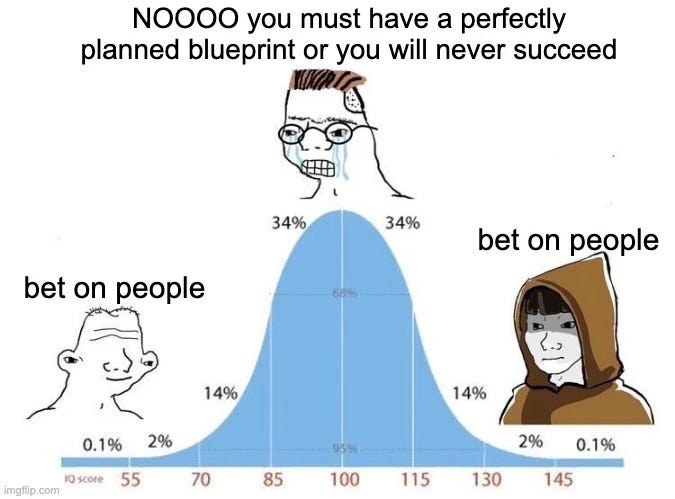
It was around this time that I started nicknaming us a ‘first-cheque fund’ instead of a ‘student-focused fund’. Mitch initially hated it, so I doubled down and called ourselves ‘vibe investors’ (a play on vibe coding), which he hated even more. We’re most certainly not ‘vibe investors’, but it was a recognition that much of backing young founders relies heavily on instinct. That feeling you can’t articulate, but also can’t ignore, when you meet someone who you know has the ambition and something special in them that you want to learn more about and eventually work alongside to amplify.
This brings me back to a line and my favourite meme from our 2024 Annual Letter that continues to anchor our thinking: special people do special things.
Closing the gap
Only just this year, I learned of a little community in the early 2010s called Silicon Beach. It was a loose collective of Australian startup founders who supported each other and went on to build meaningful companies around the world. Around the same time, Startmate was also bringing founders in cohorts to Silicon Valley, again, where many would stay permanently. This left me with a question.
Not why so many Australians leave, but how they leave. What it must have felt like to go. And why so few seem to have returned, or had their stories carried forward for the next generation to see and hear.
Leaving Australia to build your startup is not actually a problem, it tends to be the right move. The deepest pools of talent, capital, and customers are elsewhere (typically in Silicon Valley) and that seems unlikely to change.
The real issue is that too many founders, especially young, have historically left Australia feeling misunderstood or out of place on home soil. The instinct has always been to cut down ambition (tall poppy syndrome), which creates an emotional disconnect that sticks. So when people leave under those conditions, they rarely come back with time, wisdom, or capital. That sense of disconnect compounds for the current generation of young founders where there are so few visible stories that show what is possible, or signal that ambition is encouraged.
What Silicon Valley has done exceptionally well is not magic. It has compressed the feedback loop of belief and success. They put talent, capital, mentorship, and cultural permission within close proximity, so taking big swings feels normal. This means the ambitious are also not treated like anomalies. That gravity is why Aussie founders have historically felt welcomed when they arrive.
If we do not intentionally cultivate that sense of belonging here for the most ambitious, this pattern will continue. And the impact is two-fold. Some young people will continue to play it safe, or they leave to the US with a lingering sense that they never quite fit. Over time, Australia will not just lose talent, but the enduring connection to those it could have raised and inspired.
I believe we can begin to close the gap by bringing Australia’s best back into the loop and making the path to startup success more visible. More mentorship from Australians who have already done it, more capital earlier, and more proximity between successful founders and young builders who are ready to go from zero to one. If you were ever part of Silicon Beach or an early Startmate cohort that took you overseas, I would love to hear from you.
The goal is not to keep everyone here. It is to make Australia a place where the most ambitious young builders are proud to have started.
A growing garden of tall poppies
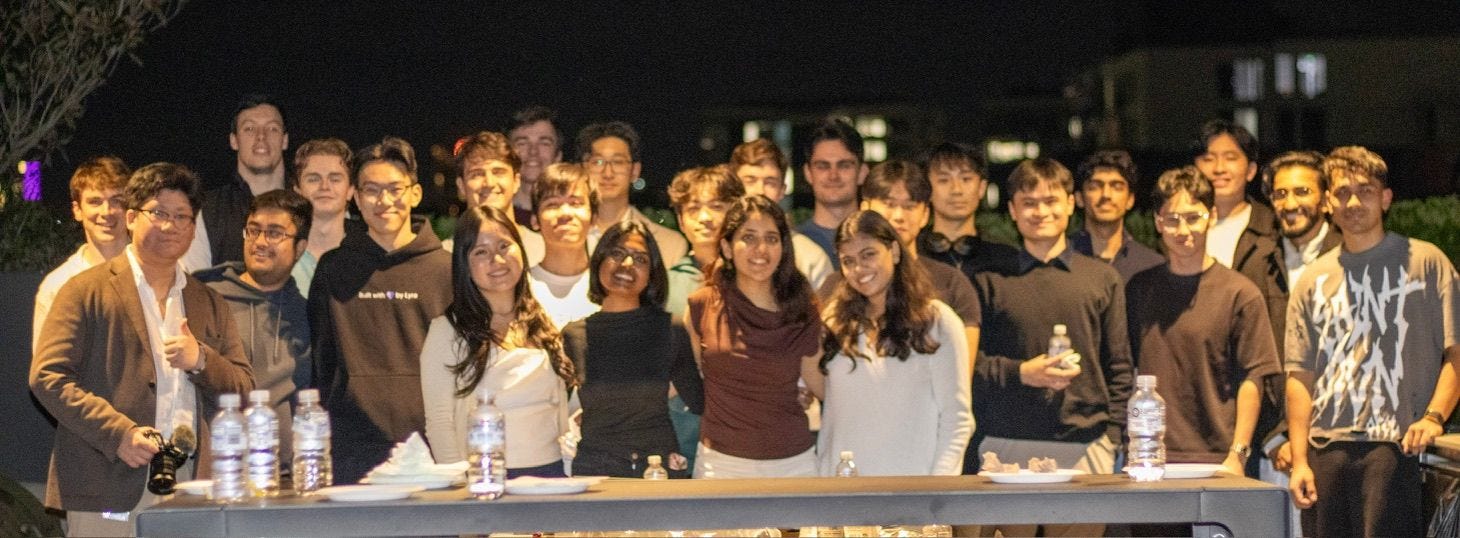
Today, the rising number of students choosing to build companies rather than default to traditional pathways is not happening organically, nor is it the result of any single organisation. With that, I have deep respect for Nam and Anh at Lyra, Akshat at Arrayah, and Justin at Hack48 who are each doing the unglamorous work, in their own ways, of nurturing fearless ambition at the grassroots. I’ve gotten to know each of these teams extensively over the course of the year and I’m deeply grateful for the support they’ve shown our mission in return.
Cultural shifts come from disparate individuals who choose to act differently, and in doing so, give others permission to do the same. This is because proximity and repetition matters. These independent efforts have created an environment around startups at the grassroots which feels qualitatively different to just three years ago when we started NextGen. There is more energy, experimentation, and social reinforcement around building than we have ever seen.
A note to young founders
Thank you.
NextGen would not exist without the daily grind of founders who choose the risky, daring, and often outrageous path of building companies. If there is one thing I hope founders feel when reading this, it is that there is a rapidly growing level of support for your success, including from ourselves at NextGen.
There has also never been a better time to build.
But in a world where more people are starting companies, differentiation comes from working on problems you authentically care about. When you care deeply, pushing through hard moments never involves negotiation, it is inevitable.
One story I love is that of Zuck in 2006. When he was 22, Yahoo offered $1bn to acquire Facebook. Zuck ultimately declined because of an unwavering belief in the long-term mission. But a lesser-known detail from board meeting recollections was that he wasn’t sure what he’d do with the money and that he would just start another social media company. But he liked the one he already had.
If you are young, you have a whole life ahead of you. If you have the opportunity to build something, make it something you genuinely care about. It makes the journey more meaningful and, in a lot of cases, often increases the chance of success.
–
Comments
Nothing yet. Say the first thing.
Sign in to join the conversation.