
Hi there,
Welcome to the 66th edition of Next Capital, where we help you find Africa’s most promising startups before they get big.
In our last edition, we wrote about the startup that lets Nigerian businesses lock in fuel prices before they spike. If you missed it, you could catch up here 👇🏾

Next Capital is launching a podcast, and we need your brain for it.
We want you to send us your ideas.
The thing you’ve been sitting on. The gap you spotted in a market. The problem you’ve experienced one too many times and thought, “Why hasn’t anyone built this yet?”
Send it in, and we might review it on the pod.
And here’s a little secret: we’re creating something that’s going to let you build your ideas in real life.
Drop your idea here → Next Ideas Pod!
P.S. - Know someone who always has startup ideas? Forward this email to them!
Startup: Packet Africa
Location: Nigeria
At most Nigerian universities, paying your department or student union dues still means tracking down whoever’s holding the ledger that week and handing over cash. What you get back is a handwritten receipt, with no guarantee it ever makes it into the union’s books. There’s no confirmation beyond a signature in a notebook, and no easy way to check whether the money three hundred students paid actually matches what the treasurer reports at the next general meeting.
Edgar Odey, Saviour Udoh, and Benjamin Ahunanya built Packet Africa to replace that notebook — the handwritten ledger of cash and signatures that’s the only record most student unions have. The three co-founded the company in November 2024 under the name PayDues, spent most of the following year building it, and relaunched under the Packet Africa name when the product properly went live in October 2025.
More than 2.1 million students are enrolled in Nigerian universities right now, and most of the money a university actually collects from them (tuition, acceptance fees) already runs through Remita, the payment platform federal universities have standardized on for years. What doesn’t run through Remita is everything students collect from one another: union dues, election fees, event tickets, department merch/memorabilia. That money is smaller, messier, and apparently not worth a big platform’s time, which is the gap Packet Africa is betting on.
Here’s how it actually works: a student union exec or department treasurer logs into Packet Africa’s dashboard and creates a payment link for whatever they’re collecting, whether it’s dues, a levy, or an event ticket. Students pay that link by bank transfer, card, or USSD, and the money moves through two payment partners Packet Africa plugs into rather than builds itself: Anchor for bank transfers, Monnify for card and USSD, which keeps its own infrastructure costs down.
The moment a student pays, the system generates a receipt automatically, with a QR code the treasurer or a gate attendant can scan to confirm it’s real: the digital version of the notebook signature it replaces. The same dashboard also runs two other things for the same student union: a voting module for elections and pageants, and, more recently, a storefront the team is testing for departments to sell branded merchandise.
Get in front of 11,000 investors, founders, execs, and tech enthusiasts in Africa.
Note: Traction shared in this edition is based on information provided by the founders.
Since its October 2025 launch, Packet Africa has processed over ₦30 million (roughly $20,000) across 400 student communities and about 15,000 students, with university partnerships now spanning 25+ Nigerian states, including Lagos State University, the Federal University Oye-Ekiti, and Federal Polytechnic Orogun.
Its voting module has processed more than 57,000 votes across elections and pageants.
The company takes a 2% commission on transfers. In June 2026, that came to $110 in revenue on $5,500 of transaction volume.
It’s bootstrapped and raising $100,000 to expand into four more universities and fund a full rollout of the merchandise storefront it’s currently testing.
Owning this niche outright means clearing two things standing in Packet Africa’s way. Neither is hypothetical; both are already playing out.
Packet Africa isn’t the only one chasing this niche. NAPS, the national body representing Nigeria’s polytechnic students, already runs a free official rival called CampusPay at polytechnics nationwide; Paydue Technologies, a separate company, launched a near-identical dues platform at Federal University, Lokoja, this year. Neither overlaps with Packet Africa’s current university partnerships yet, but selling a paid platform only gets harder if a free official alternative or a rival startup gets to a campus first.
Student leadership turns over every year. A new union administration owes a vendor nothing its predecessor agreed to. Packet Africa’s answer is to sell into the layer that doesn’t turn over as fast: heads of department and the standing student union body, rather than whichever executive currently holds office, and eventually get a Vice Chancellor’s sign-off so adoption survives a change in student government. It’s a reasonable hedge, but the real test is whether Packet Africa can make it stick at even one of its current partner universities before this raise adds four more.
Next Capital’s take?
Competing with the official payment partners universities already use for tuition and acceptance fees, Remita among them, was never really on the table. Those partnerships run directly through government and institutional channels, and that kind of standing relationship isn’t easy to dislodge. What’s smart is that Packet Africa didn’t try. It went after money that never touches an official partner in the first place: dues, votes, tickets, merch- small and irregular, but frequently occurring enough to be worth building for.
The startup is still early, and the revenue behind it is still thin, something Packet Africa itself would probably agree with. Real conviction here isn’t more universities added quickly; it’s one campus turned into a place where the notebook never comes back out, dues season after dues season, election after election.
What do you think? With a free official platform and a near-identical rival both already live, is Packet Africa’s head start enough to hold this niche, or does distribution end up deciding it?
We’ll be watching to see this paper trail turn into the business Packet Africa is betting it can be.
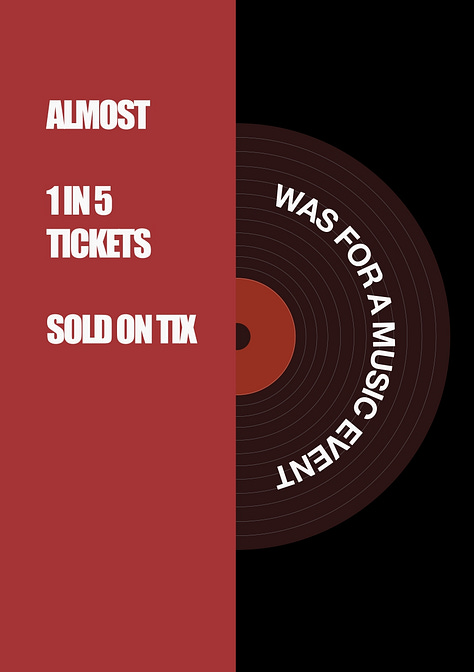


Read the full report here.
Want to be featured in Next Capital? Drop us a line.
Until next week! 🫡
We’re always coordinating participation across active opportunities within the Next Capital pipeline, particularly for investors who can back startups.
If you’d like to be considered for current or upcoming opportunities, let us know, and we’ll follow up where there’s alignment.
Thanks for reading Next Capital! We think more people should read it, and more people will if you share it.
Enjoyed reading this? Forward it to someone you think would enjoy it as well.
Comments
Nothing yet. Say the first thing.
Sign in to join the conversation.