
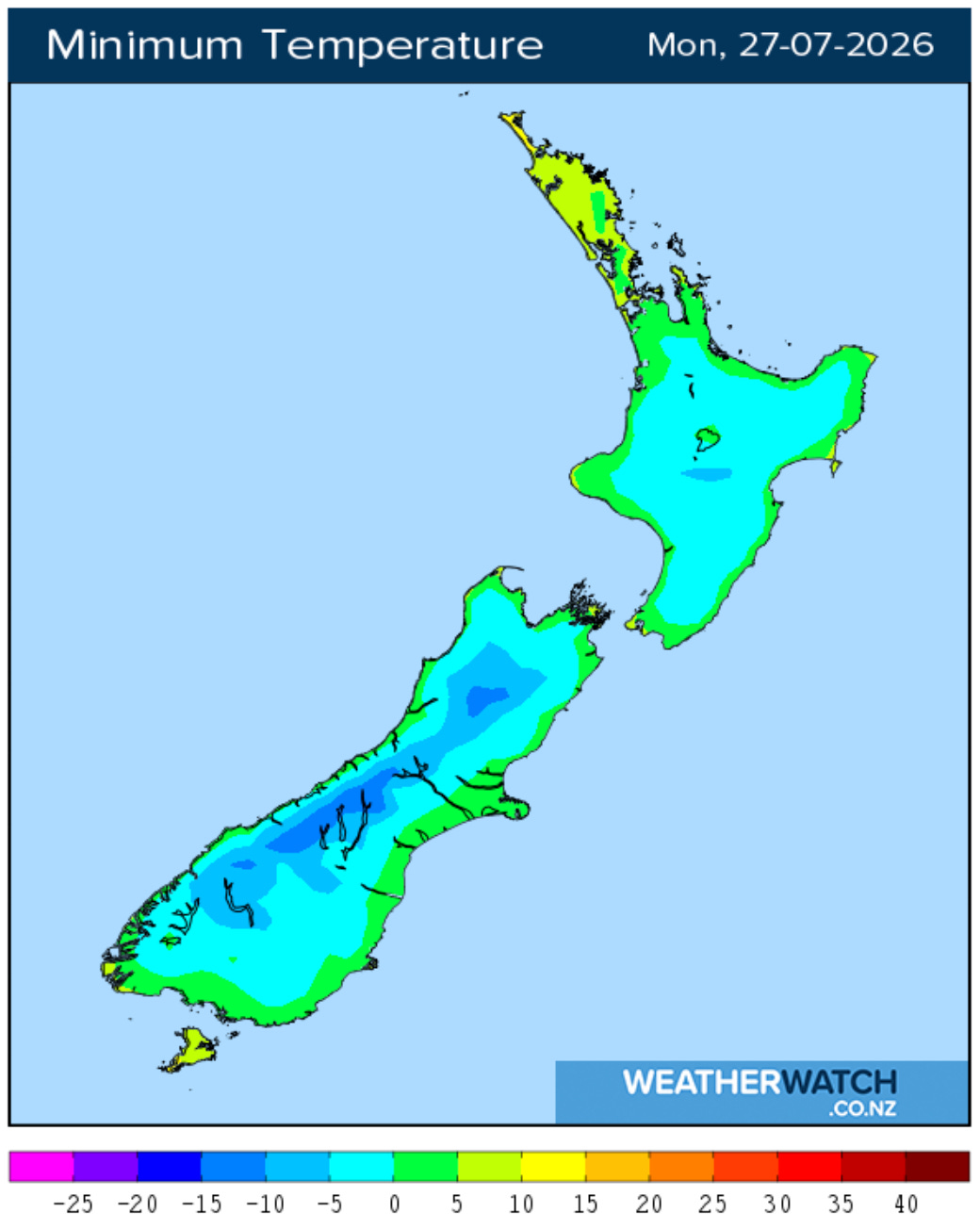
Last night I found myself watching the Transpower live generation dashboard. Sounds riveting, I know, but for anyone interested in how New Zealand’s electricity system actually works, it was fascinating .
The grid demand climbed to about 7,325 MW at 6:30pm as everyone got home from work, tried to warm up the house, and cook dinner. This likely set a new winter peak.
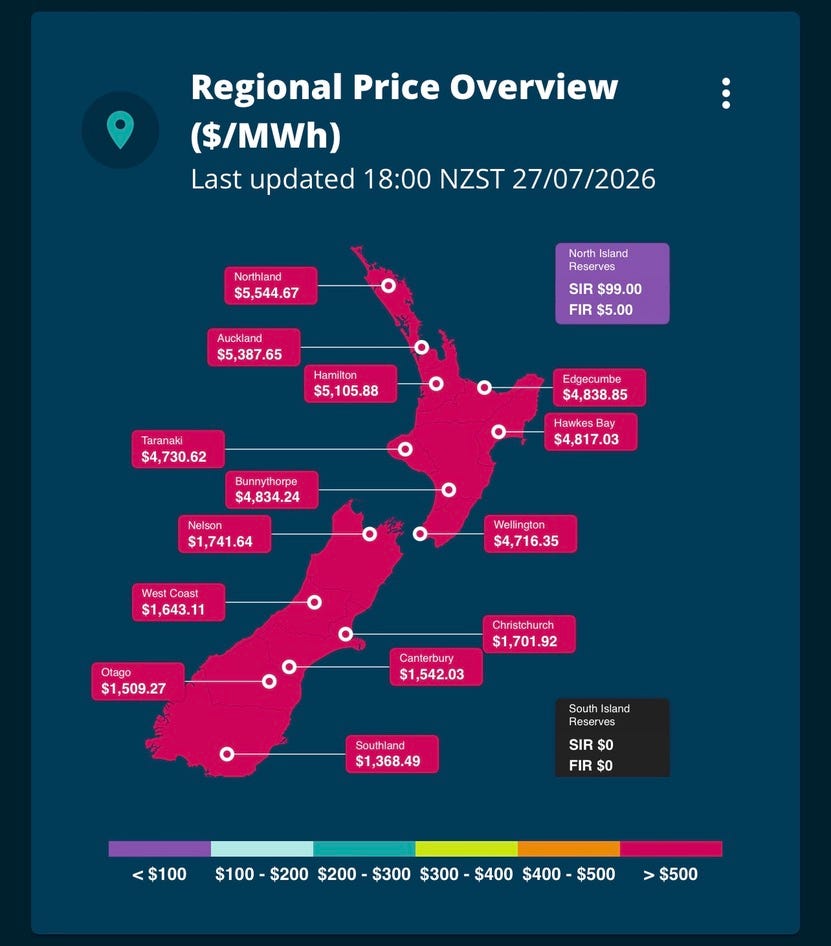
Across parts of the grid, wholesale electricity prices briefly spiked above $5,000/MWh in the upper North Island, while Transpower issued a Low Residual warning, signalling that the system was predicted to have 200MW or less of spare generating capacity left. A failure of any of the big generations under these conditions could lead to Transpower needing to initiate emergency procedures similar to those during the August 2021 supply emergency, when weed blocked the inlet screens at Tokaanu hydro station, reducing hydro output just as wind generation fell away.
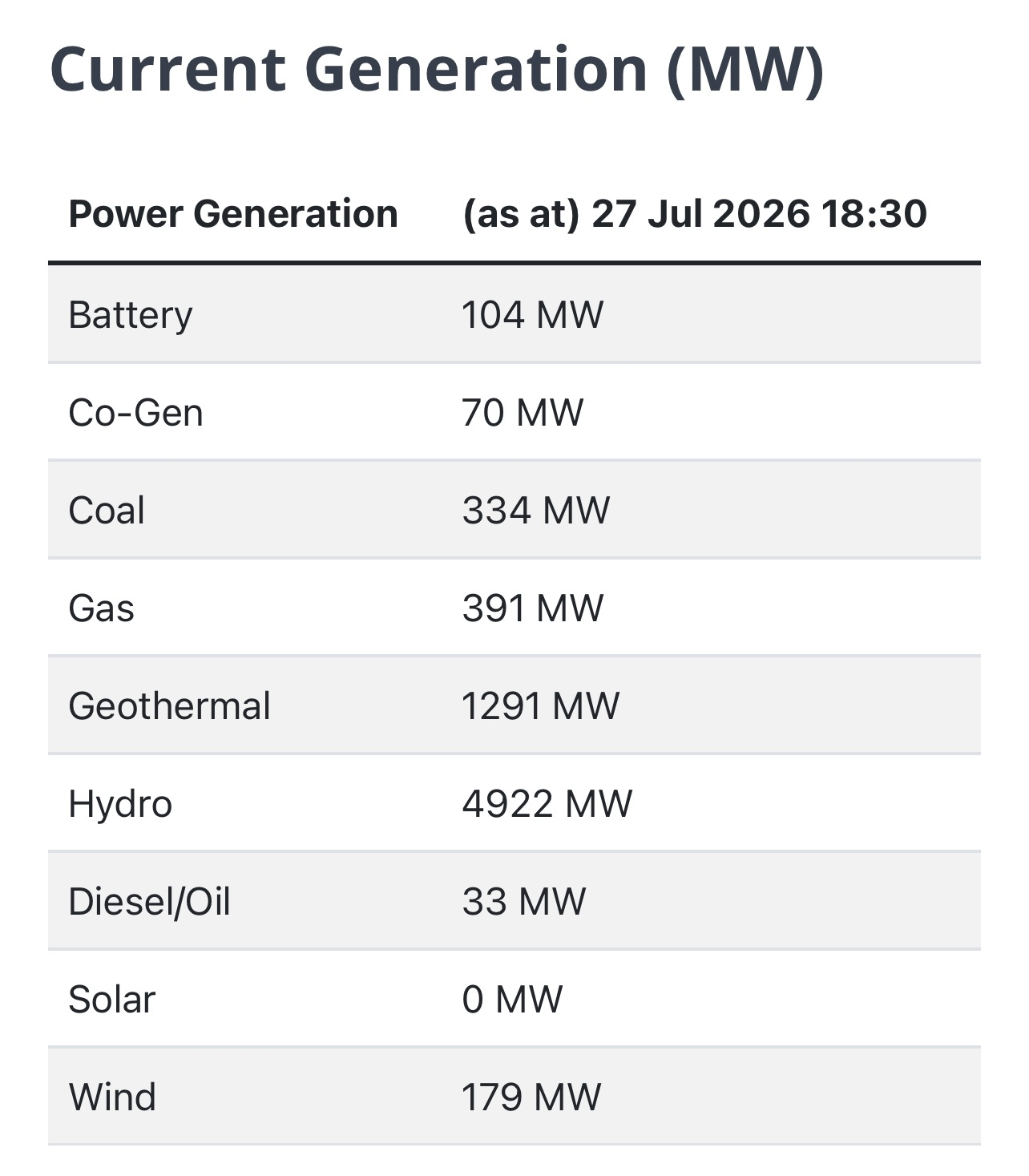
The important take away from last night is not what wasn’t generating electricity. It’s what was.
Predictably on a cold, still winters night there was no solar and wind generation was minimal. I will note that I was surprised how little battery output there was given the ideal arbitrage conditions at the time.
The grid was being carried by the technologies that sit in front of a large dispatchable energy gradients. Hydro stations were operating close to their maximum output. Geothermal was producing almost everything it could. Gas-fired generation and Huntly’s coal units were there to provide the additional firm capacity needed to meet a record load.
For me it is an important reminder that we often confuse energy with power.
New Zealand currently has healthy hydro lake levels. We had plenty of stored energy. But energy alone doesn’t keep the lights on. What matters on a cold winter evening is power – the rate at which that stored energy can be delivered to homes and businesses.
A simple analogy is a car. Energy tells us how much fuel is in the tank, or battery, as in increasingly the case. Power tells us how hard we can press the accelerator. Tonight, New Zealand had plenty of fuel in the tank, but it was approaching the limit of how hard it could press the accelerator.
This matters because so much of our future energy strategy centres on electrifying transport and industry while simultaneously adding large amounts of wind and solar to supply the generation.
These technologies will undoubtedly contribute energy to the system over the course of a year, and I’ve seen a lot of analysis lately suggesting that with recent additions we may not have a dry year risk. But on a cold, calm winter evening like last night, they contribute very little firm power when it is needed most.
The quiet hero of the evening was geothermal. It produced dependable base load electricity hour after hour, regardless of the weather. Alongside hydro, it formed the backbone of the system. If we can’t add more hydro, due to geography, then more geothermal is what we need to be building.
It was also a reminder that declining domestic gas supply is more than just an issue for industrial gas users. On nights like this, gas is an important source of firm generation, producing just under 400MW of resilience last night to support the geothermal and hydro.
The electricity system didn’t fail last night. It was well managed, reliable and stood up to the challenge, but there wasn’t a lot of headroom left.
It again gave us an important reminder.
When New Zealand’s electricity system is under its greatest stress, it is not wind or solar that carries the load. It is firm, dispatchable generation. If we are serious about electrifying the economy, we need to spend just as much time talking about where our future “power” will come from as where our future “energy” will come from. The characteristics of generation matter just as much as the amount of generation in order to keep the system reliable.
P.s.
Its pretty chilly out there but the sunrise is going to be great, its worth the trip outside.
If you’re finding value in these pieces, the best way to support this work is by subscribing, reading, sharing, and engaging with them.
I publish these pieces freely in the hope they help people better understand the role of energy in our lives.
It costs nothing to subscribe or access the full back catalogue of over 150 articles that can be found here. However, if you choose to become a paid subscriber, that’s greatly appreciated, it allows me to dedicate more time to researching and writing.
Larry

No posts
Comments
Nothing yet. Say the first thing.
Sign in to join the conversation.