Join Newt Gingrich, former U.S. Speaker of the House and Ph.D. historian, for the most diverse, informative, and entertaining podcast available. Every episode is an education.
The Pentagon ranks biological warfare as a greater threat than nuclear war - and investigative journalist Annie Jacobsen spent years finding out why. The Pulitzer Prize finalist and New York Times bestselling author of Nuclear War joins Newt Gingrich to discuss her new book, Biological War: A Scenario, which charts the terrifying hours and days following a lab leak at Russia's Vector Institute.…
Marine combat veteran, former Assistant Secretary of Defense, and military historian Bing West has spent six decades on battlefields from Vietnam to Afghanistan - and he's angry. In his new book, Cat 5: The 2033 War, West argues that America's leaders won every battle in three wars but lost every war, driven by what he calls the "Jupiter Complex" - the dangerous belief that America is so powerful…
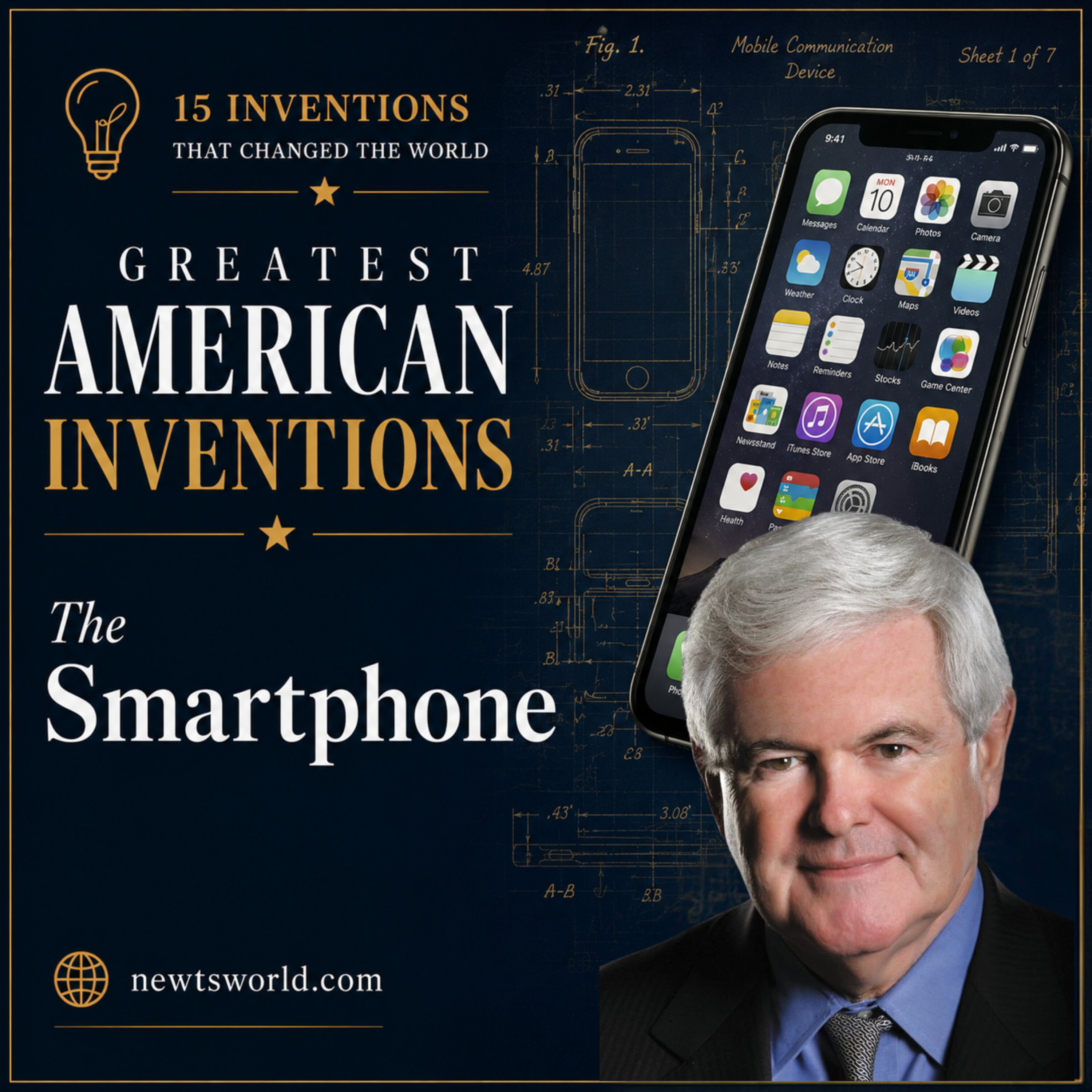
On January 9, 2007, Steve Jobs walked onstage and declared three "revolutionary" products were actually one: the iPhone. Newt closes his 15-part series with the invention that fused the telephone, the transistor, the internet, GPS, and the camera into a single device now carried by six billion people-three-quarters of humanity. From the App Store's trillion-dollar economy to the industries it…
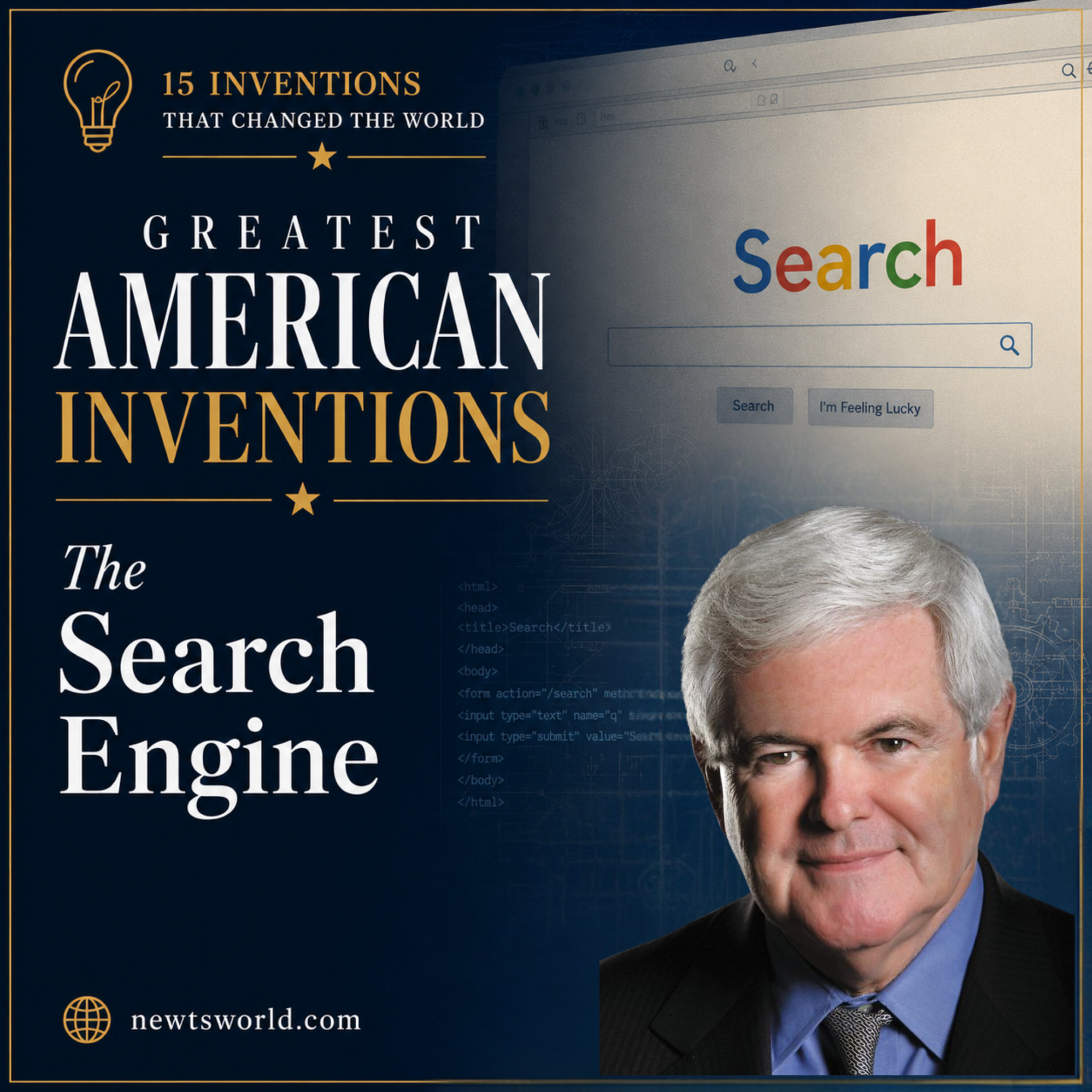
By the mid-1990s, the web was drowning in pages and starving for a way to find anything useful. Newt tells how two Stanford PhD students, Larry Page and Sergey Brin, had a better idea: rank pages by how the web itself linked to them. Their algorithm, PageRank, became Google-incorporated in a Menlo Park garage with a $100,000 check written to a company that didn't legally exist yet. From 10,000…
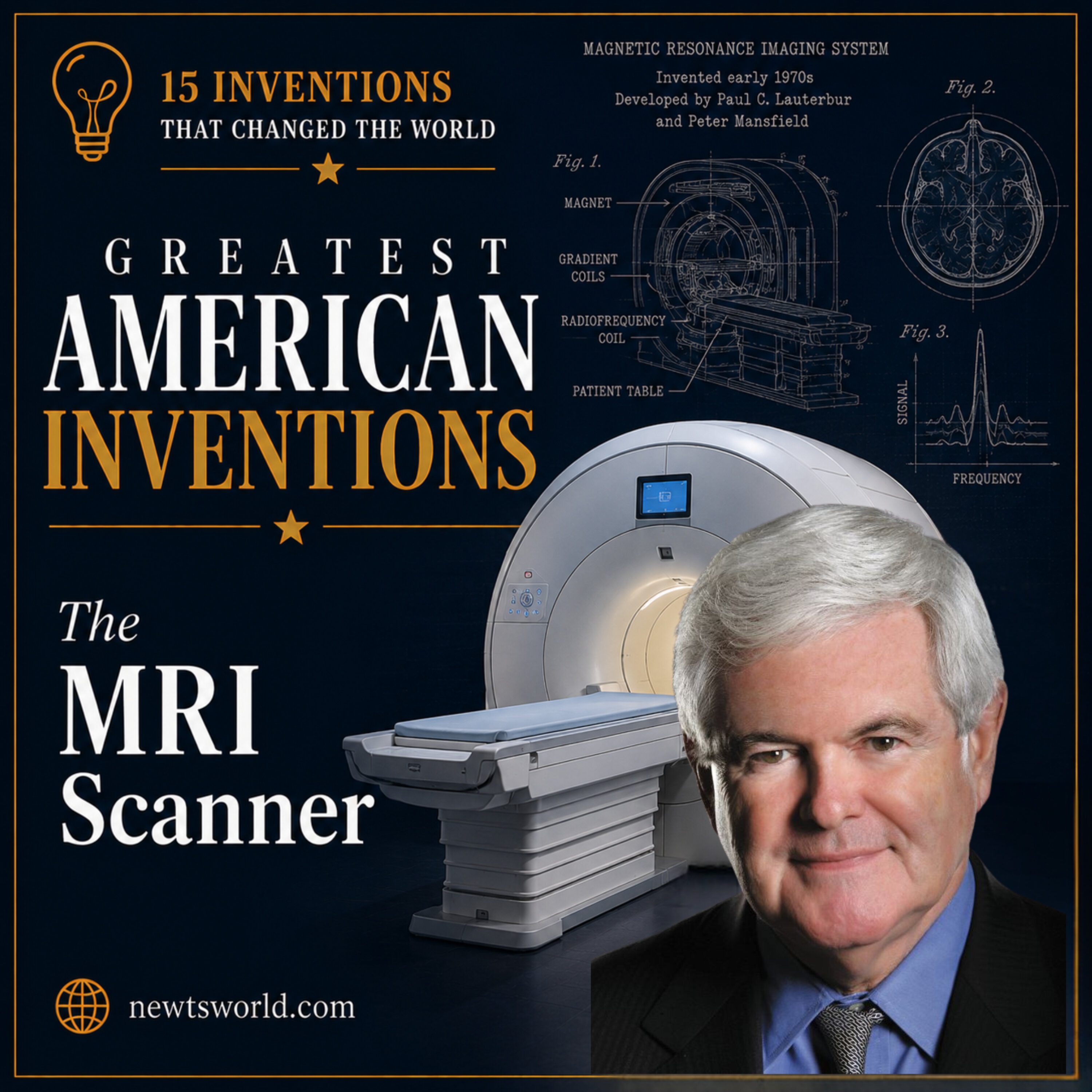
For most of human history, seeing inside a living body meant surgery. Newt tells how Dr. Raymond Damadian and physicist Paul Lauterbur turned 1940s nuclear magnetic resonance research into the MRI scanner-a machine that images soft tissue in astonishing detail without radiation or a single incision. From Damadian's hand-built "Indomitable" scanner to today's 40 million annual U.S. procedures, this…
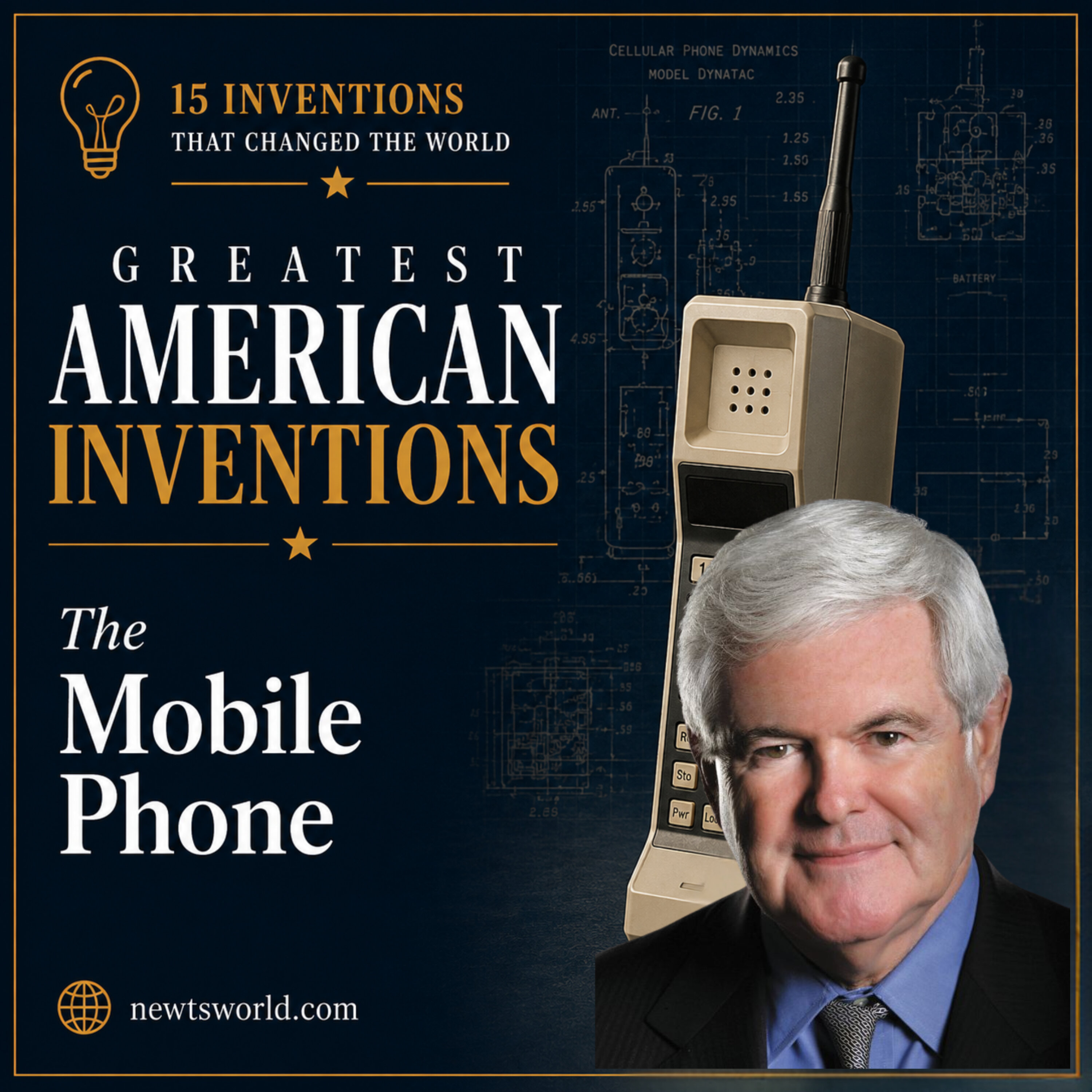
On a Manhattan sidewalk in 1973, Motorola engineer Martin Cooper made the first handheld cellular call-to his rival at Bell Labs, just to say Motorola got there first. Newt traces the mobile phone from a $3,995 status symbol to a global phenomenon with more subscriptions than people on Earth. Beyond the American story, this episode spotlights the developing world, where mobile networks leapfrogged…
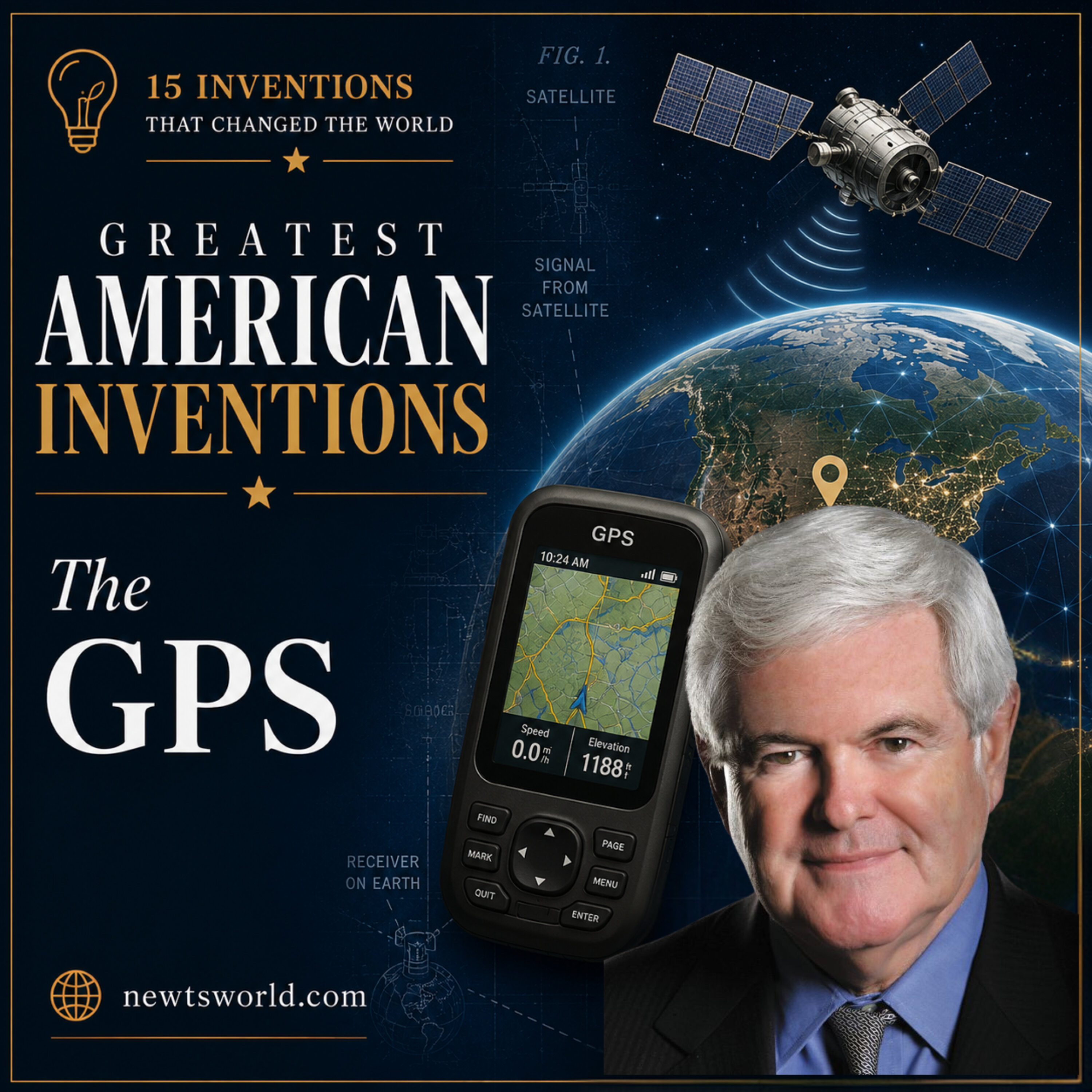
Twelve thousand five hundred miles above Earth, 31 satellites quietly guide nearly every navigation app on the planet. Newt tells how GPS, developed by the Department of Defense as a military tool, became a free gift to humanity after President Reagan opened it to civilian use following the 1983 Korean Air Lines tragedy. From synchronizing financial markets to guiding precision agriculture, GPS…
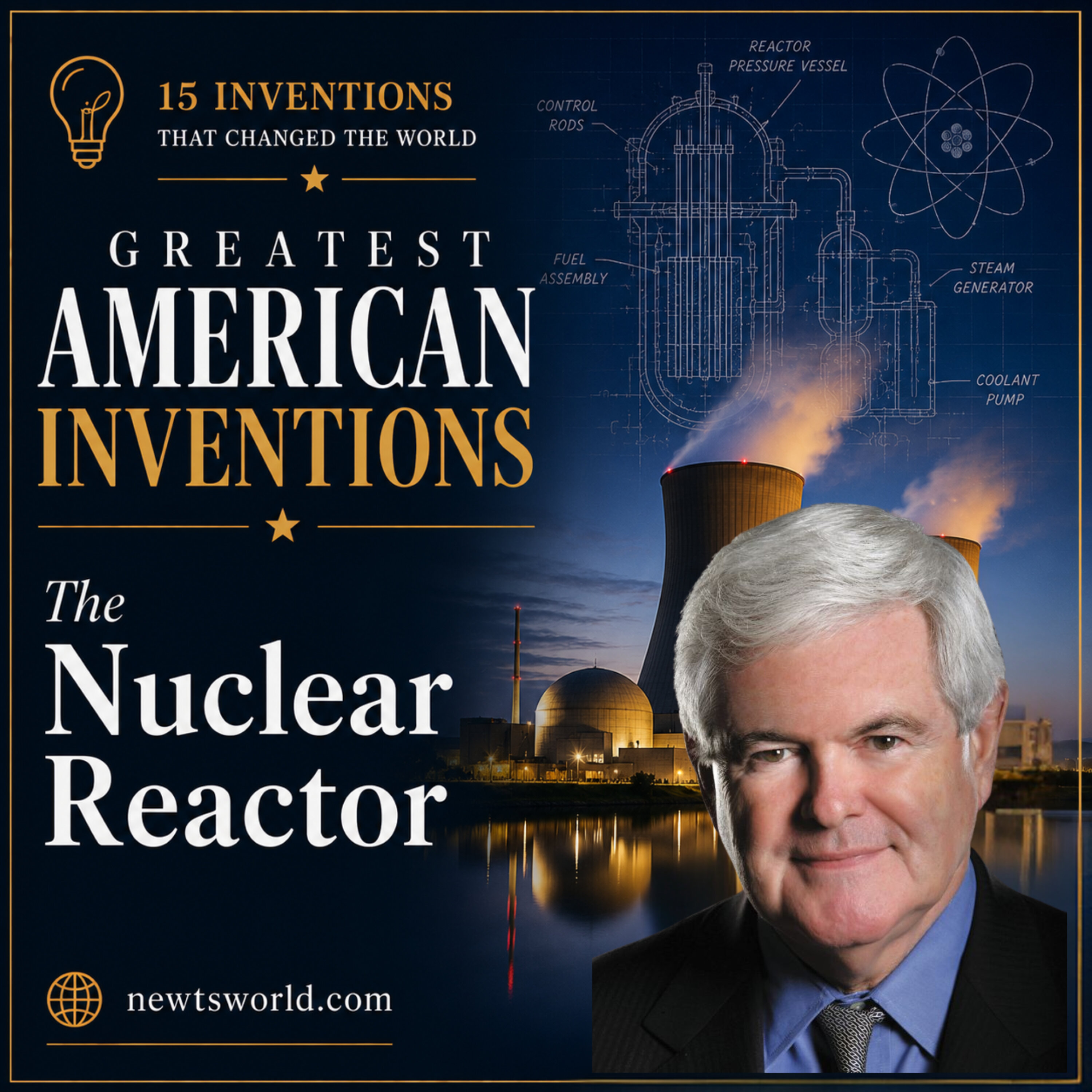
Beneath a football stadium at the University of Chicago on December 2, 1942, Enrico Fermi's team achieved the first self-sustaining nuclear chain reaction in history-producing just half a watt of power but proving a concept that would reshape the world. Newt traces the Manhattan Project's dual legacy: the atomic bombs that ended World War II, and the nuclear power plants that now generate clean…
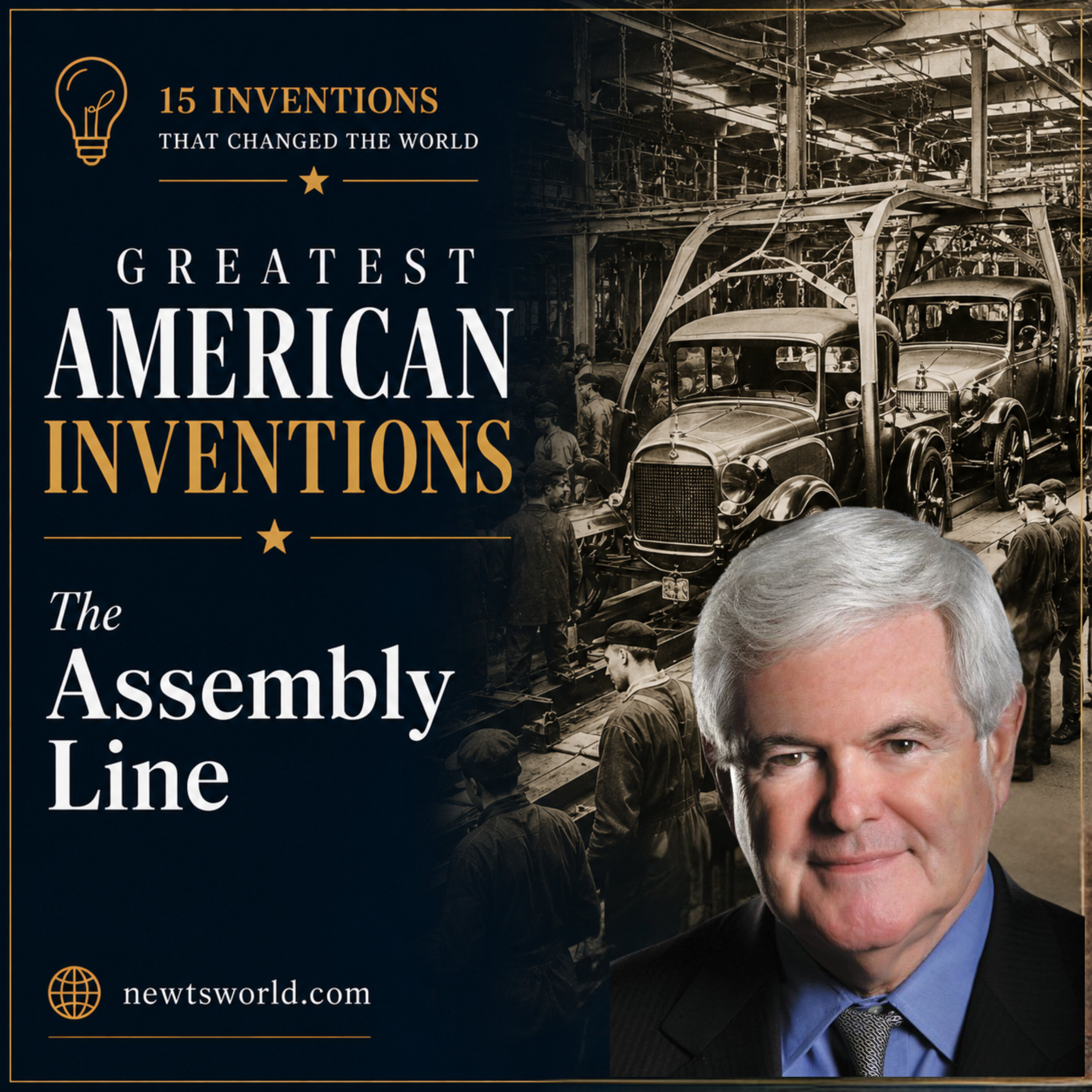
Henry Ford didn't invent the automobile-he invented a way to make it affordable. Newt examines how Ford's 1913 moving assembly line cut Model T production time from 12.5 hours to 93 minutes, and how Ford's controversial $5-a-day wage turned his own workers into customers, helping create the American middle class. But this episode doesn't shy away from complexity: the same system that built…
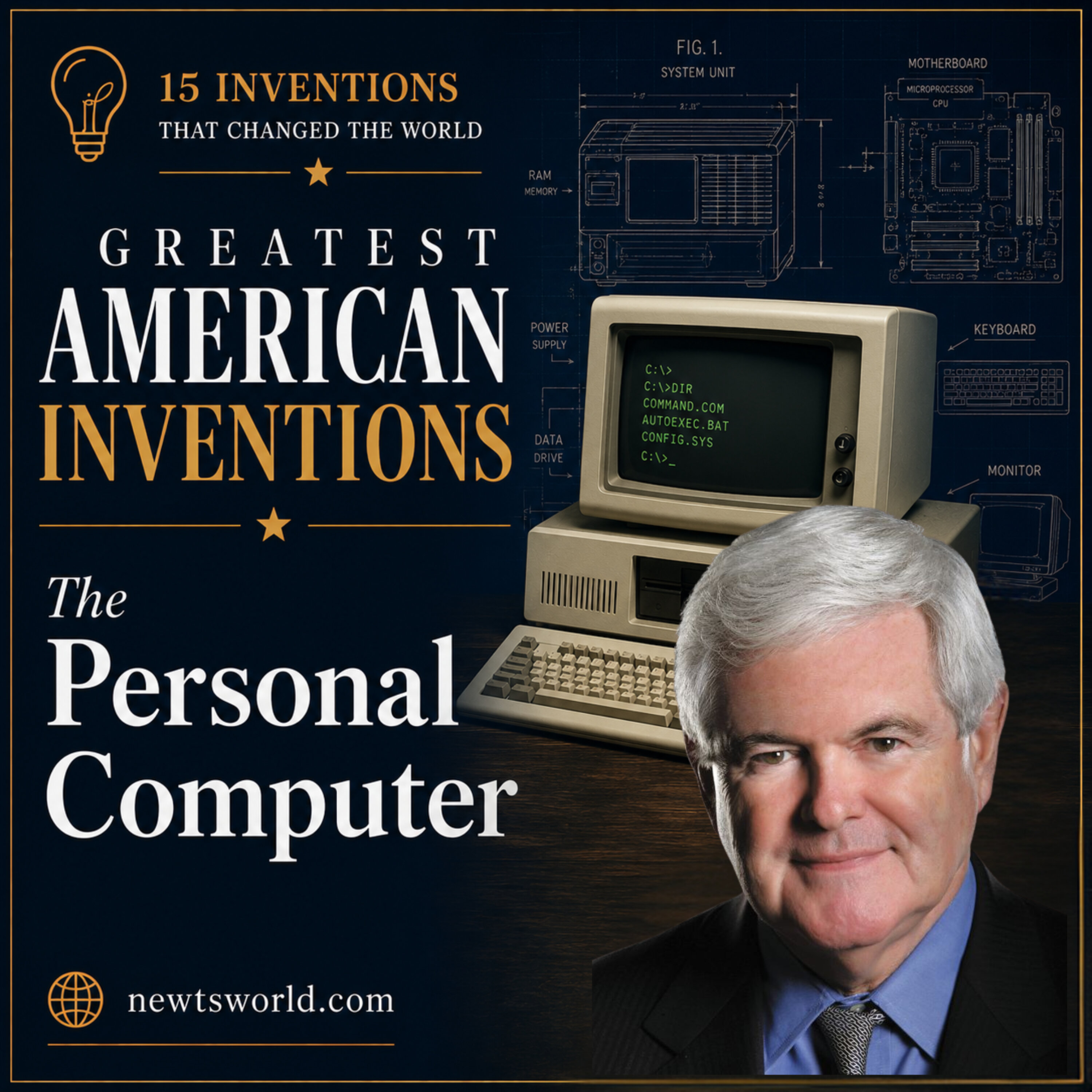
For thirty years, a computer was something only governments and corporations could own-an entire room of machinery. Newt tells how that changed in 1975, when a $439 kit computer on the cover of Popular Electronics inspired a Harvard student named Bill Gates and an HP engineer named Steve Wozniak to imagine something radical: a computer anyone could own. From Microsoft's garage-built software to…