
The Constitution divides the power of war: Congress declares and funds it, while the president commands the armed forces. But throughout American history, that division has rarely been as clear as the words on paper.
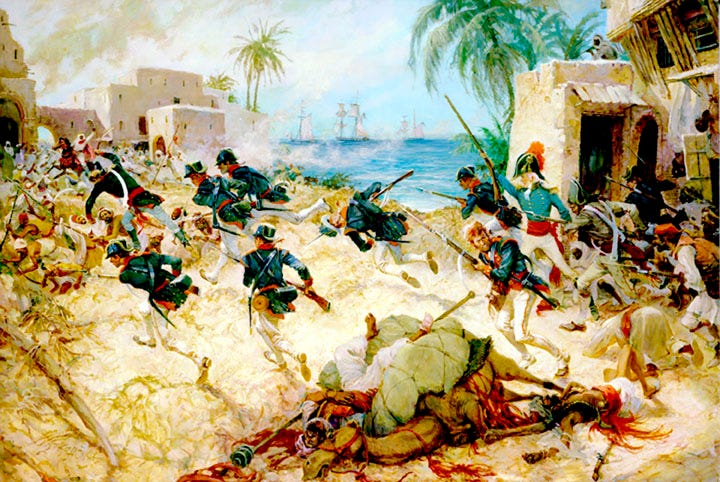
This weekend’s episode of our nationally syndicated radio show/podcast, America@250:Due Diligence, begins with one of the nation’s first overseas conflicts. When Thomas Jefferson refused the demands of the Pasha of Tripoli, he sent the young United States Navy into combat against the Barbary powers—without requesting a formal declaration of war. Congress knew about the campaign, financed it and allowed it to continue, establishing an early precedent for presidential military action supported through congressional acquiescence.
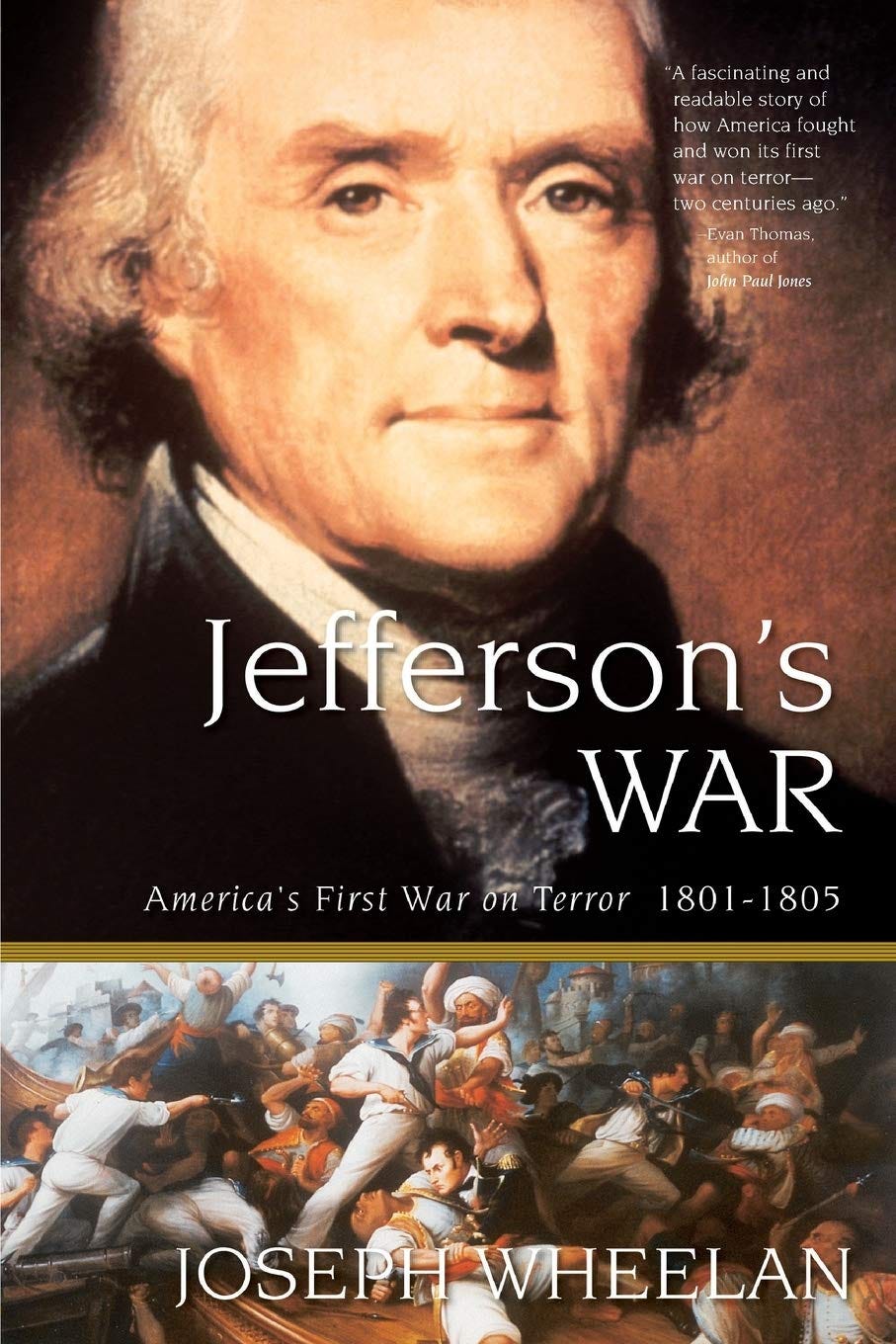
Author Joseph Wheelan, whose book Jefferson’s War chronicles the conflict, explains how the Barbary campaign tested the military and constitutional authority of the new republic.
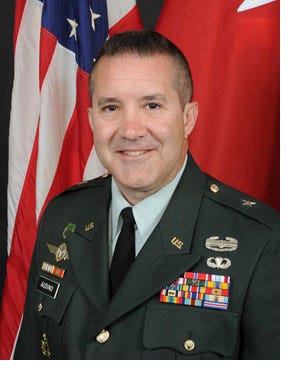
Retired Army Brigadier General Ernie Audino argues the Constitution gives the commander in chief the authority to commit American forces to combat, while Congress retains its most powerful check: the ability to withhold funding. Drawing on nearly three decades in uniform and his experience advising Kurdish Peshmerga forces in Iraq, General Audino also examines the importance of clearly defining the political objective before military action begins—and the growing implications of artificial intelligence and autonomous weapons.
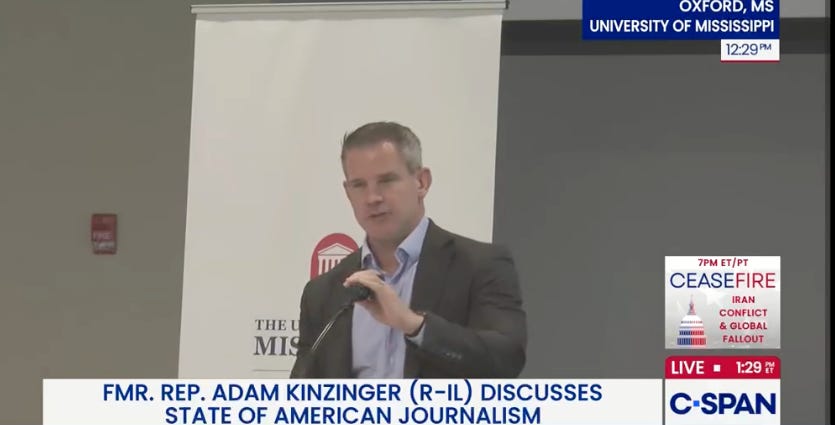
Former Illinois Congressman and Air Force combat veteran Adam Kinzinger (who was a hit speaker at our Jordan Center symposium earlier this year in Oxford, Mississippi) offers a view from both the cockpit and Capitol Hill. He argues that presidents sometimes need the flexibility to act quickly, but that Congress has repeatedly surrendered its constitutional responsibilities. Lasting military action, he says, requires lawmakers to vote, the president to explain the mission and the American public to understand what its forces are being asked to accomplish.
From Tripoli to Pearl Harbor, as well as Korea, Vietnam, Iran and Venezuela, this latest episode, titled, The Power of War, asks whether America’s constitutional system can function when formal declarations disappear—and whether Congress and the president are still willing to share responsibility for the gravest decision a nation can make.
Meanwhile, we’re taking America@250: Due Diligence to a live audience at the National Press Club this coming Tuesday where co-host Bill Bernardoni and I will be taping an episode, the ‘First Amendment on Trial,’ focusing on threats to press freedom. We’ll have remarks from veteran investigative journalist Catherine Herridge, formerly with ABC News, Fox News, and CBS News. In February 2024, Herridge was held in civil contempt by a federal court for refusing to disclose her confidential sources for a series of national security reports on Fox News in 2017. Later this summer, Herridge and her legal team will ask the U.S. Supreme Court to consider her First Amendment case, which has significant implications for journalists across the United States. On July 2, the Court denied Herridge’s application to halt the $800 a day in court fines.
Washington and Lee University’s journalism professor, Toni Locy, has been through a similar legal ordeal and we will hear from her during the event. In 2008, a federal judge held Locy, then a reporter for USA Today, in contempt of court for refusing to reveal the identities of confidential sources who provided information for stories she wrote about the FBI’s flawed investigation into the deadly 2001 anthrax attack. Locy was subpoenaed as a witness in a civil lawsuit filed by scientist Steven Hatfill, who had been identified by Attorney General John Ashcroft as “a person of interest” in the anthrax attack investigation but never charged. Hatfill sued the U.S. Department of Justice, accusing federal agents of violating his rights under the 1974 Privacy Act. A federal judge held Locy in contempt when she refused to identify her sources and imposed escalating fines while barring her from accepting help in paying the penalties. The judge threatened additional sanctions, including jail, if she continued to disobey his order. The Justice Department eventually settled the lawsuit with Hatfill.
Also joining us will be attorneys Laura Handman and Eric Hageman.
Laura Handman, a partner at Davis Wright Tremaine, has established many of the key precedents that have strengthened the protection for content—winning the first U.S. decisions to refuse to enforce foreign libel judgments, leading to passage of the SPEECH Act; establishing the standard in New York for libel by implication; establishing a heightened standard before the government can access records of a customer's expressive content purchases, establishing that internet rankings are opinion, defeating use of RICO in libel suits against advocacy groups and securing for satire protection from libel and right of publicity claims. Laura is on the executive committee of the Reporters Committee for Freedom of the Press.
Eric Hageman is a partner at Clare Locke LLP, known for its defamation litigation. Clare Locke has repeatedly sued major media outlets and public figures, most notably co-leading Dominion Voting Systems’ $787.5 million settlement with Fox (a high drama of its own within the firm). It has also prevailed with earlier high‑profile verdicts and settlements against Rolling Stone and the Southern Poverty Law Center.
America@250: Due Diligence is our groundbreaking non-partisan, non-commercial program and podcast that we’re fortunate has been picked up by about 90 radio stations across the United States. It is made possible by a few civic-minded contributors to the Jordan Center of Journalism Advocacy and Innovation, the support of the School of Journalism and New Media at the University of Mississippi and is distributed via Talk Media Network, the Public Radio Exchange and the Radio Free America project.
If you like what we’re doing with the radio show and podcast, we would appreciate your grassroots support by clicking here.
Comments
Nothing yet. Say the first thing.
Sign in to join the conversation.