
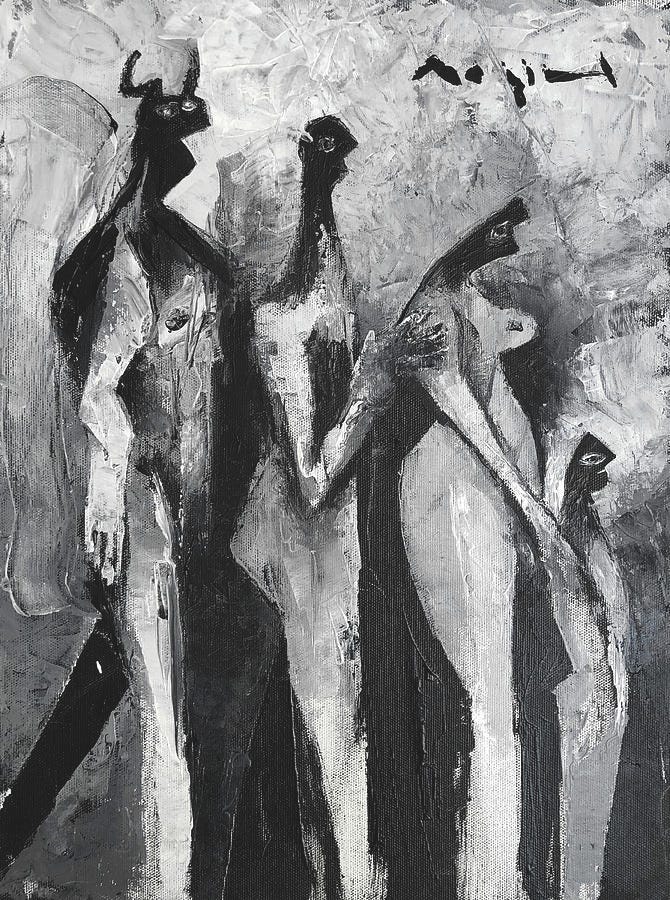
The most dangerous thing you can do is convince yourself that you have your own choices when somewhere deep down, you know you haven’t. And if you do convince yourself, it is not because you are weak or because you failed to think yourself. It is because most of us were trained very early to confuse familiarity with freedom. We grow up inside systems that work quietly. Families. Cultures. Religions. Communities. Social rules that are never written down but somehow everyone seems to know. Expectations that arrive dressed as common sense. Values that are passed down without context, only consequence.
By the time we are adults, many of our decisions feel personal simply because we have repeated them long enough. This can look like the following:
Career paths chosen because they are respectable.
Relationships chosen because they make sense on paper.
Lifestyles chosen because everyone around us seems tired in the same way.
From the outside, it looks like agency yet from the inside, it often feels like obligation with better branding.
What makes this dangerous is not the influence itself. Of course, influence is unavoidable because we are social beings. We learn by watching. We absorb by proximity. We adapt to survive and to belong.
What makes it dangerous is the lack of awareness. When you believe you are choosing freely, you stop questioning and when you stop questioning, you stop listening. It is here that you lose access to the quiet signals that tell you something is off.
And this my friends, is how people wake up ten years into a life that looks fine but feels wrong.
The inheritance you never consented to.
I cannot write the end of the last section without writing about things that are inherited from generations before. Generational habits are powerful precisely because they are rarely examined. They arrive as tone rather than instruction and despite often being rules, they come across as emotionally charged tradition (or better still, conformity).
Perhaps it was how your family handled money or how conflict was avoided or managed. Maybe it was what was praised and what was quietly punished or who was allowed to rest and who had to earn their worth.
You do not just inherit eye colour and nervous systems. You inherit assumptions about what a good life looks like. In some families, safety equals stability, even if stability costs aliveness. In others, success equals sacrifice, even if no one is enjoying the reward. In others still, love is proven through endurance rather than ease.
None of this is malicious. Most of it comes from people doing the best they could with what they knew, and often because they did not question what they knew because they operated under trauma or their own conditioning and it felt safer to do what they knew. But when you carry these patterns forward without questioning them, you do not get choice. You get momentum. And momentum can look a lot like purpose until you stop moving.
Community expectations and the invisible contract.
Beyond family, there is also the unspoken contract of community. Every group has one and so this will probably not feel unfamiliar to read. It says: this is how we live, this is what we value, this is what earns approval and this is what costs you belonging.
You learn quickly what is rewarded.
You learn whether ambition is admired or resented.
Whether emotional honesty is welcome or inconvenient.
Whether deviation is tolerated or subtly corrected.
Most people do not consciously choose to comply. They simply notice what feels safer.
So they edit themselves. They smooth their edges. They delay the questions that might make things awkward.
Over time, the adaptation becomes identity.
This is how someone can say, I chose this life, while feeling a constant low level resistance to it. The body often knows before the mind does. But when you have been taught to override discomfort in the name of being sensible, grateful, or grown up, those signals get filed under noise.
Subliminal influence and the myth of independence.
We like to think influence is obvious. Advertising. Social media. Trends. And of course, most of these influences are perpetuated by - you guessed it - traditional thinking, community based thinking, religious thinking, passed down thinking. And it’s not that these influences are wrong…they just might not all be right for you.
The truth is, the most powerful influence is subtle. It is the repeated message that busy equals important. That productivity equals value. That wanting something different means you are ungrateful. That ease must be earned through exhaustion.
These ideas are reinforced everywhere. In language. In praise. In what gets visibility. You do not have to consciously agree with them for them to shape you - you only have to swim in them long enough.
This is why so many people say they want freedom but structure their lives in ways that remove it.
They work in systems that reward compliance and call it ambition.
They follow scripts that promise happiness and feel confused when it does not arrive.
Again, this is not stupidity. It is conditioning doing its job. The real problem is not that we are influenced but that we are rarely taught how to notice it.
The quiet violence of unconscious living.
When you are not self aware, choice becomes performance.
This is because you often pick what is expected and then work very hard to convince yourself it is what you wanted. For a long time I felt this personally about being a lawyer and it is only this year that I have started consulting and working for someone who is the exception to the rule of toxic corporate workplaces that I feel perhaps I will be able to stay it in far longer than I originally thought.
When choice becomes performative, it creates a subtle kind of violence. Not loud. Not dramatic. But cumulative. It shows up as chronic dissatisfaction you cannot explain. As irritability with people who dare to live differently. As a constant sense that you are behind, even when you are doing everything right.
Eventually, something has to give.
Sometimes it is burnout.
Sometimes resentment.
Sometimes a sudden life change that looks impulsive from the outside but has been building internally for years.
Often, people say they lost themselves. More accurately, they never had space to meet themselves in the first place.
Reclaiming choice starts with honesty.
Real choice is not about doing whatever you want. It is about seeing clearly what is actually driving your decisions. This requires a level of honesty that can feel uncomfortable at first. It means asking questions without rushing to justify the answers and noticing where you default instead of decide.It means allowing the possibility that some of what you call preference is actually conditioning.
This is not about rejecting your past or blaming your environment. It is about moving from unconscious inheritance to conscious authorship. And trust me, that shift alone changes everything.
So how can you start to reclaim choice?
You do not need to overhaul your life to begin reclaiming choice. You need awareness and a willingness to pause.
Here are a few grounded ways to start.
Track your shoulds for one week
Notice every time you think or say the word should. Write it down. No judgement. At the end of the week, review the list and ask: who taught me this? Many shoulds are borrowed rules masquerading as personal standards.
Identify your default decisions
Look at three areas of your life where you rarely question your choices. Work, relationships, routines, diet, lifestyle, religion. Ask yourself: if no one was watching, would I still choose this? Sit with the discomfort of that question before answering (with honesty).
Listen to resistance without fixing it
The next time you feel resistance, exhaustion, or irritation, do not immediately try to solve it. Ask instead: what is this reacting to? Resistance often points to misalignment long before it turns into crisis.
Separate safety from truth
Notice where you prioritise being accepted over being honest. This is not about becoming confrontational. It is about recognising when safety has replaced authenticity as your main decision filter.
5. Practice small acts of conscious choice
Start tiny. Choose something differently simply because it feels true to you. A boundary. A preference. A change in pace. Choice is a muscle. It strengthens with use.
The relief of seeing clearly.
Here is the paradox.
The moment you realise how little of your life was consciously chosen, you are not disempowered. You are freed. Awareness does not take options away. It creates them. You may still choose the same things. You may still stay in the same job, relationship, or community. But the energy shifts.
What was once obligation becomes intention.
What was once autopilot becomes authorship.
And that changes how it feels to live inside your own life.
Take this offline.
Use these conversation starters with people you trust. No phones. No fixing. Just listening. See what you learn about yourselves:
Which parts of your life feel genuinely chosen, and which feel inherited?
What did your family or community quietly teach you about what makes a life successful?
If you knew you would not lose belonging, what truth would you say out loud more often?
Final words.
Choice is not something you declare but rather something that you practice.
And the first practice is seeing clearly what you are actually choosing from.
That awareness alone can be the beginning of a very different life.
About the author

Roxanna Sarkar-Patel is a lawyer and mindset and self-alignment coach. Through her work at @newperspectives.coaching, she supports people in returning to their foundations, mastering their inner world, and building lives that feel both successful and true. Her work is grounded, reflective, and centred on bridging the gap between self and life.
Learn more at www.newperspectivescoaching.com
Comments
Nothing yet. Say the first thing.
Sign in to join the conversation.