
There are so many places to tell you about this month, so let’s get straight into the report!
Here’s what’s in today’s newsletter:
7 new Denver and Boulder restaurants & bars you should know about
3 links that made me laugh, cry, or say whaaaat?
One final craving (a special ice cream flavor that’s got me in a summertime mood)
I keep a list of all the new and upcoming restaurant openings in and around the Denver area and every few weeks I filter through them to find the ones you actually need to know about. Here’s my curated list of interesting spots that started welcoming guests in the month of May:
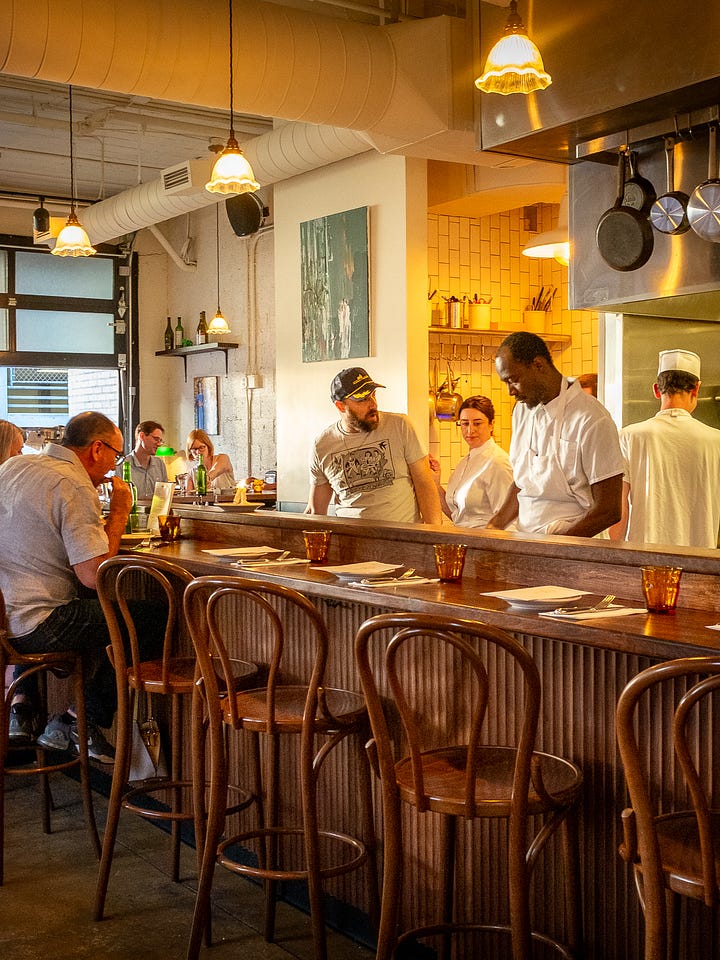
Heretík is the second restaurant from chef Theo Adley, whose last job in Denver was as executive chef at the much-missed RiNo eatery The Populist. For the last few years he’s been running his acclaimed Lyons eatery, Marigold, tinkering with a menu influenced by the cuisines of northern Italy and the south of France. But Adley has always had a sweet spot for Spanish and French Basque food and has been stewing on the idea for this restaurant for almost a decade. Where Marigold is quiet and composed, things at Heretík are more freewheeling.
Vibe: Walking through the door, you’d be forgiven for thinking you’d just been transported to a bustling seaside bistro overlooking the Bay of Biscay. Even at 5 PM, things are already jamming. The ambient buzz of clinking wine glasses and clattering plates fills the room as couples lean in close to talk. From the open kitchen, dishes slide out in cazuelas -- the terracotta earthenware dishes ubiquitous across the Basque region -- landing on tables and counters lined with chocolate-colored bentwood bistro chairs. There’s a sharp, throwback look for the staff: servers in white button-up shirts and waist aprons, and cooks sporting paper chef caps. (Naturally, the kitchen’s “bad boy” wears his cap slightly askew). Adley tells me he thinks of his newest restaurant as the ultimate first-date spot, and I can see why. At the exact right time of the evening, sunlight streams through the windows and frosted-glass garage doors, transforming the intimate space into a golden lightbox, where everything -- and everyone -- instantly looks even more beautiful.
What’s on the menu: While a tempting display of heritage-breed chickens turns on a rotisserie spit at the front of the kitchen — offered in half or whole portions —those who dig deep into the selection of small plates are rewarded with the biggest thrills. The multiple house-made sausages are particularly scrumptious and uniformly plump and snappy. You can order them on their own, like an order of the thin and spicy txistorra de maison, or find them cleverly paired in dishes, like in a order of crispy-skinned chicken wing meat wrapped around cuts of boudin blanc sausage (it tastes far more delicious than I’m making it sound). Then there are the oysters du jour, served alongside two stout, herby links of chipolata. In the non-sausage category, my current favorite is the artichoke with grilled foie gras that sits in a rich and elegant sauce thickened with al dente beluga lentils. To wash it down, there’s a brief cocktail menu and a handful of NA options, leaving the spotlight for the wine list: an eclectic selection from small, family-owned producers curated with Adley’s input.
Want to get a better feel for the place? Check out my IG Reel of my meal at Heretik.
Quincy Cherrett is no stranger to running his own business – he spent a couple years dishing out food at a stall within Avanti F&B, first with his sandwich spot, 22 Provisions, and most recently with his American bistro concept, Eloise. But as of early May, he’s officially graduated to his first standalone brick-and-mortar with his restaurant, Madeline. Cherrett, whose resume also includes stints at Izakaya Den and Jackson Hole’s Teton Thai, has set up shop in the quaint space that formerly housed Alex Seidel’s Fruition for nearly two decades.
Vibe: Anyone familiar with the old Fruition space will note that the bones of the restaurant remain largely untouched. Instead, Cherrett worked with the team at Regular Architecture to give the restaurant a youthful glow-up. The walls are refreshed with a coat of juniper green paint, now accented by custom floral mural from artist Lena Dechamps, that uses undulating lines to bring romance and softness to the room. A fun gallery wall of contemporary art prints lines the coziest part of the dining room – a narrow, window-lined galley space right next to the kitchen. A trip to the bathroom will have you swing past an art installation made of classic hotel keys – a nod to Cherrett’s father, who spent his career as a hotelier and lastly, inside one of the restrooms things get a bit cheeky with a rendering of Paris Hilton made up like a holy messenger with a blazing sacred heart.
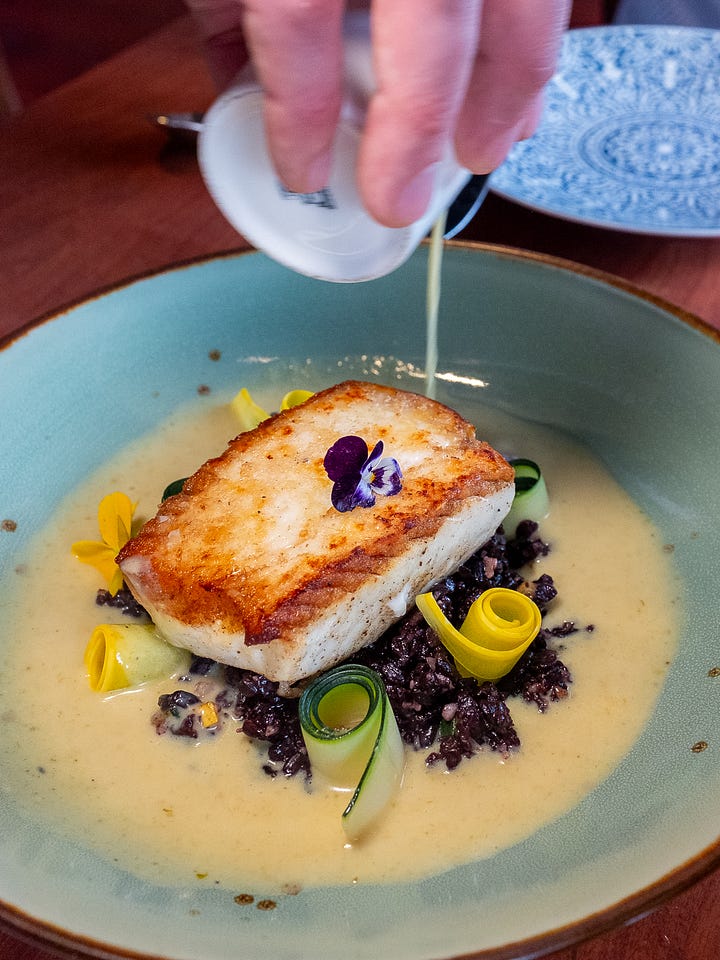
What’s on the menu: A good portion of the offerings could be described as upgraded bistro fare – think Caesar salad, steak frites, and mussels – but the most memorable plates showcase Cherrett’s love of Asian flavors. Take the tom yum toast: it arrives as four thick triangles of milk bread, practically begging to be used to soak up the rich, red miso shrimp bisque drizzled across the plate. A perfectly cooked halibut, paired with black forbidden rice and an assertive green curry, was an immediate favorite at my table. Cherrett has been tinkering with the recipe for years, and all that practice has definitely paid off. A number of the decadent desserts also pull in Asian flavors, including a dense, spongey slice of red miso sticky toffee pudding, that comes topped with a heaping scoop of vanilla ice cream. A number of the cocktails are also quite nice and punchy. Try the “Turn Key” – a gin-based and coconut milk cocktail named with a wink and a nod to the fact that the property was billed to Cherrett as a turnkey restaurant (spoiler: it wasn’t). Or put in an order of the Trellis, a deep, oaky pour made summery and bright with strawberry.
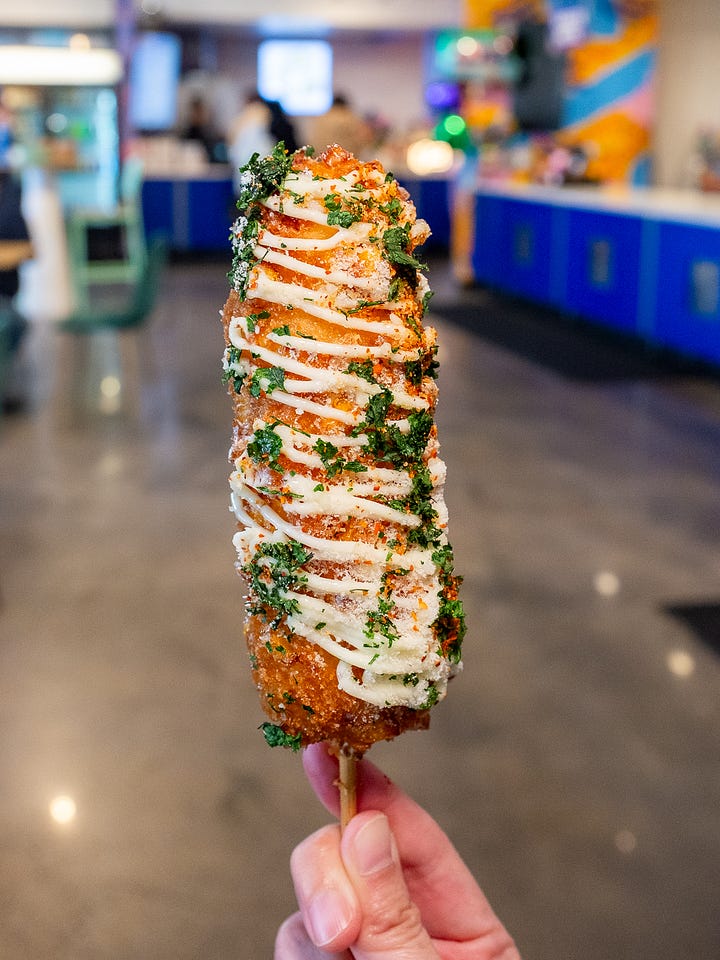
This woman- and AANHPI-owned family business has been operating their food truck since 2019, earning a loyal following for their creative takes on Korean street food – most notably, their addictive Korean corn dogs. Matriarch Julia Rivera runs Mukja with the help of her children, James and Kayal Makowski, as well as her husband, Victor Rivera. While the team still regularly carts out their food truck at events, they have finally opened a permanent location. You can now find them most days of the week (all days except Tuesdays) serving lunch and early dinner as one of the vendors inside Assembly Student Living on Elati Street.
Vibe: Located at the far end of the food market, Mukja’s cheery stall is easy to spot – just look for a large lit-up sign with their logo of a tiger pulling cheese from a corn dog. The market features a light-filled atrium with plenty of open seating and tables, making it an easy spot to sit down and enjoy your meal. Because Assembly is a Denver student housing community, the space is always bustling with college kids, as well as visitors from the immersive Van Gogh art experience next door who wander in looking for a bite to eat.
What’s on the menu: There are plenty of indulgent dishes and craveable flavors to choose from here. If you’ve been following their food truck over the years, you’ll recognize dishes like their hearty bibimbap, tteokbokki, and kimchi fries alongside a full assortment of their popular corn dogs. These crispy treats come in fun flavors like hot Cheeto, crab rangoon, and garlic cream cheese, as well as my personal favorite: the elote dog, topped with mayo, cotija, and Tajín. If you’re having a serious snack attack, don’t miss the crunchwrap filled with spicy carbonara Buldak noodles, fried chicken, and cheese sauce. To drink, there’s an ube americano and house-mixed flavored lemonades or sodas you can upgrade with popping boba and rainbow jelly, as well as a selection of bottled and canned beverages.
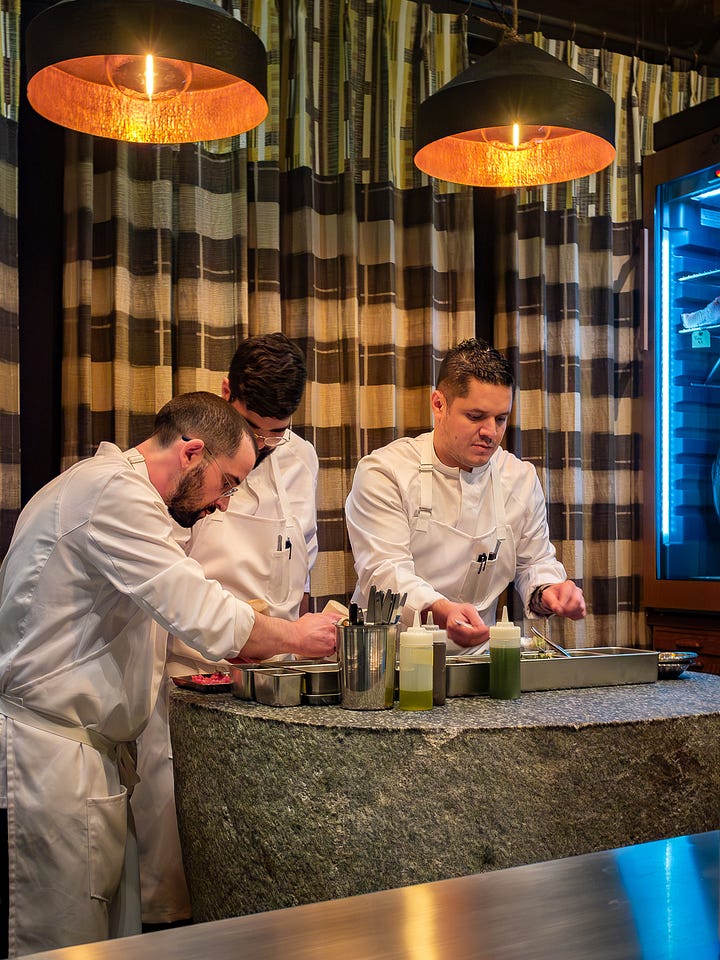
Husband and wife team Johnny and Kasie Curiel have added another restaurant to their growing Fonda Fina Hospitality group (now six restaurants and counting, including the one-Michelin-starred Alma Fonda Fina). However, Milpero is their most ambitious project to date: a culinary playground designed to showcase the vast nuances of traditional Mexican cuisine, guided by a simple principle: there is still so much to love about Mexican food that people don’t yet know or understand. The tasting menu restaurant is tiny, an intimate space that only fits 16 diners a night, split into two seatings of eight. Guests spend their three-hour meal divided between two chef’s counters (for cold and hot food), including a stopover in a glass-enclosed room lined with wine and vinegars that’s wedged into the back corner like a museum diorama.
I spent over an hour interviewing Johnny Curiel for an in-depth profile on the chef and the journey to get Milpero open. It was published last month, and you can read it here.
Vibe: The dining room is pitched in shades of darkness, with every window hidden behind tan and brown Western-style buffalo check print curtains. Designer Agatha Strompolos of Agatha Jane Interiors says the lack of natural light was entirely Curiel’s choice; he wanted a distraction-free zone – not unlike a casino – where guests could lose themselves completely in the $225 experience he’s crafted. Curiel admits an aversion to sleek and sterile Mexican restaurants, telling me they don’t feel like home. Instead, he worked with Strompolos, a frequent collaborator, on a sharp yet rustic look. They layered texture upon texture with distressed penny-colored accents, commissioned ceramic pieces, reclaimed-wood walls, and imported Mexican copper pendants, trying to recreate the feel of an old (but very nice) cabin.
What’s on the menu: You can read more about what it’s like dining at the restaurant in my longer piece, but the tl;dr version is that it’s an 18-course meal that starts off strong at the cold counter, with a stream of small bites like a beautiful sliver of uni balanced atop a pale-green hoja santa tamal, paired with a dollop of silky jocoque. For the second half of the meal, at the hot counter, you may encounter dishes like wagyu served over a masa-thickened mole amarillo and paired with beefy ayocote beans. At the end, pastry chef Yna Zuniga presents a number of dessert courses. Highlights include a comforting play on atole, reimagined as a cold mousse molded into the shape of a corn cob. For drinks, the Mexican wine pairing gets very high marks, and I absolutely loved the spicy, salty housemade NA tejuino (a fermented corn drink) served at the beginning of the meal, which I could have happily drank non-stop, all night long.
The name might be confusing at first – this isn’t a health food store. Instead, Wellness Counter is a sushi restaurant, co-owned by Phoebe and Steven Lee, the couple behind Denver’s plant-based Japanese sushi and ramen spot, Wellness Sushi. Chef Steven, who previously trained under restaurateur Ryuji Ishii, designed this newest venture to offer a full sushi experience, complete with a dry-aged fish program.
Vibe: A large portion of the space is orientated around a long sushi counter, which takes up most of the front half of the restaurant, while standard table seating is tucked into the back. The simplified decor features soothing tones like dusty terracotta and turquoise, with unique touches: the wall sconces and pendant lights hanging above the sushi counter are actually made of mushroom mycelium. Outside, a nice little patio sits directly on the Pearl Street Mall, making for excellent al fresco dining and people-watching. Located right alongside shops for premium outdoor brands like Cotopaxi, PrAna, and Athleta, Wellness Counter is a nice stop after a day of strolling or shopping.
What’s on the menu: To start, the share plates mix familiar dishes like shishito peppers and miso eggplant with more esoteric options, like baked green mussels with eel sauce and tuna karaage with a dash of Japanese citrus. In the main sushi section, there isn’t a ton of crossover from Wellness Sushi’s plant-based menu, though familiar items like the jackfruit “krab” are found in nigiri form. Instead, the menu highlights a daily raw fish selection of nigiri, sashimi, and handrolls. If you tire of fish and rice, there is a Japanese shokupan toast section where you can select from a number of premium toppings, including toro and caviar, wagyu tartare, or uni. The kitchen also offers izakaya-style skewers and grilled items like tsukune (chicken meatballs), roasted cauliflower, and sake butter scallops. The beverage program is fully stocked with a curated selection of sake, wine, and matcha and a cocktail menu with unique takes on classic drinks, like a rice-washed gin martini mixed with a house-made rice vinegar shrub.
In early May, Justin Freeman and Danny Matthews’s pizza pop-up concept, Monarch, officially took over the kitchen at the Public House at Urban Cowboy, replacing former tenant Little Johnny B’s. Freeman, who also serves as the executive chef at the vegetarian haven Somebody People, has taken on a Herculean — and mildly insane — effort of doing a new menu every single week. He announces the new lineups on Instagram with a video of him dramatically tossing the previous week’s menu into the wood-fired stove. (I’ll admit, watching the paper go up in flames is highly satisfying.) While the constantly changing menu is a boon for the regulars, it can be a little bit of a bummer if you miss out on a previous week’s special you loved or wanted to try.
Vibe: The space itself remains unchanged: a historic carriage house converted into a bar and restaurant with a hip American cowboy aesthetic. Inside, there are tin ceilings, antlers on the wall, grandma wallpaper, and rustic wood tables and chairs. There’s also a fire pit area out on the patio that’s a great place to hang out on a warm evening.
What’s on the menu: While you can reliably find a classic margherita pizza on the menu every week, the rest of the offerings are getting swapped out weekly. Past menus have filled the vegetable offerings with roasted Mokum carrots, cauliflower, or radishes served with lemon herb butter. The weekly pizza specials have featured unique combinations like shrimp fra diavolo and hakurei turnip. Freeman also expands the menu beyond pizza with entrees like a center-cut pork chop or clam frites, followed by sweet finishes like a buttermilk panna cotta.
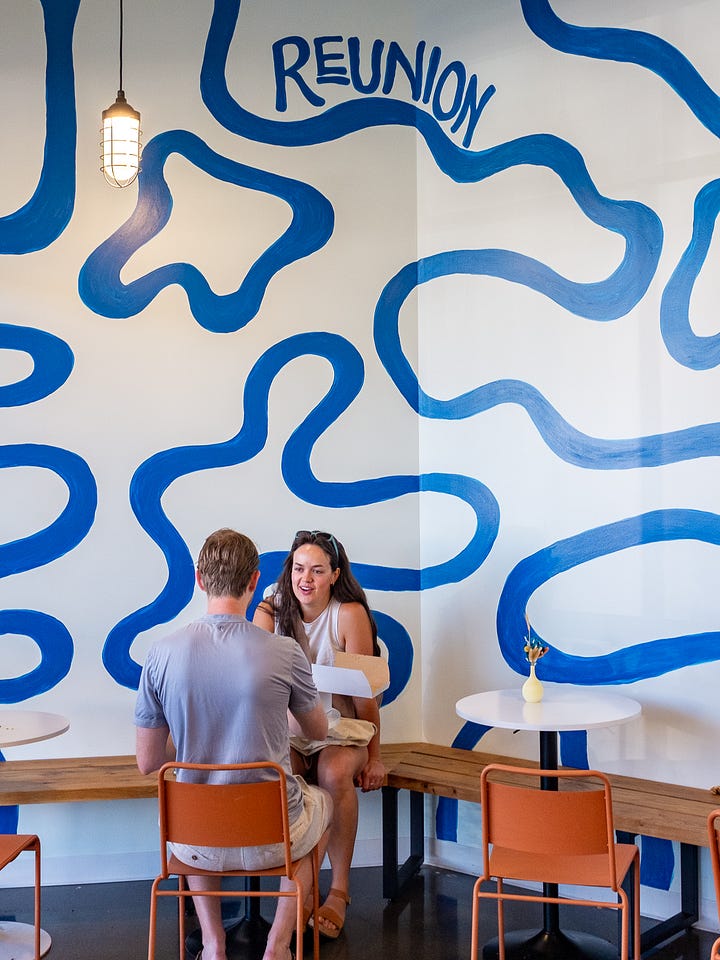
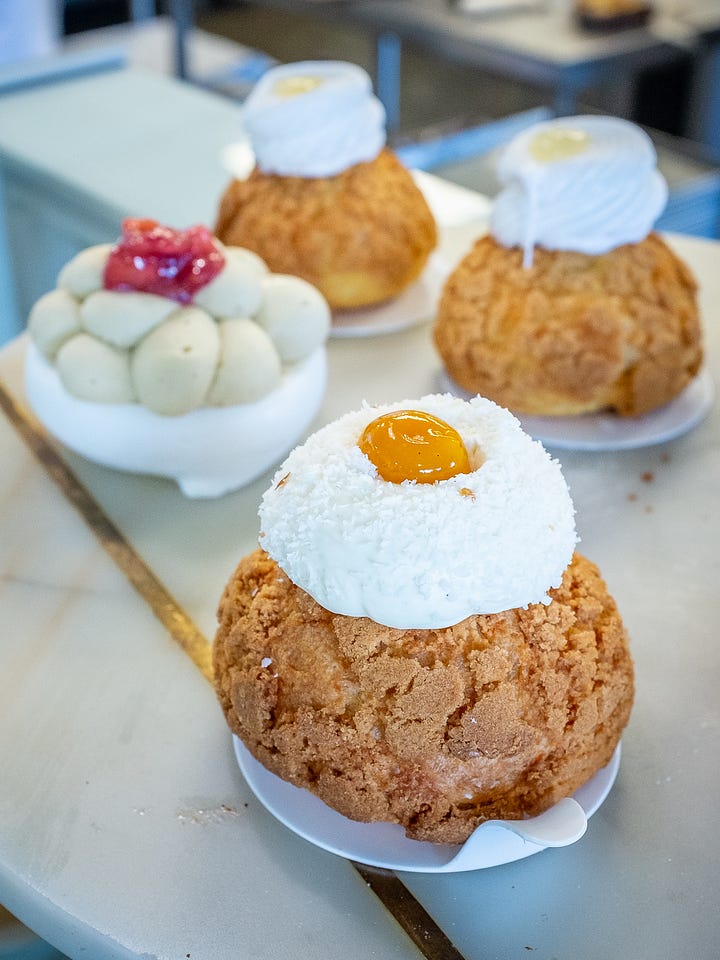
Ismael de Souza’s Reunion Bakery has officially moved to South Pearl Street and it’s been a long time coming. Starting in 2018, the bakery has been working in a tiny space inside The Source in RiNo, that they outgrew within the first year of business. In November 2024, De Souza announced an upcoming move to Platt Park. Because the new location required a complete build-out from scratch, the painstaking process took a year and a half — but they are finally open and ready for business!
Vibe: The new space is an excellent upgrade from their old home. Situated on the ground floor of a new residential apartment building, the bakery features a full wall of windows that allows passersby to watch the full production kitchen in action. Inside, a vibrant wall featuring playful blue squiggles and the Reunion logo catches your eye. Underneath, a handful of cafe tables invite you to stay awhile, whether you're grabbing a quick pastry or sitting down to eat one of their larger hot plates.
What’s on the menu: The expanded menu now features coffee, tea, sandwiches, and hot food — including a handful of breakfast toasts built on their signature sourdough and topped with options like lox, fattoush, or goat cheese and preserves. A rotating lunch special is also planned for the future. De Souza’s heritage continues to shape the menu. Raised in Venezuela by a Portuguese family, he still bakes the shop's highly sought-after pastéis de nata (Portuguese custard tarts) alongside salty-sweet golfeados (Venezuelan sticky buns). A new refrigerated case allows them to offer cream puffs and tarts, featuring rotating flavors like lemon meringue and mango choux. Make sure to try the blue corn masa blueberry cookie, too. It’s a less-sweet, delightfully crumbly treat that is perfect for dipping in coffee — I liked it so much I ended up buying three. And don’t worry, whole loaves of their bread (honestly some of my favorite sourdough in Denver) are still available, though you’ll still need to get there early on the weekend to snag one.
Want to see more of the new space? Check out my IG Reel of my visit to Reunion Bakery.
* Disclosure: Blurbs marked with an asterisk were facilitated by a hosted meal or media event. However, the restaurant has no influence over my coverage, which remains independent.
The Syscourse, Explained. Punch
A mild panic settled over the restaurant industry when it was announced in March that Sysco – the food supplier giant that every chef loves to hate – plans to acquire the independently-owned Restaurant Depot. Chefs with the freedom to source premium ingredients — and the clientele to pay for them — rarely rely on Sysco or Restaurant Depot. Even so, a market with fewer choices for business owners is never a good thing. This full explainer breaks down the most commonly asked questions about this potential merger in a clear and understandable way. Additionally, whoever came up with the term “Syscourse” deserves a pat on the back.
The Tech Bros Are Going to Etiquette School. WSJ
I don’t love judging anyone’s path to self-improvement, but after reading about a VC hosted etiquette class for tech bros I couldn’t help but want to scream. The target audience here are tech founders who desperately need someone else to teach them the soft skills of how to act like a normal, not at all creepy or weird, human in social settings. Instruction and activities includes how to woo potential investors in person, doing caviar bumps (um, don’t?), and deep discussions on wine pairings. (Denver Library cardholder link)
Your Friendly Neighborhood Newsletter. The New Yorker
Writing a local newsletter myself, I felt a wave of hope reading this. Hyper-local newsletters are thriving because they tackle community needs overlooked by traditional media, building fiercely loyal followings in the process. They are the ultimate defense against AI algorithm slop. As small, usually one-person operations, they gain traction by winning over readers who love that the writing and curation come directly from someone who lives in and cares about the communities they cover.

I’ll admit, I was totally sleeping on Sadboy Creamery until my husband read a Colorado Sun piece on their extremely in-demand ice cream. He became obsessed with trying Sadboy and we snagged a pint of Nana’s No Bake (banana and peanut butter) the other week, and we've been addicted ever since. I was initially skeptical it could really be some of the best in Denver, but dang — it absolutely is. The flavors are remarkably intense; I ordered the Strawberry Matcha Golden Oreo on a whim, and its vibrant berry flavor tastes like summer. At $15 a pint, competition for the rotating weekly drops is fierce. I’ve only managed to try two flavors so far, so I can’t wait for their storefront to open later this year. In the meantime, I’ll continue trying each week to snag the flavors that have eluded my grasp so far — though honestly, I know whatever I end up with will be delicious.
ICYMI: Last month, I covered a Michelin-recognized duo that brings ramen and sushi to East Boulder, a Mexican concept that moved into Denver’s fanciest mall, and a new bar and clubhouse serving up Millennial nostalgia.✨Read it here✨
Comments
Nothing yet. Say the first thing.
Sign in to join the conversation.