
Art-Science Undisciplined
Learn More About Art & Science
Gamifying Euclid’s Elements
Janani Balasubramanian and Natalie Gosnell are an art-science duo whose partnership began as an experiment nearly a decade ago. After years creating science-inspired artworks, they developed a methodology called Art-Science Undisciplined that helps artists and scientists come together to produce transformative projects. We spoke with them about their work and what artists and scientists can learn from each other.
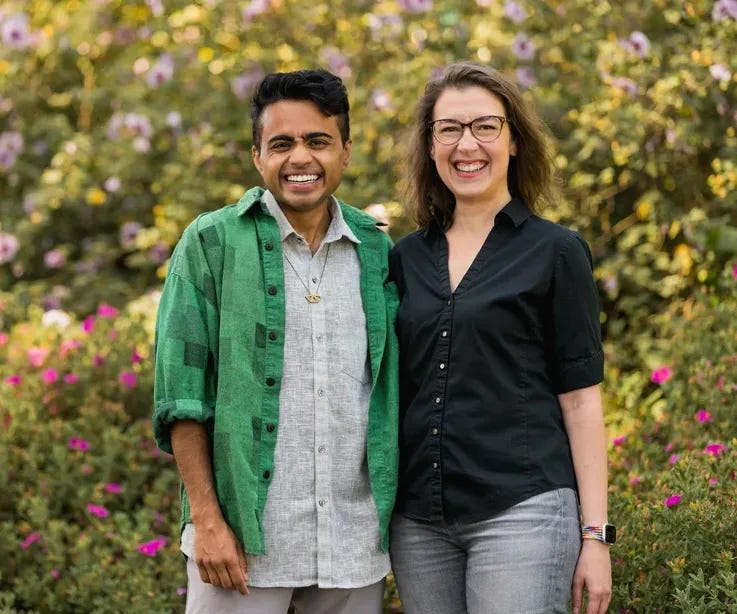
Janani Balasubramanian is an artist, director, and founder based at Stanford University.
Natalie Gosnell is an astrophysicist, artist, and Associate Professor of Physics at Colorado College.
Q: Can you tell us a little bit about yourselves and how your collaboration began?
A: We are an artist-astrophysicist team who have been closely collaborating since 2018. When we first met we thought we would only be working together for a couple of hours one afternoon, but in that first encounter we realized there was a real collaborative spark worth pursuing. At that time we were curious about what becomes possible when an artist and scientist come together to truly co-create a new way of engaging with science storytelling. In the years since, we co-created an immersive artwork, The Gift, based on Natalie’s research. The Gift premiered at New York Public Library in collaboration with Lincoln Center for the Performing Arts and has now toured widely to cultural and scientific institutions nationwide. And, in addition to our own shared creative work, from the beginning of our collaboration we have had an interest in helping other artists and scientists build and strengthen their collaborations too.
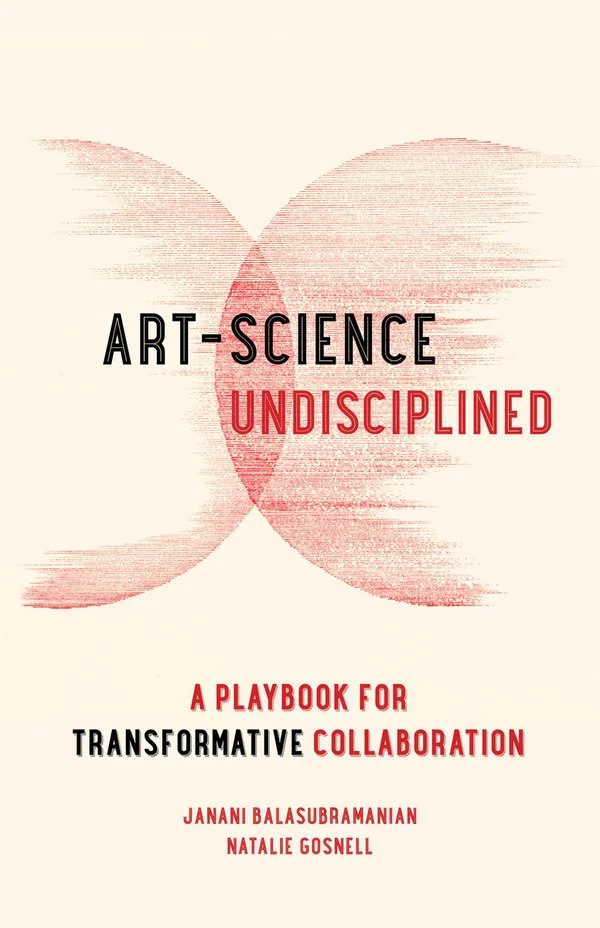
Q: You’ve co-written the book Art-Science Undisciplined: A Playbook for Transformative Collaboration. Who is it for?
A: Our book is an answer to the repeated question we’ve received over the years when we talk about our own collaboration: “I’ve always wanted to collaborate across art and science. How can I do this too?” In our book we offer a methodological guide to help artists and scientists build and grow toward a meaningful, long-term, mutually beneficial collaboration. The book is also written for the decision makers, our supporters, who can make art-science work possible—think deans, funders, curators, department heads, and other leaders in our ecosystem. They are key co-conspirators who have to also see the possibilities in undisciplined collaborations, finding ways to say “yes” when it’s often easier to say “no.”
Q: What do you see as the most important connections between art and science?
A: Artists and scientists alike are keen observers and share a deep curiosity about our world and our universe. They notice patterns and possibilities others may miss. And in their practices, artists and scientists are ultimately sharing their own interpretation of these patterns back with the world. It is a shared process of observation, interpretation, and production, even if the final products can take many different forms.
Q: What can artists and scientists gain from collaborating with one another?
A: So much! A long-term, mutually beneficial collaboration between artists and scientists is about building from and beyond disciplinary expertise, allowing both practitioners to develop a more extensive skill set in inquiry, discovery, and imagination. Every long-term art-science team we’ve interviewed has shared meaningful overflow benefits to themselves, their professional spheres, and their own personal lives, from improved teaching practices to more confidently interacting with new data and ideas. Beyond these immediate pragmatic benefits, we’ve also noticed in ourselves and other art-science teams that engaging in “undisciplined” work across art and science silos simply brings us more joy. And that itself is worth celebrating.
Q: What are the biggest challenges faced by artists and scientists who want to collaborate with each other?
A: Most of our institutions are not structurally designed to support inter- or transdisciplinary work, so those interested in this type of collaboration have to make their own way and find their own space. It takes initiative and perseverance, but the journey is worth it. The last chapter of our book, “The Jump,” focuses on how to transform this structural reality—powering a whole ecosystem of undisciplined practice where artists and scientists can learn and discover together abundantly.
Q: What’s the best book you’ve read this past year and why?
A: (Natalie) This past year I’ve found myself returning to old fantasy favorites, like Robin Hobb’s Farseer series and The Lord of the Rings—books and stories that are a comfort to me in these trying times. However, this summer I look forward to reading Chanda Prescod-Weinstein’s most recent book The Edge of Spacetime: Particles, Poetry and the Cosmic Dream Boogie, which I have no doubt will be excellent.
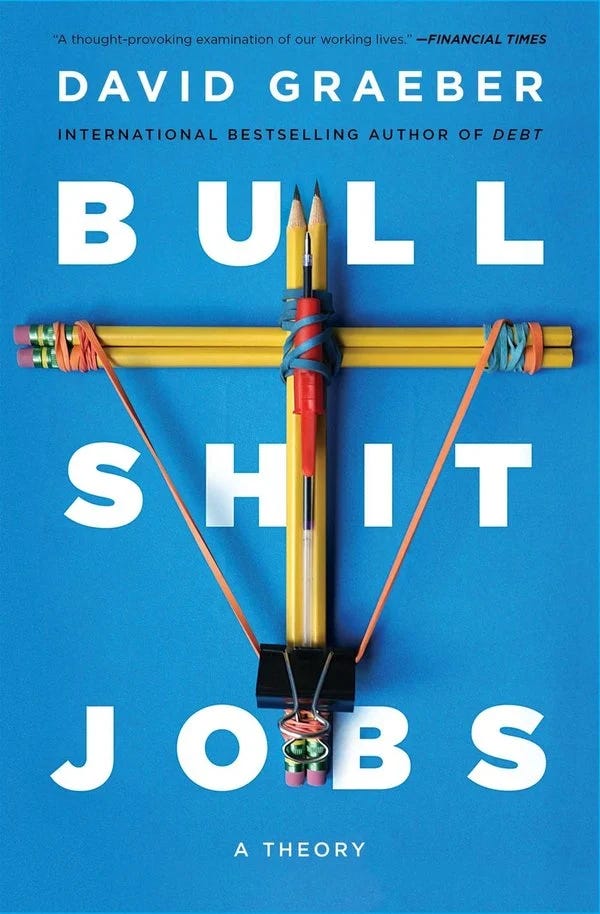
A: (Janani) I’ve been rereading David Graeber’s Bullshit Jobs, which is a funny and poignant take on how some work can rob us of dignity and agency, and how we might instead organize our world to support human beings in our innate desire to create and build and mend and discover. I thought about this work a lot while writing Art-Science Undisciplined, as part of the project of our own book is expanding joy and curiosity within the jobs of artists and scientists, to allow us to fully express ourselves as we undertake our labor.
Q: If you could receive a private lesson from any artist or scientist, living or dead, who would it be and why?
A: (Natalie) Not a lesson, per se, but I would love to sit down and discuss the possibilities of art-science collaboration with Carl Sagan, in particular how we can best position undisciplined art-science collaboration as a method for building the capacity to answer the most challenging questions of our time. The world is not neatly categorized into disciplines and departments, so our ability to engage with inquiry and discovery should not be either. I think this was something he innately understood and lived out in his work. I hope he would have been a fan of our book.
A: (Janani) I would love to sit down with the poet and essayist Muriel Rukeyser. She was also theorizing, in the early and mid-twentieth-century, how art and science can sing together in the bigger project of expanding human capacity and social imagination. I’d love to share Art-Science Undisciplined with her and hear her reflect on how it might relate to her own body of work.
Share with an artist or scientist.
Interested in learning more about the overlap between art and science? Check out a few great NBN interviews!
Why do we insist on keeping art and science in separate corners? In this interview about Art, Science, and the Politics of Knowledge, Hannah Star Rogers suggests that this artificial boundary isn’t just limiting our understanding of both fields, it’s actively distorting how we think about knowledge itself.
Tune in as Tom McLeish discusses The Poetry and Music of Science: Comparing Creativity in Science and Art. He challenges the assumption that doing science is in any sense less creative than art, music, or fictional writing and poetry, and treads a historical and contemporary path through common territories of the creative process.
Listen to W. Patrick McCray’s interview about his fascinating book Making Art Work: How Cold War Engineers and Artists Forged a New Creative Culture. He explores how, during the Cold War, artists, engineers, and scientists collaborated to build new technologies and multimedia work. He reveals how artists and technologists have continually constructed new communities in which they exercise imagination, display creative expertise, and pursue commercial innovation.
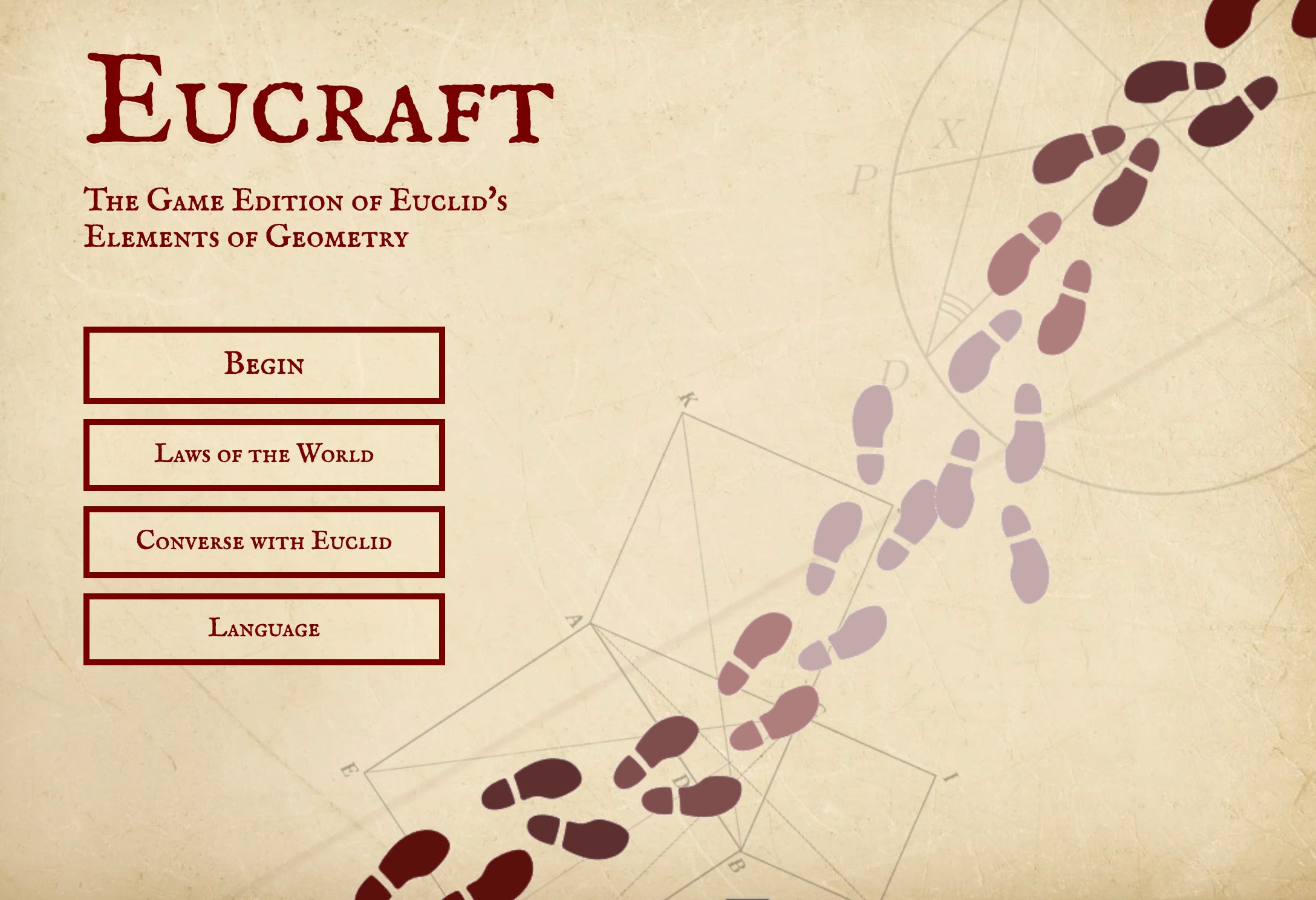
Eucraft is the game edition of Euclid’s Elements of Geometry. The idea of Eucraft is to let players craft 48 propositions using only the tools Euclid had. This process helps players read Euclid’s Elements by trying their hand at each proposition. Designed by high schooler Zoe Zhang, the game has animations that demonstrate the fundamental building blocks of Euclidean geometry: the 23 definitions, 5 common notions, and 5 postulates. And if you want to learn about Euclid and his life in Alexandria some 2,000 years ago, you can chat with him in the “Converse with Euclid” section.
Zoe Zhang is a passionate learner often lost in wonder at ἀρχή — the first principles of the world. She’s interested in the connections between physics, mathematics, engineering, and the classics. Zoe hopes to create opportunities for others to experience that same sense of wonder.
Play the game: Eucraft
No posts
Comments
Nothing yet. Say the first thing.
Sign in to join the conversation.