
The History of Now
3 Episodes On: Smell
Cats with Roderick Phillips
New Books in Animal Studies
Check out The History of Now, a new Substack by Daniel Steinmetz-Jenkins sponsored by Columbia University Press, University of North Carolina Press, Cambridge University Press, and Prickly Paradigm Press.
Daniel is an intellectual historian of modern political thought with a specific focus on Europe and the world from the Cold War to the present and Assistant Professor in the College of Social Studies and History at Wesleyan University. He also runs a regular interview series with The Nation and co-hosts the podcast, Of This World, with journalist Nick Tabor.
In this newsletter, Daniel will share new and forthcoming works of nonfiction, academic articles, interviews, and his own work as a historian. Learn more about his Substack here, and subscribe to stay up-to-date on new literature and current intellectual debates.

The sense of smell is often linked to the dark, the antisocial, the primitive—the very opposite of modernity and progress. Today we live in an almost odorless world, where everything is reduced to images. Yet smell plays a vital role in how we relate to others and our surroundings, forming our experiences and our memories. Tracing a history of smell from the first ancient cities, through medieval plagues and the Industrial Revolution to the present day, Smell: The Tale of a Fading Sense (Reaktion, 2026) is a tribute to the sense of smell in all its beauty and disgust. Along the way, Bjørn Berge introduces us to twenty iconic scents—from blood and soil to the ocean—and invites readers to reflect on and reawaken their senses.
What features of the world do smells pick out? What is the olfactory code? In her new book, Smellosophy: What the Nose Tells the Mind (Harvard UP, 2020), Ann-Sophie Barwich delves into the mysteries of smell and the difficulties of scientific attempts to explain how it works.
In Olfactory Worldmaking (University of Minnesota Press, 2026), Dr. Hsuan L. Hsu traces how olfactory experience communicates across visceral, material, and affective registers to offer new ways of relating, which challenge the extractive logics of racial and colonial capitalism. Blending environmental humanities, sensory studies, and critical ethnic studies, the book highlights how scent animates suppressed histories and marginalized memories.
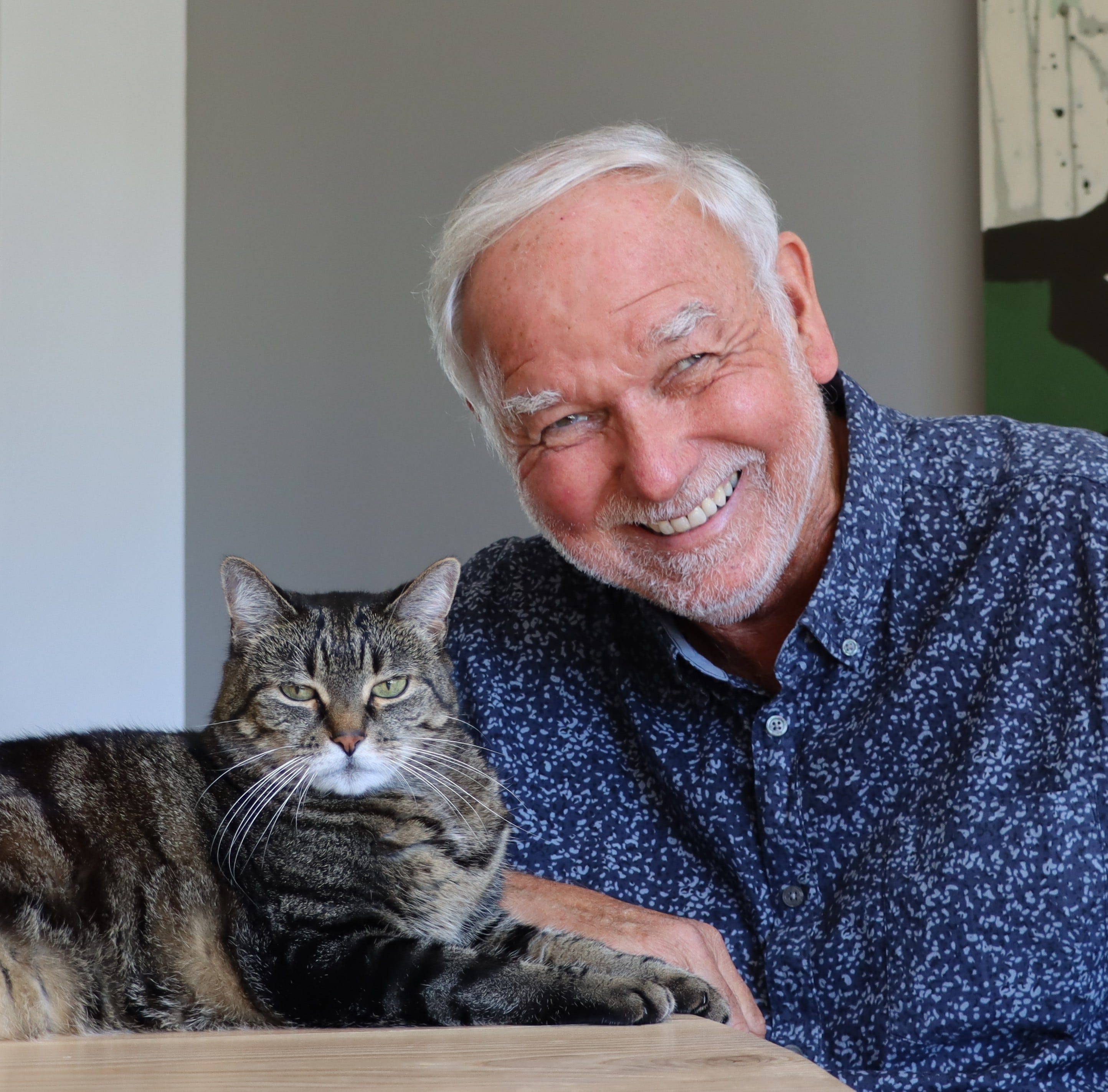
I’m Rod Phillips, a professor of history at Carleton University in Ottawa, Canada. My research and publications have mostly been on the history of the family (especially divorce) and the history of alcohol (especially wine), and I teach in those areas as well as in the French Revolution. I’ve written a dozen or so books, articles in scholarly and popular publications, and worked in various media.
Q: You have previously written about the family, wine, and food. What drew you to writing a history of human-cat relationships?
A: I love cats (and dogs) and for a long time I’d thought of writing a history of cats as a retirement project. There’s a lot of scholarly work on the history of animals, and although dogs, horses, and others are quite well represented, there wasn’t much on cats. So I thought I would fill the gap. But then Covid struck in 2020 and I couldn’t get to the archives in France I needed for my research at the time. So I started the cats book.
What I found as I wrote it was that the cat-human relationship was much more complicated than I expected. Cats have been valued for thousands of years for killing vermin that prey on human food, but they were reviled by the Catholic Church as associates of witches, heretics, and the Devil. Men associated cats with the worst characteristics they attributed to women: being deceitful, selfish, and promiscuous. In addition, cats are the animal most often subjected to gratuitous torturing and killing. (Wikipedia has an entry on “Burning Cats.”)
It’s only in the past half-century that humans have kept cats as pets on a widespread basis. It makes you wonder why a small, harmless animal would attract such starkly polarized attitudes.They persist today: surveys show that many more people dislike cats than dogs. My book goes some way to explaining these attitudes, but it goes further because, like the history of alcohol, the history of cats provides a window into broader historical issues, such as gender, religion, and class,
Now that the book is published, I’ll have to find a new retirement project.
Q: What are you reading right now?
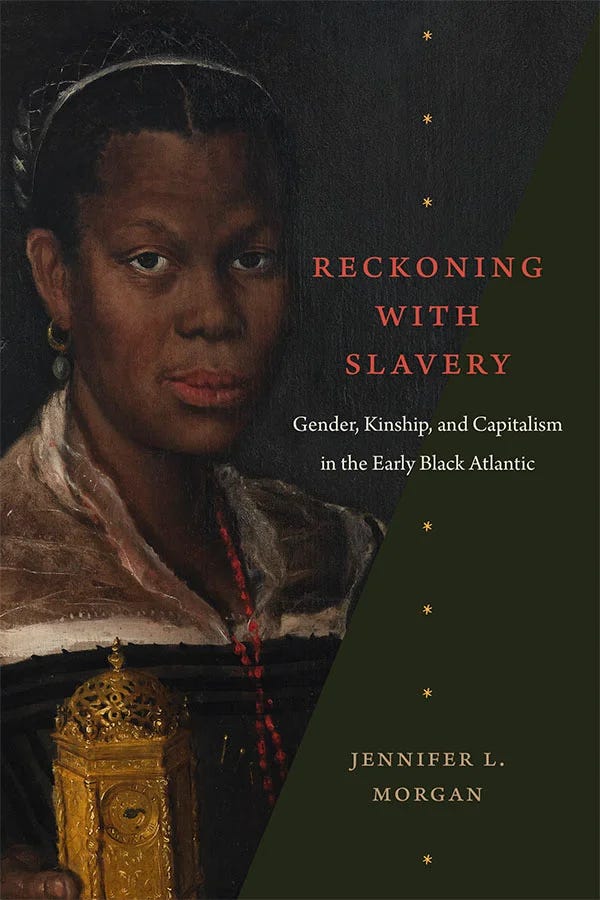
A: Jennifer Morgan’s Reckoning with Slavery, which focuses on enslaved women in the 16th and 17th centuries. I started reading it for information on the way slave families were split up, because I’m working on a revised edition of my 1988 history of divorce. But once I’d read those pages of Reckoning with Slavery, I was so drawn in that I wanted to read the rest. It’s a compelling study in the commodification of humans and their treatment as numbers. I’ve read a little on slavery before, but this is a real eye-opener.
Q: Is there a book you read as a student that had a particularly profound impact on your trajectory as a scholar?
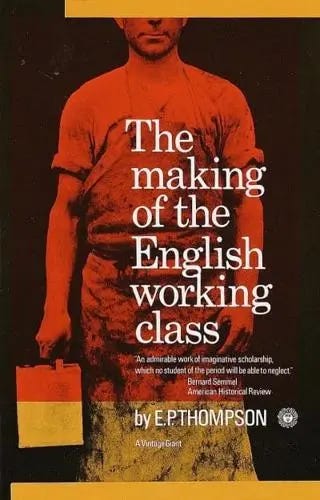
A: E.P. Thompson, The Making of the English Working Class. It was published in 1963 and I read it as an undergraduate about 1970. I remember being impressed that I finished it, because it’s a long book! It’s such a rich portrait of workers that I found irresistible at the time. I had the opportunity to meet Thompson in the 1980s and I was able to tell him what an impact he’d had on my intellectual formation.
Q: What is your favorite book or essay to assign or give to people, and why?
A: Not a book or an essay, but a page from a book: page 162 (which I photocopy and distribute to students) of James A. Brundage, Law, Sex, and Christian Society in Medieval Europe. It’s a flow-chart of the sexual decision-making process that sits as a highly entertaining page in a densely footnoted, 700-page scholarly work. I always imagine Brundage coming up with the chart late one evening and then being unable to resist including it in his book. The chart suggests that anyone thinking about having sex should ask themselves questions such as: Is it Lent? Is it Advent? Is it a feast day? Is it Sunday? Is it Wednesday? Is it daylight? If the answer to any of these (and many more) questions is “Yes,” they’re directed to a box marked “Stop! Sin!” If they get the all-clear to have sex, the cautions include: No fondling! No lewd kisses! Only once! Students love this chart and it’s a great way to teach the Church’s attitudes towards sexuality.
Q: What’s the best book you’ve read in the past year?
A: That’s a tough one, but one that I enjoyed immensely very recently is The Dog’s Gaze, by my friend Thomas Laqueur. Neither of us knew the other was working on these books, and his book on dogs came out at the same time as mine on cats. The Dog’s Gaze deals with dogs in art, and I wish I’d been able to read it before I finished mine. Dogs are not exactly ubiquitous in art, but they’re far more present than cats, and their different portrayals and roles in paintings are indicative of the different relationships humans have had with them over time. I discuss cats in art in my book, but having Tom’s insights into representations of dogs would have enriched what I wrote.
Q: Which writer (no limits) would you most like to meet and why?
A: Because there are no limits, I’ll go with a dead author: Bertrand Russell. I was a militant atheist when I was a teenager, and when I discovered Russell’s essay “Why I am not a Christian,” (1927) I thought I had gone to atheist heaven. I ended up reading most of what Russell wrote and later his three-volume autobiography. I was always engaged by the way Russell wrote and thought, and also by his activism from World War I to the anti-war movement of the 1960s. I’d always thought I would try to meet him, but he died in 1970, three years before I arrived in the UK to do my PhD.
Q: Who should read your book Cats and why?
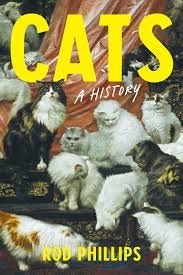
A: Everyone! Judging by interviews I’ve done, there’s an assumption that the book is written for cat-lovers. But it’s a history book that should appeal to people not only interested in cats, but also in animals generally and our relationships with them. Humans have had complicated relationships with many animals, but I think those with cats are the most complicated.
Q: Anything else you’d like to share about cats and your research?
A: As far as I know, there’s nothing systematic about cats in any archive. There are records of dogs, horses, wolves, and vermin of all kinds, but not of cats. In 50 years of working in archives, I’ve come across only two references to cats. While I was researching divorce in Rouen (Normandy) in the 1790s, I found a case where a wife accused her husband of (among other things) throwing a cat at her. The second reference, found when I was researching the history of wine in Burgundy, was to a ditch in Beaune which was said to be where dead cats were thrown.
Thanks for reading The New Books Network Newsletter! This post is public so feel free to share it.

Want to learn more about animals and our relationship with them? Check out a few other interviews about animals, and subscribe to New Books in Animal Studies
In Squirrel: How a Backyard Forager Shapes Our World (Island Press, 2025), Nancy Castaldo shines new light on this familiar backyard mammal, exploring their staggering diversity (they’re found on all continents but Antarctica) and the many surprising ways they shape our world, our communities, and our cultures.
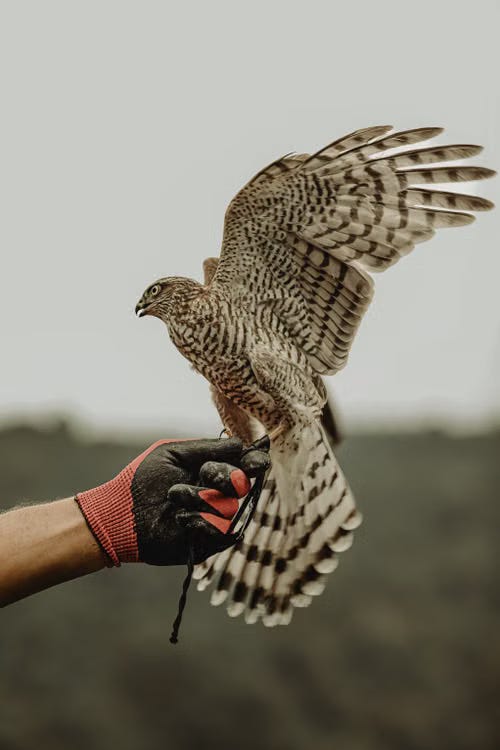
Fantastic and informative talk with Sara Petrosillo of the University of Evansville about her new book, Hawking Women: Falconry, Gender, and Control in Medieval Literary Culture (Ohio State University Press, 2023). Listen all the way to the end for a great description of the process of hunting with birds! While critical discourse about falconry metaphors in premodern literature is dominated by depictions of women as unruly birds in need of taming, women in the Middle Ages claimed the symbol of a hawking woman on their personal seals, trained and flew hawks, and wrote and read poetic texts featuring female falconers.
In Feminism in the Wild: How Human Biases Shape Our Understanding of Animal Behavior (MIT Press, 2025), Ambika Kamath and Melina Packer reveal how scientists studying animal behavior have long projected human norms and values onto animals while seeking to understand them.
No posts
Comments
Nothing yet. Say the first thing.
Sign in to join the conversation.