

Sell books online with WeBuyBooks. Get 15% extra on your first offer with code NBN15 if you’re in the UK. Download the app and scan your books here.
3 Episodes on Childhood
Scholarly Sources: Kelly Duke Bryant
Centering Youth Perspectives
Check out 3 great episodes about childhood! These scholars examine how race, class, and gender have shaped notions of what ideal behavior and education looks like for children.
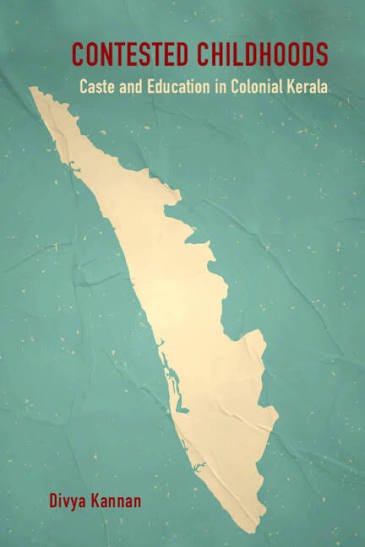
In Contested Childhoods: Caste and Education in Colonial Kerala, Divya Kannan analyzes the history of caste, race, education, and Christian missions in colonial south India. She reveals the relationship between caste and education in reshaping ideas and norms of modern childhood and lower-caste community building.
Listen to Ruby Oram discuss her book Home Work: Gender, Child Labor, and Education for Girls in Urban America, 1870-1930. She explains how changes to girlhood education promoted by middle-class, white women reformers ended up entrenching gender, race, and class inequalities in school systems.
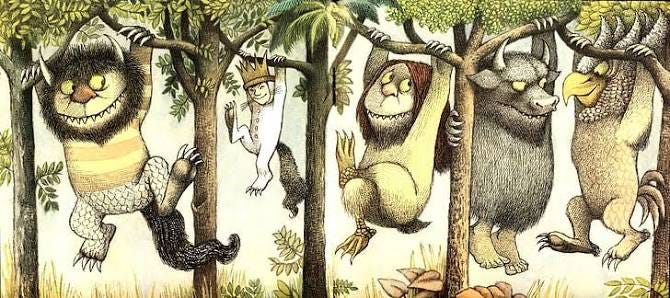
Tune in as Henry Jenkins shares Where the Wild Things Were: Boyhood and Permissive Parenting in Postwar America. He shows that the language of advice literature in the 1960s also informed children’s books, comics, and films.
Share to help us spread the word.
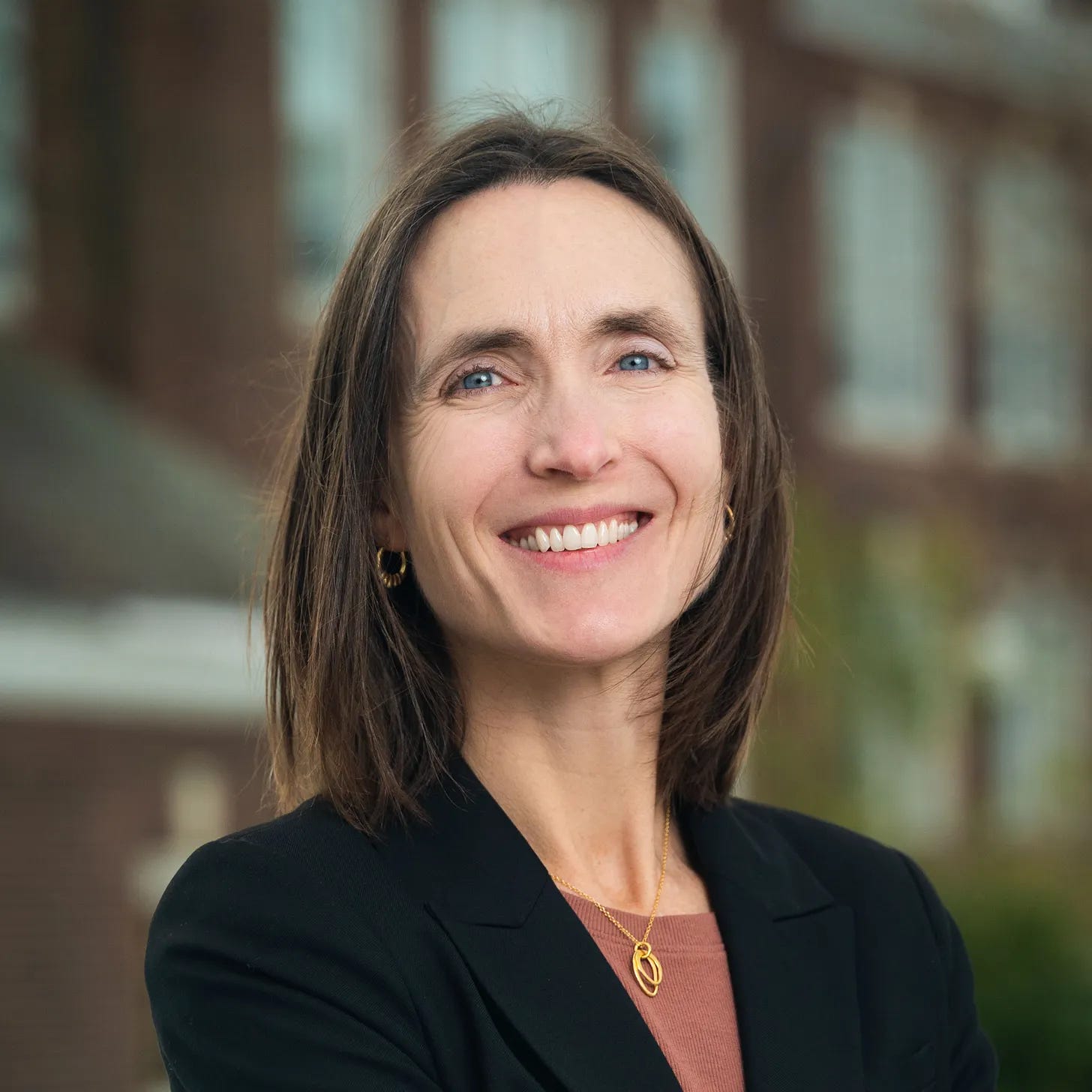
Kelly Duke Bryant is an Associate Professor (and soon to be Professor) of History at Rowan University in New Jersey (USA), where she also serves as department chair. She is a specialist of African history, and her research explores the histories of education, childhood, and youth in colonial Senegal. In addition to a variety of book chapters and articles on these topics, she is the author of two books: Education as Politics: Colonial Schooling and Political Debate in Senegal, 1850s–1914 (University of Wisconsin Press, 2015) and Negotiating Childhood: French Colonialism and African Children in Senegal, 1848-1940 (University of Massachusetts Press, 2026).
Q: Can you tell us a bit about yourself? What drew you to study African history and to writing this history of childhood in Senegal?
A: I credit Kenyon College and my college mentor, Clifton Crais, with introducing me to African histories and cultures and—more than anything else—with showing me that there was so much more I did not know but wanted to learn. Like many Americans, I had learned almost nothing about Africa in grade school (despite attending very good public schools in Kentucky, where I grew up); I found myself compelled in college to try to fill in these gaps. I had the good fortune to study abroad in Senegal for a semester, and I had an amazing experience learning about this place. I also developed lifelong relationships with my two host families, and having this support network has been crucial to my career.
My college experiences led me to study African history in graduate school and to write my dissertation on the history of education and mobility in Senegal at the turn of the twentieth century—I was interested in Senegalese students who attended colonial schools in Senegal, Tunisia, and Algeria, and in those who received scholarships to fund secondary schooling in France. This research formed the basis of my first book, which explored how colonial education and Africans’ experiences of it shaped political debates and power relations in Senegal.
As I conducted the research for my dissertation and then for my book on education, I was frustrated by the fact that this focus meant I was mostly writing about an elite, or a developing elite. In search of context and as a kind of corrective, I began to collect any and all material, archival and published, that mentioned Senegalese children. Having a set of sources at the ready made it that much easier to start researching and writing Negotiating Childhood. Ultimately, this book grew out of my lingering desire to understand how children from rural and urban areas and from various class and status backgrounds navigated and shaped colonialism. And my choice of topics was also shaped by my own life experience, writing a book while raising three young children.
Q: Is there a book you read as a student that had a particularly profound impact on your trajectory as a scholar?
A: There are many, but I’ll focus on one. In my very first African history course, which I took as a sophomore undergraduate student before I had decided to major in history, the professor assigned a lot of novels and memoirs alongside historical scholarship. I loved this approach, since the fiction and memoir helped bring alive what we were learning in class and in scholarly articles and books. Wole Soyinka’s Aké: The Years of Childhood, was one of these books, and it was particularly impactful in my first experience with African history and in my research and teaching trajectories since then.
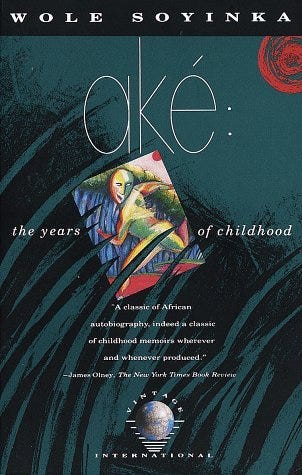
In this book, Soyinka, the celebrated Nigerian author and Nobel laureate, offers an intimate picture of his life in a busy Yoruba household maintained by his father, an Anglican minister and headmaster, and mother, a political activist and market seller, in the 1930s and 1940s. Soyinka draws on his memories of this world as he experienced it in childhood, using the voice and perspective of a young child rather than an adult looking back. This approach invites readers to consider how African children experienced various aspects of colonialism—from encounters with British officials, to a military parade, to unfamiliar imported objects, to literacy and European-style schooling, to adults’ nationalist activity. It also offers insight into Yoruba culture and cultural change as a child might have understood it. And finally, the book raises important methodological questions, about memory and its limits, the utility of children’s voices, and the impact of race, class, gender, and literacy on the kinds of sources available to historians of childhood. Although my research has focused on Senegal, I have engaged with many of these issues in my various publications.
(Want to learn more about Wole Soyinka? Check out our newsletter from last year here.)
Q: What is your favorite book to assign and why?
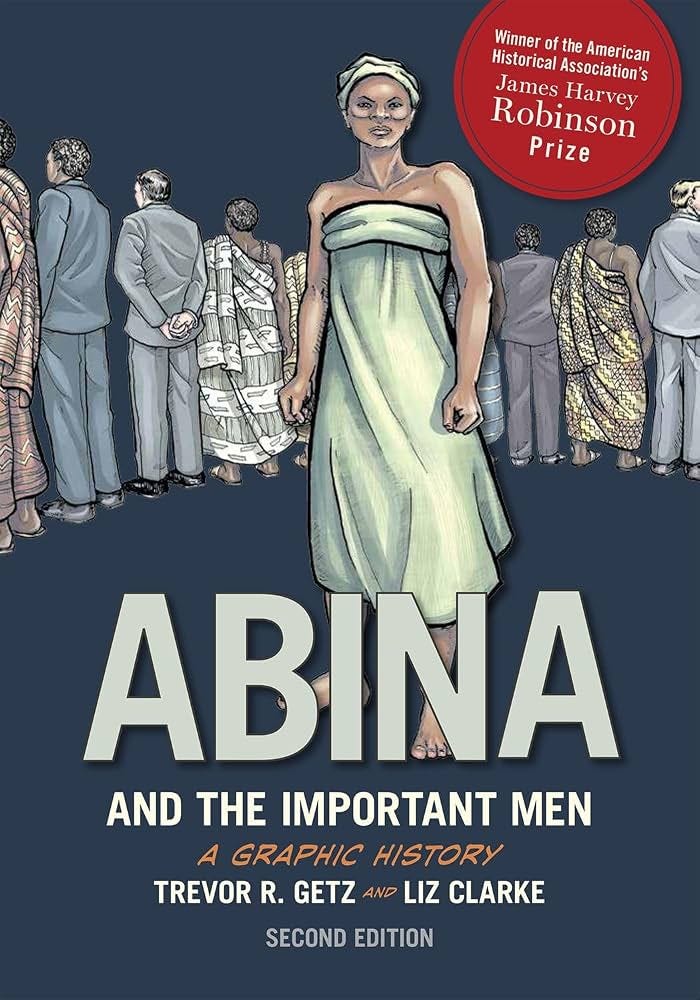
A: I have had really great classroom experiences with Abina and the Important Men: A Graphic History, by Trevor Getz and Liz Clarke. The book tells the story of Abina Mansah, a girl (or young woman) who suffered capture, sale, and exploitation in the Gold Coast (modern day Ghana) in the 1870s. It centers on the legal case she brought to court in 1876 to contest her enslavement. As the title suggests, this is a graphic history—told with research-based comic-book style illustrations, thought bubbles, and dialogue boxes–a format that students find compelling and easy to follow. Importantly, Getz and Clarke also include the full text of some of the primary sources on which their narrative is based, a thoughtful reflection on how they crafted the graphic history despite gaps in the historical record, a series of interpretive essays, and other contextual or interpretive material, making this an extraordinarily useful book for teaching both content and method. I have used this book productively in many classes—historical methods, history of children and youth in Africa, and Africa since 1800 to name a few—and it always leads to great discussions about sources and interpretation, how we define basic terms (like slavery, freedom, marriage, or childhood) and how these definitions are contextual, and how we might address historical silencing. I highly recommend it!
Q: Which writer would you most like to meet and why?
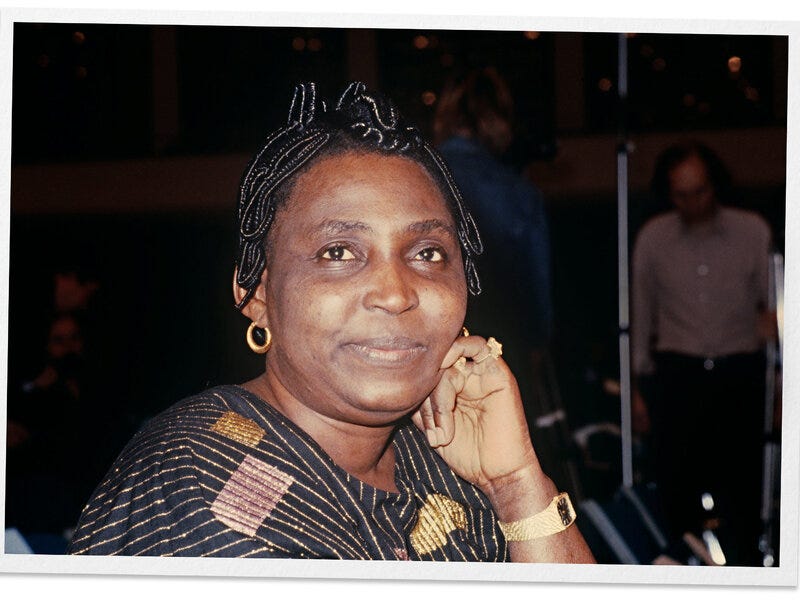
A: I would like to meet the groundbreaking Senegalese author Mariama Bâ, who is best known for her epistolary novel, So Long a Letter, which draws on her life experiences as a Muslim woman and mother of nine and stands as an important critique of gender inequality and polygyny in her society. Bâ was born in 1929 in Dakar, attended school—including the well-known girls normal school in Rufisque—and became a teacher. I would love to be able to talk with her about her childhood, her experiences of colonial schooling, and her career. I often assign a short essay she wrote about her adjustment to French school, but I’m sure there is more to know. I would also like to thank her for writing a book that is so intimate, yet accessible, and that raises gender issues that remain relevant.
I’m going to cheat and mention a second author, Sylviane A. Diouf, who is both an accomplished academic historian and an author of children’s books, including one that I have loved reading to my own kids. This book, Bintou’s Braids, explores cultural ideas around hair and hairstyles from the perspective of a young Senegalese girl, but it also is a great way to introduce West African cultures to children from other places.
Q: What are you reading right now?
A: I am reading The Essex Serpent, the second book by British author Sarah Perry, which was published in 2016. I noticed it on a list of recommended books from NPR, and shortly thereafter, saw a copy in a used books stall at a local farmer’s market. I bought it right away, appreciative of the fortuitous coincidence. The book follows Cora Seaborne, a wealthy young widow, who comes to a village in Essex, England from London to reclaim her identity and to deal with emotional trauma following the death of her abusive husband. She challenges society’s expectations of women, pursuing her passion for the natural sciences and trying to determine the veracity of Essex residents’ fervent belief that they are being threatened by a mysterious sea serpent. Along the way, she encounters assumptions about gender and class, tensions between science and religion, and other obstacles and triumphs. This book is a bit of a departure for me—it has been years since I read a novel set in Victorian Britain!—but I am enjoying it. I appreciate the author’s attention to personal relationships, the time they take to develop, the messiness they can involve, and the ways they evolve over time.
Q: What’s the best book you’ve read in the past year?
A: It is hard to choose one! But I’ll mention Ana Lucia Araujo’s 2020 book, Slavery in the Age of Memory: Engaging the Past, which I have been reading a bit more closely this summer since it relates to an ongoing research project. This book is really helpful for thinking through how we talk about, exhibit, and memorialize the history of slavery. It takes a comparative and transnational approach, drawing examples from the United States, Benin, Brazil, England, South Africa, and beyond, and it shows that the legacies of slavery, though dealt with differently in different places, remain very real and extremely important in our contemporary world.
Q: Who should read your book Negotiating Childhood: French Colonialism and African Children in Senegal, 1848–1940 and why?
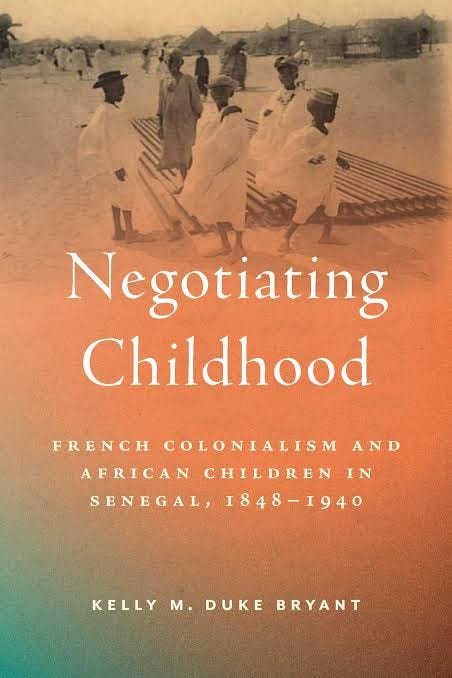
A: My book will appeal to anyone interested in the global history of childhood, in imperialism, in modern African history, or in tracing the emergence over time of what today seem to be ordinary practices and concepts related to children. I have taken particular care to ensure that my writing is accessible to non-specialists, so casual readers and undergraduate students should be able to engage with it. In multiple chapters, I explore the idea that in their cooperation with, avoidance of, or resistance to French policies and institutions targeting them, children shaped both colonialism and understandings of childhood in Senegal. I also show how different colonial practices and spaces contributed to widespread documentation of children’s lives and identities and to the adoption of chronological age as a measure of childhood. Finally, given its relevance to contemporary issues facing children and those who care for them, social workers, child psychologists, and development or aid workers will likely find my book useful.
Q: Anything else you’d like to share? Either about your academic work or creative endeavors?
A: With crucial help from an amazing undergraduate research assistant, I have been working to create a digital dataset from many of the archival sources I relied on in the first chapter of my new book. These sources relate to the history of child slavery, liberation, guardianship, and labor in Senegal at the turn of the twentieth century. Once we have concluded work on the dataset, we plan to submit it, along with an interpretive essay, to an online publication so that other researchers can use it, instructors can incorporate it into their teaching, and members of the general public can explore it. Given the paucity of readily available sources—online or in print—related to the history of childhood (and especially African childhood), this dataset will meet a need, allowing users insight into children’s experiences at a particular place and time, encouraging them to conduct their own analysis and draw their own conclusions, and improving our understanding of trends and patterns.
Learn about how children and adolescents are both subjects and actors in American politics from political scientists who center these perspectives in their scholarship.
In See Jane Run: How Women Politicians Matter for Young People, David E. Campbell and Christina Wolbrecht analyze the long-term impact of how the presence of women politicians affects young people. They demonstrate that women in politics convinces boys and girls that women are capable political leaders, and increases young women’s political engagement.
Then tune in to our interview with Alison Gash and Dan Tichenor about their book, Democracy’s Child: Young People and the Politics of Control, Leverage, and Agency. They reveal how children have been leveraged in politics, and acted as agents of change themselves.
Curious about how young people use social media? Ysabel Gerrard interviewed over 100 teenagers to unpack the myths and realities. In her book, The Kids are Online: Confronting the Myths and Realities of Young Digital Life, she examines how children navigate social media and proposes how to build safer social media systems.
No posts
Comments
Nothing yet. Say the first thing.
Sign in to join the conversation.