
Marcus started the iron supplement under his doctor’s advice three months ago. His energy came back first, then his color. The follow-up blood work looked good: hemoglobin up, ferritin climbing. His doctor was pleased. Marcus was pleased. Case closed.
Except it wasn’t. Nobody had asked why a man in his 60s, eating normally, with no history of anemia, had suddenly gone low on iron. The daily ibuprofen he’d been taking for his knee for years never came up. Neither did a colonoscopy.
This article explores why simply taking a supplement is often not enough, and what additional investigations should have been considered. The problem gets addressed here, not because Marcus’s story is rare, but because it’s common enough to be the main lesson.
Iron deficiency can be a warning sign for a problem you can’t see or feel. In adult men and women past menopause, doctors always look for hidden bleeding if there isn’t an obvious reason for low iron. Taking a supplement might make your lab results look better, but it doesn’t fix the cause if something bigger is going on.
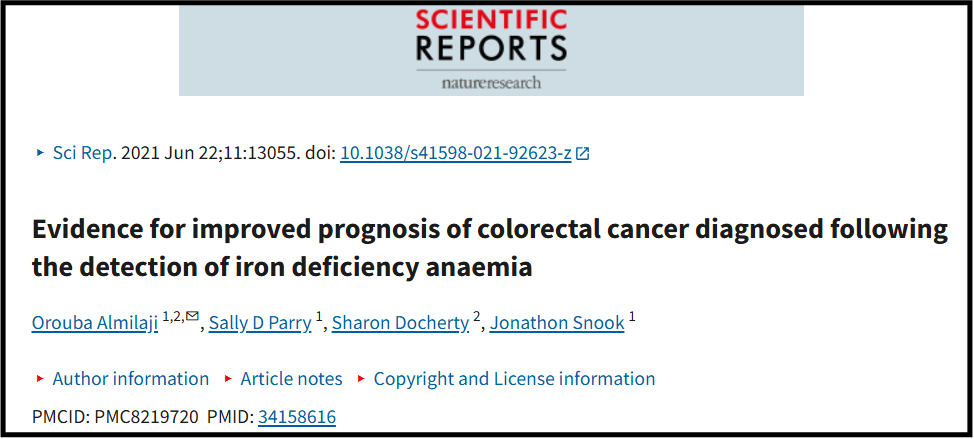
Colorectal cancer is the case that shows up most in the research, and for a specific reason. Right-sided tumors, the ones tucked further up the colon, tend to bleed slowly and quietly rather than producing visible blood in the stool. That slow trickle drains iron for months before anything else announces itself. In one large UK study, iron-deficiency anemia was the strongest predictor of exactly that kind of tumor. And the deficiency-first patients weren’t diagnosed later or diagnosed more severely. They were caught earlier. The number that everyone wanted to just “treat” was actually the earliest warning the disease gave.
Celiac disease runs the same playbook from a different direction. It can cause years of quiet intestinal damage with no digestive symptoms at all. In people who show up with unexplained iron deficiency and nothing else, a real slice of them turn out to have celiac disease sitting underneath it. No stomach pain. No diarrhea. Just tired, and low on iron, until someone finally asks why.
Finding out you’re low is the beginning of the question, not the end of it.
If you’ve ever typed your symptoms into a search engine or an AI tool, you already know what happens. You get diet advice first, maybe a supplement recommendation, occasionally a mention of heavy periods. The serious causes are in there somewhere, but they’re usually buried behind a follow-up question you didn’t know to ask. Nobody volunteers “have you considered we should rule out cancer” unprompted, and reasonably so. It’s why a structured map matters more than a good guess. You shouldn’t have to know the right question to get the right answer.
Not every cause of iron deficiency is equally serious, and treating them all the same is how the dangerous ones get missed. Here’s a way to think about it: this map is sorted by how bad it would be to miss a cause, not by how often it happens.
Comments
Nothing yet. Say the first thing.
Sign in to join the conversation.