
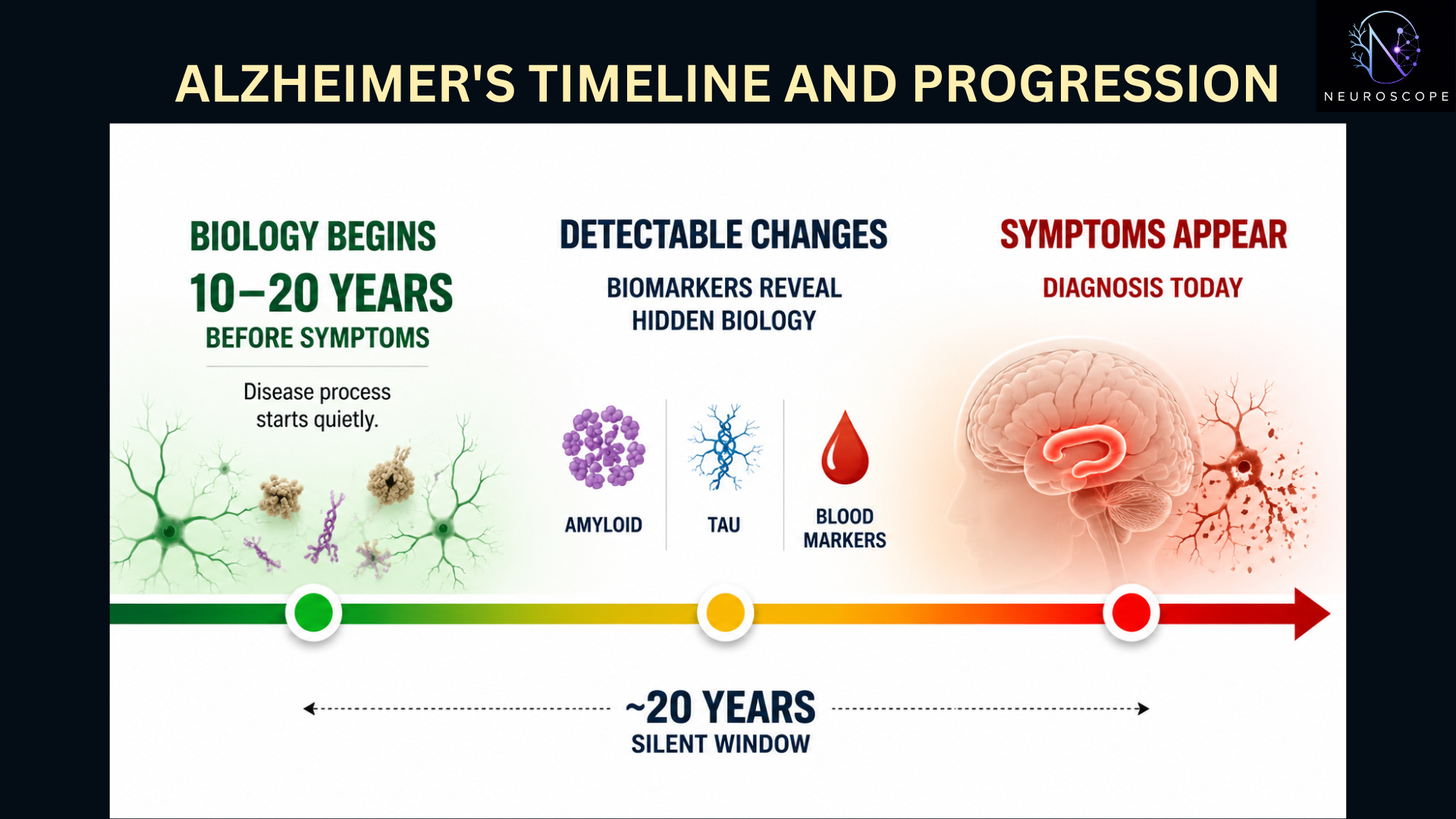
Sporadic Alzheimer’s does not start the day a person’s symptoms appear. It starts 10-20 years before symptoms develop and gradually progresses. This timeline is called the prodromal period, where different risk factors work together to increase the chance of developing Alzheimer’s disease. Catching the disease risk around this timeline will help a patient understand what risk factors drive the disease and thereby allow doctors to address the risk factors to hopefully prevent or at least delay the onset of disease symptoms.
The discovery of risk factors and biomarkers that underlie this devastating disease has been a breakthrough. Recently, the FDA cleared a blood test called Lumipulse that detects p-tau217 and amyloid, two hallmarks of Alzheimer’s disease.
There’s a real excitement around p-tau217 right now, and I am too. Biomarkers and blood-based tests like this are a breakthrough for Alzheimer’s research. Studies show that p-tau217 can detect risk of Alzheimer’s disease at least 10 years before disease symptoms hit, with 90% accuracy.
When everyone was celebrating, I had some concerns about using p-tau217 as a single biomarker. And that brings the conversation to my favorite phrasing. “Alzheimers disease is not one size fits all.”
Alzheimer’s disease is not just one disease; it’s many. In other words, Alzheimer’s disease has subtypes, and these subtypes might need specific treatment options. Relying on one biomarker means we can risk missing these subtypes and overlook treatment options for a patient.
Recently, I was listening to some talks at the Alzheimer’s Association International Conference (AAIC), and one discussion really got me excited. For the first time, I heard scientists openly agree: “p-tau217 alone cannot fully predict an individual’s future risk.”
This is an important conversation because age, genetics, environment, gender, gut microbiome, kidney function, obesity, and underlying conditions all can be risk factors for Alzheimer’s disease. All these factors can change how a person could develop Alzheimer’s. That means there are different subtypes of the disease, each with its own disease driver or drivers. Relying on one biomarker is not enough to identify the root causes or disease progression of different Alzheimer’s subtypes. Identification of correct subtypes is required for proper treatment.
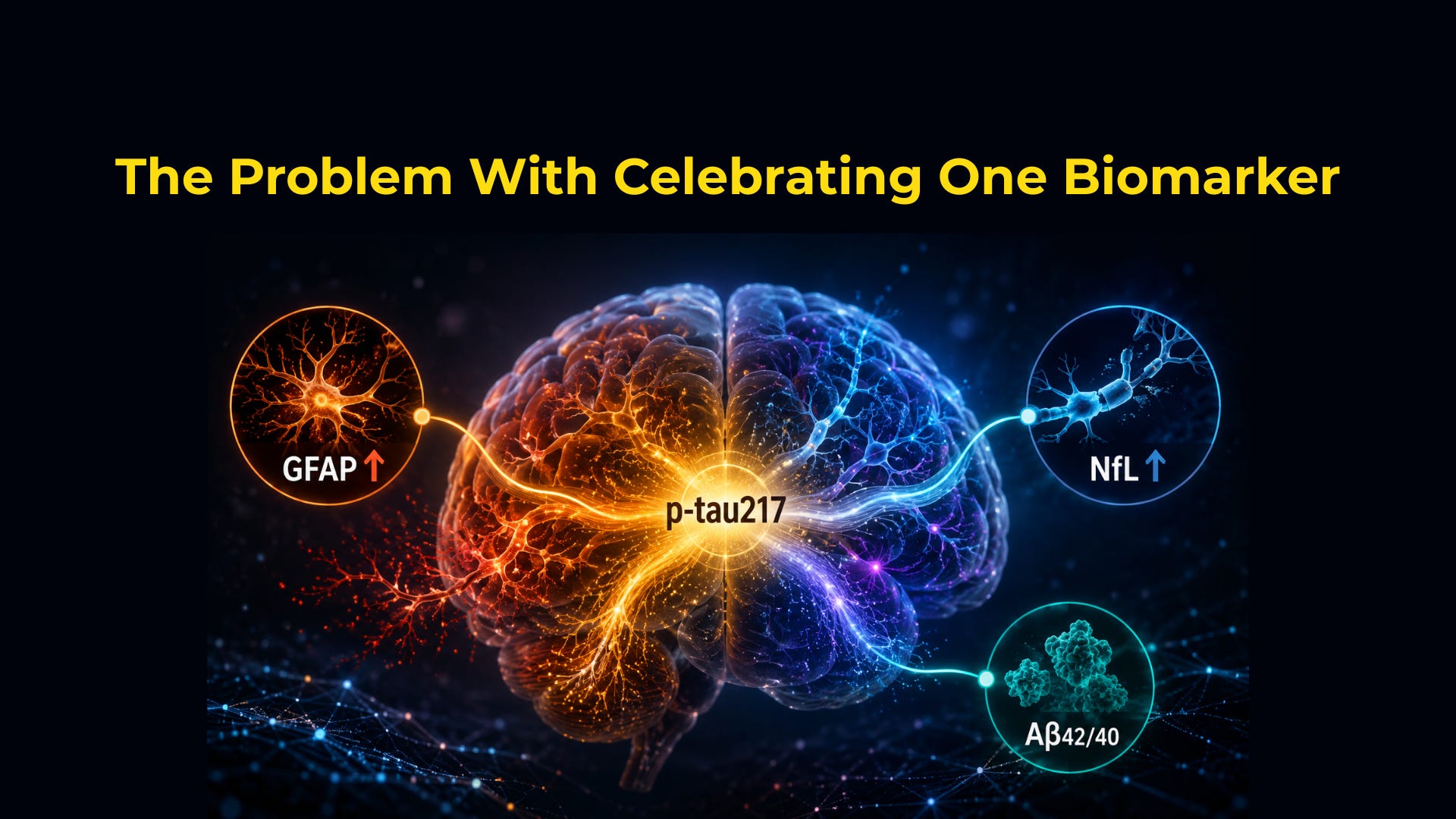
We can get a full picture with a biomarker panel, which should be available in labs. In my studies, I have used p-tau217, GFAP, NfL, p-tau181, and amyloid (Aβ42/40) as a panel; running them together can give a broader understanding of the risk. Let’s look at what these biomarkers signify.
p-tau217 is the signal that shows the buildup of tau tangles, which is the hallmark of Alzheimer’s disease.
GFAP is a neuroinflammation marker
NfL is a marker that signals when brain cells are being damaged.
Amyloid (Aβ42/40) signals plaque development in the brain, which is another hallmark of Alzheimer’s disease.
p-tau181 is an earlier tau marker, not as precise as p-tau217, but can be valuable for diagnosis when in a panel.
Talk to your doctor about the availability of these biomarkers. Amyloid (Aβ42/40) and p-tau217 (Lumipulse test) are FDA-cleared, and your insurance might (not guaranteed) cover the cost. But it’s worth talking to your medical provider about the actual cost to you.
Two patients walk in to get tested for Alzheimer’s risk. We will call them patient A and patient B.
Patient A tests using a biomarker panel, and his/her result is
High p-tau217 - This shows that the patient is at risk for Alzheimer’s
High GFAP - This shows that the person has neuroinflammation, which can be the main driver of the disease.
Low NfL - This shows that the brain damage marker is low.
Patient B tests using a biomarker panel and his/her result is
High p-tau217 - This shows that the patient is at risk for Alzheimer’s
Low GFAP - This shows that the person has low neuroinflammation.
High NfL - This shows that the brain damage marker is high and possibly could be the main driver of the disease.
They both tested for p-tau217, but the underlying root causes that could be driving their disease are different. Patient A’s main issue is increased neuroinflammation, and this could be the main disease driver. A possible treatment option could be a drug like diranersen (Biogen, BIIB080) that helps to clear the toxic tau and a drug or lifestyle changes that focus on neuroinflammation.
Patient B, on the other hand, has a high brain damage marker. This suggests a different root cause and calls for a different treatment plan. Diranersen will still help remove toxic tau, but identifying the root causes driving the disease and options beyond it is needed to properly manage and prevent disease progression.
This is a perfect example of why root causes could decide which treatment package for each patient. The right treatment plan depends on what’s actually driving the disease in each individual.
Please note: Diranersen is still investigational and it’s currently in Phase 2 trials and expected to move to Phase 3. I’m including it here as an example of the kind of targeted treatment this subtyping approach could point toward, not as something available today.
Scientists are researching and discovering more biomarkers. A good example is Circular RNA (circRNA), which I discussed recently.
In this study, circRNA alone (AUC 0.945) outperformed p-tau217 alone (AUC 0.877).
When the researchers combined circRNA with p-tau217, the accuracy improved over just one biomarker alone (AUC 0.977)
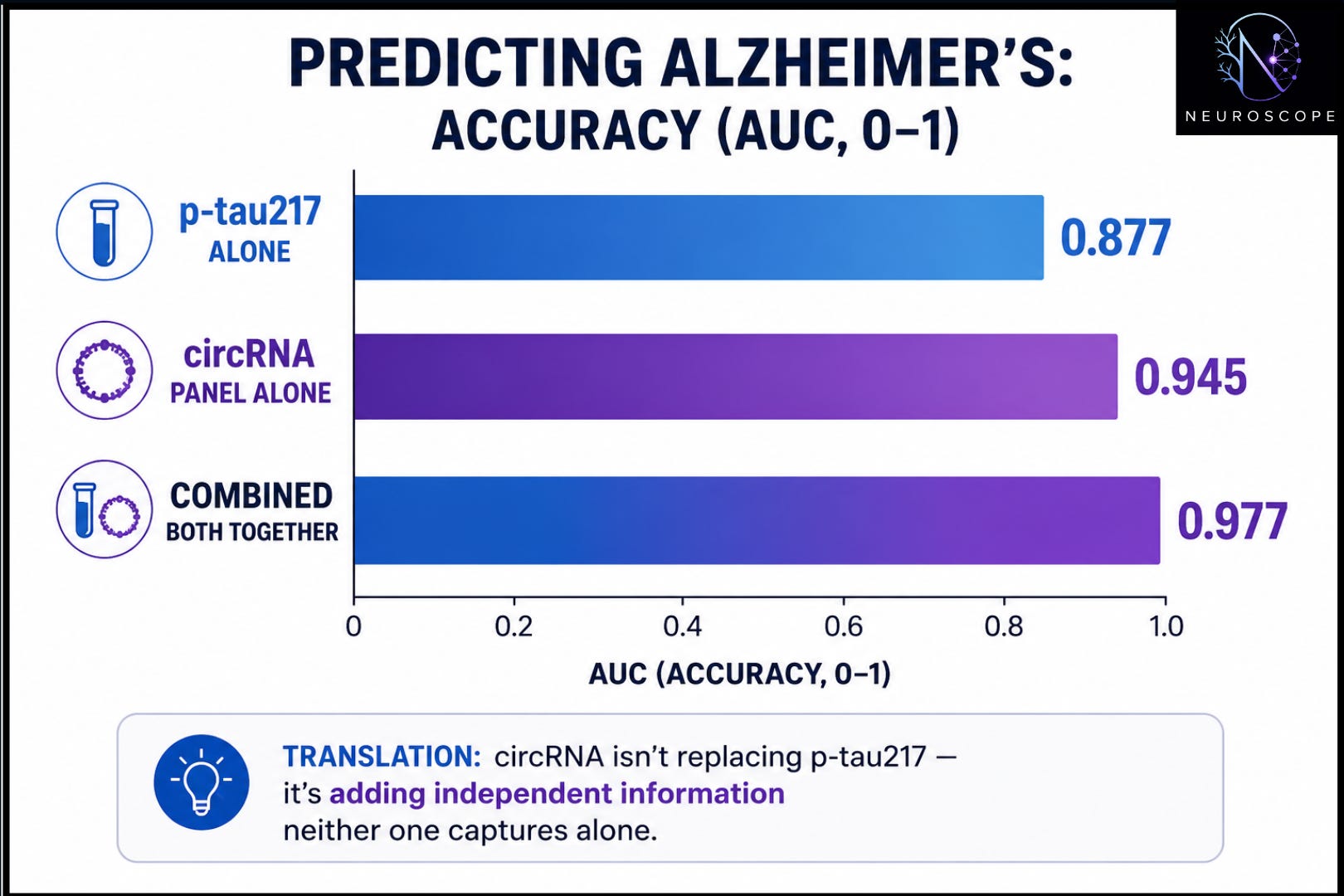
This accuracy was almost as close to the traditional CSF/PET scan imaging used for Alzheimer’s disease risk prediction, but without the invasive side attached to it.
This is the reason why I have been advocating for multiple biomarkers for a more accurate and better diagnosis of Alzheimer’s risk. Plus, it can also help us understand root causes and what is driving the disease.
Bottom line
Alzheimer’s is not one disease. It is not one-size-fits-all.
One biomarker test is not enough.
There will not be one universal cure.
No posts
Comments
Nothing yet. Say the first thing.
Sign in to join the conversation.