
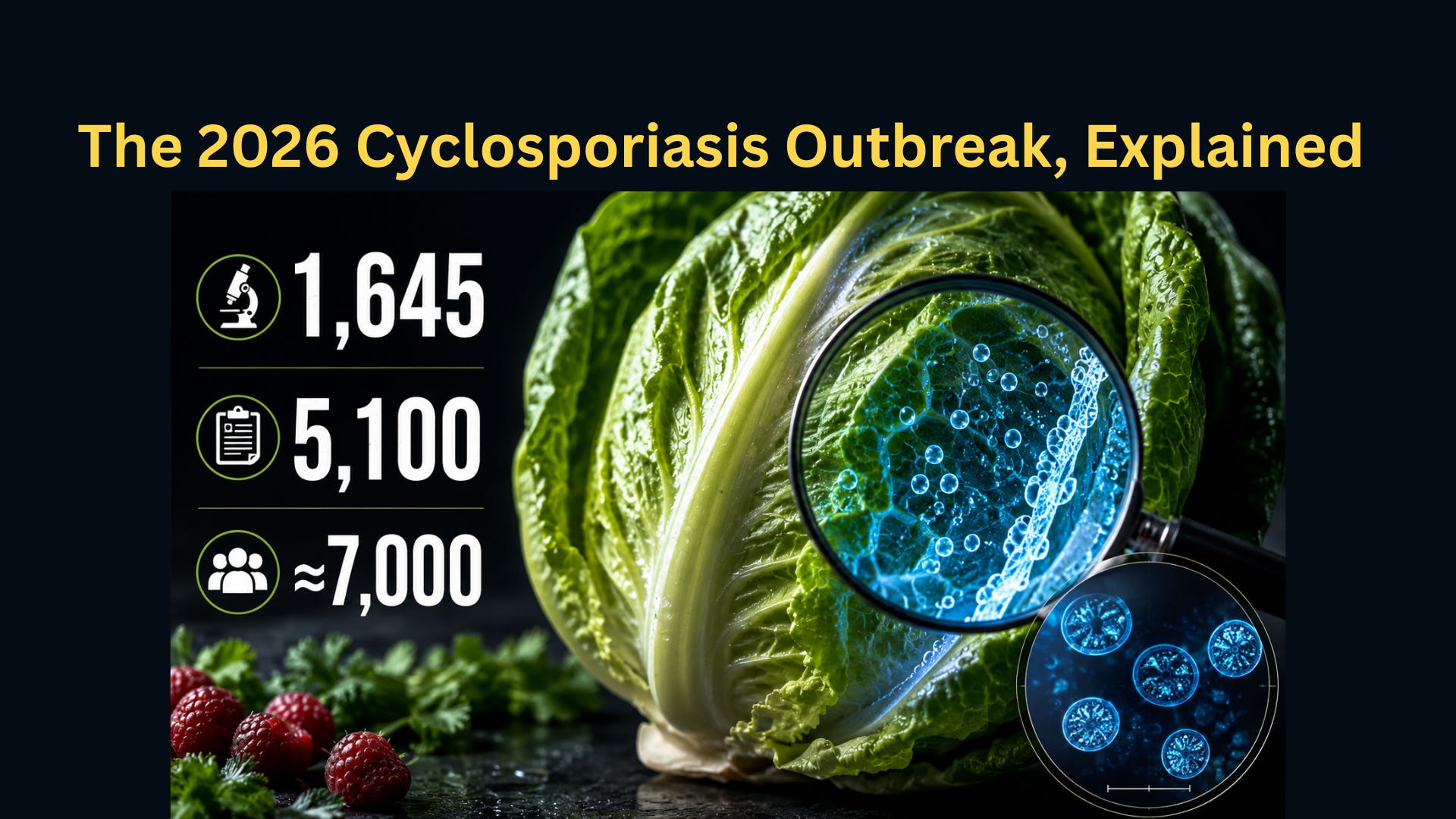
A fast-moving outbreak of cyclosporiasis, an intestinal illness caused by the microscopic parasite Cyclospora cayetanensis, has become one of the largest on record in the U.S., and it is still growing. But if you have seen the numbers reported anywhere from “1,600 cases” to “nearly 7,000,” you are not misreading. Those figures are all real. They just measure different things. Here is what is actually known, and how to make sense of the parts that sound contradictory.
A note on dates. Case counts in this piece are as of the CDC's July 14, 2026, advisory. The source confirmation came later, on July 17, and is dated separately in that section. This is an active investigation, and the numbers move daily.
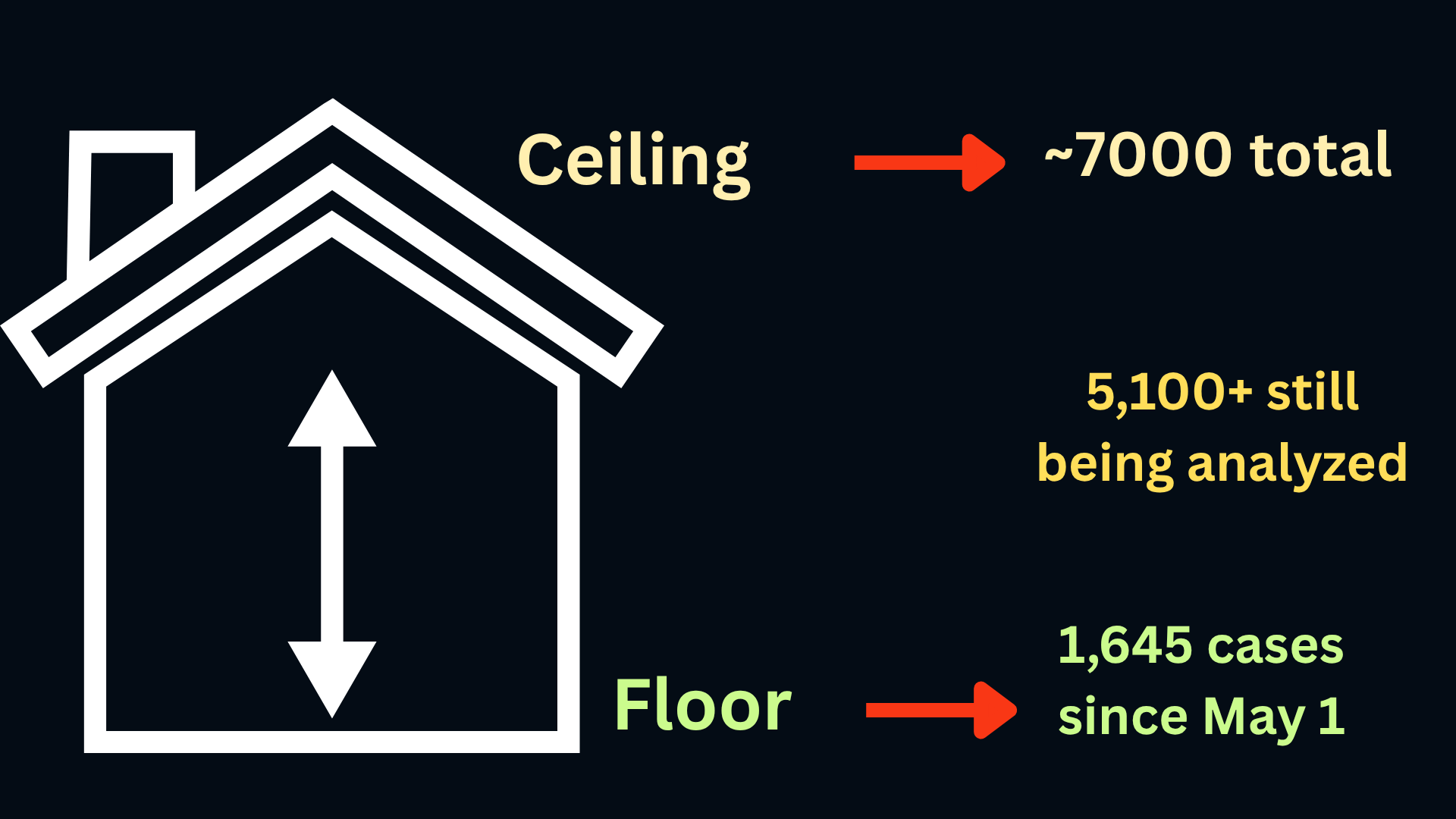
This is the part most coverage skips. As of July 14, the CDC has confirmed 1,645 cases in the lab. Another 5,100 or so are reported but still being checked. Add them, and you get the “nearly 7,000” in the headlines.
None of those numbers is wrong. They are just measuring different things. 1,645 is what has been confirmed. 7,000 is the outer edge, and some of those pending cases will not pan out. The real figure sits between the two and is still climbing, because Cyclospora takes weeks to confirm, and reported cases always lag the actual infections. So when you see a scary round number, check whether it means confirmed or suspected. With this parasite, that gap is wide, and it is the whole reason the count keeps jumping.
Michigan is the epicenter, reporting 3,309 cases as of July 14, more than double its count from four days earlier. Nationally, cases span 34 states, with 141 hospitalizations and no reported deaths. Even the confirmed count has already passed the previous U.S. record of roughly 4,700 cases, set in 2019, and a CDC official said that week she expects numbers to keep rising through the outbreak season, which typically runs through August.
For scale, during the same period in 2025, the CDC had received 249 reports of domestically acquired cyclosporiasis. This year, there are 1,645 confirmed cases, with thousands more pending.
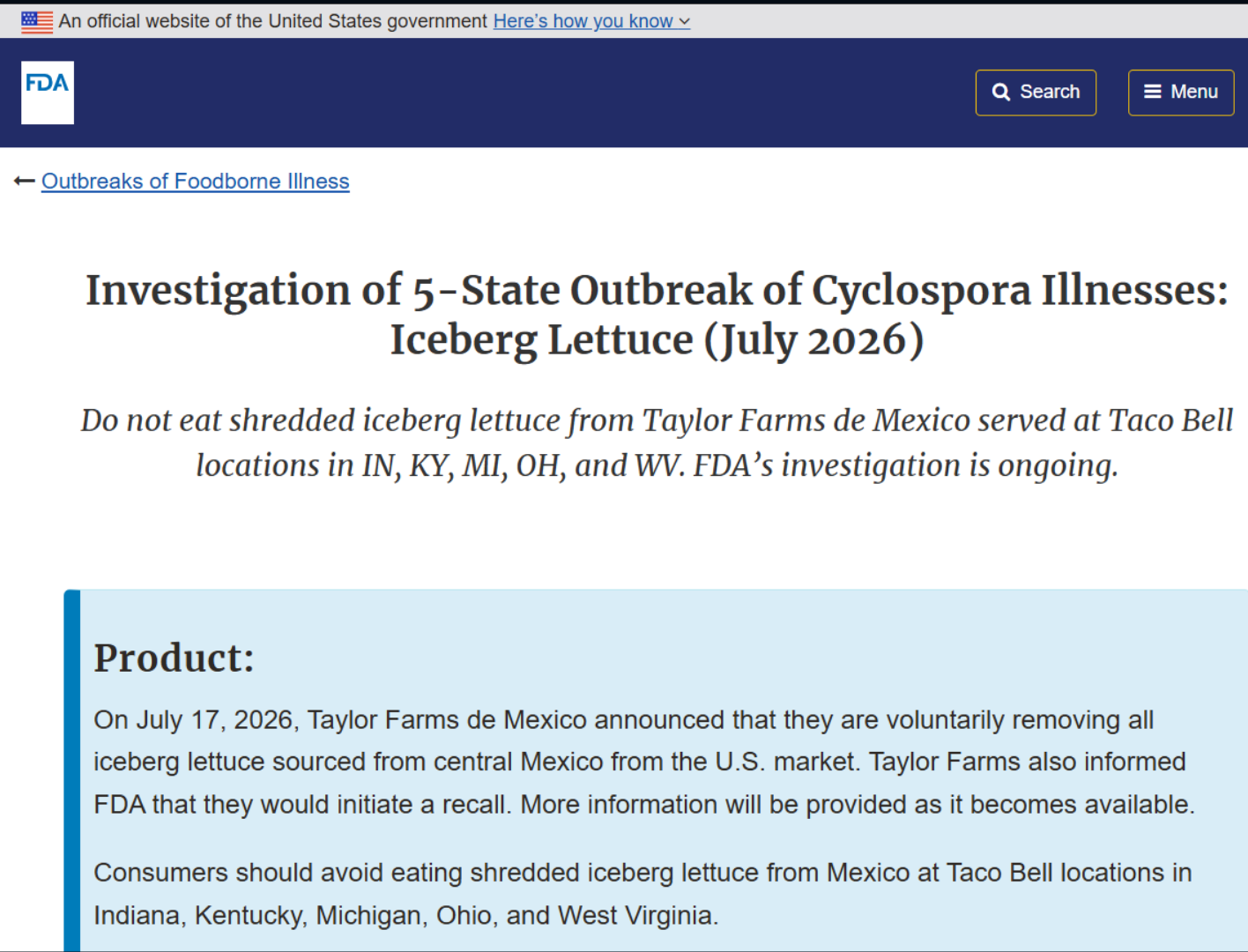
For weeks, lettuce was only a suspect. That changed on July 17. The FDA’s traceback investigation identified a single supplier, Taylor Farms de Mexico, as the source of shredded iceberg lettuce served at Taco Bell locations in Indiana, Kentucky, Michigan, Ohio, and West Virginia. The FDA told consumers not to eat it, and Taylor Farms began voluntarily removing all iceberg lettuce sourced from central Mexico, with a recall to follow. Taco Bell says it has removed the affected lettuce from its restaurants nationwide.
The epidemiology behind that call is worth seeing. Across those five states, 1,644 people who got sick reported eating at Taco Bell, with 94 hospitalizations and no deaths. Michigan interviewed 190 of them about what they actually ordered, and 90 percent had eaten iceberg lettuce. The traceback then converged on one supplier, and Taylor Farms says the FDA pointed to a specific independent farm representing under 1 percent of the U.S. iceberg supply.
That cluster is about 1,644 cases. The national count is close to 7,000. So roughly five thousand illnesses still have no confirmed source. Michigan has said plainly that many of its sick residents never ate at Taco Bell, though lettuce kept showing up in their food questionnaires anyway. And lettuce is not the only food this parasite travels on. Past U.S. outbreaks came from raspberries, basil, cilantro, snow peas, and green onions.
One more detail worth knowing. This is not Taylor Farms’ first cyclospora outbreak. In 2013, 631 people across 25 states were sickened by a salad mix traced to the same company, many of them diners at Olive Garden and Red Lobster.
You might wonder: with thousands of cases, why can’t investigators just find the source?
Here is why. Cyclospora has an unusually long, variable incubation period. Symptoms usually appear about a week after exposure, but anywhere from 2 to 14 days out. That delay makes it hard for sick people to remember what they ate, which is a big part of why traceback for this parasite crawls. It is also why the case count keeps climbing after the fact. People infected in June are only now showing up in the data.

The hallmark symptom is watery, sometimes explosive diarrhea, along with cramping, fatigue, nausea, and loss of appetite. The illness can last for weeks and is known to relapse, improve, and then return before fully resolving, which catches people off guard when they expect a single bout.
It is rarely life-threatening, and most people recover with a course of the antibiotic Bactrim (trimethoprim-sulfamethoxazole), along with hydration and rest. Older adults, young children, and immunocompromised people are generally at higher risk of a more prolonged illness, so symptoms are worth taking seriously in those groups.
If you look at the peer-reviewed images, you will notice they almost always show oocysts, the parasite’s tough, dormant, egg-like stage, rather than an active, wriggling organism. There is a genuinely interesting reason for that.
First, a terminology flag worth keeping straight: an oocyst is not the same as an oocyte. An oocyte is an immature egg cell in reproductive biology. An oocyst is the environmentally armored spore stage of certain parasites. They sound nearly identical and get swapped constantly, but they are unrelated. The Cyclospora stage is the oocyst.

● It is the only stage that survives outside the body. The replicating forms (sporozoites, meronts) are obligate intracellular. They only live inside the cells lining the small intestine. Once shed in stool, only the armored oocyst survives the open environment. In fact, a freshly shed oocyst is not even infectious yet. It has to spend days to weeks maturing in soil or water first, which is precisely why the infection spreads through contaminated food and water rather than person to person.
● It is the diagnostic smoking gun. Because the replicating stages remain locked within intestinal tissue, labs diagnose cyclosporiasis by detecting oocysts shed in stool. They are a distinctive 8 to 10 micrometers across, and they autofluoresce, meaning they glow under UV light, which makes them identifiable under a microscope.
● Seeing the active parasite requires a biopsy. To photograph the replicating stages actually invading cells, you would need an invasive intestinal biopsy. Those images are rare in the literature. Oocysts, by contrast, are easy to collect from stool or a contaminated leaf.
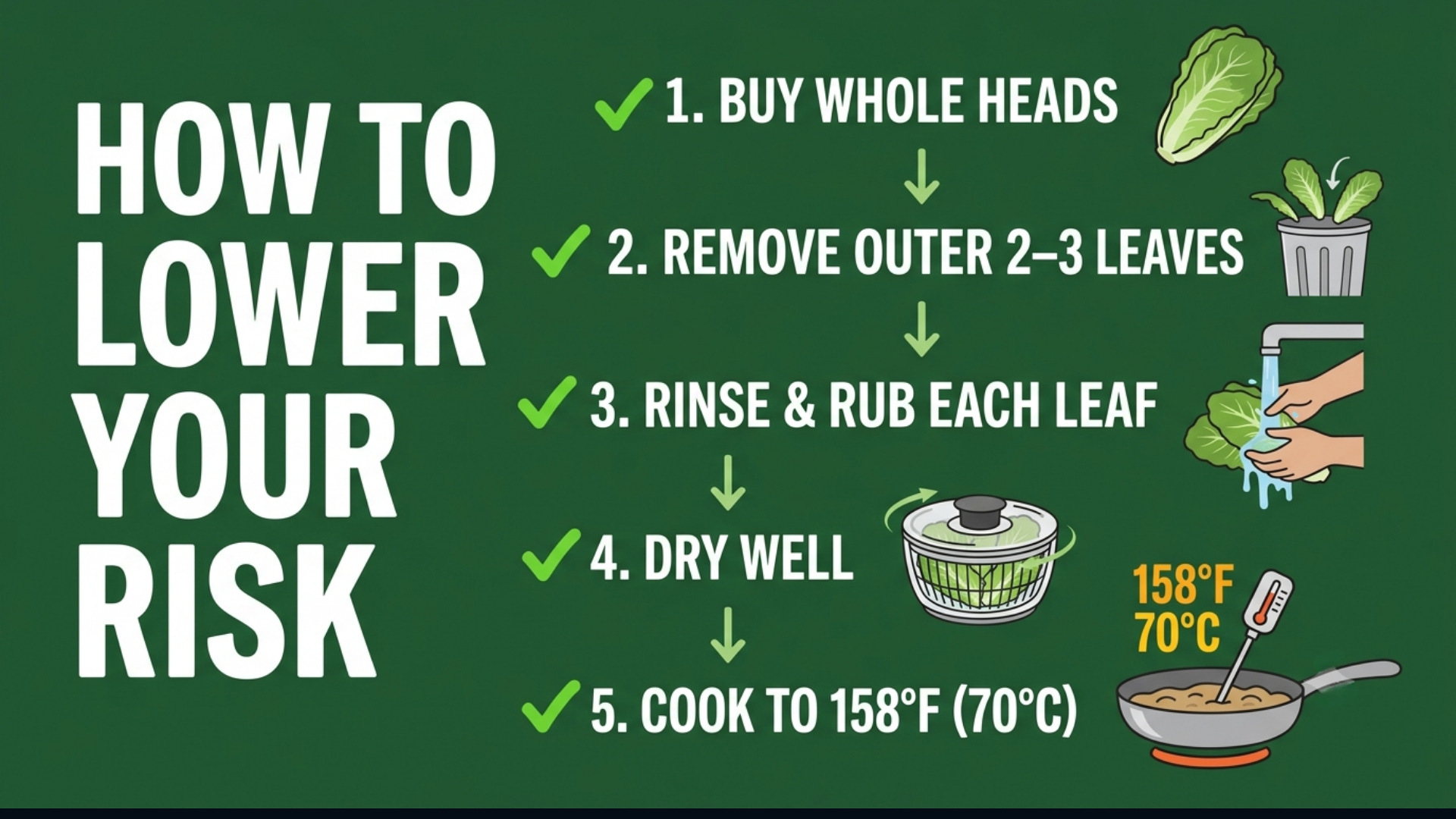
Here is the counterintuitive one: rinsing does not reliably fix this. Cyclospora resists chlorine and standard produce washes, and officials have been explicit that this includes home remedies like vinegar soaks. There is no evidence that soaking removes the parasite. It has to be physically scrubbed off or cut away, not soaked or rinsed off. Cooking greens to at least 158°F (70°C) is the only method confirmed to kill it outright.
Buy whole heads of lettuce rather than pre-washed, bagged mixes. This is the current recommendation.
Discard the outer 2–3 leaves before use.
Rinse each inner leaf under cool running water, gently rubbing to dislodge residue.
Spin dry or pat with a clean towel. Excess moisture encourages bacterial growth.
Use greens within a few days; store, wrapped in a paper towel, in a bag in the fridge.
Cook greens (sautéing, wilting) for extra caution. Heat is the only confirmed method of killing.
Wash your hands, cutting boards, and knives after handling raw produce.
This is an active investigation, with case counts changing daily and only one confirmed product recall so far. If you develop sudden, persistent diarrhea, see a doctor for a stool test rather than waiting it out, especially given how long it can drag on if left untreated.
The reasonable move right now is not to panic or swear off produce. It is to handle greens carefully, stay alert to updates, and treat any single scary-sounding number with the context it deserves.
The video abive is made based on data provided on July 14th 2026. Please note the updated changes in the current article.
Sources
Primary:
FDA, Investigation of 5-State Outbreak of Cyclospora Illnesses, Iceberg Lettuce (July 2026)
CDC Health Advisory Network Notice, HAN 531 (July 14, 2026)
CDC Cyclosporiasis Surveillance page
MDHHS Infectious Disease Outbreaks page
News coverage:
CNN, Taylor Farms pulling iceberg lettuce after tie to cyclospora outbreak (July 16, 2026)
NBC News, FDA names source of cyclosporiasis outbreak (July 17, 2026)
CBS News, Outbreak traced to lettuce from Mexico used by Taco Bell (July 17, 2026)
STAT News, Outbreak traced to Taylor Farms lettuce, Taco Bell (July 17, 2026)
NBC News, earlier outbreak coverage, including vinegar-soak guidance (July 14, 2026)
Peer-reviewed:
Ortega and Sanchez, Clinical Microbiology Reviews (2010)
No posts
Comments
Nothing yet. Say the first thing.
Sign in to join the conversation.