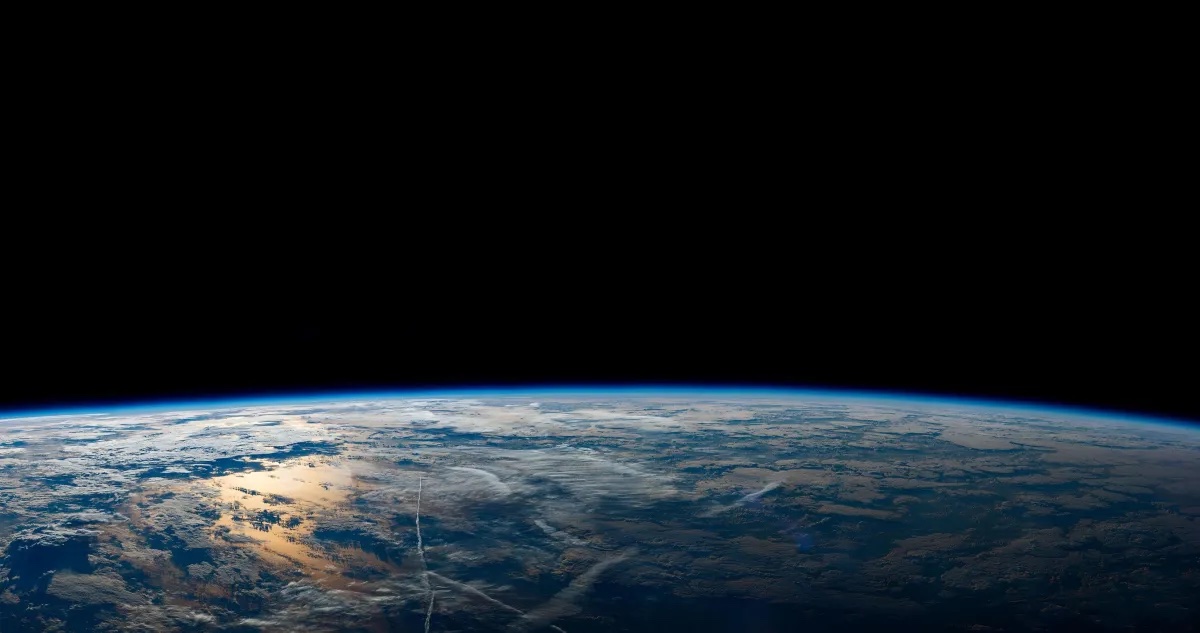
Photo by Yoann Boyer on Unsplash Core ideas within Buddhist and Daoist spiritual traditions are reflective of the commonalities found across many human scale indigenous cultures. A compassionate frame of love as vulnerable mutual knowing is compatible with a panpsychic relational philosophy. Everyone wants their experience to be taken seriously. We are embodied spirits, compelled to make sense of…
Autistic culture is a world of infinite diversity beyond the neuronormative imagination. Every Autistic relationship is unique, and many of us are traumatised. We need appropriate tools to invest in deeply understanding each other. Cultural metamorphosis requires radically reframing everything we understand about cultural adaptivity in terms of co-creating ecologies of care. Cultural metamorphosis…
Underneath the surface of internalised ableism, no one wants to be seen and heard by many. Everyone prefers to be understood and loved deeply by a few, and everyone wants to love and help. This is what makes us sacred human animals. Continuous dialogues about commitments make life sacred. This is how humans create meaning for each other and with each other. This is the experience of life as a…
Many Autistic people have great difficulties to think of the world in hierarchical ways. From what we know about our evolutionary path as humans, this is a reflection of innate human collaborative cultural capabilities in combination with a much reduced capacity for maintaining cognitive dissonance on an ongoing basis, which in turn can be traced to uncommon sensitivity profiles that fall outside…
In the Western Educated Industrialised Rich Democratic (WEIRD) world we live in what philosopher Guy Debord attempted to describe as The Society of the Spectacle. The reality presented to us via the media and public social media has been engineered to fit the exacting standards of Homo Economicus®. All the people alive today in Westernised countries, i.e. all the people in WEIRD countries and in…
In the current Aotearoa New Zealand Autism Guideline the existence of Autistic culture is not mentioned with a single word. Understanding Autistic people and Autistic culture is still a secondary concern. Civil society activists and child rights’ defenders from around the world are now joining together to create the Rights-Centric Education network. Some compare Autistic life in a hypernormative…
The human capacity for language serves to improve understanding and trust, fostering collaboration instead of competition. This contradicts capitalist interpretations of evolution and supports the notion of human collaboration. Society's hierarchical structure and wealth creation methods perpetuate exploitation, leading to societal sickness. To heal, we must rediscover faith in humanity and focus…
In our modern world the notion of tribalism is associated with many negative connotations, and especially with tribal bias, which is assumed to be an undesirable trait. A closer analysis reveals that the modern bias against tribalism is the result of conveniently sloppy research and a collective cognitive and emotional blind spot related to the collaborative potential of networked egalitarian…
Many scientists don't acknowledge the extent to which their disciplinary paradigms are influenced by the cultural frames of the colonial era. The so-called mental health crisis is a symptom of a terminally diseased institutional landscape. Neurodiversity and disability activists have been collaborating on coherent theories of human ways of being. Collaborative niche construction is the…
Our individually unique nervous systems and sensitivities develop and evolve over the course of our lives. 85% of neurodivergent adults often or always feel overwhelmed and misunderstood, and over 60% often or always feel disrespected and unsafe. Our overall sense of wellbeing is determined by alignment between our sensitivity profiles and the ecology of care we are embedded in (or not).…