Network Capital’s (NC) mission is to democratize inspiration and make personalized mentoring and career guidance accessible to every person on the planet. We are a global community of more than 200,000 peer mentors from 104 countries who learn with and from each other. We are a subscription based career content and mentoring community 1. Serve as your personalized career coach in the form of global tribe of mentors. No matter what you are looking for, someone on Network Capital has done it. 2.…
In this episode of the Network Capital Podcast , Sandhya Sabapathy, author of Burn Bright, Build Slow: How to Build a Just Climate Future , explores the ideas, institutions and leadership models required to address the climate crisis. The conversation reflects Network Capital’s broader interest in how individuals and organisations can combine purpose, intellectual curiosity and practical action.…
Harvard's holistic admissions system emerged in the 1920s, in part to reduce the number of Jewish students who had excelled under an examination-based system. "Character" and "fit" became the language through which discrimination could be exercised. That history remains the strongest argument for examinations: anyone with access to the syllabus and sufficient preparation can, in principle, compete…
Himanshu Gulati is an Indian-origin Norwegian politician from the Progress Party and a member of the Storting representing Akershus. Known for his work in education, foreign affairs, and defense, he has built a reputation as a sharp and disciplined voice in Norwegian politics. He currently serves in leadership roles on the Standing Committee on Foreign Affairs and Defence and the Enlarged Foreign…
In 2007, as user-generated content was upending media, Barry Diller declared that "the truth is there isn't that much talent to go around." Big audiences, he insisted, belonged to trained professionals. The two decades since have complicated that claim. YouTube built a creative economy larger than Hollywood's, and it did so by ignoring the gatekeepers Diller defended. Now AI has reopened the…
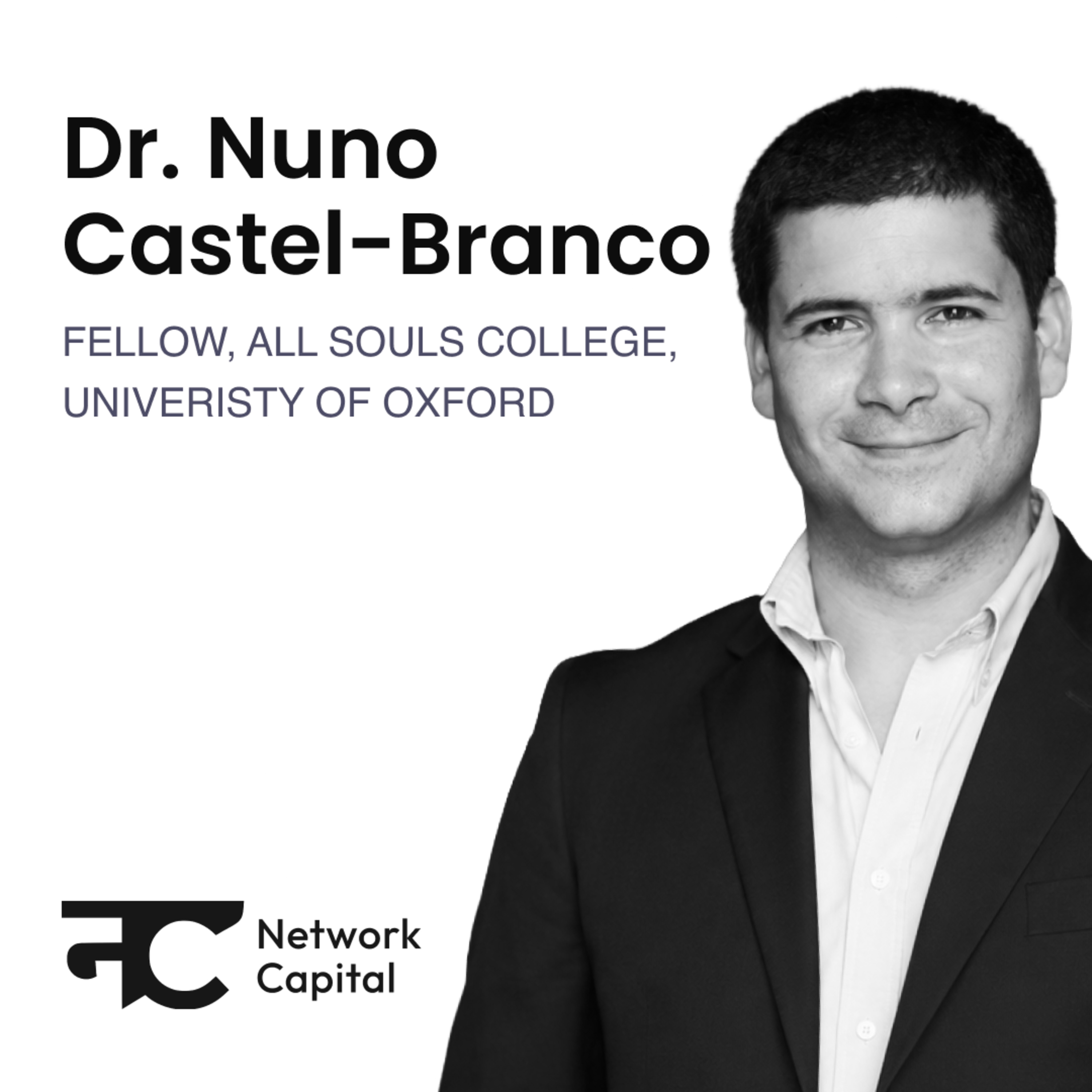
Dr Nuno Castel-Branco is a Research Fellow at All Souls College, Oxford. He completed his Ph.D. in the history of science at Johns Hopkins University in 2021 after earning a Bachelor’s and Master’s in Physics at the University of Lisbon. Previously, he worked as a Research Fellow at Harvard University’s Villa I Tatti in Florence and at the Max Planck Institute for the History of Science in Berlin.…
Space is back at the centre of economic and geopolitical conversations. Over the past few years, SpaceX has become one of the most important technology companies in the world, Starlink has reached millions of users, and Starship has opened a new debate about what becomes possible next. In this episode, Dhruva speaks with Utkarsh and takes a slightly different approach from the podcast’s usual…
India is entering a decade where ingenuity under constraint will decide who leads and who falls behind. LeanSpark shows how India’s ‘high-tech jugaad’ is turning scarcity into an innovation superpower—across drones and EVs, fintech and AI, sports, space and public policy. It distils a decade of research and fieldwork into a practical playbook for doing more with less, and for doing it at scale.…
Matt Weinzierl is Senior Associate Dean for Faculty Research and Development at Harvard Business School, where he is the Joseph and Jacqueline Elbling Professor of Business Administration in the Business, Government, and the International Economy Unit, and a Research Associate at the National Bureau of Economic Research. From 2022 through 2025, he served as Faculty Chair of the MBA Program at HBS,…
For decades, the classic path to prosperity seemed clear: build factories, create jobs, grow exports, and lift millions out of poverty. But in a world shaped by AI, automation, and the internet, that model no longer feels so certain. We debate whether developing countries should still bet on manufacturing, or whether services offer a faster and more realistic route to growth. Along the way, we…
Career Principles with INSEAD Professor Dr. Linda Brimm Linda Brimm is Emeritus Professor of Organisational Behaviour at INSEAD, teaching both in the MBA and executive programmes. Along with her teaching responsibilities, Dr. Brimm created and ran the psychological service for the MBA programme at INSEAD. Trained as a clinical psychologist, she also works with both individuals and families at a…
Career Principles with Nobel Laureate Dr. Robert Shiller Sterling Professor Emeritus of Economics Yale University About this masterclass Mental models for expanding your thinking Advice for young graduates Universities of the future Careers in academics Nobel Laureate Robert J. Shiller is Sterling Professor of Economics, Department of Economics and Cowles Foundation for Research in Economics, Yale…
Some argue that the age of American dominance is beginning to fracture, as rival powers rise, global trust erodes, and the institutions that once upheld U.S. leadership lose their force. Others contend that talk of decline is overstated, and that America remains the world’s central economic, military, and cultural power, however contested its position may now be. We explore whether the United…
Santanu Bhattacharya is the author of two novels, One Small Voice and Deviants, and several works of short fiction. One Small Voice was an Observer Best Debut Novel for 2023, and was shortlisted for the Author’s Club Best First Novel Award and the Gordon Bowker Volcano Prize. Deviants won the Rainbow Award and BLF-Atta Galata Prize 2025, and was longlisted for the Gordon Burn Prize. Santanu is the…
Dhruva and I explore both sides of the debate, starting with the case for fully remote organizations. Remote work expands the talent pool beyond geography, allowing companies to access exceptional people wherever they live. It can reduce bias linked to physical presence and office politics, and it often enables deeper focus without constant interruption. Asynchronous communication can sharpen…
Some view religion as a vital source of moral guidance, community, and meaning, while others argue that secular ethics, reason, and shared human values are sufficient foundations for a meaningful life. We explore whether religious institutions continue to provide social cohesion or whether, in an increasingly pluralistic world, they risk reinforcing division. We debate if and how faith offers…
This episode examines a fundamental tension in political philosophy: should we focus on leveling the playing field or on where people actually end up? Advocates of equal opportunity argue it preserves freedom and rewards merit while respecting individual choices. Critics contend that without addressing outcomes, opportunity remains illusory for those born into disadvantage. Dhruva and Utkarsh…
Some argue that digital detox is the way to deepening the way we connect with ourselves and our loved ones. They say that being constantly connected can be much less liberating than one might think. Others say that digital minimalism is fashionable but ineffective. If yes, how? In this episode of Arguable, we explore what it means to pay attention instead of demanding it, to look within when…
NVIDIA just hit a $5 trillion market cap. That’s more than the entire German economy. AI stocks are rewriting history, but investors often vacillate between unbridled fear and raging optimism. On one side, believers say AI is the real deal, transforming productivity, driving corporate earnings, and justifying sky-high valuations. On the other, skeptics warn of circular funding, speculative hype,…
Born in August 1992 in Ankara, Türkiye, Tuva Atasever attended the Bilkent University, where he received a Bachelor of Science in Electrical and Electronics Engineering. After completing his undergraduate studies in 2014, Atasever moved to the United States and received a master’s degree in photonics from the University of California, Irvine. In addition, in 2018 Atasever completed the Space…
Once, politics was something you debated and moved on from. Today, it can redraw the boundaries of who we call a friend. In this episode of Arguable, we ask a question that’s become uncomfortably common: when someone you care about stands for ideas you find intolerable, should you preserve the relationship or protect your principles? We explore how political identity has evolved into moral…
This episode examines the uneasy balance between moral ambition and political realism. Has the right’s coherence come at the cost of empathy, or has the left’s pluralism diluted its sense of purpose? Are voters choosing certainty over openness or merely responding to fatigue with ambiguity? In this debate, we put forward two contrasting arguments. One side contends that the right’s success stems…
The U.S. H-1B lottery just ended, and thousands of ambitious professionals are asking themselves the same question: is chasing a global career still worth it? Immigration rules are tightening, borders are harder to cross, and belonging feels more elusive than ever. In this episode, we think through the promise and pitfalls of building a life across countries. We’ll talk about the upside - bigger…
Taylor Swift has built an empire that redefines what it means to be an artist-entrepreneur. Her ownership battles, billion-dollar tours, and mastery of narrative have been hailed as a leadership blueprint for a new generation. Yet critics argue her success rests on singular talent, timing, and cultural lightning strikes that no strategy can replicate. This episode debates whether Swift offers a…
Previously a Fulbright Scholar, Fox International Fellow and Teaching Fellow at Yale, Gul has also been a Lead for the Digital Transformation of Industries at the World Economic Forum in Geneva, and an Expert on Higher Education, Entrepreneurship, and Industrial Policy at the United Nations Industrial Development Organisation in Vienna. His book The New Geography of Innovation won the Financial…
In order to thrive at work, must we always be working? For many young professionals, the hours outside work are no longer a refuge. In this episode of Arguable , Dhruva and Utkarsh explore the shifting line between hobbies and side hustles, and what that says about careers today. Are side hustles a smart form of insurance in an unpredictable economy, or a symptom of a culture that demands we…
This episode explores whether the modern millennial’s embrace of stoicism, rigorous health routines, and padel reflects a genuine search for meaning or a set of coping mechanisms that ultimately fall short. Has the rise of self-discipline and structured lifestyles created a more resilient generation, or has it led to a quiet sense of emptiness masked by routine? We examine the social and…
We live in an era of disciplinary chauvinism. While most hiring managers agree that deep generalists are precious for the modern workplace, they tend to hesitate before giving a shot to someone from a non-traditional background. That’s why it is important to study the careers of people like Arunima Anand who pivoted her career from literature and is building her category of one at Spotify, one of…
Urvashi Prasad has spent the last 15 years trying to make the world a kinder, fairer, and better place through her policy-based interventions in heathcare. Armed with degrees from Cambridge and LSTH, she worked as a director at NITI Aayog, and was awarded the India-UK Achievers Award. In addition to sharing principles and frameworks for building meaningful careers in public policy, Urvashi opens…
Esther Wojcicki is a renowned educator and journalist, best known for her transformative parenting philosophy outlined in her books In this episode, she shares the principles that guided her as a mother to Susan Wojcicki, former CEO of YouTube, Anne Wojcicki, founder of 23andMe, and Dr Janet Wojcicki, a professor of paediatrics at UCSF. She reflects on how childhood trauma, loss and adversity can…
What kind of economy does India need—not just to grow, but to serve its people with dignity and purpose? In this episode, we speak with Arun Maira, former Member of India’s Planning Commission, Chairman of BCG India, and author of Reimagining India’s Economy: An Inquiry into the Real Costs of Economic Growth. Tracing his journey from Tata Motors to the highest levels of government, Maira reflects…
Podcast Description: The nuclear family has become the dominant model in much of the world—but was its rise a step forward or a profound social loss? Critics argue that the shift from joint families to nuclear households has led to loneliness, burnout, fragile caregiving systems, and the erosion of intergenerational wisdom. Joint families, they say, offered economic resilience, shared childcare,…
Private space travel once belonged in the realm of science fiction—but today, celebrities like Katy Perry are booking tickets on Blue Origin, and billionaires are launching rockets. In this episode, Dhruva and Utkarsh explore the growing role of private companies in space exploration and whether the shift away from government-led missions is cause for celebration or concern. They delve into the…
In this episode, you will learn What is disability and ways in which our society discriminates against people with disabilities What can do about it Ways to deconstruct "I am not your inspiration" In The Anti-Ableist Manifesto, Tiffany Yu highlights the myriad ways in which our society discriminates against people with disabilities - and what we can do about it. Foregrounding disabled identities…
About this Podcast What did European missionaries misunderstand about Hinduism when they first arrived in India? How did colonial power and missionary pressure help reshape Hindu identity from within? Could the rise of modern Hindu nationalism be traced back to these early cultural and religious encounters? When European missionaries arrived in India in the sixteenth century, they entered a world…
Selective admissions have long defined access to elite universities but a number of scholars are challenging this model, arguing that it reinforces privilege and entrenches inequality. In this episode, Dhruva and Utkarsh examine the case for replacing selective admissions with a lottery among qualified applicants. The discussion draws on John Rawls’s concept of the veil of ignorance, and Michael…
Foreign aid and reparations are terms often used interchangeably, yet they embody distinct principles and purposes. In this episode, we discuss the differences between these concepts, exploring their definitions, the potential risks of conflating them, and the implications of such conflation. Foreign aid typically refers to financial or technical assistance provided by one nation to another,…
Tariffs—taxes on imports—have long been a powerful tool in economic policy, shaping global trade for centuries. But are they always harmful, or can they serve a strategic purpose? In this episode, we trace the history of tariffs from the British East India Company to modern trade disputes between the U.S., China, India, and Europe. William Dalrymple, in The Anarchy, writes about how Britain used…
In this debate, we explore the tension between structure and spontaneity, discipline and serendipity, as it plays out in the lives of ambitious professionals. For young professionals navigating packed calendars, hustle culture, and the constant pressure to optimize every minute, the debate is real: Does saying “yes” to unexpected opportunities fuel growth, or does it lead to chaos and burnout?…
Elon Musk’s $56 billion compensation package from Tesla sparked intense debate and legal scrutiny. Approved in 2018, the performance-based package hinged on Tesla reaching ambitious market and operational milestones. As Tesla’s stock price soared beyond expectations, the package’s value ballooned to $101.4 billion by 2024. Notably, Musk would have earned nothing had Tesla not achieved these…
Today it is easier than ever to stay in touch with friends, check out their updates, milestones, and everyday moments even when life gets busy. For those separated by distance, platforms like social media and messaging apps help us remain part of each other’s lives. Work friendships often flourish thanks to digital tools, and technology has made possible countless improbable connections, offering…
Alok Sama was the chief dealmaker at SoftBank, the backer of Arm Holdings, Yahoo, Nvidia, TikTok, Uber, T-Mobile, Alibaba and WeWork. In his first book The Money Trap, Sama discusses the inside story of some of these deals and presents a stranger-than-fiction personal odyssey featuring his experiences alongside SoftBank's iconic founder, Masayoshi Son, a maverick who wants to be remembered as “the…
Justice delayed is justice denied. Given how much time trials take, the emotional toil, and the reputation damage that comes with it, is it ethical for people to turn to media for justice? This is a question relevant to both prominent celebrities and regular citizens as they figure out appropriate redressal mechanisms in an increasingly connected world. In this episode, we explore whether media…
In this Episode, you will learn 1. How to think about problems from first-principles 2. Why digital public infrastructure of India could propel the GDP 3. How to build in India for India Deepak and Dipankar embarked upon the mission of democratizing quick commerce in India by launching Kirana Pro, a cutting-edge e-commerce platform that leverages ONDC (Open Network For Digital Commerce) to address…
A crypto entrepreneur bought a banana taped to a wall for several millions. Jaguar launched a widely watched advertisement that confused and irritated the fans. Zomato announced a new position that got 18,000+ applications, even though the selected candidate would have to pay $25,000 to join. In this debate, we analyse the short and long term impact of publicity stunts. Do they work? If yes, under…
This American election was a battle of narratives. One side won. Dhruva and Utkarsh debate the key constructs and analyse macro implications. Most media outlets would have you believe that this election was the outcome of a supremely popular candidate vs one who wasn’t. That doesn’t quite capture the essence. Tune in for a deep dive
Voters often face a dilemma: should they vote based on ideology or pragmatism? This podcast delves into the tension between these two approaches, exploring questions like: What is ideology, and how does it shape our values and worldview? When do pragmatic considerations—those based on practical outcomes and interests—come into conflict with ideological commitments? William Clay once said, “This is…
TikTok has over 1 billion users globally. Instagram has 2 billion. If these apps were countries, they would be some of the most highly populated countries in the world. As concerns grow about misinformation, addiction and foreign control of these apps, how should governments respond? Are attempts to ban social media apps, like the Indian government’s TikTok ban in 2020, legitimate? These are…
In this episode, we explore the complex intersection of climate change, environmental conservation, and human rights with environmental lawyer and legal scholar Arpitha Kodiveri. While nations of the Global North focus on emissions trading and alternative energy sources, communities in the Global South—especially forest-dwelling communities in India—face life-and-death decisions about natural…
Should popular media always seek to have storylines and characters with different ethnicities, religious backgrounds, and sexualities? In this episode, Dhruva and Utkarsh debate whether the growing focus on diversity has gone too far. They explore how diversity of ideas, origin, conviction, and orientation make the world a more vibrant and interesting place, but question whether mandating it…
Ashoka University, India’s top liberal arts university, charges over a million rupees per year in tuition - three times the yearly income of the average Indian. Williams College, one of America’s best-known liberal arts colleges, charges 68,000 dollars per year - more than the average yearly income in the US. Despite its cost, the popularity of the liberal arts system is growing. Many new…