
Hi Guyz,
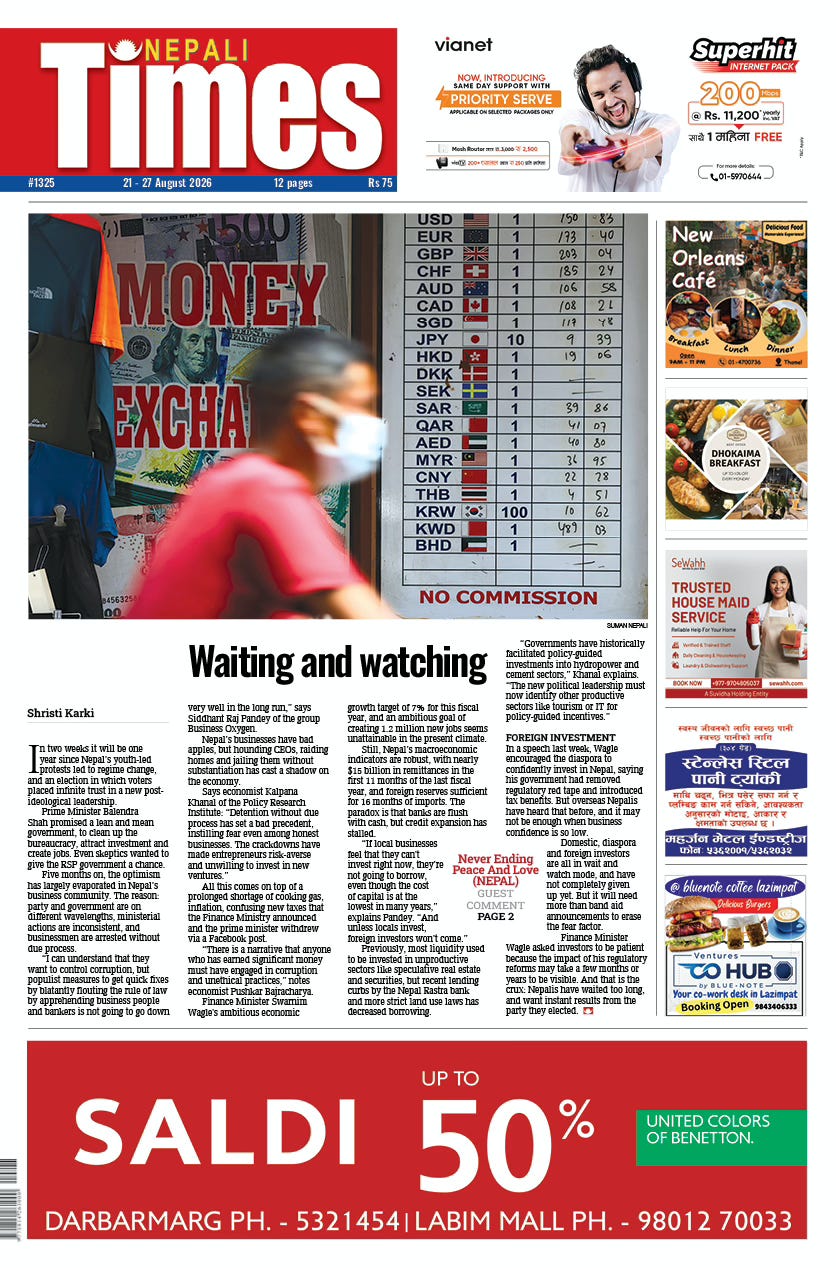
Nepal’s Parliament has consistently lived up to its reputation of being the most liberal in South Asia by legalising gay marriage, sanctioning the right of daughters to also inherit family assets, and permitting MPs to bunk legislative sessions en masse.
And now, the honourable and honorary members of the august House are preparing to debate re-legalising marijuana. It has always struck me as supreme irony that the very country that pushed Nepal to outlaw cannabis cultivation and sales in 1973 to discourage the anti-Vietnam War hippies from escaping to Nepal, dodging the draft and smoking dope, now allows street-side vendors to dispense marijuana over the counter.
Sure proves that grass is always greener on the other side. Soon, delegates to international conferences in Kathmandu organised by SAARC, ICIMOD or UNDP can have breakout sessions to smoke joints instead of tea breaks, which should substantially elevate the level of participation.
And our perennially cash-strapped government can generate revenue by imposing a #hashtax on weed, which we are told is under serious consideration by the Finance Minister. So what if Nepal is a secular republic? It is still a country where the patron deity regularly partook of bhang.
Hemp fabric is already being used to manufacture bags, jackets, socks, and rugs for export (Getting High on Hemp Products, page 10-11). Could this mean that potheads abroad could, in an emergency, smoke their Made in Nepal hemp laptop covers?
Reporter Sudiksha Tuladhar put a lot of work into this special coverage on the move in Nepal’s legislature to decriminalise cannabis (page 10-11).
It’s the economy, stupid.
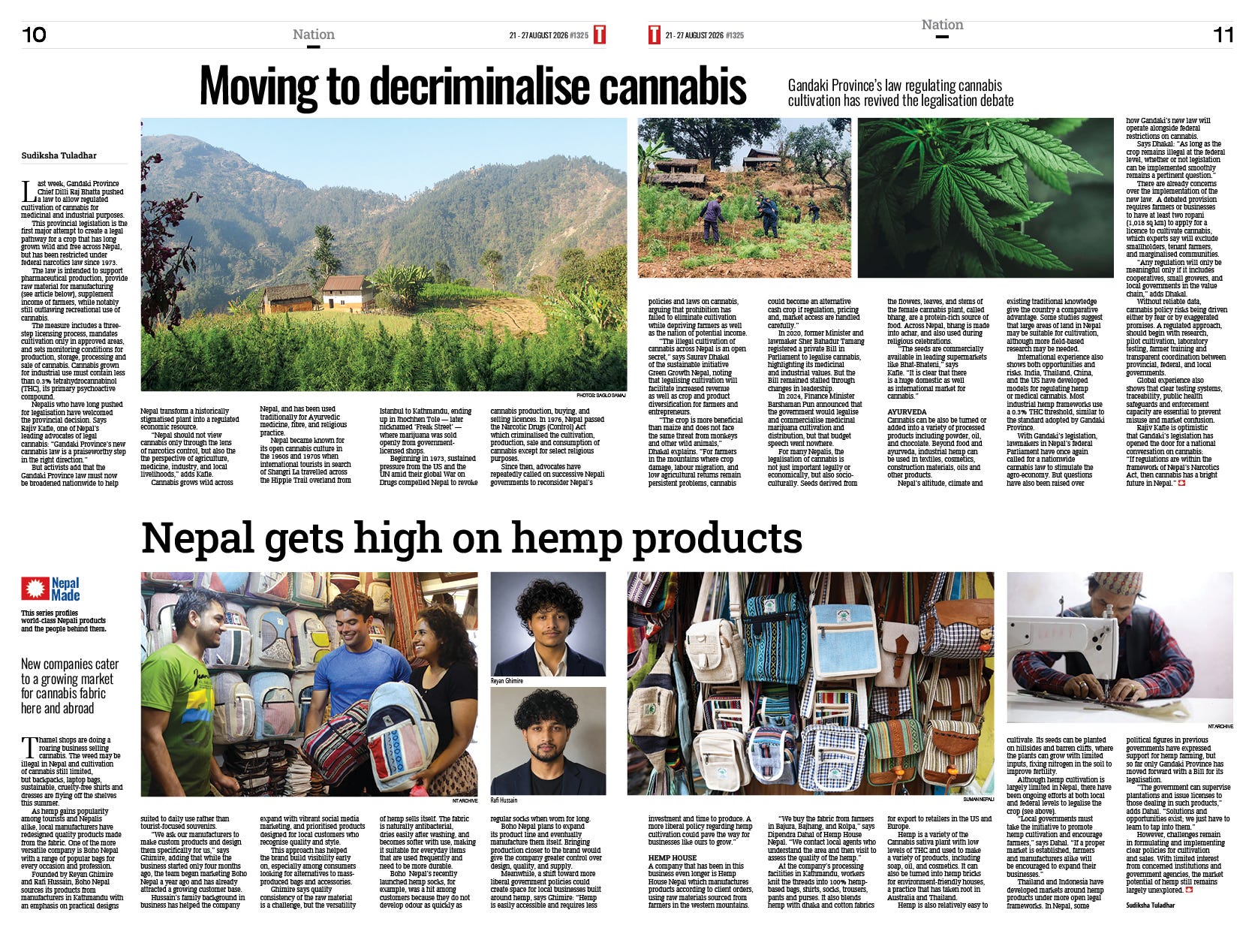
And five months into Prime Minister Balendra Shah’s government, we assess his administration’s performance so far on the economy. Special Correspondent Shristi Karki’s conclusion is that while one arm of govt tries to attract investors, the other arm arm-twists CEOs and bankers.
Banks are flush with cash, but no one is borrowing. First, power centres within the governing RSP must be on the same wavelength, then there needs to be a coherent strategy to incentivise investment, create jobs, and lift the economy (Waiting and Watching, page 1).
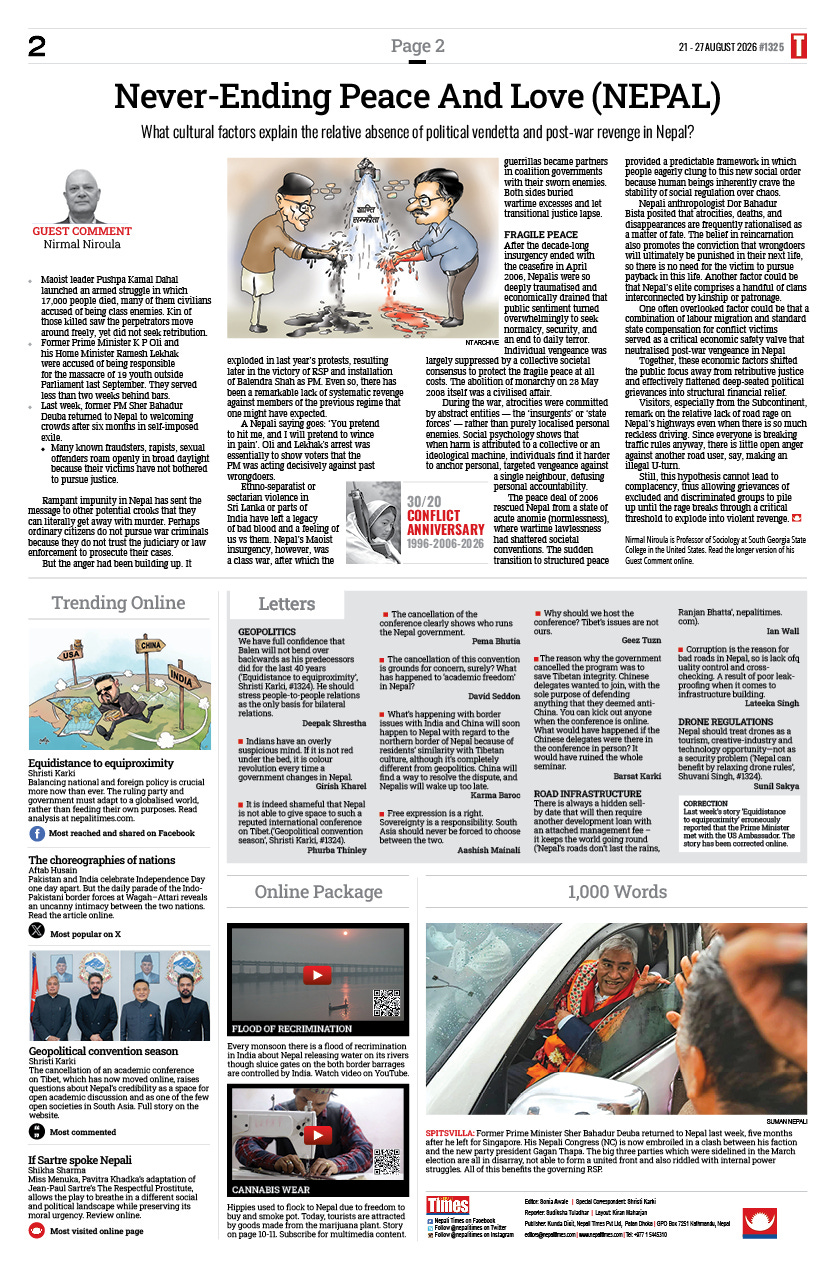
Have you ever wondered why there is so little road rage on Nepal’s highways despite all the reckless driving? Everyone flouts traffic rules, so no one gets mad when someone overtakes on a blind turn in the wrong lane. Sociology professor Nirmal Niroula writes that this same culture could explain the relative absence of violent vendetta in Nepali politics in his page 2 Guest Comment, Never-Ending Peace and Love (NEPAL). What is your explanation?
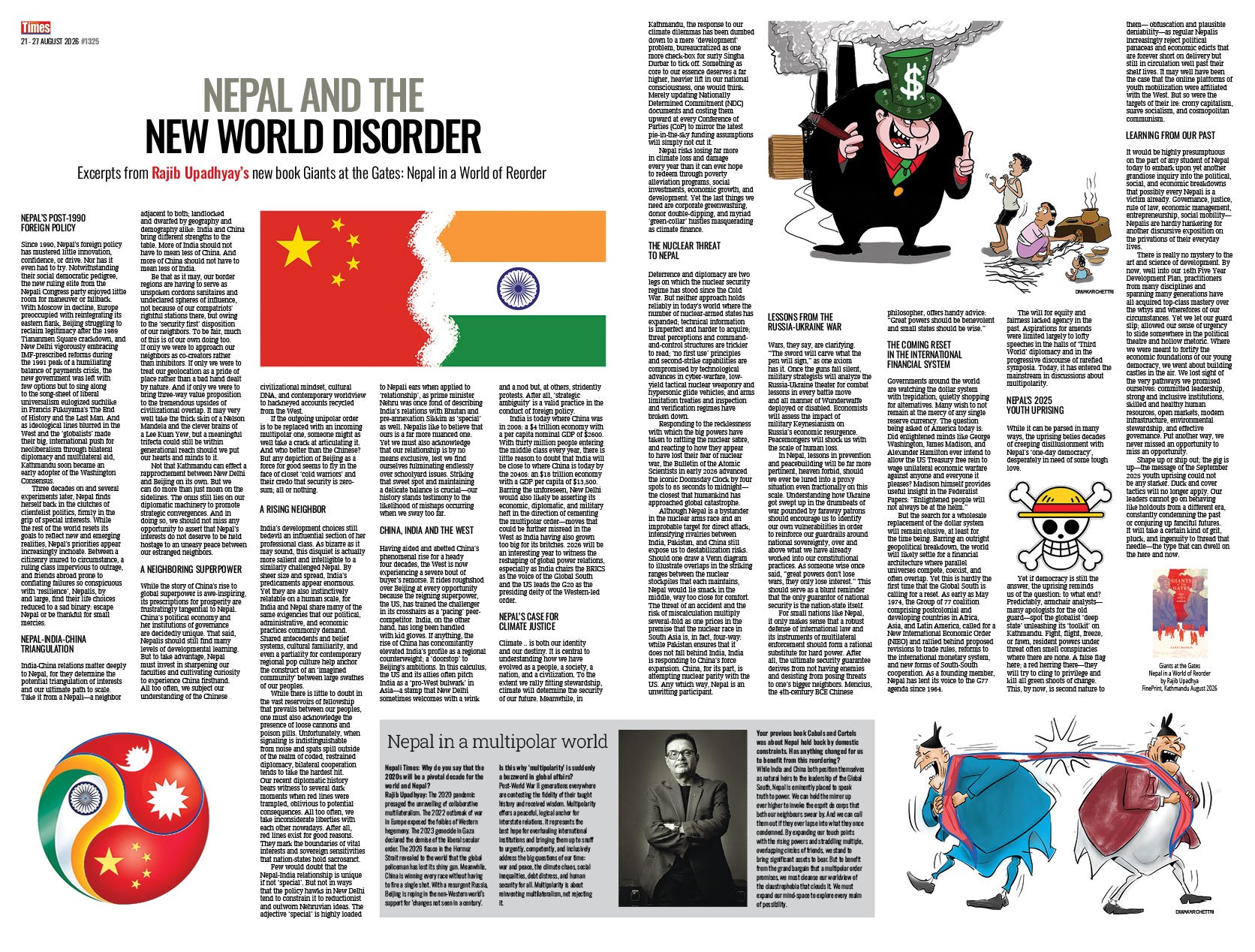
On Saturday in Kathmandu, economist Rajib Upadhyay launched his newest book, Giants at the Gates: Nepal in a World of Reorder, in which he deep dives into ways in which the new Nepal leadership can navigate and survive in a multipolar world. Read choice excerpts from the book. (Nepal and the New World Disorder, page 6-7).
We in the newsroom had no idea there were ethnic Nepali people living in the Chittagong Hill Tracts of Bangladesh. When we found out, we thought they were families of British Gurkha soldiers from World War II who stayed behind. It turns out the 50 families are descendants of Nepalis brought here by the East India Company in 1873 to be settled along a defensive buffer zone to protect from raids by indigenous tribes.
More than seven generations later, Manoj Bahadur Gurkha is a cultural activist and musician who has a large portrait of Prithvi Narayan Shah on his studio wall. (The Gorkhalis of Bangladesh on page 4-5 was reported by Rehnuma Shahreen of The Business Standard in Dhaka).
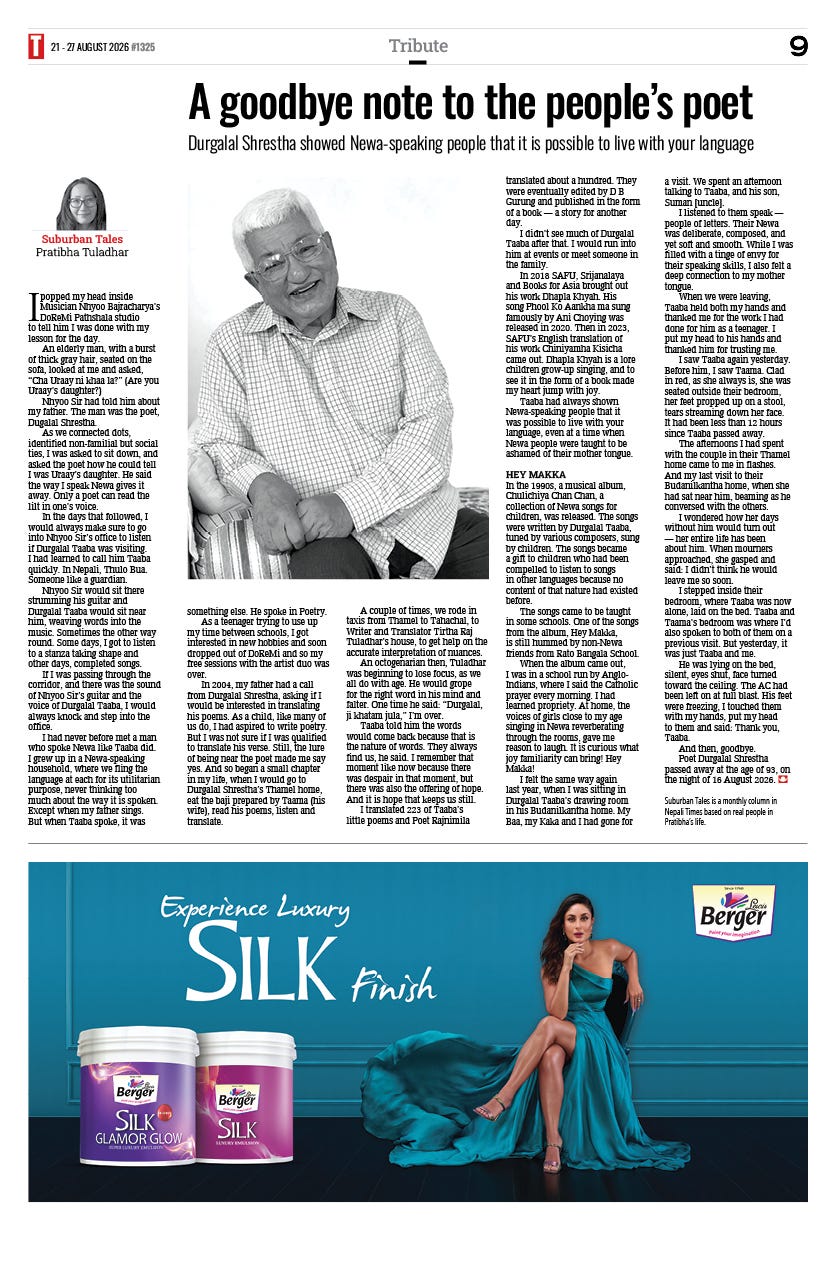
Columnist Pratibha Tuladhar in her latest Suburban Tales pays tribute to poet, lyricist and musician Durgalal Shreshta, who died last week at age 93 (A Goodbye Note To the People’s Poet, page 9).
And finally, the art review this week is of an exhibition at The Kalā Salon by Sri Lankan husband-wife duo Manoranjana Herath Bandara and Nilanthi Dilini Perera (Blissful Conjugal Life Is an Art, by Shuvani Singh, page 12).
And for more events, exhibitions, dining and getaway tips visit the About Town section on page 8.
Sorry for this shortish letter this time. My brain is still somewhere over the Mediterranean and trying to catch up with the rest of me here in rainy Kathmandu.
Later,
Kunda Dixit
No posts
Comments
Nothing yet. Say the first thing.
Sign in to join the conversation.