
Around the time I turned 10 and picked up a guitar, cosmic powers conspired to open up the floodgates of western rock music to my ears, with Green Day and Linkin Park being the first through the door. Like any other kid with a burning desire to be cool, I decided to start a band with my buddies. With bassist being the least desirable role (duh), I took one for the team. This particular band never left the proverbial garage, but it gave me two lifelong friends who introduced me to music that shaped my taste for years to come.
This was also a canon event that led me to grace every ‘Battle of Bands’ stage in the Kolkata high school circuit, covering songs by a tasteful range of global acts like the Red Hot Chili Peppers, Arctic Monkeys, John Mayer, Metallica, Pink Floyd, Dream Theater, Porcupine Tree and more.
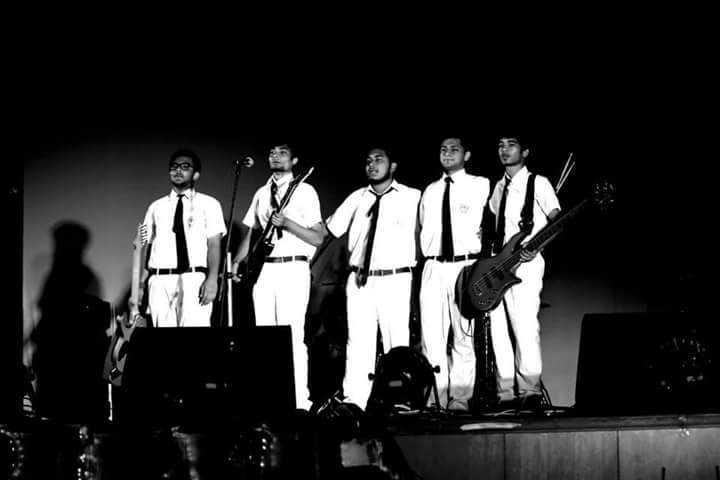
“Those were the best days of my life.” - Bryan Adams
The purpose of this personal anecdote was to interpolate lived experiences as a premise for my thesis that bands or artist collectives are making a comeback and will soon be shaping (or re-shaping?) the musical zeitgeist over the coming decade. Let’s explore this argument through the chronology of rock bands in India.
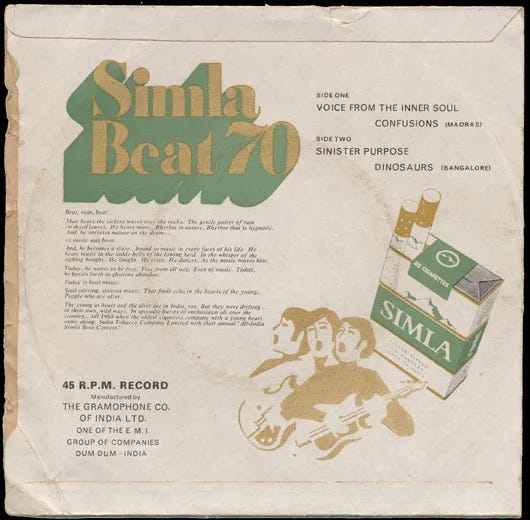
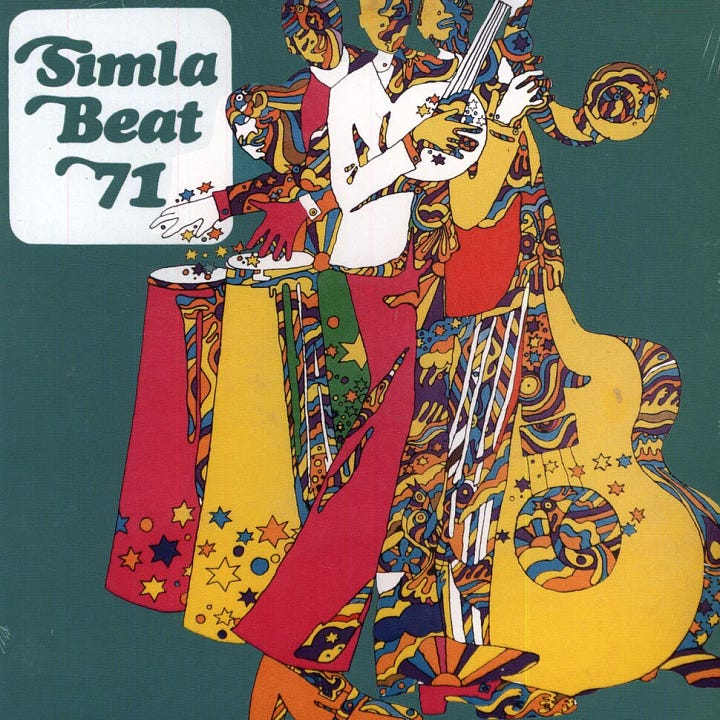
Fast forwarding through the medieval and colonial era of Indian classical, jazz or brass bands, I began with the question - who was the first known Indian rock band? There seem to be multiple contenders across the 60s and early 70s in the form of Western rock cover bands across university circuits paying homage to the global wave of Beatles-inspired psychedelic rock. This is best represented by the Simla Beat’ 70 compilation album, a contest of the same name where winning bands recorded their versions of popular Western rock at the time (also check out Simla Beat’ 71). There is no single uncontested name because bands like The Cavaliers, The Combustibles, The Mustangs, The Vanguards, The Flintstones, The Savages, Human Bondage (wtf?) and Great Bear formed almost simultaneously across different cultural centres, with Kolkata and Mumbai leading the charge. (or in this case, Calcutta and Bombay?)
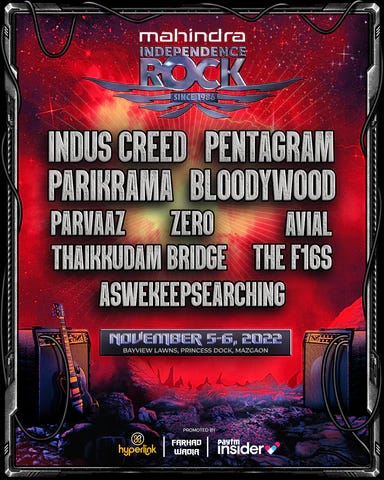
The first known Indian band that earned wide acclaim for their original music was Moheener Ghoraguli, formed in Kolkata in 1975. Their music drew from Bengali folk, Baul, urban American folk, and jazz creating a unique genre often described as “Baul jazz”. Their tale is an inspiring one and will continue to live on as a defining piece of contemporary Bengali music history. Going into the 80s and 90s, with globalization and the arrival of MTV, tastes rapidly changed, encouraging 90s bands to harden their sound and focus more on underground styles like alternative rock, metal, and progressive. This era of Indian rock is underlined by college festivals and the rise of Independence Rock, or I-Rock, which soon became a home for legendary names like Indus Creed (fka Rock Machine), Pentagram, Millennium, Demonic Resurrection, Parikrama and many more. The early 2000s started seeing massive fan following for more such bands like Indian Ocean and Euphoria, elevating them to pop status back then and cult classics of now. If you’re a curious cat like me and want to dig deeper, you can start here: Excellent Documentary About Indian Rock n Roll History
Having gone through the glory days, it is important to unpack why rock and metal bands couldn’t see it through the advent of the digital age from the 2010s onwards. I would personally peg it down to the following:
Lack of major label support as rock music was still considered niche in India and mostly popular among younger listeners with low spending power. It couldn’t provide a strong enough challenge to Bollywood, which was undoubtedly the most effective channel for discovery and distribution to mass audiences. So it’s not very surprising that a genre innately based on rebellion, non-conformity and rejection of authority, was an unlikely candidate for Indian major labels.
Digital piracy and streaming brought about major changes in the consumption patterns and economics of music globally. With rock acts primarily relying on album sales promoted through live touring, MTV and radio, they found it tough to keep up with the fast moving dynamics of the singles format brought about by streaming. With growing access to advanced digital recording software, a single composer/producer could recreate the same magic that would otherwise need an ensemble and lots of expensive gear. Hence recording, touring and selling albums became increasingly tougher for bands with hardly any spoils to share equitably among the members.
Lack of innovation and changing tastes is a harder pill to swallow but probably one of the strongest reasons for the decline of rock and metal. With hip-hop and electronic dance music emerging as much more accessible and youth-centric genres, they quickly took over playlists, festival stages and nightclubs throughout the 2010s, toppling rock as the incumbent leader of pop music culture. Surprisingly a genre that innately started off as anti-establishment, soon became the establishment to be unseated. Dad Rock is now an actual genre
As someone stuck right between Millennial dad rock evangelism and Gen-Z hip-hop / electronic futurism, I’m actually having a ball of a time. There is fresh music coming out at a much faster rate than one can consume, while live promoters are hitting all the right spots with a perfect blend of nostalgia and discovery. New international bands like Sleep Token and Turnstile are making waves, while legacy acts like Oasis are reuniting. Homegrown bands like Peter Cat Recording Co and Bloodywood are making global leaps, with a vibrant pool of emerging bands building a base across local circuits. But the top highlight for me this year has to be:
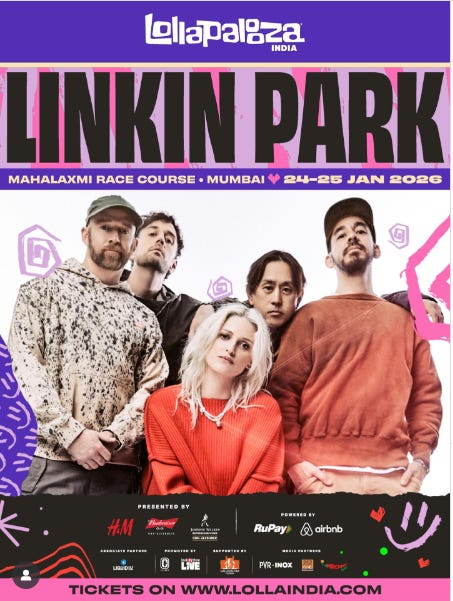
LINKIN PARK IS FUCKING BACK!! - Music nerds often find it appalling to answer the question “Who’s your favourite artist?”. But for me LP takes the cake. Simply because where else can you find rock, metal, rap and electronic all rolled into one? With the devastating news of Chester Bennington’s passing on my birthday 8 years ago, I thought they would just remain a dear piece of my childhood to be held onto. And now I suddenly get to see them live?? In India?? With new songs?? Thank god for Emily Armstrong (and BookMyShow).
The Indian live circuit is exploding and will soon rival global markets, with legacy international acts gracing our stages alongside emerging and established domestic acts, across every genre imaginable. This rebuilds the much-needed direct channel for emerging bands to promote their music as digital and streaming fatigue starts to set in.
Let’s look the percentage split of multi-member groups versus solo/duo acts in Lollapalooza India lineups since inception:
2023: 13 groups vs 27 solo/duo, roughly 30 / 70. Notable bands included international heavy hitters like Imagine Dragons, The Strokes, Cigarettes after Sex and domestic indie acts like Yellow Diary, Bloodywood, aswekeepsearching, The F16s, Till Apes, Easy Wanderlings
2024: 16 groups vs 22 solo/duo, roughly 40 / 60. Notable international bands included Jonas Brothers, Keane, Royal Blood, OneRepublic, Jungle, with domestic acts like The Raghu Dixit Project, Skrat, Jatayu, Long Distances and more
2025: 5 groups vs 27 solo/duo, roughly 15 / 85. While the total number of bands took a dip, let’s keep in mind the cost of bringing a giant legacy act like Green Day to India alongside Glass Animals, Nothing but Thieves and Wave to Earth. The remaining lineup largely reflected the peak popularity of hip hop acts and global DJs / producers
2026: 12 groups vs 29 solo/duo, roughly 30 / 70. Linkin Park has to be the highlight while Playboi Carti is the more unexpected headliner choice for me. The remaining lineup is actually quite vibrant with emerging and established Indian bands alongside a very exciting roster of electronic acts and DJs.
While Lollapalooza India is the premier contemporary music festival at least for me, Bandland is actually the IP that strongly proves the idea of rock bands making it back into the mainstream. With Muse being announced as the 2026 headliner alongside Train and Karnivool, the past 2 editions have featured legendary acts like Deep Purple, Goo Goo Dolls, Avenged Sevenfold and Extreme.
If you went back in time to 2010 and told an Indian rock/metal fan that all of the above artists would one day be coming to India within the span of 3 years, they would have laughed in your face. So let’s appreciate the absolutely wild times we’re living in, and hope that such festivals and IPs will soon become a launchpad for emerging Indian bands to take the global stage.
At this point, I started wondering if this article was getting too long but I would be remiss not to mention the virtual elephant in the room. This section was inspired by a recent video essay by one of my favourite youtubers, ‘Mic The Snare’: When Fake Bands Feel More Real Than Humans
Without getting into the weeds of morality, artistic integrity and cultural shock that often underline any AI music related debate, I want to first clarify that virtual or digital bands have always been around. I’ll just leave you with 3 separate case studies for you to draw your own conclusions.
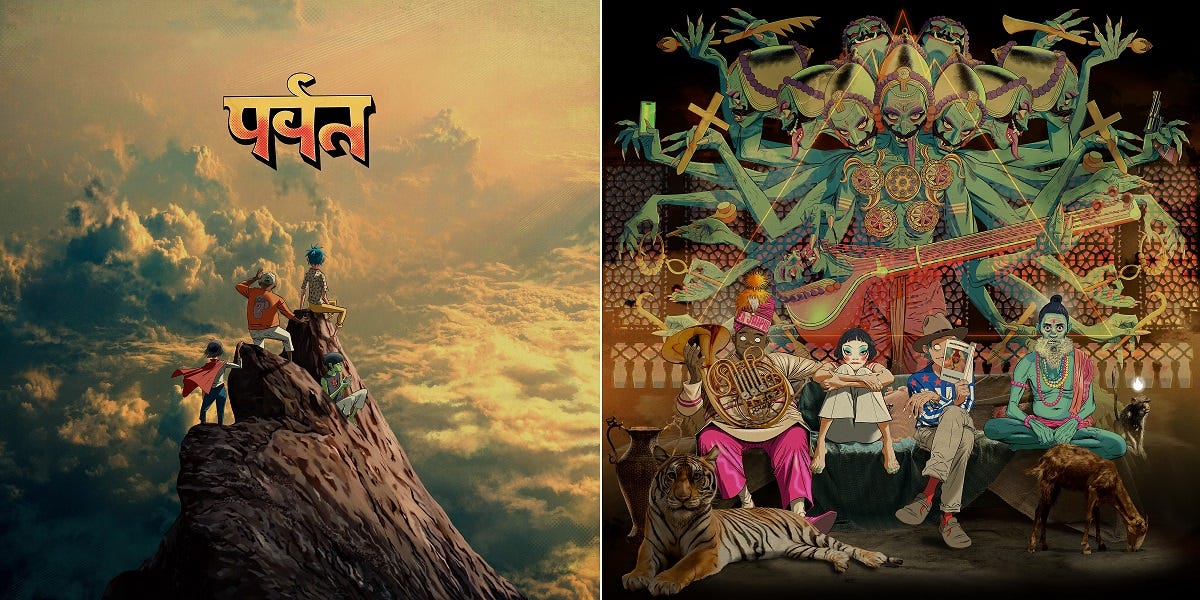
Gorillaz: An undeniably awesome collaboration between music and animation, brought about by two undeniably authentic artists Damon Albarn and Jamie Hewlett, they’ve been around as the world’s foremost virtual music collective for over 2 decades. In fact, they recently announced their upcoming 9th studio album ‘Mountain’ which is so heavily India-coded that it feels like we’re living in an alternate timeline. In my eyes, this is enough proof that EVEN VIRTUAL BANDS are making a real comeback and India could soon be at the forefront of this global cultural moment.
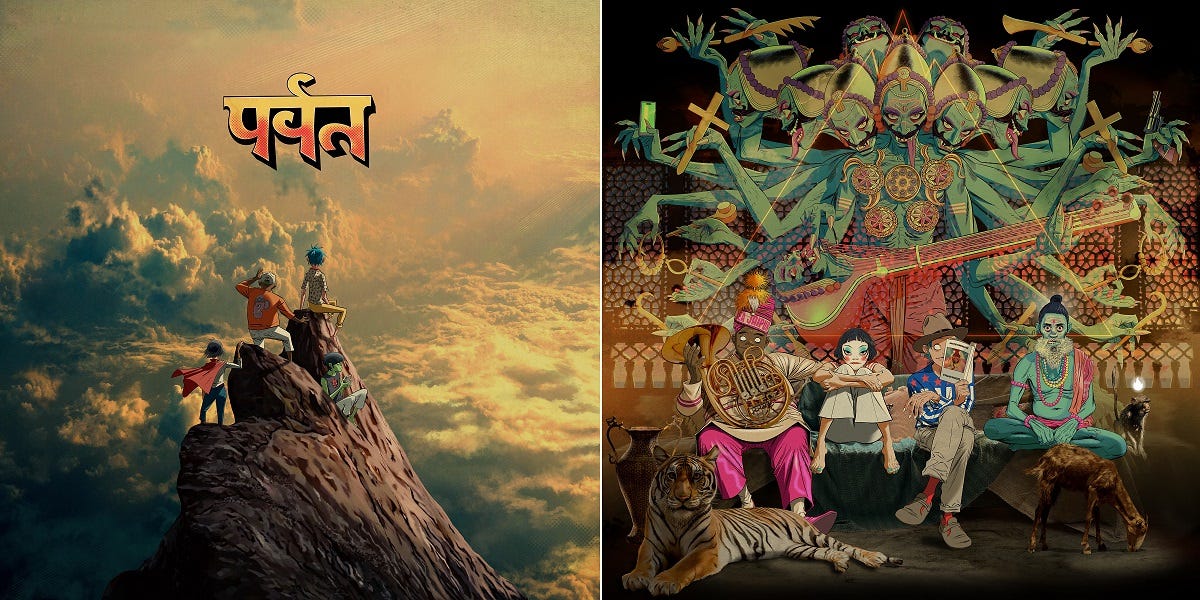
Source: Rock Cellar Magazine
K-pop Demon Hunters: An unexplainable phenomenon of pop music in 2025, this animated Netflix film follows a K-pop girl group, Huntr/x who lead double lives as demon hunters. They face off against a rival boy band, the Saja Boys, whose members are secretly demons. Now here’s the crazy part - the single ‘Golden’ from the film’s soundtrack has gone PLATINUM and has been at the top of Billboard charts for multiple weeks now. This is absolutely unheard of for such a virtual group. But wait, it gets even better:
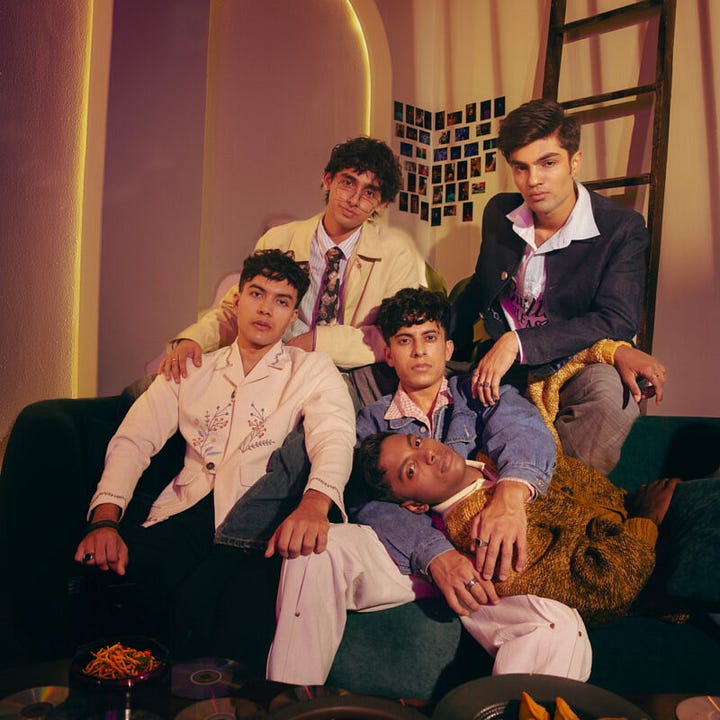
This soundtrack was crafted by Visva Records, a brainchild of Savan Kotecha, the venerable songwriter of INDIAN ORIGIN who was the driving force behind One Direction. But wait, there’s even more.
Visva Records is also building an Indian boy band named Outstation which was scouted through a good old talent hunt across Indian states. They’ve managed to do a self-promoted 6 city tour, drawing an audience of over 3500 WITHOUT EVEN PUTTING OUT A SINGLE TRACK. (just clarifying, this is a real band and not virtual)
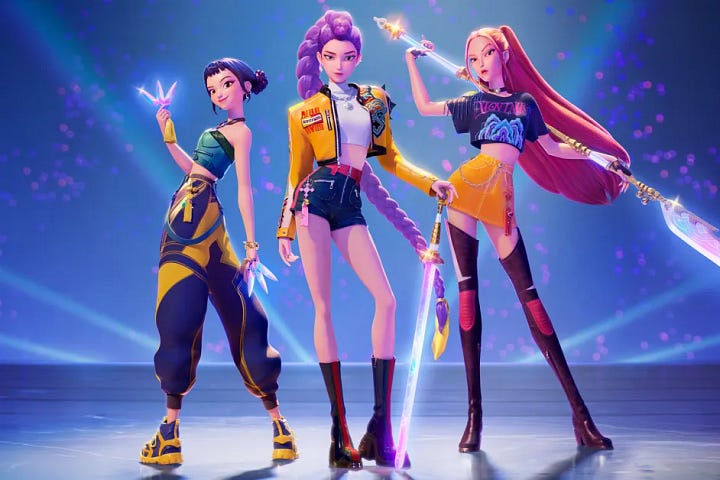
Source left: Billboard, right: MusiCulture
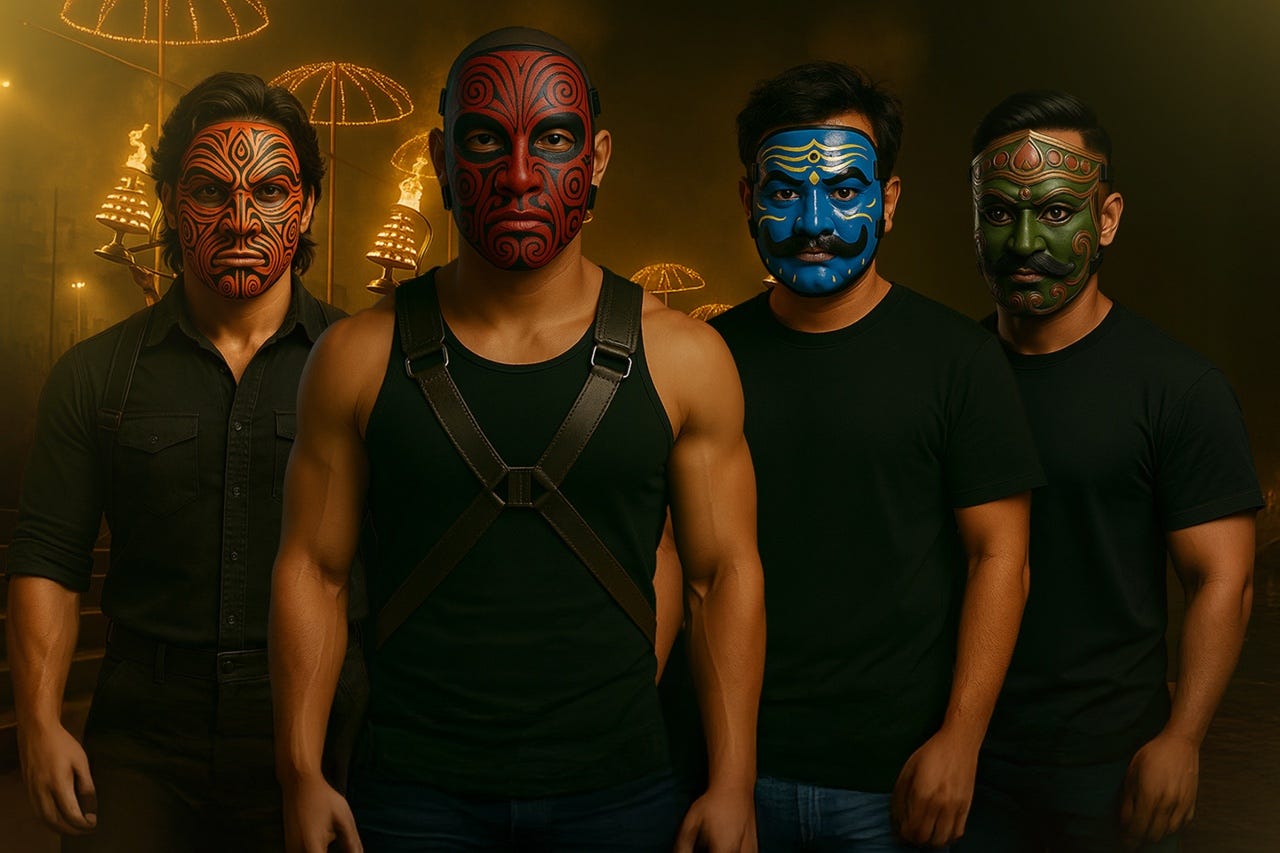
Trilok: India’s first fully AI-powered spiritual rock band (trust me this was not on my 2025 bingo card) which put out an AI-generated rendition of the age-old devotional track Achyutam Keshavam. I won’t pass any opinions or judgement here, but just a quick anecdote: I showed this track to my mum who’s deeply spiritual just to get her opinion on it, and in response she played me Sonu Nigam’s rendition of the same track. There wasn’t much left for me to say after that, but again I’ll let you draw your own conclusions.
As a childhood cartoon-network addict and occasional anime enjoyer, I’m slightly biased towards virtual universes simply because of the infinite possibilities that an animated medium can lend to any creator with an unbound imagination. Having said that, we can’t forget that it is still the human creator who puts soul into the story being told, and is leaving behind a legacy for us consumers to enjoy long after they’re gone.
Oh, and once the maestro of Indian music himself has decided to bless AI music, who are we really to doubt him? (And what is this sudden obsession with Mountains?)
I hope the above pointers have added some weight to my postulate of musical groups making a resurgence in the cultural zeitgeist, be it in physical or virtual spaces, be it globally or at home in India. To think of a deeper reason as to why, I imagine it has something to do with the collective fatigue of hyper-individualism that the digital age has brought about. After all, we are social creatures with an inner desire to be a part of something bigger than ourselves. And when it comes to music or art, I’d like to think the whole is often greater than the sum of its parts.
Thanks for sticking around this far! As always, I’m happy to be proven wrong or called out — be my guest to start a debate in the comments. Before you go, here’s a non-exhaustive list of bands that will always be dear to me along with the track that introduced me to them:
International
Indian
Please feel free to namedrop bands you like in the comments and a track to introduce me to them, and maybe we could make a playlist out of it!
Comments
Nothing yet. Say the first thing.
Sign in to join the conversation.