
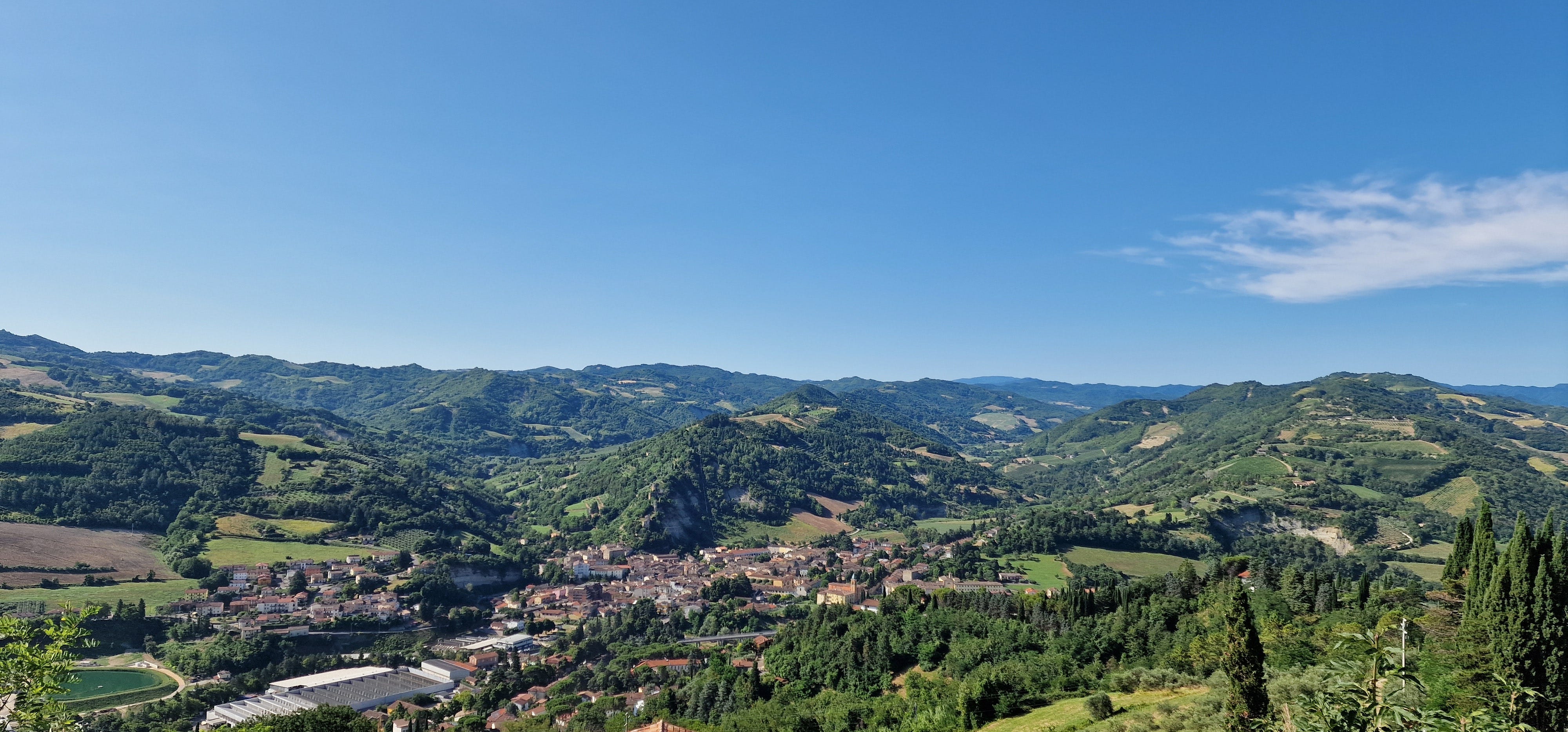
Somehow, Modigliana got better and stuck at the same time. And I, too, got both excited and bored while tasting the wines.
The quality has improved throughout the appellation at an impressive speed. While the two leading producers, Villa Papiano and Mutiliana, continue to make good wines, many others, such as Il Teatro and Menta & Rosmarino, are catching up to them. Drinking 2022 Modigliana is a no-brainer; the wines are different, interesting, nuanced, and more terroir-driven than most of their Tuscan counterparts.
Nonetheless, I felt underwhelmed because the style is becoming redundant. As in previous years (2019, 2020), recognising which valley a wine comes from is easy. But the valley identity has become so important that it overshadows the idea of the cru. Most of these wines are from single vineyards, but they are at “village” level in quality.
Modigliana has completed the first part of its important journey, but it's struggling to move on to the next stage. We’re still far from seeing this area adopt a Burgundian structure, and I don’t understand why. Embracing “valley blends” and giving serious attention to single vineyards is the only way for Modigliana to get unstuck and begin the conversation about how Sangiovese can translate microclimate into wine.
2022
A mild winter with a significant amount of snow and rain.
A dry spring, with constant rain between late April and early May, created water reserves for the year.
Drought and lower diurnal range during summer led to early veraison. Light rain at the end of August helped the vines throughout the growing season.
Harvest began on the 20th of September.
Sangiovese and high ph
2022 is a warm vintage but features a long growing season. That gave more time to the tartaric acid to drop and for the pH levels to raise. This is one of the less acidic vintages we’ve seen so far with levels around 3.55pH in the majority of the wines.
High pH levels dictated the style of this vintage. The colours lost a touch of brightness and tone. The tannins are coarse and more prominent than the acidity. The finishes are not particularly expressive; they have length, but with less fruit definition.
High pH may also encourage Brettanomyces growth. In Modigliana, shading from the woods creates ideal conditions for the development of this yeast. Brett’s fast metabolism thrives in high-pH environments, competing with Saccharomyces in the must during fermentation. Winemakers have addressed the problem by shortening macerations (22 days instead of 30), and by doing constant racking and sedimentation (Brett has heavy cells that settle with the lees).
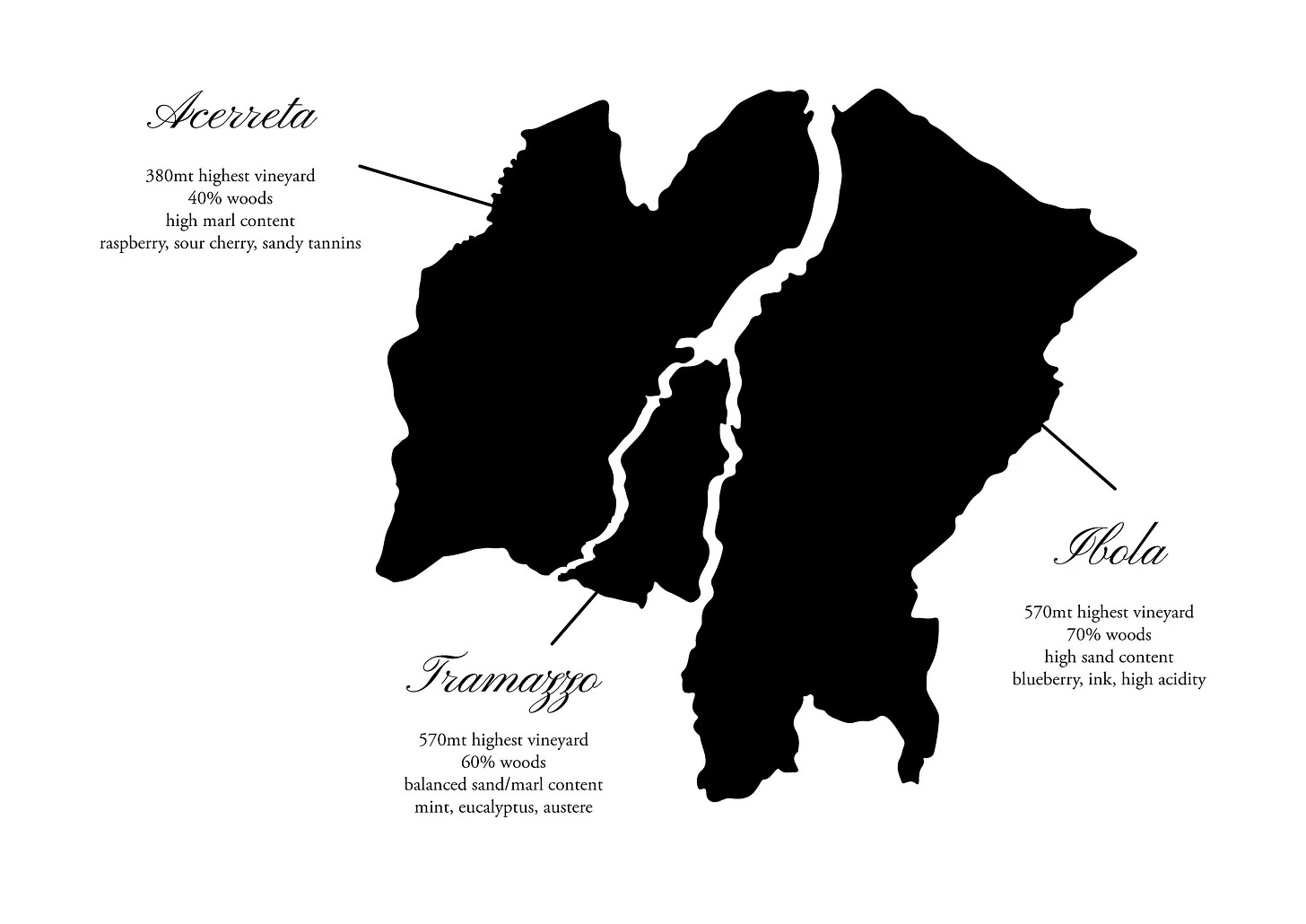
The valleys, the wines.
The sandy soils of the Ibola Valley produced wines with high, coarse tannins that, in most cases, masked both the fruit profile and the acidity. Also, unlike in other years, there’s a Nebbiolo-like tar note that adds complexity on the nose.
Vigna Probi from Villa Papiano is perhaps the most important wine ever made in this valley. The high acidity of the Ibola has always been a major issue for the balance of the wines, especially on the finish, where a strong lemony note often covered the fruit, making the body lighter and less complex. That doesn’t happen in this wine, which is one of the most balanced (alcohol, acidity, and tannins are perfectly in place) and precise expressions of this valley ever made. It also packs a multitude of aromas: wild blueberries, ink, sand, tar, nettle, forest floor, and earth. From now on, this will be our benchmark for what it means to make a great Ibola.
Another year of lower quality for the Tramazzo Valley, due to oak overuse and high VA, faults tied more to producer style than terroir. Unfortunately, there’s no high recommendation this year for wines produced in this valley.
Drought was more severe in the hotter and more exposed Acerreta Valley. Extreme fast ripening forced producers to pick early. Even though the wines retained their ripe sour cherry profile, the tannins changed completely. Where they were once sandy and lively, they are now dusty and lacking in character. We liked most of the wines, because they were all quite similar to each other.
If I had to recommend one, it would be Fondo San Giuseppe’s Ca’ Bianca, the only wine in the tasting that showed a thoughtful interpretation of a single vineyard. Stefano Bariani, who worked at Gaja for many years, used aggressive extractions in the early stages of fermentation, just as Guido Rivella did when making Barbera. The result is a wine where the grace of Sangiovese meets the power of Barbera: it shows amazing depth of blueberry and blackcurrant, with an austere palate and high, sandy tannins that hint at many years of ageing.
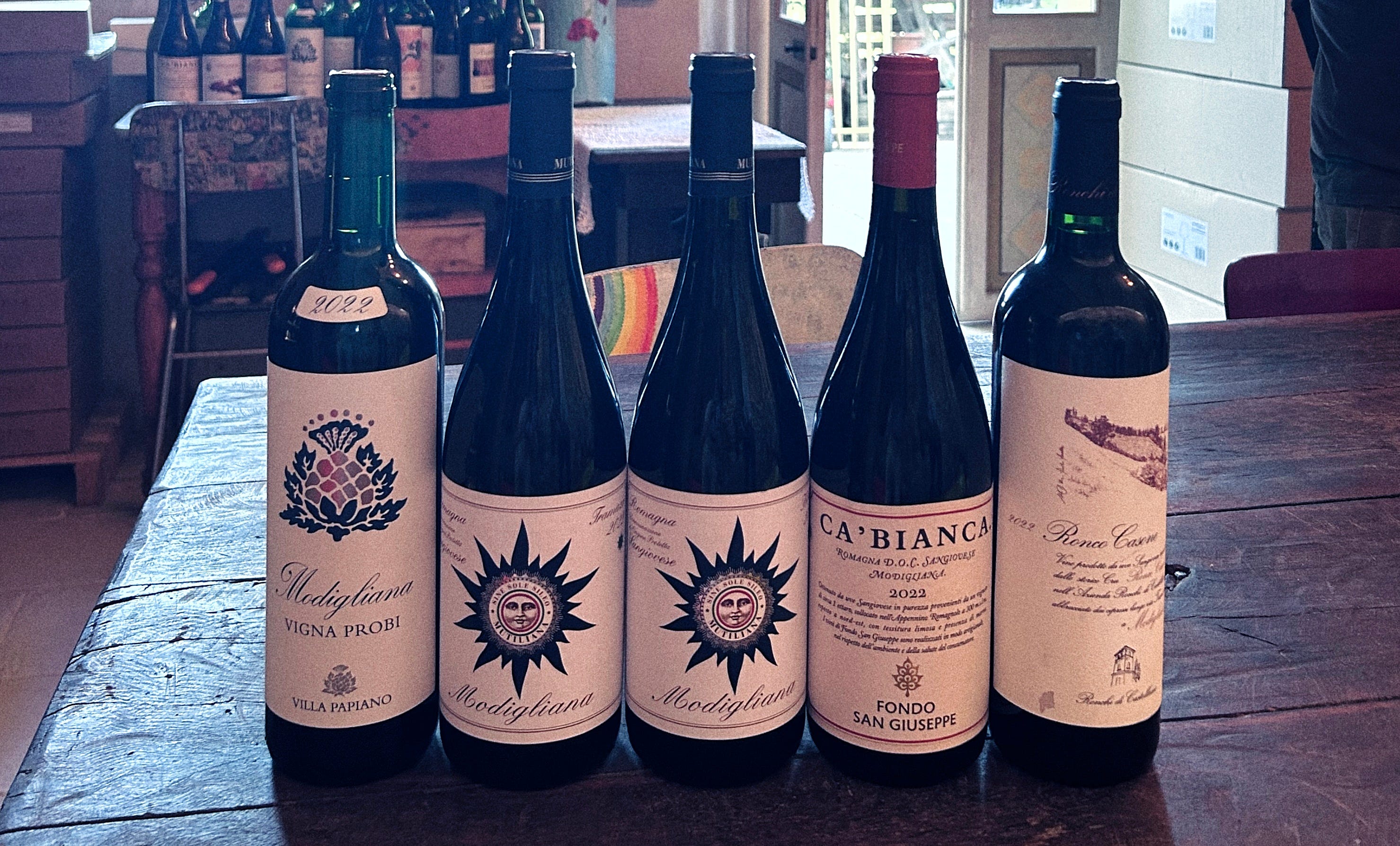
The panel also liked the wines from Giorgio Melandri’s Mutiliana. This was the first year in which every wine, one from each valley, showed well and remained consistent with the quality of previous vintages. Castelluccio’s Ronco Casone and Ronco della Simia also performed well, though the style leaned more toward varietal purity rather than the cru expression we saw in the stellar 2020.
2022 Modigliana is a tasting/report by Nelson Pari.
This year's blind tasting panel featured Nicholas Bratti (head sommelier at La Gioconda) and Tommaso Ciuffoletti (editor at Intravino and producer at Cantina del Rospo), alongside Aldo Rametta (Castelluccio), Stefano Bariani (Fondo San Giuseppe), and Emilio Placci (Il Pratello).
The tasting director was Francesco Bordini (Villa Papiano), and the sommelier was Rachele Bellinazzi (cellarhand at Fabio Motta).
No posts
Comments
Nothing yet. Say the first thing.
Sign in to join the conversation.