
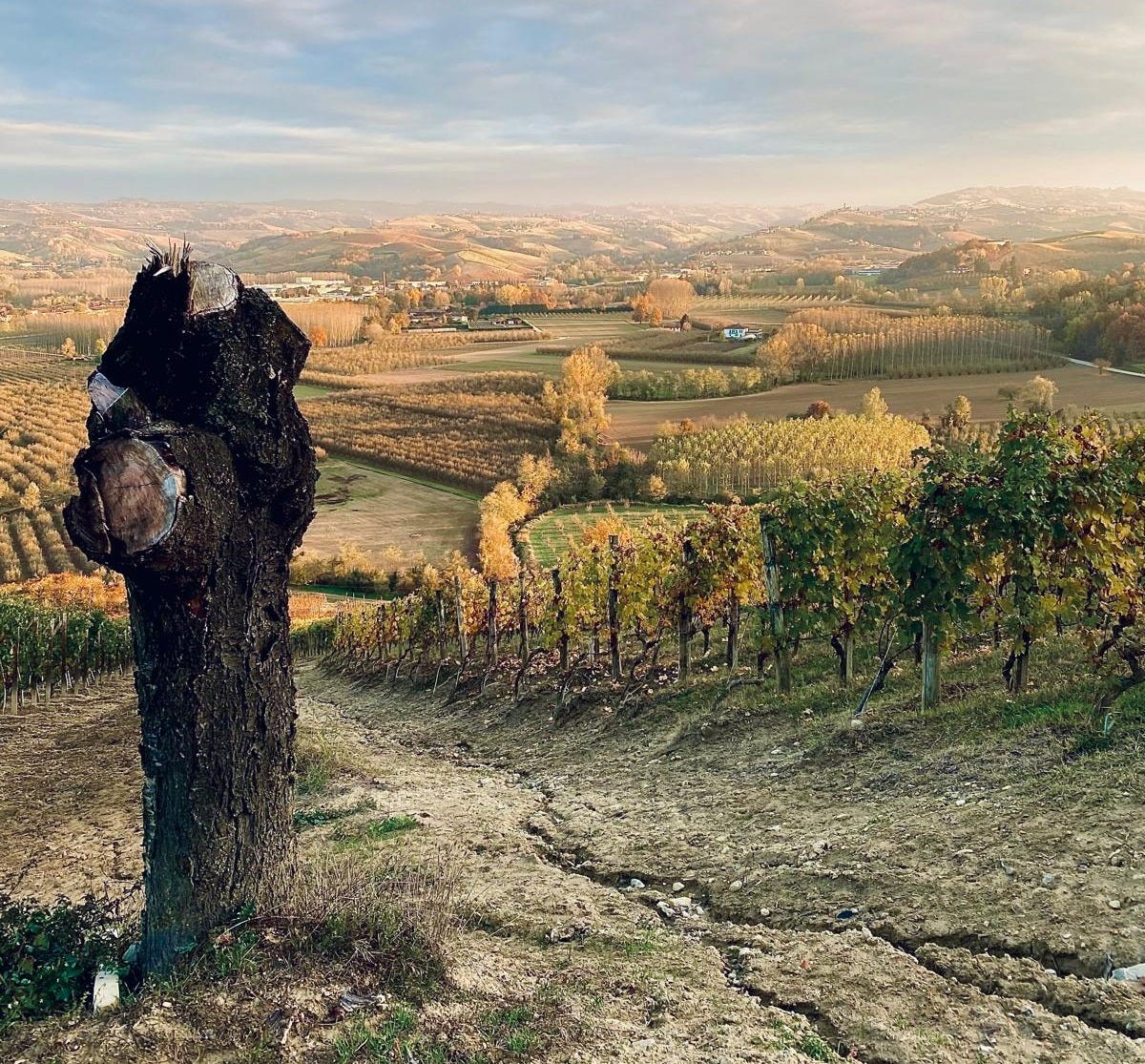
A winter with no rain was followed by a mild spring and a warm summer marked by extreme drought. Light rain in July and September saved the vintage. Overall, we classify the vintage as minor and torrid.
2022, on paper, is a disaster; however, the wines are good.
Calling a vintage ‘bad’ before it’s even released is nothing new: before the wines are on the market, words are already on the street, spread by collectors and critics. As extreme drought showed up, many immediately recalled 2003 or 2017, labelling the wines as similar. What people tend to forget is that not only is the climate changing, but so is the knowledge of producers; 2022 has far more in common, stylistically, with the magic vintages trio of ’19, ’20, ’21 than with 2017.
The warmth of the vintage and lower extractions in the cellar brought, respectively, lower levels of acidity and tannin, leaving aromas as the main structural component in most wines. Funnily enough, while tasting, we barely mentioned alcohol at all. As always, tannins don’t lie: the vintage brought forward a type of tannin we define as “raw” (“crudo” in Italian), one that leaves your palate bone dry.
We believe that 2022 shows a higher average quality across the appellation than 2021. Extreme drought has levelled many wines into a similar band, and the results are generally good. If this is the main pro, there is also a major con: with most wines sitting at the same quality, finding a truly extraordinary one is harder. Our enthusiasm for the wines is indeed lower compared to previous vintages.
On one hand, we’re happy: since we started this report, many producers have added a Barolo del Comune to their portfolio. On the other hand, we’re not sure they’re doing it for the right reasons. When we taste dilution, cheap oak integration, and short, bitter finishes, we know we’re facing the new “cash cow” of the appellation. So it comes as no surprise that, year after year, the names rising to the top of our blind tastings are those producers who treat Barolo del Comune as a mission - to introduce and educate consumers on the stylistic diversity of the appellation.
We can tell that many producers are scared about the state of the market; yet the moment you mention cutting prices, you can watch their faces twist into SAW’s Jigsaw mask. Right now, Barolo del Comune typically retails between £35 and £50 a bottle: still premium, but somehow affordable to many. This is where we have to draw the line. It cannot get more expensive than this. This category is, in our view, the most important today: it can fit into a BTG program in restaurants, become a staple for high-end retailers catering to Barolo lovers, and educate the trade about the different villages.
To you, wine lovers and collectors, we ask you to try just one of these wines this year. To you, producers, we ask one thing: do not fuck this up with your greed.
A mild winter with no rainfall led to early budburst in mid-March.
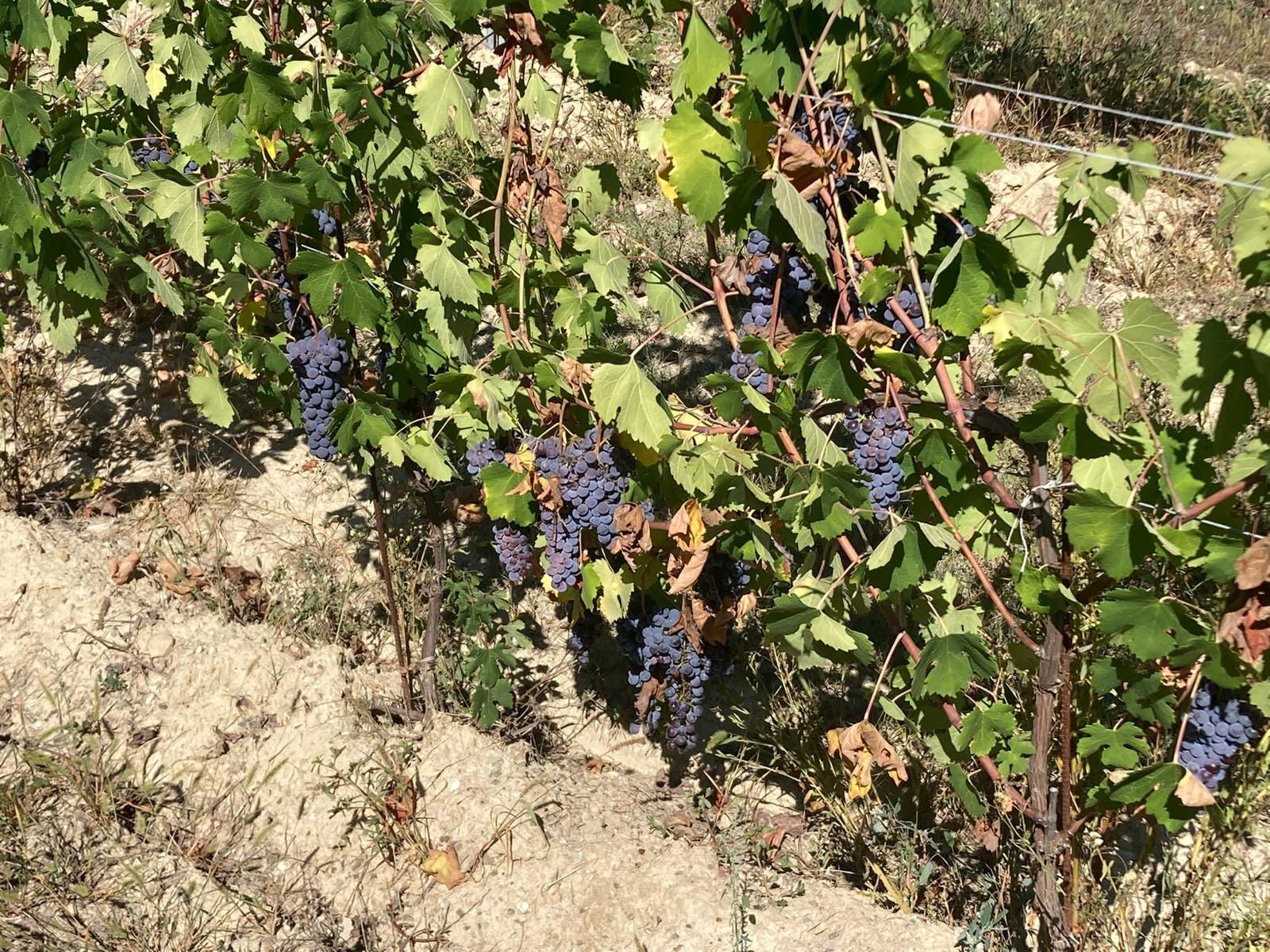
Low levels of rainfall continued through May, creating high levels of stress and reducing both vigour and water uptake in the bunches. Hail on the 28th of June in the communes of La Morra and Barolo further decreased yields.
Constantly high summer temperatures, with 13 days over 35°C. Rain on the 29th of July helped the vines recover. Some south-facing vineyards, especially in Monforte d’Alba, struggled with sunburn.
A hot autumn refreshed by rain on the 30th of September. Most producers finished harvesting by the first week of October.
Instead of the classic 700 mm of rainfall, 2022 saw a jaw-dropping 340 mm. In order to survive, vines had to slow both vegetative and reproductive growth till shutting down.
Shoot trimming was unnecessary; plants simply did not have enough vigour to grow as they usually do. To prioritise canopy development, many shoots were bent downwards in order to push vigour into what little growth occurred in the first part of the season (a technique known in Piedmont as arcaplé). Netting was also widely employed, with strong results: around 20% less solar radiation and sunburn, alongside lower temperatures within the vine microclimate. In south-facing vineyards, however, sunburn was often inevitable.
Some producers believed the best option was not to work the soil at all; weeds were left in place to retain humidity and lower soil temperatures. Others argued that weeds compete with the vine for water and that light work in the top 5 cm of soil could break capillary channels, limiting evaporation and helping retain moisture.
In the cellar, the main challenge was avoiding aggressive extraction of green, harsh tannins. Sugar levels were already high while phenolic ripeness was still developing. Reduced pump-overs and macerations under 30 days were widely adopted. Many producers also chose to bottle relatively early, after around 18 months of oak ageing, with little or no time in stainless steel following oak maturation, in an effort to slow the rapid evolution of the wines.
As every year we recommend trying as many Barolo del Comune as possible: in our yearly database, you will find all the wines we believe are sufficiently terroir-driven to be recommended, along with our tasting notes. Nonetheless, we are human: at the end of every commune recap, we added a short paragraph highlighting the wines that truly stood out in the panel.
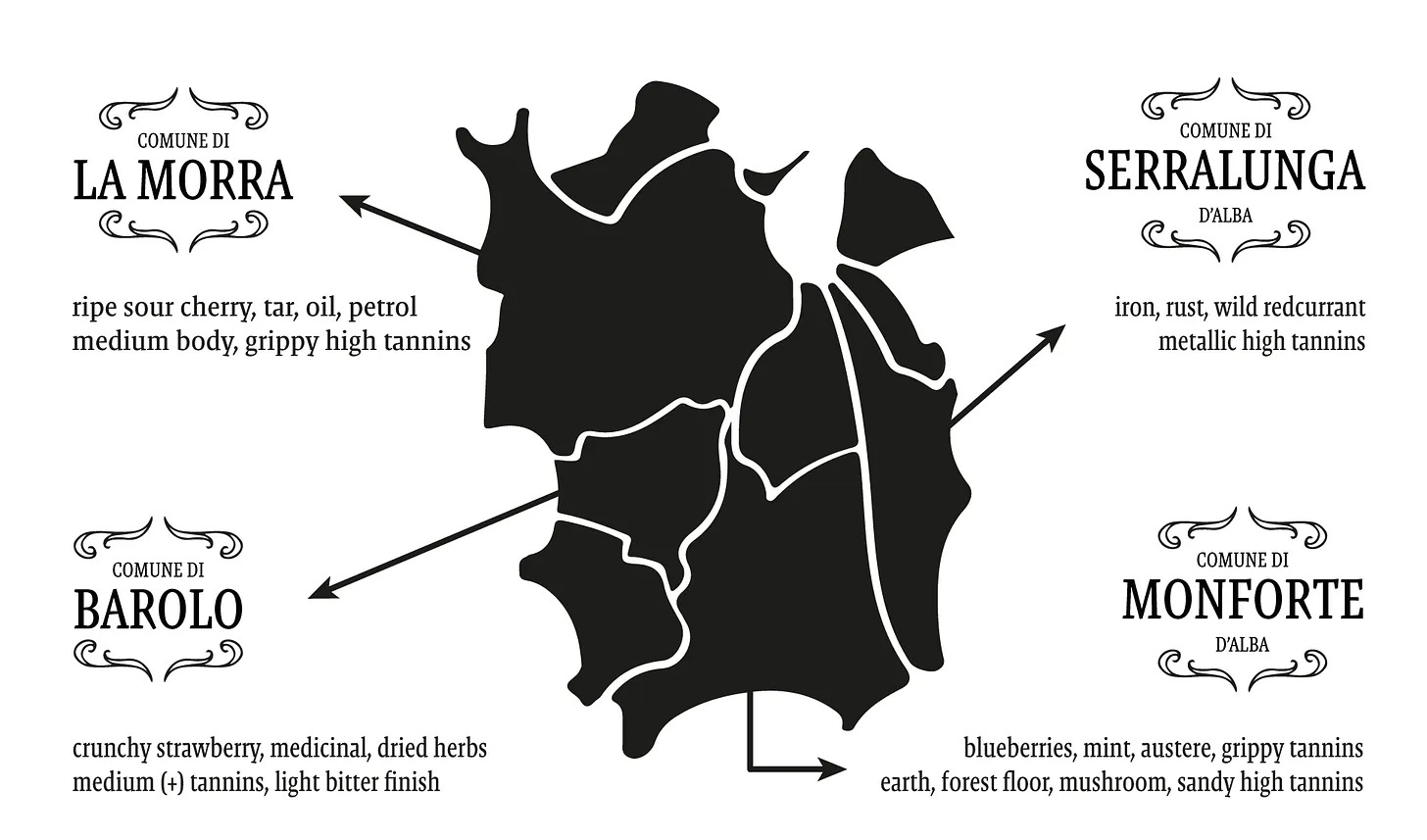
Surprisingly, the commune that usually suffers the most from excessive warmth delivers an overall good performance, with wines characterised by perfumed aromas of incense, and the classic dried-herb notes of the village. This doesn’t mean the heat isn’t there: tannins remain silky but are slightly coarser, the fruit lacks its crunchy character, and finishes often show a light alcoholic burn.
Famiglia Anselma interprets the vintage with a more extracted fruit profile of ripe strawberries and sour cherries, which helps mask the alcohol while retaining a good level of freshness. Scarzello, meanwhile, confirms itself as the star of Barolo del Comune di Barolo, maintaining, despite such a tough vintage, its immutable style based on elegance, fragrance, and finesse: redcurrant, pomegranate, white pepper, roses, silky tannins, and a long finish marked by orange peel.
2022 seems a vintage capable of highlighting many of this commune’s traits: the watery dilutions here are balanced by the classic oily and tar character, which this year is extremely pronounced. Many producers still believe that La Morra is the perfect place to experiment with oak over-extractions, and nothing could be further from the truth. As we have said many times, La Morra is a commune best left alone.
A big congratulations goes to Dosio, who managed to craft a wine where the oak works with the commune rather than against it: tar is softened by hints of vanilla, and sour cherry meets smoke and toasted almonds. We believe that Burzi’s first communal wine is one of the most extreme La Morra examples we have ever tasted: grease, garage, rubber, oil. It is not a wine for everyone, but for lovers of this commune, it is a mandatory drink.
La Morra is one of the hardest communes to balance, because of its firm tannins and comparatively lighter bodies. Cristian Boffa has nailed it here, crafting a wine of incredible drinkability without sacrificing power: blueberries and dark cherries, tar and dried herbs, fine-grained tannins, and high acidity. Not only is this the best 2022 La Morra, but it is also one of the best wines we have tasted this year overall.
Castiglione Falletto is the village that made the best wines in the vintage 2022. Subtle oriental spices and long finishes. The classic notes of wet stones and chalky tannins are not as evident as in previous vintages but are well integrated with hints of tertiary notes of white mushroom and truffle.
Boroli has chosen to accentuate the spicy profile of Chinese five spice and teal leaf of the commune, allowing the oak to enhance the aromas and highlight the already complex tertiary notes of forest floor, white musk and roasted pine resin.
Rarely in our reports we encountered a wine like Roccheviberti Vecchie Viti. A subtle nose packed with intense and complex aromas: red cherry and grapefruit peel. Roses, Chinese five spice, and cumin. Creamy acidity and fine-grained, chalky tannins coat the palate, enhancing aromas of thyme, rosemary, and faint white flowers. Roccheviberti didn’t just nail a wine; it explained the meaning of the category of Barolo del Comune. A complex, fine wine from an old-vine blend of two of Barolo’s most iconic vineyards (Bricco Boschis and Rocche di Castiglione): not overpriced and better than most single crus out there.
After two great years (including a stellar 2021), Monforte delivers wines that are hard to read, with less evident terroir in the glass. Tannins are extremely metallic, more Serralunghian in style, with strong tertiary notes of wet grass, hay, and earth. Other wines show diluted, oily palates, more reminiscent of La Morra. In this unusual spin-off vintage, we don’t have any high recommendations for this commune.
If you are a fan of Monforte, we liked Domenico Clerico, who emphasizes ripe fruit character and drinkability, and among the Serralunghian-style wines, we also appreciated Galarin, which balances fine earthy tertiary notes with powerful metallic tannins.
Another year of great consistency in Serralunga. Tannins are less aggressive and sweeter, with good oak integration across nearly all wines. In this vintage, we noted that the higher the extraction, the more monotone the wines become, even though 2022 produced some of the most extracted wines we’ve seen so far. In general, the commune’s style is strong, but this is clearly a defensive year: most wines are good, but rarely exceptional.
Three producers reached our top recommendations in this village for the first time. Enrico Serafino made a refined Serralunga with gentle oak integration and notes of wild strawberry and white peach, linking the complexity of some of the best 2021s with the warmth of 2022. Tenuta Rocca is oaky, full-bodied, and succulent, yet extremely balanced - a standout surprise of the vintage. Angelo Negro uses extraction to achieve purity and definition: wild strawberry, sweet vanilla, white chocolate, coffee, pudding. Wines like this can only be made in Serralunga.
We’re not surprised to see wines like Palladino in the top list, where complex fruit softens the metallic edge, rounding the sharper aspects of the commune. Ettore Germano also shines, with a structure-dominated wine featuring metallic tannins and brick-like acidity, producing a style that is at once shy and austere, yet agile and easy to drink.
A special mention goes to Francesco Versio, who delivers a masterclass in balance. Fine-grained tannins are gracefully integrated with charred wood and cedar oak, while rust, flint, iron, and the purity of wild strawberry invade the palate. You’re not drinking a warm vintage, you’re drinking a high-quality Serralunga.
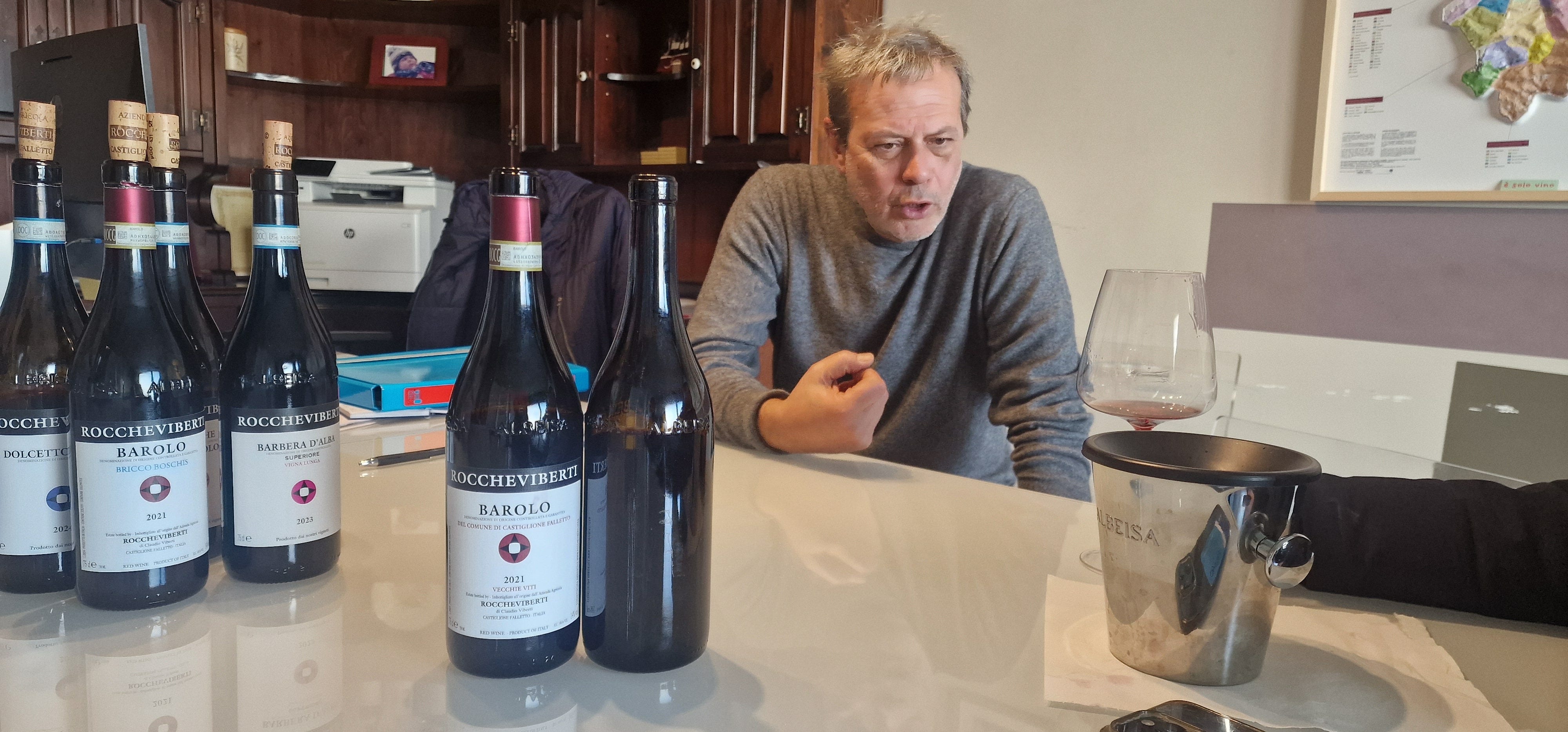
From an economic point of view, I didn’t want to make this wine. But I realised I needed an “entry-level” Barolo for my winery. I was afraid of getting stuck in the world of classic Barolo blends and in that of Barolo del Comune, so I decided to make a blend of the old vines I have to give it a bit of grit and do something truly different.
This is a blend of 60% Rocche di Castiglione and 40% Bricco Boschis, with vines over 60 years old (as the rest, in any case, are around 50…). Roccheviberti mainly speaks about the Rocche di Castiglione cru, and that has to come through immediately, even in this communal wine: pale color, sweet spices, finesse, and elegance.
2022 was a tragic year for us. The vines on the sands of Rocche di Castiglione suffered compared to those on the more clay-rich soils of Bricco Boschis. Vegetation progressed slowly, the plants went into protection very early, and we lost 30% of the production. My son had to work for two years with survival pruning, leaving 4–5 buds per cane, just to get the plants back in shape. He used to come back home saying that he wouldn’t go back to work in the vineyard; it was painful for him to see the plants suffering like that. My father, who is 85, had never seen anything like it. In desperation, I asked Enrico Scavino for the contact of a friend of his who does dowsing. This lady spent an entire afternoon walking the Rocche with this huge stainless steel wire to try to find water and, of course, found nothing. A geologist friend had suggested a study of my parcels, but that would have been a long process, and by then it was already too late.
Tasting the wine today, I can hardly believe it.
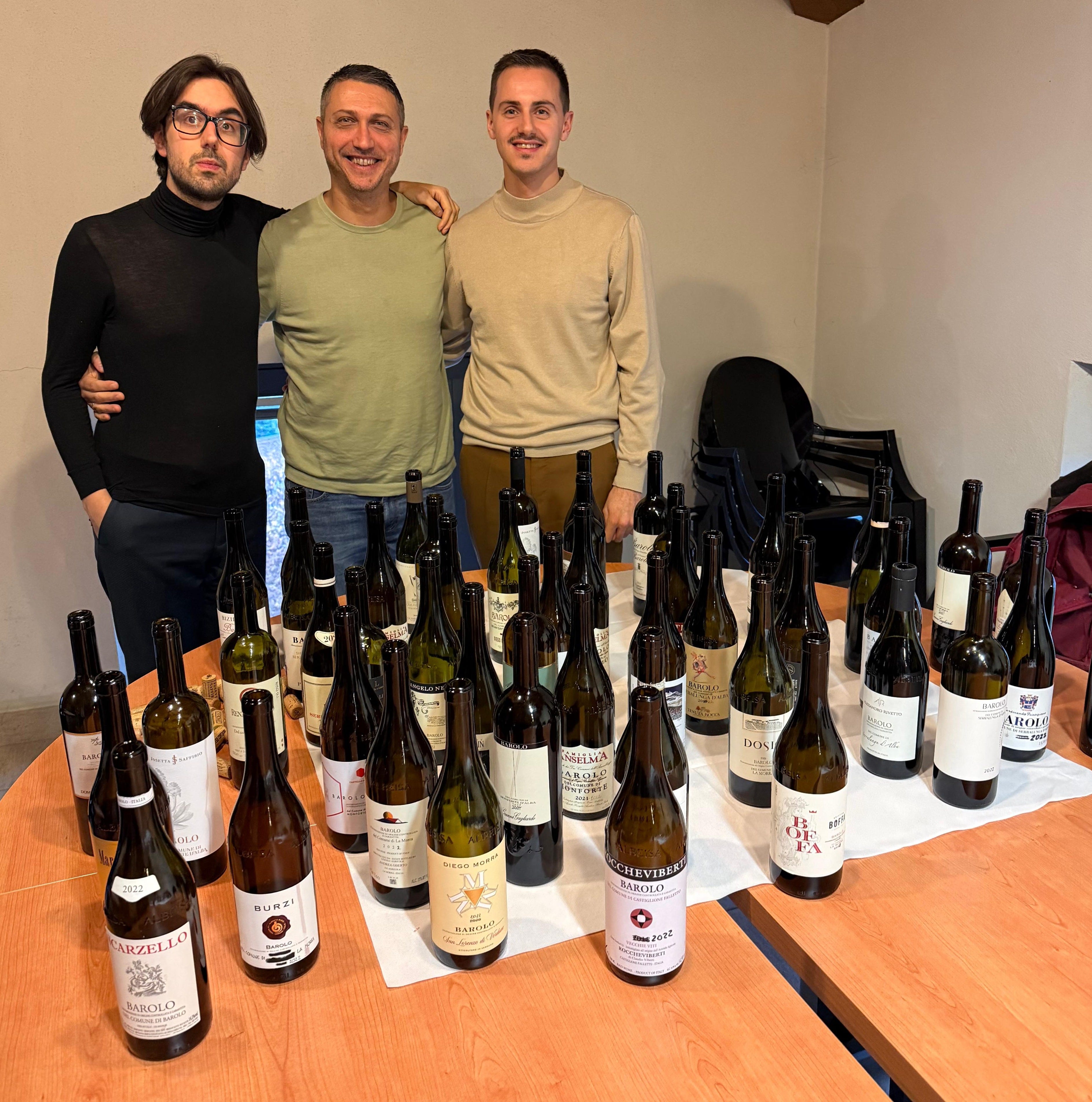
This year’s blind tasting panel featured Nelson Pari, Federico Moccia (head of wine operations for 67 Pall Mall) and Jacopo Dosio (head sommelier of Piazza Duomo, 3 Michelin Star in Alba) alongside Virna Borgogno, Alberto Gagliardo (Poderi Gianni Gagliardo) and Andrea Farinetti (Fontanafredda).
The tasting director was Gian Luca Colombo and the sommelier was Iacopo Casadio (Riecine).
PS. We cannot believe that this is already our fourth report on Barolo del Comune. Thank you to everyone who’s been following us, and a warm welcome to those reading for the first time. This report, as everything on this Substack, is free to read. The only way to support our work is to leave a like below and subscribe to the newsletter.
No posts
Comments
Nothing yet. Say the first thing.
Sign in to join the conversation.