
In New York circa ’78 disco was king and DJ’s were its servant. From the posh clubs of midtown Manhattan to the schoolyard across from my mother’s East New York home, records associated with a dance called the hustle filled the nights. Seemed like every corner bar had twin turntables, a mirrored ball and space carved out for folks to boogie. The Big Apple may have been on the verge of bankruptcy and still recovering from the ’77 blackout, but all across the city people were grooving through garbage strikes, muggings and civic chaos.
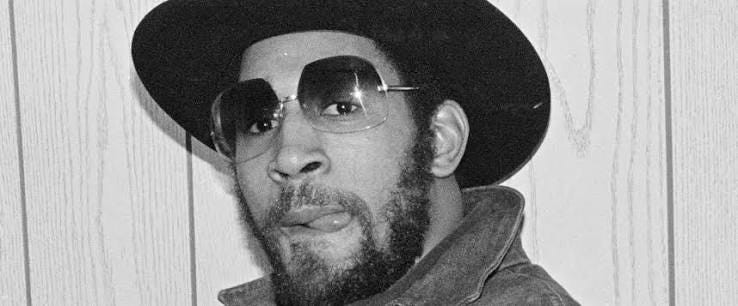
KOOL HERC IN THE ‘70S
But what was “disco” anyway? There was Euro-disco, much of it made in Germany, which gave the world the sexy Donna Summer and the monotonous Silver Convention. There was salsa-infused disco like the Salsoul Orchestra. The sophi-funk of Chic’s Bernard Edwards & Nile Rodgers was making a mark out of New York. From L.A. came the lush, sexual crooning of Barry White’s hits. The intricately arranged “Philly Sound” records from Gamble & Huff’s stable seemed endless. The explosive double play combo of Saturday Night Fever movie and soundtrack, confirmed that disco was an undeniable cultural force, seemingly ready to overtake rock as the mainstream musical culture.
All these records were self-consciously constructed to accommodate the spins and twirls of the hustle. Moreover, they were very much shaped to the taste of clubs jocks – often gay, black, Italian or some combination of these identities – who were disco’s crucial gatekeepers. In previous generations it was DJs and programmers on the radio who made hits. Disco would alter that narrative, democratizing taste making, giving great power to non-musicians who spun records in clubs. That democratization would continue on post-disco, as much was driven by taste makers with a very different aesthetics.
Every sweeping musical movement draws a reaction, often from other musicians whose critique comes in the form of a contrasting musical style. Since disco was driven as much by the taste of DJs as by the musicians, it was perhaps inevitable that it would be another set of DJs who, through their own peculiar taste, shaped music’s next bold move. While New York’s underground club scene was ground zero for disco, what we now call hip-hop was originally composed of bits and pieces of other musical movements popular in the city. Propulsive electronic music from computer-based bands like Germany’s Kraftwerk infected the ears of progressive ghetto kids. Newly arrived immigrants from Jamaica were playing dub tracks, recordings stripped down to bass and drums, and sautéed with reverb. The raw rhythms of funk, pioneered by James Brown in the late ‘60s and embellished by numerous bands in the ‘70s, was squeezed off NY radio by disco, yet it still impacted the city’s hearts and minds.
The thirst – no, the need – for rough rhythm needed to be quenched, and street jocks from a most unlikely place pioneered a new sonic aesthetic. I came upon this scene through my mentor, a Billboard magazine advertising staffer and part-time reporter named Robert ‘Rocky’ Ford Jr. Rocky was a unique man. In the mid-‘70s this very fair-skinned man wore long-out-of-fashion saddle shoes with jeans, blazers, ties, a large Afro, bushy mustache and steel framed glasses, like this was a uniform. He had a great sense of humor, a passion for music and a wide range of friends. We met because I saw him scribbling on a notepad with a lighted pen during a Graham Central Station concert at the Beacon Theater in 1976. I thought, “Damn, he must be a rock critic.”
After the show, I followed Rocky down Broadway and told him I was an aspiring music critic and could prove it with clips from a college newspaer. Though he had every reason to blow me off, Rocky gave me Billboard’s address and actually read my youthful writings. He took me under his wing and helped me get an internship at Billboard where, for three college credits, I was able to review concerts, attend listening parties (and eat free food), and do articles for the magazine’s spanking new disco section. While in college I was also able to get a similar internship at the black weekly, the Amsterdam News, though most of what I wrote there centered around movies and sports.
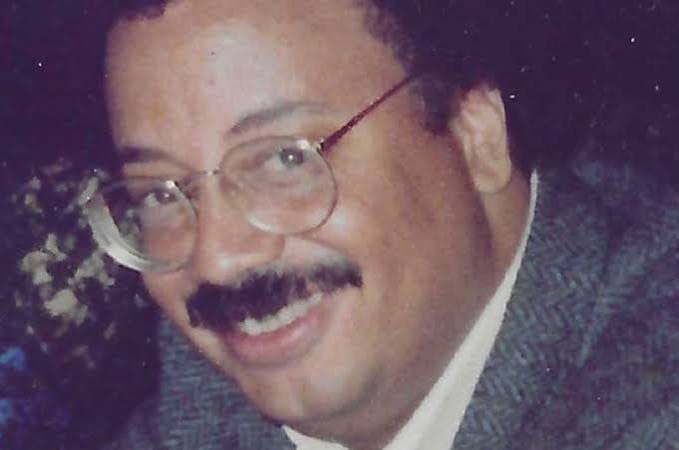
ROBERT ‘ROCKY’ FORD
So I became a Billboard mascot, hanging out at their Times Square office after school, scooping up free records and cassettes, and getting a music (and music biz) education from the staff and record label folk who visited. Rocky was a regular at Downstairs Records, a retailer located in the subway station at 42nd Street and Sixth Avenue, which was a Mecca for the city’s vinyl junkies.
Downstairs Records had a large selection of “cutout” or discounted records. If the list price was $11.99 for a hot new LP, the discounted price for records that hadn’t sold were $2.99, $1.99 or as low as 99 cents. At some point in the summer of ’78 Rocky got wind that large quantities of cutouts were being purchased by black street jocks from Harlem and the Bronx. What was so surprising, the records being purchased were not discounted disco records, but albums of all kinds: sound effects, cartoon show themes, hard rock, fusion jazz, obscure funk and R&B. Through Downstairs Records, Rocky and I saw a flyer for a DJ named Kool Herc, who was to play in a high school playground in the Bronx on a Saturday afternoon. Curious about this uptown scene, Rocky and I took the D train up to the Grand Concourse and ended up at a high school playground.
What we saw is related in an article published in the Amsterdam News on July 1, 1978, which is likely the first published piece of reporting on hip-hop . Maybe something about the uptown scene was printed elsewhere that I don’t know about, but it was absolutely the first piece done on Kool Herc, who’s mixes are the foundation for hip-hop’s aesthetics. It was called “D.J. Herc and his ‘B-Beats’” and it was published July 1, 1978.
“It’s a warm Friday evening in the Bronx and at Taft High School field people have come from all around to hear D.J. Herc jam. He’s tall, 26 and quietly calm in a manner that makes adolescent girls giggle. His reputation as a party master is unsurpassed in the South Bronx. But unlike many of his counterparts Herc (real name Clive Campbell) isn’t a rapid rapper who keeps your head spinning with patter. No Herc is a musical innovator of the turntables. Not satisfied with simply playing the latest sides, Herc began excavating in record bins for cutouts – the older records that sell for $2.99 and less. His dj experience told him that the young dancers of the Bronx loved ‘breaks’ in records, section that deviate from the melody to showcase energetic Latin percussion.
“So by interjecting into the middle section of a current hit the percussive sections of old hits like Dennis Coffey’s ‘Scorpio’ or a section from the obscure ‘Willie Dynamite’ soundtrack album, Herc creates a lengthened and more exciting dance experience. The DJs greatest discovery was ‘Bongo Rock’ by the Incredible Bongo Band, which features nothing but conga and bongo playing. That record has become so popular that the tag ‘b-beat’ was hung on Herc’s technique in its honor. ‘B-beat’ was developed about four years ago and is now being used in various forms by other inner city djs.
“Herc and his Herculods (the nickname of his helpers) now regularly appear at high school dances, proms and at Herc’s own disco, the Sparkle, at 1590 Jerome Avenue. A major reason for Herc’s use of old records is that ‘the kids don’t like music that sounds processed’ as much of the music aimed at discos unfortunately does. Another factor is that much contemporary dance music is styled to accommodate the slick twist and turns of the hustle. But today, as a young lady called Short Stuff commented, ‘The hustle is out and the freak is in.’ The freak is a loose, funky dance which, at its most suggestive, resembles a fast grind. The dance’s slinky movements are best accompanied by a heavy rhythm track that ‘b-beats’ provides.
“As Herc begins playing at Taft High several folks in the crowd begin to freak. The music gets better and the number of dancers increases while Herc and his Herculods monitor sophisticated Star-Trek-looking equipment. Many people may not appreciate disco music. But it’s interesting to realize that a whole generation of young males have been turned onto electronics through working with dj equipment. The black electricians of the future may be playing disco music in the park tonight.”
A few things leap out at me on re-reading the piece: that I’d already seen “rapping DJs” by that point, including DJ Hollywood and Busy Bee Starski at a show at City College of New York; that the DJs were responding to the shifting taste of uptown dancers; that the canon of crucial break beats was very much in place; that ‘b-beats’ could have become the definition of the music; and, finally, that neither Herc nor any of the other people in that schoolyard used the phrase “hip-hop” to describe what was happening.
I was twenty years old when I wrote this. I had no idea forty years later this article would still, not simply be relevant, but the gateway to new a slew of unbelievable opportunities. I never saw myself as a hip-hop writer. I have always seen myself as a celebrator and curator of black music’s legacy, with hip-hop just one branch of an incredibly rich tree. But, as the culture has shifted and memories faded, the hip-hop part of my lineage has overshadowed a lot of my other work. In ways that soul did a bit of, disco did for a minute, and funk never really accomplished, hip-hop became a self-sustaining economic engine whose tentacles have penetrated every part of the globe . This culture would open many doors for me. I would co-write the rap comedy CB4 with Chris Rock for Universal Pictures, work on the Hip Hop Honors show for VH1 and get my first episodic TV writing credit on The Get Down. a show about hip-hop’s Bronx birth, for Netflix. These are opportunities that might never have happened if Rocky hadn’t taken me along with him that afternoon in 1978.
Unfortunately, my relationship with Kool Herc has been up and down since that Bronx encounter. He believes since I was there first I should have written about him (i.e. celebrated him) more over the years. All I can say is that I followed the story. As the culture spread across the city, new creative forces in Harlem and Queens rose to popularize it, people like Kurtis Blow and Russell Simmons, who would be part of putting music on wax, which Herc wasn’t doing. For The Source magazine I would conduct what is to date the only joint interview with Herc, Afrika Bambaataa and Grandmaster Flash.
Several decades later I helped get Herc honored on VH1’s Hip Hop Honors, but he was pissed that he was honored alongside with Harlem rapper DJ Hollywood, who Herc didn’t view as a true hip hop MC. He let all of us who worked on the show know that he felt disrespected by having to share the spotlight.
When I worked on The Get Down , I supported producer/director Baz Luhrmann’s desire to get Herc involved. A young actor played him in the series. Moreover, we actually shot in the Cedar Avenue recreation room where Herc did his earliest parties. I hope he feels The Get Down gave him the respect he deserves. Our personal relationship has never been rebuilt, but our legacy is tied together and I’m fine with that. I hope he is too.
No posts
Comments
Nothing yet. Say the first thing.
Sign in to join the conversation.