
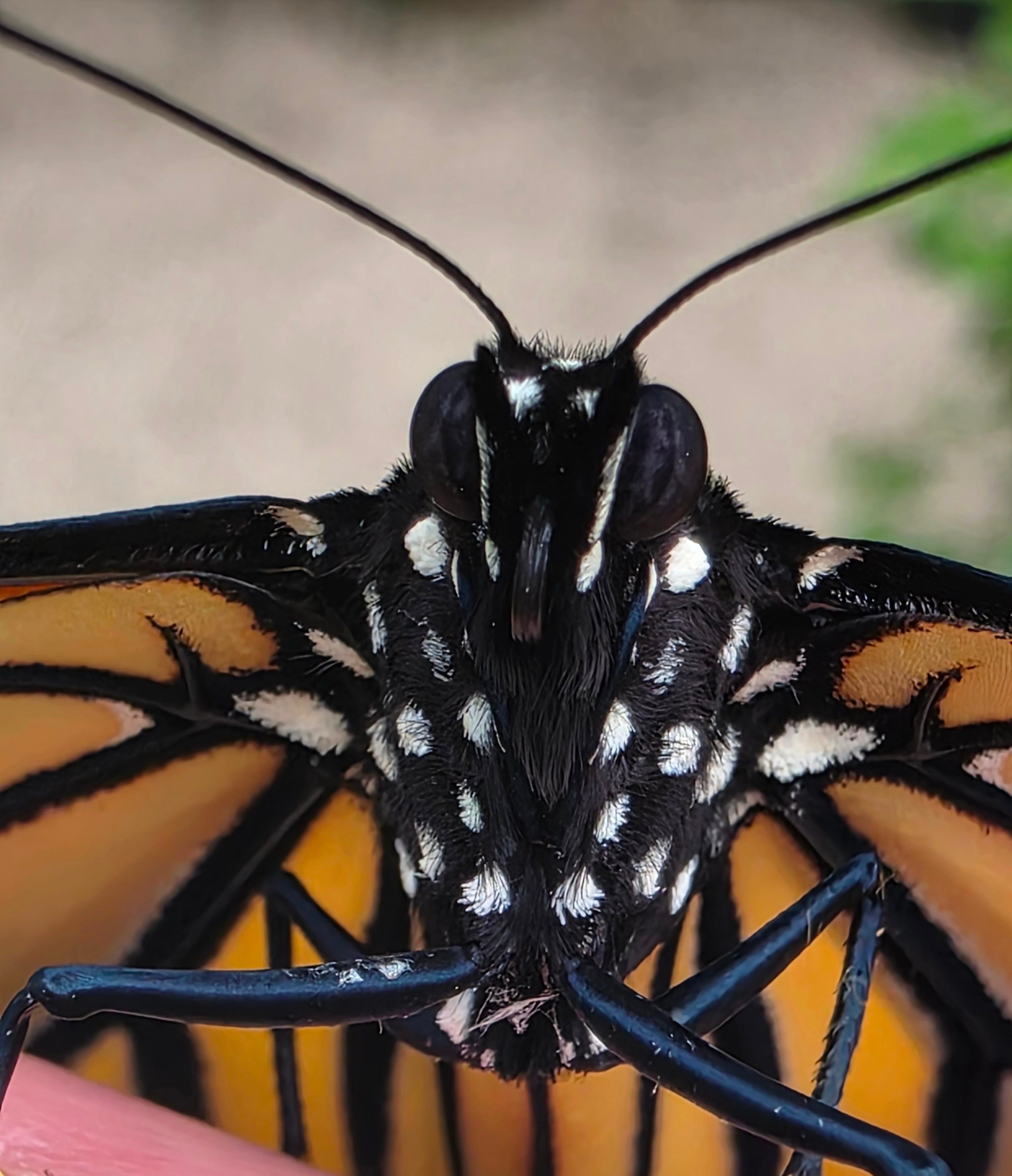
Lepidoptera: Monarch butterflies (Danaus plexippus) are iconic kind of the poster insect for pollinators, gardening, and basically any time people want to show a beneficial, “non-scary” bug (or lady bugs). Lady bugs are super-helpful for Monarchs because they love eating aphids and Monarchs larvae nibbling on milkweed infested with aphids tend to be smaller and less robust than those unencumbered by those dastardly little buggers.
Monarchs are certainly cool—they’ve been found throughout much of North and Central America, they migrate over 3000 miles to overwinter in places like Mexico (fancy, aren’t they?), and they can diapause (suspend reproduction so they can enjoy their winter vacay without dying). They’re also in trouble. Cases of OE (Ophryocystis elektroscirrha) have been wreaking havoc on the species, especially in places like South Florida where the butterflies breed year-round. OE is a protozoan parasite so small it’s hard for even microscopes to see it, but it gets passed from parent to offspring and can cause smaller or even deformed wings and can even prevent metamorphosis from completion.
Luckily, this is largely isolated, though it does affect increasing portions of the migrating populations. If it wasn’t so devastating to the Monarch butterflies, the weird little protozoan would be grossly fascinating. Because of it, though, more and more gardening and pollinator experts are requesting people avoid planting Tropical Milkweed (Asclepias curassavica).
Flora Tropical Milkweed (Asclepias curassavica) is nearly as ubiquitous as monarch butterflies, especially at Big Box and other large commercial gardening centers and nurseries. People see “butterfly plant” or “attracts monarch butterflies” and snap it up, planting it all over. Ironically, I’ve seen more than one gardening post from people new to butterfly gardening who want to know how to kill or discourage caterpillars from eating their butterfly plants.
Trouble is, especially in places north of South Florida, tropical milkweed can cause butterflies to hang around longer than they should. It also has a strange way of masking the symptoms of OE, allowing infected butterflies to reproduce infected offspring at greater rates.
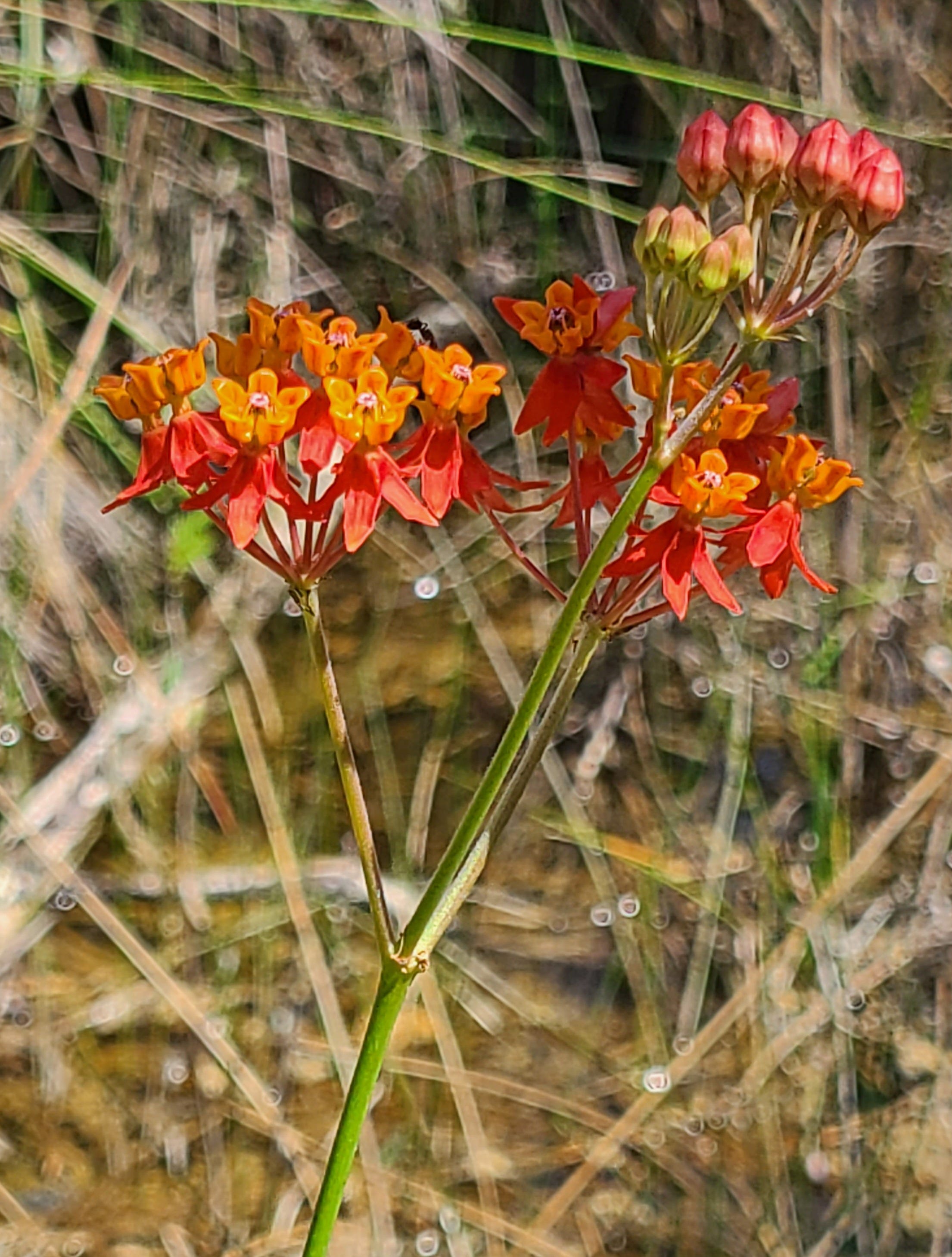
Luckily, there are so many cool native milkweeds, depending on where you live. One of the neatest I’ve seen out in the wilds of Big Cypress is the Fewflower (Asclepias lanceolata).

Books A few novels I’ve finished lately include The Antiques by Kris D’Agostino and Greta and Valdin by Rebecca K. Reilly. The Antiques was an entertaining romp about a family in the midst of multiple crises as a storm sweeps in. The patriarch is dying and all of the adult children are having their own issues, which doesn’t sound that amusing, but as things come to a head the dysfunctional parts combined with the heartwarming parts come together in a satisfying way. (The older brother has some issues with sex, but there’s nothing terribly explicit if you’re an audiobook in public type.)
Greta and Valdin centers on two siblings, one nearing thirty and the other nearing the end of grad school, trying to figure out life and love. It’s set in New Zealand, but there’s quite a bit of travel, especially as Valdin tries to decide if reconnecting with his former lover is worth it. (Both siblings are gay; none of the scenes are explicit.)
Art This week’s local artist is Nae of Madeye Designs. I discovered her at the Bookish Bar Crawl in Oakland Park, FL last month and she had such a fantastic collection of items from enamel pins and bookmarks to stickers, art prints, and fantastic earrings.
While a lot of the stickers and other merch at the Books and Brew event was very smut and spice themed (not really my thing), the event as a whole was great and it was wonderful to see so many people (mostly women) excited about books and reading and geeking out together over shared interests.
Wild Card Today’s wild card is a bit of an odd one. I recently discovered the Kanopy app through the local library that allows you to listen to all kinds of shows and courses for a certain number of “tickets” that automatically renew each month. One of the courses I was listening to talked about story telling and mentioned the old chestnut about Hemingway “winning a bet” with a six-word story about baby shoes.
While the idea that unused baby shoes once upon a time definitely left readers with a certain sadness because typically that meant the baby had died before using them, there were apparently cases of similar advertisements in newspapers predating Hemingway’s writing years. One of them was even tracked down by a reporter eager to get the sad story about why a family didn’t need the carriage. Turns out they needed a double instead of a single, but given the lack of overconsumption at the time, his initial assumption made sense.
I’ve mentioned this story a time or two to students and they have difficulty understanding why never-used baby shoes are supposed to be sad. We live in a time of such abundance, even though much of it is cheapy made and feels like the opposite when it falls apart upon second use, that a pair of unused baby shoes could simply mean Amazon delivered them too late for the event they were ordered for, that they were a duplicate gift at a shower, that they didn’t match the parents’ aesthetic, or the kid outgrew them before anyone got around to sticking them on the wee feet.
We also live in much more casual times so except for a few instances like certain religious gatherings or family portraits, literal babies aren’t likely to need shoes unless they’re already Nike influencers.
Certainly there’s something in there about “classic” writing becoming harder and harder for students to connect with as time marches on or changing cultures. Maybe we lost something when that story stopped being immediately sad. Or maybe it’s just the same way everyone watching separate streaming services, TikTok accounts, YouTube channels, etc. fragments water-cooler talk in a way no one in the golden age of sitcoms and Dynasty could have predicted.
Or maybe it actually makes it easier to find “your people.” (The way my co-worker and I squealed at each other when we both realized we knew about Black Forager when we both noticed a “weird plant” at work and tried to decide if it was “a poison or a snack.”)
That’s it for this week. As Black Forager says, “happy snacking and don’t die.”
(Next week there will probably be bears!)
Thanks for reading Past Tense of Draw! This post is public so feel free to share it.
No posts
Comments
Nothing yet. Say the first thing.
Sign in to join the conversation.