
Before you read…
This essay began as a conversation with my fearless friend, Amrita Singh. She tackles almost any topic without hesitation, asks uncomfortable questions, and says out loud the things many of us are thinking. She’s my spirit human in many ways, and I want to thank her for her continued support and for championing the South Asian voice in an industry where we still need to get loud to be heard.
Trigger Warning: what you’re about to read might make you uneasy. Hell, it made me uneasy just typing the words because I’m having to question my complicity and culpability in upholding the establishment.
If you’re a POC who’s written about cultural appropriation here on Substack, please let me know in the comments. I’d love to read your work.
Conversations about cultural appropriation tend to become very black and white, but I don’t think it’s quite that simple. For me, the more interesting conversation lives in the grey area.
There are definitely examples that are difficult to defend. Taking from a marginalized culture without acknowledgement, credit, or respect deserves to be called out, but there are also moments that feel much more like appreciation, and I think they’re worth talking about too.
This might surprise you, but I’m pleased to see references to Indian dress, textiles, or craftsmanship in Western fashion houses. I’m of South Asian descent, but I was born and raised in Canada so my identity has always been a blend of East and West. Why wouldn’t I want to see those influences reflected in the clothes I wear?
I also love the idea of people discovering one another’s cultures through fashion because when it’s done thoughtfully, it broadens our understanding of each other, tears down walls, and makes the world feel a little smaller.
Which is why I think powerful luxury fashion houses need to approach it with care. When a brand chooses to borrow from another culture, it isn’t just making a design decision. It influences how millions of people understand that culture. And this isn’t just about India. From the Mandarin jacket to the Palestinian keffiyeh, Japanese tabi, Indigenous textiles, African weaving and beadwork, and countless other cultural traditions, fashion has long borrowed from cultures around the world, and we’re not asking for those exchanges to stop. We’re asking for you to approach it with curiosity and humility, and acknowledge the people and traditions you’re drawing from. Even better if they’re part of the design process.
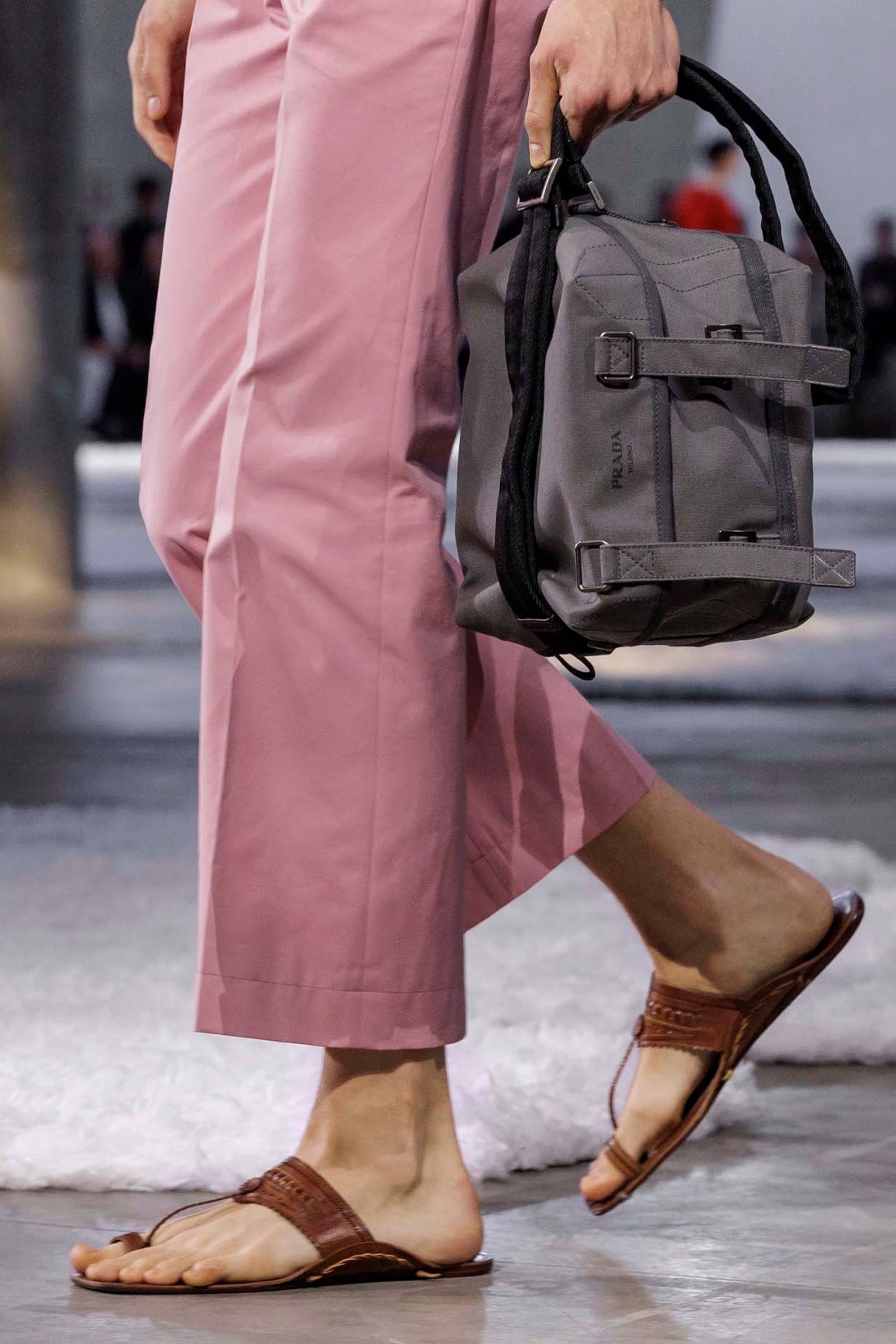
PRADA
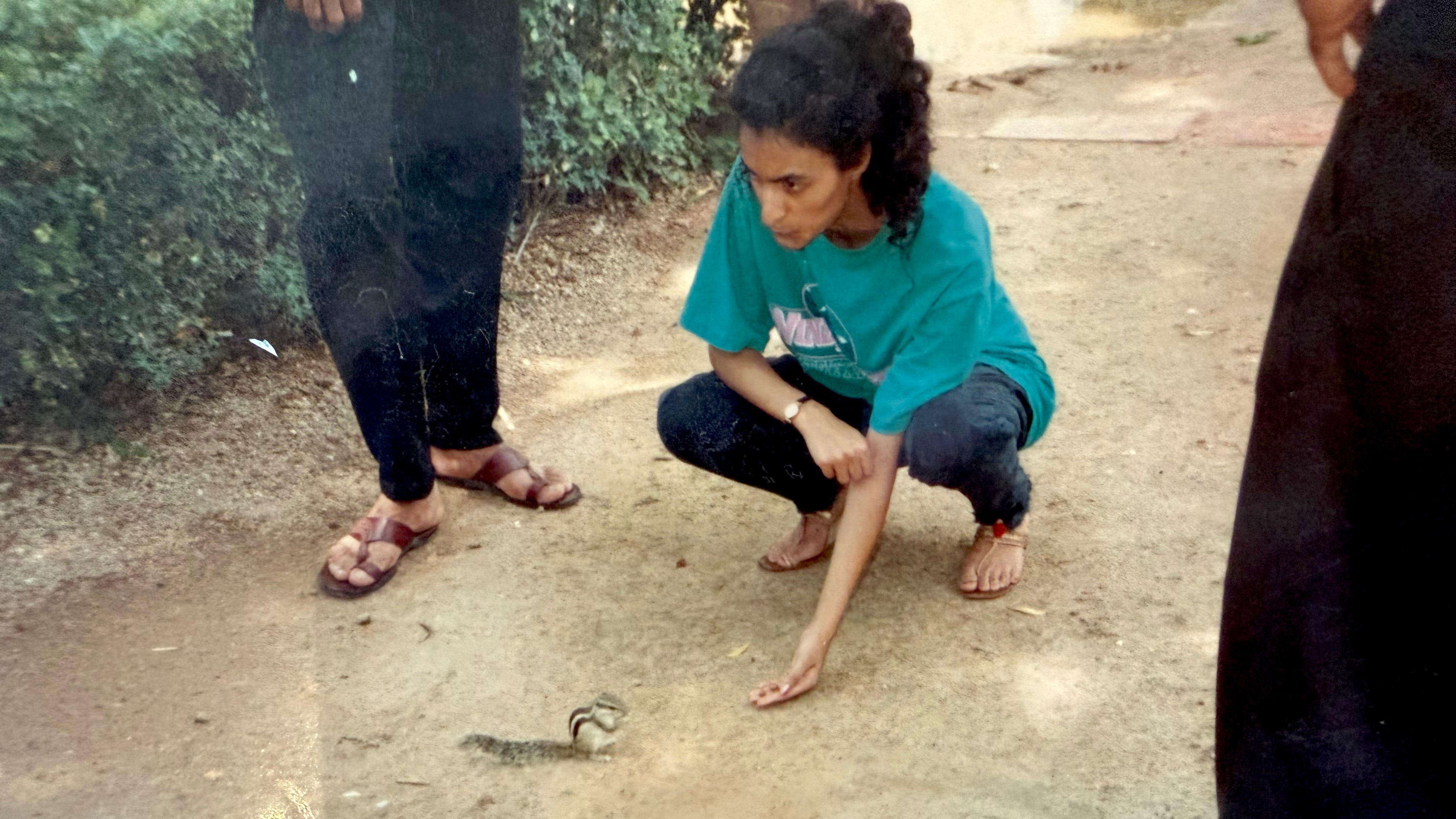
Little did that 24-year-old know that one day Prada would send those very sandals down the runway, sparking a much-discussed debate about cultural appropriation in fashion. Had I known, I might have worn them with more ease.
Because the thing is, growing up in the small town of Belleville in the 70s, whenever there was a cultural event that meant wearing my Indian clothes outside of the house, I was anxious. I felt so visible. I was often teased, racial slurs were hurled at me, and I’d go home shaking.
This is why I welcome the crossover with open arms. I want young South Asian kids growing up today to wear the same clothes I did, but without feeling the need to hide. And if a fashion house can help make that happen, I think that’s a wonderful thing.
But it has to be done with respect. And Prada got that part wrong.
THE ROW
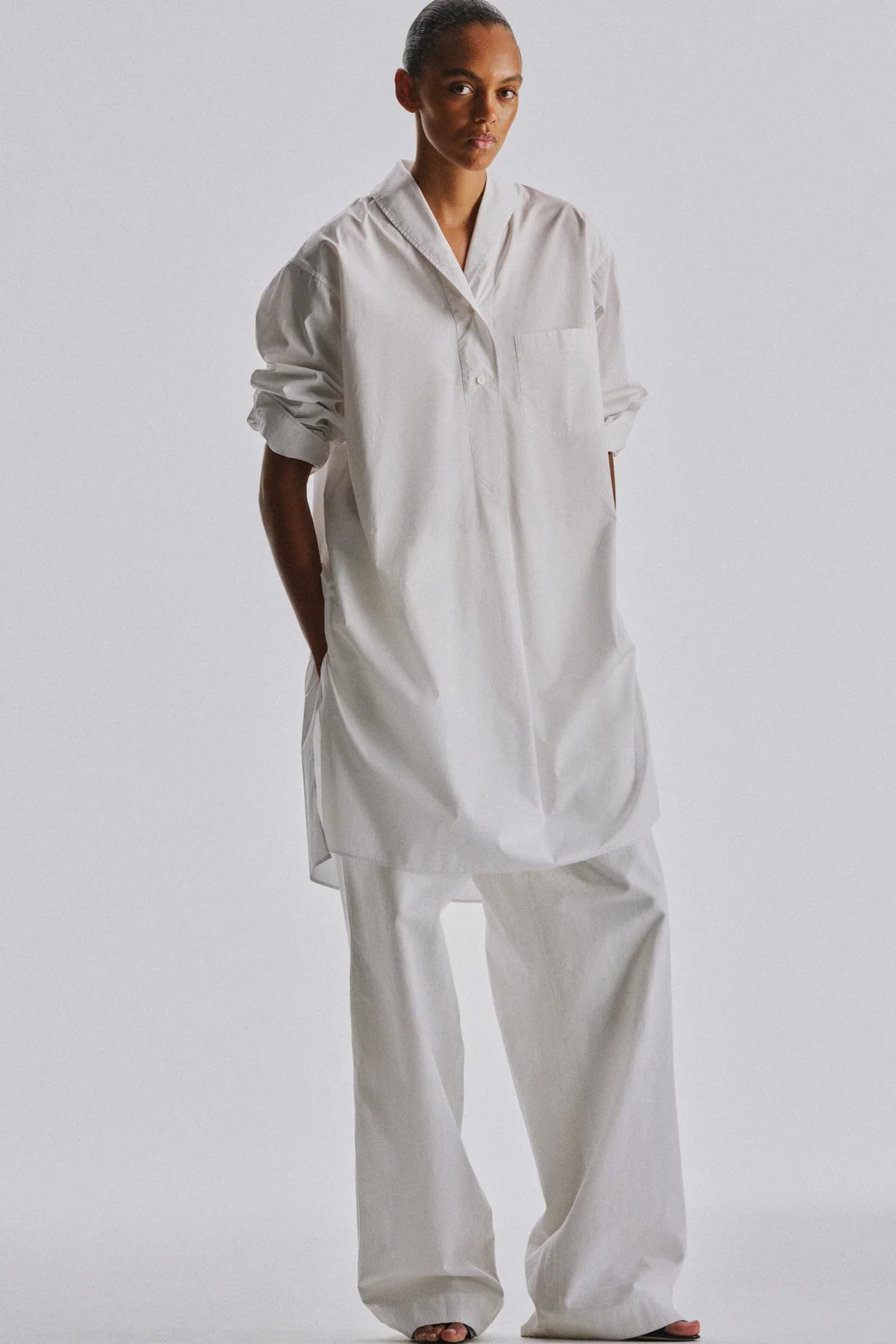
When I first saw this image, my reaction wasn’t outrage. The Row’s pretty vanilla, tipping into boring and predictable. This makes them more interesting.
But all the excitement, and the subsequent sell-out, over what any South Asian would immediately recognize as a simple kurta pyjama was unsettling. It’s a traditional uniform that’s been around for centuries, yet everyone was treating it as novel and ultra-cool.
Kurta pyjamas change from season to season, just like Western tailoring. Trends come and go. Pants get skinnier or wider, collars change, cuffs change, hem lengths change, but the core design remains the same: a slightly oversized tunic paired with trousers. The simple cotton versions are utilitarian, keeping you cool in hot summers while providing coverage, and the more elaborate, embellished sets communicate celebration and sometimes status.
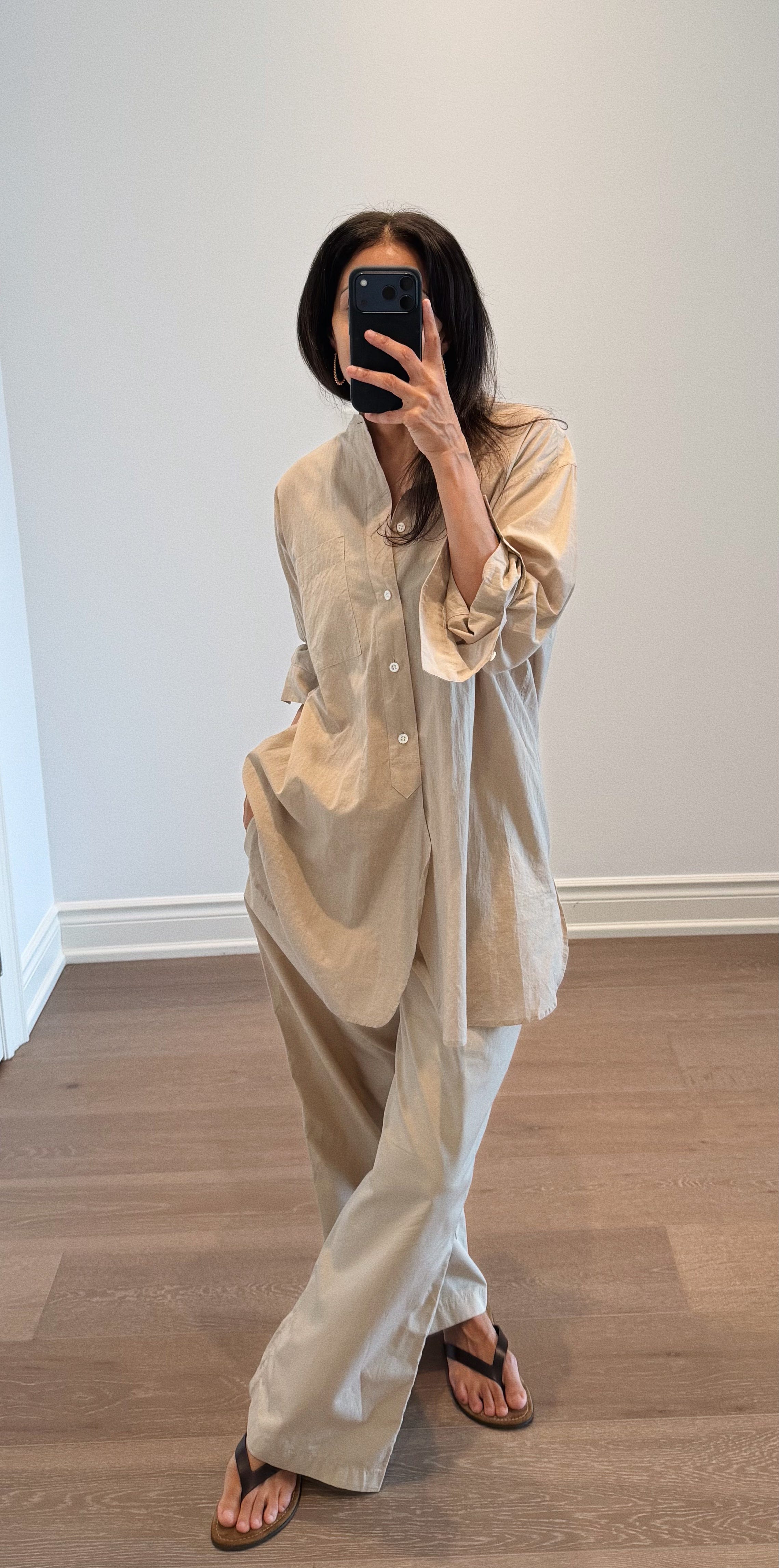
The style presented by The Row leans masculine, which is why I’m sure it called to them. It’s also the shape I’ve been wearing since I was young, despite the pleading of my aunties. When I see this, the nostalgia warms me up. I’m young again. The smell of morning coffee wafting upstairs, me frantically dressing for school, and my father sitting in what my mom affectionately referred to as his “Archie Bunker” chair, tapping his foot and turning the inky pages of The Globe and Mail in his kurta pyjama. My brothers, uncles, and cousins wore them morning and night. This silhouette means something to me and countless others who share that cultural background.
Now, obviously, this isn’t the most egregious example of cultural borrowing by any means. But it’s the overzealous energy around it that’s telling. Maybe people are blissfully unaware of its origins and see it as something entirely new; that tells me we still have some educating to do. The Row had an opportunity to do exactly that. They assign unique names to each of their pieces and pen a description about it underneath, so they could have shared the inspiration and given it a name that reflected its cultural origins. Trust me, it would still sell out.
Then there’s the other possibility. That clients know the origins but are only excited because The Row made it.
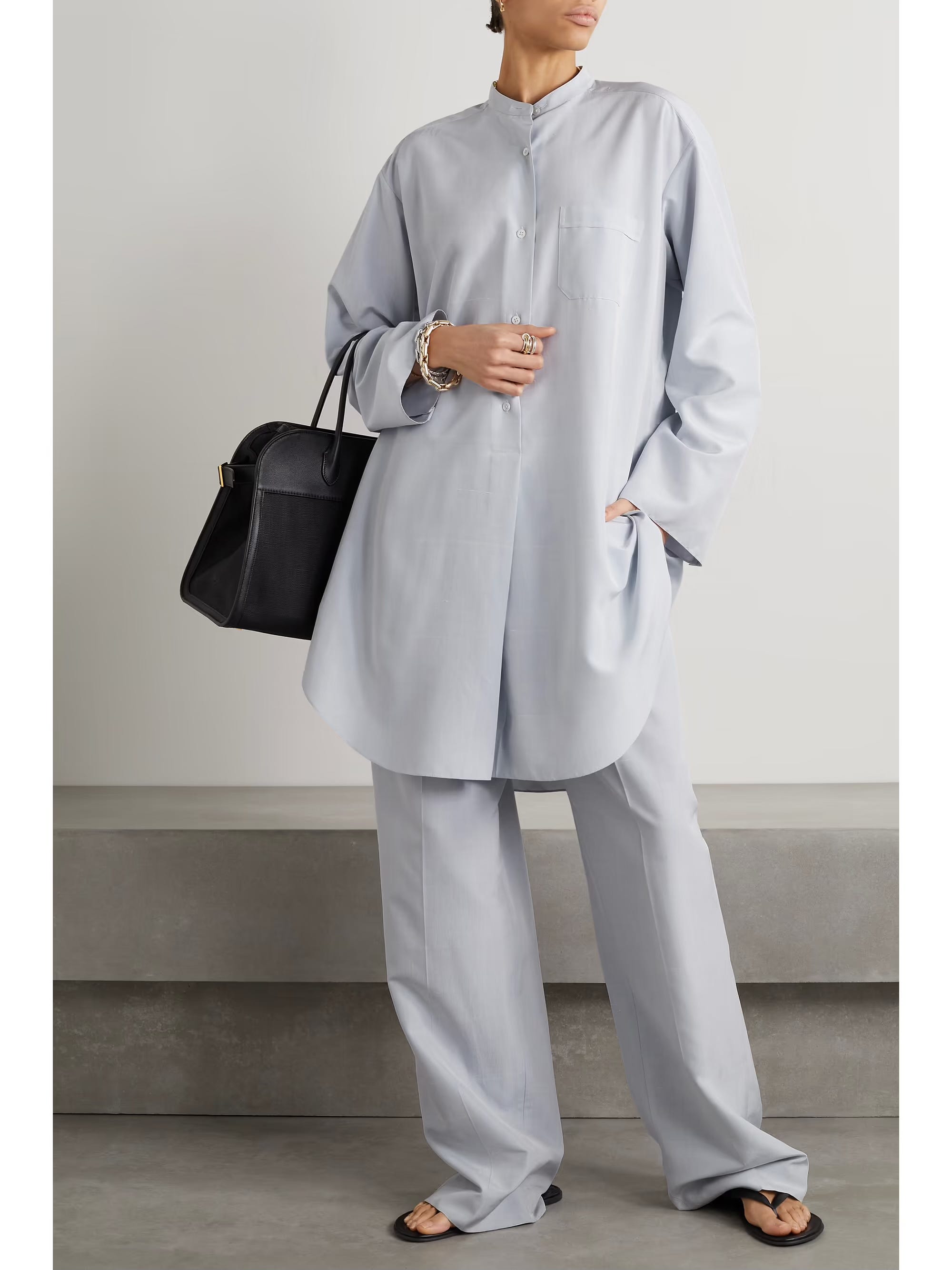
A few years ago, at The Row sample sale, I saw a heavily discounted silk Come tunic (above) in baby blue, and a brown woman standing next to me told me it was too on the nose and that we’d look like Indian aunties in it. It stayed with me.
We both recognized and understood the reference, but she’d clearly internalized the idea of who gets to confer taste. On us, it was reduced to something pedestrian and undesirable. On a white woman, it became modern and luxurious. The garment hadn’t changed, only the context.
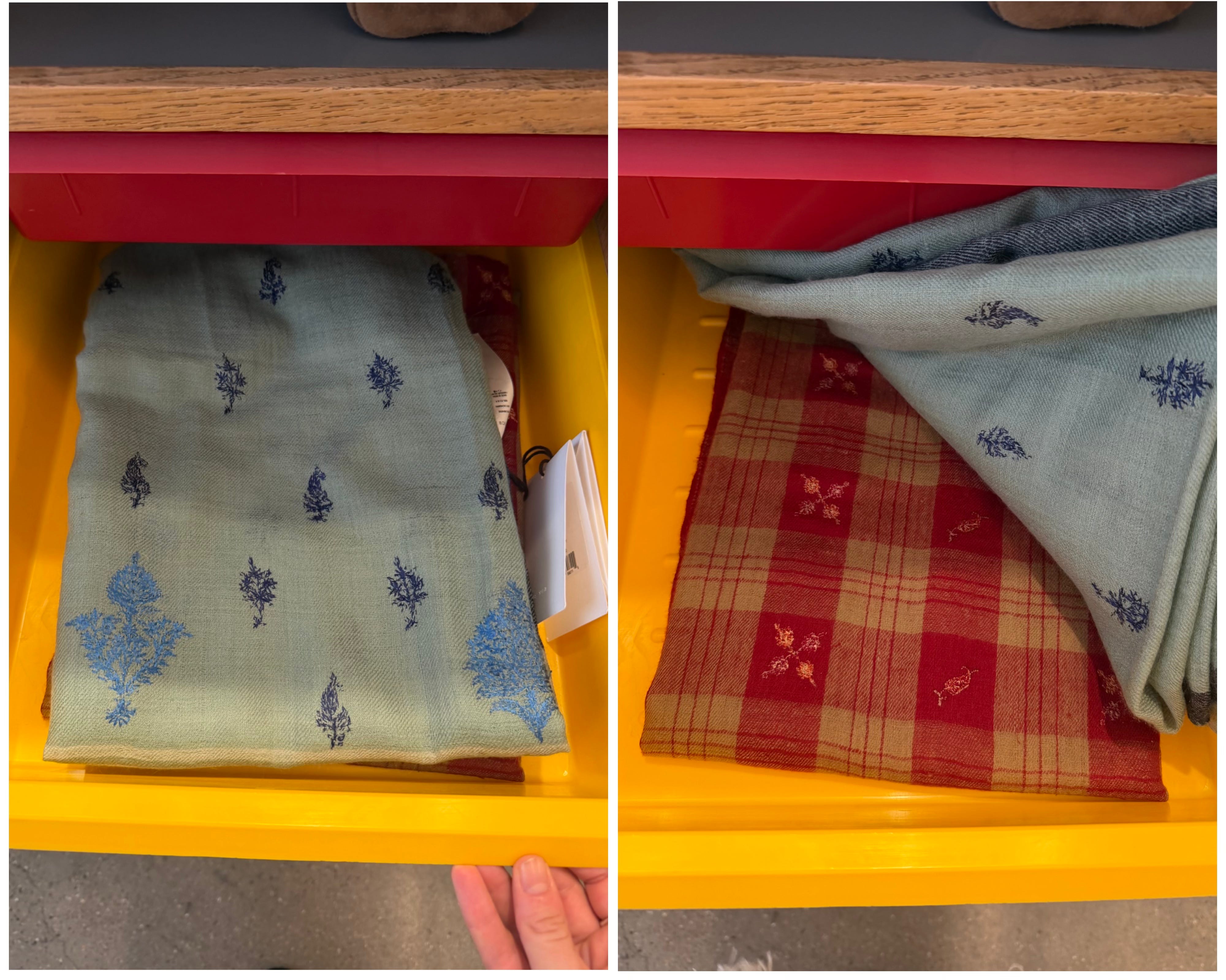
Recently, a member of our Substack chat shared photographs taken inside The Row’s London boutique. Tucked away in a drawer were a couple of shawls that looked remarkably similar to the Yaser Shaw shawls that the designers have been wearing for years.
Two members of my Substack chat received different explanations from sales associates in two different The Row boutiques. One was told the shawls were connected to Yaser and his family’s business. The other was told they were Yaser’s shawls and part of a collaboration, released under a private label.
But I reached out to Yaser directly, and he confirmed that these aren’t his shawls and that there is no collaboration. (If you’d like to explore his work, I’ve included a list of retailers that carry his collection at the end of this article.)
It’s entirely possible that these sales associates are just misinformed. But this isn’t high-street. If you’re selling one of these shawls for £2,900, you should have some knowledge of it.
From what I’ve been told, the shawls in the London boutique were produced by an Indian company, and they bear a “Made in India” label. Now, had The Row spent years openly celebrating Indian craftsmanship and giving them proper credit, I think this would feel very different. But these don’t feel like an extension of The Row’s design DNA or a continuation of an ongoing dialogue with Indian craftsmanship. The shawls have been divorced from their cultural context and folded into the brand’s world without introducing customers to the centuries-old tradition behind them.
The Row has collaborated with other makers before. They’ve carried Lisa Eisner’s jewellery under her own name. They’ve featured Ileana Makri. They’ve brought Desert Vintage into the shop as Desert Vintage. They’ve hosted Charvet. They know how to introduce their customers to the people behind the craft. So why not here?
This should have been approached as a partnership or a pop-up.
DIOR
When Dior, under Maria Grazia Chiuri, presented its Fall 2023 collection in Mumbai, it was, rightfully, hailed as a landmark moment. Staged at the historic Gateway of India, it was received as a respectful tribute to Indian craftsmanship, giving Dior’s longtime partners recognition on a global platform.
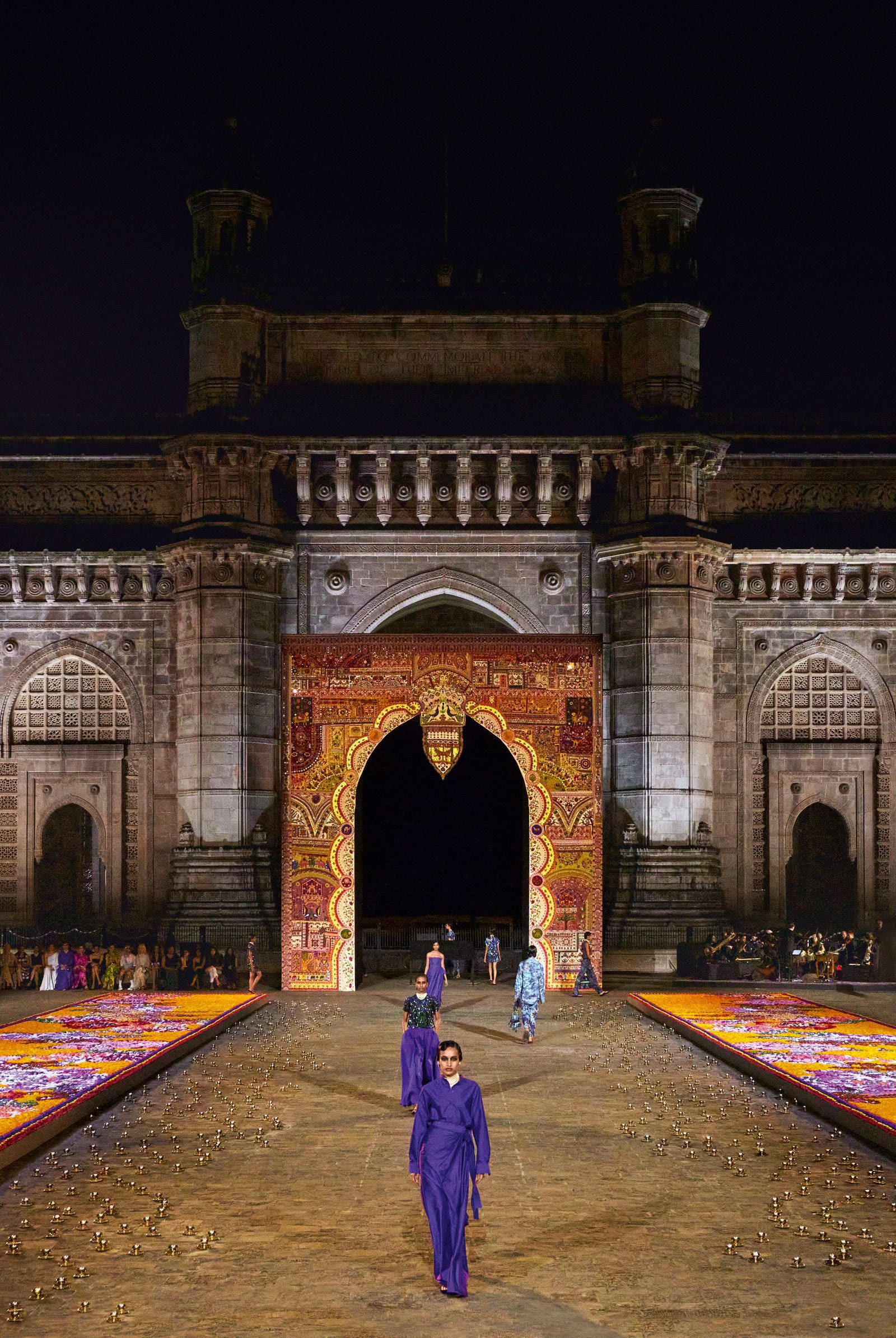
The presentation was stunning, and I immediately went in search of a number of those pieces in stores (none of which I could find). Maria brought extraordinary attention to India and its rich textile history, and she deserves credit for that. But here’s the thing… those garments already existed in India. They have for centuries. Those techniques, those embroideries, those silhouettes. None of it was new.
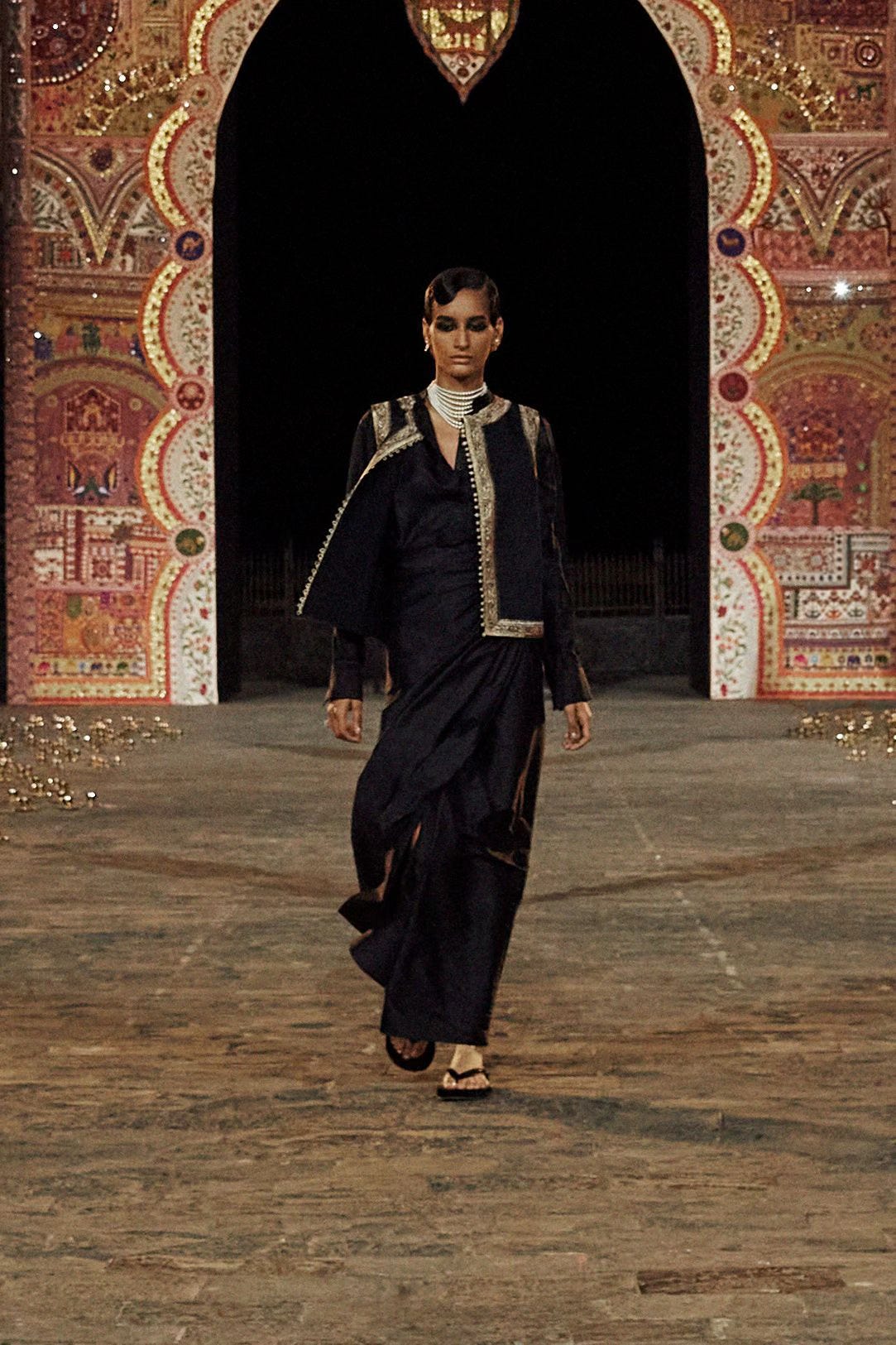
And while I thought the show was spectacular, it also bordered on spectacle. I felt like I was looking at India through a singular lens: luxury. It was glamorous and aspirational, and the guest list was a who’s who of Indian film, fashion, and society.
Is this what it takes for the wider fashion world to take notice? If so, that says as much about us as it does about Dior.
DRIES VAN NOTEN
Dries might not be for everyone, but in my humble opinion, he’s in a league of his own. He has an uncanny ability to combine colour, print, texture, and embellishment in ways that shouldn’t work, yet somehow do. Every collection leaves me wanting something I didn’t even know I wanted until I saw it, then pining for it and mining the depths of the internet for years. In one case, for 28 years.
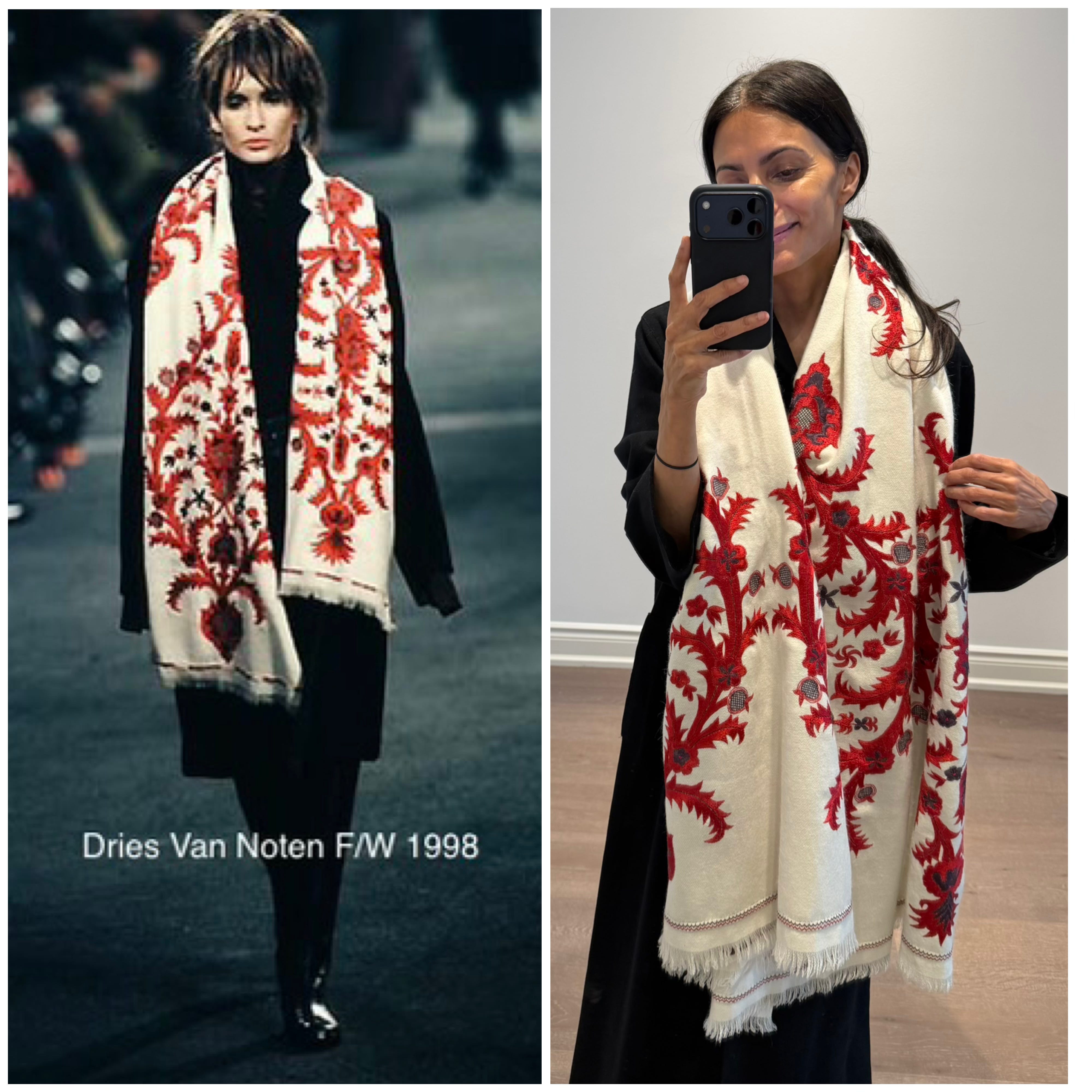
During my last visit to India, I set a few days aside to shop for bright, embellished wool scarves like the ones I’d admired in Dries’s runway shows. I took my fashionable, knowledgeable cousin with me, but we came home empty-handed because, as she and the many designers whose shops we visited that day informed me, the type of scarf I was looking for generally wasn’t produced for sale within India (at that time). Those ornately embroidered, heavily embellished wool scarves were primarily exported to the West.
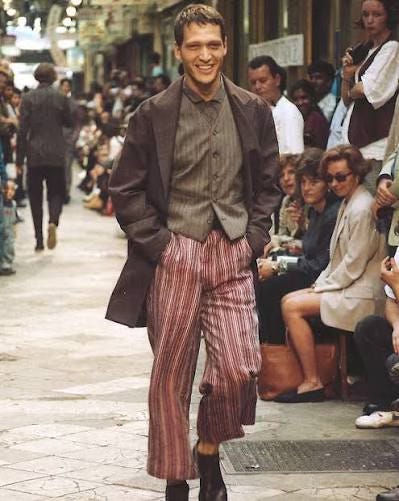
Dries was doing something so few of the other luxury houses were doing: working with and alongside the Indian artisans whose work inspired his designs. He cherished his long-term relationships with Indian ateliers and spoke about deliberately keeping embroidery in every collection because he wanted the artisans to thrive. He gave public credit, sold garments with “Made in India” labels, and spoke openly about India’s influence on his work. He viewed Indian craftspeople as collaborators, not simply manufacturers.
To me, this is what true cultural appreciation looks like. It’s about giving credit where it’s due, celebrating the people behind the work, and ensuring artisans remain visible.
And unlike Dior, when I think about Dries Van Noten and the work behind it, I picture something entirely different. I don’t see the celebrities or the pomp and glamour. I picture the workshops and the hands that made them. And that’s far richer and more meaningful to me.
On cultural appreciation
I love it when people travel through India, find inspiration, and bring some of it home. I love seeing Western brands discover Indian craftsmanship, acknowledge the people behind it, and celebrate their talent alongside their own.
Dries embraced the artisans who made his work possible. Maria Grazia Chiuri invited the world backstage in India. Acknowledgement doesn’t diminish great design; it enriches it.
The uncomfortable truth
So why do some people only see the value in it once the West embraces it?
The obvious answers are colonialism, racism, power, and the whiteness of fashion. This is why the very same garment can be perceived so differently depending on who’s wearing it. A saree on an Indian woman is unremarkable. On a white woman, it suddenly becomes interesting, elegant, and fashion-forward.
But shouldn’t we be further than this? And if we’re not, whose responsibility is it to change? Is the onus on people of colour to keep calling it out? Or is it on the brands themselves to be more generous with their recognition?
I think it’s actually pretty simple. If you’re borrowing from our cultures, and you have the power to decide who gets a seat at the table, you need to pull up more chairs.
Your resident Indian aunty, signing out.
N xo
Yaser Shaw Stockists
In the U.S., you’ll find some of the strongest selections at Capitol (Charlotte), Santa Fe Dry Goods (Santa Fe, New Mexico), Hero Shop (San Francisco), Mary Nuages (Aspen), Attersee (New York), and Lakeside Goods (Michigan). Matta NYC also carries many of his pieces, although they don’t always receive a broad selection.
In Europe, Mouki Mou has the widest assortment. Other retailers include Crimson Cashmere, By Marie in Paris, and Super Mountain in St. Moritz, all of which regularly carry his work.
You can also follow Yaser on Instagram. From time to time, he hosts pop-up events, which he typically announces in his Stories.
No posts
Comments
Nothing yet. Say the first thing.
Sign in to join the conversation.