
For decades, one of San Diego’s most beloved urban legends lived quietly on the slopes of Mount Soledad.
It was called Munchkinville.
Nearly everyone who grew up in San Diego heard the story. Hidden among the winding streets overlooking the spectacular La Jolla coastline was a tiny neighborhood where, according to local lore, some of the actors who portrayed the Munchkins in the 1939 classic The Wizard of Oz had settled after the film. Their homes were said to be perfectly scaled for little people, complete with tiny doors, compact rooms, and whimsical architecture.
Like thousands of other San Diegans, I believed it.
When I turned 33 in 1988, my husband Mark surprised me with one of the most memorable birthday presents I’ve ever received: a limousine ride through Munchkinville.
As we slowly wound our way up Hillside Drive, the neighborhood seemed almost enchanted. The road overlooked the blue Pacific, mature trees shaded the tiny cottages, and a charming stone troll bridge added to the fairy-tale atmosphere. There was even a tree house that looked like it belonged in a storybook.
It felt like discovering a hidden village perched above La Jolla.
Years later, Mark had an opportunity few people ever experienced. He was invited inside one of the cottages. He came away convinced that everything had been designed for people of short stature. Whether it was the unusually intimate proportions, the compact layout, or simply the remarkable character of the home, it left a lasting impression on him.
Recently, I decided to look beyond the stories and research Munchkinville’s history.
What I discovered surprised me.
The cottages on Hillside Drive were not built after The Wizard of Oz. They were designed in 1935, four years before the movie was released, by celebrated architect Cliff May, who would later become famous as the father of the California ranch house.
The homes were commissioned by Violetta Horton, one of Cliff May’s earliest patrons. Their low rooflines, compact interiors, and hillside placement reflected May’s early architectural style, not a community built for former Hollywood performers.
I also searched for evidence connecting the homes to the Munchkin actors.
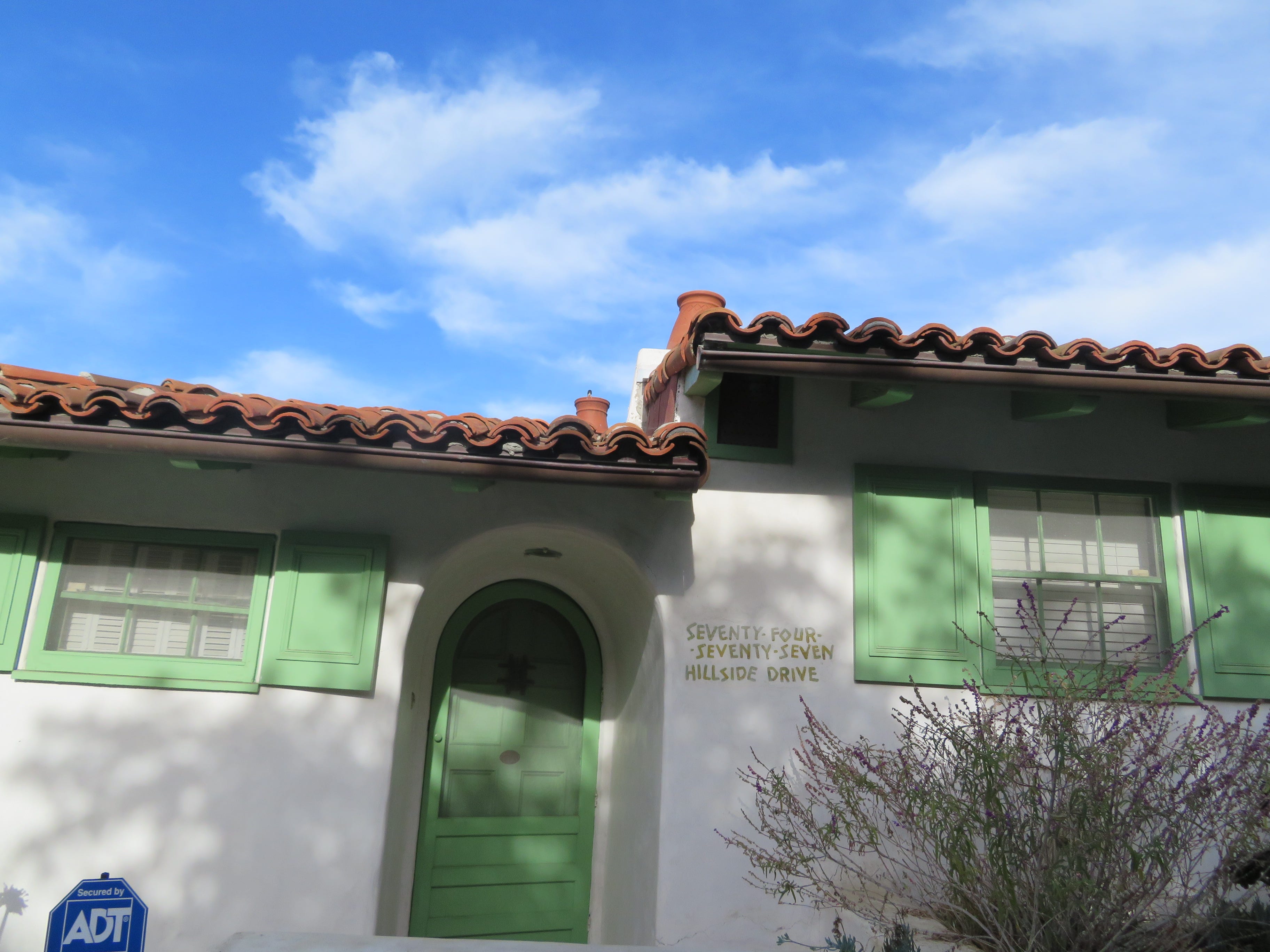
Despite decades of rumors, historians have found no documented evidence that any of the performers from The Wizard of Oz ever owned or lived in these houses. The famous story that they pooled their earnings to create a miniature village appears to be just that: a story.
At first, I was disappointed.
Then I realized something.
The truth doesn’t diminish Munchkinville.
It makes it even more fascinating.
Looking back, it’s easy to understand how the legend took hold.
The homes really did appear miniature from the street because they were built into the steep hillside. You could almost reach out and touch the roof as you walked past. Their cozy proportions felt unlike anything else in San Diego. Add a troll bridge, a tree house, breathtaking ocean views, and generations of curious visitors, and the neighborhood practically invited people to invent a magical explanation.
Sometimes architecture creates folklore.
Sometimes folklore becomes history in people’s minds.
The greatest surprise of all isn’t that the Munchkin story appears to be a myth.
It’s that the neighborhood itself has nearly vanished.
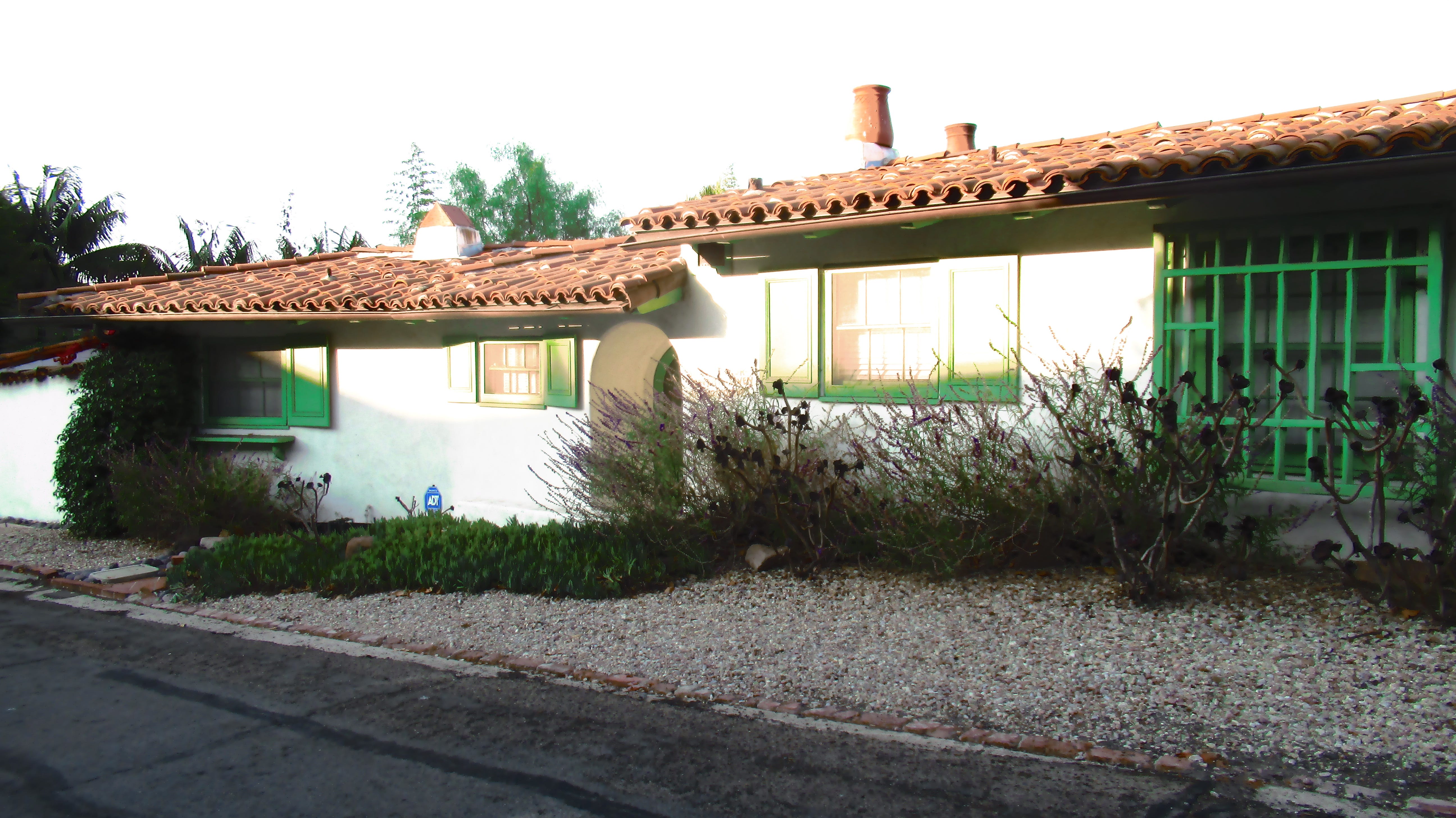
Over the years, the original Cliff May cottages were demolished one by one to make way for increasingly large luxury homes. Today, only 7477 Hillside Drive remains, protected as a historic landmark. It stands as the last survivor of a neighborhood that once possessed a scale, warmth, and whimsy that modern construction rarely captures.
To my eye the surrounding mansions overwhelm the small hillside lots they occupy. They’ve replaced intimacy with grandeur, and charm with sheer size.
Progress has a way of changing not only what we build, but also what we choose to preserve.
Do I still believe Munchkinville existed?
Yes.
Just not in the way I once imagined.
It wasn’t a colony built by the actors from The Wizard of Oz. It was something even rarer: a neighborhood whose architecture was so distinctive that it inspired one of San Diego’s most enduring legends.
When Mark and I rode through Munchkinville in that limousine in 1988, we weren’t driving through a Hollywood relic.
We were driving through a place where imagination met architecture, where local folklore flourished, and where a handful of extraordinary little cottages convinced generations of San Diegans that fairy tales might just be real.
Today, only one cottage remains.
But the story, now enriched by both memory and historical research, continues to live on.
Sometimes discovering the truth doesn’t destroy the magic.
Sometimes it simply gives us a deeper reason to appreciate it.
Comments
Nothing yet. Say the first thing.
Sign in to join the conversation.