
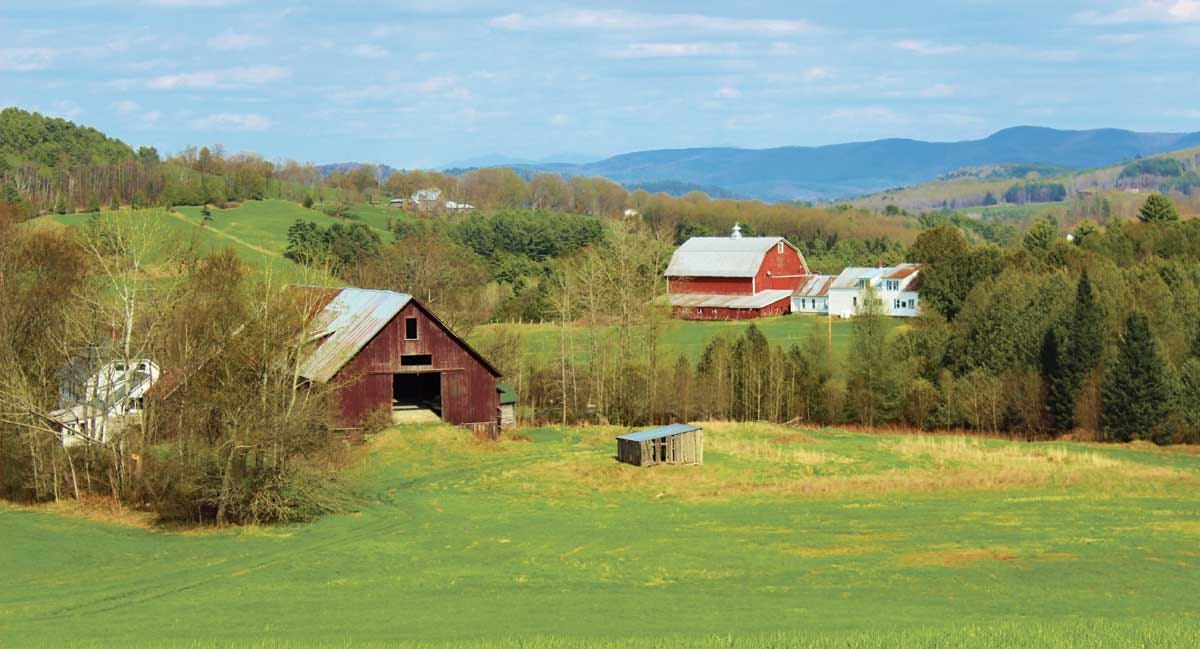
Despite certain stereotypes to the contrary, Vermont is a farming state. The Green Mountain State’s agrarian history is an important part of Vermonters’ collective identity – for generations, the state was composed almost entirely of families working and living off of small plots of land. But this way of life is under pressure, facing an extinction-level crisis from converging economic disruptions. Farms are closing, and with them go people’s livelihoods.
New England is not known for its agricultural production. The entire region accounts for just 1% of all farms in the United States, and that is mostly confined to Maine and Vermont. Vermont claims 6,537 farms according to 2022 census data, down 4% since 2017, and a fraction of the 11,000 which existed in 1950.
Historically, New England and Vermont were agricultural powerhouses. From 1830 to 1880, about 80% of the region’s land was cultivated for farm use, almost all of which has since been reclaimed by nature. The Connecticut River Valley basin — covering southern Vermont, Western Massachusetts, and Connecticut — was formerly one of the largest tobacco producing regions in the country. Dense population, land development, and competition with larger farms in the South (often using the coercive system of sharecropping to suppress labor costs) pushed many of New England’s agricultural producers out of existence. The pressures that folded many New England farms 100 years ago foreshadowed the same pressures that are punishing Vermont’s holdouts and growers nationally today.
Understanding the Squeeze
The economics of farming are tightening nationally. Over 300 farms went bankrupt in 2025, a 46% increase since the year prior. Average farm income, even including the largest conglomerates, is negative. The reasons are multifaceted, but the primary causes are largely the decreasing cost of agricultural commodities and increasing cost of land.
The price of milk, for example, is the most critical factor for Vermont’s formerly thriving dairy industry. If a glut of supply forces prices down, farmers lose money. Yet, this price drop paradoxically compels farmers to produce and sell more milk to recoup lost earnings, resulting in continued high supply and low prices. The end result in past decades has been very cheap milk, and dairy farmers forced out of the game.
The squeeze on the dairy industry isn’t just on the supply side, though. Although the yield from farming has stayed mostly consistent, the cost of doing business has skyrocketed.
According to Caroline Sherman-Gordon, legislative director at the farmer advocacy group Rural Vermont, the price of land is critical for the agricultural industry’s margins. “It’s basically a case of impossibility to make any kind of farming model happen in a viable way. Just based on the price inflation of land.” The cost of land in Vermont, and in the rest of New England, has exploded in recent years. The average price for an acre of land in Vermont was $3,205 in 2012, but in 2022, an acre costs $4,130.
This increased value brings some benefit to Vermont homeowners through appreciation, but presents challenges to farmers. For one, as land value increases, so too do property taxes, since they are assessed based on the market value of land holdings. Further, the acreage held by farmers is often more valuable in the hands of developers, who use it to build things like strip malls, data centers, and much-needed housing. For small farmers facing an economic squeeze, selling their land is often necessary to avoid bankruptcy.
Vermont has the fourth-highest property taxes in the country. Further burdens include regulatory costs and providing healthcare — so much so that larger farms hire entire compliance departments to ensure their farms adhere to an increasingly complex web of regulations.
“Farmers are getting crushed by the economics,” says Sherman-Gordon, “Let’s say your tractor breaks and you can’t afford to repair it…you have the choice of taking out more debt or moving on in life and selling.” For context, new tractors used by small farms can cost $40,000 or more, and servicing costs have surged by more than 40% in the last five years.
The financial pressures have real human consequences: farmers are three-and-a-half times more likely to commit suicide than the general population.
Survival in the Fields
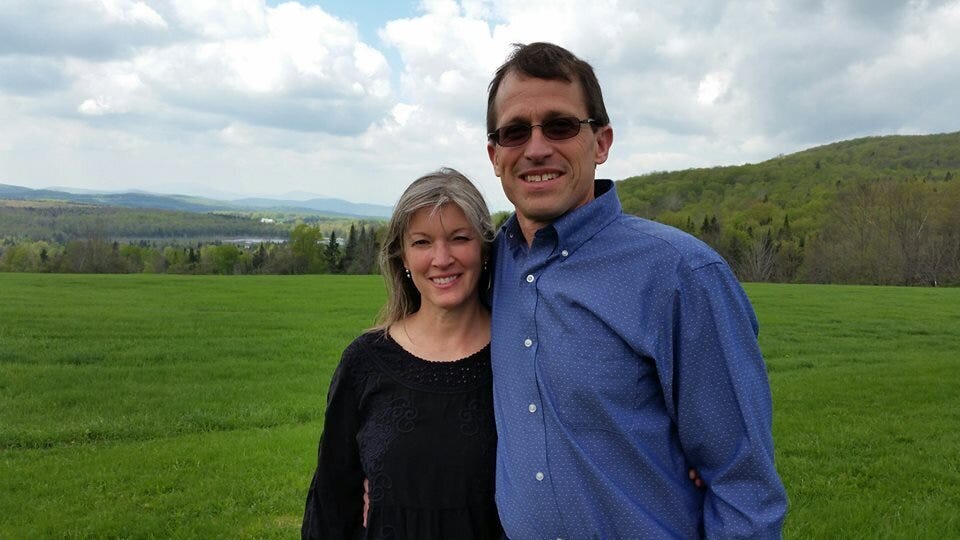
MKVT Farm operates 73 acres in Glover, VT. Glover is a town of about 1,100 people just 30 minutes from the Canadian border. Mark and Karen Rodgers opened the farm in 2015 after Mark sold his stake in a dairy farm. MKVT focuses on open pastures and ethical treatment of the sheep, pigs, chickens, and turkeys that they raise.
Mr. Rodgers offered a grim assessment of the state of independent farms. Small farms, particularly dairymen, are going out of business. “Farms are getting larger. The small farms see less market share and higher costs compared to their bigger neighbors.” Large agricultural operations can weather price fluctuations and other costs more efficiently due to having more control over their supply chains.
In the past, family-run outfits could make a living despite these challenges. Now, it is much less certain, with Rodgers joking that the farm might be earning just 35 cents per hour. He believes that farm consolidation is increasing as a result of small farms selling to larger ones or getting out of the business entirely.
Farm quantity isn’t the only casualty; the broader agricultural economy has suffered from the decline of independent farmers. For instance, farm service providers have struggled in recent years. Rodgers noted that his local granary — a storehouse for animal feed — reacted to rising costs by implementing a minimum order size of six tons. “It’s burdensome to many small farmers who only have three ton bins.” Small farmers reacted to the restriction by purchasing bagged grain, which comes at a premium, or fronting the cost of investing in larger grain bins.
Veterinary clinics, understandably important for the livestock business, have diminished as the number of farms has dwindled. Some farmers are left to travel significant distances for routine care.
Rodgers adds that even meat processing has similarly increased in difficulty. His local facility has added scheduling limitations, which leaves farmers grappling with extended timelines to get their product to market. These restrictions, however, can be removed if a farmer offers enough product volume to make it profitable for the processor, which often shuts out many small farms who cannot produce meat in those quantities. This is yet another example of the lopsided playing field facing local farmers.
Montpelier’s Moment of Decision
According to Sherman-Gordon, a healthy farm ecosystem is a national security issue. “It’s in the public interest, not just in the farmer’s interest, to have a more local, self-reliant food system that’s climate resilient. Food security is emerging as a matter of national security: when farmers go out of business or are impacted by climate change, our food supply chains become more vulnerable.”
Luckily, there are policy options available that extend beyond the big farm lobby’s historic preference for infinite subsidies. Healthcare, as is the case for many business-owners and working people, is routinely one of the highest expenses. Farmers are no different, and Rural Vermont has adopted universal healthcare as a signature policy plank in their advocacy.
Innovative solutions include the creation of a state public bank for climate and agricultural initiatives. The only state-owned bank in the U.S., surprisingly, is the Bank of North Dakota, which was chartered in the early 20th century after farmers complained of usurious interest rates from out-of-state financiers. The bank returns two-thirds of its profits back to North Dakota, and has been identified by the Boston Federal Reserve as a potential model for public banking in Massachusetts and elsewhere.
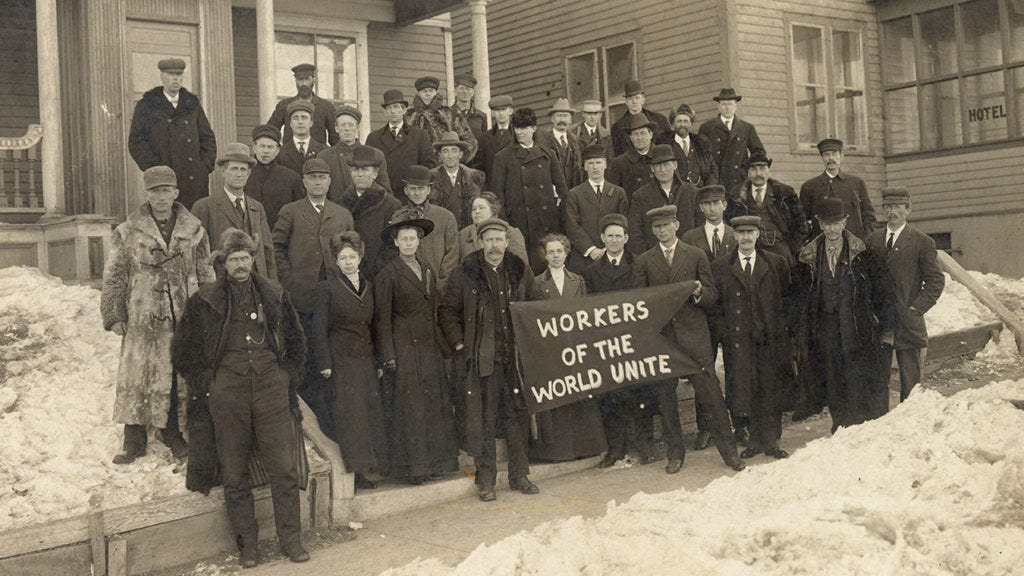
A bill to launch a research committee in climate-focused public banking is being considered by the Vermont Senate.
Sherman-Gordon has contributed to legislation that allows Vermont farmers to be able to participate in the waste management business, typically accomplished through composting, by cutting through red tape which had prevented Vermont farms from participating in the surprisingly-profitable trade. This regulatory shift has yielded new and desperately needed revenue streams.
Although farming is far from lucrative, Vermont families like the Rodgers do it because they love it, and because their work is important.
The Vermont legislature is now confronted with a choice: create agricultural infrastructure that allows its rich tradition of family farmers to continue, or be left with only national agro-business behemoths and hobby gardens — and with that, a permanently-changed state identity.
“I think most people that want to farm do it for their soul,” says Sherman-Gordon, “they want to have a connection to the land, to feel purpose, and live in a symbiotic relationship to the animals and the land.”
Quotes have been edited for length and clarity.
Chris Brady is a Regional Correspondent for The New England Beacon. To contact him with tips and information, please email here. To support our mission, please click here.
No posts
Comments
Nothing yet. Say the first thing.
Sign in to join the conversation.